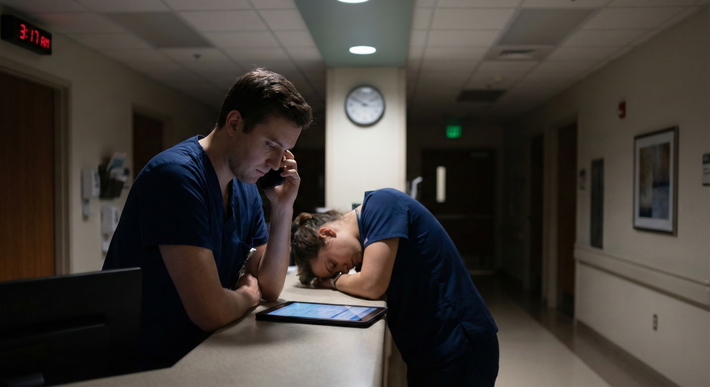
It’s 2:47 a.m. You’re on night float as a brand‑new intern, staring at the vital sign pager that just won’t shut up, wondering: “Is this my life now? How much sleep do interns actually get… ever? And is this rotation just awful, or is this normal?”
Here’s the answer you’re looking for: sleep as an intern is rotation‑dependent, program‑dependent, and honestly, chaos‑dependent. But there are realistic ranges and patterns you can plan around.
I’ll walk through the big rotations and give you real numbers: average sleep on work days, what post‑call looks like, and which months will wreck you if you’re not proactive.
Ground Rules: What’s Actually Possible Under Duty Hours
Before we talk specifics, quick reality check on the rules you’re up against:
- Max 80 hours/week, averaged over 4 weeks
- Max 24 hours of continuous clinical work (+ 4 “transition” hours)
- 1 day off in 7 (averaged over 4 weeks)
- Minimum 8 hours off between shifts (10+ “preferred”)
So no, a legal schedule shouldn’t have you getting 0–2 hours of sleep every night for a month straight. But you will have nights with terrible sleep, and certain rotations push right up against what’s technically allowed.
To keep this useful, I’ll give you conservative but realistic ranges based on what I’ve seen across multiple IM, surgery, peds, EM and OB programs.
High‑Level: How Much Sleep by Rotation Type
Here’s the 30,000‑foot view first.
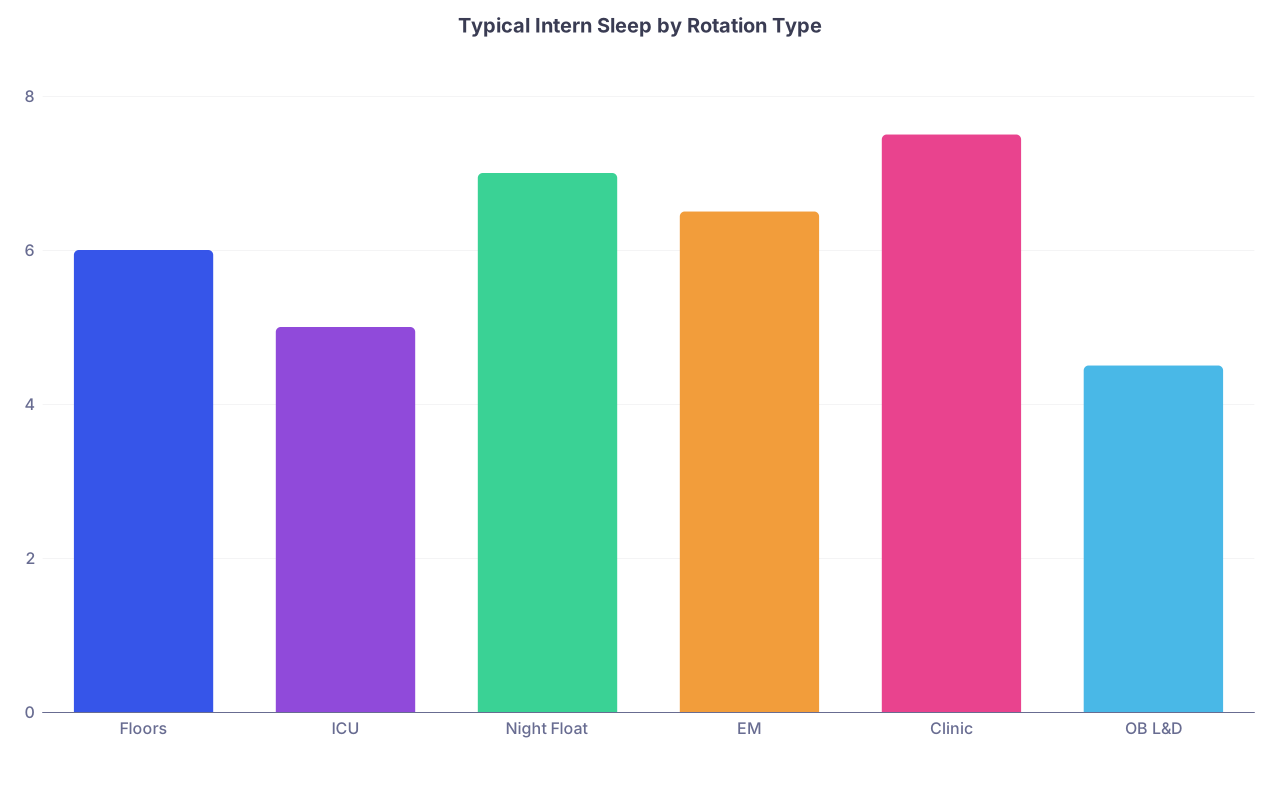
| Rotation Type | Typical Sleep / Night | Sleep Quality |
|---|---|---|
| Floors (IM/Surg/Peds) | 5–6.5 hours | Fragmented |
| ICU (MICU/SICU/PICU/NICU) | 4–6 hours | Unpredictable |
| Night Float | 6–7.5 hours (daytime) | Often better block |
| Emergency Medicine | 6–7 hours | Shift-dependent |
| Outpatient/Clinic | 7–8 hours | Most consistent |
| OB/GYN L&D Night Call | 3.5–5.5 hours | Frequently interrupted |
Now let’s break it down rotation by rotation.
Inpatient Floors (Internal Medicine, Surgery, Peds)
This is where most interns live.
Daytime Inpatient (no 24‑hour call)
Typical schedule:
- 6–6:30 a.m. pre‑round, stay until 5–7 p.m.
- 6 days/week
- Cross‑cover or short call some evenings
Realistic sleep on work days:
- Most interns: 5–6.5 hours/night
- On “chill” floor months (lower census, good senior): 6.5–7 hours possible
- On brutal services (onc, CT surgery, busy peds, no NP support): 4.5–5.5 hours, sustained
This usually looks like:
- Home by 6:30–7:30 p.m.
- Eat/shower/answer a couple pages, documentation spillover
- In bed by 10:30–11:30 p.m.
- Alarm at 4:45–5:30 a.m.
On floors, the trap is hidden sleep loss: you technically “sleep” 6 hours, but:
- You’re wired from sign‑out or a code
- You’re still thinking about that DKA you admitted at 5 p.m.
- You’re half‑checking the EMR from bed like a crazy person
Result: 6 hours on paper feels like 3–4 hours of real rest.
24‑Hour Call Floats (if your program still has them)
Some IM, surgery, and peds programs:
- 24 + 4 call every 4th night (q4) or so
On these:
- Call nights: 0–3 hours sleep (sometimes literally zero)
- Post‑call day: out by late morning, sleep 3–5 hours at home
- Non‑call days in that block: 5–6.5 hours
You don’t adapt. You just survive.
ICUs (MICU, SICU, PICU, NICU)
This is often the worst continuous fatigue load for interns.
Common schedules:
- 12‑hour shifts (7a–7p / 7p–7a)
- Or 24‑hour calls q3–q4
12‑Hour ICU Shifts
On days:
- Sign‑out around 7 p.m., home by 7:45–8:15 p.m.
- In bed 10–11 p.m. if you’re disciplined
- Up 5–5:30 a.m.
Realistic: 6–7 hours on good days, 5–6 hours on bad ones.
On nights:
- Get off 7 a.m., home by 7:30–8 a.m.
- Sleep 8:30 a.m.–1 or 2 p.m. (often can’t sleep more)
- Maybe nap 4–5 p.m. before shift
Realistic: 5–7 hours total, but split and low quality.
24‑Hour ICU Call
This is where sleep just disintegrates.
During an average 24‑hour ICU call:
- Sleep in broken chunks: 0–3 hours is typical
- Some nights: not a single uninterrupted hour
Post‑call day:
- Out mid‑late morning
- Crash 12–4 p.m.
- Get maybe 4–6 hours before your circadian rhythm fights you
Over a full ICU month:
- Heavier programs: average 4–6 hours/day across call + non‑call days
- Lighter programs with 12‑hour shifts: more like 6 hours baseline, with some 7–8 hour days off
Night Float
Believe it or not, this is often when interns get the most consistent sleep.
Typical setup:
- 5–6 nights/week, 2–4 weeks at a time
- 7 p.m.–7 a.m. shift (or similar)
- Protected sleep during the day, minimal obligations
For a well‑run night float:
Workdays:
- Leave at 7 a.m., home by 7:30–8 a.m.
- In bed 8:30–9:30 a.m.
- Sleep until ~2–3 p.m. (5–6 hours)
- Nap 1–2 hours early evening before shift
Total realistic: 6–7.5 hours of sleep per 24 hours.
| Category | Value |
|---|---|
| Floors | 6 |
| ICU | 5 |
| Night Float | 7 |
| EM | 6.5 |
| Clinic | 7.5 |
| OB L&D | 4.5 |
Caveats:
- Transition days (switching from days to nights) are awful
- The first 2–3 nights, your body rebels hard
- Social life dies during these blocks, but your sleep debt often improves
Emergency Medicine Rotations
EM as an intern is weirdly bimodal. Either you feel okay or completely demolished, depending almost entirely on how the shifts are grouped.
Common schedules:
- 8–10 hour shifts
- Mix of days, evenings, nights
- 16–18 shifts/month
When the schedule is well designed (clustered, gradual transitions):
- Most interns can average 6–7 hours/night
- On stretches of all days or all nights, you might hit 7–8
When the schedule is sloppy (day → night → evening → morning):
- Flip days: 3–5 hours
- On stable stretches: back to 6–7
The thing that kills sleep here isn’t hours, it’s circadian whiplash and staying late:
- “Off at 11 p.m.” inevitably becomes 12–12:30 a.m. with sign‑out
- Post‑shift adrenaline and charting push sleep back further
If you protect your wind‑down routine (shower, 30–45 minutes off screens, small snack), EM can be one of the more humane rotations sleep‑wise.
Outpatient / Clinic / Consult Months
This is as close as intern year gets to normal human life.
Typical schedule:
- 8 a.m.–5 p.m. or 8:30–4:30
- Minimal weekends
- Rare late pages or admits
Realistic sleep:
- Consistently 7–8 hours/night for most people
- Go to bed 10–11 p.m., wake 6–7 a.m.
This is where you catch up.
You’ll still be tired because you’re carrying months of sleep debt, but this is the month you remember what it’s like to do laundry and see the sun.
OB/GYN, L&D, and “Notorious” Rotations
Some of the worst sleep of intern year happens on:
- OB/GYN Labor & Delivery
- Trauma surgery
- Busy night float without cap
- High‑volume ED months in county hospitals
Let’s talk OB/GYN L&D nights as an example.
Typical:
- 24‑hour call or 12‑hour nights with constant pages
- Frequent emergency sections, triage, postpartum issues
Realistic sleep:
- On 24‑hour call: 0–3.5 hours, often in 20–40 minute chunks
- On 12‑hour nights: sometimes no sleep until you get home
During a rough L&D month, I’ve seen interns average under 5 hours/day across the whole block. That’s not sustainable mentally, so you have to be ruthless with off‑day recovery.
How Sleep Changes Across the Year
Early in intern year:
- You move slower. You over‑document. You re‑check everything.
- You stay late finishing notes and calling families.
Result: 0.5–1.5 fewer hours of sleep per night than later in the year on the same rotation.
By spring:
- You preround faster
- You pre‑chart smarter
- You can admit someone in half the time
- You know which things actually matter at 2 a.m.
You don’t magically get more duty hours, but your usable off‑time grows, and that usually adds 30–60 minutes of sleep on most workdays.
Sleep Debt and What Interns Actually Feel Like
Let’s be blunt: even when you’re technically getting 6 hours/night, you’re often walking around like someone who sleeps 3–4.
Why?
- You’re rarely in deep, high‑quality sleep (stress, pager trauma, light‑sleep conditioning)
- You’re constantly flipping between day, evening, and night schedules
- You rarely get two truly restorative days off in a row
So on paper, the math might look like:
- “Average 5.5–7 hours/night over the month”
But subjectively, most interns will tell you:
- “I feel like I’ve been jet‑lagged for six months”
This is normal. Not good. But normal.
What You Can Actually Do About It (Without Magical Thinking)
You can’t make ICU nights into a wellness retreat, but you can swing your weekly average by 1–2 hours if you’re deliberate.
Here’s what consistently works for interns who cope best:
Hard bedtime on floor months
Decide: “Lights out by 10:30 p.m. period.”
You’ll never finish all your work and life tasks. Sleep takes priority.Brutal efficiency with post‑shift time
On busy rotations, your evening is:- Heat food (meal prep or leftovers)
- Shower
- 15–20 minutes to decompress
- Bed
That’s it. No scrolling, no “just one more episode.”
Treat post‑call like an emergency
You go home. You sleep. No errands. No “I’ll just swing by Target.”
Sleep 3–5 hours, wake up, light snack, then a normalish bedtime.Blackout + earplugs on nights
Don’t fight biology with half‑measures.
Get: blackout curtains, white noise, eye mask, and decent earplugs.
If you’re serious, your daytime sleep goes from 4–5 hours to 6–7.Stop caffeine after a certain hour
Most residents who sleep decently cut caffeine at:- 12–2 p.m. on day shifts
- 6–8 hours before they plan to sleep on nights
Use days off intentionally
Don’t sleep until 2 p.m. and then be mad you can’t sleep that night.- If post‑nights: 1 long nap early, then stay up and sleep at a semi‑reasonable time.
- If post‑days: sleep in 1–2 hours, not 5.
Rotation‑by‑Rotation: What You Should Expect
Here’s a quick “if you remember nothing else” guide.

General Medicine Floors
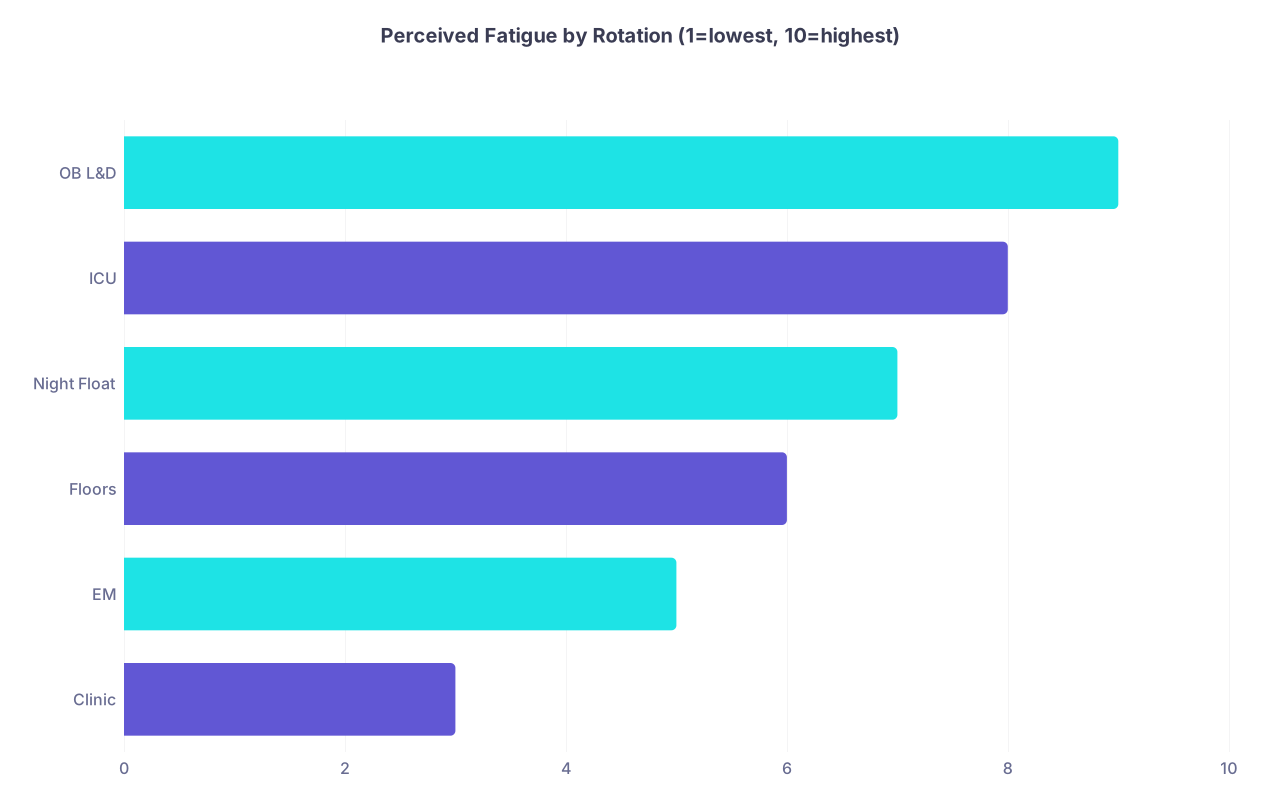
Expect: 5–6.5 hours on workdays, maybe 7–8 on days off.
Feels like: constant background fatigue, but manageable.ICU Rotations
Expect: 4–6 hours/day on average, worse on 24‑hour calls.
Feels like: heavy, cumulative exhaustion. This is one of the lowest‑sleep blocks.Night Float
Expect: 6–7.5 total hours/day if you protect daytime sleep.
Feels like: living in a different time zone, but often more stable.Emergency Medicine
Expect: 6–7 hours on most days, 3–5 on bad transition days.
Feels like: you’re fine, then wrecked for a day, then fine again.Clinic/Outpatient
Expect: 7–8 hours pretty consistently.
Feels like: vacation compared to wards.OB/GYN L&D, Trauma, Crazy Services
Expect: 3.5–5.5 hours/day during bad stretches.
Feels like: survival mode. You plan your life around sleep only.
| Category | Value |
|---|---|
| Clinic | 3 |
| EM | 5 |
| Floors | 6 |
| Night Float | 7 |
| ICU | 8 |
| OB L&D | 9 |
Quick Mental Health Check
Persistent 4–5 hour nights + constant responsibility = risk.
If any of these hit:
- You start making dumb, obvious medical errors
- You nod off on rounds or while driving, more than once
- You feel hopeless or detached most days, not just “tired”
- You catch yourself thinking “I don’t care what happens to this patient”
That’s not just “normal intern tired.” That’s dangerous and treatable.
At that point:
- Tell a senior or chief you trust
- Use your GME wellness or mental health resources
- Ask for schedule adjustments if you’re at the edge
You’re not weak. You’re human running on too little sleep in a high‑stakes job.
FAQs About Intern Sleep
1. Is it normal to only sleep 3–4 hours some nights as an intern?
Yes, on certain rotations and certain nights. ICU call, L&D, and particularly bad floor nights can drop you to 0–4 hours of sleep. What shouldn’t be happening is 3–4 hours every single night for weeks. If that’s the norm, not the exception, talk to your chiefs or program leadership.
2. Do interns ever actually get 8 hours of sleep?
Yes, but not consistently on hard rotations. You’ll see 8‑hour nights on: outpatient months, lighter floors with good teams, some EM schedules, and your days off. Over the entire year, many interns average 6–7 hours when you include off days and easier blocks.
3. Which rotations are usually the worst for sleep?
Common culprits: MICU/SICU with 24‑hour call, OB/GYN L&D nights, trauma surgery at busy centers, and poorly designed night float without caps. Also any floor service that’s chronically understaffed with high census and tons of admits.
4. Is it safe to drive home after 24‑hour call?
Bluntly: sometimes no. If you’re nodding off sitting in a chair, you’re not safe behind a wheel. A lot of residents keep a standing agreement to crash in a call room, nap in the car, or ask a co‑resident/partner to drive them when they’re wrecked. If you nearly fall asleep driving home once, treat that as a big warning and change your plan.
5. Does sleep actually get better after intern year?
For most people, yes. You still work hard as a PGY‑2/3, but you’re more efficient, you carry tasks faster, and your role shifts a bit. You also tend to have slightly more control over your schedule and electives. Many residents report gaining 30–90 extra minutes of sleep on typical workdays compared to intern year.
6. What’s one concrete thing I can do this week to get more sleep?
Pick one rotation night in the next 7 days, and set a non‑negotiable “electronics off” time 45 minutes before your ideal bedtime. No EMR, no texts, no scrolling. Just shower, dim lights, maybe a book or podcast, then bed. Guard that one night completely. Most interns are shocked they can buy back 30–60 minutes of real sleep just by killing late‑night phone time.
Today, pick the rotation you’re most worried about and write down a realistic bedtime and wake time for a typical workday on that block. Then ask: “What exactly needs to change in my evenings to make that sleep window real?” That’s your action list.