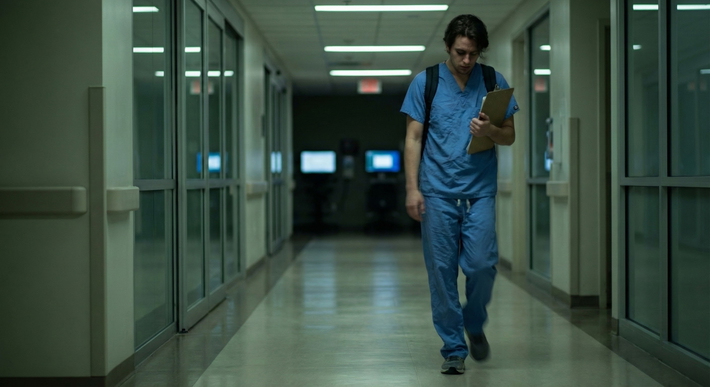
It’s 4:59 a.m. Your alarm is about to go off for the third time. You’re on inpatient wards as a brand-new intern. Night float is going to sign out in about an hour. And your brain is trying to decide which feels worse: getting out of bed or showing up unprepared to your first real pre-rounding and sign-out as the “doctor.”
Here’s the reality: 5:00–8:00 a.m. will make or break your day. Not in some motivational-poster way. In a very real, “Did you miss that patient’s 3 a.m. rapid response?” way. Or “Why is the attending asking you about the sodium you didn’t check” way.
You need a map. Hour by hour, then minute by minute. At each point, you should know exactly what you’re doing, what you’re checking, and what you can safely ignore.
This is that map.
5:00–5:30 a.m. – Wake-Up, Non-Negotiables, and Mental Boot-Up
At this point you should be: out of bed and doing the same exact thing you do every inpatient morning. Consistency saves you here.
5:00–5:05 – Zero-thinking wake-up
Your first mistake is trying to “decide” to get up.
Set things up the night before so 5:00–5:05 is pure autopilot:
- Phone/alarm across the room.
- Scrubs, socks, and shoes laid out.
- Badge, keys, wallet all in one visible spot.
- Bag already packed with:
- Laptop/iPad
- Charger
- Stethoscope
- Pen + backup pen
- Small notebook
- Snacks
At 5:00, you should be:
- Up, not scrolling.
- Bathroom.
- Contacts/glasses in, face washed, teeth brushed.
No decisions. No “maybe I’ll sit down for a second.” You don’t sit until you’re at the hospital.
5:05–5:15 – Fast body maintenance
You’re not doing a 30-minute skincare routine here. You’re doing “don’t feel like a corpse” prep.
Bare minimum I recommend:
- Drink a full glass of water. You’re mildly dehydrated, whether you feel it or not.
- Caffeine plan:
- If you have a long commute: make coffee/tea to go.
- If you’re close to the hospital: wait and grab it there.
- Quick stretch (1–2 minutes): neck, shoulders, lower back. You will stand a lot today; your body will remember this more than another 5 minutes in bed.
At this point you should be dressed for work, with your bag by the door.
5:15–5:30 – Commute: mental pre-round
This commute is not Netflix time. It’s mental boot camp.
If you’re driving:
- No reading, obviously. Use audio:
- Brief podcast on hospital medicine, critical care, or your specialty.
- Or silence. Honestly, some days silence is better.
If you’re on public transit:
- Open your EHR app (if allowed) to:
- Skim overnight vitals for your highest-risk patients.
- Check new labs for anyone you were worried about.
- Look for new admissions assigned to your team overnight.
Your mental checklist on the way in:
- Top 3 sickest patients on your list:
- What was the plan last night?
- Any expected changes? (diuresis, transfusion, antibiotics)
- Any time-sensitive stuff this morning:
- Planned procedures (OR, IR, colonoscopy)
- Time-sensitive meds/monitoring (heparin drips, pressors, insulin drips)
You’re not managing care from the bus. You’re just priming your brain so sign-out makes sense, fast.
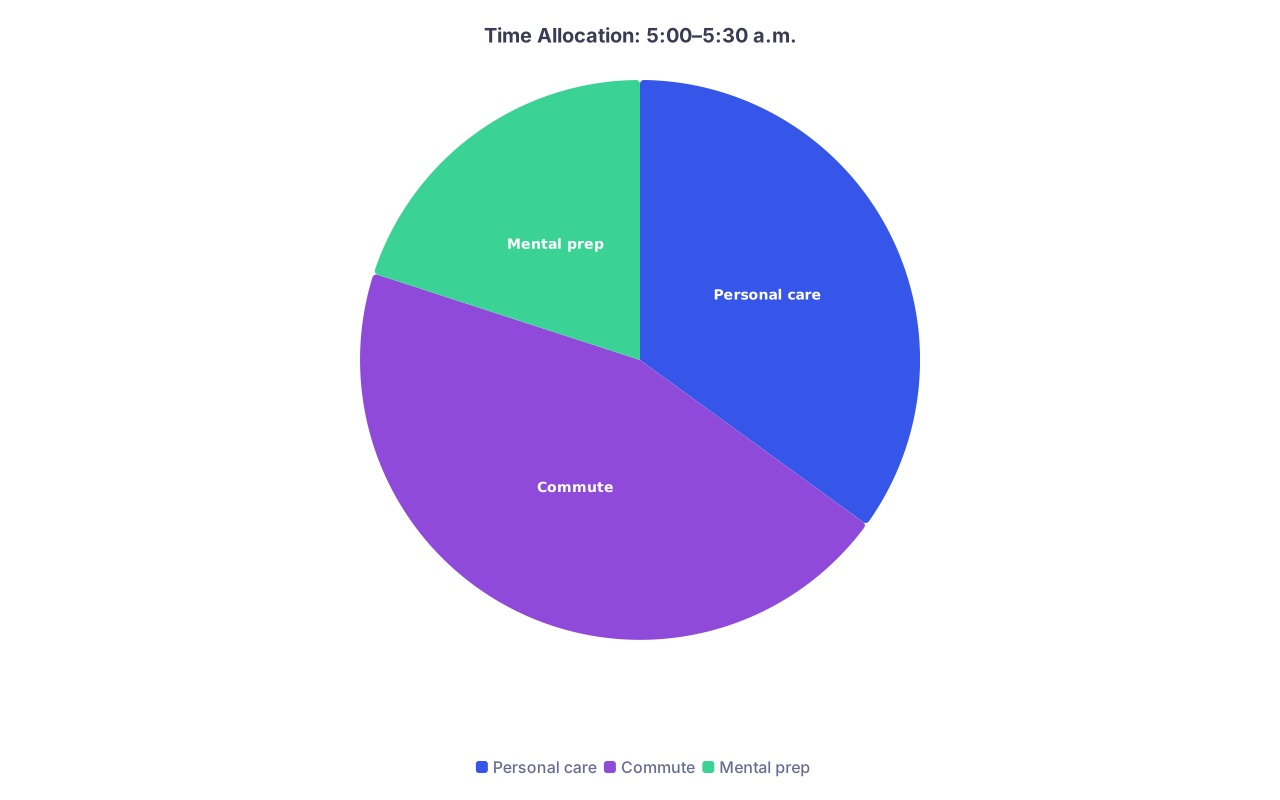
| Category | Value |
|---|---|
| Personal care | 35 |
| Commute | 45 |
| Mental prep | 20 |
5:30–6:00 a.m. – Arrive, Set Up, and Quick Chart Triage
At this point you should be: in the hospital, logged in, and looking at data, not wandering around looking for a pen.
5:30–5:35 – Physical setup
Walk in like you’ve done this a hundred times:
- Drop your bag in the team room/locker.
- Badge on if it isn’t already.
- Grab:
- Rounding list (printed if your team does that)
- Sign-out sheet template or notebook
- One black pen, one colored pen or highlighter
Open your workstation and launch:
- EHR (main)
- PACS/imaging viewer (if separate)
- Any pager or messaging system on your computer
5:35–5:45 – Generate or update your patient list
Your list is your life. If the list is a mess, your morning will be a mess.
At this point you should:
- Pull the most current patient census for your team.
- Compare to yesterday’s list:
- New patients? Mark them clearly.
- Discharges? Remove them.
- Transfers (ICU–>floor, floor–>ICU)? Flag those.
- Make sure for each patient you have:
- Room number
- Attending
- Code status
- Active problems (1–3 words each, no novels)
This is where you catch early:
- “Wait, who is this new admission?”
- “Why is this patient listed as ‘ICU’ but still on our list?”
5:45–6:00 – Overnight data scan: labs, vitals, events
Before you talk to night float, you should already have a rough idea of what happened.
Go patient by patient, but prioritize sickest first:
For each:
- Vitals:
- Any hypotension, tachycardia, new fever overnight?
- O2 requirements changed?
- I/Os:
- Massive positive or negative balance?
- Did they pee? (Especially if AKI or post-op)
- Labs:
- Morning BMP and CBC if already drawn:
- Potassium
- Creatinine
- Hemoglobin
- WBC
- Any notable trends:
- Sodium creeping up or down
- Worsening renal function
- Morning BMP and CBC if already drawn:
- Events:
- Any rapid response, codes, or significant nursing calls?
- New imaging done overnight?
You’re not solving problems now. Just flagging:
- “Needs K repletion”
- “Worse creatinine”
- “New fever, cultures last night”
Mark these directly on your list.

6:00–6:30 a.m. – Night Float Sign-Out: What To Ask and What To Ignore
At this point you should be: physically at sign-out, with your list printed or on screen, pen in hand, ready to write only what you’ll actually use.
6:00–6:05 – Get there on time and ready
You walk in before or exactly at the sign-out time. Not two minutes after, breathless, apologizing.
Have:
- Your patient list
- Sign-out area clearly separated:
- “To know” vs “To do”
- A simple format per patient:
- Yesterday’s plan
- Overnight events
- Pending items
6:05–6:25 – Structured, efficient sign-out
You’re not a court stenographer. Don’t write every word they say.
For each patient, at this point you should capture:
- Big overnight changes
- “Hypotensive at 3 a.m., got 1L bolus, now stable”
- “New chest pain, EKG and trops sent, normal”
- Outstanding studies or labs
- “Blood cultures pending from yesterday”
- “CT abdomen pending – ordered overnight”
- Time-sensitive tasks for the morning
- “Follow up K+ and replete before rounds”
- “Check post-transfusion CBC at 8 a.m.”
- “Touch base with family – they’ll be here ~9 a.m.”
What you can safely not write word-for-word:
- Re-hashing the admission story you already know
- Every normal vital overnight
- Non-actionable gripes (“Pt pulled off monitor again” unless it changes your plan)
Push back if sign-out is vague. Ask direct questions:
- “When was the last set of vitals?”
- “Did anyone actually lay eyes on him after that hypotension?”
- “Is the attending aware of this new issue?”
Your goal by 6:25:
- You know which 3–5 patients need your eyeballs first
- You know which labs or imaging you absolutely need to check again before rounds
- You don’t have 17 pointless notes cluttering your brain
6:25–6:30 – Triage your list post sign-out
Right after sign-out, do not chat, scroll, or wander. Take 5 minutes and rewrite your top priorities.
Make a simple 3-column system on your list:
| Patient Priority | Must Do Before Rounds | Can Do After Rounds |
|---|---|---|
| High | See in person | Call family |
| Medium | Check labs | Reconcile meds |
| Low | Skim vitals | Update note details |
By 6:30, you should know:
- Which patients you’ll see in person before 7:30
- Which charts you’ll review only (if that’s acceptable on your service)
- What absolutely cannot be forgotten
6:30–7:30 a.m. – Pre-Rounds: Bedside Plus Chart in a Tight Window
This hour is where interns drown. Too slow and you’ll miss patients. Too superficial and your attending will expose it in 10 seconds.
You’re going to rotate between:
- Targeted chart review
- Short bedside checks
- Quick task ordering (when obvious)
6:30–6:40 – Start with your sickest patient
At this point you should be at the bedside of the patient most likely to crash or be discussed first.
Before you walk in:
- Re-skim:
- Latest vitals
- Overnight MAR (what meds were actually given?)
- Any new labs you flagged
In the room, your pre-round script is tight:
- Introduce yourself if they’re new to you.
- 3–4 focused questions:
- “How are you feeling compared to yesterday?”
- “Any chest pain, trouble breathing, dizziness?”
- “Any new pain anywhere?”
- “Eating, drinking, peeing, pooping okay?”
- Quick focused exam based on their problem:
- CHF: JVP, lungs, edema, weight
- PNA: work of breathing, O2 sat, cough
- GI bleed: abdominal exam, mental status, any new blood
- Double-check:
- Lines/tubes/drains
- Foley still in? (If yes, does it still need to be?)
- Central lines needing removal?
Before you leave the room:
- Write one or two micro notes on your list:
- “Less SOB, still 2+ edema, on 3L O2”
- “Pain better, tolerating diet”
6:40–7:10 – Systematic pre-round on remaining patients
You’re not doing full H&Ps. You’re doing targeted updates.
Approach:
- High and medium-priority patients: in-person.
- Low-priority, stable patients:
- On some services, a robust chart review + nursing check may be enough some mornings. Ask your senior what’s acceptable. Don’t guess.
Per patient, aim for 3–5 minutes:
- Chart snapshot (30–60 seconds):
- Vitals trends (last 24 hours vs last 8 hours)
- I/Os
- New labs
- MAR: Did they get their meds? Any PRNs used (pain, nausea)?
- Bedside (2–3 minutes):
- One-line check-in: “How are you today compared to yesterday?”
- Focused symptom questions tied to their main issues
- Targeted exam only
- Quick orders if obvious (optional but efficient):
- If potassium is 3.1 and you already know the protocol, just order the repletion now.
- If patient needs PT/OT and it’s clearly overdue, place the consult.
You’re not writing full notes yet. You’re building:
- Today’s “one-liner” update in your head
- 2–3 key data points and decisions per patient
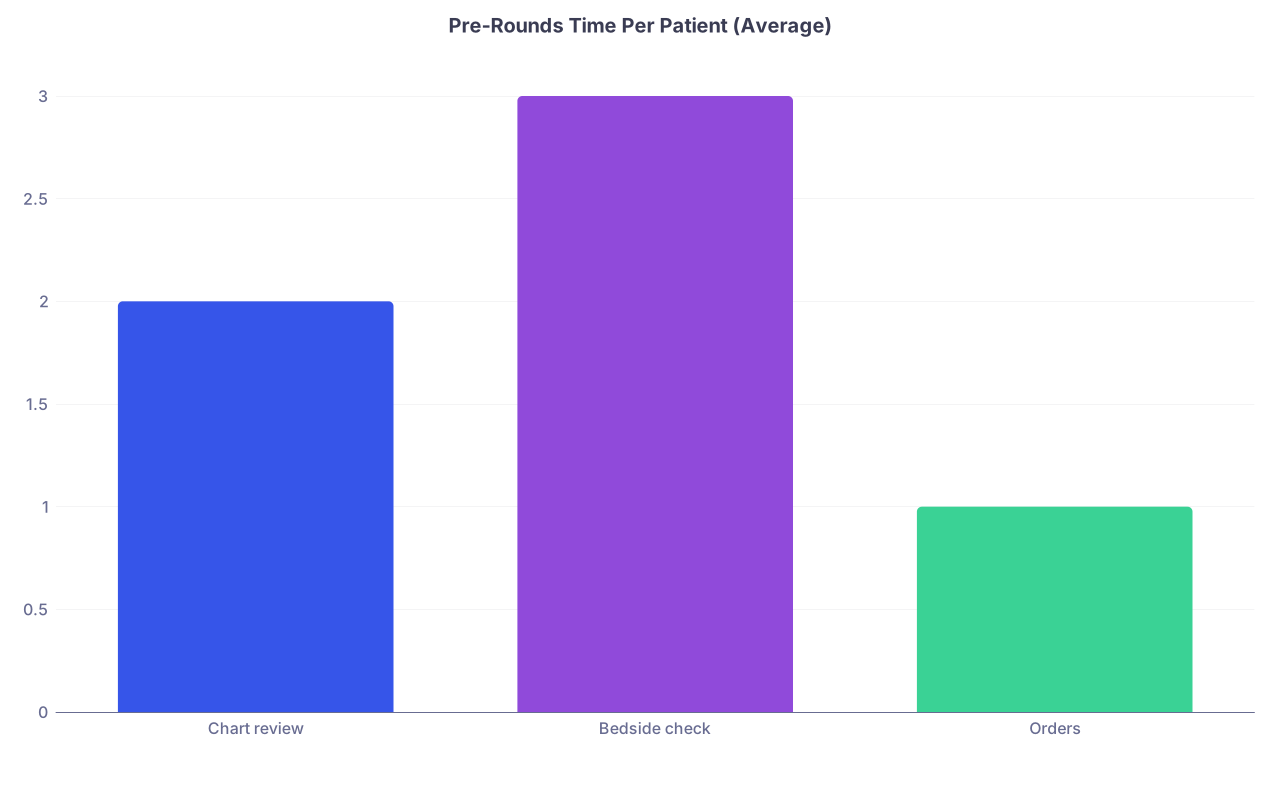
| Category | Value |
|---|---|
| Chart review | 2 |
| Bedside check | 3 |
| Orders | 1 |
7:10–7:25 – Quick documentation seeds and orders
By now, you should have seen the key patients. Use this pocket of time well.
At this point you should:
- Enter urgent orders you’ve been holding:
- Electrolyte repletion
- Diet changes
- Imaging that will delay disposition if you wait
- Drop “note skeletons”:
- Open each patient’s progress note and jot:
- Updated one-liner
- Today’s planned problem list headers
- Save as drafts. Don’t over-write now.
- Open each patient’s progress note and jot:
Example for your draft note:
- One-liner: “65M with HFrEF, HTN, admitted with acute decompensated HF, now improving diuresis.”
- Problems:
You’ll fill these in later. The structure saves you time post-rounds.
7:25–7:30 – Final pre-round huddle with yourself
Last 5 minutes before morning conference or rounds start:
- Re-scan your list:
- Any labs still pending that will change management?
- Any task you promised to do “right after sign-out” that you haven’t touched?
- Star or box:
- The 1–2 main points you want to say for each patient on rounds:
- “Net negative 1.5L, creatinine stable, plan to continue diuresis.”
- “Still febrile overnight, cultures pending, broadened abx.”
- The 1–2 main points you want to say for each patient on rounds:
You want to walk into rounds with a headline for each patient, not a random pile of facts.
7:30–8:00 a.m. – Handoff to Day, Conference, or Team Rounds
Different programs run this half-hour differently. Some:
- Have morning report at 7:30.
- Start attending rounds at 7:45.
- Or have a brief 7:30 “team pre-round huddle.”
Whichever flavor you have, here’s what you should be doing at this point.
If you have a 7:30 conference
Your priority: Don’t show up late, and don’t sit there panicking about your list.
Before you walk in:
- Make sure:
- All urgent labs are ordered.
- Any acutely unstable patient has been seen in person.
- Have your list with:
- One-line update per patient.
- Star next to anyone you’re really worried about.
During conference:
- You’re expected to be present, but if you get a page about one of your patients, you answer it.
- Quick mental game: For each patient, try to state in your head:
- “Today I care most about X” (e.g. “diuresis goal,” “controlling pain,” “weaning O2”)
If you go straight to team rounds
Here’s where good pre-rounding pays off.
For each patient you present between 7:30–8:00, you should be able to say:
- One-liner with today’s frame, not just admission story.
- Overnight:
- “No acute events” or
- “Had X, we did Y, now Z.”
- Key objective data:
- Vitals trend (don’t read every number)
- One-line labs: “Cr slightly up from 1.2 to 1.5,” or “Hgb stable around 8.5”
- Today’s plan in 2–3 bullets:
- “Continue IV diuresis, repeat BMP at 2 p.m., if Cr stable and net -1L, consider transitioning to oral tomorrow.”
You should not be:
- Flipping through the chart while talking.
- Seeing new problems for the first time in front of the attending.
- Surprised by a basic lab you could’ve checked at 6:00 a.m.
If you’re handing off to another day team (e.g., you’re night float ending at 8:00)
Different angle, same discipline.
Your 7:30–8:00 should be:
- Tight, structured sign-out back to day intern:
- Sickest first
- New admissions with clear one-liners and pending work-up
- Any patient you were worried about overnight, whether or not they “looked okay” at 5 a.m.
- No rambling stories. No mysteries.
- Clear red flags:
- “If BP trends down again, please re-evaluate early.”
- “If CT shows X, plan is Y – attending aware.”
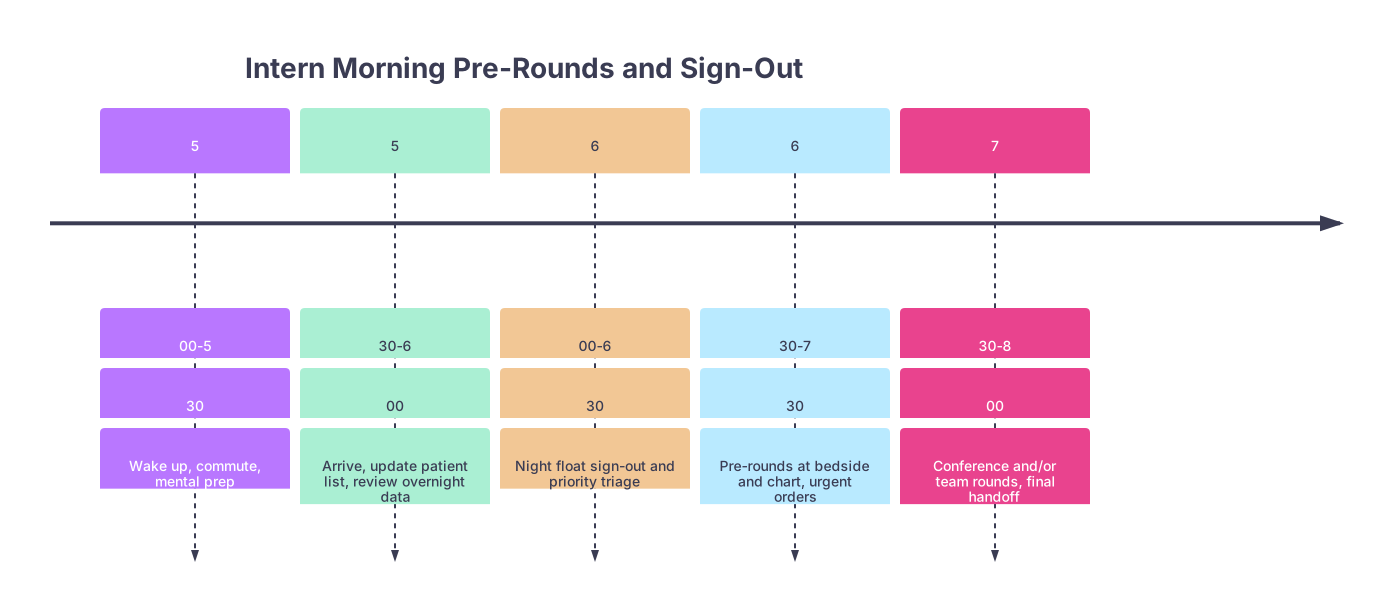
| Period | Event |
|---|---|
| 5 | 00-5 |
| 5 | 30-6 |
| 6 | 00-6 |
| 6 | 30-7 |
| 7 | 30-8 |
Putting It All Together: Your 5:00–8:00 a.m. Playbook
Strip away the noise and your morning comes down to three things:
- 5:00–6:00 a.m.: Get yourself functioning and get your data straight.
- 6:00–7:30 a.m.: Extract what actually matters from the night and the chart, then lay eyes on the patients who need you most.
- 7:30–8:00 a.m.: Communicate clearly – in sign-out, in conference, and on rounds – using the prep you already did, not scrambling to catch up.
You’ll tweak this routine for your hospital, your service, and your own brain. But the structure stays the same: wake, orient, receive, verify at the bedside, then present. Every single morning.