The biggest lie about July is that “it’ll be fine, you’ll figure it out as you go.” You won’t—unless you treat this month like a military operation.
You’re not just “starting residency.” You’re stepping into a system that assumes you can keep people alive at 3 a.m. with a pager screaming and three attendings asking why that order isn’t in yet.
So we’re going to walk July week by week, then day by day for the first few days. At each point: what you should be doing, watching for, and absolutely not doing.
Before July 1: 3–5 Day Pre-Game
At this point you should stop pretending “orientation week” will prepare you. It won’t. You prep yourself.
3–5 days before July 1, you should:
- Get your logins and access sorted:
- Test EHR login from home or a quiet spot
- Open order entry, lab review, imaging, discharge summary templates
- Find where order sets live (sepsis, chest pain, DKA, alcohol withdrawal, anticoagulation, insulin)
- Build quick tools:
- A one-page “intern brain” template (printable, or OneNote/Notion):
- Name, MRN, code status, PCP
- Diagnosis, active issues
- To-do, pending labs/imaging, discharge barriers
- Personal sign-out template with:
- One-liner
- Active problems
- “If/then” overnight instructions
- A one-page “intern brain” template (printable, or OneNote/Notion):
- Do a 2–3 hour targeted refresh:
- How to manage:
- Sepsis (fluids, cultures, antibiotics)
- Chest pain rule-out
- DKA/HHS
- Alcohol withdrawal (CIWA, benzo dosing)
- Hyper/hypokalemia
- And how to write:
- Admission H&P that doesn’t ramble
- Focused progress note (SOAP) in 10 minutes or less
- How to manage:
- Logistics:
- Buy:
- Two pens you like (you will lose one)
- Small notebook
- Portable phone charger
- Healthy-ish snacks you can eat in 30 seconds
- Sleep:
- Start shifting to your first month’s schedule (especially for nights)
- Buy:
At this point your goal is simple: don’t spend July 1 wrestling with the computer or hunting for a plug.
Week 1 (July 1–7): Survival Mode, Not Hero Mode
You’re new. Everyone knows. Your only job this week: be safe, predictable, and coachable.
July 1: The First 24 Hours

| Step | Description |
|---|---|
| Step 1 | Arrive Early |
| Step 2 | Find Team |
| Step 3 | Get List |
| Step 4 | Print or Build Intern Brain |
| Step 5 | Pre Round |
| Step 6 | Work Rounds |
| Step 7 | Write Notes and Orders |
| Step 8 | Check In With Senior |
| Step 9 | Sign Out |
At this point you should…
Before 6:30–7:00 a.m. (arrive 30–45 min early):
- Find:
- Workroom
- Your senior resident
- Charge nurse on your primary unit
- Get:
- Census list
- Your EHR list organized by service/attending/room
- Pick 2–4 patients to pre-round on (your senior will assign)
7:00–9:00 a.m.: Pre-rounds
Your checklist per patient:
- Scan overnight events:
- New vitals issues: fever, hypotension, O2 changes
- New labs: Hgb drop, K+, creatinine, lactate, troponin
- New imaging, consult notes
- Brief exam:
- Mental status
- Heart, lungs, abdomen
- Extremities (edema, perfusion)
- Lines, drains, catheters
- Update a tight one-liner:
- “65M with CHF and CKD admitted with volume overload, now diuresing, watching creatinine and oxygen.”
9:00–noon: Work rounds
At this point:
- Do not try to impress with long presentations.
- Do:
- State the one-liner
- Hit overnight changes, today’s plan, disposition
- Ask: “For clarity, today my priorities are X, Y, Z—anything else you want me to add?”
Write down exact orders and tasks. Don’t rely on memory.
Noon–late afternoon: Notes and orders
Your rule: orders first, documentation second (safely).
Order priority:
- Anything that affects stability (oxygen changes, NPO, antibiotics, IV fluids, pressors if ICU, etc.)
- Time-sensitive stuff:
- STAT labs
- Imaging with cutoff times
- Consults that need to see patient before 5 p.m.
- Routine adjustments (home meds, PT/OT, discharge planning)
Then your notes:
- Keep templates simple:
- Problem-based plans for complex patients
- Auto-text abbreviations for common lines (e.g., warfarin management, insulin sliding scales)
- Once you finish a note:
- Skim vitals/med list again before signing. Catch contradictions.
Your sign-out should always include:
- One-line summary
- Active issues
- What you’re worried about
- Explicit “if/then” statements:
- “If systolic < 90, give 500cc LR and recheck in 30 minutes, then call me/senior.”
- What not to do (e.g., “Don’t give more fluids, severe HFrEF, call senior first.”)
Before you leave: ask your senior, “Anything I can improve for tomorrow?”
Rest of Week 1: Build Systems
From July 2–7, at this point you should shift from pure panic to pattern-building.
Daily goals for Week 1:
Mornings:
- Aim to finish pre-rounding with notes jotted by:
- 8:00 a.m. on wards
- Earlier for ICU/surgical
- Build a pre-rounding routine:
- Labs/vitals → see patients → update plan → star/highlight urgent issues
- Aim to finish pre-rounding with notes jotted by:
Afternoons:
- Start writing notes earlier:
- Draft assessment/plan as you round
- Fill details between tasks
- Learn one EHR trick per day:
- Smart phrases
- Bulk sign orders
- Best flowsheet for I/Os
- Start writing notes earlier:
Communication:
- Touch base with your senior at:
- Start of day: priorities
- Just after rounds: clarify your task list
- Mid-afternoon: status check and review discharge plans
- Touch base with your senior at:
By the end of Week 1 you should:
- Know:
- The names of key nurses on your primary unit
- How to page RT, pharmacy, and major consult services
- Have:
- A stable intern brain system (paper or digital)
- A simple daily packing list that lives in your bag:
- ID, stethoscope, pens, charger, snacks, water bottle
Week 2 (July 8–14): From Reactive to Slightly Proactive
Now you’ve seen a few codes, some bad sign-outs, and at least one admission that made you sweat. This week is about tightening up and getting ahead.
At this point you should clean up your workflow
- Target:
- Pre-rounding 1–2 minutes per stable patient, 4–6 minutes for complex ones
- Pre-round focus:
- Stop rewriting the entire story daily
- Update only what changed:
- New problems
- Trend of key labs/vitals
- Today’s decisions and barriers to discharge
During rounds:
- Practice:
- Saying your assessment before your whole plan:
- “I think his dyspnea is improving but he’s still volume overloaded. Today I recommend…”
- Pre-empting likely questions:
- “We ordered TTE, pending.”
- “Troponin is flat, EKG unchanged.”
- Saying your assessment before your whole plan:
- Take notes in real time:
- Write orders inline with each problem
- Use checkboxes or asterisks for tasks
Afternoons:
- Start batching:
- Do similar tasks together:
- All new med recs in one sprint
- All discharge med recs and summaries together
- All calls/pages to consults back-to-back
- Do similar tasks together:
- Block 20–30 minutes mid-afternoon:
- Hard stop to:
- Review each patient’s chart end-to-end
- Look for missed abnormal labs
- Confirm all time-sensitive orders are placed
- Hard stop to:
Clinical skills you should sharpen in Week 2
Pick one focus per day:
- Recognizing and responding to:
- Sepsis
- New hypoxia
- Acute chest pain
- Sudden delirium/agitation
- Practice a “90-second stabilization script”:
- Read vitals, O2, mental status
- Check IV access, airway, breathing
- Place immediate orders:
- O2
- Basic labs
- EKG if chest pain
- Bolus if hypotensive (or call senior if CHF/renal)
- Then call your senior with:
- One-liner
- Vitals trend
- What you’ve already done
Week 3 (July 15–21): Efficiency and Boundaries
At this point, the easy trap is this: you’re slightly less terrified, so you start saying yes to everything. Bad move. You need boundaries before you burn out.
Workflow upgrades this week
Mornings:
- Aim to finish:
- Pre-rounding + basic note skeletons before rounds start
- For each patient:
- Decide before rounds:
- “If stable, we can wean X.”
- “If labs are unchanged, we can discharge.”
- This makes you look prepared instead of passive.
- Decide before rounds:
Afternoons:
- Protect time for:
- 15–20 minute late-afternoon “safety check”:
- Re-scan overnight orders and MAR:
- Any stat orders not resulted?
- Any missed critical lab alerts?
- Re-scan overnight orders and MAR:
- Discharge quality:
- Check:
- Follow-up appointments actually scheduled
- Prescriptions sent to correct pharmacy
- Clear instructions on anticoagulation, insulin, diuretics
- Check:
- 15–20 minute late-afternoon “safety check”:
Evenings:
- Work on leaving on time when appropriate:
- Hand off non-urgent tasks
- Ask your senior:
- “I have X and Y left—what must I finish before I leave?”
Week 4 (July 22–31): Owning Your Role, Not the World
Now you’re capable of doing harm and good quickly. That’s power. This week is about consistency and not getting sloppy.
At this point you should be…
- Anticipating:
- Who’s going to crump tonight?
- Who will bounce back if you discharge too early?
- Who needs palliative care or family meeting scheduled?
- Tightening your sign-out:
- Fewer, clearer words
- Explicit red flags and thresholds
- Refining your communication:
- With nurses:
- “If X happens, please do Y and page me.”
- With consultants:
- Clean, concise consult questions:
- “We’re asking GI to evaluate for upper GI bleed source; patient is hemodynamically stable but Hgb dropped from 9 to 7.8.”
- Clean, concise consult questions:
- With nurses:
Typical July Intern Month: Macro Timeline
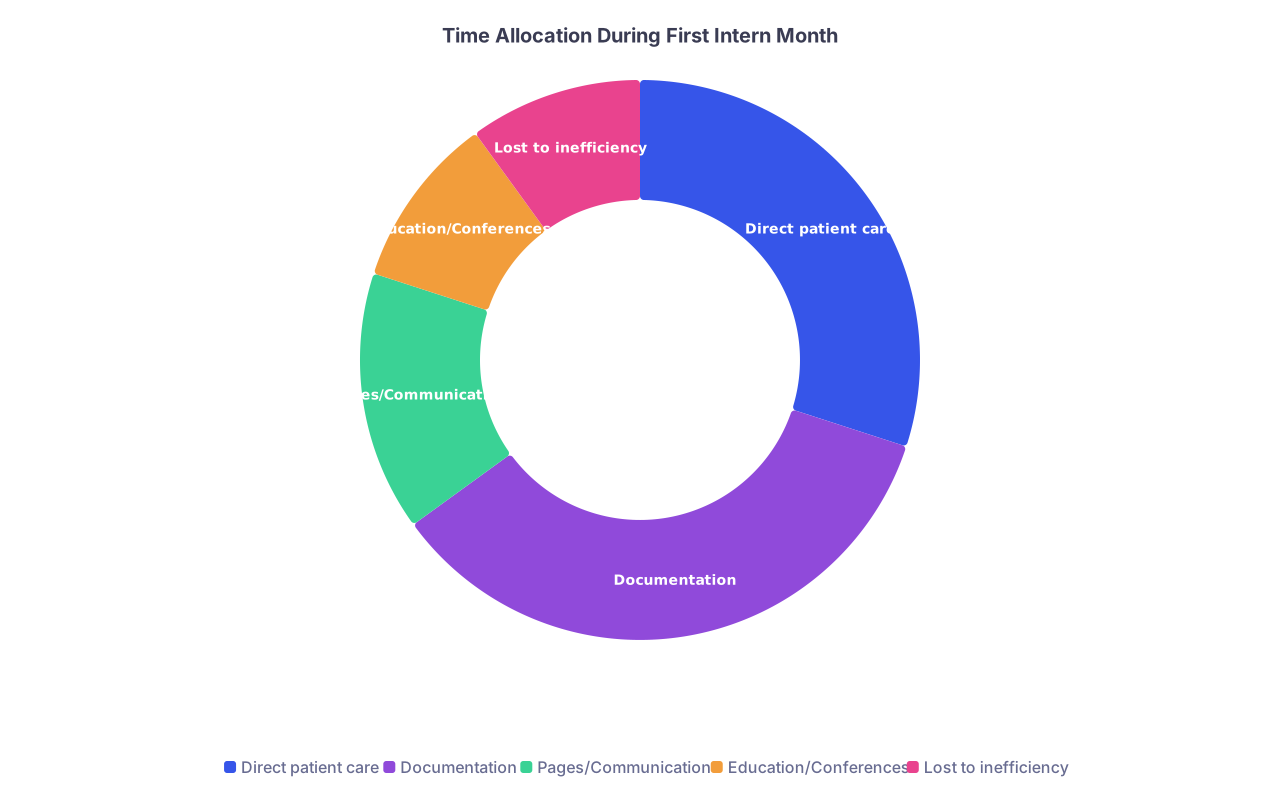
| Category | Value |
|---|---|
| Direct patient care | 30 |
| Documentation | 35 |
| Pages/Communication | 15 |
| Education/Conferences | 10 |
| Lost to inefficiency | 10 |
Your goal is to drive that “lost to inefficiency” slice down week by week.
Nights in July: A Separate Beast
If you have nights during July, adjust your expectations. Nights are where you’ll feel the most incompetent and the most alone.
First night shift: at this point you should…
- Arrive early:
- Get a thorough sign-out from the day team
- Ask specifically:
- “Who are you worried about?”
- “Who might need escalation if labs go the wrong way?”
- Structure your shift:
- First hour:
- Meet charge nurse
- Check on the two sickest patients in person
- Through the night:
- Triage pages:
- Red: vitals, chest pain, acute changes → immediate
- Yellow: pain, nausea, agitation → soon, but can cluster
- Green: routine stuff → batch every 15–30 minutes if safe
- Triage pages:
- First hour:

| Step | Description |
|---|---|
| Step 1 | Page Received |
| Step 2 | Go see patient now |
| Step 3 | Batch with other tasks |
| Step 4 | Address within 15 min |
| Step 5 | Vitals unstable? |
| Step 6 | New chest pain or neuro change? |
| Step 7 | Routine request? |
Your mantra at night: Don’t practice medicine you don’t understand. Call your senior.
Key Relationships to Build in July
You do not survive July alone. At this point you should be deliberately investing in:
- Senior residents:
- Be honest:
- “I don’t know how to do this.”
- Ask for:
- Feedback once a week:
- “What’s one thing I should stop, start, or continue doing?”
- Feedback once a week:
- Be honest:
- Nurses:
- Learn name + preferred communication style
- When you’re not slammed, go see the patient before making a phone order if they’re worried
- Pharmacists:
- Ask:
- “Can you help me sanity-check this anticoag/insulin/pain regimen?”
- They will save you from at least one major dosing error this month.
- Ask:
Minimal Daily Checklist: What You Should Hit Every Day
| Time | Focus |
|---|---|
| Pre-shift | Login check, patient list updated |
| Morning | Pre-round, identify sickest patients |
| Midday | Orders in, high-yield notes started |
| Late afternoon | Discharge work, safety re-check |
| Pre-sign-out | Update to-do, red flag handoff |
Tape a version of that inside your locker or on your workstation.
Emotional Reality Check: What’s Normal in July
You will:
- Feel stupid daily
- Go home replaying conversations where you sounded clueless
- Miss something minor and feel like you should not be a doctor
All standard.
What’s not acceptable:
- Hiding mistakes
- Avoiding your senior out of embarrassment
- Letting exhaustion push you into cutting corners that risk safety
If you feel yourself sliding into numbness or dread every day, talk to someone early: a chief, PD, mentor, therapist. July is heavy; waiting until November doesn’t make it easier.
Micro-Timeline: Your First Week, Compressed
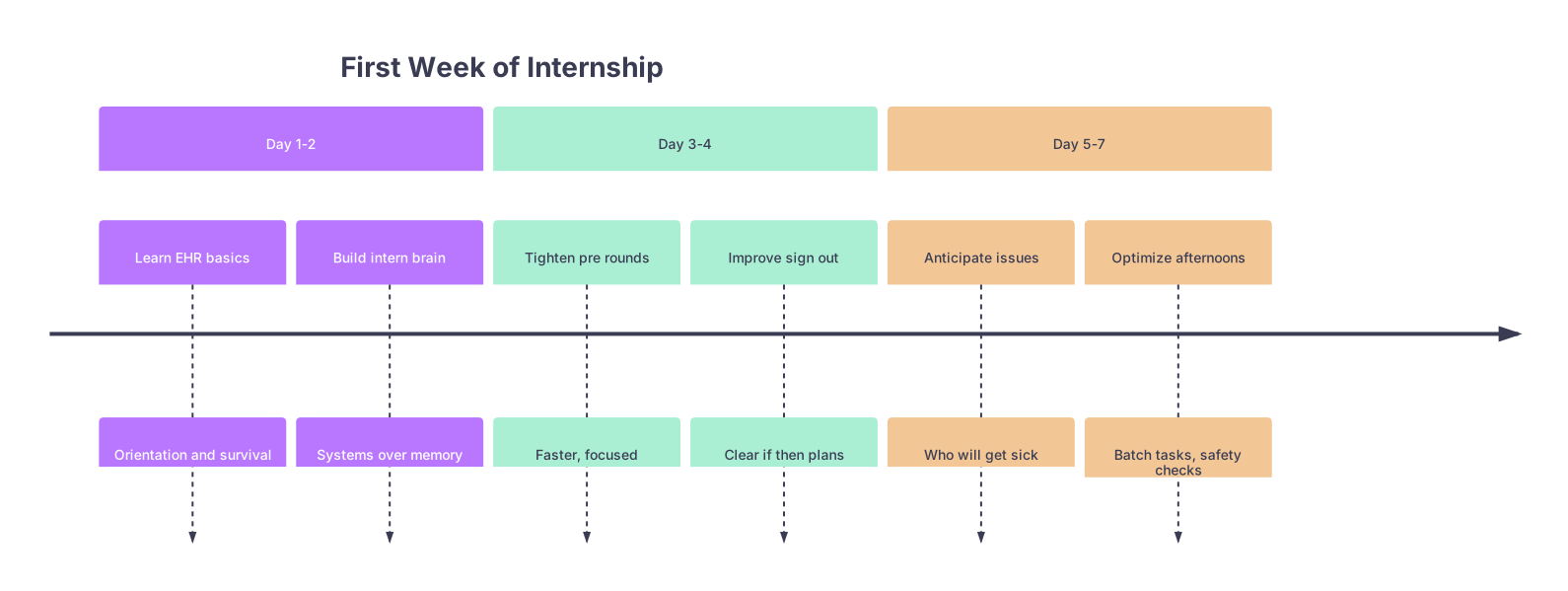
| Period | Event |
|---|---|
| Day 1-2 - Learn EHR basics | Orientation and survival |
| Day 1-2 - Build intern brain | Systems over memory |
| Day 3-4 - Tighten pre rounds | Faster, focused |
| Day 3-4 - Improve sign out | Clear if then plans |
| Day 5-7 - Anticipate issues | Who will get sick |
| Day 5-7 - Optimize afternoons | Batch tasks, safety checks |
Three Tiny Habits That Make July Survivable
The 60-second pre-leave check (every day):
Before you walk out:- Reopen your patient list
- Scan:
- New labs
- New vitals
- Incomplete orders
- Ask: “Would I be embarrassed if the night team discovers X in 2 hours?”
The one-line reflection (after shift):
- Write one sentence about the day:
- “Today I learned not to ignore mild tachycardia in a septic patient.”
- Over time, this becomes your real education.
- Write one sentence about the day:
The weekly ask:
- Once a week, tell your senior:
- “I want to get better at X (notes, communication, triage). Can you watch me once and give feedback?”
- Once a week, tell your senior: