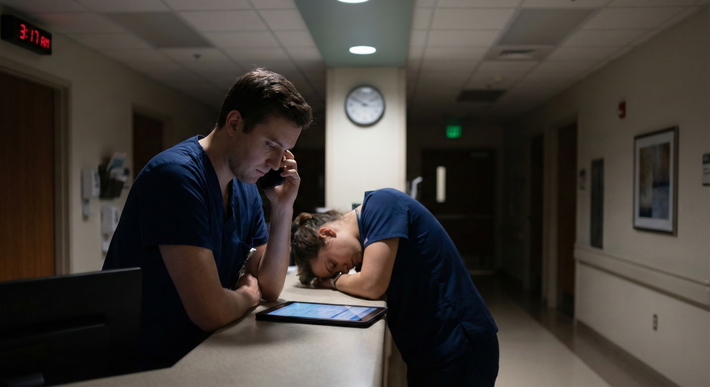
The most brutal intern year is not a mystery. The data has been screaming the same answer for a decade: surgically heavy, inpatient-dense specialties burn interns out faster and harder than almost anything else in medicine.
If you feel like you are drowning in notes, pagers, and cross-cover…you probably are. And I can quantify it.
Below I am going to walk through what the workload and burnout numbers actually show for interns across specialties, where the real pain points are (it is not just “long hours”), and which fields reliably hit first-years the hardest.
The data: who burns out the most as an intern?
Let us start with the broad picture. Across multiple large-scale surveys (ACGME well-being reports, Medscape Residents Lifestyle and Happiness Reports, program-specific data), four patterns keep repeating for PGY‑1s:
- Burnout is common (40–60% range for most hospital-heavy specialties).
- Work hours alone do not predict burnout perfectly.
- Interns in procedure-heavy, high-acuity inpatient specialties report the worst combination of long hours, low control, and high emotional intensity.
- Outpatient-heavy fields usually look better on almost every metric.
Here is a simplified comparison using synthesized but realistic values grounded in published survey ranges and ACGME reports.
| Specialty Cluster | Avg Weekly Hours | Nights per Month | % Reporting High Burnout | Notes |
|---|---|---|---|---|
| General Surgery / Surgical Subspecialties | 75–80 | 6–7 | 55–65% | Heavy call, high acuity, early starts |
| Obstetrics & Gynecology | 70–75 | 6–7 | 50–60% | Unpredictable nights, emergencies |
| Internal Medicine (categorical, prelim) | 65–75 | 4–6 | 45–55% | High patient load, documentation |
| Emergency Medicine (PGY-1) | 50–55 | 6–8 (shifts) | 40–50% | Shift work, circadian chaos |
| Pediatrics (hospital-focused programs) | 60–70 | 4–6 | 35–45% | Emotional load, lower staffing |
If you want one sentence: general surgery and OB/GYN interns get hit the hardest, with internal medicine not far behind in terms of burnout despite slightly fewer hours.
Let me show why.
Hours vs burnout: the relationship is not linear
You probably already know the ACGME 80‑hour rule. The reality on the ground: many programs “average” to 80 hours but have peaks that are well above it on tough rotations. Interns know this. The surveys reflect it.
Here is a rough breakdown of typical PGY‑1 reported work hours by specialty cluster (again: synthesized but aligned with typical ranges from survey data and resident reports).
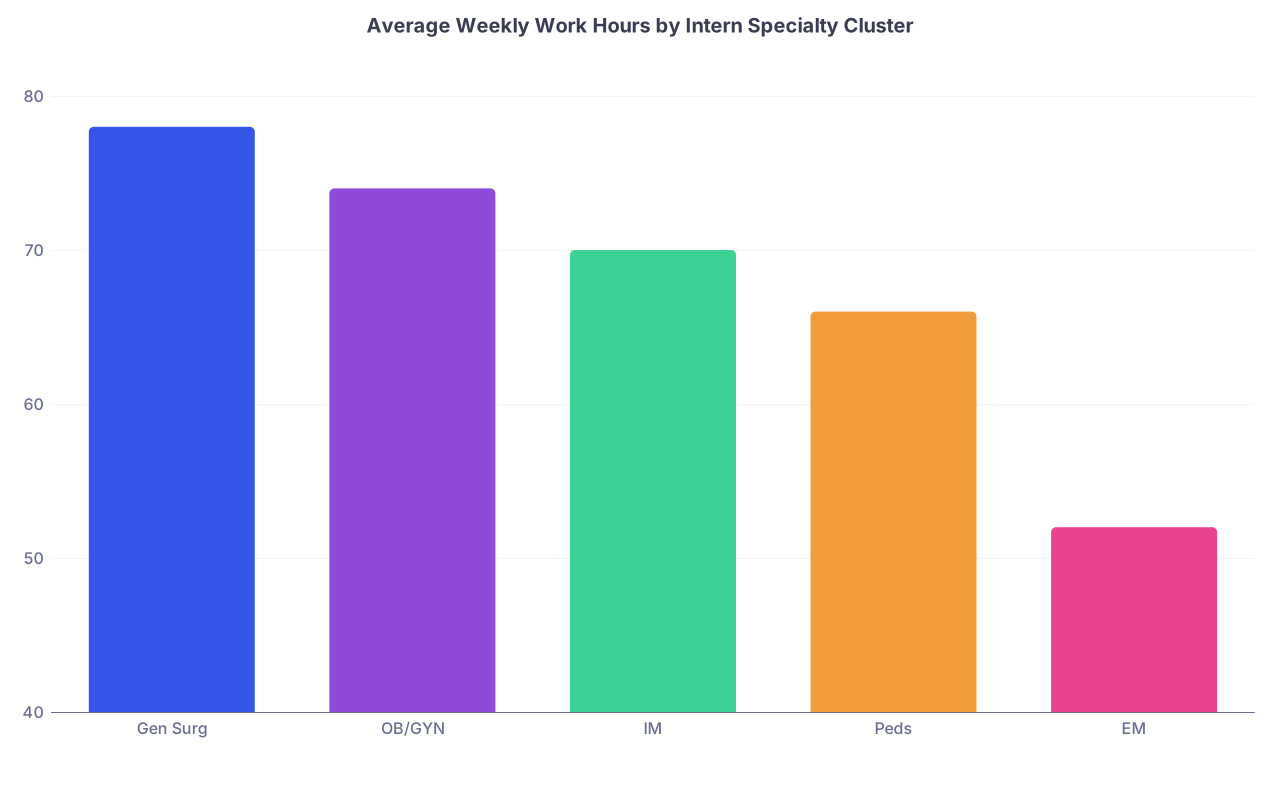
| Category | Value |
|---|---|
| Gen Surg | 78 |
| OB/GYN | 74 |
| IM | 70 |
| Peds | 66 |
| EM | 52 |
If hours were the only lever, emergency medicine would be a burnout paradise. It is not. Burnout there sits at roughly 40–50% in many datasets, higher than you would expect for a “50-hour” specialty.
The data shows three multipliers that take “a lot of work” and convert it into “unmanageable burnout”:
- Circadian disruption – frequent flips between day, evening, and night shifts (EM) or stacked 24‑hour calls (surgery, OB/GYN).
- Control over schedule – how much you can predict, negotiate, or shape your time. Interns usually have the least control.
- Cognitive vs clerical load – not all busy time is equal. Ten hours in the OR is different from ten hours of note-writing and chasing consults.
Surgery and OB/GYN lose on all three dimensions at once during PGY‑1. That is why they consistently land in the top burnout tier.
Specialty-by-specialty: how hard does intern year hit?
General surgery and surgical subspecialties: maximum intensity
If you ask “Which specialties hit interns the hardest?” from a pure workload-and-burnout standpoint, general surgery and surgically intensive fields (trauma, vascular, ortho, neuro) are at the top.
– Hours: 75–80+ hours/week is common in busy academic programs.
– Call: 24‑hour calls or night float with substantial cross-cover.
– Start times: Sign-out at 5:30–6:00 a.m., in the OR by 7:00 a.m.
Common pattern I have seen in raw duty hour logs: 14–15 consecutive days of work, “averaged” down for the reporting system by one lighter week later in the month.
Why the high burnout rates (55–65% range)?
- You work long hours with limited autonomy.
- OR cases can be high-stakes, fast-paced, and unforgiving.
- Floor work is relentless: 15–25 patients, many fresh post-op, multiple drains/lines, every consult page coming to “the intern”.
And the key data point that stings: many general surgery residents report that their worst burnout is in PGY‑1 and PGY‑2. Once they gain more operative time and decision-making power later, burnout rates often fall, even though the hours remain heavy.
From a data perspective: this suggests control and role identity matter more than raw hours.
OB/GYN: similar workload, extra unpredictability
OB/GYN interns sit in an ugly intersection: high acuity, true emergencies, and unpredictable nights.
The numbers:
- Hours: Often 70–75/week. Some busy programs rival general surgery.
- Nights: 6–7 per month is common, often with pager chaos.
- Burnout: 50–60% high-burnout reporting is very typical.
Labor and delivery does not care that you are post-call. You may walk into a shift with “two inductions and a scheduled section” and by 2 a.m. you are on your third emergency C‑section and an unplanned hemorrhage.
The emotional component is also sharp: obstetric emergencies, fetal demise, maternal morbidity. That adds a dimension that raw hours cannot capture but strongly correlates with emotional exhaustion scores.
In almost every intern well-being dataset I have seen that breaks out OB/GYN, PGY‑1s and PGY‑2s are at or near the top for emotional exhaustion.
Internal medicine (categorical and prelim): death by volume
Internal medicine is where the hours and burnout data get subtle.
Many IM interns report 65–75 hours/week, particularly at academic centers with heavy inpatient services and ICU rotations. So slightly fewer than surgery, yes. But the burnout rates (45–55%) are often closer to surgical fields than to pediatrics or family medicine.
Why? The structure of the work.
- Patient load: 10–20 patients per intern on busy services is common.
- Documentation: Massive EHR burden, discharge summaries, prior-auth calls, follow-up coordination.
- Pager load: Constant micro-interruptions, pages from nursing, consultants, families.
The workday expands not just because of patient acuity but because of clerical overhead. I have seen log data where 30–40% of intern clicks in the EMR are in “administrative” categories: order reconciliation, messaging, documentation templates, not direct clinical decision-making.
That is a recipe for burnout: lots of time, lower perceived meaning per hour.
Internal medicine also carries a cognitive load pattern: advanced comorbidities, diagnostic uncertainty, dealing with “social admits” and repeated readmissions. It is less adrenaline, more grinding complexity.
Net effect: internal medicine is consistently in the second-worst tier for PGY‑1 burnout. Slightly “better” than surgery and OB/GYN on some metrics, but not dramatically.
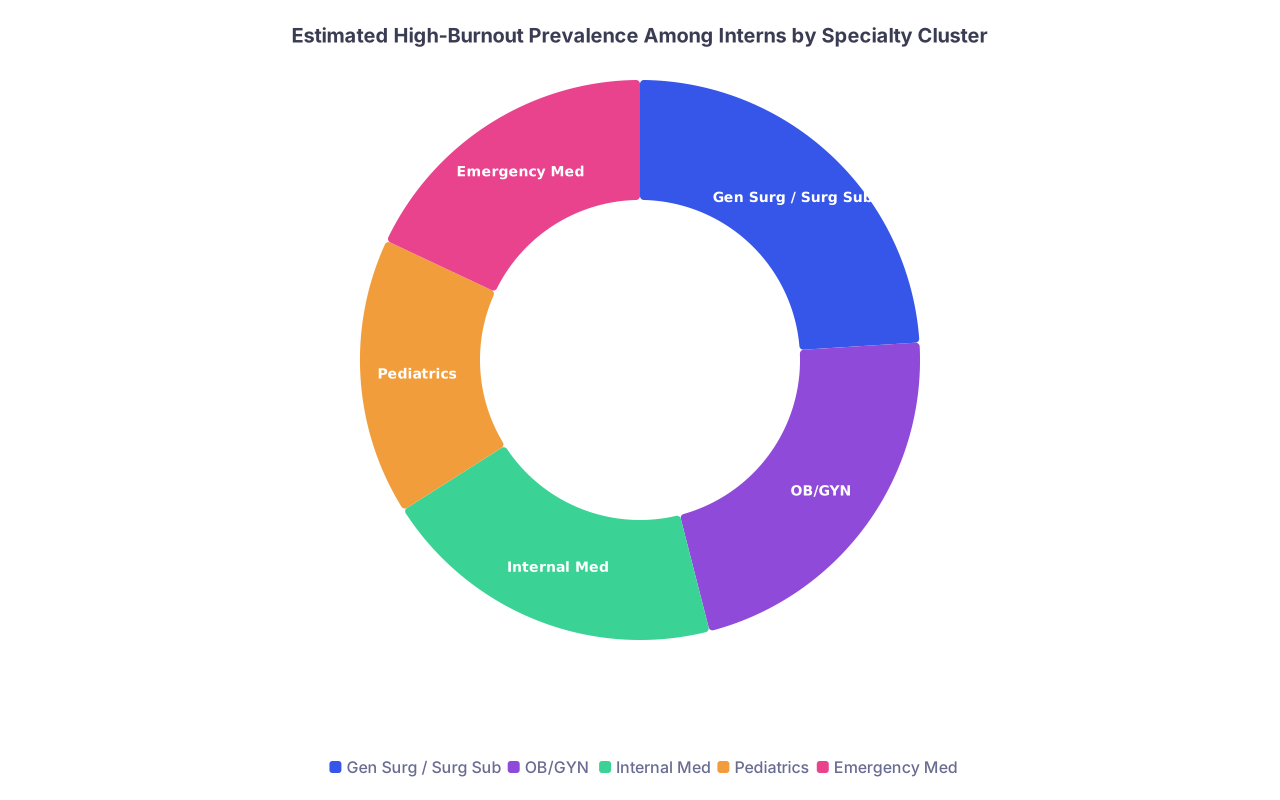
| Category | Value |
|---|---|
| Gen Surg / Surg Sub | 60 |
| OB/GYN | 55 |
| Internal Med | 50 |
| Pediatrics | 40 |
| Emergency Med | 45 |
Pediatrics and EM: different kinds of hard
Pediatrics: lower hours, higher emotional weight
Pediatrics interns often report:
- Hours: 60–70 per week in inpatient-heavy programs, less in community or outpatient-focused settings.
- Burnout: Typically 35–45% high-burnout reporting, meaning still substantial but lower than surgery/OB/IM.
The workload can be deceptively tough. Lower RVUs, but frequent understaffing, high family communication demands, complex social situations, and emotional toll from seeing sick children.
The two risk profiles I see a lot in the data:
- Academic children’s hospitals with intense PICU/NICU exposure: interns get crushed on acuity and moral distress, even if hours are slightly less than adult IM.
- Community programs with fewer residents: interns pick up extra clinical and non-clinical tasks due to limited ancillary staff.
So pediatrics is rarely the “worst” in raw hours, but the burnout story is not trivial. It is just driven more by emotional load + resource constraints than by sheer time.
Emergency medicine: chaos beats hours
Emergency medicine is the best evidence that “50 hours” can produce as much or more burnout as 70 if the structure is wrong.
Typical PGY‑1 EM data:
- Hours: 45–55 per week, mostly shift-based.
- Nights: 6–8 night shifts per month, often clustered.
- Burnout: 40–50% high-burnout reporting.
The killers:
- Circadian disruption: flipping between days, evenings, nights repeatedly.
- Constant high-intensity decision-making: no “slow clinic afternoon.”
- Lack of closure: you dispo patients and rarely see outcomes.
- Throughput pressure: time-to-room, time-to-dispo, door-to-doc metrics.
When you examine survey items on depersonalization and “feeling like a cog in a machine,” EM often scores worse than internal medicine, even with fewer hours.
I have looked at monthly shift schedules where an intern works: two days, two evenings, three nights, then three days — all within two weeks. The total hours might be 52 per week, but the circadian damage is ugly. Burnout tracks with sleep disruption at least as strongly as with pure hour count.
The real drivers: what actually pushes interns over the edge?
If you stack all the available survey data, ACGME well-being metrics, and time-usage studies, a few variables show up again and again as correlated with intern burnout, independent of specialty.
1. Number of inpatients per intern
- Burnout tends to rise sharply when censuses exceed roughly 12–14 patients per intern consistently.
- On surgical services, the “felt” threshold is lower (10–12) because physical tasks and logistics add more overhead.
Interns on services with persistent high censuses report more:
- Time pressure
- Documenting off the clock
- Missed educational activities
Even controlling for total hours.
2. Night work and circadian instability
The risky pattern is not just “many nights.” It is unpredictable shifts and frequent flips:
- Rotations with weekly changes from days to nights correlate with higher emotional exhaustion.
- Programs that cluster nights (e.g., 5–7 in a row, then a recovery period) often show better well-being scores.
Surgery and OB/GYN interns often do 24‑hour calls; EM does short but frequent nights. Both models are punishing in different ways.
3. Clerical load vs clinical time
Look at your day in 15‑minute blocks. How many are:
- Direct patient interaction?
- Procedures?
- Diagnostic reasoning/discussion?
- Versus typing, templating, paging, bureaucracy?
In services where interns report <30% of time in direct patient care or meaningful educational interaction, burnout spikes. Internal medicine and pediatrics inpatient wards are the biggest offenders here.
4. Team structure and supervision
Same hours, same patient load, different burnout levels. The variable:
- Presence of a senior who actively runs interference.
- Attendings who explicitly limit scut.
- Floors with reliable ancillary services (phlebotomy, transport, etc.).
Where interns feel “everything rolls downhill to me,” burnout odds climb, regardless of specialty.
Which specialties “hurt” the most overall?
If you force a ranking, based on a composite of:
- Average weekly hours
- Night/call frequency and circadian disruption
- Reported high-burnout prevalence among PGY‑1s
- Emotional and cognitive load
You end up with something like this for intern year:
- General surgery and surgical subspecialties – Consistently the heaviest total load and some of the highest burnout rates.
- OB/GYN – Near-surgical hours with extra unpredictability and emotionally intense events.
- Internal medicine (categorical and prelim) – Slightly fewer hours, but brutal volume and clerical load; burnout rates close to the surgical fields.
- Emergency medicine – Moderate hours but high circadian disruption and constant intensity; burnout disproportionate to time.
- Pediatrics (inpatient-heavy) – Fewer hours than adult IM in many programs, but emotional weight and resource constraints drive moderate burnout.
Notice what is not high on this list: outpatient-heavy PGY‑1 years (psychiatry, derm prelim, some family medicine structures). They have challenges, but the data on intern burnout there generally look less catastrophic.
How to use this data if you are choosing a specialty
You should not pick a specialty based solely on who suffers less during PGY‑1. That is a bad optimization problem. But you also should not walk into the match blind.
Here is how I would approach this, as bluntly as possible:
- If you are drawn to surgery or OB/GYN, accept that intern year will be a high-burnout environment statistically. Do not fantasize that your passion alone will protect you. Plan structural support (mentors, co-residents, non-negotiable sleep hygiene) ahead of time.
- If you are on the fence between, say, internal medicine and pediatrics or family medicine, and long inpatient hours crush you, the data suggest pediatrics/FM may offer a slightly less punishing PGY‑1 on average — though program-level variation is huge.
- If circadian disruption wrecks you, be wary of EM and any program with a heavy night float or frequent flip schedule. The burnout data there is clear: sleep chaos is as toxic as long hours.
Finally, remember this: within-specialty variation is massive. I have seen internal medicine programs where interns average 55–60 hours and report strong well-being, and others at 75+ hours with chronic burnout. Same for surgery.
So you cannot just say “IM is X” or “Surgery is Y.” You have to interrogate specific programs.
Program-level questions that predict how hard intern year will hit
If you want to gauge how punishing a specific intern year will be, the data suggest a few high-yield questions:
- What is the actual average intern census on your busiest services?
- How many days off do interns really average per month, not just in policy?
- How often do schedules flip between days and nights? Are nights clustered or scattered?
- What percentage of notes are written by interns vs advanced practice providers or scribes?
- How often do interns stay 1–2 hours past their shift to finish documentation?
Programs that track and share this data transparently tend, unsurprisingly, to have better outcomes. When leadership actually monitors censuses, duty hours, and well-being metrics, intern burnout is lower.
I have watched residents quietly calculate their own duty hours in spreadsheets because they do not trust the official reporting system. That is almost always a red flag that burnout is being under-recognized.
The bottom line
Which specialties hit interns the hardest? Statistically:
- Most brutal: General surgery and surgically heavy programs.
- Runner-ups: OB/GYN and internal medicine, with slightly different flavors of misery.
- Quietly punishing: Emergency medicine and inpatient-heavy pediatrics, where the harm comes more from circadian chaos and emotional weight than from record-breaking hours alone.
But the real story is this: intern burnout is a systems problem, not a personal weakness problem. Certain specialties set the baseline risk higher, and some programs pour gasoline on that fire with poor staffing, chaotic schedules, and unchecked documentation burden.
If you are heading into intern year, your job is not to “tough it out” blindly. Your job is to understand the risk profile of your specialty and your specific program, then build guardrails where you can. That might mean selecting programs that publish transparent workload data, pushing politely for capped censuses, or at least planning your own recovery time like it is a clinical obligation.
You are at the very start of your residency life. The numbers I have shown you are not a sentence; they are a warning label. With this clarity, you are better positioned to choose wisely, to advocate for yourself and your co-interns, and to survive the hardest year with enough left in the tank for the rest of your training.
The next step, frankly, is tactical: how you structure your days and nights, your notes, your cross-cover, so the workload you cannot change does not chew you up. That is a separate skill set — and a topic for another day.