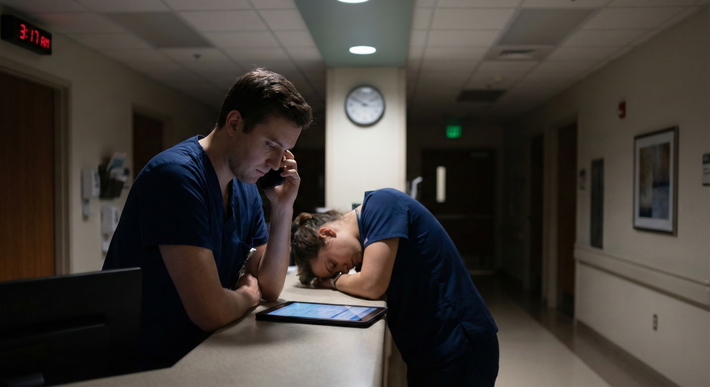
It’s 7:45 a.m. The night float is signing out. You’re the intern who just had the worst shift of your short career. Missed pages, slow admits, a near-miss on insulin, an attending who had to bail you out on a crashing patient. You can feel the disappointment in the room, even if nobody says it directly.
You walk out of the workroom to go home. You hear the door close behind you.
Now what happens?
Let me tell you exactly what happens. Because I’ve been in that room. On the faculty side. On the “we need to talk about this intern” side. And what gets said in those 10–20 minutes after you leave can either quietly kill your reputation for months…or surprisingly protect it.
This is the stuff no one ever explains to you. They just tell you “work hard, be professional.” That’s not enough. You need to know what they actually say and what they really mean.
The First 5 Minutes: The Unfiltered Debrief
Right after a bad night, the first person who speaks is almost always the senior resident or night float.
It starts blunt.
- “Last night was rough with [your name].”
- “We can’t have more nights like that.”
- “I had to step in on three separate things.”
Faculty and seniors do a vent then analyze pattern. First the vent, then the narrative.
The vent part is raw. I’ve heard:
- “He doesn’t seem to understand he’s the doctor.”
- “She disappears when things get busy.”
- “He freezes when the nurses call.”
- “I kept having to ask if tasks were done. And half the time they weren’t.”
Here’s the part you do not see: while one person vents, other people in the room are already starting to decide if this is a pattern or a fluke. They’re categorizing you in real time.
They have three mental buckets:
| Bucket | What It Really Means | Typical Outcome |
|---|---|---|
| Fluke | Bad night, not who you are | Narrative recovers quickly |
| Fixable | Gaps in skills or judgment | Coaching, closer watch |
| Problem | Unsafe, resistant, or checked out | Written feedback, escalation |
You want to live in “Fluke” or, worst case, “Fixable.” You absolutely do not want to drift into “Problem.” The way you behaved during and after that bad night decides which bucket you land in.
The Stories They Tell About You (Not the Numbers)
Faculty don’t say, “This intern is at the 35th percentile for clinical efficiency.” They tell stories.
One or two stories become your unofficial brand for the next few blocks. That brand can haunt you or protect you.
Here are the types of stories that get told.
1. The Competence Story
This is the “Can they actually do the job?” conversation. It’s not about knowing everything. It’s about basic, safe functioning.
You’ll hear versions of:
- “He didn’t recognize how sick that patient was.”
- “I had to tell her to go see the rapid response. She stayed at the computer.”
- “I don’t think he understands when something is time-sensitive.”
Translation: they’re questioning your ability to triage, escalate, and act like the responsible clinician. That’s serious.
If your night involved:
- Not physically seeing a crashing patient promptly
- Ignoring repeated nursing pages
- Fumbling basic orders (fluids, insulin, antibiotics)
- Not updating the attending when you were clearly over your head
…then the competence story will dominate the post-call conversation.
2. The Effort Story
This is where they decide if you’re slow-but-trying or lazy/checked out. Program directors care about this distinction more than you think.
I’ve heard attendings say:
- “She was drowning, but she stayed until everything was tied up.”
- “He kept asking to leave ‘because I’m post-call’ while we were still admitting.”
- “She vanished for 40 minutes at 3 a.m. when we were slammed.”
Same bad night. Entirely different take.
If your body language screamed “I’m done” at 4 a.m. while the senior kept grinding, they notice. If you kept moving, kept asking “What else can I do?” even while clearly overwhelmed, that also gets noticed.
3. The Insight Story
This one decides your trajectory more than raw ability.
Faculty will ask seniors:
- “Did they realize it was a bad night?”
- “Did they own any of it?”
- “Did they ask for help early, or only after it fell apart?”
There’s a huge difference between:
“I really dropped the ball on that insulin order. I thought I understood the sliding scale, but I didn’t double-check, and that’s on me. I want to go over it tomorrow.”
versus
“Yeah, the nurse was confused and the system is terrible. I didn’t get good sign-out.”
We talk about that difference. Explicitly.
Attendees will say:
- “He’s rough, but he gets it. We can work with that.”
- “She doesn’t see what the issue is. That worries me more than the mistake.”
Skill can be trained. Insight and accountability? Much harder.
How the Senior Resident Shapes Your Fate
You probably think the attending opinion rules everything. Not quite.
On night shifts especially, the senior resident’s story about you is the backbone of the faculty narrative. If your senior likes you and believes you’re coachable, they’ll cushion the blow.
I’ve literally heard the same intern described in two very different ways by two different seniors in two different months.
Scenario A: Senior protecting you
- “Last night was pretty rough. But to be fair, I dumped a lot on him and probably didn’t check in enough. He’s green, not malicious. He stayed late to finish everything.”
Scenario B: Senior throwing you under the bus (and sometimes you earned it)
- “We’ve gone over this three nights in a row. He still doesn’t answer the pager, then acts surprised when something is missed. I can’t keep babysitting every basic task.”
Behind closed doors, faculty will ask:
- “Is this a knowledge thing?”
- “Is this organization?”
- “Is it attitude?”
The senior’s answer is the most powerful data point in the room.
The smart intern understands something uncomfortable: your relationship with your senior is not just “nice to have.” It’s political capital. The person you roll your eyes at, or blow off, or avoid…is the same person program leadership asks about you when things go bad.
What Specific Behaviors Bother Faculty the Most
It’s not just “being slow” or “making mistakes.” Everyone’s slow at first. Everyone makes mistakes.
What really sticks in our craw are certain patterns. Let’s be blunt.
Vanishing When Things Get Hard
Every faculty group has a story like this:
“It’s 2 a.m., rapid response called. Senior is there, attending is there, charge nurse is there. Where’s the intern? Nowhere. Shows up 15 minutes later saying they were ‘working on notes.’”
If that was you, your name will come up in faculty meetings for weeks. Not dramatically, just as an example of “interns not yet understanding priorities.”
It reads as:
- Poor situational awareness
- Poor prioritization
- Maybe even avoidance
Defensiveness and Blame
You screw up. You’re post-call. Attending sits with you for a mini-debrief.
“I heard it was a tough night. What happened with Mr. X?”
Faculty listen for your first instinct.
- If your first move is to explain how nursing, the EMR, the ED, the sign-out, and the consultant all failed you? You’re branded as defensive.
- If your first move is: “I missed X. I should have done Y. I was unsure about Z and didn’t ask,” that short-circuits half the negative narrative.
We already know the system is bad. That’s not new information. We’re not asking to audit the hospital. We’re asking: do you see your part?
Dishonesty, Even Small
There is a short list of things that turn a “bad night” into “this is now a serious problem.” Fudged documentation, altered timestamps, made-up exam findings, pretending you saw a patient you didn’t. These get reported and discussed.
The conversation after a night like that is different. It shifts from “teaching and coaching” to “can we trust this person with a license?”
You do not come back easily from that.
What Helps You More Than You Realize
Here’s the part you probably won’t believe until you see it: faculty often want to like you. They want you to succeed. Nobody enjoys tearing interns apart. It’s tedious and creates more work.
So we actively look for reasons to see you as “teachable, worth investing in” rather than “lost cause.”
Certain moves you make during or after a bad night change the entire tone of the post-call conversation.
Owning Your Part Before They Force It
If during sign-out you say something like:
“Just to flag, I had a really hard time last night keeping up with cross-cover. I missed a page about Mr. X for 30 minutes, and that delayed his labs. I’ve written it down to talk through so I don’t repeat it.”
Seniors will repeat that to us, almost verbatim:
“He actually brought it up himself. Didn’t make excuses. Wants to do better.”
That moves you from “problem” toward “fixable.”
Asking for Concrete Feedback
After a rough shift, if you grab the attending or senior and say:
“I know tonight was not good. When you’re not slammed, can you tell me the top one or two things I need to change for my next call night?”
That sounds small. It isn’t.
The story the senior tells later changes to:
“He was rattled but genuinely wanted feedback. He knows he struggled.”
We repeat that at faculty meetings: “She actively asks for feedback,” versus “He gets defensive every time we bring stuff up.”
Visible Improvement on the Next Shift
This is huge. You do not need to be perfect on the next call. You do need to show you heard what was said.
If last time you missed pages, this time your pager is out, volume up, you pre-emptively check in with nurses, and you actively say, “Call me for anything that worries you tonight”—nurses tell seniors that. Seniors tell faculty that.
And the narrative in the room becomes:
“Last call was messy, but he really turned it around. Much more present. Still slow but safer.”
In other words: fluke, not fatal.
How This Shows Up in Your Evaluations and Reputation
You see “professionalism: meets expectations” on MedHub or New Innovations. You think, “Okay, I survived.” That’s the sanitized version.
What actually happened among faculty is more granular.
We talk in phrases like:
- “On the bubble but improving.”
- “Needs a strong next block.”
- “Good attitude, low skill. Worth the effort.”
- “High risk if left alone at night. Needs direct supervision.”
Those phrases do not all show up in writing. But they shape who gets:
- More autonomy
- Better letters
- Chief recommendations
- The benefit of the doubt
And yes, program leadership absolutely knows “who scared the ward team on nights.”
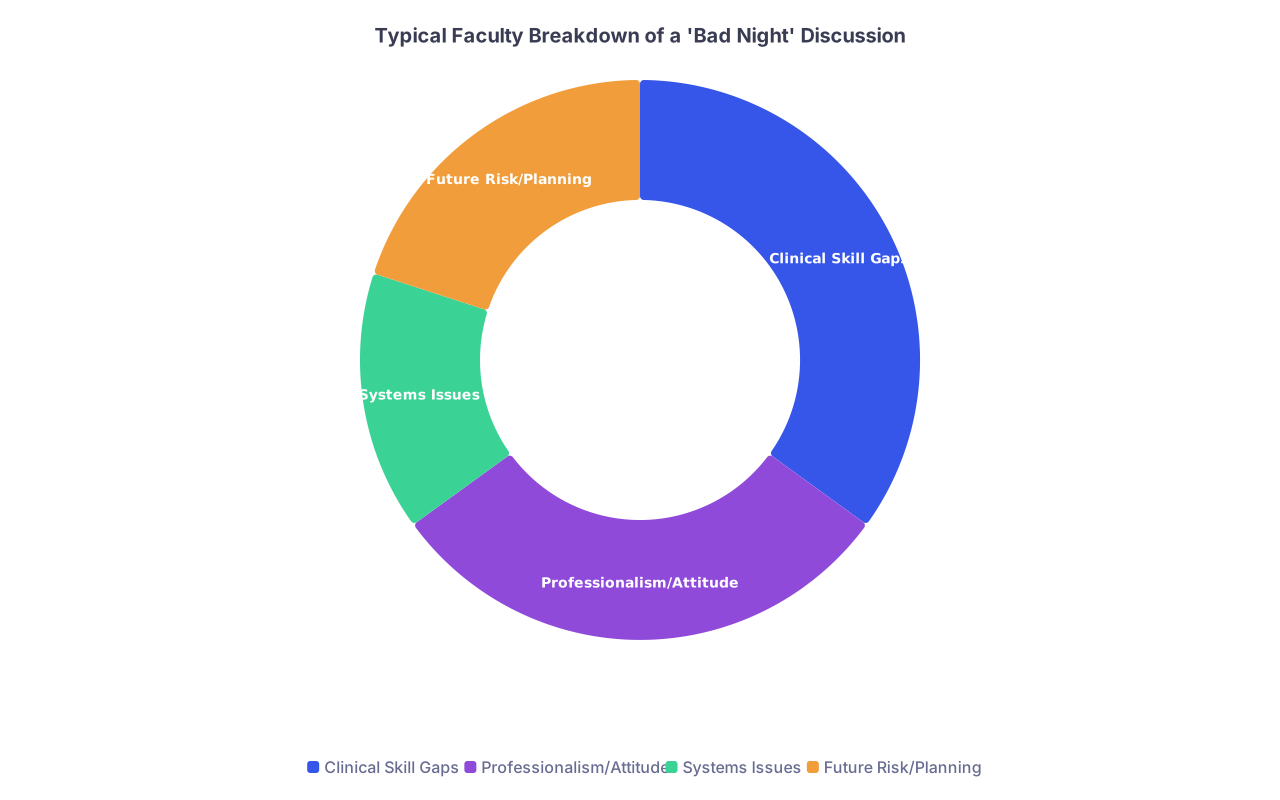
| Category | Value |
|---|---|
| Clinical Skill Gaps | 35 |
| Professionalism/Attitude | 30 |
| Systems Issues | 15 |
| Future Risk/Planning | 20 |
That last slice—future risk and planning—is where they decide: “Do we let this slide as a bad night, or do we tighten the leash?”
What You Should Actually Do After a Bad Night
Let me cut through the feel-good nonsense. Here’s the sequence that works in real life.
Same morning, before you leave
Find your senior or attending. One or two sentences. Not a confession monologue.“Last night was tough and I know I missed a few things. I’m exhausted right now, but I’d appreciate hearing later what you think I should focus on improving.”
You’ve already signaled insight and openness. That carries into their post-call conversation.
Within 24–48 hours
Send a short, focused message or grab them briefly if you’re on the same service.“I’ve been thinking about that night. The main issues I see are X and Y. I’m working on Z to prevent a repeat. Is there anything else you think I’m missing?”
You’re doing the work for them. You’re constructing the insight story they will later retell to others.
On your next call
Overcorrect your biggest failure visibly.- Was it communication? Over-communicate with nurses and your senior.
- Was it delay in seeing sick patients? Show up fast. Physically.
- Was it organization? Come in with a list, use a system, ask seniors to review your plan early.
Then, optional but powerful: “I’ve tried to fix what went wrong last time. If you see me slipping into old habits, please call it out.”
Interns who do this shift the faculty narrative from “concerning” to “promising” very quickly.
And yes, we do talk about you that way:
“He had a brutal start, but look how quickly he rebounded. That actually earns points with me.”
What Faculty Almost Never Tell You Directly (But Think)
There are a few quiet truths.
We absolutely keep informal lists in our heads. Who we trust on nights. Who we worry about. Who we’d want taking care of our own family in the ICU at 2 a.m.
A bad night does not automatically put you on the “do not trust” list. But how you handle it—your insight, your follow-up, your pattern—can.
We are more tolerant of:
- Slowness with insight
- Anxiety with effort
- Knowledge gaps with humility
We are less tolerant of:
- Avoidance
- Defensiveness
- Blame-shifting
- Dishonesty
And when we sit around a table months later, talking about who should be chief, who should get the nice fellowship letter, who we’d recommend without reservation—those early stories resurface.
Not the numbers. The nights.
Quick Reality Check: You’re Allowed to Have a Bad Night
Do not walk away from this thinking one bad shift ruins your career. It doesn’t. I’ve seen some of the best residents I’ve ever worked with start as absolute disasters on nights.
But here’s the pattern they shared:
- They looked wrecked afterward—but they cared that it went badly.
- They actively pursued feedback.
- They didn’t repeat the same error three times.
- Seniors liked having them around, even when they were green, because they tried and listened.
And the opposite pattern? The intern every attending side-eyes when they’re on the call schedule? That’s the one who has three or four “bad nights” with the same issues and the same excuses.
The hospital is full of chaos you can’t control. The post-call conversation about you is not.
You control your insight, your accountability, your effort, and your follow-through. That’s what faculty actually remember.

| Step | Description |
|---|---|
| Step 1 | Bad Night |
| Step 2 | Negative Senior Story |
| Step 3 | Supportive Senior Story |
| Step 4 | Faculty Concern |
| Step 5 | Faculty Reassured |
| Step 6 | Problem Reputation |
| Step 7 | Fluke, Growth Story |
| Step 8 | Your Response |
| Step 9 | Next Calls |
FAQ: What Interns Always Ask But Faculty Rarely Answer Honestly
1. Can one terrible night actually tank my chances at a competitive fellowship?
Not by itself. People remember patterns, not isolated disasters. If that night becomes “typical you,” then yes, it bleeds into your letters. If that night becomes your turning point story—“they grew a lot after that”—it can actually help. I’ve written letters that explicitly say, “Had a rough start, but their growth trajectory has been exceptional.” PDs like that.
2. Do attendings and seniors really talk about us by name outside formal evals?
Constantly. Workroom, sign-out, hallway, email, resident meetings. Your name comes up in lots of “So how’s [name] doing on nights?” conversations. That’s how your informal reputation forms, which later shapes formal decisions. You want those casual check-ins to be, “Getting better,” not “…we’re worried.”
3. Should I apologize after a bad night, or does that make me look weak?
A targeted, specific apology makes you look mature, not weak. “I’m sorry I didn’t call you sooner about that hypotensive patient. I won’t make that mistake again” lands well. A vague, emotional apology monologue (“I’m so sorry, I’m terrible, I don’t know if I can do this”) just adds work for the senior to comfort you. Be specific, brief, and focused on change.
4. How much does my relationship with nurses matter in these conversations?
More than you think. When a nurse quietly tells a senior, “We like working with her; she shows up when we call,” that gets repeated. When they say, “He never answers his pages,” that also gets repeated. Faculty trust nursing impressions, especially about nights. Don’t be the intern the unit is collectively tired of.
5. What’s the fastest way to recover if I know faculty are already concerned about me?
You need a visible three-part combo: consistency, communication, and proof. String together a few solid call nights, proactively ask for quick feedback afterward, and then repeat back what you’re working on. If your senior tells an attending, “He’s a different person from a month ago,” that’s the fastest rehab mechanism you’ve got. Your goal is to create a new story that overwrites the old one.
Key takeaways:
First, faculty don’t remember your exact errors; they remember your stories—how you behaved, whether you owned it, and if you got better. Second, the senior’s opinion about you after a bad night carries enormous weight, so your attitude and response matter as much as your knowledge. Finally, one bad night doesn’t define you, but repeating the same mistakes with the same excuses absolutely does.