
Educational disclaimer: This article is for general educational purposes only and is not legal, financial, tax, contract, or employment advice. Compensation models, productivity expectations, panel targets, and job terms vary widely by practice; review offers with qualified advisors and your institution’s legal or contract professionals when appropriate.
I watched this happen to a graduating resident who took what everyone called a dream outpatient job. Good specialty. Predictable hours. No overnight call disasters. No ICU chaos. The brochure version of adulthood. Six months in, she wasn’t complaining about seeing too many patients a day. That part was fine. What changed her life was panel ownership.
That’s the phrase people throw away too casually. “You’ll build your panel.” Sounds harmless. Sounds even flattering. What it really means is that hundreds, then thousands, of people get mentally and electronically attached to you. Their refill requests hit your inbox at 6:12 p.m. Their mammograms are overdue. Their labs need review. Their portal message that begins with “quick question” turns into chart review, medication reconciliation, counseling, documentation, and a follow-up plan. Suddenly the workday has a second shift, and nobody warned you because it doesn’t show up on the clinic schedule.
Here’s what really happens in so-called chill fields: the number that wrecks your lifestyle often is not how many patients you see today. It’s how many patients belong to you in total. That denominator drives the inbox, the preventive care backlog, the cognitive drag, and the guilt. The calendar can look light while your life quietly gets crowded.
1. Panel Size Is the Real Job Description Nobody Mentions
Panel size is simple. It’s the total number of patients assigned to you as their primary clinician or regular specialist. Not the 14 patients on today’s template. The full group. The whole village.
And in lower-acuity outpatient fields, that number matters more than most residents realize. Why? Because the visible work is the visit, but the invisible work is ownership. Every additional patient increases the chance of refill approvals, normal-but-needs-comment lab results, abnormal results needing a plan, preventive screening reminders, prior authorizations, referrals, forms, chart clean-up, and messages that someone swears should “only take a minute.” That minute is a lie. It always is.
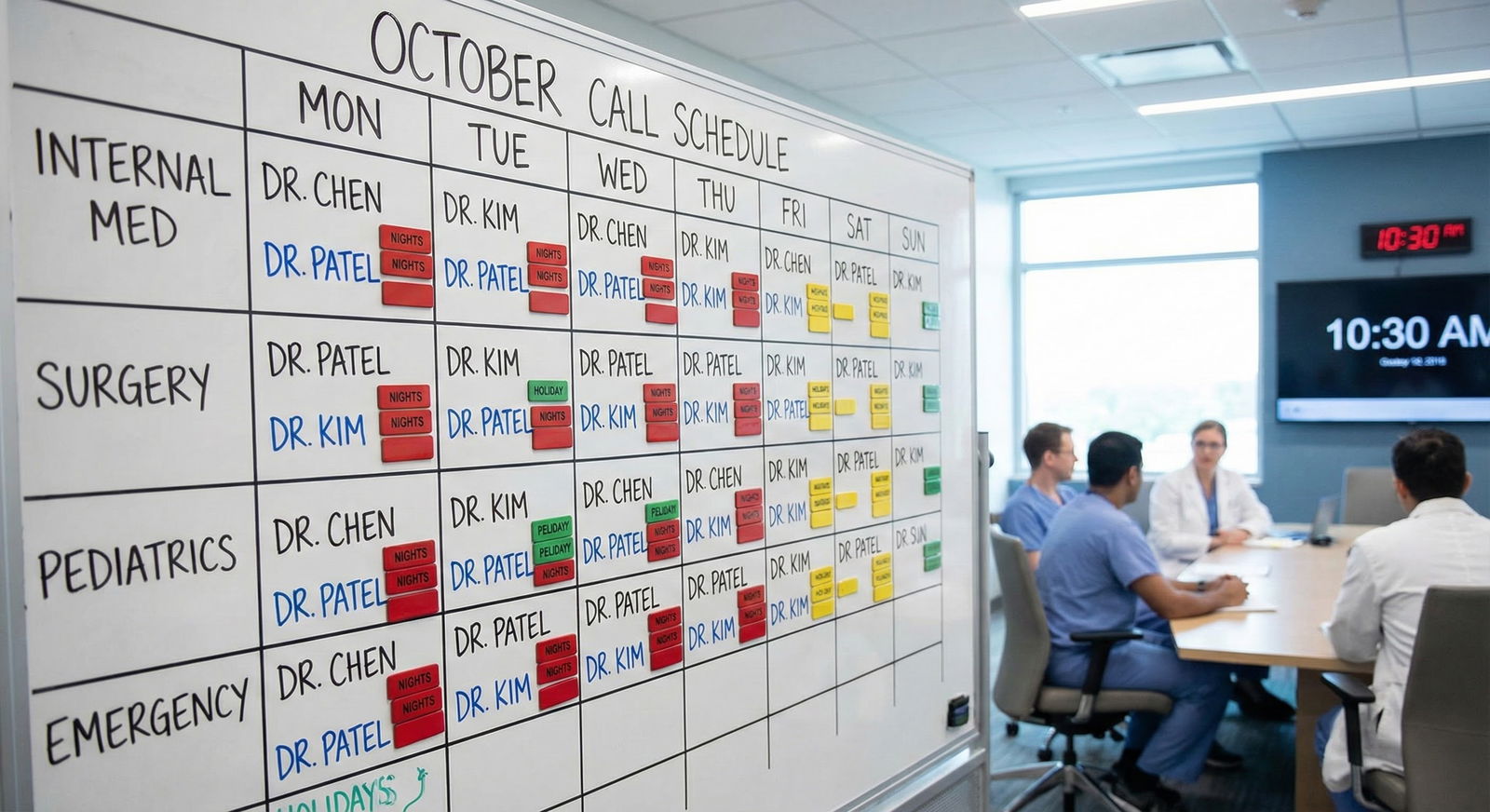
Program directors and attendings love talking about schedule templates because templates are tidy. Fifteen-minute follow-up. Thirty-minute new patient. Half-day admin block. Nice little boxes. But the real burden lives in the denominator. How many people are tied to your name. I’ve sat in enough faculty meetings to tell you this plainly: leaders often describe jobs by the visible schedule because it sounds cleaner, while the true workload is sitting in panel metrics, inbox counts, and unresolved tasks nobody puts on the recruitment slide deck.
A clinic with 12 patients a day can still eat your evenings if the panel is bloated and the systems are sloppy. That’s the secret.
2. The Inbox Trap: Why ‘Just a Few Messages’ Scales Badly
People who haven’t owned a full panel misunderstand inbox work. They picture a short reply. Maybe two. Done. That’s not how it goes.
One portal message can trigger a whole chain reaction. You read the message. Then you open the chart. Then you check the last visit, the med list, the allergies, the recent labs, maybe the consultant note. Then you decide whether to advise, refill, order, route to staff, schedule a visit, or tell the patient this cannot be handled safely by message. Then you document what you did. Then the patient replies with one more question. Now you’ve got a thread. Threads breed.
And message burden scales badly. Not linearly. Badly. A bigger panel means more messages, yes, but also more interruptions, more context-switching, more unresolved fragments hanging around your brain while you’re trying to finish clinic. That’s why a “light” clinic day often doesn’t feel light. The scheduled visits end, and the asynchronous work starts feeding on your lunch break, your commute, and your couch.
Here’s the part new attendings learn the hard way: residents and fellows often have a buffer. There’s a supervising structure, shared responsibility, or at least less true ownership. Once you’re the final stop, the inbox hits differently. Attendings who forgot that are often the same ones telling you, with a straight face, “It’s only a few messages a day.” Sure. Per hundred patients. Now multiply.
3. Preventive Care Backlog: The Silent Time Thief
Low-acuity does not mean low-maintenance. That’s one of the biggest myths in outpatient medicine.
When your panel grows, maintenance care multiplies. Annual visits. Cancer screenings. Vaccines. Chronic disease follow-up. Bone density checks. Medication monitoring labs. “Can you remind this patient to come in?” turns into ten reminders, then fifty, then a backlog large enough to become its own weather system.
This is why some of the calmest-looking specialties feel weirdly relentless. There may be no trauma pager going off. No crashing patient in room 8. But there is constant upkeep. Constant maintenance. A conveyor belt of ordinary responsibility that never looks dramatic enough to earn sympathy and never stops long enough to give your brain real closure.
And the pressure is moral, not just logistical. Doctors carry guilt about overdue care. They know Mrs. Jackson still hasn’t had her repeat A1c. They know the colon cancer screening reminder has been sitting there for months. They know the vaccine gap. That knowledge keeps the work mentally open after clinic ends. You may be home. The panel is still sitting in your head.
4. The Staffing Myth: Why a Small Team Can Make a Small Panel Feel Huge
This is where applicants get fooled. They hear a panel number and think they understand the job. They do not.
A panel exists inside a system. A 900-patient panel with weak support can feel brutal. A 1,500-patient panel with excellent staff, standing protocols, smart routing, competent MAs, refill pathways, and decent EHR workflows can feel surprisingly sane. Support changes everything.
When refill requests go directly to you with no protocol, you become a human bottleneck. When every portal message lands in your personal inbox instead of being triaged, you become the triage nurse, scheduler, pharmacist, and secretary. When results routing is sloppy, admin work follows you home. Simple.
I’ve seen leadership call positions “light” or “protected” while quietly expecting physicians to absorb the work of missing staff. No nurse coverage? “The doctor can probably handle it.” No documentation support? “Most people get efficient.” No clear refill pathway? “It’s manageable.” That word again. Manageable. Translation: we normalized dysfunction.
5. When ‘Lifestyle-Friendly’ Turns Into Always-On Mental Load
The most dangerous burnout isn’t always the dramatic kind. It’s the stealth version. The low hum.
Panel ownership creates cognitive drag. You remember the potassium that needed recheck. The patient who messaged twice about side effects. The referral that hasn’t gone through. The overdue annual you meant to nudge. None of these items alone ruins your night. Together, they prevent actual recovery.
That’s why “chill” fields can be deceptive. There’s less visible chaos, so trainees don’t clock the damage early. They think burnout should look like brutal call or 80-hour weeks. Sometimes it looks like sitting on your couch after dinner with a low-grade sense that something is still unfinished. Because something is. Usually ten somethings.
Work-life balance doesn’t fail only when hours get long. It fails when your mind never fully stands down. Constant anticipatory stress is still stress. If every free evening contains a shadow of unfinished clinic business, that job is not protecting your life. It’s renting space in it.
6. The Questions to Ask Before You Sign: Panel Size Red Flags and Green Flags
Let me save you from the rookie mistake. Don’t ask, “Is the lifestyle good here?” That question gets you marketing. Ask operational questions. You want numbers, workflows, and who does what.
Ask directly: What is the typical mature panel size for this role? What is the expected panel size at 6 months, 12 months, and 24 months? How many patient messages per day or per week does a physician usually receive? What percentage are triaged by staff before reaching the doctor? How are refills handled? Are there standing protocols? How much protected admin time is built into the week? How are preventive outreach tasks assigned? Who tracks overdue screening and chronic follow-up gaps? What happens when a physician’s panel grows faster than expected? Is there redistribution, capping, or staffing expansion?
Those questions don’t make you difficult. They make you employable for the long term. Smart adults ask how work actually works.
Red flags are obvious once you know what to listen for. Vague answers. “It depends.” “Most people find it manageable.” “We’re still working on inbox optimization.” “Our team is very collegial.” Fine. Nice. Not an answer. Another bad sign: nobody can tell you average message volume, refill burden, no-show rates, or expected ramp-up speed. That means they either don’t measure it or don’t want you to know. Both are bad.
Green flags look very different. Transparent panel targets. A stated ramp-up plan instead of instant overload. Clear inbox routing rules. Refill protocols owned partly by staff or pharmacy workflows. Documentation support that actually exists, not mythical support that disappears after onboarding. Leadership that can explain exactly what happens when capacity is exceeded. That’s a real system. Real systems protect lifestyle. Vibes do not.
7. How Smart Physicians Protect Their Lives Without Looking ‘Difficult’
The best attendings I know don’t wait for hidden workload to become tradition. They set terms early.
They ask for phased panel growth. They negotiate real admin time, not fake admin time packed between patients. They ask who triages messages, who handles routine refills, and what access targets are considered acceptable. They push for workflows that match human bandwidth. Quietly. Professionally. Firmly.
This matters because once a bad setup becomes normalized, clawing it back is much harder. If you answer every late-night message and absorb every admin gap, the system learns the wrong lesson: that it works. It doesn’t. You’re just subsidizing it with your life.
Here’s the truth faculty rarely say out loud. The best lifestyle jobs are not the ones with the prettiest specialty label. They’re the ones where panel size, staffing, and expectations actually line up with reality. That’s the game. Not image. Capacity.
Closing Encouragement: Chill Specialty, Smart Setup, Real Balance
A lifestyle-friendly field can absolutely be sustainable. I’ve seen it. But only when you judge the job by the machinery underneath it, not the stereotype on top of it.
Look past the specialty label. Ask about panel size. Ask about inbox volume. Ask who owns preventive care gaps, refill pathways, and message triage. Ask how they protect physician time when the panel grows. If they can’t answer cleanly, that’s your answer.
Real balance is not handed to you by a “chill” specialty. It’s designed. Negotiated. Protected. Do that well, and you can build a career that actually stays inside the life you wanted.