Why Work–Life Balance Matters for IMGs in Radiation Oncology
Radiation oncology is often cited as one of the more “lifestyle residency” options, especially compared to many surgical or acute care specialties. For an international medical graduate (IMG), however, the work–life balance equation is more complex. You are navigating not only clinical training and the rad onc match, but also immigration, cultural adaptation, and sometimes family separation or relocation.
This IMG residency guide focuses on a realistic work-life balance assessment for radiation oncology residents, with practical strategies to protect your well-being while building a strong academic and clinical profile.
Key themes we’ll cover:
- What typical duty hours and schedules look like in radiation oncology residency
- How workload changes across PGY years and rotations
- Unique pressures IMGs face in this specialty
- Practical strategies to create and sustain a healthy residency work life balance
- How to evaluate programs for lifestyle fit during the application and interview process
Throughout, we’ll anchor the discussion in the specific experience of the international medical graduate in radiation oncology.
1. Understanding Radiation Oncology Workload and Schedule
1.1 The Nature of Radiation Oncology Work
Radiation oncology is primarily an outpatient, procedure-light specialty focused on cancer care through radiation therapy. Typical activities include:
- New patient consultations and follow-ups
- Simulation (SIM) sessions and treatment planning
- Contouring tumors and organs at risk on CT/MRI/PET
- Reviewing and approving treatment plans with physicists and dosimetrists
- On-treatment visits (OTVs) to assess side effects
- Tumor boards and multidisciplinary conferences
- Occasional inpatient consults and calls for emergencies (e.g., spinal cord compression, brain metastases)
Unlike many hospital-based specialties, much of the work is scheduled and takes place during standard daytime hours, which is central to its reputation as a lifestyle residency.
1.2 Typical Duty Hours in Radiation Oncology Residency
While every program differs, the following ranges are common in radiation oncology residency:
- Weekday hours:
- Generally around 7:30–8:00 am to 5:30–6:00 pm
- Busier services or academic centers may push beyond these times during heavy planning weeks
- Weekly total:
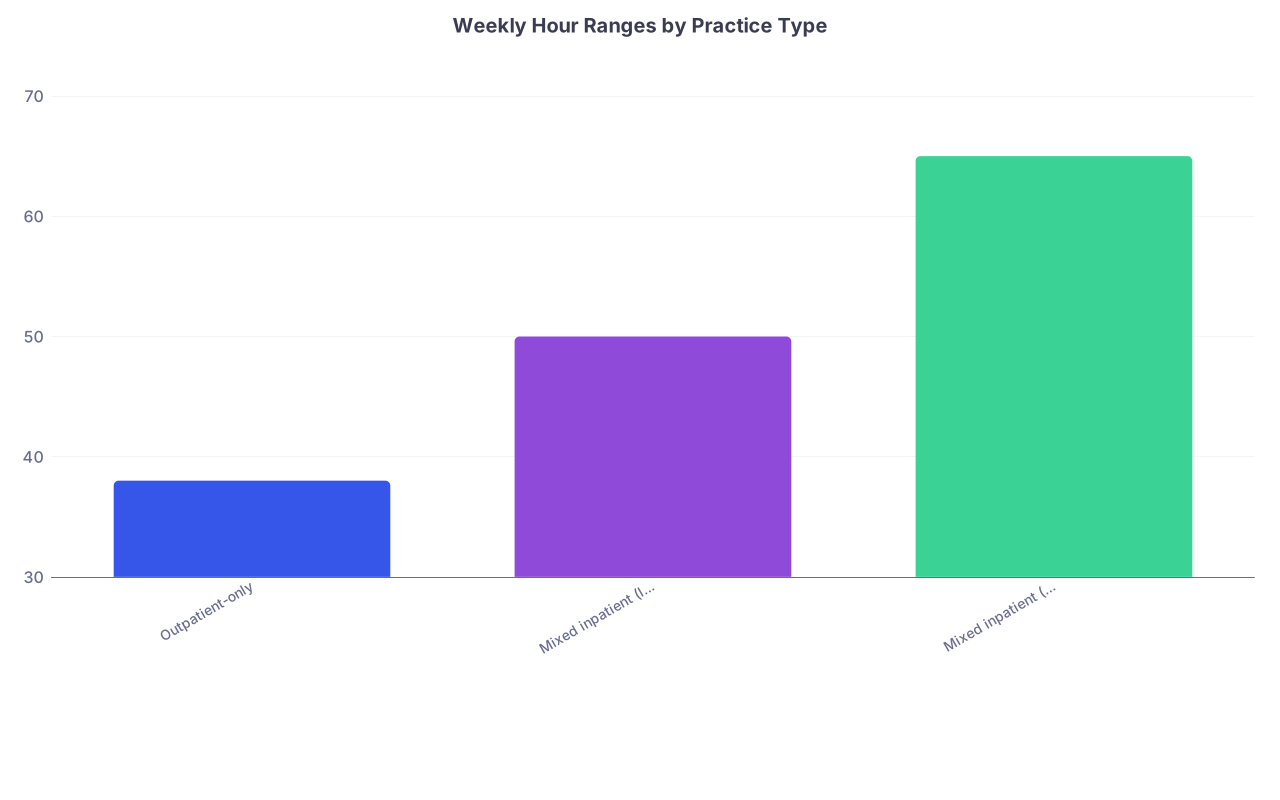
- Often in the 50–60 hour range, sometimes less in more lifestyle-friendly programs
- Peaks (busy consult weeks, high patient volume services) may approach the duty hour cap
- Weekends:
- Many radiation oncology programs involve limited or no routine weekend work
- Some require occasional weekend rounds for inpatients or urgent consults, but day-to-day clinical care is largely weekday-based
Compared to many other specialties, radiation oncology duty hours are relatively predictable, with fewer overnight emergencies and fewer unplanned schedule disruptions.
1.3 Call Responsibilities
Radiation oncology call is usually home call, with significant variation by program:
- Home call structure:
- Residents carry a pager or phone and are available for urgent consults from the ED or inpatient teams
- May need to come in for emergent treatments (e.g., bleeding tumors, spinal cord compression) if the center has 24/7 treatment capability
- Call frequency:
- Often between 1 weekend per month to 1 in 4 weekends, depending on program size
- Night call may be 1 week at a time every 1–2 months or an equivalent structure
- In-house call:
- Rare in radiation oncology; more common in other specialties
- If present, usually at large tertiary cancer centers with very high volumes
From a residency work life balance perspective, radiation oncology calls are typically manageable and less intrusive than many inpatient and procedural specialties. However, IMGs should still clarify the exact call arrangements of each program they are considering.

2. Specific Work–Life Challenges for IMGs in Radiation Oncology
While radiation oncology offers favorable duty hours, IMGs face unique stressors that can strain overall life balance.
2.1 Visa and Immigration Pressures
For many international medical graduates, visa status is a constant parallel concern:
- Visa type (J-1, H-1B, etc.) can affect:
- Ability to moonlight (and thus financial flexibility)
- Options after residency (fellowships, jobs, waiver requirements)
- Geographic mobility and spouse employment
- Administrative demands:
- Extra paperwork, deadlines, and institutional immigration meetings
- Anxiety about policy changes and renewals
These non-clinical pressures can significantly impact mental bandwidth, even if your duty hours are reasonable.
Actionable advice:
- Engage your institution’s international office early and maintain a clear timeline of visa milestones.
- Ask residents (especially current IMGs) how supportive the GME office is with visa issues during your interviews.
- Store all immigration documents in both physical and secure digital formats to reduce last-minute stress.
2.2 Cultural and Communication Adaptation
Radiation oncology involves nuanced communication about prognosis, treatment goals, and side effects, often in emotionally charged situations. For IMGs:
- Spoken language adjustments:
- Learning colloquial phrases, idioms, and sensitive end-of-life vocabulary
- Adapting to different patient expectations and health literacy levels
- Cultural expectations:
- How directly to discuss prognosis
- Different norms around sharing bad news with families vs. patients
- Variations in patient attitudes toward radiation therapy and cancer
The learning curve can be steep, and you may initially spend extra time preparing for patient encounters, reading charts more slowly, and documenting carefully—adding to your effective “work hours” beyond duty hour reporting.
2.3 Academic and Research Expectations
Radiation oncology is highly academic: many programs expect residents to participate in:
- Clinical research projects
- Physics or biology research
- Presentations at conferences (ASTRO, ESTRO, etc.)
- Quality improvement initiatives
For the IMG, research can represent both an opportunity and a hidden time cost:
- Advantages:
- Strong research output can counterbalance common IMG concerns in competitive fields
- Publications and presentations support fellowship aspirations (e.g., CNS, pediatrics, brachytherapy)
- Challenges:
- Working outside of clinical hours to complete data collection, analysis, and manuscripts
- Navigating unfamiliar research infrastructure and IRB processes
This is critical in a rad onc match context: having solid research can elevate your profile, but it must be balanced against exhaustion and burnout risk.
2.4 Social Support and Family Responsibilities
Relocation amplifies personal and family challenges:
- Being far from extended family and cultural community
- Spouses or partners facing their own immigration/employment hurdles
- Raising children without familiar support networks
- Time zone differences complicating contact with home country
These factors often mean that IMGs must invest additional emotional labor and time to build a new support system, adding another layer to the work-life calculus.
3. A Realistic Day and Week in Radiation Oncology Residency
To make this IMG residency guide more concrete, it helps to visualize daily and weekly rhythms.
3.1 Example of a Typical Day on a Busy Outpatient Service
7:30–8:00 am: Pre-clinic preparation
- Review the day’s schedule: new consults, follow-ups, on-treatment visits
- Pre-read scans and review prior oncology notes
- Check any urgent messages from dosimetry, physics, or nursing
8:00–12:00 pm: Clinic and OTVs
- See new consults with attending (history, exam, consent, initial contouring plan)
- On-treatment visits: evaluate side effects, adjust supportive medications
- Coordinate with nurses, social workers, nutritionists as needed
12:00–1:00 pm: Lunch and educational conference
- Didactics: radiation physics, radiobiology, disease-site lectures
- Tumor board or multi-disciplinary conference once or twice weekly
1:00–4:30 pm: Treatment planning and follow-ups
- Contouring target volumes and organs at risk
- Reviewing and approving plans under supervision
- Handling “add-on” consults or urgent inpatient requests
4:30–6:00 pm: Wrap-up and independent work
- Finalizing notes and orders
- Answering patient messages, reviewing labs
- Working on research, studying for exams or boards
For many residents, particularly in well-structured programs, the day ends by 5:30–6:00 pm, with minimal after-hours disruptions, assuming you are not on call.
3.2 Weekly Structure and Fluctuations
Across a typical week:
- 1–2 full days may be more clinic-heavy
- 1–2 days more flexible, focused largely on planning, follow-ups, and academic time
- 1+ half-day or more reserved for research or independent study (varies widely)
- Conferences/tumor boards: typically 3–5 hours spread through the week
Some services (e.g., head and neck, CNS, palliative) may be busier with complex cases and more urgent consults, while others (e.g., prostate, breast in some centers) may feel more routine and predictable.
For IMGs, early in training, the steep learning curve for language, documentation, and systems navigation may extend your effective workday even when clinical hours are reasonable. Over time, as you gain fluency and efficiency, your actual “take-home” workload usually drops significantly.
4. Strategies to Maximize Work–Life Balance as an IMG in Radiation Oncology
Even in a favorable specialty, work-life balance is not automatic. It is the result of deliberate choices, boundary setting, and support systems.
4.1 Time Management: Protecting Your Evenings and Weekends
Radiation oncology often allows you to leave the hospital at a reasonable time; what you do with that time is crucial.
Practical steps:
Structure your day intentionally:
- Complete documentation between patients whenever possible; avoid leaving all notes to the end of the day.
- Keep a running to-do list (urgent vs. non-urgent) so you can close tasks logically rather than jumping between items.
Use micro-blocks of time efficiently:
- During short gaps, tackle quick tasks (reply to 1–2 emails, skim a key article, update your research to-do list) instead of doom-scrolling.
- Reserve longer uninterrupted blocks (at home or during protected time) for research-writing or deep studying.
Set a daily “departure goal”:
- For example, aim to leave by 5:45 pm most days. If something non-urgent arises at 5:30 pm, ask yourself honestly whether it must be finished the same day.
4.2 Academic Success Without Burnout
Many IMGs feel pressure to “compensate” with extra research, especially in competitive specialties like radiation oncology. You can still be productive without sacrificing your health.
Use a focused research strategy:
- Choose 1–2 meaningful projects early on rather than saying yes to every opportunity.
- Align projects with your long-term interest (e.g., breast, CNS, pediatrics, global oncology) so that publications build a coherent narrative for fellowship or job applications.
- Seek mentors who have a track record of actually finishing projects with residents.
Create realistic weekly academic goals:
- For example, plan “2 focused research sessions per week, 90 minutes each” instead of unspecific aspirations like “work on research whenever I can.”
- Track small wins (data collection completed, abstract drafted) so you can see progress without needing all-day marathons.
4.3 Boundaries and Communication With Attendings
Clear communication is essential to protect your personal time without appearing disengaged.
How to communicate effectively:
Clarify expectations early:
- Ask attendings: “For this rotation, what are your expectations regarding after-hours emails and response times?”
- Inquire about timeline flexibility: “Are you okay if I batch non-urgent messages and respond the next morning?”
Negotiate reasonable workloads:
- If overwhelmed, say: “I’m committed to learning and contributing, but my current patient load plus two research projects is stretching me thin. Could we prioritize which tasks are most important over the next month?”
Use the “yes, but with structure” approach:
- Instead of flatly declining new opportunities, respond: “I’d love to help with this project. To be realistic about my clinical load, would it work if my role is limited to data collection and drafting the methods section?”
These strategies show engagement while protecting you from unsustainable commitments.
4.4 Building a Support Network as an IMG
Creating community is central to maintaining mental and emotional balance.
Build connections at multiple levels:
Within your program:
- Ask senior residents (especially other IMGs) what helped them adjust.
- Join informal study groups or journal clubs; they often evolve into social support circles.
Across the institution:
- Seek multicultural/IMG groups, international student and scholar services, or clubs related to your language or culture.
- Attend cross-department wellness events when possible.
Outside medicine:
- Explore local religious, cultural, or hobby-based communities.
- Consider meetups aligned with your interests (sports clubs, music groups, language exchanges).
Having at least one non-medical outlet is protective against burnout, especially when you’re far from home.
4.5 Financial Planning and Lifestyle
Even in a lifestyle residency, financial stress can erode work-life balance.
Actionable steps:
- Create a simple monthly budget early in PGY-1 or PGY-2, accounting for:
- Rent, utilities, food, transportation
- Visa/legal fees, exam fees (USMLE, licensing, boards)
- Remittances to family abroad, if applicable
- Avoid unnecessary debt:
- Be especially careful with high-interest credit cards.
- Delay major purchases (e.g., luxury car) until you understand your long-term financial picture.
Financial stability provides mental space to enjoy the lifestyle benefits of radiation oncology.
5. Evaluating Work–Life Balance When Applying for Rad Onc as an IMG
When strategizing for the rad onc match, IMGs should assess programs not just for prestige, but also for realistic lifestyle and support.
5.1 Questions to Ask Residents on Interview Day
Targeted questions can reveal the true culture of duty hours and wellness:
- “On a typical week, what time do you usually leave the department?”
- “How often do you need to finish notes at home?”
- “What is the call schedule like, and how often do calls actually require you to come in?”
- “Are there rotations that are considered especially demanding, and how does the program support residents during those times?”
- “If you had a personal emergency, how flexible has the program been in adjusting schedules?”
Specific, behavior-focused questions lead to more honest and informative answers than vague questions like “Is the program supportive?”
5.2 Program Characteristics Linked to Lifestyle
While exceptions exist, certain program traits often correlate with better work-life balance:
- Adequate resident-to-faculty ratio (not too few residents for the patient volume)
- Stable or growing faculty numbers (not relying heavily on residents for basic service functions)
- Real protected academic time that is honored in practice
- Home call rather than in-house overnight call
- Historically strong compliance with duty hours and a responsive program director when issues arise
- Transparent policies around parental leave, sick leave, and mental health support
During interviews, note whether residents seem genuinely relaxed and collegial or tense and guarded.
5.3 Red Flags for IMGs
For international medical graduates, certain warning signs are especially relevant:
- Vague or evasive answers about visa sponsorship or track record with IMGs
- High resident turnover, especially among IMGs
- Program leadership minimizing concerns about duty hours or joking about “just writing down 80 hours”
- No clear wellness initiatives or dismissive attitudes toward burnout
Choosing a supportive environment is critical; as an IMG, you are balancing more variables than many of your peers.
6. Long-Term Work–Life Balance: After Residency
Radiation oncology’s reputation as a lifestyle specialty extends beyond training, but the post-residency landscape is changing, and IMGs must plan thoughtfully.
6.1 Academic vs. Community Practice
Academic centers:
- Often involve:
- Research and teaching responsibilities
- Tumor boards and administrative tasks
- Sometimes more complex cases, which can be emotionally demanding
- Work hours: generally full-time weekdays, but may extend with research and committees
Community practice:
- Typically more straightforward clinical focus
- Potential for more predictable hours and fewer after-hours responsibilities
- However, smaller groups may have heavier call burden or fewer colleagues to share coverage
For IMGs, visa requirements (e.g., J-1 waiver jobs) may influence where you can work initially, which can shape your early-career work-life balance.
6.2 Evolving Job Market and Its Impact on Lifestyle
The radiation oncology job market has become more competitive in some regions, leading to:
- Increased emphasis on productivity (RVUs) in some practices
- Pressure to see more patients or cover multiple sites
- Geographic constraints on finding ideal positions
However, the fundamental structure of the specialty—largely outpatient, scheduled work—still offers more lifestyle control than many acute care disciplines.
6.3 Building a Sustainable Career as an IMG
Long-term well-being strategies:
- Plan your fellowship and job search early, considering visa constraints and personal priorities (family, geography, research vs. clinical).
- Continue to refine your time management and boundary-setting skills developed during residency.
- Invest in non-medical identity: hobbies, friendships, and community involvement that are independent of your role as a physician.
- Revisit work-life priorities every few years; what you value at age 30 may differ at 40, especially as family and health needs evolve.
Radiation oncology offers a strong foundation for a sustainable career if you shape your trajectory deliberately.
FAQs: Work–Life Balance for IMGs in Radiation Oncology
1. Is radiation oncology truly a lifestyle residency for IMGs, or is that an exaggeration?
Radiation oncology generally offers more predictable daytime hours, minimal overnight in-house call, and relatively limited weekend work compared to many specialties. For IMGs, however, additional pressures—visa issues, adaptation, research expectations—can make the experience more intense. It is still one of the more lifestyle-friendly specialties, but your personal work-life balance will depend heavily on program culture, individual habits, and external obligations.
2. How can an IMG balance research productivity with personal life in rad onc?
Focus on quality over quantity: select 1–2 well-scoped projects aligned with your interests, find reliable mentors, and schedule dedicated weekly time blocks for research instead of working randomly. Use templates and reference managers, collaborate with co-residents to share workload, and avoid saying yes to every project. Consistency over time is more sustainable than short bursts of overwork.
3. Are certain radiation oncology programs better for lifestyle than others? How can I identify them?
Yes, there is wide variation. Look for programs with: reasonable clinic hours, home call rather than in-house overnight call, protected academic time, and honest resident testimonials about leaving by early evening most days. Ask specific questions about average arrival and departure times, call frequency, and how often notes are done from home. Programs with a positive culture, strong mentorship, and satisfied senior residents tend to support better work-life balance.
4. As an IMG, what single habit most improves work–life balance in radiation oncology residency?
Consistently finishing clinical documentation before leaving the department has an outsized impact. When you avoid taking charts and notes home, your evenings remain largely yours for rest, family, or targeted study. This habit requires disciplined time management during the day, but it sharply reduces the “invisible” extension of work into your personal time and supports long-term sustainability.
Radiation oncology offers international medical graduates a rare combination: meaningful involvement in cancer care, strong academic opportunities, and genuinely manageable duty hours. With intentional planning, clear boundaries, and a supportive program environment, you can leverage this specialty’s structural advantages to build a fulfilling, balanced life—both during residency and beyond.