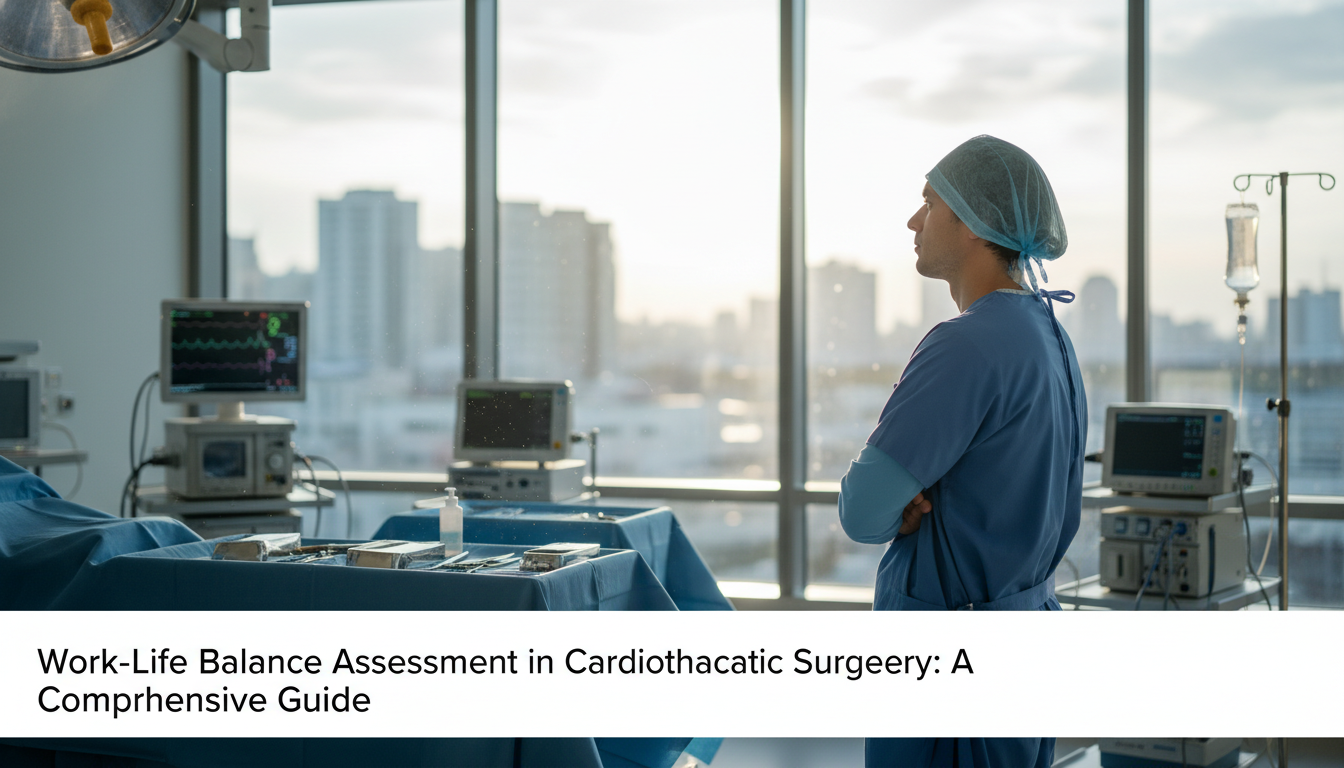
Understanding Work-Life Balance in Cardiothoracic Surgery
Cardiothoracic surgery has a reputation: intense training, long hours, and life‑and‑death decisions. For many applicants, the question isn’t just “Can I match into cardiothoracic surgery residency?” but “Can I build a sustainable life in this field?”
This specialty sits at the far end of the spectrum in most “lifestyle residency” rankings. Yet the story is more nuanced than the stereotype. Duty hours regulations, evolving practice models, and cultural shifts within surgery have reshaped what heart surgery training and long‑term practice can look like.
This guide walks you through a realistic work-life balance assessment in cardiothoracic surgery residency and beyond, and offers concrete strategies to protect your wellbeing if you choose this path.
We’ll focus on:
- What “work-life balance” specifically means in this specialty
- Day-to-day reality of cardiothoracic surgery residency
- Structural factors: duty hours, call models, and case demands
- Personality fit and lifestyle preferences
- Practical strategies to thrive during and after training
What “Work-Life Balance” Actually Means in Cardiothoracic Surgery
Before judging whether cardiothoracic surgery is a “lifestyle residency,” it helps to clarify what balance actually means in this context.
Dimensions of Work-Life Balance
In cardiothoracic surgery, balance typically hinges on:
Time
- Average hours per week
- Predictability of schedule
- Frequency and intensity of call
- Ability to plan personal events
Cognitive and emotional load
- High-stakes, prolonged operations (e.g., complex valve repairs, transplant)
- Managing complications and mortality
- Responsibility for acutely unstable patients in ICU
Physical demands
- Long stretches standing in the OR
- Night call followed by daytime operating
- Limited control over breaks on heavy days
Flexibility and autonomy
- Control over case mix and daily schedule (more in attending life than residency)
- Vacation and elective time
- Ability to adapt practice as life circumstances change
Recovery and support
- Institutional wellness resources
- Culture around asking for help and setting boundaries
- Availability of mentorship and team-based care
Reality Check: Where Cardiothoracic Surgery Sits on the Spectrum
If you imagine a spectrum from most to least lifestyle-friendly specialties, cardiothoracic surgery is generally toward the least lifestyle-friendly end during training. The factors that drive this:
- High-acuity, complex cases that can’t be postponed
- Long OR days and emergent night cases (e.g., aortic dissections, cardiac tamponade)
- ICU responsibilities with very sick patients
- Limited number of residents and fellows in many programs, intensifying workload
However, the reputation of never-ending 120‑hour weeks is outdated. Duty hours rules, team-based models, and growing attention to surgeon wellness are making both training and practice more sustainable.
The key question is less “Can cardiothoracic surgery be a lifestyle residency?” and more “Can I build a reasonable, personally meaningful balance within this demanding specialty?”
Residency Training: What Work and Life Really Look Like
Pathways to Cardiothoracic Surgery and Their Lifestyle Implications
There are several common training pathways in the U.S., each with subtle lifestyle differences:
Traditional Pathway
- 5 years General Surgery + 2–3 years Cardiothoracic Surgery
- Lifestyle:
- Early years: classic general surgery hours and call
- Later: more cardiac/thoracic exposure, similar or slightly higher intensity
Integrated I-6 Cardiothoracic Surgery Residency
- 6 years direct from medical school
- Lifestyle:
- Earlier subspecialization; high expectations from the start
- Potential for a more focused, coherent education, possibly less duplication of grueling general surgery rotations
- Early immersion in heart surgery training, which can be both exhilarating and exhausting
4+3 or 3+3 Combined Pathways (at select institutions)
- Blended or accelerated formats
- Lifestyle depends heavily on program design and institutional culture
Regardless of path, the first 2–3 years of post‑graduate training are usually the most grueling from a lifestyle perspective.
Typical Weekly Rhythm in Cardiothoracic Surgery Residency
Exact schedules vary by program, but a composite example:
- Weekday mornings
- Pre‑rounds starting ~4:30–5:30 am
- Rounds with service ~6:30–7:30 am
- OR start: ~7:30–8:00 am
- Daytime
- Long cardiac cases (e.g., CABG + valve), lasting 4–8 hours or more
- Thoracic oncologic resections, lung transplants, emergent cases
- Floor/ICU consults and procedures when not scrubbed
- Evenings
- Sign-out, notes, follow-up tasks
- Late finishes if long or additional cases run
- Some days end 5–6 pm; many end later, especially on cardiac service
Duty hours for ACGME-accredited programs are capped at:
- 80 hours per week, averaged over 4 weeks
- 1 day in 7 free of clinical duties (also averaged)
- No more than 24 hours of continuous in-house duty (plus 4 hours for transitions/education)
- 8–10 hours off between shifts (depending on program policies)
Most programs are serious about duty hours compliance, but residents commonly report weeks that feel close to the upper limit during intense blocks.
Call Schedules: Where Lifestyle Really Gets Tested
Call structure may be:
- Home call (attending and senior resident at home; urgent calls in)
- In-house call (on-site overnight, usually in ICUs or covering consults)
- 24‑hour plus call (with post-call relief policies that may or may not include leaving before noon, depending on workload and culture)
On cardiac services, you may be called for:
- Acute chest trauma requiring emergent thoracotomy
- Aortic dissection needing emergent repair
- Post-op cardiac patients with tamponade, arrhythmias, or hemodynamic collapse
- ECMO cannulation or complications
Frequency of call varies widely:
- Some programs run a q3–4 call during busy rotations
- Others use night float, spreading burden more evenly, which may improve residency work life balance slightly
Non-Clinical Duties and Their Impact on Balance
Outside of direct patient care, you’ll also juggle:
- Conferences, morbidity and mortality (M&M), journal club
- Simulation sessions and skills labs
- Research expectations (especially if you aim for an academic career)
- Teaching medical students and junior residents
During research years (where offered), lifestyle can temporarily improve, with more predictable daytime hours and weekends off, though this depends on your project and PI.

Personal Fit: Who Tends to Thrive in This Specialty?
If you’re evaluating lifestyle, you’re really evaluating fit: will the lifestyle demands of cardiothoracic surgery align with your values, temperament, and long‑term goals?
Traits That Support Sustainable Practice
People who do well long‑term in cardiothoracic surgery often share:
High intrinsic motivation
- Deep fascination with cardiopulmonary physiology and complex surgery
- Satisfaction from managing critically ill patients and technically demanding procedures
- Purpose strong enough to justify short‑term sacrifice
Resilience and stress tolerance
- Ability to function under pressure and uncertainty
- Emotional stamina to cope with complications, including mortality
- Capacity to separate self-worth from surgical outcomes while still learning from them
Discipline around self-care
- Protecting sleep when possible
- Prioritizing exercise and nutrition despite long days
- Actively building and maintaining supportive relationships
Preference for intensity over idle time
- Some residents find meaning in being busy and deeply engaged rather than in having frequent downtime
- If you’re energized by challenge and complexity, you may perceive balance differently than peers in more lifestyle-friendly fields
Long-term vision
- Understanding that residency is a phase, not forever
- Willingness to accept a more demanding training period in exchange for later autonomy and scheduling control
Signs the Lifestyle May Not Be a Good Fit
You might want to reassess cardiothoracic surgery if:
- You strongly prioritize predictable 8–5 hours above all other career attributes
- Late nights or sleep disruption quickly erode your functioning or mood
- You find high-stakes, low-control situations chronically overwhelming
- You’re primarily choosing the specialty for prestige or external validation, not genuine interest
Importantly, this isn’t about toughness or “grit.” It’s about aligning your career with how you want your days and nights to actually feel.
Shaping Your Own Lifestyle: Strategies During Training and Beyond
Even if cardiothoracic surgery is not a classic lifestyle residency, there is substantial room to shape your experience and long‑term work life balance.
During Medical School: Laying the Groundwork
Get realistic exposure
- Do sub-internships on cardiac and thoracic services at your home and away institutions
- Shadow a cardiothoracic surgeon across a full day: OR + clinic + ICU rounds
- Ask residents candid, respectful questions about hours, stress, and support
Build foundational habits now
- Regular exercise and sleep routines you can adapt in residency
- Basic mindfulness or stress management skills
- Time management strategies for high workload periods (e.g., exam prep + rotations)
Clarify your personal non-negotiables
- Relationships, hobbies, family goals
- Write down what you’re actually willing to sacrifice, and what you’re not
In Residency: Protecting Your Balance Within Structural Limits
- Choose program culture deliberately
During interviews and away rotations, assess:
- How honestly residents talk about their hours and stress
- Whether attendings model healthy boundaries or glorify overwork
- How strictly duty hours are followed and how violations are addressed
- Availability of formal wellness resources (counseling, peer support, protected time)
Not all cardiothoracic surgery residency programs are the same. Some are supportive, team-based, and serious about sustainable training; others still valorize martyrdom.
- Optimize your time and energy
- Use standardized templates (for notes, handoffs) to reduce cognitive overhead
- Develop a pre‑rounding and post‑op checklist to minimize errors and repetition
- Learn to delegate appropriately to juniors, NPs, or PAs when present
- Protect your off days: truly be off from clinical work and email whenever possible
- Set expectations with your support system
- Communicate clearly to partners, friends, and family about:
- Call schedules and peak busy rotations
- Times of year when you’ll be more available (e.g., elective rotations, research blocks)
- Develop routines: weekly brief check-ins, standing date night when feasible
- Involve them in your journey; many loved ones feel better when they understand why your schedule is so demanding
- Manage emotional load
Cardiothoracic surgery can expose you to sudden, devastating outcomes. Protecting your mental health is part of maintaining a sustainable career:
- Debrief after difficult cases with trusted peers or mentors
- Use formal support services if you notice persistent anxiety, sleep issues, or mood changes
- Cultivate interests entirely outside medicine as a psychological counterweight
Transition to Attending: Where Lifestyle Can Improve
After training, you’ll have more control over:
- Practice setting: academic vs. private vs. hybrid
- Case mix: heavy cardiac, mostly thoracic, congenital, transplant, minimally invasive, structural heart, etc.
- Call structure: group practice with shared call vs. solo or small group
Examples of lifestyle variation:
Academic, high-volume transplant center
- Pros: complex cases, research, teaching, prestige
- Cons: more nights/weekends, frequent emergencies, heavier ICU involvement
Private practice, mostly elective adult cardiac
- Pros: more predictable days, potentially higher compensation, controlled case mix
- Cons: may include community call with emergencies, business pressures
Thoracic-focused practice (oncologic resections, minimally invasive)
- Often somewhat more predictable than pure cardiac
- Fewer acute overnight disasters compared with aortic emergencies, though still significant cases
Structural heart or hybrid roles
- Mix of cath lab and OR, often more daytime-focused work
- Growing area with potentially more controllable schedules, depending on institution
Many cardiothoracic surgeons gradually modify their practice across their career—for example, shifting from major aortic and transplant work to more elective cases—as family or personal needs change.

Comparing Cardiothoracic Surgery to Other Specialties on Lifestyle
Because this article sits in the context of “most lifestyle friendly specialties,” it’s useful to place cardiothoracic surgery explicitly on that map.
Versus Classic Lifestyle Specialties
Compared to fields like:
- Dermatology
- Radiology
- Pathology
- Outpatient-focused specialties (e.g., many outpatient psychiatry or allergy practices)
…cardiothoracic surgery is far more demanding in:
- Weekly hours during training
- Unpredictability of schedule
- Emotional intensity and pressure
If a “lifestyle residency” for you means reliable 50‑hour weeks, minimal nights and weekends, and high schedule control, cardiothoracic surgery will not fit that definition.
Versus Other Surgical Fields
Against other surgical specialties:
General Surgery
- Similar or slightly higher intensity during specific CT rotations
- Post-residency, general surgery can sometimes be structured into more elective practices; cardiothoracic can too, but emergencies are more inexorably tied to cardiac and aortic pathology
Neurosurgery
- Comparable intensity; neurosurgery residencies are often longer (7 years) and call-heavy
- Both share high stakes and long cases; local culture may make a bigger difference than the specialty label
Orthopedic Surgery, ENT, Urology, Plastic Surgery
- Generally seen as somewhat more lifestyle-friendly than cardiothoracic or neurosurgery, though still demanding
- Emergency burden and overnight calls exist but are often less frequent or less uniformly critical
On a purely lifestyle basis, cardiothoracic surgery residency sits among the more intense surgical training programs. For someone whose primary decision criterion is residency work life balance, there are objectively easier paths.
Versus Interventional Cardiology and Cardiac Anesthesia
You may also be comparing cardiothoracic surgery to adjacent cardiac-focused fields:
- Interventional Cardiology (via Internal Medicine → Cardiology)
- Night call for STEMI and structural heart procedures
- Often intense but with different physical burdens than open surgery
- Cardiac Anesthesia
- Long cases but different stress profile and division of responsibility
- Many anesthesiology practices have more predictable hours or shared call pools
These careers can offer substantial involvement with cardiac patients and high-tech procedures with potentially more flexible lifestyles, depending on the practice.
Making Your Decision: A Practical Work-Life Balance Checklist
When deciding if cardiothoracic surgery is right for you, consider:
Intellectual and emotional fit
- Do you consistently feel energized—or at least deeply engaged—when you’re on CT rotations, despite fatigue?
- Do you find the heart, lungs, and great vessels more compelling than any other system?
Tolerance for training intensity
- Can you accept 6–8 years of high-intensity training with limited control over duty hours?
- Do you have (or can you grow) the support systems to sustain you through that period?
Long-term lifestyle vision
- Are you comfortable with a career where emergencies and night work may always be part of your practice, even if they lessen over time?
- Can you envision tailoring your later practice (elective vs. emergency mix, academic vs. private) to reach an acceptable lifestyle?
Non-negotiables
- Are there firm boundaries you will not cross (e.g., regularly missing major family events, specific sleep needs, mental health vulnerabilities)?
- Can you identify programs and practice models that respect those boundaries?
Plan B
- If you begin heart surgery training and find the lifestyle unsustainable, is there a realistic alternate path within surgery or medicine that would satisfy you?
Being honest with yourself about these questions is a sign of maturity, not weakness. Cardiothoracic surgery demands a lot—but it also offers a profoundly meaningful career to those who genuinely resonate with the work.
FAQs: Work-Life Balance in Cardiothoracic Surgery
1. Is cardiothoracic surgery residency compatible with having a family?
Yes, many residents and attendings in cardiothoracic surgery have partners and children. That said, it requires:
- A particularly understanding and flexible support system
- Clear communication about duty hours, call, and rotations
- Willingness to accept that you may miss some events and may rely heavily on your partner or other family for day-to-day logistics at times
Some programs are more supportive of parental leave, adjusted rotations, and flexible scheduling; this should be a key topic during your residency interviews if family life is a high priority.
2. How many hours per week do cardiothoracic surgery residents actually work?
Most residents report 60–80 hours per week, with peaks near the ACGME maximum during high-intensity rotations. The exact number depends on:
- Program structure and staffing
- Service census (number and acuity of patients)
- Your year of training (junior vs. senior responsibilities)
If a program consistently exceeds 80 hours without acknowledging or correcting it, that’s a red flag for both training quality and resident wellbeing.
3. Does work-life balance improve after completing heart surgery training?
For many surgeons, yes—but not automatically. As an attending you gain:
- Greater control over your schedule, case mix, and practice setting
- Ability to negotiate call structures and group arrangements
- Flexibility to eventually reduce hours or shift away from the most emergent cases if desired
However, high-acuity centers, heavy transplant or aortic practices, and leadership roles can still involve substantial night and weekend work. Long-term balance depends heavily on the practice you choose and the limits you’re willing to set.
4. If I care a lot about lifestyle, should I rule out cardiothoracic surgery entirely?
Not necessarily. You should be candid with yourself: cardiothoracic surgery is not a classic lifestyle residency, and duty hours and workload will be intense. But if:
- You truly love the field
- You’re willing to accept a demanding training period
- You’re thoughtful about choosing supportive programs and later practice settings
- You actively cultivate resilience and boundaries
…then you can construct a meaningful, sustainable career in this specialty. If lifestyle is your primary driver and you’re indifferent between several fields, though, you may be happier in a specialty designed with more predictable hours from the outset.
In the end, assessing work-life balance in cardiothoracic surgery is about aligning the realities of heart surgery training and practice with your own values and capacities. If the work itself calls to you strongly enough, and you’re prepared to design your life around intentional tradeoffs, cardiothoracic surgery can be both demanding and deeply fulfilling—professionally and personally.