Understanding Work-Life Balance in General Surgery
Work-life balance in general surgery residency is a nuanced topic. Compared with many so‑called “lifestyle residencies,” general surgery is demanding, high‑acuity, and time‑intensive. Yet the specialty has evolved significantly over the past 10–15 years. Duty hours are regulated, wellness is now a core accreditation standard, and many programs are actively re‑engineering schedules to reduce burnout and improve retention.
For residency applicants, the key is not to ask “Does general surgery have good lifestyle?” but rather “What kind of lifestyle does this general surgery residency realistically provide, and does that align with my values and goals?”
This guide breaks down how to assess work-life balance in a general surgery residency, what realistic expectations look like, and how to evaluate programs during the surgery residency match process.
What “Work-Life Balance” Really Means in General Surgery
Redefining “Lifestyle Residency” in a Surgical Context
In the context of general surgery, “lifestyle” doesn’t mean easy or relaxed. It typically means:
- Predictable structure (even if long hours)
- Protected time off that is enforced
- Fair, transparent scheduling
- Reasonable post‑call expectations
- Supportive culture when residents have life events or crises
Compared with more lifestyle-oriented fields (e.g., dermatology, radiology), general surgery residency will almost always involve:
- Earlier mornings
- More frequent call or night float
- More intense, time‑sensitive clinical demands
- Higher emotional load (trauma, emergencies, complications)
A realistic framing is: Can you achieve sustainable work-life integration rather than perfect balance?
The Core Pressures on Work-Life Balance in Surgery
Several structural factors make work-life balance challenging in general surgery:
High acuity and unpredictability
Emergency surgeries, unstable patients, and trauma admissions don’t respect the schedule.Procedural learning curve
Developing technical skills requires time in the OR, repetition, and sometimes staying late to assist in additional cases.Responsibility for critically ill patients
It’s hard to “turn off” mentally when you’re caring for patients in the ICU or post‑op with complications.Culture of commitment
Surgery prides itself on ownership, thoroughness, and availability, which can sometimes clash with personal boundaries if not managed thoughtfully.
That said, not every program interprets “commitment” the same way. Some foster a culture where:
- You hand off effectively and leave on time when your shift ends.
- Coverage systems protect days off and vacations.
- Asking for help is normalized and encouraged.
Others still function with an older ethos: “The work is done when it’s done.” Learning to distinguish these cultural differences is central to evaluating residency work life balance.
Duty Hours, Regulations, and Reality
ACGME Duty Hour Rules: The Framework
All ACGME-accredited general surgery residency programs in the United States must comply with duty hour standards. The major rules include:
Weekly cap:
- Maximum average of 80 hours per week, calculated over 4 weeks, including all in‑house call and moonlighting.
Time off between shifts:
- Minimum of 8 hours off between scheduled clinical work and education periods, ideally 10 hours.
- At least 14 hours off after 24 hours of in‑house call (up to 4 additional hours for transitions allowed).
Maximum shift length:
- No more than 24 hours of continuous in‑house clinical duties, with up to 4 additional hours for transitions of care and didactics (not new patient care responsibilities).
One day off in seven:
- At least one day off every 7 days, free of all clinical responsibilities, averaged over 4 weeks.
These duty hours create a framework, but they don’t fully describe the lived experience of general surgery residency.
How Duty Hours Play Out in Real Life
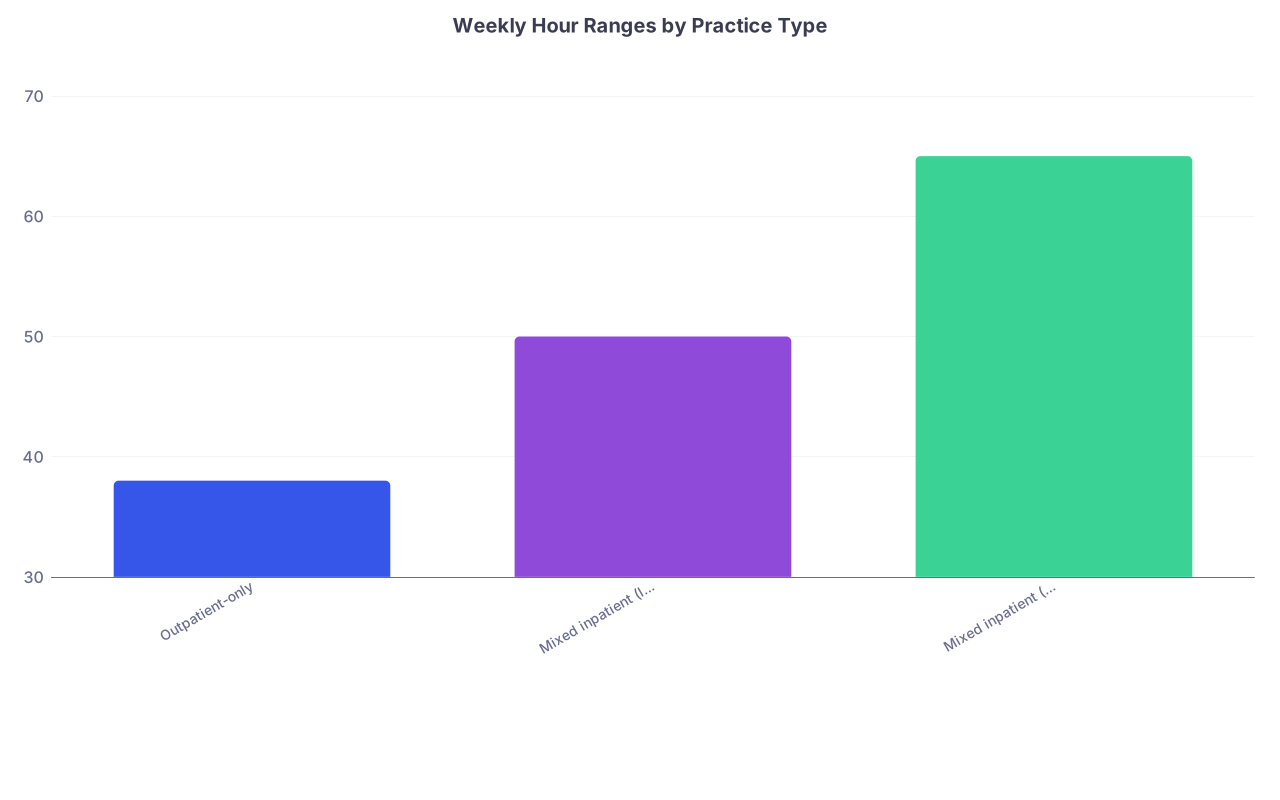
Residencies vary in how closely they approach the 80‑hour ceiling. Common patterns:
Early PGY‑1–2 years in large academic programs:
- Often 65–80 hours/week depending on rotation (trauma, ICU, busy general surgery services).
- Call or night float systems can concentrate hours into certain blocks.
Senior years (PGY‑4–5):
- Often more autonomy in scheduling but still heavy: 60–75 hours/week is common.
- More time in the OR, more consults, often fewer floor tasks—but higher overall responsibility.
Red Flags Around Duty Hours
When researching or interviewing at programs, be alert for:
Residents joking about “creative logging”
If people casually mention “fixing” duty hour reports, that may indicate systemic overwork.Frequent references to “just under 80… on paper”
Suggests culture may tolerate under‑reporting.Nonchalant attitude toward violations
“Everyone just sucks it up here” is a worrisome sentiment.PGY‑1s consistently missing educational conferences or continuity clinic
Possible sign that the service is always in “crisis mode” and understaffed.
Realistically, any busy general surgery residency will sometimes push up against duty hours during certain rotations. The key question: What happens when violations are identified? Programs focused on healthy residency work life balance treat violations as data to improve systems, not as a resident’s personal failure.

Key Dimensions of Work-Life Balance in General Surgery
1. Schedule Structure and Call Systems
How a program organizes its schedule influences your daily and weekly rhythm.
Common models:
Traditional 24‑hour call q3–q4 (less common than in the past):
- You take in‑house call every 3–4 nights.
- Post‑call days may be lighter but sometimes still include OR or clinic.
- Can be hard on sleep, but some residents like “post‑call” days for personal errands or rest.
Night float systems (increasingly common):
- Residents rotate through 1–4 week blocks of nights.
- More consistent sleep-wake cycle during that block (nights only).
- Day teams often leave earlier since nights cover admissions/urgent issues.
Hybrid models:
- Day float + night float + occasional 24‑hour weekend calls.
- Many academic programs use this structure to stay within duty hours.
Questions to ask on interview day:
- “How are nights covered for the main general surgery services?”
- “How frequently do interns and juniors take in-house call?”
- “Do post‑call residents reliably leave by a certain time?”
2. Service Intensity and Support Staff
Two programs with similar duty hour averages can feel entirely different depending on support:
High support (APPs, scribes, strong ancillary staff):
- Residents focus more on decision‑making, procedures, OR time.
- Less time spent on transport, phlebotomy, paperwork, and EMR scut.
Low support:
- Residents may do most procedures, notes, and logistical tasks.
- Long days can feel more “busy work” than educational.
Ask residents:
- “Do you often stay late for non‑educational tasks?”
- “What proportion of your day is direct patient care vs. documentation/administrative work?”
- “Do you feel the number of residents matches the service volume?”
3. Culture: The Hidden Curriculum of Work-Life Balance
Culture often matters more than the raw hour count. Important markers include:
Attending expectations
- Do attendings criticize residents for leaving when their shift ends?
- Are they respectful of post‑call status and days off?
Peer support
- Do residents help each other leave early when possible?
- Are schedule swaps and coverage for important life events (weddings, funerals, medical appointments) handled with grace?
Program leadership
- Does the program director talk openly about resident wellness and workload?
- Are there structured wellness initiatives that residents actually use, or are they just in brochures?
Example:
A program where residents average 70 hours/week but feel their attendings protect their days off, step in during emergencies, and value their education may be far more sustainable than a 60‑hour/week program with shaming, hierarchy, and little control over your time.
4. Personal Control Over Time
Surgeons rarely enjoy total scheduling freedom, but some programs offer more control:
Vacation policies:
- How are vacation blocks chosen (seniority vs lottery)?
- Are vacations clustered or split? Can you align vacation with major life events?
Electives and research time:
- Is there a dedicated research year or protected research block?
- Can you choose lighter rotations before major exams or personal events?
Flexibility for family responsibilities:
- How does the program handle parental leave and childcare emergencies?
- Any part‑time or reduced‑duty pathways in later years (even if rare)?
Evaluating Programs During the Surgery Residency Match
Pre‑Interview Research: What to Look For
Before you apply or interview, use public information to identify potential red flags or green flags for lifestyle:
Program websites and social media
- Look for explicit mentions of “resident wellness,” “flexible scheduling,” or duty hour compliance.
- Photos and posts of residents doing non‑clinical activities (retreats, outings) can be a modest positive sign.
Residency review websites and forums
- Take anonymous comments (good or bad) with caution.
- Look for repeated themes: “great operative experience but brutal hours,” or “supportive program with good balance, but smaller case volume,” etc.
Case volume vs. number of residents
- Very high volume with a small resident complement can indicate intense workloads.
- A balance between resident numbers and hospital catchment area is ideal.
High-Yield Questions to Ask Residents
On interview days, social hours, or virtual meet‑and‑greets, your best intel comes from current residents. Consider asking:
“What does a typical week look like for an intern on your busiest service?”
Push for specifics: start time, average end time, call frequency.“How often do you have to stay significantly past your scheduled end time?”
Ask: “More than once a week?” “Almost every day?”“What happens when you hit duty hour limits?”
Do seniors help? Is there float coverage? Does the program adjust staffing?“Do you feel comfortable asking for time off for important family events?”
Watch facial expressions and body language when they answer.“Have you ever considered leaving? Why did you stay?”
This helps surface stressors and also tells you what keeps people there.“What do you do outside of work for fun, and how often?”
If nobody can name a consistent outside-of-work activity, that’s informative.
Interpreting Answers and Nonverbal Cues
Pay attention not just to what they say, but how:
- Long pauses, nervous laughter, or glance‑exchanges when duty hours are discussed can be revealing.
- Residents who describe their program as “intense but fair” and can give balanced pros/cons are often more credible than “everything is perfect” answers.
- If only chiefs talk and juniors are quiet or hesitant, consider why.

Strategies for Maintaining Personal Balance as a General Surgery Resident
Regardless of the program you choose, general surgery residency will challenge your time and energy. Having deliberate strategies can help you create a sustainable lifestyle residency experience even in a demanding field.
1. Align Expectations With Reality
Before starting:
- Recognize that 60–80 hour weeks are standard on many rotations.
- Accept that holidays and weekends will often be spent in the hospital.
- Understand that fatigue and emotional stress will be part of training.
Instead of searching for a “light” general surgery residency, look for a program where the hard work feels meaningful and where you have:
- Good mentorship
- Strong operative training
- A team culture you can lean on
2. Build Routines Around a Variable Schedule
Even with long duty hours, small consistent habits can preserve your well‑being:
Sleep protection
- Prioritize sleep over optional social events during heavy rotations.
- Use blackout curtains, earplugs, and a consistent pre‑sleep routine.
- Avoid scrolling or chart review in bed; separate “sleep space” from “work space” if possible.
Nutrition
- Keep shelf-stable, healthy snacks in your bag or locker (nuts, protein bars, dried fruit).
- Learn which hospital cafeterias or nearby spots are open during nights.
- Hydrate regularly; keep a refillable water bottle in your workroom.
Exercise
- Identify “micro‑workout” opportunities: 15–20 minutes of bodyweight exercises at home or a quick treadmill jog post‑call.
- Some residents commit to 2–3 set sessions per week on lighter days rather than a daily routine.
3. Protect Key Relationships
General surgery residency can strain relationships if expectations aren’t clear.
Communicate upfront with partners, family, and close friends:
- Explain your rotations, call schedule, and periods of high intensity.
- Set realistic expectations about availability—especially for nights and ICU months.
Use technology strategically
- Short but frequent texts or check‑ins can maintain connection even during busy weeks.
- Schedule regular video calls on lighter days or golden weekends.
Be intentional with time off
- Plan one specific enjoyable activity on your day off, even if it’s simple (brunch, park walk, movie night).
- Protect days off from unnecessary work creep whenever possible.
4. Use Institutional Resources
Many general surgery residency programs now offer:
Mental health services
- Confidential counseling or therapy
- Access to psychiatrists familiar with physician burnout and trauma
Wellness initiatives
- Resident retreats
- Peer support or Balint‑type groups
- Mindfulness or resilience training sessions
Practical supports
- Discounted or on‑site childcare at some institutions
- Meal stipends or free call‑room food
- Parking close to the hospital for late‑night safety
Use these resources early rather than waiting for a crisis. High performers sometimes delay seeking help; general surgery culture is slowly shifting to normalize proactive support.
5. Define Your Long-Term “Why”
Keeping sight of your reasons for choosing general surgery helps you endure the challenging stretches:
- Passion for the OR and hands‑on patient care
- Desire to handle acute, life‑saving situations
- Interest in surgical oncology, trauma, critical care, or global surgery
- Commitment to underserved communities or complex surgical disease
Some residents write a short personal statement or reminder and keep it on their phone or in their locker. Revisiting it during difficult rotations can reshape your perspective from “I’m trapped” to “This is training for the kind of surgeon I want to become.”
Life After Residency: Work-Life Balance as an Attending Surgeon
When you assess general surgery residency work life balance, remember that residency is temporary. Your post‑training career can look very different depending on your choices.
Practice Settings and Lifestyle
Academic general surgery
- Mix of OR, clinic, teaching, and sometimes research.
- Call shared among multiple faculty; may be home call in some subspecialties.
- Hours can still be long, but often more control than residency.
Community hospital practice
- Often more predictable OR blocks and clinic schedules.
- May involve broader scope (hernia, biliary, colorectal, basic vascular, etc.).
- Call burden depends on group size and hospital structure.
Subspecialty fellowships
- Some (e.g., surgical oncology, minimally invasive) may offer more predictable schedules.
- Others (e.g., trauma/acute care surgery, transplant) remain highly acute and call‑heavy.
Evolving Trends Toward Lifestyle Considerations
Over the last decade, there has been:
Growth in hospital‑employed models that may offer:
- Defined work hours
- Protected time for administrative tasks
- Support for part‑time or flexible roles
Increasing attention to surgeon burnout in the literature and professional societies.
More younger surgeons insisting on:
- Protected family time
- Reasonable call structures
- Sustainable workloads
In other words, general surgery is no longer synonymous with sacrificing your entire personal life indefinitely. The training years are intense, but many attending surgeons now achieve a functional and fulfilling life outside the hospital.
Frequently Asked Questions (FAQ)
1. Is general surgery considered a “lifestyle residency”?
Compared with specialties like dermatology, radiology, or pathology, general surgery residency is not typically considered a lifestyle residency. Residents often work 60–80 hours per week, including nights and weekends, and face high‑acuity, emotionally intense cases.
However, among surgical specialties, some general surgery residencies are more lifestyle‑friendly than others. Programs with strong support staff, thoughtful scheduling, and a healthy culture can offer a relatively balanced, sustainable training experience—despite the inherent demands of the field.
2. How can I tell if a general surgery residency program respects work-life balance?
Look at both structure and culture:
Structural signs:
- Clear call system (often night float rather than constant 24‑hour call)
- Consistent duty hour compliance and responsive leadership when issues arise
- Reasonable resident-to-patient ratios and strong ancillary support
Cultural signs:
- Residents feel safe reporting fatigue or burnout.
- Attendings respect post‑call and days off.
- Residents can attend important life events with program support.
Talking openly with current residents during interviews and paying attention to nonverbal cues is one of the most reliable ways to assess this.
3. How many hours per week do general surgery residents really work?
This varies by program, rotation, and PGY level, but approximate ranges:
- Intern (PGY‑1): often 65–80 hours/week on busy services.
- Junior residents (PGY‑2–3): 60–80 hours/week depending on rotations (ICU, trauma, acute care surgery).
- Senior residents (PGY‑4–5): 60–75 hours/week, with more OR time and leadership responsibilities.
Some rotations may be lighter (clinic‑heavy months), and others heavier (trauma, ICU). Over four weeks, programs must average under 80 hours per week in compliance with duty hours.
4. Can I have a family or children during general surgery residency?
Yes. Many residents successfully start or raise families during general surgery residency, though it requires flexibility and support:
- Ask programs about parental leave policies, coverage during leave, lactation facilities, and attitudes toward pregnancy.
- Clarify how schedules and rotations are adjusted (e.g., away from radiation exposure, heavy call) when needed.
- Plan support systems—partner, extended family, childcare—recognizing your schedule will include nights and weekends.
Programs differ widely in how family‑friendly they are. If this is a priority for you, be explicit in your questions and look for evidence of residents with children thriving in the program.
General surgery residency is demanding, but demand does not have to mean dysfunction. With careful program evaluation, realistic expectations, and intentional self‑management, you can find a training environment where rigorous surgical education coexists with a sustainable, meaningful life outside the hospital.