
Last month, a PGY‑2 in anesthesiology showed me her “lifestyle field” schedule. She’d been sold on predictable hours, no home call, and “protected weekends.” On paper she was in one of the most lifestyle-friendly specialties. In reality, she’d just finished 18 nights of OB call in six weeks because of how the call pool was structured.
That disconnect—between the marketing and the math of call pools—is what trips people up. Lifestyle-friendly fields absolutely exist. But the call pool is where the lifestyle lives or dies.
The Lie of “Lifestyle” Without Talking About Call
Programs love to say the right phrases on interview day: “great work–life balance,” “reasonable call,” “home by 5 most days.” They’re not exactly lying. They’re just not telling you how the call is distributed.
The dirty secret across anesthesiology, radiology, EM, derm, ophtho, PM&R, even many outpatient IM subspecialties: the same total amount of nights, weekends, and coverage gets carved up very differently depending on:
- How big the call pool is
- How many sites need coverage
- How many services are excluded from call
- How much the attendings offload onto residents
Two anesthesia programs can both say “q6–q7 call.” One means a 20‑person pool where you barely notice it. The other means a six‑person pool where you’re buried.
On the tour, no one breaks down the arithmetic. Faculty don’t; residents often can’t because they’ve normalized it. So you look at the specialty (anesthesia, rads, derm, ophtho, PM&R) and assume “good lifestyle.” That’s how people get burned.
Let’s walk through what actually governs your life: the call pool structure.
Call Pools 101: The Stuff People Gloss Over
Call pool = group of people who rotate through some form of off-hours coverage: nights, weekends, holidays, cross-cover.
The key variable isn’t just “q4 vs q6.” It’s:
- Size of the pool
- Number of simultaneous coverage spots
- Whether some people are shielded from call
- Whether there’s a night float system or true 24‑hour call
| Category | Value |
|---|---|
| 4 Residents | 91 |
| 6 Residents | 61 |
| 8 Residents | 46 |
| 10 Residents | 37 |
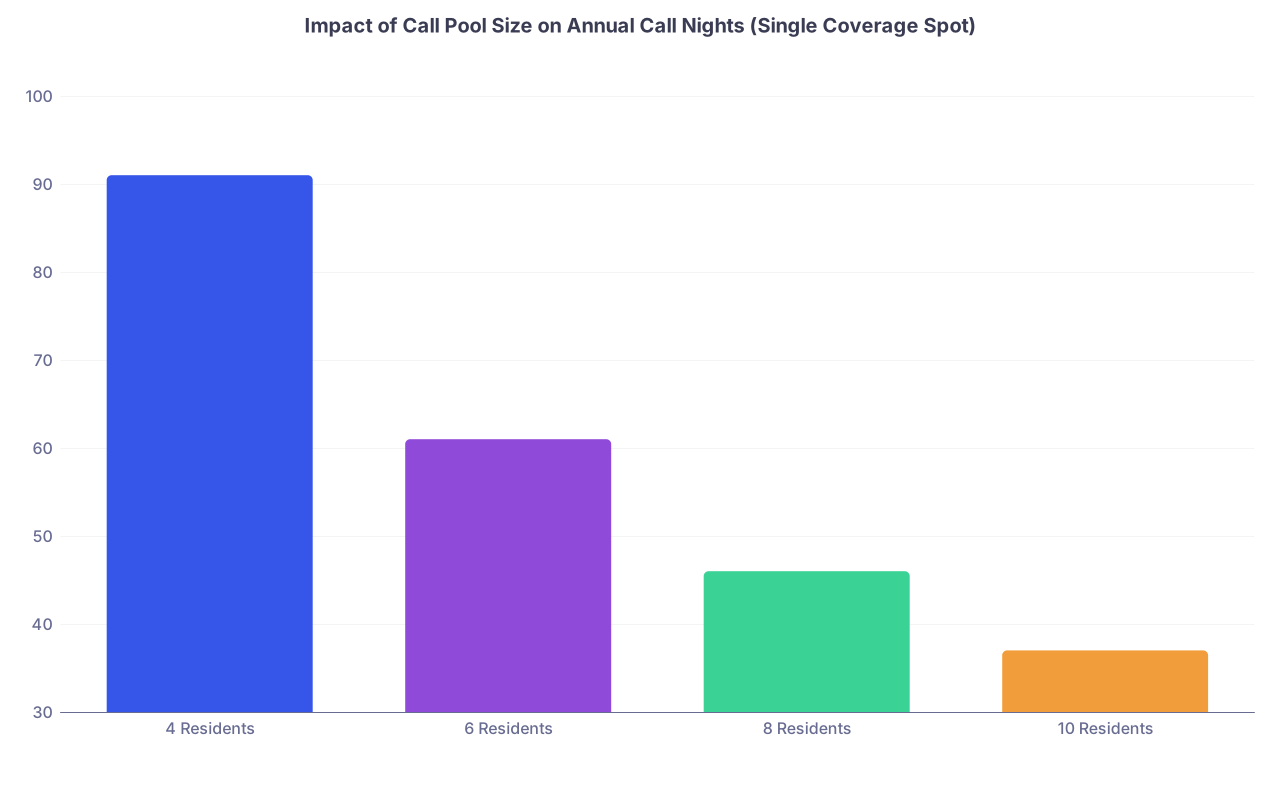
You see that bar chart? That’s the part no one wants to spell out during your interview dinner. One coverage spot, 365 days a year. If only four people share it, you’re on call roughly every four days. Ten people? About once every 10 days.
Now multiply by multiple sites and multiple services and it gets ugly fast.
The “Hidden” Call Pools Inside Lifestyle Fields
Here’s what I’ve watched happen in three very “lifestyle” specialties.
Anesthesiology
The big call drivers: main OR, OB, trauma, and sometimes hearts.
- At a big tertiary center, you might have: one main OR call, one OB call, and one trauma call. That’s three parallel call slots every night. If your CA‑1–3 pool for OB call is six residents, you’re doing OB q6 on top of main OR or trauma for some years.
- Many places pull “jeopardy” call—basically an extra warm body on a short leash for sick calls or surge. That doesn’t show up on the attractive rotation list, but it hits your weekends.
Radiology
You think: no nights, no weekends, right? Not quite.
- Overnight night float is common—2‑week or 4‑week blocks of brutal nights, followed by “golden weekends.” Looks fine on the calendar. But I’ve seen programs where PGY‑3s and 4s did 10–12 weeks of nights per year.
- Even in “no overnight call” programs, there’s evening and weekend coverage. That might mean q3–q4 Friday nights in a small pool if you’re at a medium-sized program covering a busy ED.
Dermatology
The golden child of lifestyle fields. Here’s where the surprise comes in:
- At some academic programs, derm residents cover inpatient consults (and sometimes on-call biopsies) for large hospital systems. Small derm residency = tiny call pool.
- If your program has 7–8 residents total and they only exempt seniors from weekends, your PGY‑2 annihilates their weekends for that year.
The pretty rotation map doesn’t show the call density. The call pool math does.
Different Call Models in “Lifestyle” Fields (And How They Really Feel)
Let me spell out what the common models look like from the inside.
1. Traditional 24‑Hour Call
You’re in the hospital 24+ hours, then post‑call day.
Still very common in anesthesia and some PM&R setups (especially if they cover rehab plus consults plus cross-cover).
If a program says, “Our anesthesia call is q5–q7,” you need to ask:
“q5–q7 within what pool? How many CA‑1–3s share OB or trauma call?”
A six‑person pool sharing daily OB call = roughly 5 calls/month. In a “lifestyle” field.
2. Night Float
Radiology lives here. Anesthesia and PM&R are flirting with it.
Pros: You batch your suffering. When you’re off nights, you’re usually home for dinner, maybe with lighter call.
Cons: You can end up with a lot more total nights than you’d expect because they’re “only” night float.
I’ve seen programs where rads residents did:
- 3–4 weeks of nights as PGY‑2
- 4–6 weeks as PGY‑3
- Then senior call on top of that
On paper it’s “lifestyle friendly” compared to surgery. In real life, 8–10 weeks of nocturnal life each year adds up.
3. Home Call
Derm, PM&R, some ophtho, some rads. And yes, it can be cushy. Or it can be a non-stop pager nightmare.
The trick: programs will proudly say, “It’s home call, not in-house.” What they won’t say unless you ask:
- Is there a cap on how often you get called in?
- Do multiple hospitals dump on the same call person?
- Are you backing up APPs who call you for every decision?
I’ve watched derm residents get absolutely hammered on home call at places where medicine, surgery, and EDs think derm is their biopsy concierge at 2 a.m.
4. Shift-Based Call
You see this in EM obviously, but also now in some anesthesia and radiology setups—protected “late” shifts, “short call,” etc.
For anesthesia, that might mean:
- 7 a.m.–5 p.m. regular days
- 7 a.m.–7 p.m. “late stay”
- 7 p.m.–7 a.m. night coverage
Residents rotate through all of those. This often feels better than 24‑hour call because you’re never raw for 30 hours in a row. But if the pool is small, you can still lose a massive chunk of evenings.
The Real Determinants: What You Should Be Asking
When I’m advising students looking at “lifestyle-friendly” specialties, here’s what I tell them to actually extract from residents and chiefs.
How Big Is the Call Pool, Exactly?
You’re not looking for vibes. You’re looking for numbers.
Ask:
- “How many residents share your specific call type (OB, consults, nights, weekends)?”
- “Are prelims, fellows, or attendings in the pool, or just categorical residents?”
I’ve seen big anesthesia departments where:
- Pain fellows do zero call.
- Cardiac fellows do very limited call.
- CRNAs are totally shielded from nights.
All that call has to go somewhere. It lands on you.
| Program Type | Call Pool Size | Monthly Calls per Resident |
|---|---|---|
| Small community (6 residents) | 6 | 6–8 |
| Mid-size academic (12 residents) | 12 | 3–4 |
| Large academic (20 residents) | 20 | 2–3 |
The “number of residents per year” is almost meaningless if many are research years, off-service prelims, or protected from call.
How Many Simultaneous Call Spots Are There?
You need to multiply pool size by the number of parallel call roles: OB + trauma + main OR + consult pager, etc.
You ask anesthesia residents:
- “On a typical weekday night, how many anesthesia residents are in-house covering call?”
- “On weekends, how many?”
If they say: “Two at night, three on weekends,” and there are only eight of them in that class, do the math. That’s a workload problem dressed in nice rotations.
Who Is Not Doing Call?
This is the part almost no one talks about, but faculty talk about all the time in closed-door meetings.
- Are senior residents protected from nights?
- Do certain tracks (research, global health, leadership) get exempt?
- Are integrated residents carrying call for non-integrated or independent colleagues?
I know a derm program where the PGY‑2s got stuck doing almost all the weekend consult call because the seniors were on cushy cosmetic electives “for their careers.” No one put that in the brochure.
What Happens When Someone Goes Out on Leave?
The words you want to listen for are “we flex” and “we just take care of each other.” That sounds nice. Practically, it often means the remaining people in the pool eat the extra call.
Ask politely:
- “When residents take parental leave or are out for illness, how does the schedule adjust? Do calls get redistributed to the rest of the pool?”
You’ll see a facial expression before you hear the real answer. Watch for the half-second pause.
Specialty-Specific Behind-the-Scenes Stuff
Let’s zoom in, because “lifestyle-friendly” isn’t one thing. Each of these fields has its own games.
Anesthesiology: OB, Trauma, and the CRNA Equation
The anesthesiology call story is usually OB + main OR + trauma.
The critical hidden factor: CRNA coverage. At many private or hybrid sites, CRNAs do a lot of nights. At many academic flagships, they go home and residents cover more of the off-hours.
Things PDs talk about at meetings, not at interviews:
- “We’re adding another trauma room, we’ll need another in-house resident most nights.”
- “CRNA group has limited night coverage, so we lean heavily on CA‑2/3s.”
So while the day residents brag, “I’m usually home by 3:30,” the call residents get crushed.
Concrete red flags:
- A big Level 1 trauma center plus busy OB plus limited CRNA nights = small resident pool getting pummeled.
- No genuine post‑call day off. I’ve seen places still quietly expecting residents to stick around post‑call for “teaching” or pre-ops. That destroys whatever lifestyle you thought you had.
Radiology: Who Owns the Night?
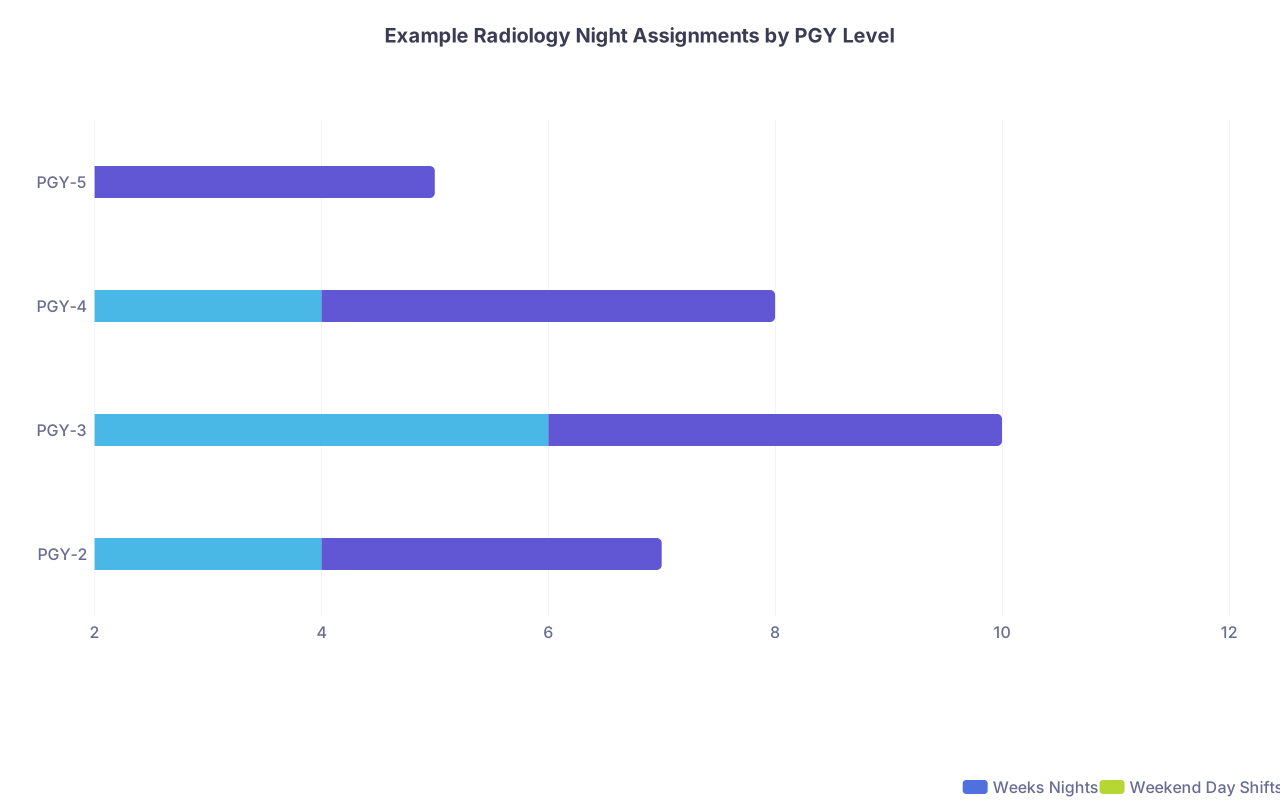
Rads feels lifestyle once you’re attending and can shape your shifts. As a resident, it’s all about how early you get pulled into nights and how many weeks.
| Category | Weeks Nights | Weekend Day Shifts |
|---|---|---|
| PGY-2 | 4 | 3 |
| PGY-3 | 6 | 4 |
| PGY-4 | 4 | 4 |
| PGY-5 | 2 | 3 |
What I see behind the scenes:
- Programs with strong teleradiology contracts offload a ton of overnight to external groups. Residents then mainly do evenings and a few weeks of nights. That’s genuinely lifestyle-friendly.
- Programs where residents are the cheapest 24/7 coverage—those “proud” of being the backbone of hospital imaging. Translation: you’re doing a lot of nights.
Questions to ask:
- “How many total weeks of nights will I do across residency?”
- “Are nights front-loaded to juniors or shared?”
- “Is there an attending physically in-house overnight or just by phone?”
If attendings are at home and you’re in-house as the primary reader at 3 a.m., that is not the same lifestyle as a cushy telerads-covered program.
Dermatology: Small Pool, Big System
Derm is a fun one. You may have only 8–12 residents total. But if you’re the only derm department covering consults for a three-hospital system, every single weekend in PGY‑2–3 might be tethered to your phone.
Most derm PDs don’t lie; they just speak their truth: “The call is light. You maybe get 1–2 calls a night.” That’s accurate—if you’re counting pure page volume.
What they’re not focused on (but you should be) is frequency:
- Are you on call every 3rd weekend for a whole year?
- Are there holiday “marathon” call stretches because the pool is tiny?
Also, attendings in derm often quietly expect quick texts, photos, and management decisions because “it’s just a quick look.” Those quick looks drag you out of dinners, workouts, and sleep.
Ophthalmology & PM&R: The “We Don’t Really Have Call” Myth
Ophtho: Many programs truly have light call. But where it exists, it’s savage—trauma consults, emergent glaucoma, post-op disasters at weird hours. At small programs, one resident can own all of that for days at a time.
PM&R: On paper, the inpatient rehab unit seems chill. Then you find out:
- Your program covers consults for trauma, neuro, and general rehab across a whole system.
- You cross-cover 40–60 inpatients on nights as the sole PM&R resident.
- The call pool is 6–8 people total.
Now your “lifestyle” field includes 1–2 brutal call nights a week for long stretches.
How to Actually Evaluate Lifestyle-Friendly Call on Interview Day
Most applicants ask terrible questions about call. They ask, “Is call busy?” or “Is call q4 or q5?” That’s how you get rehearsed nonsense.
Ask like this instead.
Make Them Do Arithmetic
Ask a senior or chief:
- “If we look at just this year—how many nights and weekends will a typical PGY‑2/3 do?”
Not “what’s the call schedule template?” Actual totals.
Then follow with:
- “How many residents/fellows share that pool?”
- “Any changes planned with new hospitals or expansions?”
If they hedge with “It depends,” press (politely):
“Rough ballpark. More like 2–3 calls a month or 6–8?”
You’re looking for data, not vibes.
Ask About the Worst Month, Not the Average Month
Everyone will tell you about their cushiest months. You care about the worst.
- “What’s the heaviest call month you’ve had and what did that look like?”
- “Any rotations where you feel like you basically live in the hospital?”
In anesthesia, that’s often OB or trauma. In rads, it’s first night float month. In derm, it’s the inpatient consult months.
Ask the Right Person
Do not rely on the happiest, most extroverted resident at dinner. Programs pick them for a reason.
Find the tired introvert in the corner. Or the PGY‑2. Or the one with kids.
- “What surprised you most about the call schedule here?”
- “If you had to fix one thing about call, what would it be?”
That’s where the truth lives.
A Quick Reality Check: Lifestyle Still Beats the Knife-and-Gun Clubs
Let me be clear: I’m not saying anesthesia is secretly worse than general surgery, or derm is secretly like trauma. The overall work-life balance can be dramatically better in these fields.
But they’re not magic. There’s no such thing as a complex hospital that runs itself on Monday at 3 a.m. Someone is awake. Someone is covering. If your call pool is small or badly structured, that “someone” is you more often than you’d imagine from the brochure.
What mentors don’t tell you—because many of them never really had to think about it—is that:
- You don’t just choose a specialty.
- You choose a call system.
- And the call system can completely reshape how “lifestyle-friendly” your life actually feels.
Get in the habit now of listening for the math under the marketing.

| Step | Description |
|---|---|
| Step 1 | Interview Day |
| Step 2 | Ask about pool size |
| Step 3 | Ask about total nights per year |
| Step 4 | Ask who is exempt from call |
| Step 5 | Realistic view of lifestyle |

FAQs
1. Are anesthesia, rads, derm, ophtho, and PM&R still the most lifestyle-friendly specialties overall?
Yes, overall they’re still among the best for long-term lifestyle compared with heavy surgical or acute care fields. But within those specialties, there’s massive variation by program. A badly structured call pool in a “lifestyle” field can feel worse during residency than a well-run internal medicine program with thoughtful night float. Specialty gives you a ceiling on lifestyle; call structure determines how close you get to it.
2. If a program says “we’re compliant with duty hours,” does that guarantee reasonable call?
No. Duty hour compliance is a very low bar. You can be 100% compliant and still be exhausted—79.5 hours a week, q4 call, lots of “short call” that runs long, post-call days eaten by expectations to stay “a little late.” Compliance just means they’re not blatantly breaking rules, not that the schedule is humane.
3. Is home call always better than in-house call?
Not always. A quiet home call where you rarely get called in is great. But if you’re tethered to your phone every 15 minutes, driving in multiple times a night, and then still expected to do a full next day “because technically you were home,” that can be worse than one clean in-house 24‑hour shift with a guaranteed post‑call day. The frequency and intensity matter more than whether you physically sleep in your own bed.
4. How much should call influence my choice of specialty vs. my choice of program?
Call should heavily influence your choice of program, and moderately influence your choice of specialty. Don’t choose derm solely for “no call”—you’ll hate it if you don’t like derm work. But if you already like two or three lifestyle fields, then call structure becomes a major tiebreaker. Inside a specialty, the difference between a good and bad call setup is the difference between having a life and just surviving.
5. What’s the single most revealing question I can ask residents about call?
Ask: “If you had to stay at this program for another three years, would the call schedule be a reason to stay, a reason to leave, or neutral?” Then shut up and watch their face. Their first reaction—before the polished answer—will tell you more than any official slide deck or PD speech.
Key points: “Lifestyle-friendly” is not a guarantee; the real story lives in the call pool math—size, structure, and who’s shielded. You do not just choose a specialty; you choose a call system, and that system will quietly decide how much of your life is actually yours.