
The biggest lie about remote radiology is that it’s a meritocracy. It isn’t. It’s politics, leverage, and timing wrapped inside a thin layer of “productivity metrics” and “operational needs.”
You can absolutely build a remote or hybrid life in radiology. Tons of people do. But the ones who get the best deals—the 100% remote telerad jobs, the 3–4 day hybrid weeks, the “I moved to another state and they still kept me on”—they didn’t get there by just “being good.” They understood the power dynamics and played them well.
Let me walk you through how it actually works behind the scenes.
The Ugly Truth: Remote In Radiology Is About Power, Not Just Skill
Programs and groups will tell you, “If you’re productive and a team player, remote options will come.” That’s… incomplete.
Here’s what’s really happening in decision meetings.
I’ve sat in those rooms where partners and section chiefs argue about remote flexibility. The names on the whiteboard aren’t arranged by RVUs alone. They’re arranged by:
- Who the group cannot afford to lose
- Who has a sub-specialty they desperately need
- Who brings in referrals from surgeons/oncologists/orthopedists
- Who is willing to cover the thankless shifts (nights, weekends, holidays)
And only after those factors do they talk about “fairness” and “equity.”
If you’re in the “we cannot lose this person” bucket, remote/hybrid options appear. Rapidly. If you’re seen as replaceable—generic body imager #7—you’ll get the standard line: “We’re looking into remote, but administration’s not there yet.”
That phrase? It usually means, “You haven’t earned the leverage to make us fight for it.”
Who Actually Gets Remote and Hybrid Roles First
Let me be brutally clear: residents don’t get true remote roles. Fellows barely do. New attendings get the scraps, unless the group is desperate.
Remote and hybrid privileges go in this order, pretty much everywhere:
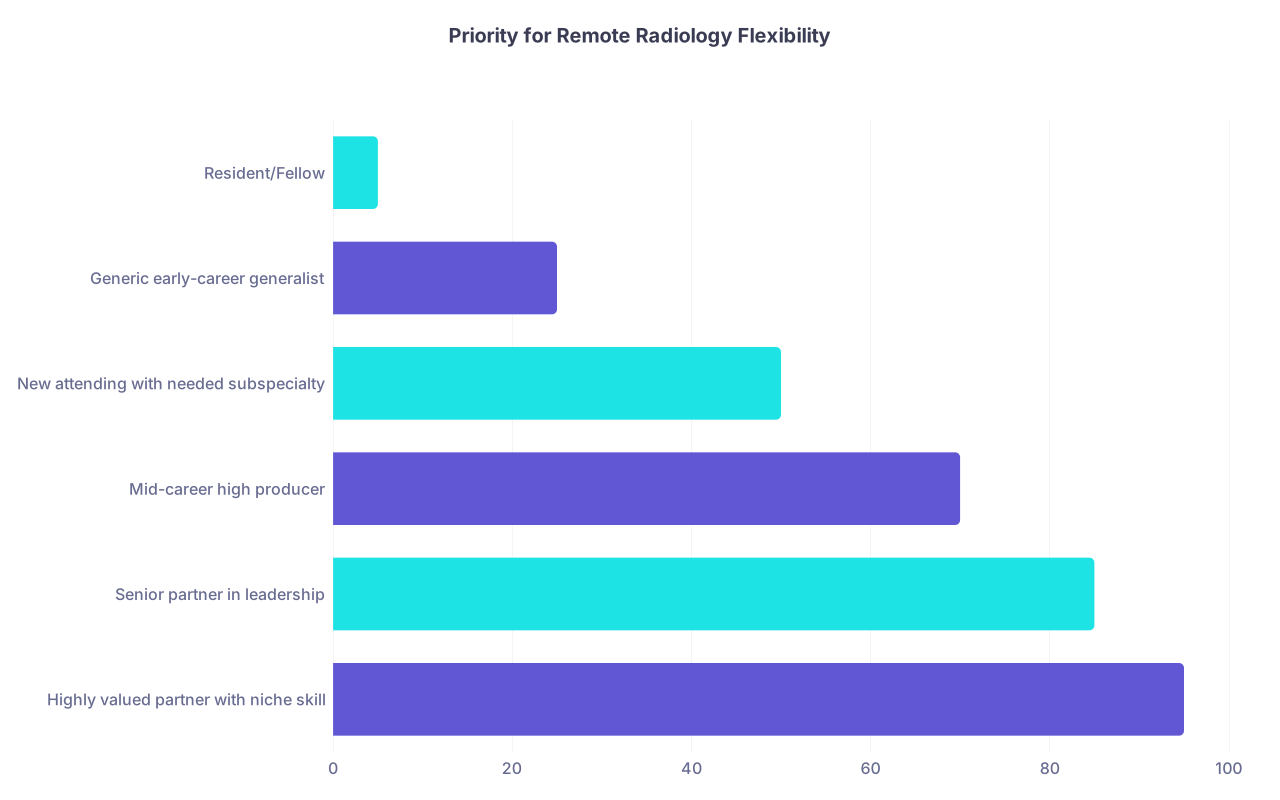
| Category | Value |
|---|---|
| Highly valued partner with niche skill | 95 |
| Senior partner in leadership | 85 |
| Mid-career high producer | 70 |
| New attending with needed subspecialty | 50 |
| Generic early-career generalist | 25 |
| Resident/Fellow | 5 |
Let’s break down the real winners.
1. The indispensable subspecialist
Think: the only neuro guy doing advanced stroke imaging at a mid-size hospital; the IR doc who keeps surgeons happy; the breast imager everyone trusts.
In meetings, the conversation literally goes like this:
“If we don’t give her hybrid, she’s walking. You want to recruit another high-end breast imager in this market? Good luck.”
Result? They get hybrid. Sometimes 2–3 days remote. Sometimes they move states and still read for the same group.
2. Senior partners with political capital
These are the folks who’ve carried the practice for a decade, sat on hospital committees, bailed the group out more than once, and know where every skeleton is buried.
They say, “I want to slow down, do 3 days a week, mostly remote.”
Everyone else: “Yeah, that’s fair.”
You as a 2nd year attending? You ask for the same thing and suddenly “it’s too complicated with hospital credentialing.”
3. High-volume grinders who cover the ugly shifts
Night-hawk types. People who can clear a ridiculous stack and do it accurately. The ones who answer every phone call and never say no.
Groups will quietly cut insane deals with them: high compensation plus full remote nights from home in another state. Why? Because nobody else wants those shifts and replacing them is a nightmare.
If you’re not in one of those three categories, you’re not getting first dibs. You might get hybrid after the dust settles and policies are formed, but you will not be the one defining the rules.
Academic vs Private vs National Telerad: Three Different Games
Residents often ask, “Where do I go if I want remote?” The problem is, they’re thinking only about lifestyle. Program directors and chairs are thinking about power, control, and revenue streams.
Here’s how the remote game differs by environment.
| Practice Type | Remote Flexibility | Who Wins | Main Tradeoff |
|---|---|---|---|
| Classic Private Practice | Moderate, politics-heavy | Partners & power players | Must earn trust & equity first |
| Academic Department | Slow, guarded | Senior faculty, niche stars | Lower pay, more meetings |
| National Telerad Company | Max remote | High-volume readers | Nights, weekends, RVU grind |
Classic private practice
Private groups fear two things with remote:
- Losing control of their workforce
- Losing their local hospital relationships to “faceless telerad”
So they compromise. Hybrid becomes the real currency. Typical pattern you’ll see:
- Early-career: Mostly on-site, maybe a half-day or 1 day remote a week if they like you.
- Mid-career: 1–2 days remote, especially if you’ve proven productive and reliable.
- Senior/indispensable: 2–3 days remote or fully remote for certain shifts.
Behind closed doors, the group is asking: “If we let more people go remote, what stops them from jumping ship to pure telerad and taking our volume knowledge with them?”
That’s why they drag their feet. They’re not confused about the tech. They’re protecting the business model.
Academic departments
Academics will talk a big game about “flexibility” and “modern workplace,” but administration is terrified of:
- Losing resident teaching quality
- Losing their justification for faculty FTEs
- Alienating surgeons/clinicians who expect “face time”
I’ve heard this line from more than one academic chair:
“We’re not going to pay you an academic salary so you can sit at home and function like a teleradiologist.”
So what you get is controlled hybrid:
- “Work from home” blocks for overnight coverage or weekends
- A fixed number of remote sessions for certain sections (neuro, body, etc.)
- Special deals for star researchers they’re scared to lose to private practice
If you’re junior faculty? You may get a token remote day tossed at you once a week—after you’ve “proven your commitment.” That means showing up to every conference, committee, and extra resident lecture you’re asked to do.
National telerad companies
This is where the rules are honest, even if they’re brutal:
You want full remote and high pay? Fine. You’ll read high volume, cover nights/weekends, and rarely see a human face.
You’ll get:
- True 100% remote
- Structured shifts, typically evenings/nights or weekends
- Workstation + stipend
- Clear metrics and clear expectations
But here’s the part residents don’t get until it’s too late: after 2–3 years of hard nights telerad, your on-site job options narrow. Groups will quietly prefer someone who’s been “in a real group” over someone who’s “just been telerad.”
They’ll never say that out loud, but it shows up in who actually gets offers.
The Real Politics Inside Departments: Who Fights For You
Let me tell you a story.
A medium-sized practice I know had a strong body imager—mid-career, high volume, collegial, good with clinicians. She wanted to move two states away for family reasons and proposed a 70% remote, 30% on-site hybrid schedule with travel every few weeks.
On paper? Totally feasible: VPN, PACS, credentialing all manageable.
The partners split into two camps:
- Camp A: “We need her. Make it work.”
- Camp B: “If we set this precedent, everyone will want to move. We lose control.”
It came down to one person: the surgeon-heavy hospital administrator who said, “If she leaves, our turnaround and quality go down. You guys fix this.”
Suddenly, the group got creative. Hybrid deal approved. Travel covered partially. Everyone claims it was a “strategic decision.”
The real lesson? Your ability to get remote/hybrid isn’t just about your value. It’s about who is willing to go to war for you in the room where the decision is made.
That might be:
- A section chief who values you and understands your leverage
- A hospital admin who knows your name and depends on your reports
- A powerful partner who respects your work and sees you as an ally
If nobody in leadership would stick their neck out for you, you’re not getting a groundbreaking remote arrangement. At best, you’ll ride whatever generic policy trickles down.
How Residents and Fellows Quietly Position Themselves For Future Remote Flexibility
You don’t ask for remote as a resident. That’s noise. But you absolutely can start setting yourself up for a career where you can negotiate for it.
Here’s how people who later “magically” get good hybrid deals actually start during training:
1. They build a reputation for reliability, not brilliance
Every PD and attending will tell you they prefer someone who:
- Shows up
- Finishes the list
- Doesn’t vanish when things are busy
- Takes responsibility when they screw up
Because remote radiology magnifies trust issues. If you’re slightly flaky in person, nobody wants to imagine what you are when nobody sees you. The resident who always finishes cases and takes sign-outs seriously? That’s the one leadership imagines could be trusted off-site.
2. They attach themselves to a high-power mentor
Not the “nice” attending. The one who actually has pull:
- Section chiefs
- Former or current chair
- Practice leaders
- The go-to radiologist for surgeons
Those are the people who later call the shots on hybrid structures or are in the meetings where policies are written. If they know you, like you, and trust your work, you become the kind of person they’re comfortable experimenting with for new remote models.

| Step | Description |
|---|---|
| Step 1 | Resident |
| Step 2 | Reputation for reliability |
| Step 3 | Mentor with real power |
| Step 4 | Strong first job in needed subspecialty |
| Step 5 | Prove value 2 to 3 years |
| Step 6 | Negotiate hybrid or remote |
3. They choose subspecialties with real leverage
Let me be blunt: not all subspecialties are equal for remote and hybrid negotiating power.
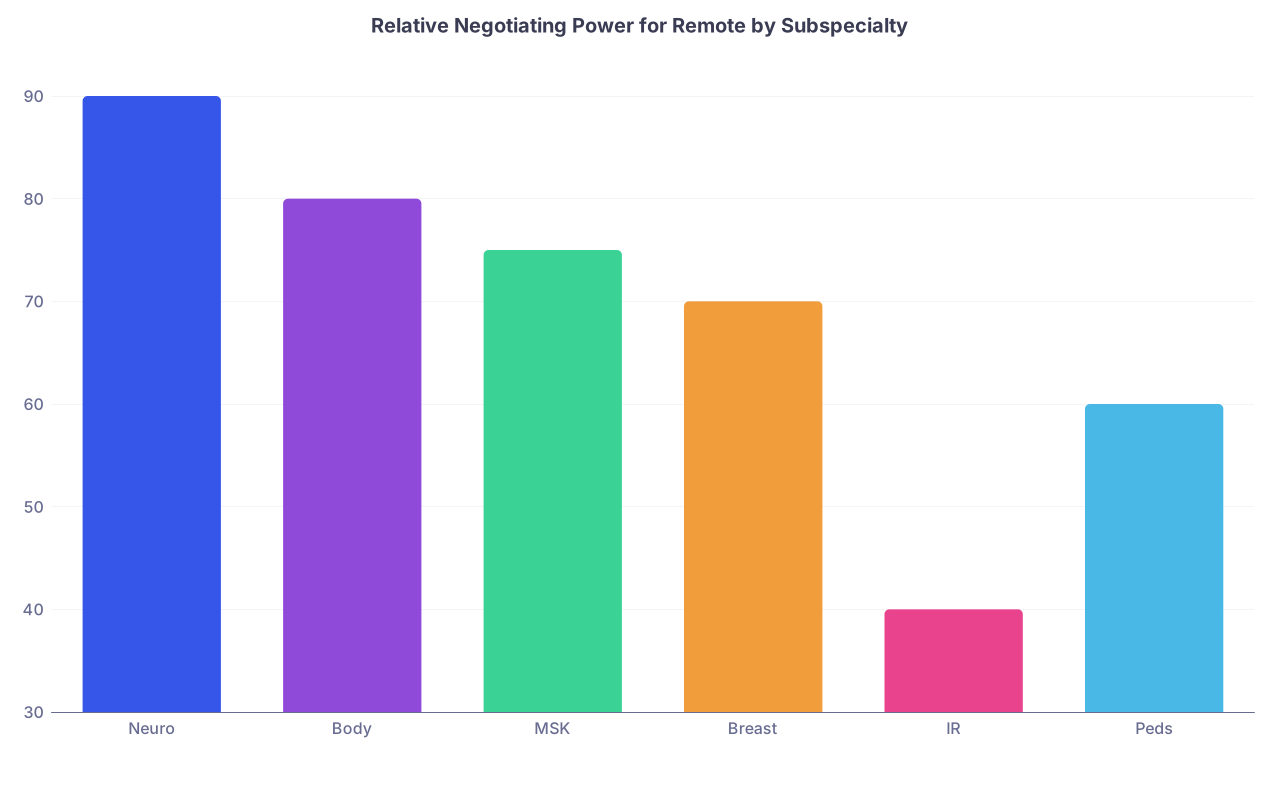
| Category | Value |
|---|---|
| Neuro | 90 |
| Body | 80 |
| MSK | 75 |
| Breast | 70 |
| IR | 40 |
| Peds | 60 |
- Neurorad: Huge telerad demand, high leverage, lots of hybrid possibilities.
- Body/MSK: Very telerad-friendly, strong demand, often easier hybrid deals.
- Breast: Trickier—screening can be remote, but procedures and same-day callbacks require presence. Hybrid common, pure remote rarer.
- IR: Worst specialty if you want mostly remote. You’re owned by procedures and consults.
- Peds: Depends on region. Big children’s hospitals may be slower to offer remote, but some are moving toward hybrid for cross-sectional reading.
Residents who think ahead don’t just ask, “What do I like reading?”
They also ask, “How mobile is this subspecialty, and how much leverage does it give me in negotiations 5 years from now?”
The Silent Filters: Who Gets Blocked From Remote Even If Policies Exist
Even when a group or department “officially” has hybrid or remote policies, they quietly gatekeep who actually benefits.
People who get blocked:
- Chronically late or disorganized attendings
- Those with higher error rates or QA flags
- Physicians who fight with techs, nurses, staff
- People seen as “bare minimum” workers
The conversation you’ll never hear goes like this:
“Tom technically meets the metrics for remote days, but if we can’t trust him on-site, why would we send him home where we can’t see anything he’s doing?”
So they stall. Or say, “Let’s re-evaluate next year.” Or require extra steps they know you won’t clear.
Meanwhile, someone with a strong reputation, even with similar numbers on paper, gets a green light, because leadership is comfortable extending them grace.
That’s why how you act as a junior attending matters so much more than your fantasy of a perfect remote schedule. You’re not collecting RVUs. You’re collecting trust.
How Hybrid Schedules Are Actually Structured (Not How They’re Advertised)
You’ll see job postings with vague phrases like “opportunities for hybrid work” or “work-from-home flexibility.”
Let me translate what these usually turn into:
- 1–2 remote days per week reading cross-sectional imaging
- In-person days stacked with procedures, mammo, fluoroscopy, or heavy phone-call services
- Occasional “remote weeks” for night coverage while others cover days on-site
- “Trial” hybrid setup for 6–12 months before it’s formalized—if it doesn’t cause friction
And there’s always this internal rule—never written down but enforced:
Seniority + indispensability = more remote days and better shifts.
So a partner with 10 years in the group might do 3 days remote / 2 days on-site.
You, as a newer attending: 1 day remote / 4 days on-site, and you’re expected to be grateful.
If you’re thinking long-term, the game is: survive the early years, build real leverage, then carefully renegotiate.
The Tech Excuse: Why “IT Issues” Are Almost Never The Real Barrier
Any time you hear:
- “Our VPN can’t handle more remote readers.”
- “PACS functionality is limited for remote access.”
- “Hospital doesn’t like off-site reads.”
You should translate that as:
- “We’re not ready to grant that level of autonomy yet.”
- “We’re scared of what it means if this becomes the norm.”
- “We want to keep you physically present because it’s easier to manage you.”
The pandemic blew up the excuse that remote reading is too hard technically. Everyone figured it out when they had to. Many departments sent half their staff home within weeks.
So when they drag their feet now, it’s not IT. It’s culture, politics, and control.
If You Want a Lifestyle-Friendly Career With Real Remote Options
Radiology is absolutely one of the most lifestyle-friendly specialties—if you play it correctly.
Here’s the stripped-down sequence I’ve seen work over and over:
- Pick radiology because you like the work, not just because you want remote. Otherwise, the grind will chew you up.
- During residency and fellowship, become known as the reliable one who clears the list and doesn’t complain.
- Attach yourself early to a powerful mentor and a high-leverage subspecialty.
- Take a first job in a group that actually values your subspecialty and is growing, not shrinking.
- Spend 2–3 years becoming indispensable: good reads, good relationships, reasonable about call and shifts.
- Then—and only then—approach leadership about a structured hybrid or partial remote model that solves a problem for them, not just for you.
You don’t walk into your first job asking for 3 days remote. That screams “flight risk.”
You walk in and make yourself the person they’re scared to lose. Then you negotiate.
Years from now, you won’t remember the exact number of days you got to work from home in your first attending job. You’ll remember whether you built enough leverage to call your own shots by mid-career.