
The lifestyle tier list you see on Reddit is a lie. The real tier system is the one residents whisper about at 2 a.m. in call rooms, when the attending is gone and everyone’s brutally honest. That’s the one you actually need to understand.
Let me walk you through what people really say when they’re not performing for med student evaluations or pretending “every specialty has its challenges” on panels.
We’re talking about the unspoken hierarchy of lifestyle specialties. Who actually goes home. Who actually sleeps. Who secretly hates their “lifestyle” field. And who quietly won the game.
The Myth vs. The Reality Of “Lifestyle Specialties”
In medical school, you’re sold a cartoon version:
- Derm, ophtho, rad onc = gods of lifestyle
- Psych, PM&R, anesthesia = good lifestyle, “chill” people
- Family med, peds, IM = noble primary care martyrs
- Surgery, OB, EM = chaos
Nice story. Mostly wrong or at least badly outdated.
Residents talk about something else entirely. They don’t just rank specialties; they rank within specialties: which practice setups, which subspecialties, which geographic markets, which call structures. Lifestyle is not a specialty label; it’s a contract plus a call schedule plus a local job market.
And there’s absolutely a tier system. It just doesn’t map cleanly to what pre-clinicals think.
The Real Lifestyle Tier System Residents Use
Here’s the rough structure that gets whispered in workrooms and after sign-out — not in brochures.
Tier 1: “Am I Even A Doctor?” Lifestyle
This is the tier everyone jokes about with a mix of envy and resentment. The ones who are home for dinner. Who plan vacations instead of begging for them. Who start talking about “work-life integration” by PGY2 without getting laughed out of the room.
Common offenders: dermatology, outpatient ophthalmology, many radiology jobs (not all), allergy/immunology, some outpatient physiatry, certain concierge primary care.
Key shared traits:
- Highly controlled schedules
- Minimal emergent middle-of-the-night anything
- Revenue tied heavily to planned, scheduled services
- Enough demand that they can say no
Here’s how the hierarchy really breaks down behind closed doors:
Dermatology
Let’s start with the cliché: “Derm is cheating.” That’s a direct quote from a burned-out surgery chief I worked with.
Residents know:
- Clinic days tend to be 8–4 or 9–5
- Most procedures are scheduled, not emergent
- In many private practice setups, call is essentially phone-only, low intensity, and often shared or token
- High earning potential without time-based suffering
The dark side? In residency, derm can be surprisingly intense intellectually and academically. But the hours still beat almost everyone. And after training, the gap widens.
The real inside joke: You don’t see derm residents frantically checking their phones at 1 a.m. for admissions. That matters.
Outpatient Ophthalmology
Ophtho is quietly tier 1 for lifestyle if you land in the right practice. Residents know this but don’t advertise it loudly, because spots are limited and competitive.
Clinic: busy but predictable. OR: scheduled. Emergencies: yes, but far fewer than you’d think compared to trauma or OB. The retina folks and academic subspecialists might eat more call and nights, but a community comprehensive ophthalmologist with a reasonable group? Very strong lifestyle.
What makes ophtho slightly “below” derm in the resident whisper rankings is the call variability and some weekend coverage in certain practices. You hear this a lot: “My friend in ophtho works really hard… but it’s all daytime.” That’s still tier 1 material.
Radiology (Selective)
Radiology is not monolithic. Residents know that.
The whisper: “Rads can be god-tier lifestyle… or it can be soul-crushing shift work.”
Classic community daytime radiologist job:
- Structured 8–5ish days
- Very few unexpected emergencies that force you physically into the hospital
- Home call or telerad coverage
- High compensation to time ratio
Night float or 24/7 groups change the math. You’ll hear senior residents say things like: “If you pick rads and then sign up for a 7-on-7-off overnight telerad job, you didn’t pick a lifestyle specialty. You picked nights for life.”
But as a category, radiology is absolutely viewed as near the top of the lifestyle pyramid — once you avoid the obvious traps.
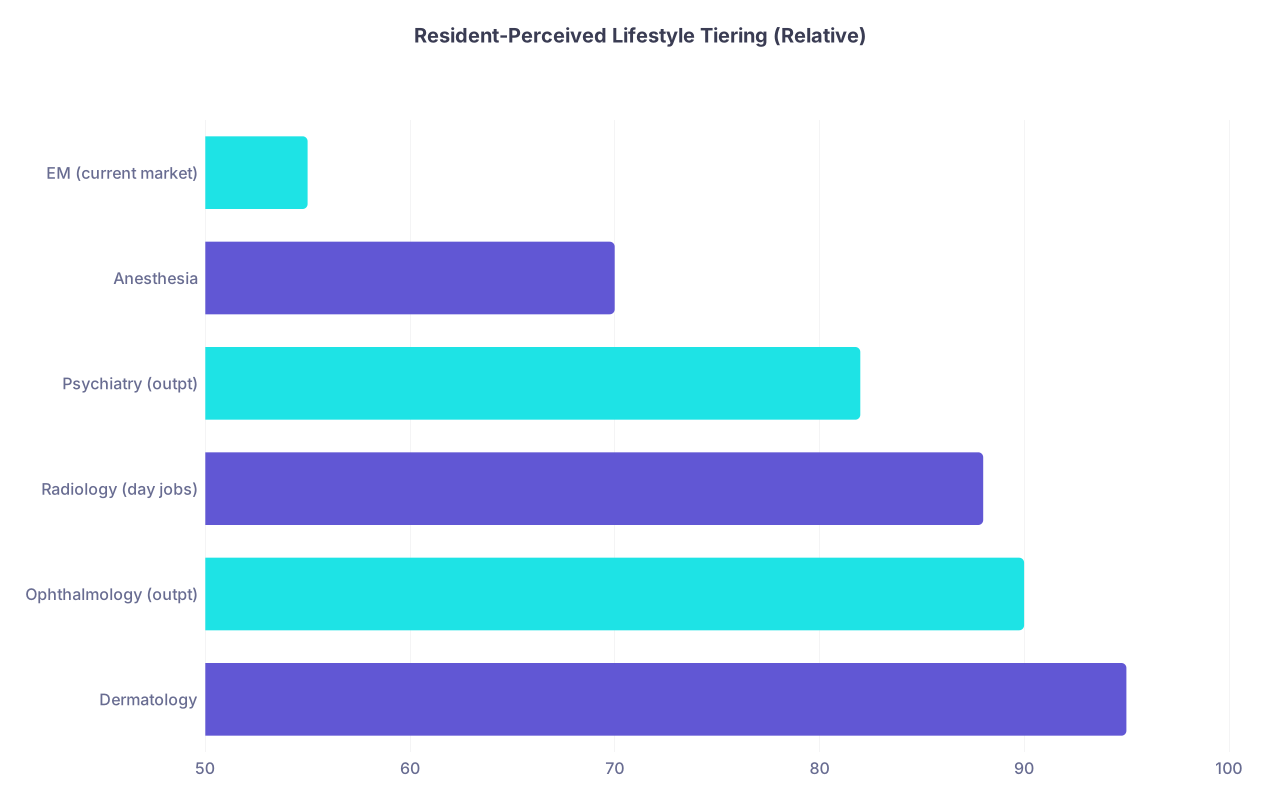
| Category | Value |
|---|---|
| Dermatology | 95 |
| Ophthalmology (outpt) | 90 |
| Radiology (day jobs) | 88 |
| Psychiatry (outpt) | 82 |
| Anesthesia | 70 |
| EM (current market) | 55 |
Tier 2: “Real Doctor, Real Life” Specialties
This is where most residents quietly want to land: still doing “real medicine,” still seeing acutely ill patients or doing procedures, but not being destroyed by the job structure.
These fields often get mislabeled as uniformly lifestyle-friendly when the truth is: lifestyle depends heavily on how you practice.
Psychiatry
Students think psych is all 10–4 therapy sessions and reflective conversations. Residents know better.
You have:
- Outpatient psych in affluent suburbs: extremely lifestyle-friendly, usually tier 1. Minimal true emergencies, lots of scheduled follow-ups, decent telehealth integration.
- County hospital inpatient psych: admits at 3 a.m. from the ED, agitated patients, staffing issues, boarding nightmares.
- Consult-liaison psych at a major academic center: pager never stops, complex medically ill patients, constant pressure to “clear for discharge.”
What people whisper: “If you choose psych and you end up working inpatient at a safety-net hospital forever, that’s not ‘lifestyle’ — that’s just a different kind of grind.”
But as a whole, psychiatry is still ranked high by residents for lifestyle potential. It’s one of the rare specialties where you can truly ratchet the chaos way down with outpatient practice choices.
PM&R (Physiatry)
PM&R flies under the radar for med students and is quietly revered among residents who know how the game works.
Why residents respect it:
- Many outpatient musculoskeletal or sports-focused jobs are pure lifestyle: predictable schedule, procedures, minimal true emergencies.
- Inpatient rehab and spinal cord injury units can have real call, but it’s rarely comparable to surgical or critical care.
You’ll hear hospitalists say: “The PM&R folks have cracked the code. They see patients, do procedures, and still make their kids’ games.”
The main friction is market-specific. In some areas, especially oversaturated ones, physiatry jobs skew toward nursing home mills or heavy inpatient census with less control. But the ceiling is excellent.
Anesthesiology
This is where the nuance really shows. Anesthesia used to be universally held up as lifestyle-friendly. Residents these days are more cautious.
Insider breakdown:
- Academic anesthesia resident life: early starts, late days, call, nights, weekends. It’s not “chill.”
- Post-residency in the right private group or outpatient surgery center, with well-structured call and staffing: can be outstanding.
- CRNA-heavy markets with aggressive corporate groups: more hours, more cases, more pressure.
The comment you’ll hear: “Anesthesia is only a lifestyle specialty if you pick your job as carefully as a derm grad picks their city.” And that’s accurate.
But compared to surgery residency or OB, anesthesia still lives in a nicer neighborhood of suffering.

Tier 3: “Borderline Lifestyle” — Depends On Your Deal
These are the specialties that get rebranded as lifestyle by attendings in cushy jobs who conveniently forget what residency or less-desirable markets look like.
The dominant resident sentiment: “It can be lifestyle… but you’re gambling.”
Emergency Medicine
This one’s changed the most in the last 10 years.
The old myth:
- 3–4 shifts a week
- No pager, no call
- Tons of time off
What residents actually say now:
- “Shifts are getting longer, volumes are brutal, boarding is out of control, and weekends/nights never really go away.”
- “I don’t care if it’s 14 shifts a month, if 8 of them are nights and weekends, that’s not ‘lifestyle’ to me.”
EM still has things going for it:
- Defined hours: When you’re off, you’re off. No clinic inbox. No rounding.
- Shorter residency than many others.
But corporate staffing models, crowding, and burnout have pushed EM down the lifestyle tier list in resident conversations, especially compared to a decade ago. You’ll hear PGY3s say out loud: “If you’re choosing EM for lifestyle in 2026, you didn’t talk to enough attendings.”
Outpatient Primary Care (FM, IM, Peds) — In The Right Setup
This is where the whispers get more nuanced.
Most residents complain about:
- Metrics and RVUs
- Admin bloat
- Documentation and inbox chaos
- Understaffing
But then they see a colleague who:
- Works 0.7–0.8 FTE
- Has a protected schedule
- Is part of a physician-friendly group or direct primary care practice
- Caps their patient panel intentionally
Then the tone changes: “Okay, that looks like lifestyle.”
In reality, primary care sits squarely in the “it completely depends on how you practice” category. Residents are very aware that the average outpatient FM doc is buried, but the smartest ones also know: if you’re ruthless about boundaries and willing to earn a bit less, you can absolutely live a good life here.
Hospitalist Medicine
Hospitalist work is like EM’s inpatient cousin in the resident ranking. Not call-based. Shift-based. Work hard when you’re on, disappear when you’re off.
Aim for:
- 7-on-7-off in a reasonable-census, reasonably staffed hospital
- No mandatory clinic
- Stable nocturnist coverage so days don’t get crushed with cross-cover
Avoid:
- Hospitals routinely running 20–22+ patient lists per doc
- Locations where you’re essentially the ICU team, cross-cover, and admitting service all at once
Residents talk about hospitalist work as: “pretty good if you don’t mind intensity in bursts and your group isn’t exploitative.” Lifestyle? Marginal, but in the current system, many IM residents see it as a decent compromise.
| Specialty | Max Lifestyle Potential | Risk of Bad Lifestyle | Typical Control Over Schedule |
|---|---|---|---|
| Dermatology | Very High | Low | Very High |
| Ophthalmology | Very High | Low-Medium | High |
| Radiology | High | Medium | High (job-dependent) |
| Psychiatry | High | Medium | High (if outpatient) |
| Anesthesiology | Medium-High | Medium-High | Medium-High |
The Secrets Residents Actually Whisper
Forget the glossy specialty summaries. Here’s the real short list of what residents quietly warn each other about.
1. Lifestyle Is A Job Attribute, Not A Specialty Label
You will hear this from jaded PGY4s who have watched friends match “lifestyle” and then get wrecked by their first job.
- A derm attending in a toxic private practice, double-booked all day with 5-minute visits and constant cosmetic upsell pressure, can burn out faster than a cushy outpatient GI doc in a low-volume town.
- A radiologist on 7 nights on / 7 nights off getting slammed with ED imaging can feel more fried than a psych attending seeing calm outpatient follow-ups.
Residents definitely gossip about specific job types:
- “ASC anesthesia with no OB call? That’s the move.”
- “Outpatient psych with telehealth two days a week, no weekends? Gold.”
- “Telerad covering three EDs overnight solo? Hard pass.”
Once you see this enough, you stop asking “What specialty has the best lifestyle?” and start asking “What jobs in this specialty have sane hours, predictable call, and non-toxic leadership?”
2. Market Saturation Quietly Destroys Lifestyle
No one tells students this clearly: oversupply kills leverage. And leverage is what lifestyle is made of.
Look at what residents say about different regions:
- “In big coastal cities, new grads in ‘lifestyle’ specialties are accepting insane call schedules just to stay in the area.”
- “In mid-size cities and certain parts of the Midwest or South, those same specialties are offering 4-day weeks, partnership tracks, and lighter call.”
This is especially true for EM, anesthesia, and some outpatient practices. The specialty might be capable of good lifestyle in theory, but in saturated markets, residents see offers that look suspiciously like: work more, earn less, thank us for the privilege.
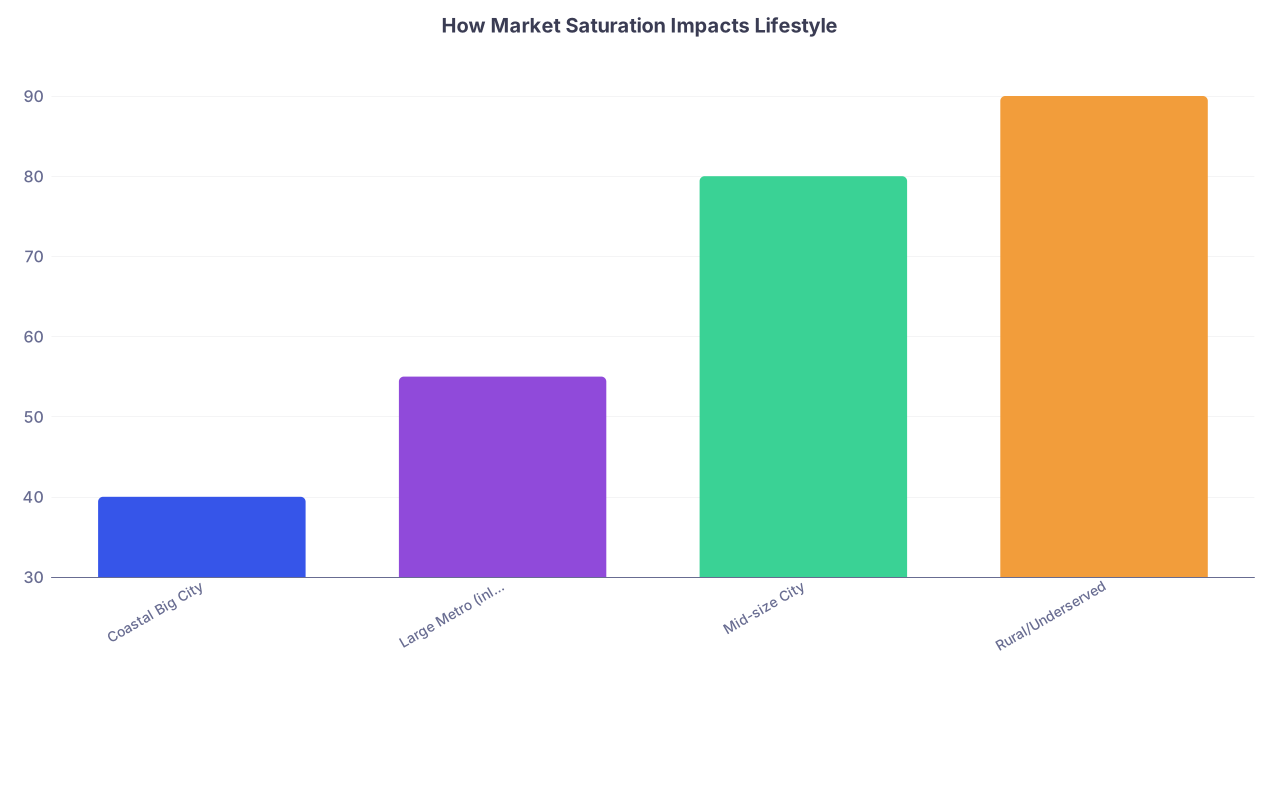
| Category | Value |
|---|---|
| Coastal Big City | 40 |
| Large Metro (inland) | 55 |
| Mid-size City | 80 |
| Rural/Underserved | 90 |
3. Ownership vs Employment: The Quiet Divider
Residents talk a lot about RVUs and salaries. They talk far less, at least on the record, about ownership. But in private conversations, you’ll hear this over and over:
“The happiest derm/ophtho/rads attendings I know own something — a group, a center, an equity stake. The most miserable ones are employed in big systems, micromanaged to death.”
Ownership or partnership often gives:
- Control over schedule
- Control over staffing
- Ability to drop low-yield services
- Long-term financial upside that lets you cut back later
But it also means:
- Administrative headaches
- Responsibility for business risk
- Delayed gratification
Lifestyle at 35 vs lifestyle at 50 can look very different depending on whether you’ve built something or just traded your time for salary. Residents who pay attention notice this and choose accordingly.
4. Call Structure Matters More Than Raw Hours
A 50-hour week looks totally different if you:
- Know you’ll sleep at night, or
- Have a pager that can explode at 2 a.m. and destroy the following day
That’s why derm, outpatient ophtho, radiology (day jobs), and outpatient psych float upward in these informal rankings. It’s not just about “how many hours.” It’s about how those hours are arranged around your life.
Residents will say things like:
- “I’d rather do 4 long days with no call than 5 shorter days plus Q4 home call that’s actually busy.”
- “I don’t mind working hard 7–5. I mind not knowing if my night is safe.”
The shape of your work matters as much as the count.

| Step | Description |
|---|---|
| Step 1 | Want lifestyle |
| Step 2 | Psych Derm PMR Ophtho |
| Step 3 | Anesthesia Rads Ophtho |
| Step 4 | Derm Ophtho |
| Step 5 | Psych PMR Outpt Primary Care |
| Step 6 | Anesthesia Rads Mix |
| Step 7 | Outpt only pathways |
| Step 8 | Prefer clinic or OR |
| Step 9 | Tolerate severe competition |
| Step 10 | Tolerate nights or early starts |
How To Play This Game Without Lying To Yourself
Here’s the part residents rarely say out loud to students but absolutely say to each other: you can’t just chase lifestyle as a label and ignore fit. That’s how you end up in psych hating psych patients or in derm bored out of your mind and stuck for 30 years.
You need to answer a few ugly questions honestly:
Do you actually like talking to patients all day?
If yes, outpatient-heavy fields (psych, PM&R, primary care, allergy, some ophtho) are viable long-term.
If no, forcing yourself into a clinic-based “lifestyle” job will make you quietly miserable.Do you want procedures enough to trade some hours or call?
People who need their hands on something often tolerate worse schedules happily. They don’t view it as a cost.Can you tolerate delayed gratification?
Some of the best lifestyle outcomes come from 5–10 years of “okay but not amazing” during residency + early attending life, then an excellent mature setup later.How location-flexible are you?
If you’re married to one overpriced coastal city with ten residency programs feeding it, expect to trade lifestyle for geography. Residents see this pattern endlessly.
The truth is ugly but simple: the real “lifestyle specialties” are the ones where:
- The emergencies are rare
- The demand is strong
- The schedule is controllable
- And you have enough leverage to say no
Derm, ophtho, rads, psych, PM&R, anesthesia — they all can do this. None of them guarantee it. Not anymore.