
It’s late January. Interview season is winding down. You’re sitting in your apartment after a derm or radiology interview day, replaying every interaction in your head.
You keep wondering: Did I come across as someone who “fits” here? Or did I just look like another person chasing lifestyle?
Meanwhile, in a conference room you’ll never see, the PD and a few trusted faculty are going through their notes. Your name is on the screen. And someone says a version of this line I’ve heard a hundred times:
“Are they here because they love this work, or because they want banker's hours in a white coat?”
Let me walk you into that room and tell you exactly how they sort you into one pile or the other.
The Core Truth: They All Know You Want Lifestyle
No derm or radiology PD is naïve. They all know these are “lifestyle” specialties. They chose them too.
What they’re actually trying to figure out is:
- Do you understand what the real day-to-day looks like?
- Are you going to be miserable when lifestyle is not perfect?
- Will you pull your weight when you’re on call, or when reads/clinic are stacked?
- Will you disrupt the culture with entitlement?
The word they use publicly is “fit.” Privately, I’ve heard:
- “We want people who like their lives but don’t act allergic to work.”
- “I do not want someone who thinks this is dermatology-as-influencer or radiology-from-the-dark-room-meme.”
- “Lifestyle is earned. If they act like it’s owed, I’m out.”
So yes, they screen for boards, research, letters. But the whole second half of the process, especially interviews and post-interview ranking, is dominated by one question:
“Is this a stable, low-maintenance, reasonably normal human who will function in this particular environment?”
Let’s split derm and radiology, because the “fit” filters are similar in concept, but the signals are different.
How Dermatology PDs Read “Lifestyle Fit”
Derm PDs are especially paranoid about one thing: people using derm as an escape hatch.
Escape from:
- Hospital chaos
- Heavy inpatient medicine
- High-acuity drama
- Real responsibility
They’ve all had a resident or two who came in for “chill clinic and 4-day weeks in private practice.” Those residents struggle, complain, drag morale down, and sometimes need remediation.
So behind closed doors, they’re looking very closely at your trajectory and your story.
1. Your Application: Lifestyle Clues They Notice (And Don’t Say Out Loud)
Here’s what they actually talk about in the file review meeting:
Rotations and electives
They scan: Did you do multiple derm rotations at different types of places? Academic derm + private practice derm? Or just one cush home elective and a research month on “cosmetics satisfaction scales”?Sincere interest looks like variety:
- Complex medical derm
- Inpatient consults
- Surgery/procedural exposure
- At least one away where you had to work hard, not just shadow
The lifestyle chaser profile: two derm electives, both very cush; heavy emphasis on “balance” in your personal statement, and almost zero evidence you’ve seen sick patients since M3.
Research focus and depth
Are you doing serious derm work, or are you just stacking your PubMed line with flimsy case reports to look competitive?I’ve sat in meetings where someone said:
“They’ve got 12 derm pubs but no continuity. This looks like they just attached to whoever would put their name on a paper.”Compare that to:
“She’s stuck with this psoriasis group for three years, did a poster, a retrospective, now a prospective trial. That’s real.”Letters and how they’re worded
This is where PDs read between the lines. They’ll actually quote phrases. You don’t see it, but I have.Things that help your “fit for lifestyle without being lazy” image:
- “Always volunteering to stay late for complex cases.”
- “A joy to have in clinic — patients and staff love working with them.”
- “Manages a high patient volume without complaining.”
Red flags they quietly highlight:
- “Pleasant, quiet, non-complaining” (translation: passive, maybe disengaged)
- “Will do well in a supportive environment” (translation: needs hand-holding)
- “Strong interest in work-life balance” with no mention of work ethic
Personal statement tone
They don’t care that you like hiking and yoga. Lots of them do.
What they dislike: when your essay reads like an Instagram caption about “a life well-lived, with derm as the perfect flexible career to support my passions.”I’ve literally heard: “I’m not training someone so they can perfect ‘balance’ at 28.”
You can mention wanting a sustainable career, yes. But if you sound like derm is an escape from difficulty rather than a meaningful career worth having a life around, that’s a hit.
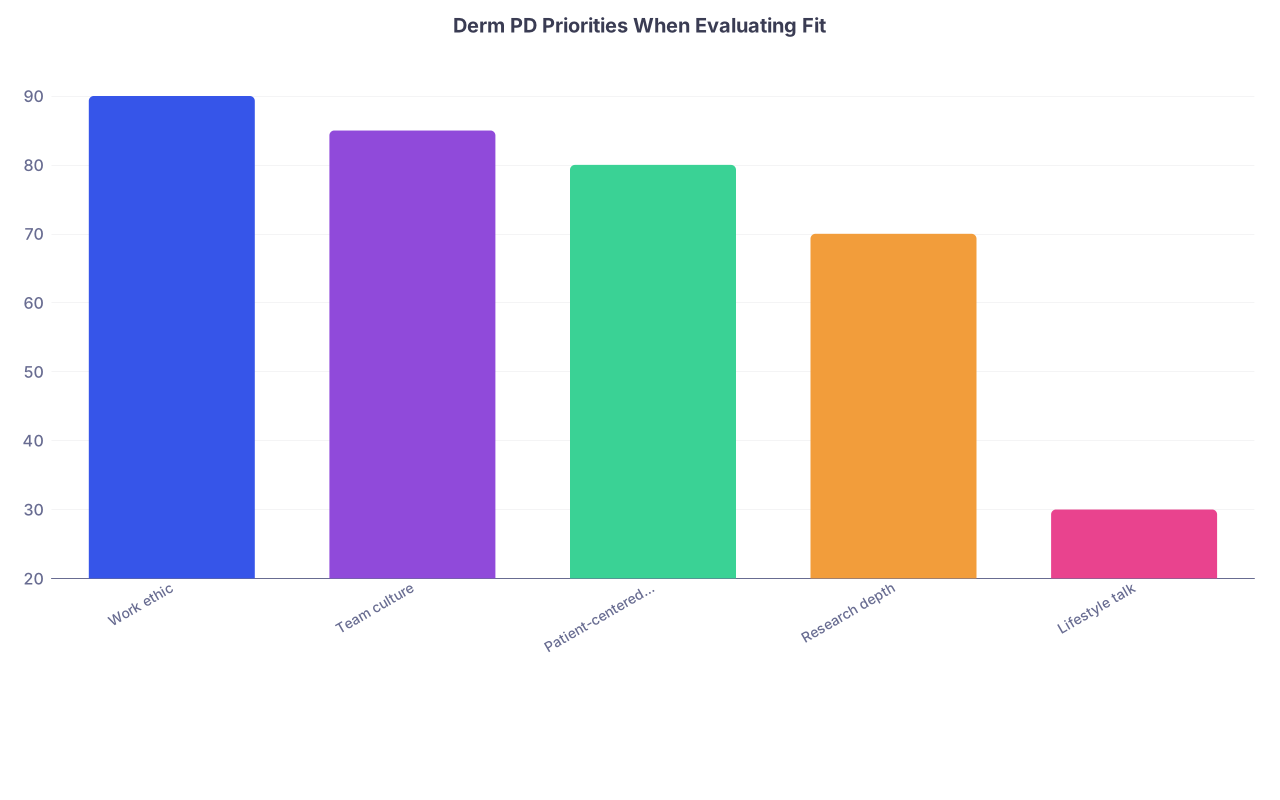
| Category | Value |
|---|---|
| Work ethic | 90 |
| Team culture | 85 |
| Patient-centeredness | 80 |
| Research depth | 70 |
| Lifestyle talk | 30 |
2. Interview Day: What Your “Lifestyle Vibe” Signals
Derm interview days are short. PDs and faculty are reading micro-signals. They’re deciding in 15 minutes if you’re “normal derm good” or “walking red flag.”
Things I’ve heard after interview blocks:
- “She asked three questions about flexibility and none about patient mix.”
- “He wants to do ‘mostly cosmetics’ but didn’t know a thing about basic derm path. That worries me.”
- “She lit up when talking about complex rashes on medicine — that’s the one I want.”
What they watch for:
How you talk about your current workload
If you brag about avoiding inpatient, or speak with contempt about medicine/surgery (“too brutal, not sustainable, too malignant”) they see entitlement. They wonder how you’ll react when derm gets busy.Your questions
It’s not that you cannot ask about schedule. You can. But if your top three questions are:- “What are typical work hours?”
- “How often do residents take work home?”
- “How much moonlighting and how soon?”
And you have zero questions about:
- Types of patients
- Autonomy
- Surgical experience
- Teaching and mentorship
You’ve branded yourself.
Attitude toward non-glamorous derm
Programs with heavy complex medical derm, inpatient consults, or underserved clinics are very sensitive to this.If you gush about cosmetics but look bored when someone mentions hidradenitis in an uninsured patient, they notice. And they talk about it.
How Radiology PDs Read “Lifestyle Fit”
Radiology PDs have a different paranoia: residents who think radiology is easy.
They have watched:
- Residents crumble on night float because they cannot push through fatigue.
- People who love “radiology lifestyle” but hate actually reading all day.
- Folks who checked out in PGY-4 once a telerad job was lined up.
So they’re filtering applicants for one thing:
Can this person handle a high-volume, high-responsibility, mostly invisible job without constant praise?
1. Your File: What Tells Them You’re Chasing Lifestyle vs. Loving the Work
Radiology PDs read your application for signals of:
- Visual pattern recognition interest
- Comfort with ambiguity
- Technical curiosity
- Ability to sit, think, and grind through stacked lists
What I’ve heard in meetings:
- “He did zero radiology electives until October of M4 and suddenly decided ‘I love rads.’ That’s not convincing.”
- “She did an ICU rotation, actually mentioned how she liked correlating imaging with the clinical picture. That’s important.”
Things they key in on:
Electives and timing
Late switchers are not always penalized, but they’re scrutinized. Did you:- Do a home radiology elective early enough to actually explore
- Seek out subspecialty rotations (neuro, IR, chest)
- Get any sense of night call / ER work
The “lifestyle tourist” is the one who does a single extremely cush rads elective, mentions “great residents and early hours” in their essay, and nothing else.
Performance in core clerkships
PDs still look at your medicine, surgery, and ICU comments. They’re asking: Are you the person others trusted? Did you show up? Do you crack under pressure?The worst combination: mid/low comments about work ethic on medicine or surgery, and an application pivoting to radiology with lots of “better fit for my personality and lifestyle.”
Letters from radiologists
They’re not just scanning for “excellent” and “top 10%.” They want:- “Stays late to help finish the list.”
- “Read widely, not just the interesting cases.”
- “Handles feedback extremely well.”
They’re allergic to:
- “Enjoyed the flexible environment of the reading room.”
- “Pleasant, gets along well with others” with no mention of speed, accuracy, growth.
| Signal Type | Genuine Derm/Rads Interest | Obvious Lifestyle Chasing |
|---|---|---|
| Electives | Multiple, varied, early | One late, very cush |
| Letters | Work ethic, volume, growth | Nice, vague, “balanced” |
| PS Content | Cases, patients, learning | Hours, flexibility, vibes |
| Questions | Pathology, autonomy, teaching | Schedule, remote work, moonlighting |
2. Radiology Interviews: How You Talk About Work, Call, and Screens
Radiology interviewers are savvy. They know half the field is mostly remote now. They know you’ve seen the memes.
So they test your reaction when they take the glamour away.
Common probing moves:
They emphasize:
- Overnight ED volumes
- Short turnaround expectations
- Direct calls from angry surgeons
Then watch how you react. Internally, they’re asking: Does this person still want the job when I describe the grind instead of the lifestyle?
They ask about:
- Times you handled a heavy workload
- Situations where your decision significantly impacted patient care
- How you handle repetitive tasks
If you keep pivoting back to how you “value time for family and outside interests,” they mentally file you as “lifestyle-first.” That’s not an automatic no, but it’s a downgrade.
They listen for:
- “I liked being the person everyone came to for the answer.”
- “I enjoy pattern recognition and seeing lots of different pathologies quickly.”
- “I don’t mind the quiet; I like getting into a flow and knocking out worklists.”
Versus:
- “I think radiology will let me have a more sustainable lifestyle.” (everyone wants that; it says nothing about if you like the work)
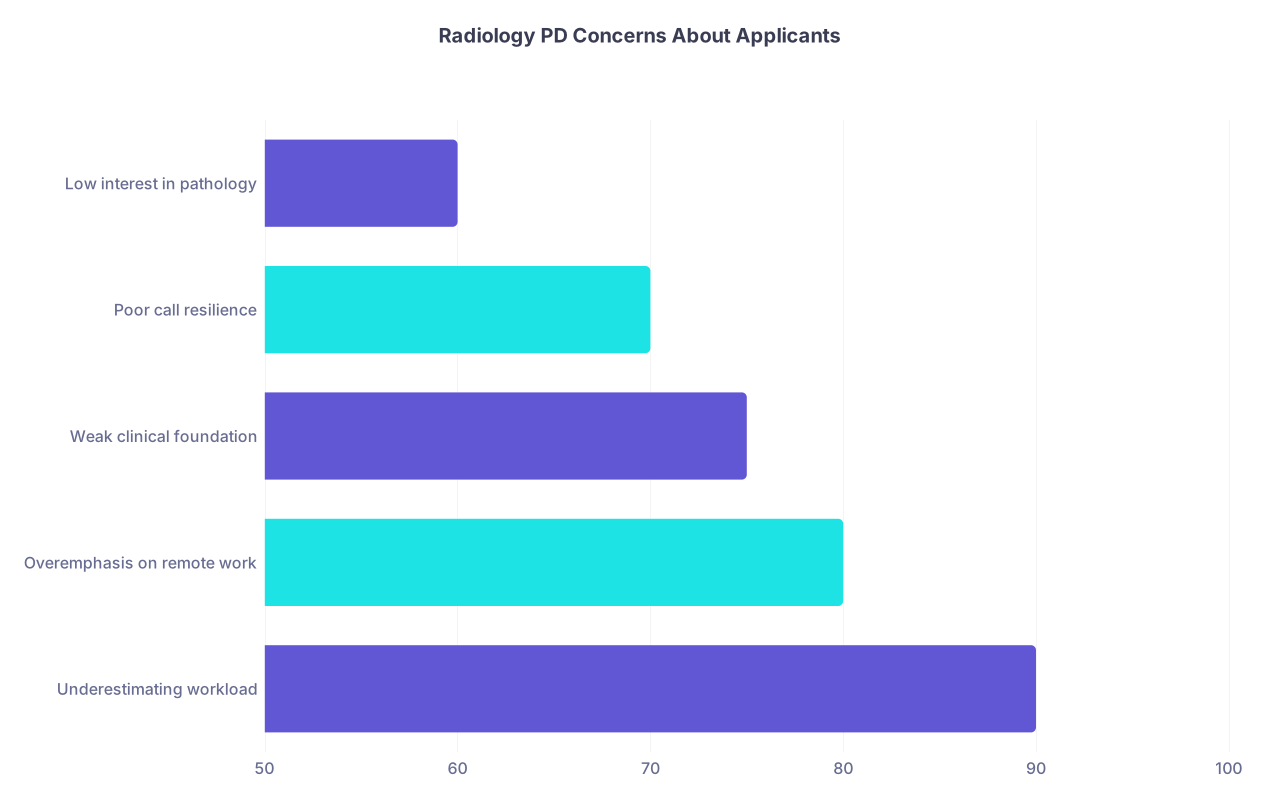
| Category | Value |
|---|---|
| Underestimating workload | 90 |
| Overemphasis on remote work | 80 |
| Weak clinical foundation | 75 |
| Poor call resilience | 70 |
| Low interest in pathology | 60 |
The Hidden Layer: Each Program Has Its Own “Lifestyle Culture”
Here’s the part students almost never understand: “Lifestyle friendly” is not one thing.
Two derm programs. Both 8–5 clinics on paper. Totally different expectations.
- One expects residents to hustle, fill templates, see high volumes, help each other, run journal club, present at conferences. They value busy days but early evenings.
- The other prioritizes super-chill clinics, slower pace, fewer procedures, limited academic push. They value low stress above all.
Same in radiology:
- One is high-volume academic, enormous ED, constant add-ons. Residents work hard, learn a ton, but go home by 6–7 most days.
- Another is community, more relaxed volume, but call is brutal because there’s little backup.
Behind closed doors, PDs are not asking, “Do they want lifestyle?”
They’re asking:
“Do they match our version of lifestyle?”
They gossip about this more than you’d think. I’ve heard:
- “She’s great, but she’s a grind mentality person. She’ll hate how slow we are.”
- “He’s laid back; I don’t think he’ll survive our volume.”
- “We’re trying to dial down the research obsession. I want someone who doesn’t care if they publish 10 papers.”
So your job, if you’re smart, is to signal alignment with that specific program’s culture, not just radiology or derm in the abstract.
How do you do that practically?
- Pay attention on interview day when they describe:
- Volume
- Expectations
- Academic vs clinical emphasis
- Service obligations
- Mirror the parts that genuinely appeal to you in your conversations:
- “I like that your derm residents manage complex inpatients.”
- “The ER volume sounds intense, but exciting — I want to see that much pathology in training.”
- “I like that your faculty encourage residents to have interests outside of work but still emphasize solid clinic volume/reading volume.”
They are absolutely listening for that.
What PDs Say Out Loud vs What They Really Mean
You’ll hear PDs say variations of:
- “We look for residents who are a good fit for our culture.”
- “We want people who value teamwork and wellness.”
- “We focus on training great clinicians who can have long, sustainable careers.”
Here’s the translation from someone who has sat in those rank-list meetings:
“Good fit”
= You will not be a headache. You’re normal, not a prima donna, not overly fragile, not going to blow up the group text at 2 am over every slight.“Teamwork”
= When the list or clinic is heavy, you will quietly help instead of disappearing, complaining, or invoking ‘boundaries’ every time someone asks for help.“Wellness”
= You will not collapse mentally the first time your lifestyle is slightly worse than you expected. You can tolerate some seasons of being busy without deciding the program is malignant.“Sustainable careers”
= You’re here because you like the work enough to do it for 30 years, not because this was your clever escape from real medicine.
The residents they remember and love years later aren’t the ones who talked the loudest about lifestyle. They’re the ones who:
- Did their work well
- Were decent to nurses and staff
- Showed up on time
- Didn’t constantly make everything about their preferences
Low drama. High reliability. That’s “fit.”
How To Show You’re Lifestyle-Savvy Without Looking Lifestyle-Entitled
You probably do care about lifestyle. Fine. So do they. But there’s a right way to show it.
A few simple, concrete moves that I’ve seen work well:
Talk about the work first, then your life.
Example in an interview:
“I’m drawn to radiology because I love being in the center of decision-making. I like high-volume environments and using imaging to answer urgent questions. At the same time, I know I’ll have a family, and I appreciate that radiology can offer some flexibility down the line — but I want very solid, rigorous training first.”Ask schedule questions at the end, and pair them with learning questions.
Instead of:
“What are your typical hours?”
Try:
“Could you describe a typical day for a PGY-3 on ER? What’s the volume like, and how does call work?”Shows you care about workload as part of training, not just clock-out time.
Use examples from your past that prove you’ll tolerate work.
“On my ICU month I actually enjoyed the intensity. I won’t pretend I want to live like that forever, but it showed me I can handle fatigue and responsibility when it matters.”Do not complain about other specialties. Ever.
Saying “Medicine is toxic” or “Surgery people are crazy” makes you look like a problem, not a victim. PDs don’t want you bad-mouthing derm or rads in five years.
You can be honest that you value a career that allows you to be a present parent or to have outside interests. Many PDs feel the same way.
Just prove first that you respect the craft enough to grind when it’s time.
What Comes Next For You
Right now, you’re on the outside. Trying to mind-read PDs and second-guess every sentence in your personal statement.
You will not do this perfectly. Nobody does. But if you absorb one thing from what you just read, let it be this:
Stop trying to sell “I want lifestyle.” They already know.
Start proving: “I can work. I understand what this field really is. And I’ll fit your version of a good life in this specialty.”
If you build your application, your interview answers, and your questions around that spine, you stop looking like a lifestyle tourist and start looking like a future colleague.
You’ve gotten a look into what happens when the doors close and your name comes up on the screen.
Next in your journey? Learning how residents themselves quietly rank you as an incoming intern — and how that can make or break your first year. But that’s a story for another day.