
What do you do when a program says, “Our residents see about 15 patients a day,” and you have no idea whether that means cushy lifestyle… or soul‑crushing RVU factory?
If you’re aiming for the “most lifestyle friendly specialties” and you screw this part up, you can very easily match into a program that looks chill on paper and feels like private‑equity urgent care in real life.
Let’s fix that.
The Core Mistake: Taking Clinic Volume Statements at Face Value
The biggest trap I see? Applicants hear a number and map it onto their own fantasy.
- “We see 18–20 patients a day.”
- “Average is around 10–12.”
- “Our residents do clinic half‑days most of the week.”
You hear:
- “Nice, manageable.”
- “Sweet, more time to read.”
- “Sounds lifestyle friendly.”
What they might really mean:
- 18–20 double‑booked with no support staff.
- 10–12 but all complex patients with endless charting.
- “Half‑days” that run over by 2 hours every time.
I’ve watched residents in supposedly “cush” specialties (PM&R, derm, outpatient psych, allergy, even lifestyle‑focused IM tracks) match thinking they were signing up for a balanced clinic experience… and end up burned out because they never learned how to decode volume and RVU talk during interviews.
Do not accept raw numbers without context. The context is your lifestyle.
What “Lifestyle Friendly” Actually Depends On
Everyone talks about lifestyle specialties like they’re automatic:
- Dermatology
- Allergy/Immunology
- PM&R
- Outpatient psychiatry
- Some outpatient-heavy IM/FM jobs
- Endocrinology, rheumatology, palliative, etc.
But the specialty label means less than you think if:
- Clinic workflow is broken
- Documentation burden is insane
- RVU expectations are quietly malignant
- You’re covering way too much admin/phone work
Here’s the ugly truth: a “benign” specialty can feel like surgical hours if the clinic is mismanaged and the RVU pressure is on.
Compare this:
| Scenario | Patient Volume | Support | RVU Pressure | Lifestyle Impact |
|---|---|---|---|---|
| A | 14/day | MA + scribe | Low | Actually lifestyle friendly |
| B | 10/day | MA only | Moderate | Manageable, some charting at home |
| C | 18/day | Shared MA | High | Evenings/weekends for notes |
| D | 20+/day | Minimal staff | Aggressive | Lifestyle specialty in name only |
Same specialty. Four very different lives.
Misreading Patient Volume: The Classic Interview Trap
You will hear numbers. Lots of them. The mistakes start when you don’t interrogate what those numbers actually represent.
Mistake #1: Not Clarifying “Per Day” vs “Per Half Day”
Programs love to say:
- “Residents see 8–10 patients in clinic.”
You must ask:
“Is that per half day or per full day?”
Because:
- 8–10 per full day in a cognitive, outpatient specialty can be very humane.
- 8–10 per half day (so 16–20 per full day) with documentation and messages? Not so humane.
I’ve seen applicants match thinking, “10 patients a day sounds light,” then show up and realize it was per half day with double‑booking.
Mistake #2: Ignoring New vs Follow‑up Mix
Ten new rheum consults isn’t the same as ten blood pressure follow‑ups. You know this, but during interviews people nod along and never ask.
You need to know:
- Typical mix: “What’s the average ratio of new to follow‑up patients on a clinic session?”
- Length of visits: “How long are new vs follow‑up visits booked for?”
If a program says:
- “We book 30 minutes for new and 15 for follow‑up, and you’ll see about 18–20 a day”
Your red flag detector should go off if:
- They have heavy comorbidities
- Complex EMR
- Limited staff help
That’s how good‑on‑paper lifestyle specialties turn into nightly charting marathons.
Mistake #3: Not Asking Who Does the Non‑Face‑to‑Face Work
Too many applicants only think about patients per day, not work per patient.
Ask:
- Who handles:
- Refill requests?
- Prior authorizations?
- MyChart/portal messages?
- Lab and imaging result calls?
- Forms (FMLA, disability, school notes)?
If the answer is:
- “The resident usually manages most of that after clinic”
That “light” schedule is lying.
In a real outpatient lifestyle job, support systems make or break your time. Interviewing for a lifestyle‑friendly program and ignoring this is a rookie mistake.
RVUs: The Hidden Lever Behind “Lifestyle”
Here’s where people really get screwed: they never ask about RVU expectations for residents and for graduates.
If your long-term plan is a lifestyle‑friendly career, you need to understand how RVUs fit into both training and your future job.
What RVU Questions You’re Probably Not Asking (But Should)
You don’t need to be a billing expert in residency. But you absolutely must avoid these mistakes:
Mistake #4: Not Asking If Residents Are Evaluated on RVUs
Some programs pretend RVUs don’t exist. Some live and die by them.
Ask:
- “Are residents tracked or evaluated on individual RVU production?”
- “Do RVUs affect our evaluations, clinic assignments, or fellowship recommendations?”
- “Do we see our own RVU reports?”
If:
- RVUs are used “informally” to judge work ethic
- High producers get better evals or letters
- There’s shaming of “low producers”
You’re in a toxic setup masquerading as a lifestyle‑friendly specialty.
Mistake #5: Ignoring Faculty Compensation Structure
You’re not just matching into a residency. You’re training with attendings whose incentives shape your daily life.
Ask:
- “Are most faculty on RVU‑based compensation, salary only, or a hybrid?”
- “Is there strong pressure on faculty to meet RVU targets?”
Because if:
- Attendings are under heavy RVU pressure
- The system pushes volume above all
Then:
- You’ll see more double‑booking
- Less protected teaching time
- More “just see the next one” instead of actual education
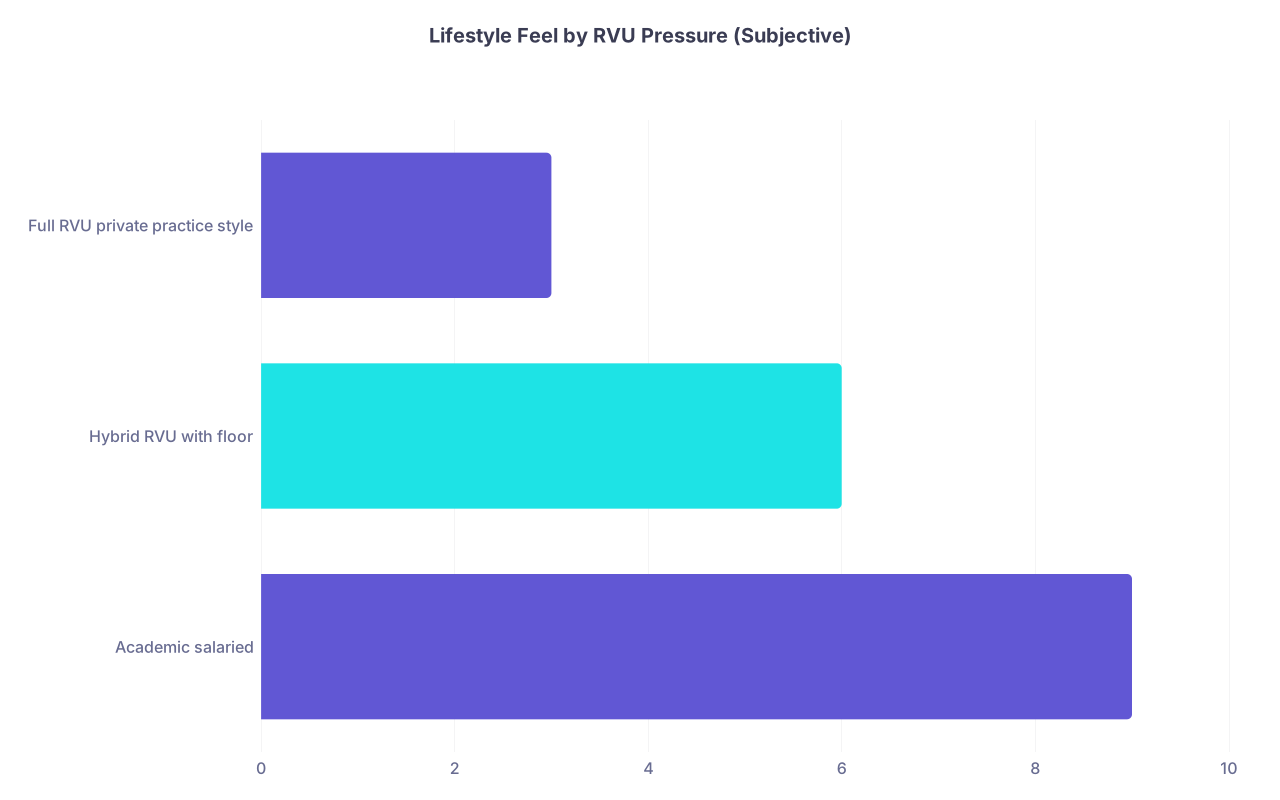
Lifestyle specialties often feel very different depending on whether they live in a pure RVU world or a more academic/salaried bubble.
| Category | Value |
|---|---|
| Academic salaried | 9 |
| Hybrid RVU with floor | 6 |
| Full RVU private practice style | 3 |
(Score 1–10: higher = more lifestyle‑friendly feel for residents.)
Mistake #6: Not Asking How Clinic Slots Are Adjusted for Complexity
RVUs are supposed to reward complexity, but if the schedule doesn’t adjust, you just get punished.
Ask:
- “Do you adjust visit length or templates for complex patients or procedures?”
- “Are high‑need patients clustered or spread out?”
If the answer is essentially, “No, you just work faster,” that’s not a lifestyle program. That’s a throughput program.
Decoding “Lifestyle Friendly” Hype in Different Specialties
Let’s go specialty by specialty for the usual “lifestyle” suspects and where people misread clinic and RVUs during interviews.
Dermatology
Common interview spin:
- “Clinic is structured and predictable.”
- “Most days are 20–25 patients.”
Mistakes:
- Not asking how many are procedures vs rashes vs full‑body exams
- Ignoring whether there’s a scribe
- Not clarifying resident role in biopsies vs notes vs counseling
Must‑ask questions:
- “On a typical resident clinic day, how many patients are we responsible for documenting on personally?”
- “Is there scribe support, and for which sessions?”
- “How are cosmetic or high‑RVU procedures handled for residents?”
If cosmetic volume is high and they run like a cash machine, don’t assume your day will feel like a mellow academic derm clinic.
Outpatient Psychiatry
Common interview spin:
- “We value 50‑minute hours.”
- “Panel sizes are reasonable.”
Mistakes:
- Not clarifying new vs med‑check visit lengths
- Ignoring portal messages and refill burden
- Not asking about call/urgent add-ons stuffed into clinic
Must‑ask:
- “What’s a typical full clinic day in numbers and visit lengths?”
- “How are crisis/urgent slots built into templates?”
- “How are portal messages and refills handled and protected for residents?”
I’ve seen psych residents with “8‑patient days” spending 3 more hours at home answering messages and writing long notes. That’s not a lifestyle win.
Allergy/Immunology / Endocrine / Rheum / PM&R
These are classic “thinking” outpatient fields. They can be fantastic. Or miserable.
Watch for:
- Long, complex new patients booked in short slots
- Zero accommodation for interpreter needs
- Heavy chronic disease management with constant forms and messages
Questions that save you:
- “How long are new consults booked for in specialty X?”
- “What’s the expectation for closing charts—same day, 24 hours, longer?”
- “How often do residents leave clinic on time vs stay late to finish notes?”
If no one can look you in the eye and say, “We usually get out on time,” believe their body language, not the brochure.
The Subtle Red Flags During Interview Day
Programs rarely say, “We grind residents for RVUs.” They show it in small ways. You just have to stop missing them.
Watch for these:
Residents joking about ‘charting at home’
- If 3 people independently joke “Epic is my side gig,” volume and expectations are off.
Attending comments about ‘keeping up’ or ‘productivity’
- “You’ll learn to be efficient fast here.” Often code for: “We push volume hard.”
Clinic tours where no one is actually sitting down
- If everyone looks like they’re sprinting, your day won’t be chill.
Residents can’t give a straight answer about patient numbers
- “It kind of depends, you know…” often = unpredictable and stressful.
No data, just vibes
- If they can’t tell you roughly how many patients residents see in different years or rotations, it’s either mismanaged or they don’t care enough to measure.
Questions You Need to Ask (Without Sounding Clueless)
You don’t want to sound like you’re obsessed with doing nothing. You want to sound like you care about sustainable, efficient training.
Here’s how to phrase it like an adult, not a lifestyle-chaser.
About Volume
- “On a typical resident clinic day, how many patients do residents see, and is that per half‑day or full day?”
- “What’s the usual mix of new vs follow‑up visits?”
- “How long are new and follow‑up visits scheduled for in the EMR?”
About Support
- “What support staff do residents have in clinic (MAs, nurses, scribes)?”
- “Who handles routine messages, refills, and forms for resident panels?”
- “Is there protected time in the schedule for inbox work or is it mostly after clinic?”
About RVUs and Expectations
- “Are residents tracked on RVU production, and is that used in evaluations?”
- “How are faculty compensated—mostly salary, RVU‑based, or a mix? Does that affect how clinic is run?”
- “Does the program explicitly aim for a certain productivity level for residents, or is the focus more on education and thoroughness?”
About Reality vs Advertised Lifestyle
- “How often do residents finish clinic and documentation by the end of the workday?”
- “If you had to estimate, how many hours per week are residents spending on charting outside scheduled clinic hours?”
- “For graduates going into outpatient jobs, what kind of panel sizes and daily patient volumes are they actually taking on?”
None of this is overstepping. It’s basic due diligence for anyone who actually understands what “lifestyle friendly” means in practice.
Don’t Confuse “Chill Interview Day” With Lifestyle
Another mistake: people judge lifestyle by interview day vibe.
- Free lunch
- Smiling residents
- No one raising their voice
That tells you more about PR than workflow.
You need concrete metrics:
- Patients per day (clearly defined)
- Visit lengths
- Support staff levels
- RVU culture
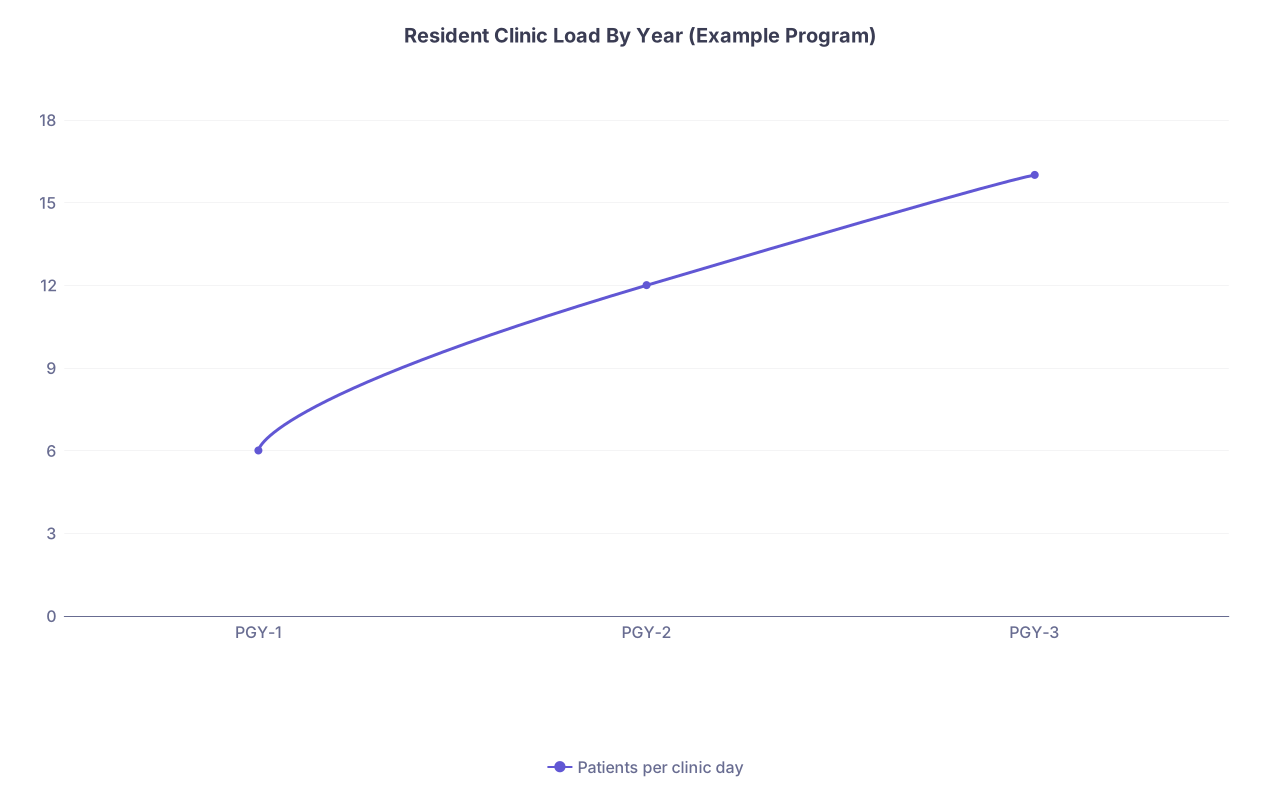
And you especially need to look at this over time:
| Category | Patients per clinic day |
|---|---|
| PGY-1 | 6 |
| PGY-2 | 12 |
| PGY-3 | 16 |
If a “lifestyle” program has PGY‑3s doing 18–20 complex patients a day with no scribes and heavy portal messaging, do not be fooled by the latte bar and nice conference room.
How to Sanity‑Check After Interviews
Don’t just trust your in‑person impression. Follow up smart.
Email a resident you connected with
- “Can I ask more concretely what a typical clinic day looks like for you? I’m trying to understand realistic patient numbers and how much work spills into evenings/weekends.”
Ask specifically about out‑of‑clinic work
- “How many hours a week would you say you spend on charting/messages outside scheduled work hours during heavier rotations?”
Compare across programs
- Lay out what each program told you. If one says 10–12/day with 40‑minute new visits and scribes, and another says 16–18/day with 20‑minute new visits and no scribes… They are not the same “lifestyle” training.
Talk to recent grads if you can
- “Did the residency’s approach to volume and RVUs prepare you for a sustainable outpatient job, or were you burned out by the time you finished?”
This is the stuff that prevents you from waking up PGY‑2 thinking, “How did I end up in a specialty I chose for lifestyle and still hate my life?”
FAQ (Exactly 4 Questions)
1. How many patients per day is “reasonable” for a lifestyle specialty?
It depends heavily on support and visit lengths. For most outpatient cognitive specialties (psych, derm, allergy, rheum, endocrine, PM&R clinic), a true lifestyle setup is roughly:
- 8–12 patients per day for complex new‑heavy clinics without scribes
- 12–16 per day if you have decent support and longer slots
- 16–18+ only feels OK if you have great staff, scribes, and short, straightforward follow‑ups
Anything above that with poor systems tends to bleed into nights and weekends.
2. Should I avoid any residency that mentions RVUs in the interview?
No. Avoid programs that weaponize RVUs against residents. It’s fine (even helpful) if they track RVUs for education and transparency, especially as you prepare for real‑world jobs. The problem is when:
- RVUs are tied to evaluations or “work ethic”
- Residents feel pressured to take unsafe volumes
- Teaching or patient care is compromised just to boost numbers
You want honest conversation about RVUs, not a black box or a quota system.
3. Is it a red flag if residents say they finish notes at home?
Not automatically. Everyone occasionally finishes work at home. The red flag is when it’s:
- Routine (“I always spend 2–3 hours after clinic finishing notes”)
- Normalized (“That’s just how it is here”)
- Widespread (multiple residents across different years saying the same thing)
A lifestyle‑friendly program might have rare spillover, not chronic off‑the‑clock charting.
4. How do I ask these questions without sounding lazy or obsessed with lifestyle?
Frame it as concern for sustainability and patient care quality:
- “I want to make sure I can learn to practice outpatient medicine well without burning out. Can you walk me through what a sustainable clinic load looks like here?”
- “How does the program balance productivity with giving residents time to think and learn in clinic?”
That signals maturity, not laziness. Honestly, if a program is turned off by you caring about sustainable practice, that’s not a place you want for a lifestyle‑oriented career anyway.
Key points to keep in your head:
- Raw patient numbers mean nothing without context: visit length, complexity, and support staff.
- RVU culture—resident tracking, faculty incentives, and clinic design—quietly determines whether a “lifestyle specialty” actually feels livable.
- If you don’t ask detailed, concrete questions in interviews, you’re gambling your lifestyle on marketing language. Don’t make that mistake.