
The myth about “lifestyle-friendly” programs is that they’re soft. They are not. They’re selective in a very different way—and if you do not understand that, you’ll fall off the rank list faster than a bad reference call.
You want to know what lifestyle-friendly program directors really do on Rank Day? They’re not flipping through your CV counting publications. They’re asking one question over and over:
“Will this person let me run a humane program without getting burned by their weakness, entitlement, or drama?”
Let’s unpack how that really plays out in lifestyle specialties—derm, ophtho, radiology, anesthesia, PM&R, outpatient-heavy IM and peds, even EM in its better-run shops.
The Real calculus: Lifestyle ≠ Easy
Lifestyle-friendly program directors live in a tension you almost never hear talked about openly.
They’re trying to build a residency that:
- Protects people from burnout
- Stays compliant with ACGME and hospital demands
- Maintains a strong reputation so the chair does not start meddling
And they’re doing this while the outside world has branded their specialty: “chill,” “cush,” “good hours.”
Here’s the part you don’t see from the student side: lifestyle PDs are paranoid about three types of residents:
- The Tourist – wants the badge and the income, not the work
- The Fragile Star – brilliant on paper, implodes under pressure
- The Clock-Puncher – does the bare minimum, disappears at 4:59 p.m.
Those three are why you get cut from the rank list at lifestyle programs even with great numbers.
On Rank Day, PDs in lifestyle specialties prioritize a very specific combo:
- Consistent, documented reliability
- Emotional steadiness (not constant crisis energy)
- Team orientation without being passive
- Enough horsepower to pass boards and keep up, but not at the cost of being unteachable
Notice what’s missing: “genius,” “top 10 school,” “first-author NEJM.” Those matter less than you think. Or at least, they matter differently.
How Rank Day Actually Looks Behind the Door
Let me walk you through a fairly typical Rank Day morning for a lifestyle-friendly program. Think dermatology at a mid-to-high tier academic center. Call it “Midwest U Derm.” Same dynamics show up in radiology and PM&R.
Program director, associate PDs, a couple of key faculty, maybe a chief or two. Spreadsheet projected on the wall. Color codes. Notes in the margins from interviews and emails.
You see columns like:
- Interview score
- Faculty impression
- Resident impression
- Red flags (with actual text)
- “Would we be happy seeing this person at 2 a.m.?” (yes, I’ve literally seen that note)
The PD starts at the top group. The conversation is never just “What was their Step 2 score?” What you hear instead:
“Okay, #3 on the draft list—great stats, but did anyone actually click with them?”
“Resident panel said ‘low energy, a little arrogant.’ That’s a problem—our service is small, attitude spreads fast.”
“Letters all say ‘technically excellent, could work on flexibility.’ I do not want to spend two years teaching flexibility to someone who thinks they’re smarter than the attendings.”
Candidate drops 10–15 spots in five minutes. No one even mentions their 260.
Now a different file:
“Board scores are fine, not stellar, but every letter says the same thing—‘always there, loved by staff, quietly reliable.’”
“Chief on their home rotation texted me separately and said we’d be lucky to have them.”
“Resident panel wrote ‘felt like one of us already.’”
That applicant moves up the rank list. Above the higher-score diva. That happens more than you think—especially in lifestyle specialties that can fill their lists easily.
Specialty by Specialty: What “Lifestyle-Friendly” PDs Actually Want
Let’s get specific, because the patterns are different.
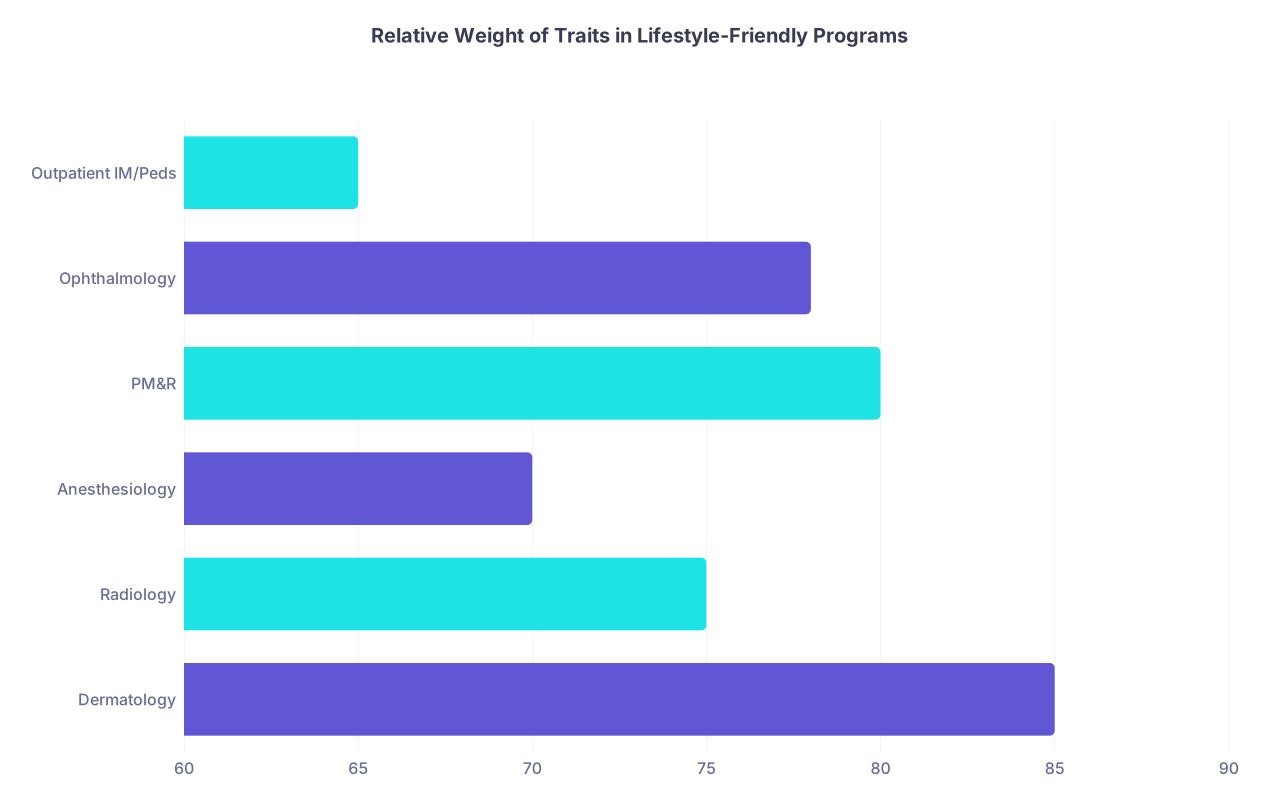
| Category | Value |
|---|---|
| Dermatology | 85 |
| Radiology | 75 |
| Anesthesiology | 70 |
| PM&R | 80 |
| Ophthalmology | 78 |
| Outpatient IM/Peds | 65 |
Dermatology: The “No Drama, High Function” Priority
Derm PDs know they’re flooded with high-achieving, high-strung people. The question on Rank Day is not “Who’s smartest?” It’s “Who can do this job without being a constant emotional fire?”
Things that move the needle:
- Reassuring, down-to-earth interview demeanor. If you come in with “I’m the smartest person in the room” energy, you get quietly buried on the list.
- Letters that talk about how you treat nurses and MAs. Derm clinics run on support staff. If you were kind, grateful, and efficient, attendings notice. They write it.
- Evidence you’ve done something over time—multi-year research, sustained volunteer clinic, not six scattered poster titles. Consistency screams “I’ll show up for four years.”
The hidden killer? Subtle hints of being high-maintenance.
I’ve watched a PD scroll to a note from a resident: “Asked repeatedly about moonlighting policy, seemed focused on money and vacation early in the day.” That applicant went from top third to barely mid-list. In derm, if it smells like entitlement, it’s game over.
Radiology: Quiet Competence and Zero Chaos
Radiology PDs live and die by one thing: trust. You’re alone in the dark room at 2 a.m. If you miss something big, or if you cannot communicate like an adult when called, they’re on the hook.
On Rank Day, they’re looking hard for:
- Pattern of solid test performance (for physics and boards)
- Calm, measured communication in the interview—no rambling, no theatrics
- Reliability comments from medicine/surgery rotations, not just radiology electives
I’ve seen rad PDs tank an applicant over one thing: stories of conflict handled badly.
If you talk in the interview about “standing up” to a surgeon and your story sounds more like you escalated a situation instead of defusing it, you get flagged. Radiology wants people who can negotiate, not pick fights they can’t win.
They absolutely love:
- Applicants who ask about how feedback works, how independence is graduated, how call is structured for safety. That sounds like someone who cares about doing it right—not just about getting out early.
Anesthesiology: Reliability Under Pressure
Anesthesia is deceptively “lifestyle” at many places: Q3–4 call, decent hours, post-call protection. But PDs know the truth—every now and then, something will try to kill your patient in the OR. At 2 a.m. During your PGY-2 year.
So on Rank Day they dissect:
- Any evidence you crumble under stress
- Attitude toward responsibility
- Your ability to own mistakes
You know what PDs talk about in that room? Stories they heard from attendings:
“On ICU, they stayed late without being asked when the unit was short. Didn’t complain once.”
“Admitted they’d missed a lab follow-up on rounds, brought it up themselves, had already called the nurse and fixed it.”
Those are gold. They scream: “You can trust me with airways and vasopressors.”
If your file contains any hint of:
- Chronic lateness
- Poor follow-through
- “Needs close supervision” language
You may not be “dead,” but you’ll fall behind other candidates who look equally smart and far more dependable.
PM&R: Team Culture Above All
PM&R is one of the most underrated lifestyle-friendly fields. PDs here are usually defending a carefully built, collaborative culture from people who don’t actually want to be there—they just want “easy hours.”
On Rank Day, they’re ruthless about weeding out the “rehab tourist.”
They look for:
- Genuine, repeated exposure to rehab: inpatient rehab, consults, pain clinic, sports, EMG. Not just “I shadowed once.”
- Clear respect for all team members—PT/OT, SLP, social work, case management. Your letters and essays should reflect this, not just “I like neuro.”
- A stable, patient demeanor. If you radiate restless, “I need constant action” energy, they know you’ll be miserable on long rehab rounds.
Where PM&R PDs bump applicants up the list:
- When a PT or OT on an elective sends an informal email saying, “That student was incredible.” Those whispers matter more than you realize.
- When chiefs at your home PM&R program say, “We’d rank them to match.” PDs call each other. That language is code for “no risk.”
They’re also attuned to lifestyle hunters. If every question you ask is about vacation, elective time, and schedule flexibility—without a single question about patient population or training philosophy—you just branded yourself.
Ophthalmology: Precision, Humility, and Steady Hands
Ophtho PDs know two things:
- The job is repeatable precision for decades
- Their residents live in a relatively small world—bad personalities poison it fast
On Rank Day, they’re obsessed with:
- Fine motor aptitude plus coachability. They’ll take the slightly less “naturally gifted” applicant who accepts feedback over the prodigy with ego.
- Professionalism history. Ophtho is small. One bad story from an away rotation gets around. And yes, PDs compare notes at meetings.
Your stock rises if:
- Your letters talk about your improvement curve: “Came in average with the scope, left excellent after really focused practice.” That’s exactly what they want—growth mindset, not “I’m already great.”
- Residents from your away rotation wrote something like, “We’d be thrilled if they matched here.” That phrase moves you sharply up.
Where you lose? Coming across as transactional.
PDs smell it when ophthalmology is just a stepping stone to private practice money. The subtle giveaway: zero interest in underserved populations, no curiosity about academic vs private, no questions about long-term complications and continuity. They see right through it.
Outpatient-Heavy IM/Peds: Emotional Stability and Honesty
Not every lifestyle-friendly job requires a “lifestyle” specialty. Some IM and pediatrics programs have built very humane, outpatient-focused tracks. These PDs have been burned before—by residents who said they wanted primary care but were clearly biding time for hospitalist jobs or fellowships.
On Rank Day they prioritize:
- True alignment with outpatient work. Continuity clinic interest. Longitudinal relationships. That theme should show up in your experiences and letters.
- Emotional regulation. These programs often have a lot of trainees who picked them because they’re burned out or fragile. PDs try to avoid stacking the deck with too many people who’ll implode at once.
Metrics they anchor on:
- Consistent, clean professionalism record
- Reflections in your personal statement and interviews that show you understand the trade-offs of “lighter” inpatient loads but heavier long-term responsibility
- How residents felt with you on interview day. If you trauma-dumped your entire life story on the resident social, it gets mentioned. And not in a flattering way.
They’re very alert to the “I want an easy residency” vibe. If that’s what they sense, you slide.
What PDs Actually Use to Separate You on Rank Day
Let me put this bluntly: by January, every PD in a lifestyle-friendly specialty has more “qualified” applicants than spots. Almost everyone is numerically fine. So “priorities” become much more behavioral.
Here’s the real sorting algorithm, whether they admit it or not.
| Factor | Impact on Rank Position |
|---|---|
| Resident feedback | Can move you 10–20 spots |
| Red flag or lukewarm letter | Can drop you off the list |
| Evidence of reliability | Moves you steadily upward |
| Entitlement or drama vibe | Hard cap, often big drop |
| Genuine specialty fit | Crucial for top tier ranking |
And here’s how each of those shows up in the room:
1. Resident Feedback: The Quiet Kingmaker
Residents are the culture. PDs know it. So they give their impressions real weight.
On the spreadsheet you’ll see a “Residents” column with notes like:
- “Top 5% of all applicants, would love to work with”
- “Fine but flat, didn’t ask anything about our program”
- “Several small comments that felt dismissive of other fields”
You don’t see those comments in ERAS. But they absolutely move people up and down 10–20 spots.
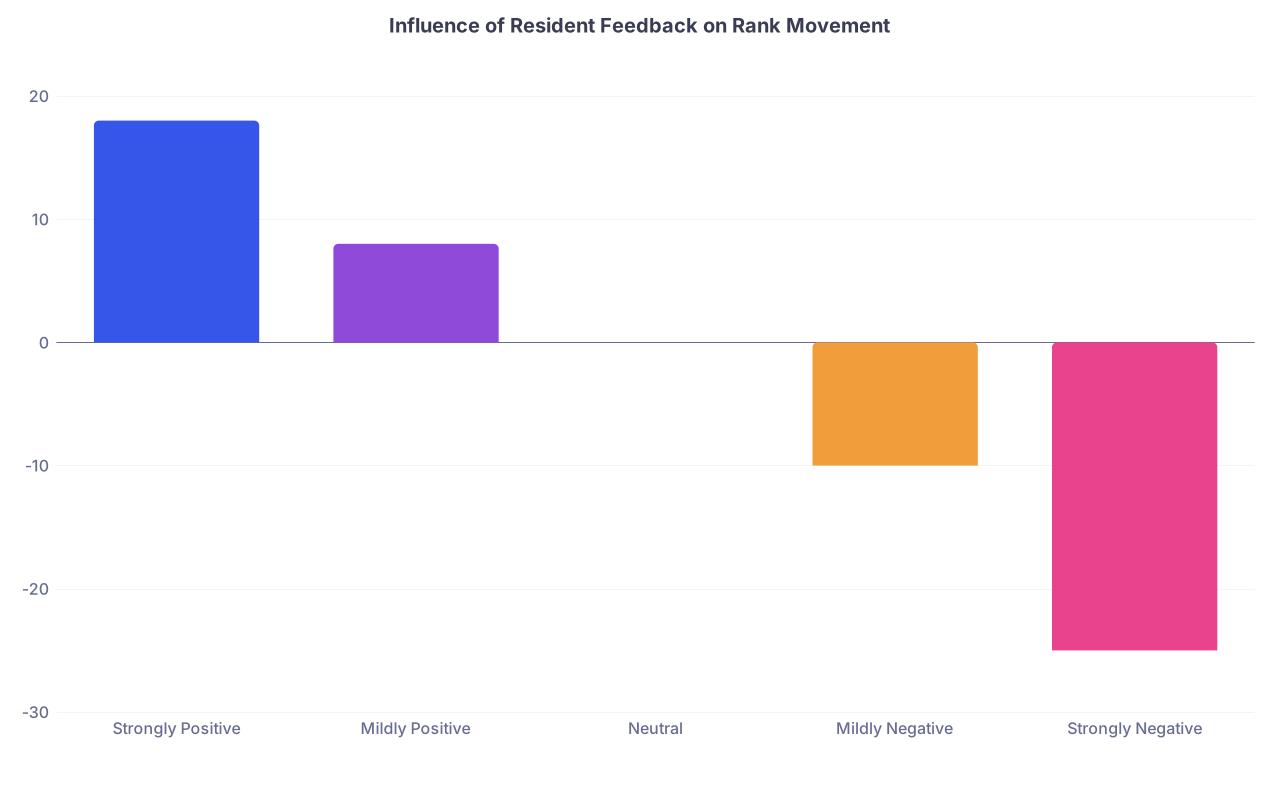
| Category | Value |
|---|---|
| Strongly Positive | 18 |
| Mildly Positive | 8 |
| Neutral | 0 |
| Mildly Negative | -10 |
| Strongly Negative | -25 |
If a lifestyle-friendly program is trying to guard its culture, the strongest resident-validated fits will rise to the top, even if they have modestly lower scores.
2. Red Flags and Lukewarm Letters
You know what PDs fear more than bad letters? Vague, carefully worded, lukewarm letters from people who usually write strong ones.
A line like “I believe [Name] will be a successful resident with appropriate mentorship and support” is death. That’s code. The PDs all know it.
On Rank Day you’ll hear:
“I called the letter writer. Got a very careful, bland response. I’m not putting that person in a small, tight-knit program.”
Lifestyle-friendly programs often have fewer residents per year. One problematic person is a bigger percentage of the whole, so the risk tolerance is low.
3. Documented Reliability
PDs love patterns. They look for evidence that other humans over time have trusted you with meaningful work and that you didn’t flake.
They bump you up if they see:
- Longitudinal commitments instead of one-off projects
- Words like “dependable,” “steady,” “can be counted on” in multiple letters
- Chiefs and coordinators endorsing you informally
The “coordinator endorsement” is underrated. If the residency or clerkship coordinator says, “They were always on top of paperwork and scheduling, never caused drama,” the PD relaxes. Which means they rank you higher.
What You Think Matters vs What Actually Matters
Let me kill a few illusions, because they hurt people in these fields every year.

You think: “I need insane stats to match a lifestyle specialty.”
Reality: yes, there are score thresholds. But once you’re above them, marginal score differences matter far less than how much you look like a safe, stable colleague.
You think: “I need a huge research portfolio.”
Reality: PDs prefer 2–3 substantial, completed things over 9 half-baked posters where you clearly just chased lines on the CV.
You think: “If I crush the interview, I’m in.”
Reality: A strong interview can’t erase months of concerning behavior that’s already in your file: lateness, unprofessional emails, unreliable responses for scheduling. PDs see all of it.
You think: “Asking about lifestyle aggressively proves I care about wellness.”
Reality: When you’re applying to a lifestyle-friendly program, pressing too hard on days off, moonlighting, and flexibility sends one message: “I’m here for me.” The well-run programs are protecting wellness; you don’t need to interrogate them like a suspicious auditor.
How To Actually Signal What These PDs Want
No gimmicks. No fake persona. Just aligning what you emphasize with what they’re really ranking on.
A few concrete moves that actually register:
- In your personal statement or secondary essays, describe a time you supported your team when there was no glory in it. Quiet reliability is extremely attractive in these specialties.
- Use your interview questions to show you care about how they train, not just how cush the schedule is: “How do you support residents who struggle early?” “How does feedback work?” “How do you balance autonomy with supervision on call?”
- Get at least one letter that focuses heavily on your professionalism, work ethic, and team behavior—not just your IQ. Lifestyle PDs read those with special attention.
- On interview day, treat staff like gold. Coordinators, residents, techs. Word gets back. Always.

| Step | Description |
|---|---|
| Step 1 | Medical Student Performance |
| Step 2 | Clerkship Impressions |
| Step 3 | Letters and Informal Calls |
| Step 4 | Interview Day Behavior |
| Step 5 | Resident Feedback Summary |
| Step 6 | Rank List Discussion |
| Step 7 | Final Rank Position |
By Rank Day, the PD isn’t asking, “Who’s the most impressive?” They’re asking, “Who can I trust to not blow up my attempt at a humane residency?”
If your entire application and behavior answer that question convincingly, you rise. If not, no amount of “lifestyle” talk will save you.