
You walk into clinic at 7:55 a.m. Coffee in hand. You click open the schedule. And your stomach drops.
Row after row of tightly packed 15‑minute slots. A couple of annual physicals dropped into 20 minutes “because the template was full.” Three double‑booked “work‑ins” before 10 a.m. You have 26 patients, 10 medication refills already in your inbox, and you have not seen a single human yet.
This is not a personality problem. It is a template problem.
Let me be blunt: in most lifestyle‑friendly outpatient specialties, the difference between a career you can sustain and one that burns you out by PGY‑5 is almost entirely driven by clinic template design. 15 vs 20 vs 30 minute slots are not minor tweaks. They determine:
- When you get home
- Whether you can think like a physician instead of a code generator
- How much charting you do at 10:30 p.m. from your couch
I have watched residents sign contracts into clinics that looked lifestyle friendly but ran on 15‑minute templates with “flex overbooks” and a culture that equated “full schedule” with “good doctor.” Two years later they were done.
So let me break this down specifically.
1. What “15 vs 20 vs 30” Actually Means In Real Life
We need to separate the myth from what you can physically do in a room with a patient.
Think of a single visit as three blocks:
- Patient time (history, exam, counseling)
- System time (clicking, orders, refills, messaging, routing to MA)
- Cleanup time (documentation, after‑visit summary, thinking)
Here is the problem: most people only count patient time. Administrators build templates assuming you are a robot for the rest.
Realistic time budgets
This is what actually happens in a decently run outpatient practice with MAs and decent EHR shortcuts:
- Patient time: 8–15 minutes
- System time during visit: 3–5 minutes
- Cleanup per visit: 3–7 minutes (either in‑room while talking, or between patients, or at lunch / after clinic)
Now map that onto the slot lengths.
| Slot Length | Patient Face Time | In‑Room System Time | Cleanup Time Left |
|---|---|---|---|
| 15 minutes | 7–10 minutes | 2–3 minutes | 0–3 minutes |
| 20 minutes | 10–13 minutes | 3–4 minutes | 3–5 minutes |
| 30 minutes | 15–20 minutes | 5–7 minutes | 5–10 minutes |
You see the issue: a true 15‑minute template assumes you can:
- Walk in on time
- Greet, listen, examine
- Reconcile meds, review vitals, address messages that pop up
- Decide, order, educate, document a coherent note
All in about 10 minutes of human interaction and 3–5 minutes of clicking. Repeated 20+ times a day.
Can some people do this? Yes. They are usually:
- In very narrow, algorithmic clinics (e.g., quick‑visit urgent care, vaccine clinics, anticoagulation checks)
- Or cutting corners on something: depth, documentation, or boundaries (“sure, we can also talk about your chest pain and new depression in this ‘med check’…”)
2. The Throughput Reality: How Many Patients Per Day?
Let’s put numbers on this. Because the math is what hits your lifestyle.
Assume:
- 4‑hour half‑day (which is standard on paper)
- 10 minutes total of “built‑in” buffer per half‑day (this is generous)
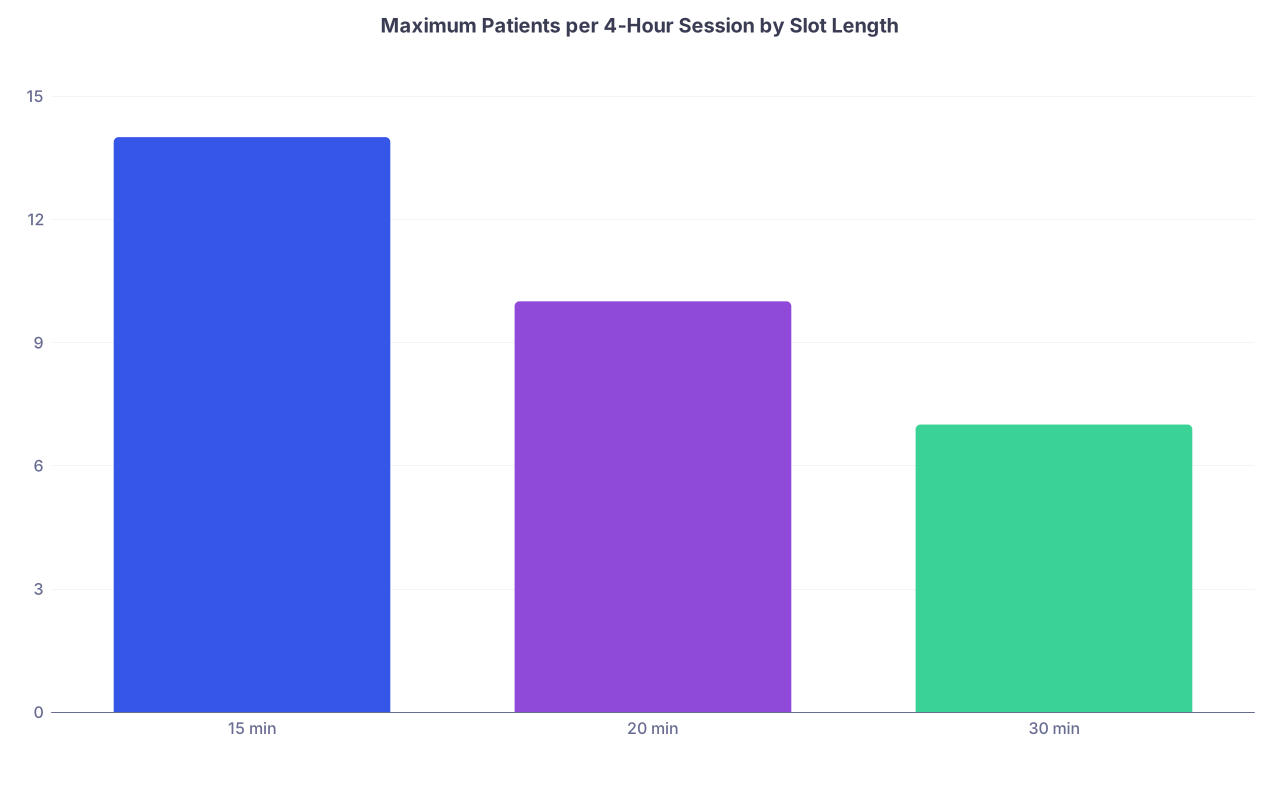
| Category | Value |
|---|---|
| 15 min | 14 |
| 20 min | 10 |
| 30 min | 7 |
Now double that for a full clinic day.
| Slot Length | Max Patients / Day (8 hrs) | Realistic Sustainable Range |
|---|---|---|
| 15 minutes | 24–28 | 18–22 |
| 20 minutes | 18–22 | 14–18 |
| 30 minutes | 12–16 | 10–13 |
“Sustainable” means:
- You finish 80–90% of notes before leaving
- You can eat something resembling a meal
- You are not charting more than 45–60 minutes at home on a regular basis
If a program or practice is demanding the max column every single day, your lifestyle is going to suffer regardless of how “friendly” the specialty looks on paper.
3. How This Plays Out By Specialty
You asked in the context of “most lifestyle friendly specialties.” Let’s talk concretely about where 15 vs 20 vs 30 minute templates show up.
I am going to focus on:
- Outpatient IM / FM (for comparison)
- Endocrinology
- Rheumatology
- Allergy / Immunology
- Dermatology
- PM&R (outpatient MSK/pain style)
Internal Medicine / Family Medicine (baseline)
Most IM/FM residencies expose you to 15‑minute chaos as the default:
- New visits: 30–40 minutes
- Follow‑ups: 15–20 minutes (often “15” but used as 20 with constant running behind)
- “Work‑ins”: double books, squeezed into 15‑minute spots
What you actually experience in clinic:
- Panels with multi‑morbid patients: CHF, CKD, diabetes, depression in one body
- A culture of “just add them on” to avoid ED visits
- Residual inpatient mindset: “we are the safety net,” so boundaries evaporate
15‑minute templates in this world are brutal. You will:
- Constantly triage: address only 2 of 5 problems
- Chart a lot at home
- Feel like you are never truly “caught up”
Contrast this with a residency where continuity clinic is built on 20‑minute follow‑ups and 40‑minute new visits, strictly enforced. Residents in those programs actually get to think, precept meaningfully, and go home earlier.
Now take that mental model into lifestyle specialties.
Endocrinology
Typical patterns:
- New patients: 40–60 minutes
- Follow‑ups: 20–30 minutes
The cognitive load is high (thyroid cancer surveillance, brittle diabetes, complicated pituitary disease) but the physical exam is relatively simple.
Where templates kill lifestyle in endo:
- Clinics that run 15‑minute “diabetes follow up” blocks all day
- Admins who see diabetes as “algorithmic” and push volume: 24–26 patients per day
What works better:
- 30‑minute follow‑ups for complex diabetes, 20‑minutes for stable thyroid / osteoporosis
- Protected 5–10 minutes per visit built into the template for documentation and CGM review
Endocrinology can be extremely lifestyle friendly if it sits closer to the 20–30 minute world and caps daily volume around 14–18. Once it drifts to 15‑minute mills, it starts resembling bad primary care.
Rheumatology
Rheum is fundamentally a 30‑minute specialty for follow‑ups if you want to do it well.
Why:
- Multisystem disease
- Heavy counseling load (DMARD risks, pregnancy and biologics, cancer risks)
- Labs and imaging to interpret at every visit
Typical good templates:
- New: 60 minutes
- Follow‑up: 30 minutes
I have seen “efficient” rheum clinics try:
- 45‑minute new
- 20‑minute follow‑up
They always end up with:
- Chronic double‑booking to handle flares
- 1–2 hours of charting at home
- Angry patients who waited 3 months for a rushed 15‑minute visit
If you want rheum and your goal is lifestyle:
- Look for clinics that absolutely protect 30‑minute follow‑ups
- Ask specifically: “How many patients per half‑day is full?”
- If the answer is 12+ per half‑day consistently, that is high volume.
- 8–10 per half‑day is far more humane.
Allergy / Immunology
Allergy is where template variation is huge.
Patterns I have seen:
Volume‑driven, primary‑care‑adjacent allergy:
- New: 30 minutes
- Follow‑ups: 15–20 minutes
- Daily volume: 22–28
- Lots of rhinitis, asthma tune‑ups, skin testing blocks
Thoughtful, sub‑specialty style allergy (more immune deficiency, complex asthma):
- New: 45–60 minutes
- Follow‑ups: 20–30 minutes
- Daily volume: 14–18
The “friendly” version of allergy is #2. It tends to use mostly 20–30 minute slots with dedicated blocks for:
- Skin testing
- Food challenges
- Biologic infusions
The more a practice carves out procedure blocks separate from standard 15‑minute face‑to‑face visits, the better your day feels. Nothing wrecks flow like dropping a food challenge into the middle of a 15‑minute follow‑up template.
Dermatology
Derm is deceptive. From the outside it looks like: quick exams, lots of 10‑minute checks, easy.
The key difference:
- Some derm practices run insane volumes: 35–45 patients per day
- Others run 22–28 with built‑in procedures and scribes
Common templates:
- “Spot check” / acne follow‑up: 10–15 minutes
- General follow‑up: 15–20 minutes
- New: 20–30 minutes
- Procedure: 20–40 minutes blocks
If derm uses pure 15‑minute blocks without:
- Scribes
- Procedure‑only slots
- Protected cosmetic blocks
You will drown. You physically cannot biopsy, inject, treat warts, counsel on isotretinoin, and document in a bare 15 minutes without something falling off the plate.
The more derm leans toward 20‑minute general slots with separate, longer procedure slots, the more tractable the day becomes.
PM&R (Outpatient MSK / Pain style)
Outpatient PM&R varies widely:
- Some clinics function as high‑throughput, injection‑heavy mills
- Others are consultative, 30–40 minute for everything
Common setups:
- New: 40–60 minutes
- Follow‑up: 20–30 minutes
- Procedure visits: separate schedule (EMG, injections)
The worst designs:
- 15‑minute follow‑ups with procedures squeezed into those slots (“quick knee injection”)
- Same‑day add‑ons into already full templates
If you want lifestyle in PM&R:
- Avoid any clinic whose standard follow‑up slot is 15 minutes without scribes and procedure blocks
- Look for 20–30 minute follow‑ups and volume capped around 14–18 / day
4. Where the Time Actually Goes: Hidden Non‑Visit Work
The slot length is only half of the story. The unseen hemorraghing of your time is non‑visit work:
- Refill requests
- Lab / imaging results
- MyChart messages
- Forms, letters, work notes
Here is the pattern: as slot length shortens, per‑patient revenue rises, so admins feel justified in dumping more non‑visit work on you “between patients.”
Let me quantify it.
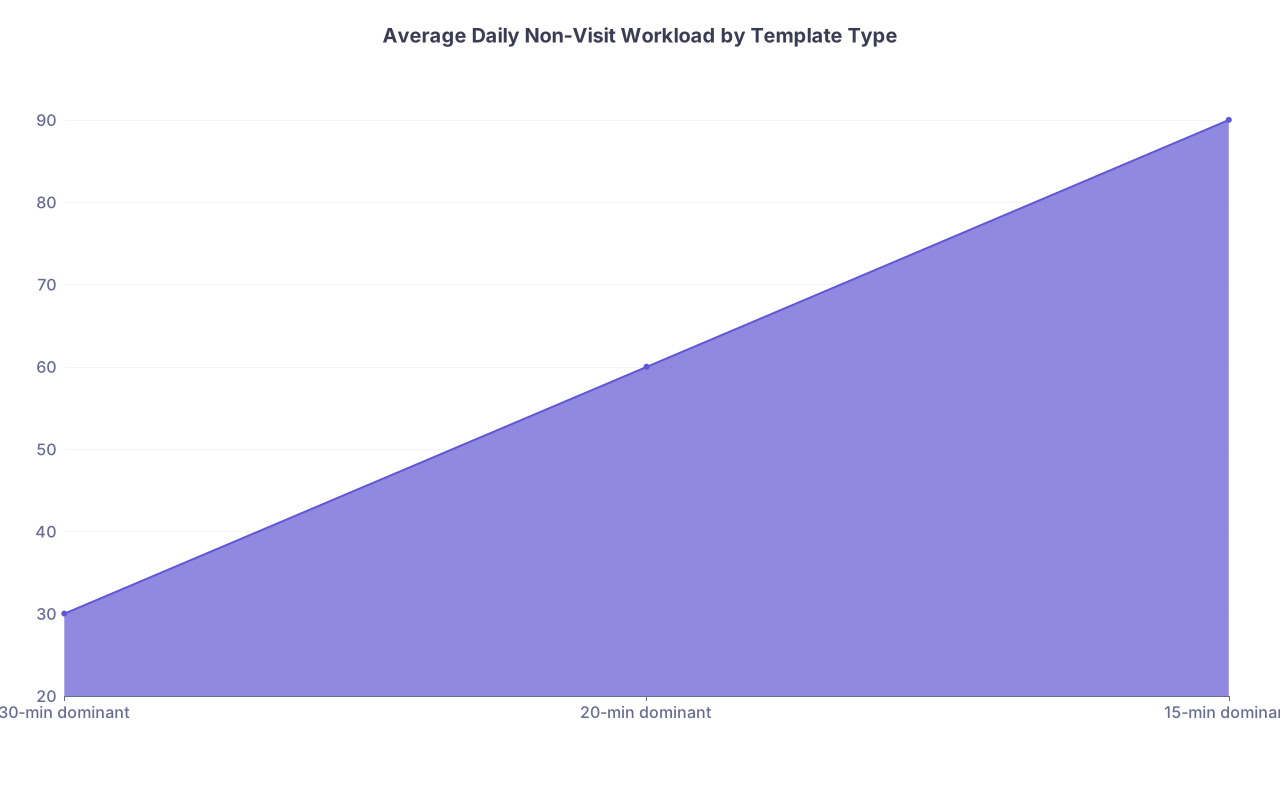
| Category | Value |
|---|---|
| 30-min dominant | 30 |
| 20-min dominant | 60 |
| 15-min dominant | 90 |
Those values are minutes of non‑visit work during the clinic day itself. The rest spills to after hours.
- 30‑minute dominant templates often let you absorb 20–40 minutes of inbox during natural gaps
- 20‑minute templates can sometimes handle 45–60 minutes if volume per day is reasonable
- 15‑minute templates with 24+ patients mean inbox has nowhere to go but your evening
If a “lifestyle friendly” specialty uses 15‑minute slots but also expects:
- Same‑day responses to every portal message
- 24‑hour turnaround for refills, documents, and forms
- No protected admin time
You will feel just as crushed as an inpatient service, but with fewer colleagues physically around you.
5. Template Design Variations That Actually Work
Now the useful part: concrete template structures I have seen that turn a potentially miserable clinic into a sustainable one.
Model 1: 20‑Minute Core with Longer New Visits
Good for: allergy, endo, outpatient PM&R, thoughtful derm.
Example day:
- 8:00–8:40 – New (40)
- 8:40–9:00 – Follow‑up (20)
- 9:00–10:40 – 5 × 20‑minute follow‑ups (100)
- 10:40–11:00 – Admin buffer
- 11:00–12:00 – 3 × 20‑minute follow‑ups (60)
That is 1 new + 9 follow‑ups = 10 visits per half‑day, 20 per full day but with:
- 40 minute new slots
- 20 minute follow‑ups
- 20 minutes buffer
With decent charting habits, you can finish the day reasonably on time.
Model 2: 30‑Minute Heavy Cognitive Clinics
Good for: rheum, complex endo, consultative PM&R.
Pattern:
- New: 60 minutes
- Follow‑up: 30 minutes
- Target: 6–7 patients / half‑day, 12–14 / day
This looks “inefficient” to a pure RVU hawk. It is not. High‑complexity codes, procedures, and better compliance often make up financial ground.
Lifestyle‑wise, this is gold.
You:
- Actually review imaging properly
- Have time to do shared decision‑making
- Rarely stay 2 hours late
I have seen mid‑career rheumatologists who moved from 15–20 minute templates at large systems to 30‑minute heavy clinics and say explicitly, “This added 10 years to my career.”
Model 3: Mixed Template + Procedure Blocks
Good for: derm, allergy, PM&R.
Key idea: not every slot is the same.
Example afternoon in derm:
- 1:00–2:00 – Procedure block (2 excisions, 30 min each)
- 2:00–4:40 – 8 × 20‑minute general visits (mix of new and follow‑up)
- 4:40–5:00 – Documentation / buffer
Or allergy:
- Dedicated shot clinic staffed by nurses, not slotted into your 15‑minute schedule
- Food challenge mornings twice a week – 2–3 patients only
- Regular clinic with mostly 20‑minute slots the other sessions
When you tour a program or interview for a job, this is what you need to ask:
- “Are procedures in separate blocks or squeezed into standard follow‑up slots?”
- “How many patients per template are procedure‑heavy vs quick visits?”
If everything is mixed into 15‑minute Legos, your day will be chaos.
6. How To Evaluate Templates During Residency And Job Hunting
You are not a victim here. You can interrogate this.
When you rotate through a “lifestyle friendly” outpatient specialty, do these three things:
Look at actual templates
- Open the schedule for the attending you are with tomorrow.
- Count: how many patients in morning, afternoon?
- What are the time lengths for each slot? Are there buffers?
Watch the end of the day
- What time does the attending leave the clinic building?
- How many notes are left at 5 p.m.?
- Are they logging back on at night? (They will tell you if you ask directly.)
Ask targeted questions
Do not ask “Is the lifestyle good?” That invites lying by omission.
Ask:
- “What is a full template here for you?” (If they say 24–28 patients per day, know what that feels like.)
- “How long are your new and follow‑up slots?”
- “How many hours a week do you spend charting from home?”
- “Do you have any protected admin time or inbox sessions?”
At job interviews, push harder:
- “Can I see a redacted sample of an average week’s schedule for an established physician in this practice?”
- “What is the expectation for work RVUs per year, and what is the average actual?”
- “What percentage of physicians are hitting target without consistently working nights/weekends?”
If they dodge, there is a reason.
7. The Subtle Cultural Piece: 15 vs 20 vs 30 Is Also Philosophy
Template length is not just logistics. It is a value statement.
- 15‑minute dominant clinics generally value volume and access over depth
- 20‑minute clinics are trying to straddle both
- 30‑minute clinics value thoroughness, relationship, and probably staff retention
None of those is “evil” by default. But you need alignment with how you want to practice.
If you are someone who:
- Likes complex problems
- Hates being rushed
- Values explaining things properly
You will be miserable in a hard 15‑minute world, even if the specialty is “easy” (e.g., bread‑and‑butter allergy).
Conversely, if you genuinely enjoy a fast pace, like dermatology’s quick decisions and visual pattern recognition, and you have a scribe, a 15–20 minute hybrid might suit you just fine.
The danger is pretending you can put a thoughtful, thorough physician into a 15‑minute mill and “they will adapt.” They will not. They will either:
- Burn out
- Cut corners in ways that harm care
- Or leave
8. How Template Design Changes Your Life Outside Clinic
Let us translate this into real life.
Imagine two allergy / immunology jobs, same city, same pay.
Job A:
- 15‑minute follow‑ups, 30‑minute new
- 26–28 patients / day
- No protected admin time
- Expectation: “inbox cleared daily”
Job B:
- 20‑minute follow‑ups, 40‑minute new
- 18–20 patients / day
- One 4‑hour admin session per week
What changes?
Time you leave work
- Job A: often 6:30–7:00 p.m.
- Job B: more often 5:00–5:30 p.m.
Evening bandwidth
- Job A: logging back in most nights, short on patience at home
- Job B: occasional log‑ins, more predictable free evenings
Vacation and time off
- Job A: building a backlog of messages that will haunt your return
- Job B: more slack in system, often colleagues with similar volume can cover
Longevity
- I have watched mid‑career physicians in Job A patterns flame out in under 5 years
- Job B patterns are what people describe as “I can see myself doing this at 60”
You cannot “time‑manage” your way out of a bad template design. You can only refuse to accept it as inevitable.
FAQ (exactly 6 questions)
1. Is a 15‑minute template always bad?
No. 15‑minute slots can work in very specific circumstances: low‑complexity visits, strong nurse/MA support, scribes, and reasonable daily volumes (18–20, not 28–30). Quick visits like vaccine checks, acne follow‑ups, or straightforward med refills can live in 15 minutes. The problem is when administrators apply the same 15‑minute framework to complex multi‑problem visits and then pile on non‑visit work without protected time.
2. What is a realistic “full day” volume for a lifestyle‑friendly outpatient subspecialty?
For most cognitive outpatient subspecialties (endo, rheum, allergy, consultative PM&R), a sustainable range is about 12–18 patients per full day, depending on case mix and slot length. Around 14–16 with 20–30 minute slots is where physicians most often report actually finishing notes at work and having some mental space left over. Particularly high‑throughput specialties like derm can push higher if procedures and scribes are well‑structured.
3. How much does having a scribe change the slot length equation?
Scribes can effectively “buy back” 3–5 minutes per visit by offloading documentation. In a 15‑minute template, that can be the difference between constant chaos and barely manageable. In a 20‑minute template, a good scribe can allow you to finish nearly all notes in real time and leave on time. They do not fix bad volume expectations, but they reduce the damage. A 15‑minute schedule with a scribe still punishes you if the clinic expects 26–30 patients per day plus a heavy inbox.
4. During residency, what specific red flags in clinic should I pay attention to?
Watch for attendings who are always 30–60 minutes behind, visibly frustrated by add‑ons, and dictating or typing notes long after the last patient leaves. Look at how often front desk or nursing staff “just squeeze someone in.” Pay attention to whether complex patients (multiple serious conditions, language barriers, social complexity) are slotted into the same 15‑minute visits as simple follow‑ups. Those are template and culture problems, not “slow doctors.”
5. When negotiating a first job, can I really ask to change the template?
Yes, but timing and framing matter. You will have more leverage if you: (1) ask to see a sample schedule first, (2) propose modest changes (e.g., 40‑minute new patients, 20‑minute complex follow‑ups), and (3) tie your request to quality and sustainability: fewer no‑shows, better patient satisfaction, lower turnover. Smaller groups are usually more flexible; giant systems are slower but still occasionally adjustable, especially for hard‑to‑recruit specialties.
6. If I like seeing a higher volume, should I just choose 15‑minute‑heavy practices?
Only if you are honest about trade‑offs. If you genuinely enjoy fast‑paced, pattern‑recognition work (e.g., certain derm setups), and the practice gives you strong infrastructure (scribes, clear procedure blocks, reasonable inbox expectations), you may thrive. But do not underestimate cumulative fatigue. A setup where you see 24–28 patients every day in rigid 15‑minute slots, with no admin time and heavy messaging, will chew up even “efficient” physicians over time. Hybrid models (mix of 15 and 20, or 20 with some quick slots) are usually safer for long‑term career satisfaction.
Key points:
- 15 vs 20 vs 30 minute slots are not cosmetic choices. They determine daily volume, non‑visit work, and whether your evenings belong to you or your EHR.
- “Lifestyle friendly” specialties only stay that way if their clinic templates and volumes match the cognitive complexity of the work—usually 20–30 minute dominant with sane daily caps.
- During residency and job searches, stop asking vague “Is the lifestyle good?” questions. Look at actual templates, visit lengths, and patient counts per day. That is your real lifestyle contract.