
The myth that outpatient pediatrics is automatically a “cush lifestyle” is wrong.
It can be fantastic. Or it can quietly destroy you. The difference lives in three boring words: panel, template, no‑shows.
Let me break this down specifically, because this is exactly where residents get blindsided. You rank programs based on “clinic seems chill” and “attendings are nice” while ignoring the structural levers that will determine whether you are home at 5:15 or finishing notes at 9:30… every. single. night.
We are going straight at those levers.
1. The Core Reality: Why Outpatient Peds Can Be Lifestyle Gold… or a Grind
Outpatient pediatrics is one of the most lifestyle‑flexible specialties. But only if the practice infrastructure is designed correctly. Three things matter more than anything else:
- How many patients are assigned to you (your panel size).
- How your day is sliced (your template).
- How your population behaves (your no‑show and same‑day demand patterns).
Everything residents obsess about (“Is it academic?” “Do I see enough zebras?”) matters less for lifestyle than those three.
What I have seen:
- A community clinic pediatrician with a 1,800 patient panel, 16–18 visits per day, protected admin time, who is basically always home by 5, does soccer pick‑up, and takes 6 weeks off per year.
- A big‑name academic pediatrician with a 3,000+ panel, 24–28 visits per day, double booking throughout flu season, charts at home till 10 pm, and burns out by 42.
Same specialty. Same CPT codes. Very different design.
You are not choosing “outpatient pediatrics.” You are choosing a version of outpatient pediatrics defined by panel math, template rules, and no‑show chaos (or control). Let’s pull those pieces apart.
2. Panel Size: The Silent Killer (or Protector) of Your Lifestyle
Panel size is not just “how many kids are allegedly assigned to you.” It becomes:
- How many messages hit your inbox.
- How often your schedule is full vs overbooked vs empty.
- How often you are squeezed for “just one more sick visit.”
A sustainable lifestyle in outpatient pediatrics is built on right‑sized panels. Most residents never see this number.
Reasonable Targets (Not Fantasy Numbers)
For a mostly outpatient pediatrician with a full‑time clinical FTE (0.9–1.0), typical rough comfort zones:
1,500–2,000 active patients: Reasonable for solid lifestyle, especially if:
- You have nurse/MA support for calls and portal messages.
- Templates are sane (more on that later).
- The population is not 80% medically complex.
2,000–2,500 active patients: Doable, but lifestyle starts to depend heavily on:
- No‑show rates.
- How aggressively same‑day sick visits get routed to you.
- Whether “panel” includes 20 NICU grads and 15 kids with trachs and G‑tubes.
>2,500 active patients: This is where lifestyle usually suffers unless:
- You have powerful team‑based care (RN triage, pharmacist, behavioral health, care coordinators).
- You are not the only continuity doc for most of these kids.
- The clinic schedule caps your daily visits at something sane.
| Practice Type | Common Panel Size | Lifestyle Risk Level |
|---|---|---|
| Private suburban clinic | 1,500–2,200 | Low–Moderate |
| FQHC / safety net | 1,800–2,800 | Moderate–High |
| Academic continuity | 1,200–2,000 | Low–Moderate |
| High-volume network | 2,200–3,200+ | High |
Panel Is Not Just a Number — It Is Acuity × Behavior
Two clinics can both tell you, “Our pediatricians have about 2,000 patients.” That statement is meaningless without context:
- How many are under 2 years old? (More well visits, more “my baby has a fever” calls.)
- How many medically complex (technology dependent, multiple subspecialists)?
- Socioeconomic mix (social complexity, legal forms, school forms, CPS, etc.).
- Portal uptake (10% of families using MyChart vs 80% means very different inbox burden).
A 1,800‑kid panel at a high‑engagement, well‑resourced suburban practice with strong nurse triage can feel lighter than a 1,400‑kid panel at an under‑resourced safety net clinic where you are social worker, therapist, and case manager.
What You Should Actually Ask Programs / Practices
Do not ask, “What’s your panel size?” and stop there. Ask:
- “How many active patients are on a full‑time pediatrician’s panel here?”
- “Roughly what percent are under 2 years old?”
- “What support do you have for medically complex kids? Any care coordinators?”
- “How are portal messages handled? Does every message hit the physician inbox first, or is there triage?”
- “Do you assign patients strictly by panel or by next available appointment?”
The answers to those questions tell you more about lifestyle than a glossy brochure about “wellness initiatives”.
3. Templates: The Real Shape of Your Day
Everyone imagines “9–5 with breaks.” What you actually live is your template. This is the grid in the scheduling system that determines:
- How many slots per session
- How long each slot is
- Which slots are reserved for what (well visits vs sick vs “anything” vs admin time)
You are not burned out because you “worked 8–5.” You are burned out because you did 30 visits, handled 40 messages, 6 refill requests, reviewed 20 labs, and then finished notes at 9 pm. Same day length. Different density.
Common Outpatient Peds Template Patterns
Let’s talk real numbers. A typical full day is two half‑day “sessions”.
Lifestyle‑friendly template often looks like:
- 8–12 morning, 1–5 afternoon.
- 16–20 total patient slots per day:
- 20–30 minutes for well visits.
- 15–20 minutes for sick visits.
- 1–2 blocked slots per half‑day for catch‑up/admin or urgent same‑day.
- 30 min block for lunch that is actually protected.
High‑volume template:
- 8–12 and 1–5 on paper, often with patients booked at 8:00 and 4:45.
- 22–28 encounters per day:
- 15 minutes for everything, including 2‑month WCC and ADHD recheck with behavior issues.
- Double booking of certain “high demand” spots (e.g., Monday mornings in winter).
- “Open access” with most slots generic, so every acute and chronic thing ends up anywhere.
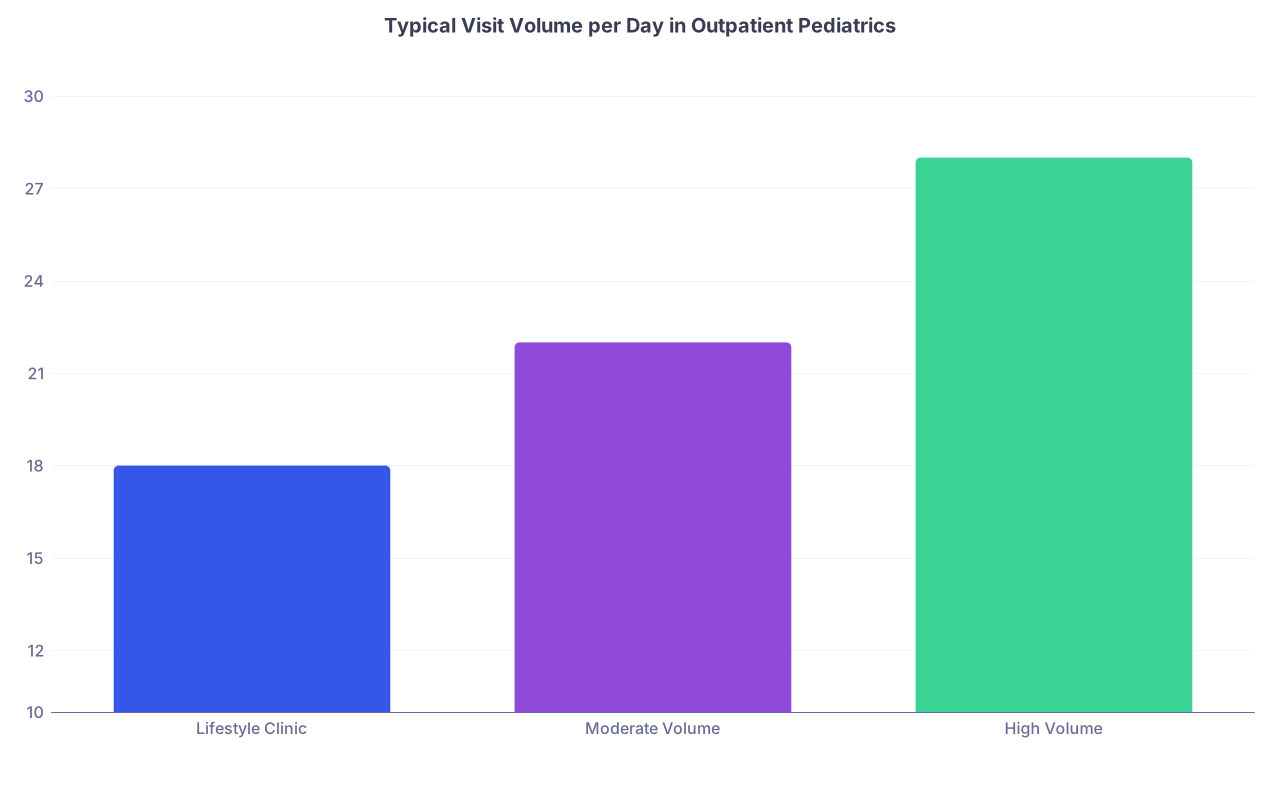
| Category | Value |
|---|---|
| Lifestyle Clinic | 18 |
| Moderate Volume | 22 |
| High Volume | 28 |
Where Templates Destroy Lifestyle
Here are the structural mistakes that turn outpatient peds into a grind:
- No protected admin blocks: Every single minute is bookable. Your only time to call families, sign charts, and review labs is after clinic or during lunch (which disappears by October).
- No acuity‑sensitive slots: The same 15 minutes for adolescent depression, 2‑month vaccines, and “my kid has a rash and cough for 2 days.”
- Automatic double booking: The system is built to overfill you “just in case someone no‑shows.” You end up working at double pace regardless of whether the no‑show appears.
What You Want in a Template (If You Care About Lifestyle)
You should be looking for:
- Visit caps around 16–20/day for full‑time pediatricians, especially early in your career.
- Longer slots for:
- Newborns and infants.
- Complex behavior/development.
- “Multiple concerns” visits.
- Protected:
- Mid‑morning / mid‑afternoon 10–15 min blocks for catch‑up and calls.
- At least one half‑day per week largely admin / project / care coordination.
Ask directly:
- “How many scheduled visits does a typical full‑time pediatrician have per day?”
- “Do physicians have input into their template design?”
- “How often are slots double booked? Is that automatic or under physician control?”
- “Is your lunch hour truly blocked, or can schedulers put patients there?”
If the answer to “Can schedulers put patients in your lunch?” is anything but “No, that is protected” — lifestyle red flag.
4. No‑Shows: Hidden Time Sink That Everyone Underestimates
No‑shows hurt you in two different ways depending on how the system is built:
- In a high‑volume, double‑booked clinic, no‑shows are used to justify cramming more into your template. “We double book because no‑shows.” When they do not no‑show, you eat the excess work.
- In a non‑overbooked clinic with poor process, no‑shows create dead air you cannot use well: 20‑minute gaps scattered all day long, but still an overflowing inbox and pending charts.
Here is the nuance: lifestyle‑friendly clinics treat no‑shows as a solvable systems problem, not a reason to stuff your schedule.
Typical No‑Show Ranges in Outpatient Peds
Numbers vary by population, but you will generally see:
- Private suburban practices: 5–10% no‑show rate.
- Academic clinics: 10–20%.
- FQHC / safety net pediatrics: 20–35%, sometimes higher in specific clinics.
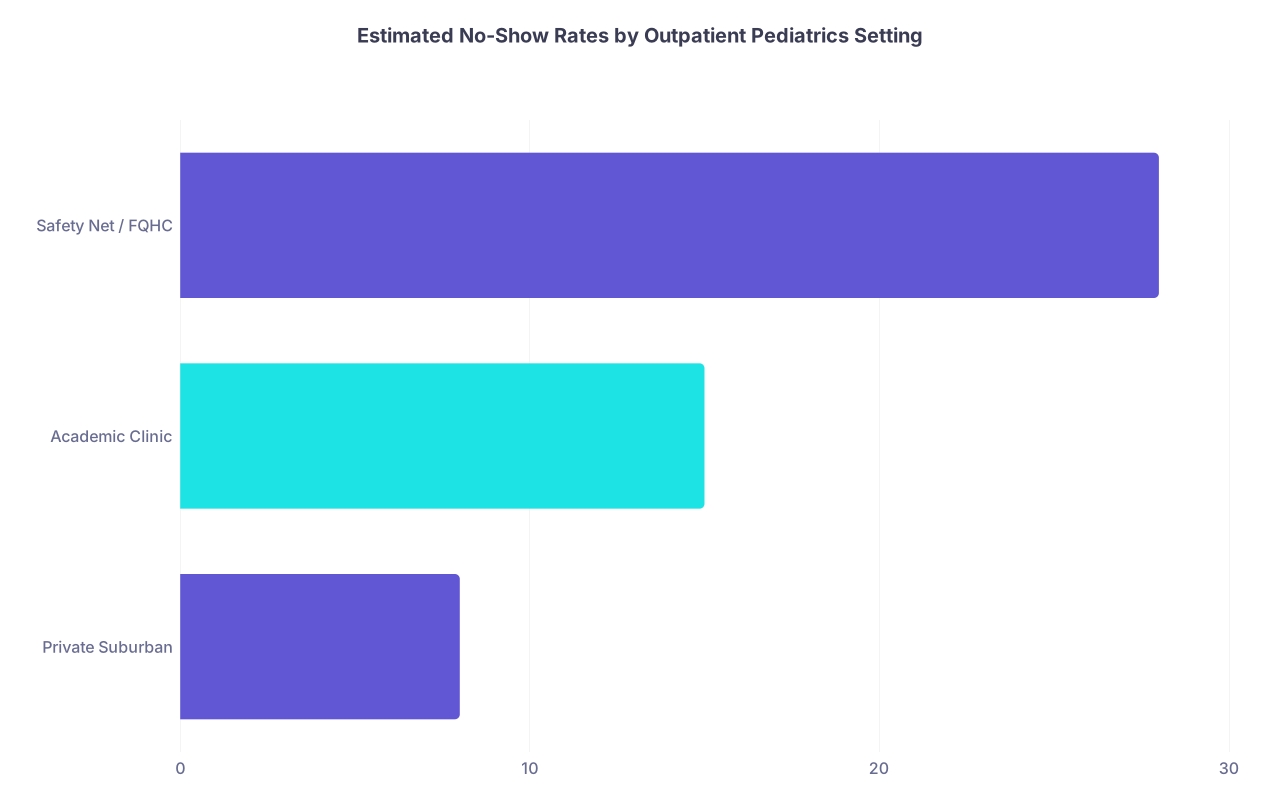
| Category | Value |
|---|---|
| Private Suburban | 8 |
| Academic Clinic | 15 |
| Safety Net / FQHC | 28 |
High no‑show clinics are not automatically bad. I have seen FQHCs with 25% no‑show rates where pediatricians had good lifestyles because leadership did not translate that straight into double booking everything and squeezing docs.
What Smart Clinics Do About No‑Shows (That Protects Your Lifestyle)
Lifestyle‑savvy clinics:
- Use reminder systems (text, calls, multilingual).
- Have same‑day “quick fill” lists to convert no‑shows into access for waiting families without overloading you.
- Track no‑show by provider, time of day, visit type and adjust accordingly (e.g., fewer late‑afternoon WCC slots for historically unreliable families).
- Give physicians quick alternative uses for gaps:
- Inbox catch‑up.
- Scheduling brief follow‑ups by phone or portal.
- Chart completion.
Clinics that wreck your lifestyle blame no‑shows on “this population” and then overbook you forever. If leadership’s answer to no‑shows is “we just stack more people on,” you already know where this goes.
Questions That Reveal No‑Show Culture
Ask:
- “What is your typical no‑show rate for pediatrics?”
- “How do you handle double booking or overbooking in response to no‑shows?”
- “Do physicians have any control over whether their clinic is double booked?”
- “If there is a no‑show, what typically happens with that time?”
You are listening less to the number and more to whether there is intentional process vs “we just keep adding people and hope.”
5. How These Three Interact: Daily Life Scenarios
Let’s make this concrete. Same specialty. Three very different lives.
Scenario A: Lifestyle‑Friendly Academic Outpatient Peds
- Panel: ~1,600 active patients, mixed acuity.
- Template: 18 visits/day, some 20–30 minute blocks, 15 minute sick visits, 2 small admin blocks per session.
- No‑shows: 10–15%. Clinic does not double book automatically; uses quick‑fill list.
Your day:
- A few strategic gaps let you sign notes as you go.
- Inbox is manageable because nursing triage filters first.
- You finish notes by 4:45–5:00 most days.
- Sick season is busy, but not a horror show.
You go home tired but not gutted. Sustainable for 20+ years.
Scenario B: High‑Volume Network Clinic
- Panel: 2,700 active patients, including many under age 2.
- Template: 26–28 slots/day, 15 minutes across the board, double booked in winter mornings.
- No‑shows: 20–25%. Leadership response: permanent double booking “to improve access.”
Your day:
- Even “slow” days feel frantic.
- No blank space to catch up; you are always 3–5 notes behind.
- Inbox pushes to evening; you finish clicking at 9–10 pm at home.
- Winter RSV/flu/COVID season? You basically live at the clinic.
This is the outpatient pediatrics that people burn out from and then bad‑mouth the entire specialty.
Scenario C: Safety Net Clinic with Smart Design
- Panel: 2,000 active patients, high social complexity.
- Template: 18–20/day, longer visits for <2 years and complex issues.
- No‑shows: 25–30%, but:
- Text reminders in multiple languages.
- Real‑time same‑day fill.
- RN and social work triage.
Your day:
- Emotionally heavy, but structurally sane.
- Gaps from no‑shows become real working time: calls, forms, portal messages.
- Less charting after 5 pm because you used those gaps.
This clinic is high work, but still lifestyle‑supportive because the system is not trying to “squeeze every RVU out of every minute.”
6. What This Means for Residents Choosing Programs
The phase you are in — “specialty specific residency insights” — is exactly where people either pay attention to these details or spend the next 10 years regretting that they did not.
Most residents choose peds programs based on:
- NICU size
- Fellowship options
- “Vibe” of the residents
All valid. But extremely few ask about:
- Longitudinal continuity clinic structure.
- Resident panel size and whether it resembles real life.
- How attendings actually practice in the same space.
Parse Outpatient Lifestyle Signals as a Resident
During interviews or rotations, pay attention to:
- How fast attendings are moving. Are they running 45 minutes behind by 10 am, or roughly on time?
- What do notes look like at 4:30 pm? Are people still documenting most of the day’s work?
- Ask residents honestly: “When you imagine yourself as a general outpatient pediatrician, could you do what your attendings are doing here and still have the life you want?”
And ask faculty targeted questions:
- “How many patient visits do you schedule per clinic half‑day?”
- “What is your typical day like during flu season?”
- “How much charting do you usually do from home?”
- “Did your panel or visit volume change in the last 3 years? Why?”
When someone answers, “It is not too bad, just 24–26 patients a day,” treat that as a data point. Many people normalize unhealthy structures because they have never seen anything else.
7. Beyond Lifestyle: RVUs, Money, and Trade‑offs
Lifestyle does not exist in a vacuum. Lower volume generally means:
- Lower RVUs.
- Lower compensation in models tied directly to volume.
But outpatient pediatrics is not orthopedics. The ceiling is lower anyway. The delta between 18 patients/day and 26 patients/day might be some tens of thousands of dollars a year. You need to decide if that is worth being home for dinner.
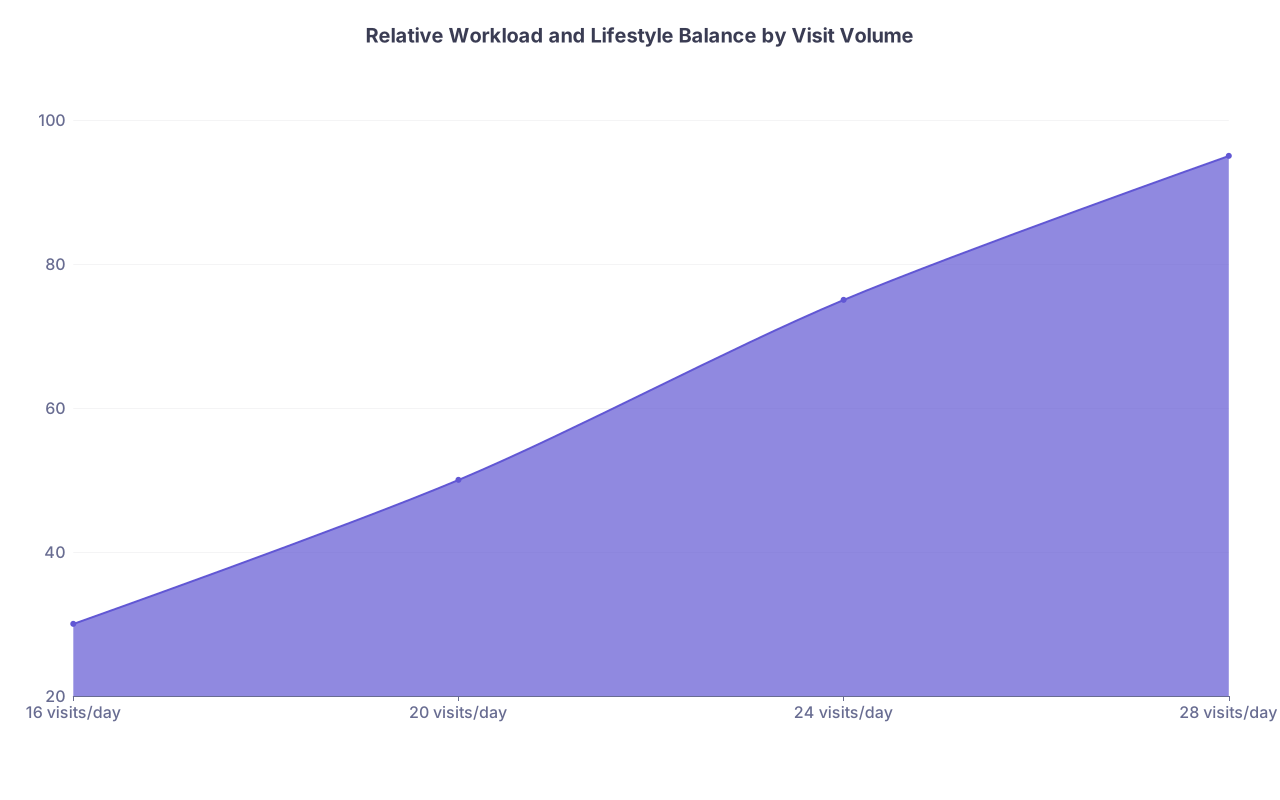
| Category | Value |
|---|---|
| 16 visits/day | 30 |
| 20 visits/day | 50 |
| 24 visits/day | 75 |
| 28 visits/day | 95 |
(Think of these values as an arbitrary “strain index” — higher visit volume, higher strain.)
I have seen young pediatricians take the high‑volume, high‑RVU job, burn out in 3–5 years, then switch to a lower volume clinic and say, “I wish someone had told me I did not have to live like that.”
You can absolutely have good compensation in outpatient pediatrics with a lifestyle‑reasonable schedule, especially in lower cost‑of‑living areas and organizations that value retention over pure RVUs.
8. Pragmatic Steps: How to Position Yourself for Lifestyle‑Friendly Outpatient Peds
During residency:
- Get good at efficient visits without rushing. Clear, focused histories; problem list prioritized; brief, precise counseling.
- Learn team‑based care: what can the MA do, what can the RN handle, what actually needs your MD brain.
- Watch attendings who leave on time without chaos. Study how they structure visits and how they use the EHR.
When job hunting:
- Request to see:
- Sample daily schedules for physicians.
- Written clinic productivity expectations (visits per day, RVUs).
- How panel size is set and whether it is adjustable as you ramp up.
- Ask, “If I felt my panel was too large for sustainable care, what would the process be to adjust it?”
You are not “being difficult.” You are doing basic due diligence on the single largest determinant of your day‑to‑day life.
FAQs
1. What is a realistic patient panel for a part‑time (0.6–0.8 FTE) outpatient pediatrician who wants strong lifestyle balance?
For 0.6–0.8 clinical FTE, a panel around 900–1,400 active patients is usually reasonable, assuming good support and sensible templates. At 0.6 FTE, you ideally want closer to 900–1,100; at 0.8 FTE, 1,200–1,400 is often workable. The key is not just the raw number, but the age mix (fewer very young infants is easier) and whether you can cap daily visits around 12–16 on your clinical days.
2. As a resident, my continuity clinic feels chaotic with 8–10 patients per half‑day. Does that mean outpatient pediatrics is not lifestyle friendly?
Not necessarily. Resident clinics are often designed poorly: overbooked, with complex teaching layers, and sometimes inefficient work flows. They also tend to concentrate complexity into shorter sessions. Many attendings in the same building have far more controlled days with better‑designed templates. Look at how the attendings’ days run, not just your continuity clinic experience, before you judge the specialty.
3. How much control do new hires typically have over their template and panel size?
Control varies widely. In some private and smaller group practices, new pediatricians can negotiate:
- Maximum visits per day.
- Appointment lengths by visit type.
- Slow ramp‑up of panel over 6–12 months.
In large corporate or hospital systems, templates are often standardized and harder to change, although you can still negotiate visit caps or structure at the time of hiring. If leadership says, “Everyone uses the same template, no exceptions,” you should assume less lifestyle flexibility.
4. Are higher no‑show rates always bad for lifestyle in outpatient pediatrics?
No. High no‑show rates are a signal, not a verdict. If the clinic responds by double booking aggressively and blaming “the population,” your lifestyle suffers. If the clinic uses process (reminders, quick‑fill lists, triage) and lets you use no‑show gaps productively for messaging, calls, and charting, you can actually have decent lifestyle even in a high no‑show environment. The key is how leadership responds, not the number itself.
Key takeaways:
Lifestyle in outpatient pediatrics is not determined by the specialty label, but by three structural levers: panel size, template design, and no‑show handling. If you want a career that allows you to be both a good pediatrician and a present human being outside work, you must interrogate those levers directly when you choose programs and jobs.