

Here is the blunt answer: a strong letter from a faculty member who changed institutions is not automatically damaged goods. But it is absolutely easier for programs to trust, verify, and comfortably use a letter from someone who is still planted in a recognizable academic role with reachable contact information.
That is the whole game. Not prestige alone. Not letterhead alone. Trust plus detail plus reachability.
I have seen applicants panic because their best mentor left in August, switched hospitals, lost access to the old email, and uploaded a letter that looked like it came from a professional witness protection program. I have also seen those same letters help secure interviews at excellent programs because the content was superb and the writer was still obviously real, current, and contactable. Program directors are not offended that faculty move. They are offended by sloppiness, ambiguity, and anything that smells unverifiable.
Let me break this down specifically.
This article is for educational purposes only. It is not financial advice, not legal advice, and not tax advice. Figures vary by individual circumstances, so consult a qualified professional before acting.
The Anatomy of the "Ghost" Letter: Why Movement Matters
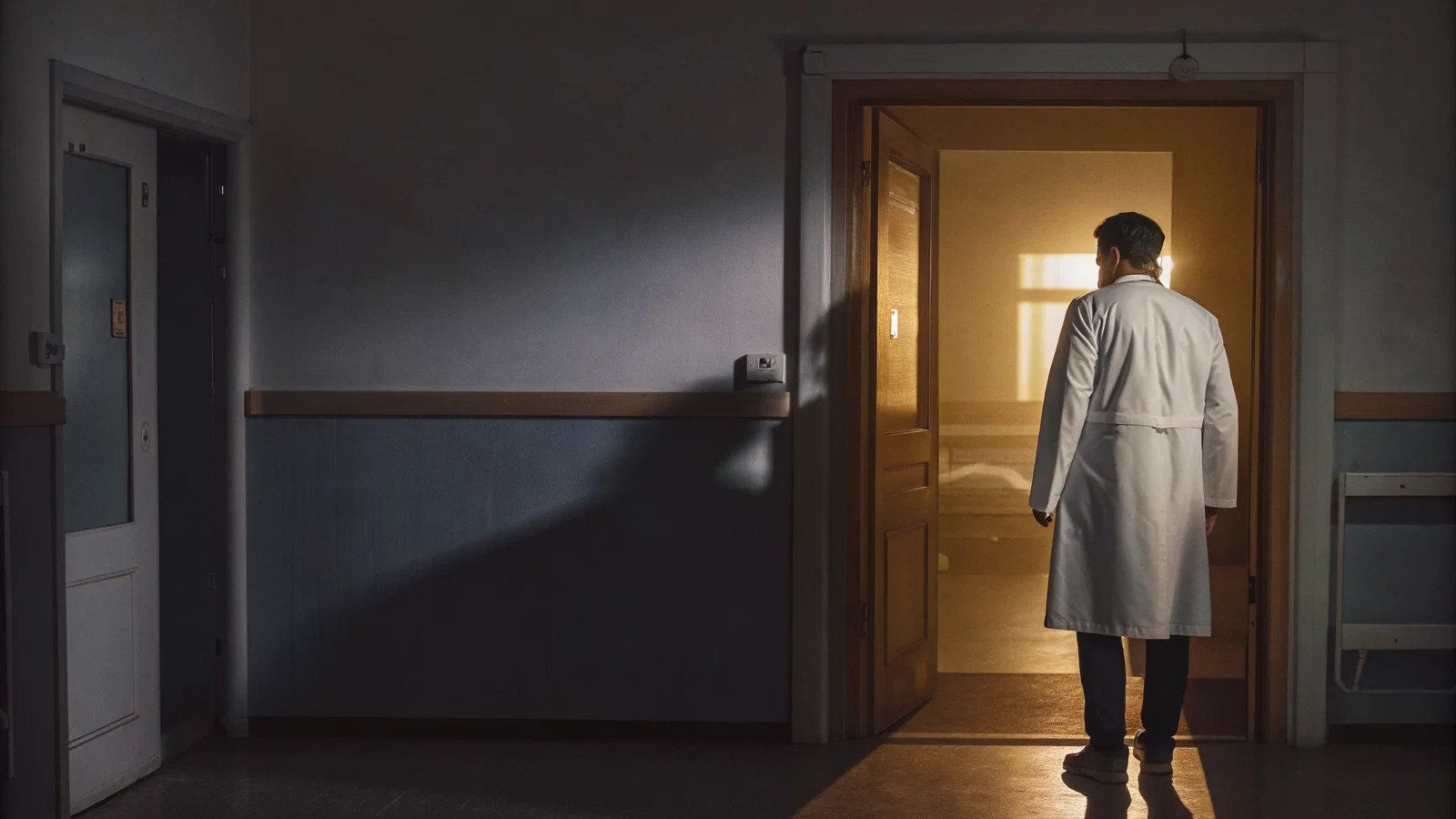
The "ghost faculty" problem is simple: your letter writer knew you well, supervised you directly, maybe even championed you hard, and then left the institution before your application cycle finished unfolding. They may have moved to another academic center, a community system, private practice, industry, research, or administrative leadership. Now the letter exists in a weird limbo. It is real. The relationship was real. But the institutional anchor changed.
That movement matters because program directors read letters in context, not in a vacuum.
A letter on old institutional letterhead can trigger questions. Not always suspicion, but questions. Was this person still there when they wrote it? Did they actually supervise the student in the role described? Is the old email still monitored? If I wanted to verify authorship, where exactly would I send that inquiry? That is the perception gap applicants underestimate. You see continuity. A PD may see discontinuity until proven otherwise.
Before finalizing your selection, consider how micro-details that make LORs credible can reinforce the authenticity of your clinical experience.
Legacy letterhead is not fatal. Bad explanation is.
If the writer trained you at University Hospital and now works at Eastview Medical Center, the cleanest version is obvious: the letter clearly states both facts. Something like, "I supervised Ms. Patel during her acting internship in emergency medicine at University Hospital in June 2026. I am currently Associate Medical Director at Eastview Medical Center." That one line fixes half the problem. It tells me where the relationship occurred and where the writer can be found now.
The trust hierarchy is also real, and applicants should stop pretending all displaced faculty letters are judged equally. They are not.
Here is how many reviewers silently rank them:
Former mentor now at another academic institution Still in a recognizable educational ecosystem. Easy to understand. Usually easy to verify.
Former mentor now in a stable professional role outside academia Community practice, private group, research institute, VA leadership, consulting physician executive. Still usable, but weaker institutional signaling.
Former mentor "in transition" with vague affiliation Red flag territory. Not because they are dishonest, but because ambiguity erodes confidence.
Former mentor with no clear current title, no stable email, and no obvious practice site Nearly worthless unless the letter is extraordinary and corroborated elsewhere.
The biggest issue is contactability. That is the word that matters most and gets discussed least. A PD does not need to personally call your writer for the letter to carry weight. But they need to feel that they could. That possibility supports authenticity.
If your writer has an institutional email at the new job, excellent. If they have a durable professional email linked to a private practice or physician group, acceptable. If the only contact listed is a Yahoo address and an office number that forwards to nowhere, that letter just got demoted. Fast.
Always remember that what program directors actually infer from your LOR language is influenced more by your performance than by the writer's current institution.
And yes, prestige still influences first impressions. A former chair from a nationally known department still has name recognition after moving. The halo survives the move. But prestige is not a magic trick. If the letter sounds generic, recycled, or oddly detached, top programs notice immediately. They read enough letters to detect boilerplate by the second paragraph.
What rescues a moved-writer letter is specificity. Concrete comments about your presentations, your ownership of patients, your clinical growth over a four-week service, your communication under stress, your fund of knowledge compared with peers. That kind of detail beats fancy stationery every time.
The Verification Dilemma: Can We Still Reach Them?
This is where the issue becomes administrative, and administrative problems kill otherwise good applications.
A faculty member leaves. Their old institutional email is deactivated. Their profile page disappears. Their hospital extension no longer works. Then their letter arrives in ERAS with old branding and no current affiliation in the body. That is how a normal recommendation turns into a verification headache.
Program directors and coordinators are not running private investigations on every letter. They do not have time. But they do have instincts, and they do have workflows for things that look off. The more effort a letter requires to trust, the less emotional energy anyone wants to spend defending it in committee.
Let me be direct about email choice in the upload process.
Best option: new institutional or professional email tied to the writer's current role. Acceptable option: stable practice-group email or university forwarding address. Weak option: personal email, used only because nothing else exists. Terrible option: dead institutional email from the old job.
Applicants often assume a personal email is automatically suspicious. That is too simplistic. A Gmail address from a known physician who clearly identifies their current role can be perfectly fine if the rest of the letter is coherent and specific. What makes it suspicious is not the domain alone. It is the combination of vague identity, no institutional trace, and poor content.
I would much rather see:
- a detailed letter,
- signed by "Jane Smith, MD, former Associate Program Director, now Hospitalist Lead at Riverbend Physicians,"
- with a working professional contact route,
than a letter on elite old letterhead with no clue where Dr. Smith actually is now.
The other mistake applicants make is ghosting their own writer. Yes, ghosting. You ask for the letter in May, your mentor moves in July, your application opens in September, and you never check whether they still have access to the upload request, whether their email changed, whether they want an updated CV, whether they remember enough detail to sharpen the letter. That is lazy, and it backfires.
During application season, maintain contact protocols. Practical ones.
- Confirm the writer's current title and institution.
- Confirm the best email for ERAS-related communication.
- Confirm whether they want their old training-site relationship spelled out in the letter.
- Send an updated CV and personal statement.
- Remind them of the exact rotation dates and settings where they supervised you.
- Check back after submission to ensure the uploaded version reflects their current professional identity.
That last point matters more than students think. A writer who moved may have drafted the letter months ago and never updated the signature block. Suddenly the letter reads like it was written from an institution they no longer belong to. That can create awkwardness even if nothing unethical happened.
There is another layer here: cross-referencing with the MSPE and transcript narrative. PDs frequently triangulate. If your letter says you were "outstanding on the inpatient consult service in August," and your MSPE or clerkship timeline does not support that, confidence drops. Not because programs assume fraud first, but because discrepancy invites doubt.
The best letters from moved faculty align cleanly with:
- the dates of your rotation,
- your MSPE descriptions,
- your specialty story,
- and your other letters.
That alignment is powerful. It shows the writer actually knew you in a concrete setting.
I have seen excellent ghost-faculty letters survive scrutiny because the writer described things only a real supervisor would know: the diabetic ketoacidosis presentation you managed at 2 a.m., the family meeting you handled with unusual maturity, the oral presentation that improved over two weeks, the callback patient you followed after discharge. Those details are hard to fake. They reassure readers.
On the other hand, a generic moved-faculty letter has almost no protection. If the writer is hard to reach and the content says only that you are "hardworking, compassionate, and eager to learn," that letter contributes very little. Honestly, sometimes less than little. It can make reviewers wonder why you included it at all.
Quantitative Impact: Assessing the "Weight" of Displaced Faculty Letters
Let us get one thing straight. There is no universal formula where a moved faculty letter loses exactly 17% of its value. Program review does not work like that. Still, patterns are obvious if you have sat in file review meetings.
The impact of a displaced-faculty letter depends on three variables:
- writer credibility
- content specificity
- verification ease
If those are high, the move barely matters. If those are low, the move becomes a major liability.
Applicants often ask whether a legacy letter from a senior, well-known mentor beats a current letter from a less-senior faculty member who knows them moderately well. Usually, yes, if the senior mentor truly knows you and writes specifically. But if the senior person's letter is generic while the current faculty member offers granular, honest observations, I would take the current letter every time.
That is the part students hate because it sounds unfairly qualitative. Too bad. It is true.
The chart above reflects the practical hierarchy many committees operate under, even if nobody writes it down.
A current department chair carries enormous default credibility. A former mentor now at another academic center still carries strong weight, especially if the letter explains the timeline. A former mentor now in private practice can still be very helpful, particularly in clinically heavy specialties where private practice physicians supervise learners directly and know what competence looks like. An unverifiable mentor? That drops off a cliff.
Now let us talk interview impact. In real review rooms, the moved-writer issue rarely acts alone. It modifies an existing impression. Strong file plus one displaced but excellent letter? Usually fine. Borderline file plus one ambiguous ghost letter? That can absolutely hurt.
The halo effect is real for famous academic people. If a nationally known residency leader leaves a top department for private practice, that name still means something. Reviewers know who they are. They know that person's standards. Their endorsement can remain potent even without university branding. But only if the letter itself has substance. Famous names attached to bland praise do not impress experienced readers. They irritate them.
Top-tier programs are especially content-focused because they are flooded with prestige signals. They read letters from chairs, directors, division chiefs, NIH-funded faculty, and every alphabet soup title imaginable. What stands out is not the title. It is the sentence that proves the writer actually watched you think.
For example:
- "He independently synthesized a broad anemia differential and revised it appropriately when hemolysis labs returned negative."
- "She gave one of the best discharge counseling sessions I have seen from a student, particularly with a patient who had low health literacy."
- "After struggling initially with ICU-style presentations, he adjusted within a week and became one of the strongest sub-interns on the team."
That is gold. Real observations. Comparative language. Trajectory. Clinical maturity.
Here is my firm position: letterhead influences confidence, but content drives decisions.
A moved faculty member with:
- direct supervision,
- comparative statements,
- memorable examples,
- and a current reachable identity
will usually outperform a current faculty member who barely remembers you and writes a polite nothing-burger.
Do not confuse institutional attachment with evaluative strength. They overlap, but they are not the same thing.
Also, applicants overestimate how much committee members care whether a writer stayed in academia. In many specialties, especially procedural and clinically oriented ones, moving into private practice does not erase judgment. If anything, some reviewers value that perspective. What they dislike is opacity. If the writer moved, say so. If the writer changed career lanes, identify the role. If the timeline is odd, explain it cleanly. Secrecy creates more damage than transition does.
Strategic Mitigations: How to Frame the Transition
This is the section that actually saves applications.
If your writer is moving or has already moved, do not just hope nobody notices. Frame it well. A cleanly framed transition looks normal. An unexplained transition looks messy.
Start with the letter itself. The writer should mention the relationship site and the current affiliation in the body or signature. Not buried. Not implied. Explicit.
A good structure looks like this:
- "I worked with Mr. Chen during his sub-internship on the cardiology consult service at Northside University Hospital in July 2026."
- "Since that time, I have transitioned to my current role as Director of Clinical Operations at Lakeview Heart Institute."
- "My observations below reflect direct daily supervision in the inpatient setting."
Three sentences. Problem solved.
That wording accomplishes four things:
- It pins the relationship to a real educational setting.
- It clarifies why the letterhead or signature may differ.
- It reinforces direct supervision.
- It protects the letter from looking stale or repurposed.
Now, should you add an explanatory note yourself? Usually not in a dramatic way. You do not need to announce, "My recommender left and I swear this is legitimate." That sounds defensive. But if there is a natural place in a supplemental application, impactful experiences box, or communication with a coordinator after a technical issue, a brief factual clarification is reasonable.
Keep it dry and short:
- "Dr. Alvarez supervised me on the infectious diseases consult service at Memorial in June; she has since joined Coastal Academic Health, which is reflected in her current signature/contact information."
That is enough. No autobiography. No panic.
The smartest tactic is what I call the double-up strategy: pair one displaced-faculty letter with one rock-solid current institutional letter. This balances narrative strength with verification ease.
A high-functioning set might look like:
- one current home-institution faculty letter,
- one specialty-specific letter from your away or sub-I,
- one moved mentor who knows you extremely well,
- and optionally one departmental leader if relevant.
That portfolio tells programs, "Here is continuity, here is comparability, and here is depth." It neutralizes the vulnerability of any single ghost letter.
What if your moved writer becomes unresponsive?
This happens all the time. People relocate, change credentialing systems, get buried in onboarding, or simply become bad at email. You cannot build your strategy on wishful thinking. If a writer starts disappearing, act early.
Use this sequence:
- Send one concise follow-up email.
- Wait a few business days.
- Try the known office contact if appropriate.
- If you have a coordinator or assistant contact, use it professionally.
- If no response, pivot to a backup writer immediately.
Do not wait until ERAS deadlines are breathing down your neck. That is how applicants end up submitting thin letter sets and then pretending they "chose quality over quantity." No. They chose delay.
Also, keep your writer prepared before they move. This is underrated. Send them:
- your updated CV,
- personal statement draft,
- specialty choice rationale,
- exact dates of supervision,
- cases or projects you worked on together,
- and bullet points of what you hope they can comment on honestly.
That packet matters because memory decays quickly after a move. A mentor who adored working with you in July may barely recall specifics by October unless you helped preserve the context. You are not writing the letter for them. You are preserving signal.
One more hard truth: if the writer leaves under messy circumstances, be careful. Programs may know. Medicine is smaller than students think. If the faculty member departed after public conflict, professionalism issues, or departmental drama, the letter may carry baggage you do not see. In those situations, a glowing endorsement from that person can become more complicated than helpful. This is uncommon, but not rare enough to ignore.
And please do not try to hide a move by asking the writer to use outdated letterhead as if nothing happened. That is dumb. If discovered, it reads as deceptive even when the underlying relationship was legitimate. Transparency always wins here.
Final Verdict: What Program Directors Actually Look For
Program directors care most about whether the writer truly knows you and can prove it through specific clinical observations. That is the center of gravity. Everything else is secondary.
The risk-reward assessment is straightforward.
Use the moved-faculty letter if:
- the writer supervised you directly,
- the letter contains concrete examples,
- the current affiliation or contact method is clear,
- and the letter fits coherently with the rest of your application.
Be cautious if:
- the writer is now hard to locate,
- the letter is generic,
- the institutional identity is confusing,
- or the relationship described is thin.
Discard it entirely if:
- the author cannot be reliably contacted,
- the letter creates timeline inconsistencies,
- the writer did not actually know you well,
- or you are keeping it only because the name looks impressive.
That last scenario is common. It is also a mistake. A famous, displaced faculty member who barely remembers you is not an asset. That letter is branding without substance. Programs see through that.
Your strongest defense is boring old professionalism: transparency, constant communication, and balanced letter selection. If one of your best mentors moved, that is manageable. Common, even. But manage it actively. Make sure the writer is reachable. Make sure the relationship is explicit. Make sure the content is rich. Pair it with stable letters from your home institution.
That is how program directors think. Less drama than students imagine. More emphasis on credibility than students expect. And far less worship of fancy letterhead than people on forums claim.
Key Takeaways
- A letter is only as good as the writer's ability to be contacted. If your writer moved, make sure a durable professional email or phone path exists.
- Program directors prioritize depth of knowledge. Specific, granular letters survive institutional transitions well.
- Give moving writers an updated CV and a reminder of exact clinical interactions so their letter stays detailed after they leave.
- Balance your letter portfolio. One "ghost" faculty letter is fine if paired with a strong, easily verified home-institution letter.


