Educational disclaimer: This article discusses residency application communication and professional positioning, including how messages may affect interview or ranking impressions. It is for educational purposes only and is not legal, financial, tax, or individualized advising. For school-specific guidance, consult your dean’s office, clerkship leadership, or specialty advisor.
Yes, you can use humor in an away rotation follow-up. But barely.
That’s the answer most people need. A tiny bit of humor can make you sound human and memorable. Too much makes you sound immature, overeager, or weirdly casual with people who may be discussing your rank list behind closed doors. I’ve seen students blow a perfectly solid impression because they treated the follow-up email like a group chat. Don’t do that.
The job of the follow-up is simple: say thank you, show you were paying attention, and leave behind a professional, easy-to-forward message. That last part matters. Your email may get forwarded to an APD, PD, clerkship director, chief resident, or attending you barely interacted with. If your joke gets stranger every time someone rereads it, it wasn’t a good joke.
If you are also working on the rest of your post-rotation communication strategy, it helps to pair this advice with a broader plan for away rotation thank-you emails, post-interview communication, letters of intent, and residency rank list strategy.
Why Humor Can Help—or Hurt—After an Away Rotation
Humor can help because medicine is full of people who are tired of robotic emails. Everyone has read the same thank-you note a hundred times: Thank you for the opportunity, I greatly appreciated the experience, I learned a lot. Fine. Safe. Forgettable.
A single light line can make you sound real. Not performative. Real.
But humor also fails fast. Faster than almost anything else in professional writing. In person, people can see your face, hear your tone, and know whether you’re playful. In email, all of that disappears. What’s left is text sitting naked in someone’s inbox, waiting to be misread.
That’s why hierarchy matters. The more senior the person, the more conservative you should be. With a resident you worked with for four weeks and genuinely clicked with, a mild, self-aware line might land well. With a chair, PD, or attending who already seemed formal? Don’t test it. You are not being judged on wit.
Here’s the framework I use:
- Main goal: gratitude and professionalism
- Secondary goal: being memorable for the right reasons
- Optional bonus: sounding warm and natural
- Never the goal: proving you’re funny
If you’re trying to be clever, you’ve already drifted off course.
The safest mindset is this: humor is seasoning, not the meal. One brief line. Maybe none. If removing the joke makes the email stronger, cleaner, or easier to forward, cut it.
What Counts as Safe Humor in Follow-Up Messages
Safe humor in this setting is boring. That’s good.
You want low-stakes, self-aware, universally readable humor. Not sarcasm. Not teasing. Not an inside joke about the overnight call room, the intern’s coffee addiction, or the case where everyone got out late. Definitely not anything political, sexual, appearance-based, or patient-related. If there’s even a small chance it could make someone pause and think, Why would they put that in writing? it’s bad humor for this context.
The safest categories look like this:
- Light self-awareness
- “I’m still trying to organize my notes from the rotation, which says good things about how much I learned and less-good things about my handwriting.”
- Mild observational humor
- “I left with a much better understanding of the service and an even greater respect for how quickly your team moves.”
- Gentle, non-cheesy warmth
- “Thanks again for such a welcoming month—I’m still impressed by how much teaching happened before most people had finished their first coffee.”
That works because it’s clean. No edge. No target. No attempt to show off.
What doesn’t work?
- Sarcasm
- Flirting
- “Dark humor”
- Specialty stereotypes
- Jokes about exhaustion
- Jokes about mistakes
- Anything that depends on shared context to make sense
- Anything that sounds like internet humor dragged into a hospital email
If the joke needs explanation, it’s dead on arrival.
Also, keep it short. One sentence. That’s it. If your funny part takes up an entire paragraph, you’ve confused “thank-you email” with “personal essay with bits.” Nobody asked for that.

When to Avoid Humor Entirely
Sometimes the right amount of humor is zero.
Skip humor if you’re emailing:
- program leadership
- a new attending
- a chair or division chief
- someone who was formal the whole month
- someone you barely interacted with
- anyone after a difficult or emotionally heavy clinical event
That last one matters. If the rotation included a patient death, a conflict on service, a bad shift, or anything emotionally loaded, don’t be the person who tries to “lighten the tone” in writing. That reads as tone-deaf, not charming.
And never joke about:
- patient care mistakes
- near misses
- being dangerously tired
- “surviving” abuse or chaos
- not knowing what you were doing
- getting pimped
- wanting to match there “so badly it hurts”
- anything that minimizes work, suffering, or standards
A lot of students get tripped up by resident culture here. Residents may joke in person in ways that absolutely do not belong in a follow-up email. That’s because in-person team banter lives in context. Email lives forever, gets forwarded, and loses tone.
Use this test: Would I be comfortable if this exact message were forwarded to the program director right now? If the answer is no, the joke is gone.
How to Write a Funny but Professional Follow-Up
Here’s the format that works.
- Thank them.
- Mention one specific thing you learned or appreciated.
- Add one brief humorous line only if it truly fits.
- Reaffirm your interest.
- Close like a professional adult.
That order matters. Professional content first. Humor second, if at all. You don’t open with the joke. You don’t make the joke the emotional center of the note. You don’t tack on a wink-wink sign-off like you’re writing to a friend from college.
A strong skeleton looks like this:
- Opening: “Thank you for the opportunity to rotate with your team last month.”
- Specific takeaway: “I especially appreciated seeing how the service balanced autonomy with clear teaching.”
- Optional light line: “I’m still trying to make my prerounding notes half as organized as the senior resident’s.”
- Interest statement: “The rotation strengthened my interest in the program.”
- Close: “Thank you again for your time and teaching.”
That’s clean. Mature. Easy to read in fifteen seconds.
Now, tone-edit it aggressively.
Read it out loud. If you cringe, the reader will too.
Cut anything that sounds:
- flirty
- too eager
- insecure
- chronically online
- fake-casual
- like you’re auditioning for “most fun sub-I”
I’ve seen students make two classic mistakes.
Mistake one: trying to recreate in-person chemistry.
You had great banter with a resident on rounds. Fine. That does not mean the banter belongs in writing. Chemistry in person is not a license for informality in email.
Mistake two: using self-deprecating humor that actually undermines confidence.
A mild line about messy handwriting is fine. A joke about being clueless, chaotic, or needing constant rescue is not. You’re applying for residency, not trying to seem adorably incompetent.
Good self-aware humor says: I’m grounded and personable.
Bad self-aware humor says: I’m unserious and maybe not ready for this.
That’s the difference.
If you want a cleaner structure before drafting, review examples of residency thank-you notes and away rotation etiquette. The point is not to sound identical to everyone else; it is to avoid unforced errors.
Examples: Good Humor vs. Bad Humor
Here are the kinds of lines that work, and the kinds that absolutely don’t.
Good examples
“Thank you again for such a welcoming rotation. I’m still impressed by how much teaching your team fit into such busy days.”
Why it works: Warm, specific, and lightly admiring. No forced joke, just a friendly human tone.
“I appreciated the chance to learn from the team, and I left with both better clinical instincts and much messier notebook margins.”
Why it works: Mild self-awareness. Harmless. It doesn’t make you sound incompetent.
“Thanks again for your teaching this month. I’m still working on making my presentations as concise as the ones I saw on your service.”
Why it works: Not even really a joke, which is part of why it’s safe. It’s humble without being pathetic.
“I’m grateful for the rotation and for how generous everyone was with teaching—even before coffee had fully done its job.”
Why it works: Universally understandable. Low stakes. No one is the butt of the joke.
Bad examples
“Thanks for tolerating me for a month.”
Bad. It sounds insecure and puts the reader in an awkward position.
“Hopefully I survived the rotation well enough to come back next year.”
Bad. “Survived” language is overdone and can trivialize difficult work.
“Tell the team I’m still recovering from rounds with Dr. X.”
Terrible. Sounds sarcastic, critical, and too familiar. Also risky if forwarded.
“I promise I’ll be less awkward next time.”
Bad. Never volunteer a weakness in a thank-you email and package it as humor.
“After this month, I can confirm I belong in [specialty] and probably nowhere else.”
Too much. It sounds melodramatic and slightly immature.
“Please rank me highly—I’ll bring coffee.”
Absolutely not. Flippant, needy, and tone-deaf.
The pattern is simple. Good humor is light and disposable. Bad humor changes the emotional tone of the message. The second your joke makes the reader think about your maturity instead of your performance, it failed.
A Practical Template You Can Copy
Use this structure every time:
- Subject line
- Thank them
- Mention one specific learning point
- Optional one-line humor
- Reaffirm interest
- Professional close
Version with no humor
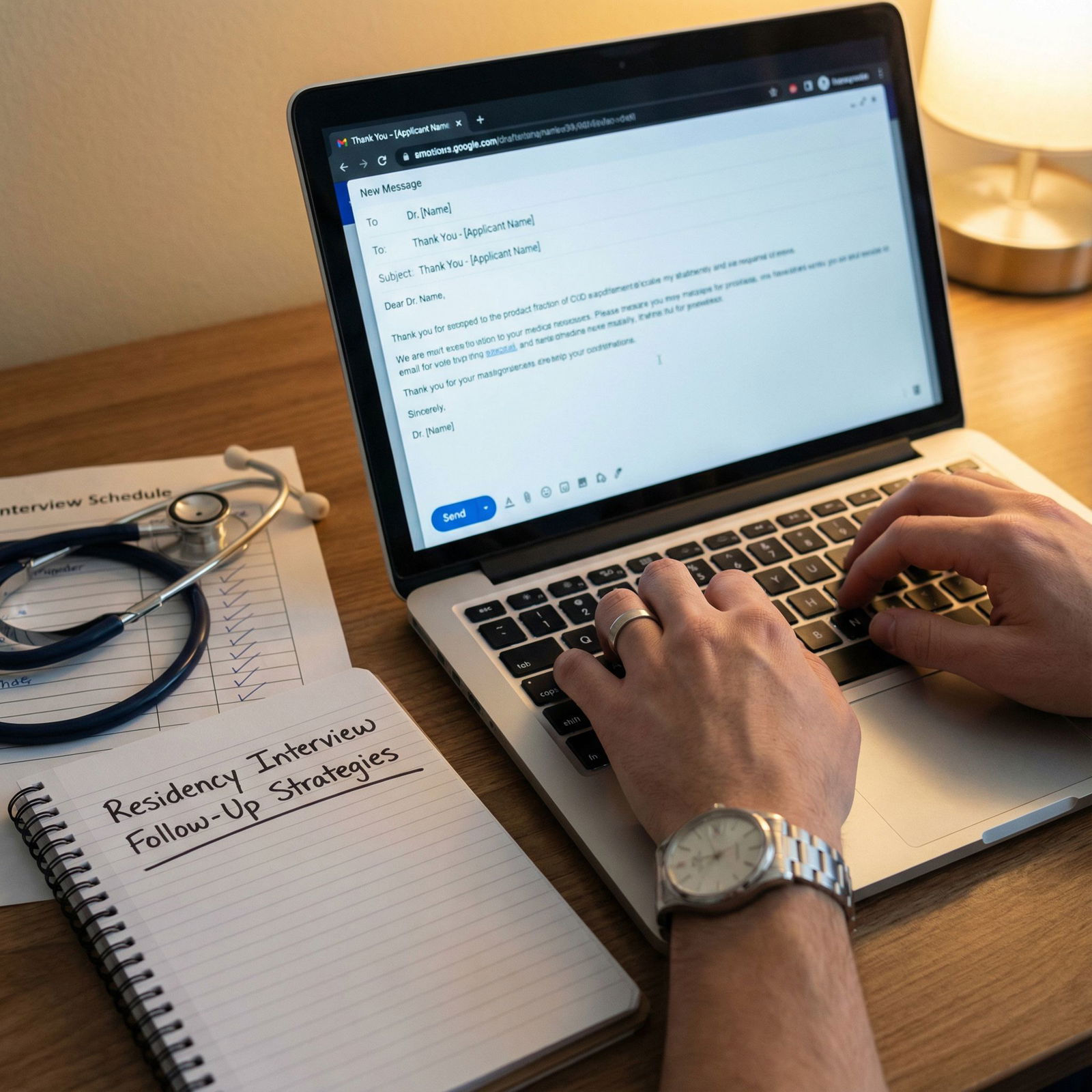
Subject: Thank You for the Opportunity to Rotate
Dear Dr. [Name],
Thank you for the opportunity to rotate with your team this month. I appreciated the chance to learn from you and the residents, especially your approach to [specific clinical skill, workflow, or teaching point].
The rotation strengthened my interest in your program, and I’m grateful for the time the team invested in teaching. Thank you again for your guidance and generosity.
Sincerely,
[Your Name]
Version with one safe humorous line
Subject: Thank You for the Rotation
Dear Dr. [Name],
Thank you for the opportunity to rotate with your team this month. I especially appreciated learning more about [specific takeaway], and I found the teaching on rounds incredibly valuable.
I’m still working on making my notes as organized as the ones I saw on your service, but I left the rotation with a much stronger understanding of the specialty.
The experience strengthened my interest in your program. Thank you again for your time and teaching.
Sincerely,
[Your Name]
Quick customization tips
- Short rotation or limited contact? Skip humor.
- Emailing residents only? You can be slightly warmer, but still keep it professional.
- Formal specialty culture? Be conservative.
- You’re unsure whether the line lands? Delete it.
- You need the joke to make the email feel less stiff? Rewrite the whole email to sound more natural instead. Don’t use humor as a rescue device.
Bottom Line: Keep It Warm, Brief, and Easy to Forward
Here’s the rule. Professionalism is the default. Humor is optional.
If a light line genuinely makes the email sound more human, use it. If it feels forced, too familiar, or even slightly risky, cut it without remorse. No one has ever lost points for sending a clean, thoughtful, warm thank-you email. People absolutely do lose points for trying too hard.
So keep it simple:
- gratitude first
- one specific takeaway
- one harmless line at most
- clean close
And if you wouldn’t want the email projected on a department conference room screen, don’t send it.