
The Match Agreement is not a casual sign-up sheet; it's a legally binding contract governed by the National Resident Matching Program (NRMP). When a residency program registers for the Match, it forfeits its right to hand-pick residents outside the system, unless very specific, strict legal parameters are met.
Both training programs and applicants operate under these bylaws. If a program attempts to circumvent the algorithm without a legal exception, the consequences are swift and severe. We're talking about sanctions, loss of accreditation, and expulsion from future Match cycles.
The core rule anchoring the entire system is straightforward: If a residency position is filled via the Match, it remains legally locked until the applicant officially declines, withdraws, or fails to matriculate. Until one of those three things happens, that spot is off-limits to everyone else on the planet.
This guide is provided for educational purposes only and does not constitute formal legal counsel. It is not financial advice, not legal advice, and not tax advice. Contract terms and program figures vary, so you should consult a qualified professional if you face an official match policy dispute.
Scenario 1: The 'Unfilled' Position (The Most Common Legal Exception)
When the Match algorithm finishes running on Match Day, some programs wind up with empty seats on their roster. This is where non-Match offers become entirely legal.
If a program fails to fill a slot through the main Match or the Supplemental Offer and Acceptance Program (SOAP), that position transforms into an "unfilled" spot. At that exact moment, the program regains its autonomy to recruit directly.
Here is how the mechanics work:
- The program officially logs the unfilled status with the NRMP.
- The spot is released from the algorithmic lock.
- The program extends direct offers to eligible applicants outside the Match framework.
This isn't a shady backdoor deal. It's a standard, legal, and necessary process designed to keep hospital services staffed. I've seen programs extend valid off-Match offers within hours of SOAP concluding to snag qualified candidates who slipped through the cracks. However, the offer can only go to applicants who are currently unmatched and uncommitted.
Scenario 2: The 'Withdrawal' and 'No-Show' Loopholes
A spot can also open up outside the Match if an applicant voluntarily steps aside or simply fails to show up on day one.
If you formally withdraw your application from the Match process before or after the deadline following NRMP protocol, your claim to that spot vanishes. It is no longer legally "filled" by you.
[Candidate Signs Contract] ➔ [Candidate Withdraws/No-Shows] ➔ [NRMP Grants Releasing Waiver] ➔ [Spot Opens for Non-Match Offer]

Then there is the "no-show" scenario. If an applicant accepts a Match offer but fails to matriculate, whether due to visa denial, medical issues, or outright ghosting, the program doesn't have to leave that position empty for the year.
If a candidate withdraws after Match results come out, the program must request a formal waiver from the NRMP. Once that waiver clears, the program can immediately offer the opening to the next candidate on their internal rank list or scout external, non-matched applicants. That explains why program directors follow up so aggressively with applicants whose status seems uncertain. Empty seats hurt clinical operations.
Scenario 3: The 'Waitlist' Trap
Do not confuse being ranked or placed on an informal program waitlist with holding a position. They are completely different animals.
Being on a waitlist doesn't secure a spot. It simply means you're next in line if a spot opens up and someone else drops out.
If a program reaches out to offer you a spot off their waitlist and you stall or decline, that spot is legally open game. The program won't wait for you. They will immediately offer it to non-matched applicants or candidates sitting on other waitlists.
If you want to hold onto a waitlisted opportunity, you must explicitly and formally accept their terms the moment it's offered. Ambiguity loses positions.
Scenario 4: When is it ILLEGAL? (The 'Double Dip' Violation)
Let's talk about where programs get into deep trouble. The line between legal recruitment and a severe NRMP violation comes down to one phrase: The Double Dip.
It is blatantly illegal for a residency program to extend a non-Match offer to an applicant who has already matched into another program. Full stop.
If you matched into Program A, Program B cannot offer you a non-Match spot. Even if Program B prefers you. Even if you prefer Program B. The NRMP contract legally binds both you and Program A to each other.
A program cannot offer an off-Match spot to an applicant who participated in the Match but withdrew after the results were released without obtaining an official NRMP waiver. Trying to bypass the waiver system is a breach of contract that ruins careers and strips programs of their credentials.
Scenario 5: The 'Match Violation' and Misconduct
What happens when someone breaks these rules anyway? It usually starts with desperation, either a program trying to secure top talent early or an applicant trying to trade up after Match Day.
If a program offers a non-Match spot to an applicant who is still technically bound to another program, they are committing direct contract misconduct.
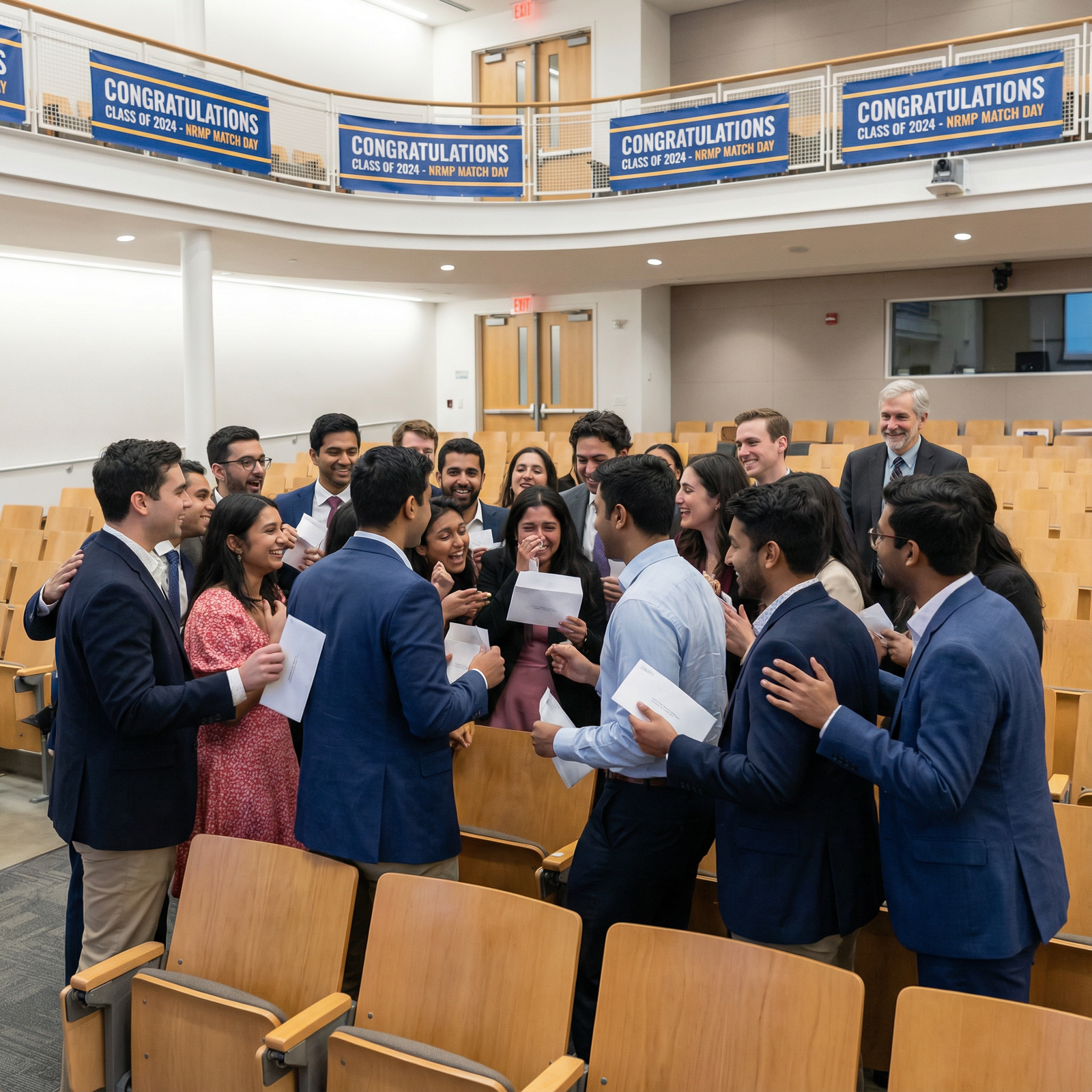
I've seen applicants try to double-dip by accepting a non-Match offer while quietly hanging onto their matched position as a backup. Don't do this. The NRMP Code of Ethics flags this behavior immediately through system audits.
When a program or applicant gets caught violating the Match Agreement, the penalties are brutal:
- For Programs: Immediate investigation, public listing as a violator, ban from participating in future Matches, and referral to the ACGME (which can pull program accreditation).
- For Applicants: Barred from entering the Match for 1 to 3 years, flagged in the NRMP database permanently, and potential revocation of existing state medical training licenses.
Action Plan: What to Do When You Get a Non-Match Offer
When an off-Match offer lands in your inbox, do not panic and do not sign anything on impulse. Run through this decision framework first.
1. Verify Your Match Status First
Check your official NRMP dashboard. Are you Matched, Unmatched, or Partially Matched?
2. If You Are Already Matched
Politely decline the non-Match offer immediately. Do not play games. Tell them: "Thank you for the offer, but I am legally bound to another program through the NRMP Match Agreement."
3. If You Are Unmatched
Treat the offer as a legitimate opportunity, but verify the program's credentials. Confirm that the spot is officially registered as unfilled with the NRMP before signing the contract.
4. If You Are Waitlisted
Ensure you have formally accepted your position on the waitlist in writing before evaluating any secondary off-Match offers. Never assume a verbal conversation holds your spot.
Key Takeaways
- The Match is Binding: Once a position is filled via the Match, it is legally locked until a formal decline, withdrawal, or waiver occurs.
- Unfilled Spots are Fair Game: Programs can legally recruit unmatched candidates for unfilled positions post-Match.
- No Double-Dipping: Accepting an off-Match offer while bound to another matched position is a severe violation.
- Verify Everything: Check your official status on the NRMP portal before signing any post-Match agreement.