Avoiding Common NRMP Match Pitfalls: Advanced Tips for a Successful Residency Application
The National Resident Matching Program (NRMP) Match is one of the most consequential milestones in medical education. It determines where you will train, who your mentors will be, and often shapes the trajectory of your long‑term career development. Despite its importance, many otherwise strong applicants make avoidable mistakes that weaken their residency applications or undermine their Match outcomes.
This expanded guide walks through common NRMP Match pitfalls, how to avoid them, and practical Match process tips you can implement immediately. Whether you are an MS4, a recent graduate, or an international medical graduate (IMG), understanding these issues—and planning around them—can markedly improve your chances of a successful Match.
Understanding the NRMP Match Process and Rules
A strong Match strategy starts with understanding how the NRMP works and what rules govern the process. Misunderstanding the system is itself a major pitfall.
How the NRMP Match Algorithm Works (In Applicant-Friendly Terms)
The NRMP uses a computerized algorithm that is applicant-proposing, meaning it is designed to favor applicant preferences when possible:
- You apply to programs (via ERAS or another application service, depending on specialty).
- Programs review applications and invite selected applicants for interviews.
- You create a Rank Order List (ROL) of programs in true order of your preference—from most desired to least desired.
- Programs submit their ROLs of interviewed applicants, ranked in order of preference.
- The algorithm attempts to match you to the highest program on your list that also prefers you enough to rank you high enough to fill one of its positions.
Key implication:
You should rank programs in the true order of where you most want to train, not where you think you are “most likely” to match. Trying to “game” the system is a classic Match process pitfall.
Critical NRMP Rules You Must Not Violate
Understanding NRMP rules is part of how to navigate NRMP Match rules safely:
- No coercive communication: Programs cannot ask you to reveal your ranking intentions or promise how they will rank you; you are not required to disclose this information.
- No binding commitments outside the Match (for Main Residency Match programs participating in NRMP).
- Violation of NRMP policy (Match violations) can result in being barred from future Matches, being listed as a violator, or institutional penalties.
- SOAP participation for unmatched applicants has its own timeline and rules that must be followed precisely.
Regularly review the NRMP’s Match Participation Agreement and policy updates on the NRMP website. Missteps here can have far more serious consequences than simply not matching.
Common NRMP Match Pitfalls and How to Avoid Them
This section expands on the classic mistakes many applicants make and offers practical, step-by-step strategies to stay on track.

1. Inadequate Research on Residency Programs
The Pitfall:
Ranking or applying to programs you know almost nothing about, based only on reputation, location, or word-of-mouth. This often leads to poor “fit,” increased risk of being unhappy, or building a skewed Rank Order List that doesn’t reflect your true goals.
How This Hurts You:
- You may under-apply to “safety” programs or over-apply to unrealistic “reach” programs.
- You might waste interview slots on programs that don’t match your interests or lifestyle needs.
- You may struggle to answer, “Why this program?” convincingly during interviews.
Avoid This Pitfall By:
- Using data-driven tools:
- FREIDA Online, AAMC’s Residency Explorer, NRMP’s Charting Outcomes.
- Look up board pass rates, fellowship match success, case volume, program size, and call schedules.
- Reviewing program websites thoroughly:
- Curriculum structure (e.g., 4+1 system, night float, rotation sites).
- Research opportunities, scholarly tracks, or global health options.
- Program values and mission statement (e.g., community-focused vs research-heavy).
- Talking to people who know the programs:
- Current residents and recent graduates from your school.
- Alumni in your specialty, especially those who’ve trained at your target programs.
- Faculty advisors who can share candid impressions and program reputation.
- Organizing your findings:
- Create a spreadsheet with columns for:
- Location, size, call schedule, fellowship opportunities, research expectations.
- Visa sponsorship (for IMGs), USMLE score expectations, and “deal breakers.”
- Use this to guide both where you apply and how you ultimately rank programs.
- Create a spreadsheet with columns for:
Example:
If you are interested in academic cardiology, a program with strong general internal medicine but limited subspecialty research or weak fellowship placement may not align with your career development goals—even if it is in a desirable city.
2. Incomplete or Weak Residency Applications
The Pitfall:
Submitting residency applications that are incomplete at the time of review or lack polish—missing documents, weak personal statements, generic experiences descriptions, or fewer letters of recommendation than recommended.
Consequences:
- Fewer interview invitations, especially early in the season.
- Being overlooked compared with equally qualified peers who presented more complete, compelling applications.
- Negative impression of disorganization or lack of commitment.
Avoid This Pitfall By:
a. Building a Comprehensive Application Checklist
Include:
- USMLE/COMLEX scores uploaded.
- Medical school transcript and MSPE (Dean’s letter).
- Specialty-appropriate letters of recommendation (typically 3–4).
- Personal statement tailored to each specialty (and sometimes specific programs).
- Updated CV and experiences section with clear, concise descriptions.
Start drafting and collecting materials months before ERAS opens. Work backward from official deadlines and school-specific timelines.
b. Strengthening Key Application Components
- Personal Statement:
- Tell a concise, specific story of why you chose this specialty.
- Highlight unique experiences and strengths relevant to the field.
- Avoid clichés and generic claims (“I want to help people”).
- Letters of Recommendation:
- Request letters early (ideally at the end of your core or sub-internship rotations).
- Choose writers who know you well and can provide specific, narrative comments.
- Provide them with your CV, draft personal statement, and bullet points of your accomplishments.
c. Getting External Review
Have multiple people review your materials:
- Faculty in your desired specialty.
- Advisors or career services.
- Trusted peers who have successfully matched.
Ask them specifically: “Is anything confusing, weak, or overly generic?” and revise accordingly.
3. Last-Minute, Emotion-Driven Rank Order List Changes
The Pitfall:
Changing your ROL during the final hours before the NRMP deadline based on anxiety, rumors, or hasty impressions, rather than thoughtful reflection.
Why This Is Risky:
- You may downgrade a program that is truly your best fit due to fear of not matching there.
- You may overvalue a recent positive interaction (“recency bias”) over months of prior research.
- You may inadvertently violate the principle of ranking by true preference.
Avoid This Pitfall By:
a. Starting Your ROL Early
- Begin drafting your ROL soon after you complete most of your interviews.
- Use a structured rubric to compare programs:
- Training quality, case mix, and board pass rates.
- Culture (resident support, wellness, diversity).
- Location (family, support system, cost of living).
- Research and fellowship opportunities.
- Lifestyle and call structure.
b. Scheduling Dedicated “ROL Reflection” Time
- Set aside several blocks of time to:
- Revisit your interview notes.
- Talk through pros and cons with mentors or trusted peers.
- Reflect on where you would be happiest and best supported.
c. Ranking by True Preference
- Remember the algorithm favors you ranking your most desired program first.
- Do not downgrade a highly desired program simply because you think it’s a “reach,” unless your advisors strongly believe it’s unrealistic (e.g., no interview there).
d. Getting Mentored Input Early
- Show your draft ROL to:
- Specialty-specific advisors.
- Program directors or clerkship directors at your home institution.
- Ask for candid feedback about:
- Program reputations.
- Hidden strengths or red flags.
- How your competitiveness aligns with your list.
4. Poor or Unprofessional Communication with Programs
The Pitfall:
Sending unprofessional emails, failing to respond to communication, or mismanaging post-interview contact with program directors or coordinators.
Potential Outcomes:
- Damaged impression, even if your interview performance was strong.
- Being perceived as disorganized, disinterested, or unprofessional.
- Risk of inadvertently violating NRMP communication guidelines.
Avoid This Pitfall By:
a. Communicating Professionally at Every Step
- Use clear subject lines (e.g., “Thank you for the interview – [Your Name], [Specialty]”).
- Address program staff respectfully (correct titles: Dr., Ms., Mr.).
- Proofread emails for spelling and grammar.
- Respond promptly (within 24–48 hours) to scheduling or information requests.
b. Managing Post-Interview Communication Wisely
- Thank-you notes:
- Many programs do not require them, but a short, sincere, specific note can reinforce interest.
- Avoid over-the-top flattery or implying ranking promises.
- Update letters or letters of interest:
- Only send if you have meaningful updates (new research, awards) or a genuinely strong interest in the program.
- Be honest; never tell multiple programs they are your absolute first choice.
c. Understanding What You Can and Cannot Say
- You may express strong interest or that a program is “one of your top choices.”
- You should not:
- Ask how high you will be ranked.
- Pressure programs for ranking commitments.
- Make misleading ranking statements.
When in doubt, consult NRMP guidelines or your school’s advising team before sending sensitive messages.
5. Ignoring or Mismanaging Important Deadlines
The Pitfall:
Missing key NRMP, ERAS, or institutional deadlines (application submission, exam results, ROL certification, CASPer/Altus testing) due to poor organization.
Consequences:
- Inability to participate in the Match or specific specialties.
- Late applications that are reviewed after most interview slots are already filled.
- Missing the Rank Order List certification deadline, leaving you unmatched by default.
Avoid This Pitfall By:
a. Creating a Master Timeline
- Include:
- ERAS opening date and first day programs can view applications.
- USMLE/COMLEX exam dates and expected score release dates.
- NRMP registration and ROL certification deadlines.
- School-specific deadlines (MSPE release, LOR due dates).
- Use digital tools:
- Calendar apps with alerts.
- Project management tools (Trello, Notion) if helpful.
b. Building Buffer Time
- Aim to complete tasks several days (or weeks) before official deadlines:
- Submit ERAS on or near the first day applications are accepted.
- Finalize and certify your ROL at least a few days before the NRMP deadline to avoid last-minute technical issues.
- Remember that letter writers and school officials also need time; give them clear, early deadlines.
c. Checking for Updates Regularly
- NRMP and ERAS occasionally adjust timelines.
- Check official websites and emails frequently, especially during the application and ranking phases.
6. Not Seeking Help or Going Through the Match Alone
The Pitfall:
Trying to navigate the NRMP Match, a complex and high-stakes process, without guidance or feedback.
Why This Is Dangerous:
- You may misjudge your competitiveness and apply too narrowly or broadly.
- You may misinterpret feedback, program signals, or NRMP policies.
- You may experience unnecessary stress and burnout.
Avoid This Pitfall By:
a. Actively Using School and Institutional Resources
- Career and residency advisors.
- Specialty-specific faculty mentors.
- Dean’s office or student affairs for procedural questions.
Schedule multiple check-ins at key phases:
- Pre-application strategy.
- Post-interview reflection and ROL creation.
- Backup planning (including SOAP or reapplication) if needed.
b. Building a Peer and Near-Peer Support Network
- Join group chats or forums with classmates in your specialty.
- Reach out to recent graduates who matched in your field:
- Ask about their application numbers (programs applied/interviews attended).
- Learn what they would do differently if they repeated the process.
c. Considering Specialty-Specific Mentored Programs
- Many national organizations (e.g., ACP, AAFP, APA, ACS) have:
- Mentoring programs.
- Webinars on Match strategy.
- Specialty-specific advice documents.
Engaging early with these resources can clarify expectations and optimize your application.
Strategies to Proactively Enhance Your Match Success
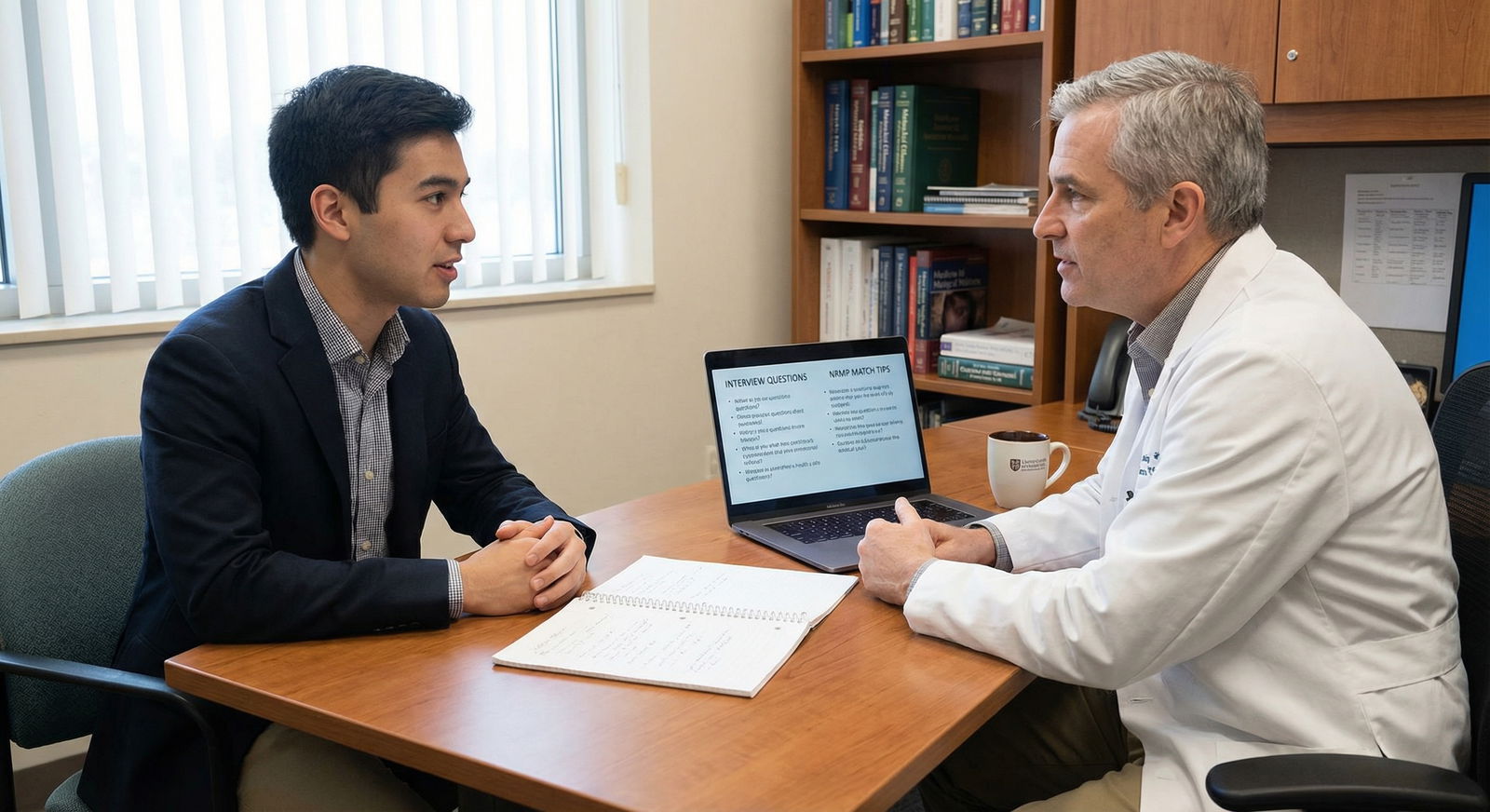
Avoiding pitfalls is essential, but you can further strengthen your residency application with targeted, proactive strategies across networking, customization, and interview preparation.
1. Strategic Networking and Relationship-Building
Effective networking in medical education is about building genuine professional relationships—not superficial connections.
High-Yield Networking Approaches:
- Away rotations / Sub-internships:
- One of the strongest ways to demonstrate interest and fit.
- Treat them as extended interviews: be reliable, teachable, and professional.
- Conferences and specialty meetings:
- Present posters or oral abstracts when possible.
- Engage program faculty during poster sessions or networking events.
- Home institution advocacy:
- Impress attendings and program leadership on your home rotations.
- These mentors can:
- Write strong letters.
- Make phone calls or send emails on your behalf to programs.
Example:
A student interested in general surgery who performs an excellent sub-internship at a competitive program may significantly increase their chance of an interview—and potentially a spot—at that program.
2. Tailoring Your Residency Application for Maximum Impact
Generic applications blend into the background. Tailoring your materials can signal authentic interest and alignment.
Key Areas to Tailor:
- Personal Statement:
- If you write program-specific versions, highlight:
- Specific faculty you’re excited to work with.
- Unique tracks or curricula (e.g., rural track, global health missions).
- Avoid cutting and pasting program names sloppily—triple-check for accuracy.
- If you write program-specific versions, highlight:
- Experiences Section:
- Emphasize activities that align with the program’s known strengths.
- E.g., for community-focused family medicine programs, highlight continuity clinic work, underserved care, and community outreach.
- Letters of Recommendation:
- If a program values research heavily, ensure at least one letter speaks to your scholarly productivity and intellectual curiosity.
Balance:
You don’t need a totally different application for each program. Instead, have flexible core materials and selectively adjust them for your top-tier choices where it makes a meaningful difference.
3. Preparing Deliberately for Residency Interviews
Interviews are where your application becomes a person in the eyes of programs. Even a stellar paper application can be undermined by poor interview performance.
Steps to Prepare:
a. Know Your Application Cold
- Re-read your personal statement, CV, and experiences section before each interview.
- Be ready to expand on:
- Research projects (methods, results, your role).
- Leadership roles (challenges, what you learned).
- Volunteer work (impact on your perspective and career goals).
b. Practice Common and Specialty-Specific Questions
- Standard questions:
- “Tell me about yourself.”
- “Why this specialty?”
- “Tell me about a challenge you faced and how you handled it.”
- Specialty-specific questions:
- For surgery: handling stress in the OR, commitment to long hours.
- For psychiatry: approach to challenging patients, transference/countertransference.
- Behavioral questions:
- Use the STAR method (Situation, Task, Action, Result) to structure answers.
c. Research Each Program Before the Interview
- Know:
- Program size, affiliated hospitals, and mission.
- Unique program strengths (tracks, specialties, research areas of faculty).
- Prepare specific, thoughtful questions:
- “How does your program support residents interested in [X]?”
- “What changes are you planning in the curriculum over the next few years?”
d. Master the Virtual Interview Format (When Applicable)
- Test your microphone, camera, internet connection, and background.
- Choose professional attire and a quiet, well-lit environment.
- Practice making eye contact through the camera to approximate in-person connection.
Frequently Asked Questions (FAQs) About the NRMP Match and Common Pitfalls
1. How many programs should I apply to for a safe NRMP Match?
The optimal number varies by specialty, competitiveness, and your applicant profile. NRMP’s Charting Outcomes in the Match and Program Director Survey provide specialty-specific guidance. As a rough framework:
- More competitive specialties (e.g., dermatology, ortho, plastics) often require more applications and interviews.
- Less competitive specialties may require fewer, especially if you have strong home or regional connections.
Discuss your specific situation with a specialty advisor who can consider your scores, experiences, and geographical preferences.
2. Is it a mistake to rank a “reach” program first on my ROL?
No—this is not a mistake if it is truly your top choice. The NRMP algorithm is designed so that you should rank programs in your true order of preference. There is no penalty for ranking a highly competitive program first, as long as you have a realistic and balanced list overall.
3. Should I tell a program they are my number one choice?
You should only tell a program it is your definite number one choice if that is completely true. Misleading multiple programs can be unethical and is discouraged by the NRMP. If you do choose to say this:
- Use clear, honest language.
- Do not make such a statement to more than one program.
- Understand that this is not a binding commitment from either side.
You can still express strong interest without labeling a program as your absolute top choice (e.g., “Your program is among my very top choices”).
4. What happens if I don’t match? Did I automatically make a mistake?
Not matching can result from many factors: specialty competitiveness, limited applications, geographic constraints, scores, or other profile elements. It doesn’t automatically mean you “failed” the process, but it does warrant honest reflection.
If you go unmatched:
- Participate in SOAP if eligible:
- Work closely with your school’s advising team.
- Be flexible and responsive during the rapid SOAP timeline.
- After SOAP, debrief with advisors:
- Identify gaps in your application or strategy.
- Discuss whether to reapply to the same specialty, switch specialties, or enhance your credentials (e.g., research year, preliminary year, additional clinical experience).
5. As an international medical graduate (IMG), what additional pitfalls should I watch for?
IMGs face unique challenges in the NRMP Match. Extra pitfalls include:
- Applying to programs that do not sponsor visas.
- Failing to obtain sufficient US clinical experience (USCE).
- Underestimating the importance of:
- Strong US-based letters of recommendation.
- Clear communication skills and cultural competence.
Mitigate these by:
- Filtering programs by visa sponsorship (J-1/H-1B) and prior IMG acceptance.
- Prioritizing hands-on USCE (observerships alone are often insufficient).
- Seeking IMG-specific mentoring programs and institutional guidance.
Conclusion: Navigating the NRMP Match with Confidence and Strategy
The NRMP Match is complex, but it is also structured and predictable if you understand its rules and timelines. Many common pitfalls—insufficient program research, incomplete applications, last-minute ROL changes, poor communication, missed deadlines, and lack of guidance—are entirely avoidable with deliberate planning and support.
To strengthen your residency application and maximize your NRMP Match success:
- Learn and respect NRMP Match rules and timelines.
- Approach your Residency Application as a long-term project, not a last-minute sprint.
- Build a well-researched, balanced program list aligned with your career development goals.
- Communicate professionally and honestly with programs at every stage.
- Seek continuous feedback from mentors, advisors, and peers.
With thoughtful preparation, a realistic strategy, and proactive use of available resources, you can reduce errors, present your strongest possible candidacy, and navigate the Match Process with far greater confidence—bringing you one step closer to the residency training that will shape your future as a physician.