

You cannot “verbally commit” to a residency program. Not in any way that actually means anything under the NRMP Match rules.
People still try to play this game every cycle. Applicants say, “I already gave them a verbal commit.” PDs say, “We’d like a verbal commitment you’ll rank us first.” Both sides sound confident. Both sides are wrong.
Let me walk through what the NRMP rules actually say, what’s enforceable, and how not to get bullied or guilt‑tripped into fake “contracts” that do not exist.
What the NRMP Really Enforces (Not What People Say)
The NRMP isn’t vague about this. They have a binding document: the Match Participation Agreement. When you certify your rank list, you’re signing that thing electronically. That’s the contract. Not your phone call, not your post‑interview email, not a “we’re excited about you” speech.
Here’s the core reality:
- The only binding commitment is what’s on your certified rank order list and the program’s list.
- The Match algorithm decides the outcome.
- Anything said before that? Non‑binding. Legally and under NRMP policy.
Programs know this. Many applicants do not. That information gap is where abuse creeps in: pressured “commitments,” manipulative promises, and straight‑up misinformation.
Let’s be precise about the key rules.
| Type of Statement | Binding Under NRMP? | Enforceable Consequences? |
|---|---|---|
| Verbal “I’ll rank you #1” | No | No |
| Email: “You are my #1” | No | No |
| Program: “We’ll rank you to match” | No | No |
| Certified Rank List (R3 system) | Yes | Yes |
| Match Outcome (if you match) | Yes | Yes |
If it’s not in the NRMP system, it doesn’t control the Match. Period.
The Big Myth: “Verbal Commit” Means Something
The phrase “verbal commitment” gets imported from college athletics and dating culture as if residency works the same way. It doesn’t.
What people think “verbal commit” means
When applicants say, “I verbally committed,” they usually mean one of these:
- They told a program: “I will rank you first.”
- They feel emotionally obligated because a PD said, “We hope you’ll rank us highly,” and they responded enthusiastically.
- They believe they’ve entered a “deal” that would be dishonest to break.
Here’s the unpleasant truth: the NRMP explicitly strips these statements of any binding power. Why? Because the Match algorithm is designed to protect applicants from pressure and side‑deals.
If “verbal commitments” were enforceable:
- Programs would strong‑arm applicants even more aggressively.
- Applicants would get locked into choices made in October before they’d even finished interviews.
- The algorithm would be meaningless, because everything would be back‑channel promises.
The NRMP exists to prevent that old boys’ network behavior.
So when someone says, “But you gave a verbal commit,” the only correct answer is: “There is no such thing under NRMP rules, and my rank list is my final decision.”
What’s Actually Illegal Under NRMP Rules
Now, don’t misread this. Just because verbal commitments aren’t binding doesn’t mean there are no rules here. There are—and they cut both ways.
1. Programs cannot ask you to commit
The NRMP is clear: programs cannot solicit or require a statement of ranking preference. They are not supposed to ask:
- “Will you rank us first?”
- “Can you promise we’ll be in your top three?”
- “We only rank people who commit to us—can you do that?”
Those questions are NRMP violations. Full stop.
Do they still ask them? Yes. Quietly. Off‑record. Often with a wink and “of course this is off the record.” I’ve heard:
“Between us, if you want to match here, you should really commit to us verbally. We don’t like to be used as a backup.”
That’s not just sleazy; it’s against the rules they agreed to follow.
2. Programs cannot condition ranking on your promise
They also can’t say, “We will only rank you if you commit to ranking us first.” That’s effectively coercion, and it undermines the integrity of the Match.
Will the NRMP send the residency police to their office the next day? No. Most violations only come to light if someone reports them. But the rule is still there, and the program is the one in the wrong.
3. Applicants cannot sign separate contracts pre‑Match
On your side: you can’t sign a pre‑Match contract with a participating NRMP program for PGY‑1/PGY‑2 positions that are in the Match. That’s obvious for most specialties now, but people still get tripped up with certain advanced positions or “informal agreements.” Don’t.
The only contract that matters is created after the Match when you sign employment paperwork with the institution you matched to.
But What About “Love Letters” and Post‑Interview Emails?
Here’s where the culture gets messy. Because technically:
- You may tell a program you plan to rank them highly or #1.
- Programs may express strong interest.
- Both sides may communicate post‑interview—NRMP doesn’t outright ban it.
But the NRMP has repeated the same theme for years: no one can rely on these statements as binding, and no one should pressure anyone.
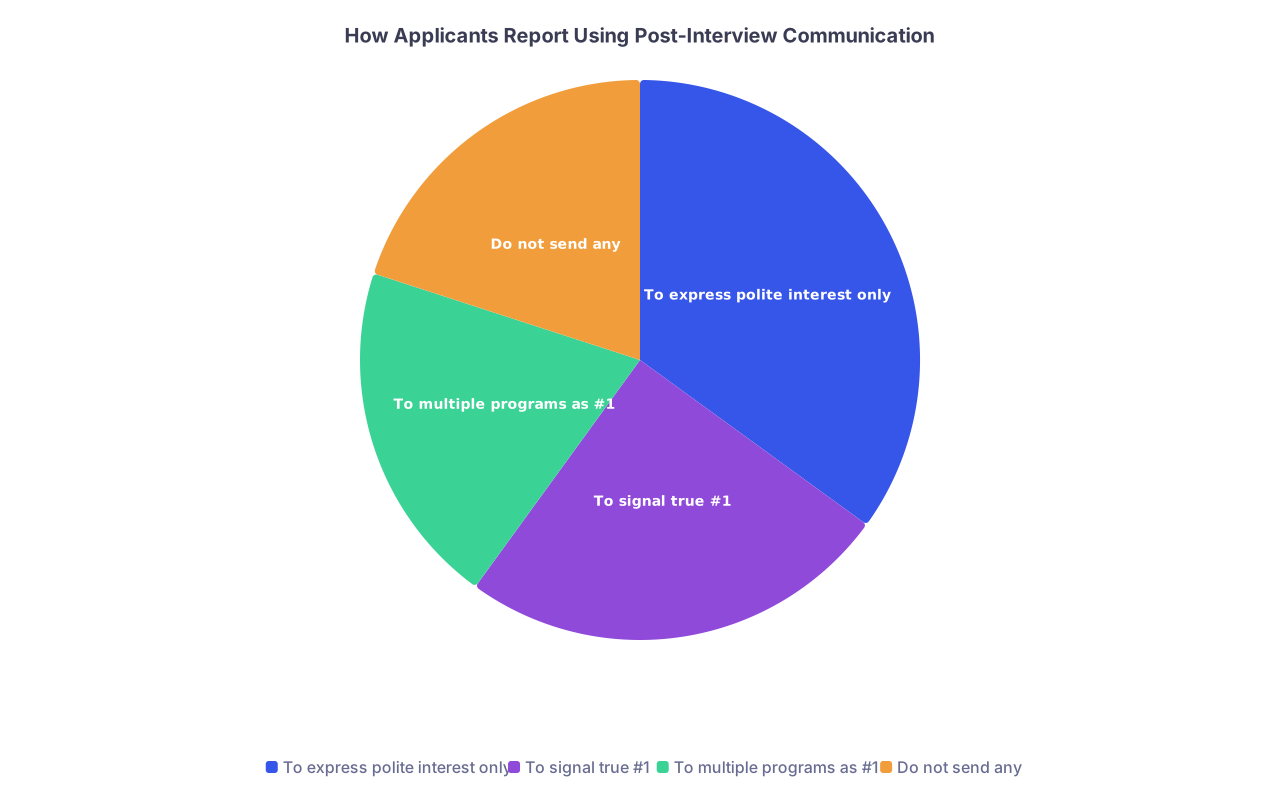
| Category | Value |
|---|---|
| To express polite interest only | 35 |
| To signal true #1 | 25 |
| To multiple programs as #1 | 20 |
| Do not send any | 20 |
You see the problem. A noticeable chunk of applicants straight‑up lie. “You’re my #1” goes to two or three programs. On the program side, I’ve heard PDs admit over coffee:
“We tell more people ‘we’ll rank you to match’ than we have slots. Everybody does. It’s a recruiting game.”
So if you’re trying to treat verbal declarations as if everybody is bound in honor and transparency—you’re operating in a fantasy world.
Some practical points:
- You are not obligated to tell any program how you’ll rank them. Silence is fully compliant.
- If you do choose to tell one program “you are my #1,” don’t tell anyone else the same thing. That’s just burning your own integrity.
- Programs’ “we will rank you highly” speech often goes to dozens of people. It’s part PR, part hope, part bluff.
Bottom line: use post‑interview communication sparingly and assume everyone is spinning at least a little.
The Only Thing That Matters: Your Rank List
Strip away the noise, and one thing decides where you go: your certified rank order list in the NRMP system.
Not the nicest social media account.
Not the flattest hierarchy.
Not the fake “deal” you think you made after a warm interview.
Your rank list.
The algorithm is applicant‑proposing. That means, mathematically, the best strategy for you is:
Rank programs in genuine order of your preference, not based on guesses about who “likes you” more.
Every year, some applicant ignores this and says:
“Well, I promised X I’d rank them first, and they said they’d rank me to match, so I put them above a program I actually liked more.”
And then:
- Sometimes they match at X and regret it for years.
- Sometimes they don’t match at X because X over‑promised and they could have matched at the other place if they had ranked honestly.
You should be optimizing for your outcome, not for imaginary deals.
“But Isn’t It Dishonest to Change My Mind?”
This argument comes up constantly: “I told them they were my top choice in January, but in February after another interview I changed my mind. Am I being unethical if I switch my #1?”
No. You are not.
Here’s the line you should not cross:
- Flatly lying: telling multiple programs “you are my #1” at the same time.
- Intentionally deceiving when asked a direct, clear, fair question (e.g., saying “I am ranking you first” knowing you aren’t).
But making a good‑faith statement at the time you say it and then changing your mind later based on new information is not unethical. That’s how decisions work in the real world.
The Match timeline is long. People mature, relationships shift, geography suddenly matters more, partner gets a job across the country. It would actually be irrational not to re‑evaluate your list up to the deadline.
Your moral obligation is to submit the most honest, up‑to‑date rank list reflecting what’s best for you at the time you certify it. Not to be locked into a December impression of a January reality.
When Programs Push for a “Verbal Commitment”
So what do you actually say when a PD, APD, or chief corner‑office‑whisperer tries to get you to “verbally commit”?
Here are responses that keep you within NRMP rules and also protect you:
- “I’m still completing my interviews and will submit my final rank list after I’ve seen all programs.”
- “I really enjoyed this program and you’ll be under strong consideration when I create my rank list.”
- “I respect the NRMP process, so I’m not going to make binding statements about my rank list before I submit it.”
Notice: you’re not being evasive. You’re refusing to participate in a rule‑breaking game.
If a program keeps pushing or implies a threat (“We only rank applicants who commit”), that tells you something about their culture. And it’s not flattering. Programs that disregard Match rules commonly disregard other guardrails too.
What If You Already “Verbally Committed”?
Maybe you’re reading this late and you already told a program, “You’re my #1,” then realized you prefer somewhere else. Now what?
Here’s the harsh clarity:
- There is no NRMP rule that binds you to that earlier statement.
- You are 100% free, under the rules, to rank someone else first.
- The Match algorithm will not care what you said in that email.
The only question left is your own sense of integrity.
If the earlier statement was honest at the time, and you changed your mind:
- You do not owe them a tortured confession or a drama email.
- You also don’t need to “update” them that they dropped to #2. That just creates angst for everyone and doesn’t change anything about the algorithm.
If you blatantly lied to multiple programs, that’s on you. The consequences are internal—regret, maybe reputation if you boasted about these emails publicly. But the NRMP won’t sanction you for changing your ranking decisions before the deadline.
Quick Reality Check: Who Actually Gets Sanctioned?
Here’s what NRMP enforcement tends to focus on in real life:
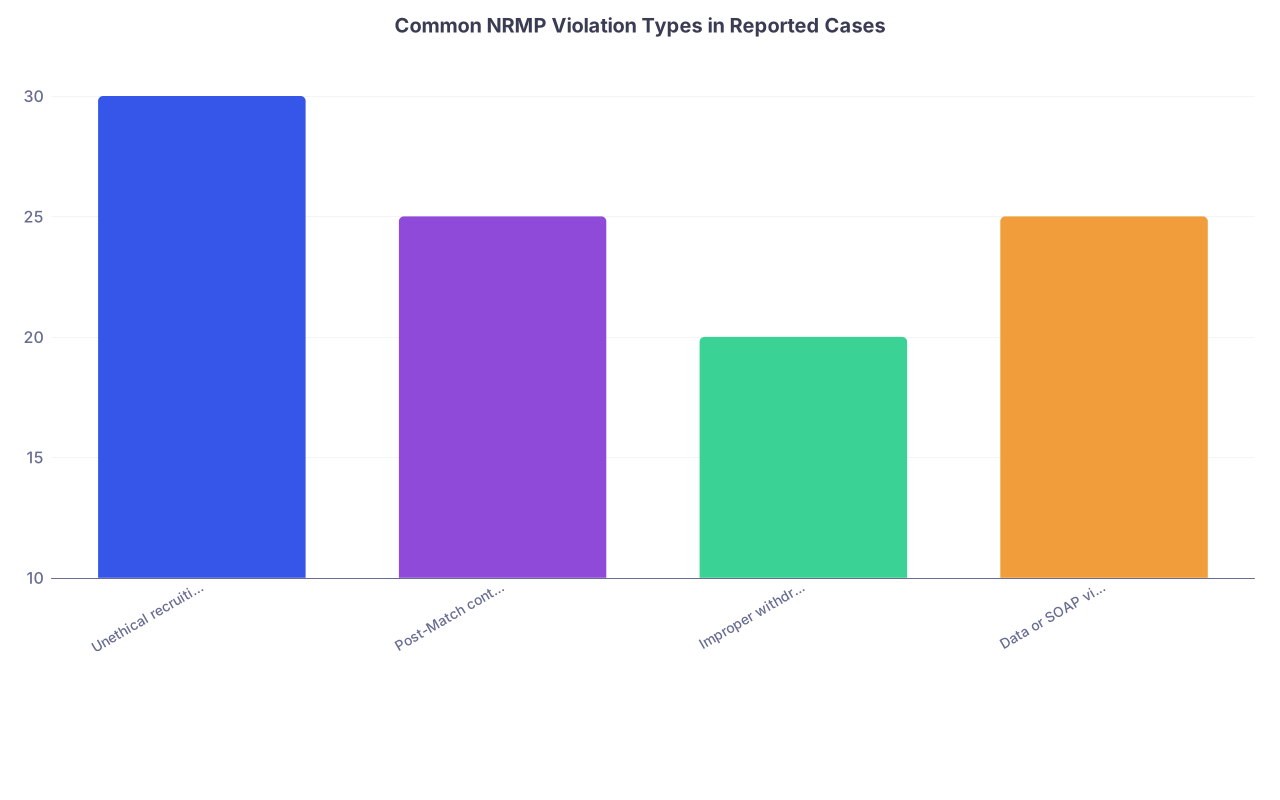
| Category | Value |
|---|---|
| Unethical recruiting/pressure | 30 |
| Post-Match contract issues | 25 |
| Improper withdrawals | 20 |
| Data or SOAP violations | 25 |
“Unethical recruiting or pressure” includes:
- Coercing applicants about rank list content
- Promising positions outside of the Match
- Threatening not to rank unless a commitment is made
You, as an applicant, are most at risk when you:
- Accept or sign anything that smells like a pre‑Match contract with a participating program
- Misrepresent your Match status or withdraw post‑Match without cause in ways that violate the agreement
But merely changing your mind about how to rank programs? That’s built into the system. NRMP expects you to reconsider right up until the deadline.
How to Actually “Navigate NRMP Match Rules” Like an Adult
Let’s be blunt: a lot of Match anxiety comes from people treating rumors as law and post‑interview vibes as contracts.
If you want to avoid getting played:
Know what’s binding:
- Your certified rank list
- The program’s certified list
- The Match outcome
Everything else is theater.
Stop over‑valuing PD “signals”:
- “We’ll rank you to match,” “We’re very interested,” “You’d be a great fit”—none of these are enforceable, and they’re often said to many candidates.
Rank honestly:
- Put programs in the order you actually want them. Not the order you think maximizes “chances” based on whispered promises.
Refuse to be pressured:
- If a program breaks the rules by demanding commitments, that’s a red flag about their professionalism.
Remember who the system was built to protect:
- The algorithm is explicitly designed to favor applicants’ preferences when both sides follow the rules. When you play guessing games about who “likes you more,” you’re fighting the math instead of letting it work for you.
Final Takeaways
Strip this down to the essentials:
- There is no such thing as a binding “verbal commitment” in the NRMP Match. The only commitment that counts is your certified rank list and the Match result.
- Programs that push you for a “verbal commit” are the ones violating the rules, not you. You owe them nothing beyond professionalism and an honest rank list.
- Your best strategy—and the one the algorithm rewards—is brutally simple: ignore the noise, ignore the fake deals, and rank programs in the exact order you want to train.


