

Is It Illegal to Negotiate After the Match? NRMP vs Contract Law
What actually happens—legally and practically—if you try to negotiate your residency contract after the Match? Are you “breaking the Match” or just acting like a normal professional under contract law?
Let me be blunt: most residents are terrified of NRMP rules and way too casual about the actual legal contract they sign with a hospital. That’s backwards.
The NRMP Match is not the same thing as your employment contract. Those two systems sometimes line up, sometimes clash, and you’re the one stuck in the middle. So let’s untangle it.
The Core Myth: “You Can’t Negotiate After the Match”
The most common line I hear from students:
“You can’t negotiate anything after the Match. It’s illegal and against the NRMP rules.”
Wrong on multiple levels.
You have two separate frameworks operating at once:
- NRMP Participation Agreement (a private, contractual set of rules between you and NRMP/programs)
- Employment contract / appointment letter with the hospital or GME office (governed by state contract law, employment law, and sometimes union agreements)
These are not the same. They don’t even come from the same universe.
NRMP rules bind your behavior about accepting positions, not every single thing you can say, ask, or negotiate with a program once you’ve matched. Contract law governs whether an employment contract is valid, enforceable, or negotiable.
So, is it “illegal” to negotiate after the Match?
No. Negotiation itself is not illegal. The question is: are there things you can do that:
- Breach NRMP rules (with NRMP-level consequences), or
- Breach a signed employment contract (with legal/employment consequences), or
- Are just annoying to the program but perfectly lawful?
Those are three different buckets. Most people mash them into one big scary “you’ll get in trouble” soup.
What the NRMP Actually Says (Not the Rumor Version)
Let’s stop guessing and look at how NRMP sees the world.
By submitting your rank list, you agreed that:
- If you match, you must accept that position.
- You will start training in good faith at that program on July 1 (or whatever the start date is), unless both sides release each other under NRMP rules.
Notice what’s missing:
NRMP does not specify your salary, your call schedule, your visa terms, your moonlighting policy, your parental leave, or your parking privileges. NRMP doesn’t care about those details.
It cares about one thing: did the match result in a binding commitment that you and the program will enter into an employment relationship?
What NRMP does prohibit is:
- Refusing to start the program you matched to without a formal waiver
- Trying to jump to another NRMP-participating program instead
- Programs and applicants colluding to break the match system
What it does not prohibit:
- Asking questions about your contract
- Asking for clarification on vague terms
- Requesting reasonable modifications (even if they say no)
- Consulting a lawyer before you sign
NRMP will not punish you for asking, “Can we clarify the parental leave policy in the contract?”
It will punish you if you say, “I refuse to sign, and I’m going to sign a contract with Program B instead,” without a waiver.
Two different planets.
NRMP Commitment vs Contract Law: How They Actually Interact
Think of it this way:
- NRMP commitment = “We agree that we will enter into an employment relationship.”
- Employment contract = “Here are the terms of that relationship: pay, duties, benefits, due process, etc.”
If the program sends you a contract that materially deviates from what they represented or from standard institution policies, you’re not required by law to close your eyes and sign.
You’re also not automatically protected if you just refuse. That’s the trick.
From a legal perspective (contract law):
- A match result is evidence of intent to enter into a contract.
- The actual signed contract is where enforceable details live.
- If there’s no meeting of the minds about fundamental terms, the contract can be contested.
From an NRMP perspective:
- They expect you to sign and start.
- If there’s a serious dispute, you may need a waiver from NRMP to avoid a violation if you don’t start.
So no, it’s not “illegal” to negotiate. But you’re playing on two fields simultaneously. You can win on one and lose on the other if you’re careless.
What You Can Safely Negotiate (Usually) vs Where You’re Playing With Fire
Let’s separate reality from fantasy.
Reasonable, common, and usually safe to at least ask about:
- Clarifying vague or missing language (duty hours, moonlighting restrictions, leave policies)
- Confirming previously promised things: “You mentioned I’d be supported for an H-1B rather than J-1—can we confirm that in the contract?”
- Non-contract but real-life issues: moving stipend, start date specifics within a range, orientation timing
- Procedural protections: grievance process, evaluation/appeal procedures already in institutional policy
Programs may say “no,” but the mere act of asking is not a Match crime.
Where you start bumping into either NRMP or institutional walls:
- Trying to renegotiate salary in a large university system where PGY salaries are locked by GME or union contract
- Asking for extra pay or radically reduced call compared to co-residents “just for you”
- Threatening not to sign unless they change core program structure
- Suggesting you might walk away to another NRMP program without a waiver
Important nuance:
“Against NRMP rules” is not the same thing as “impossible.” Residents have broken contracts and left programs. It happens every year. But there are consequences: NRMP violations, reportable history, possibly being barred from future Matches for a period, visa problems, reference issues.
The mature approach is: negotiate what is negotiable, understand what is non-negotiable, and don’t bluff with threats you cannot back up.
Typical Post-Match Contract Scenarios (And What’s Really Going On)

Let’s walk through what actually happens, not the fantasy in student group chats.
Scenario 1: “Just Sign It, Everyone Does”
Many big academic centers send a standard contract that’s identical for all residents in the system. Salary and benefits tied to PGY level. GME office controls the template, not your specialty program director.
You email to ask if salary is negotiable. HR responds: “No, these rates are set for all residents by the institution.”
Are you allowed to ask? Yes.
Will you succeed? Almost certainly not.
Did you “violate” NRMP rules by asking? No.
Hospitals are not used to residents negotiating like attending physicians. But that’s cultural, not legal. You’re allowed to ask. They’re allowed to say no.
Scenario 2: The Surprise Visa Problem
You matched as an international graduate. During interviews they were fuzzy but positive about visas. Post-Match, you get a contract that says “J-1 only,” but you need H-1B or your long-term plans are dead.
Is it “illegal” to push back hard here? Of course not. This is existential for you.
What happens in real life:
- Some programs will work with you and adjust.
- Others will say, “We can’t sponsor H-1B, take J-1 or leave it.”
- If you truly cannot accept, you may end up requesting an NRMP waiver on the basis of impossibility/visa issues.
NRMP will sometimes grant waivers for genuine visa impossibility. I’ve seen it. But do not assume they will rubber-stamp it. And do not assume there’s no downside: timeline disruption, scramble to find another position, and a history trail.
Again: negotiating or refusing a visa term is not “illegal.” It’s a collision between NRMP expectations and immigration law reality.
Scenario 3: Program B Tries to Poach You After the Match
Happens more often than people admit.
You match at Program A. A director at Program B emails and says, “If you can get out of that contract, we’d love to have you—don’t tell anyone I said that.”
This is exactly what NRMP hates.
If you engage in any serious plan to abandon A and go to B without NRMP waiver:
- You’re at risk of an NRMP violation.
- Program B is at risk too.
- “But B is giving me a better contract” will not save you.
This is the zone where NRMP rules bite hard. Not basic negotiation. Program-hopping and collusion.
Data vs Fear: What Actually Happens to Residents Who Push Back?
Let’s inject some evidence into this.
NRMP publishes Match Violation reports. Look at them sometime instead of Reddit.
Most violations involve:
- Accepting a position outside the Match while still bound to NRMP
- Resigning from a program without waiver and taking another NRMP position
- Programs pressuring applicants about ranking or commitments pre-Match
Almost none say: “Applicant asked to clarify call structure post-Match—violation.”
Residents do occasionally face institutional retaliation for being “difficult,” but that’s about power, not NRMP law. The danger isn’t handcuffs; it’s being labeled high-maintenance before day one.
So yes, be strategic. But stop telling each other that asking basic questions about your employment contract is forbidden. That’s fiction.
Where Contract Law Actually Protects You (More Than NRMP Does)
NRMP’s primary loyalty is to the integrity of the Match, not to you personally.
Contract law, on the other hand, does care about things like:
- Coercion and duress
- Misrepresentation (“we sponsor H-1B” followed by “actually, never mind”)
- Fundamental changes to expected terms
- Enforceability of non-competes or penalty clauses
Programs sometimes include overreaching language in contracts because no one pushes back. Residents feel legally powerless. That’s a choice, not a law of nature.
In reality:
- You can have a lawyer review your contract.
- You can question language that ties you to huge financial penalties if you leave early.
- You can ask whether so-called “non-compete” language is even enforceable in your state.
NRMP will not rescue you from a terrible contract. That’s on you.
Quick Comparison: NRMP Rules vs Contract Law
| Aspect | NRMP Match Rules | Employment Contract (Hospital) |
|---|---|---|
| Primary focus | Match commitment & placement | Pay, duties, benefits, due process |
| Who enforces | NRMP (private body) | Courts, state law, HR/GME |
| What a “violation” is | Breaking match commitments | Breach of contract terms |
| Can you negotiate? | No, rules are fixed | Often limited, but you can ask |
| Consequences | NRMP sanctions, future match risk | Termination, legal claims, HR action |
How to Be Smart (Not Scared) About Post-Match Negotiation
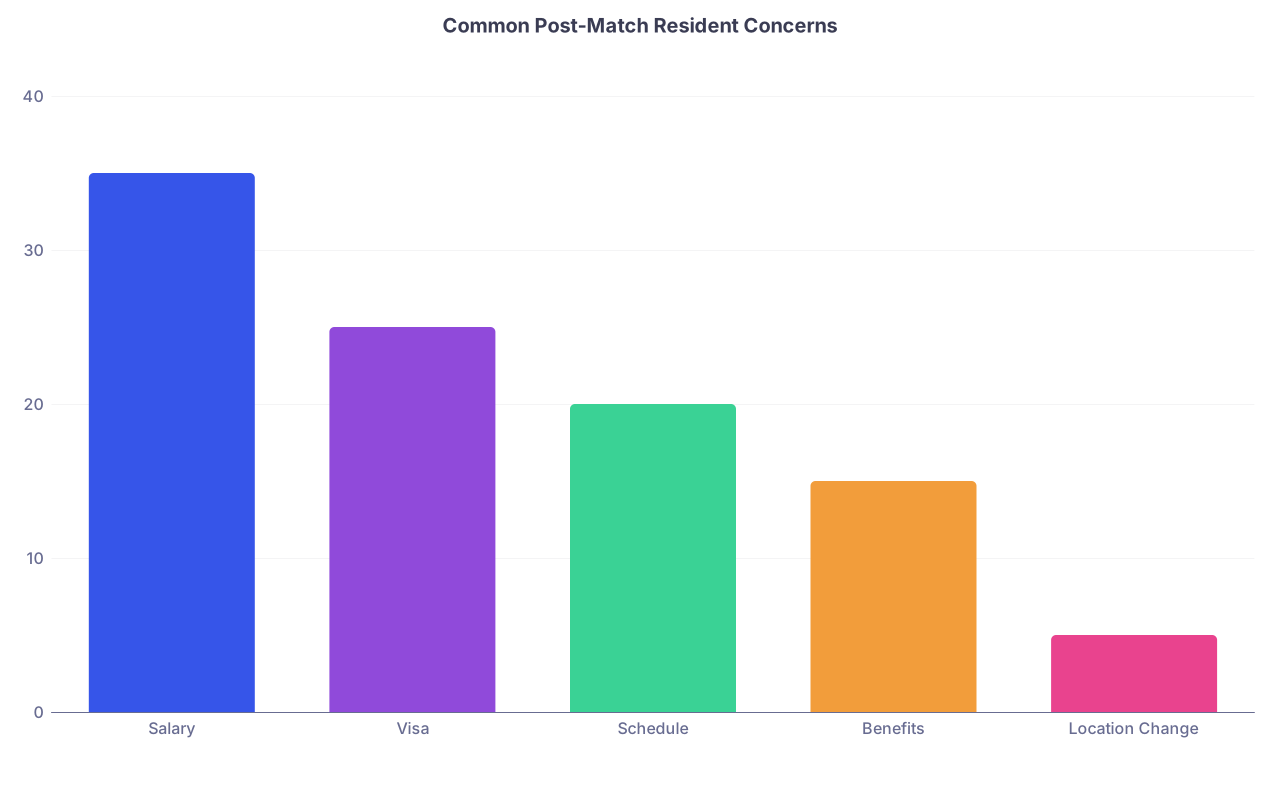
| Category | Value |
|---|---|
| Salary | 35 |
| Visa | 25 |
| Schedule | 20 |
| Benefits | 15 |
| Location Change | 5 |
If you want to avoid being steamrolled without triggering real problems, your playbook should look more like this:
- Read the entire contract. Slowly. Every page.
- Compare it to what was said on interview day and what’s on the program website.
- Flag things that are unclear, missing, or contradictory.
- Ask for clarification in writing, politely and specifically.
- Where you ask for changes, frame them as: “I just want to make sure we’re on the same page,” not “Change this or I walk.”
- If something is truly unacceptable (visa, massive misrepresentation, illegal clause), talk to:
- A contracts/healthcare lawyer
- Your med school adviser or dean’s office (they’ve seen this)
- Possibly NRMP about waiver options if it’s that serious
And keep one rule in mind:
Don’t threaten to go to another NRMP-participating program or accept another spot without a waiver. That’s where “smart negotiation” becomes “NRMP violation.”
Timeline Reality: When Contracts and Match Stress Collide
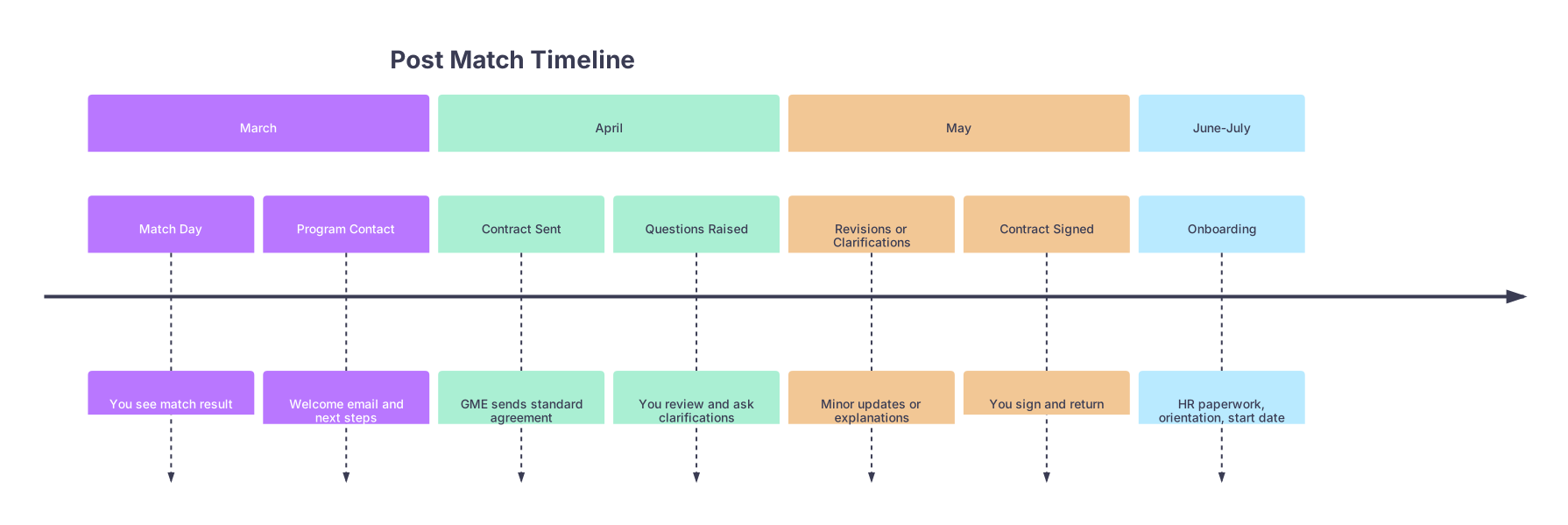
| Period | Event |
|---|---|
| March - Match Day | You see match result |
| March - Program Contact | Welcome email and next steps |
| April - Contract Sent | GME sends standard agreement |
| April - Questions Raised | You review and ask clarifications |
| May - Revisions or Clarifications | Minor updates or explanations |
| May - Contract Signed | You sign and return |
| June-July - Onboarding | HR paperwork, orientation, start date |
Most programs expect contracts returned in a few weeks. You have some room to ask questions and get clarification without looking like a problem child.
Dragging it out for months with endless demands? That’s how you start to look like a risk.
But again: that’s reputational and practical. Not “illegal.”
The Bottom Line
Here’s what the data and real-world behavior actually show:
- Negotiation itself is not illegal and not automatically an NRMP violation. You’re allowed to question, clarify, and even request changes.
- NRMP cares about commitments, not micro-terms. Breaches happen when you try to abandon your matched spot for another NRMP program or refuse to start without a waiver.
- Your contract is where your real protections and risks live. NRMP won’t save you from a bad contract, and fear of NRMP is a lousy excuse for signing something you don’t understand.
Use the Match rules as a boundary, not a muzzle. You’re not a medical student forever. Start acting like a professional whose labor and time actually matter.
FAQ (Exactly 5 Questions)
1. Can I refuse to sign the contract if I don’t like the terms?
Legally, you can refuse to sign any contract. But if you matched through NRMP and then simply refuse to start without a waiver, you risk an NRMP violation. If the issue is major (visa impossibility, serious misrepresentation), you may seek a waiver. Do not assume “I didn’t like the contract” is automatically a good enough reason.
2. Can I negotiate salary after the Match?
You can ask. In most large academic centers, resident salaries are fixed system-wide and not individually negotiable. Private hospitals and smaller programs sometimes have more flexibility, but they rarely adjust PGY salaries for one person. Asking isn’t forbidden; just don’t expect attending-style leverage.
3. What if the program changes something big after the Match (like location or major curriculum structure)?
That’s where contract law and NRMP may both get involved. If the change is substantial, you might have arguments about lack of mutual assent or misrepresentation. This is exactly when to talk to a lawyer and possibly NRMP about a waiver, rather than silently accepting a bait-and-switch.
4. Will NRMP punish me for having a lawyer review my contract?
No. NRMP doesn’t care if you involve a lawyer. Programs might find it unusual, but you have every right to get legal advice about an employment contract that governs years of your life. Just avoid using the lawyer as a blunt instrument to threaten walking to another NRMP program.
5. Can a program withdraw my position if I ask “too many” questions?
They can decide not to finalize an employment contract if things break down, but if they matched you through NRMP and then unilaterally refuse to honor that commitment without good cause, they’re the ones drifting toward an NRMP violation. Usually, programs won’t blow up a match over reasonable clarification requests. They might push back, but outright withdrawing the spot is rare and risky—for them.


