
It’s mid-November. You’re refreshing your email between patients, pretending to listen on rounds, when a subject line punches you in the chest:
“NRMP – Notice of Investigation”
Your stomach drops. You remember the program you backed out of late last cycle. Or the email where you mentioned “you’re my #1 no matter what.” Or that SOAP application where you… got creative with the truth.
You think: “I’ll explain. Worst case, I’ll just sit out this year and apply next cycle. Clean slate.”
Let me stop you there.
That “I’ll get a fresh start next year” fantasy is exactly what gets people destroyed by NRMP issues. Silent blacklisting is real. It’s not written on any official website, but it happens in selection meetings, hallway conversations, and back-channel emails between PDs.
Let me walk you through how it actually works behind the curtain.
First: What “NRMP Rule Issues” Really Mean Behind Closed Doors
Students think of NRMP violations as dramatic things: cheating on rank lists, hacking systems, something cinematic. That’s not what gets most people in trouble.
Most of the real-world problems are messy, human, and surprisingly mundane.
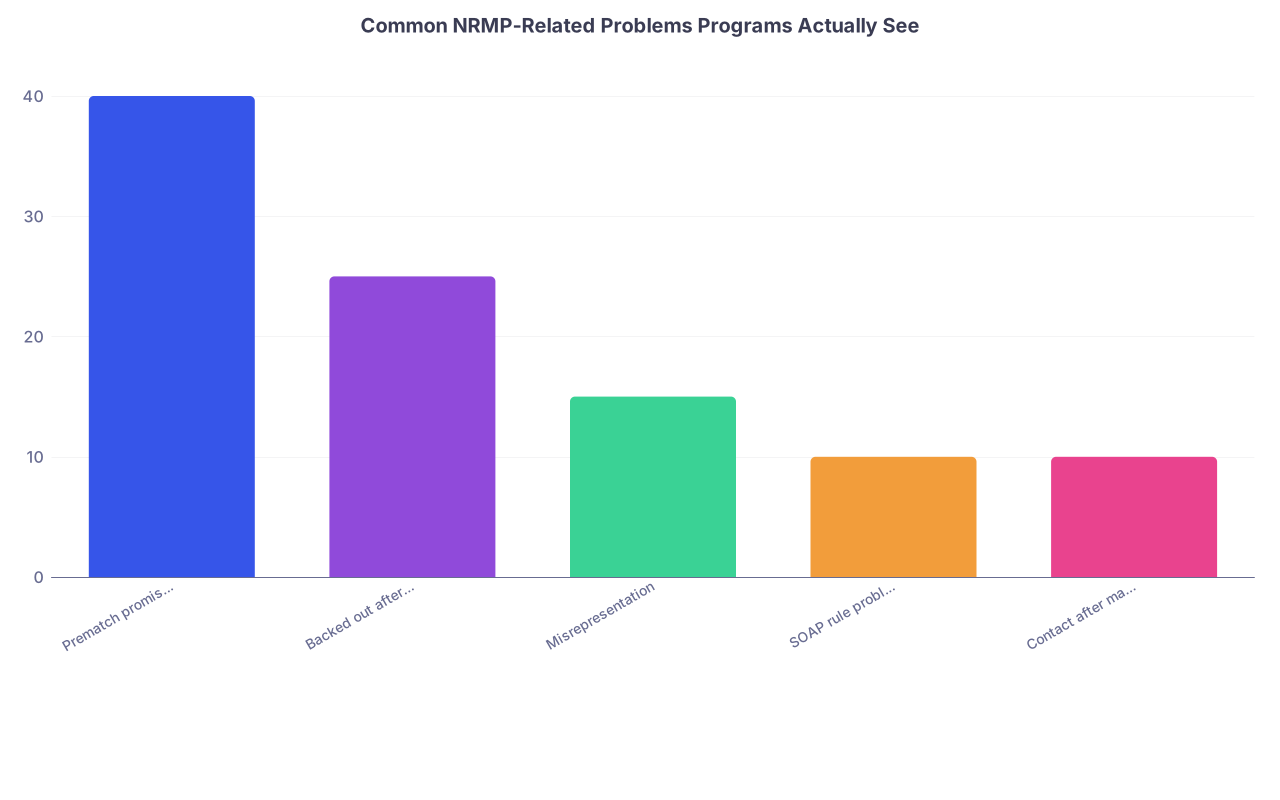
| Category | Value |
|---|---|
| Prematch promises | 40 |
| Backed out after match | 25 |
| Misrepresentation | 15 |
| SOAP rule problems | 10 |
| Contact after match | 10 |
Here’s what I see come up again and again when PDs talk about “NRMP issues” in candidates:
- You hinted or outright said rankings or commitments in emails or in person, in ways that cross the line.
- You matched, then tried to back out for “personal reasons,” fellowships, visas, or better offers.
- You accepted a position in SOAP or the Match while still trying to negotiate somewhere else.
- You misrepresented previous training, prior match participation, or disciplinary issues.
- You communicated with multiple programs after the match in ways that raised flags.
On paper, these get called “match violations,” “contractual issues,” or “failure to honor the match.” In real life, around the PD table, the language is simpler:
“Can we trust this person?”
That’s the phrase you should be hearing in your head every time you make a borderline decision involving NRMP rules.
How NRMP Rule Problems Get Recorded – And Why They Don’t Just Vanish
You need to understand there are two layers:
- The formal NRMP world (what the website and policies say).
- The informal PD network world (what actually governs your career trajectory).
They overlap, but they’re not the same.
The formal side: what goes in your record
If the NRMP formally finds you in violation, a couple of things can happen:
- You can be barred from participating for a certain number of years.
- A note can be attached to your NRMP history that programs can see.
- Your school is notified. That part is ugly.
| Type of Issue | Visible to Programs? | Impact on Future Cycles |
|---|---|---|
| Formal NRMP Violation | Yes | Major red flag |
| Program-level Complaint | Sometimes indirectly | Depends who complains |
| School-level Concern | Indirect via MSPE | Moderate to severe |
Here’s the piece applicants do not fully get: once NRMP flags you, it is never really fully erased in the minds of PDs.
Even if your “penalty period” ends. Even if you’re technically allowed back into the Match. You are now in a category that PDs discuss explicitly:
“NRMP history.”
I’ve sat in rooms where an applicant looked stellar on paper—260s, research, great letters—and someone said casually, “Just check their NRMP history to make sure we aren’t stepping into anything.” That’s standard for some programs now.
If there’s a known violation? You are no longer “just another applicant.” You’re someone they have to defend if they rank you high. Which means many of them simply will not.
The informal side: how your name spreads
The silent blacklisting does not start with NRMP. It starts with how programs react when:
- You back out after the match.
- You sign a contract then try to bail.
- You ghost after SOAP acceptance.
- You play one program against another.
Here’s what actually happens.
A PD loses a resident at the last minute. They have to scramble to fill the spot. Their coverage explodes. Their attendings are angry. Their current interns are getting hammered with extra call.
That PD will talk. At national meetings. On listservs. On private PD email chains that applicants do not know exist.
I’ve seen emails saying, word for word:
“Heads up – applicant [initials] matched here this cycle and tried to get out of their contract for a ‘better offer.’ Be extremely cautious if they apply to you.”
That is how your problem follows you into the next cycle even if NRMP never formally sanctioned you.
How Silent Blacklisting Actually Plays Out Across Cycles
People imagine “blacklisting” as some universal universal ban. That’s too dramatic and frankly not how most things work.
It’s more subtle. More dangerous for that very reason.
Year 1: The actual incident
Let’s say you match into a mid-tier internal medicine program in the Midwest. Then in April you get a last-minute research fellowship offer at a big-name institution. You email the PD:
“I’m so grateful for the opportunity, but I’ve decided to pursue this research year instead of starting residency. I hope you understand.”
They don’t.
The PD flags it to GME. Maybe they file something with NRMP. Maybe they don’t. But they definitely tell your med school. And they definitely complain about you in PD spaces.
Year 2: You try to re-enter the Match
You now decide, “Okay, I’ll just apply again. I’ll explain that I took a research year.”
Here’s what you don’t see:
- Your former matched program may quietly email programs they know in your desired region.
- Some PDs will flat-out ask your dean’s office what happened last year.
- Your MSPE addendum or updated transcript may contain language that raises questions.
And the big one:
- A subset of PDs will see the gap, smell drama, and simply toss your app into the “too risky” pile.
The conversation in the selection meeting sounds like this:
“Looks strong, but something odd happened last year. I don’t want to deal with NRMP headaches. We have plenty of safe applicants.”
You’re not “blacklisted” globally. You’re just silently filtered out by risk-averse people who have more than enough other options.
Year 3: The pattern sets in
This is the cycle where I see people finally realize something is wrong.
You’ve done research, extra observerships, maybe Step 3. You’ve “improved” your application. Yet:
- You get fewer interviews than your stats would predict.
- Interviews you do get feel oddly focused on “professionalism” and “commitment.”
- You get the sense someone has read something about you that you haven’t seen.
That’s when I usually get the panicked emails: “Is there some list? Am I blacklisted?”
There’s no big red blacklist in a central database. There is something worse: a story about you that refuses to die.
The Specific Rules People Break That Haunt Them
Let me be precise. These are the moves that come up repeatedly when PDs discuss “NRMP issues that follow people.”
1. Reneging on a Match commitment
The classic one.
You match. Then you try to get out:
- For a “better” specialty.
- For a different geographic region.
- For a research job.
- For family reasons that mysteriously appeared after ranks were in.
Programs are not stupid. They can tell when it’s genuine catastrophe versus buyer’s remorse.
Inside PD circles, the story is never: “This poor student had a complicated situation.” It’s: “They broke the match.”
That phrase—“broke the match”—is poison.
2. Making explicit rank promises
Applicants think they’re being smart when they say:
- “You’re my top choice.”
- “I will rank you #1.”
- “If you rank me, I will rank you highly.”
Here’s what too many of you don’t realize: programs screenshot those emails. They save them. They show them later when things blow up.
If you tell two programs they’re your #1, and then one of them sees you matched somewhere else, guess what they do?
Some will shrug and move on. Others will feel you lied, file a complaint, or at minimum remember your name with an edge.
The NRMP won’t chase every one of these down. But the programs will remember. And some of them will talk.
3. Games during SOAP
SOAP is emotionally brutal. People get desperate. And desperate people do dumb things.
Things I’ve seen:
- Applicants accepting a position in SOAP, then trying to back out when a “better” SOAP offer appears.
- Applicants hinting to multiple programs that they’ll commit if offered, then playing them off each other.
- Applicants lying about other offers.
SOAP programs are already stressed. You show any sign of dishonesty or opportunism? They will remember your name for years.
And SOAP programs are often the same ones that fill prelim spots, backup positions, and even PGY-2 transfers later. Your little SOAP stunt can come back to bite you when you’re trying to lateral.
4. Hiding prior training or match history
This one PDs take personally.
Omitting previous residency experience. Minimizing a prior mismatch or dismissal. “Forgetting” to mention a previous NRMP investigation.
Programs talk to each other. GME offices talk. I have seen this exact sequence:
- Applicant hides prior unsuccessful intern year.
- New program finds out midway through interviewing.
- PD emails half a dozen colleagues: “If you get an app from [Name], be aware they hid prior training and dismissal.”
Now you’re done in that whole circle of programs. Maybe in that specialty.
How Programs Quietly Screen “Risky” Applicants
You might think: “If I’m not formally sanctioned, maybe no one will notice.” Wrong.
Here’s how the quiet screening actually happens.

| Step | Description |
|---|---|
| Step 1 | Application Received |
| Step 2 | Standard review |
| Step 3 | Deeper review |
| Step 4 | Ask Dean or prior PD |
| Step 5 | Do not invite |
| Step 6 | Gap or prior match? |
| Step 7 | Any concerning notes? |
| Step 8 | Reassured? |
They look for:
- Gaps between graduation and PGY-1 with vague explanations.
- Prior participation in match without clear outcome.
- Vague talk of “personal reasons” for not starting.
- Strange wording in MSPE addenda like “ultimately did not matriculate into their initially matched program.”
Once they see a potential issue, they may:
- Email your dean’s office. They are usually quite blunt: “Any concerns about this applicant’s professionalism or contract adherence?”
- Call your prior program or the program you matched into but did not attend.
- Ask you direct questions in the interview to see how you answer.
If anything smells off, you go into the “not worth the risk” pile.
Damage Control: If You Already Have an NRMP/Match Problem
If you’re reading this because you’ve already had a problem, you’re not doomed. But you also don’t get to pretend everything is normal.
You need a very deliberate strategy.
Step 1: Stop making it worse
Do not:
- Lie to “clean up” the story. That’s how people go from “risky” to “radioactive.”
- Send emotional, defensive emails to programs, NRMP, or your dean.
- Try side deals outside NRMP to “fix” last year by quietly signing something off-cycle.
Every extra half-truth you add gives someone another reason to distrust you.
Step 2: Get one institutional ally
You need one credible person on your side:
- Your dean or associate dean for student affairs.
- A PD who knows you well and believes your side.
- Occasionally, a GME director from where you did some training or research.
You want this person to be willing, if contacted, to say something along the lines of:
“Yes, there was a situation. It was handled. I believe this applicant has learned from it and can be trusted to honor commitments.”
Without that, programs will rely solely on the worst version of your story.
Step 3: Own the story before others tell it
You cannot hide a significant NRMP or match issue and hope no one notices. That backfires almost every time.
What you do instead:
- Brief, consistent explanation in your application (if there’s a place it naturally fits: gap, prior training).
- Calm, non-defensive, factual description when asked: what happened, what you learned, why it will not happen again.
- Explicit acceptance of responsibility. Not performative guilt. Just clear ownership.
Programs listen very carefully to how you talk about it. If you sound like:
- You blame everyone else.
- You minimize what happened.
- You seem likely to do something similar again.
They’re out.
Step 4: Adjust your expectations and target list
This part no one wants to hear.
After a significant NRMP or match issue, you do not get to be picky for a while. That’s just reality.
You will have much better odds if you:
- Apply more broadly geographically.
- Are open to community or smaller academic programs.
- Consider prelim or transitional options as a way back into the system.
Once you prove yourself in an actual residency, the old story starts to matter less. Until then, it is very loud.
How to Avoid Getting on the “Silent Blacklist” in the First Place
Let me give you the rules PDs wish applicants would actually follow. The stuff that prevents problems instead of trying to rehab them.

1. Never, ever lie about anything that touches NRMP rules or contracts
Not about:
- Prior match involvement.
- Prior contracts signed or declined.
- Prior training or dismissals.
- Whether you’ve accepted a SOAP offer.
Once you’re caught in one lie, programs extrapolate: “If they lied about this, what else are they lying about?” That’s when emails get sent, and your name starts circulating.
2. Respect commitments even when better opportunities appear
This is the rule PDs judge people by:
Once you commit, you commit.
If you haven’t matched yet and you’re on the market? Fine, you can weigh options. But once you’ve matched or signed something formal through NRMP, you are expected to treat that as final unless something truly extraordinary happens.
Programs have zero sympathy for “dream fellowship” or “more prestigious specialty” as reasons to break a match.
3. Be intentionally boring with your communication
You do not impress PDs by being cute about rank lists. You alarm them.
Your post-interview communications should be:
- Polite.
- Non-committal about rank specifics.
- Completely aligned with NRMP communication guidelines.
You can say “I really liked your program.” You cannot say “You are my #1 and I will rank you first no matter what” and then do something else.
PDs keep those receipts.
4. If you are in trouble, loop in your dean or GME early
I’ve seen people try to hide a developing conflict with a program until it explodes into an NRMP issue. That’s how you end up with no allies when PDs start calling.
If something serious is brewing:
- Program wants to release you from contract.
- You’re considering not honoring a match.
- There’s talk of “professionalism concerns” tied to your decisions.
You bring your school or a trusted senior faculty member into the conversation. You want a witness and advisor before anyone calls NRMP.
What PDs Actually Say When Your Name Comes Up
This is the part no one tells you.
I’ve been in meetings where an applicant with a prior issue came up. The CV is stellar. Letters are good. Then someone at the table goes:
“Wait, isn’t this the person who had that match issue last year?”
Silence. Then one of the following:
- “I really don’t want GME breathing down my neck over some NRMP complication. We have plenty of other strong applicants.”
- “I’m not touching that. Pass.”
- Occasionally: “I know the story. It was a mess, but I think they got unfairly burned.”
Those are the people who might still rank you. But you’d better be worthy of that risk.
This is what “silent blacklisting” looks like in real life. Nobody sends out a memo saying “Do not rank [Your Name].” But your file keeps landing in the “too complicated” pile again and again.
When the Shadow Finally Starts to Lift
Here’s the good news: the silent blacklist effect is not always permanent.
What changes it?
- Completing a solid year or two at a program that’s willing to vouch for you.
- Demonstrating reliability, professionalism, and zero drama during that time.
- Having a PD or APD who can say, “Whatever happened before, they’ve been outstanding here.”
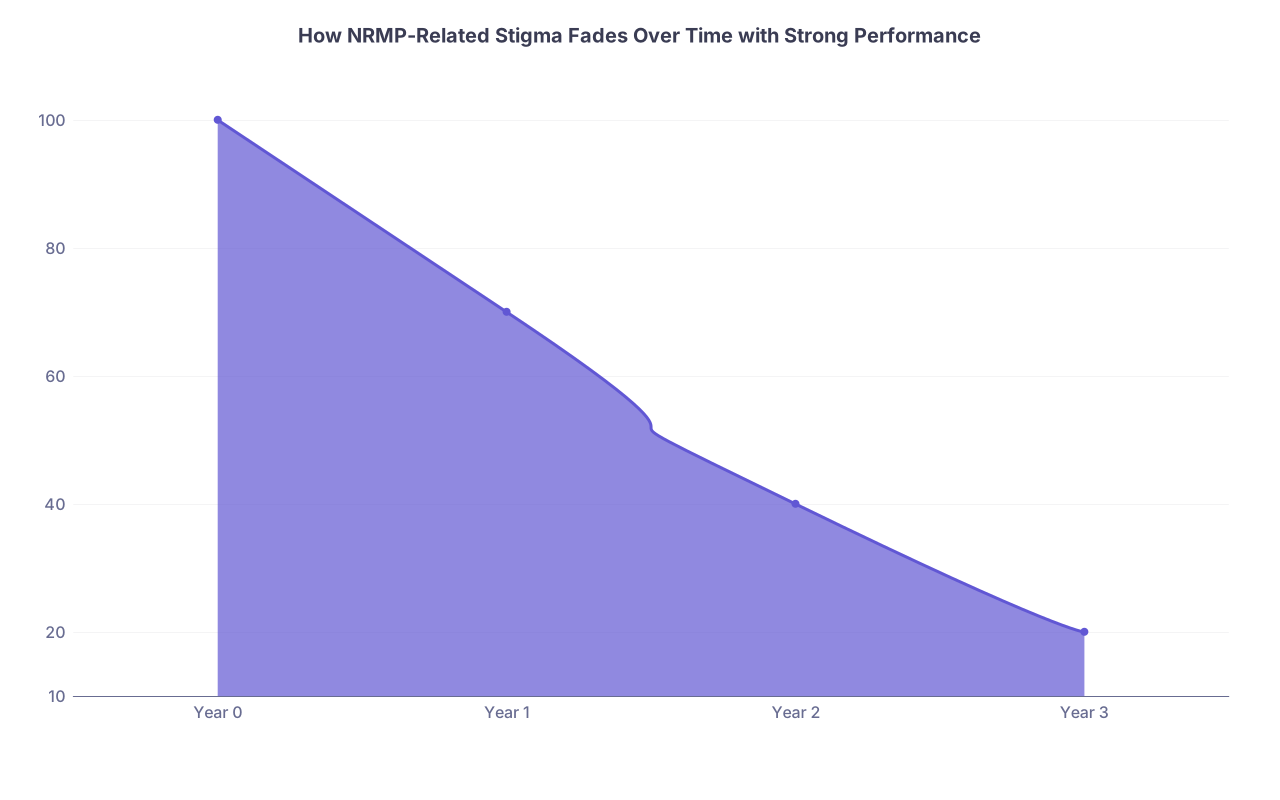
| Category | Value |
|---|---|
| Year 0 | 100 |
| Year 1 | 70 |
| Year 2 | 40 |
| Year 3 | 20 |
The informal probability that someone will hold your past against you drops as you accumulate new, clean data.
But that only works if you actually get into a program that’s willing to give you that chance. And that’s much easier if you haven’t torched your reputation with NRMP/contract behavior in the first place.
Quick Reality Check Before You Make a Risky Move
If you’re sitting on a draft email to a PD about backing out of a match, or promising ranks, or trying to negotiate across programs, stop and ask:
- If this email were screenshotted and shown to a room of PDs, how would they judge my integrity?
- Would I be comfortable with this decision being summarized in one sentence and passed around at a national PD meeting?
- If I had to explain this under oath to the NRMP, would I sound credible or self-serving?
Because that’s the level at which these things play out.
Your board score bumps your chances a little.
Your research adds a bit.
Your NRMP/contract integrity? That’s binary. Once people doubt it, they tend to just move on to safer applicants.
Years from now, you won’t remember the exact wording of NRMP policy sections. You’ll remember the one or two key decisions where you either protected your reputation or traded it for a short-term gain. And how long you paid for that choice.