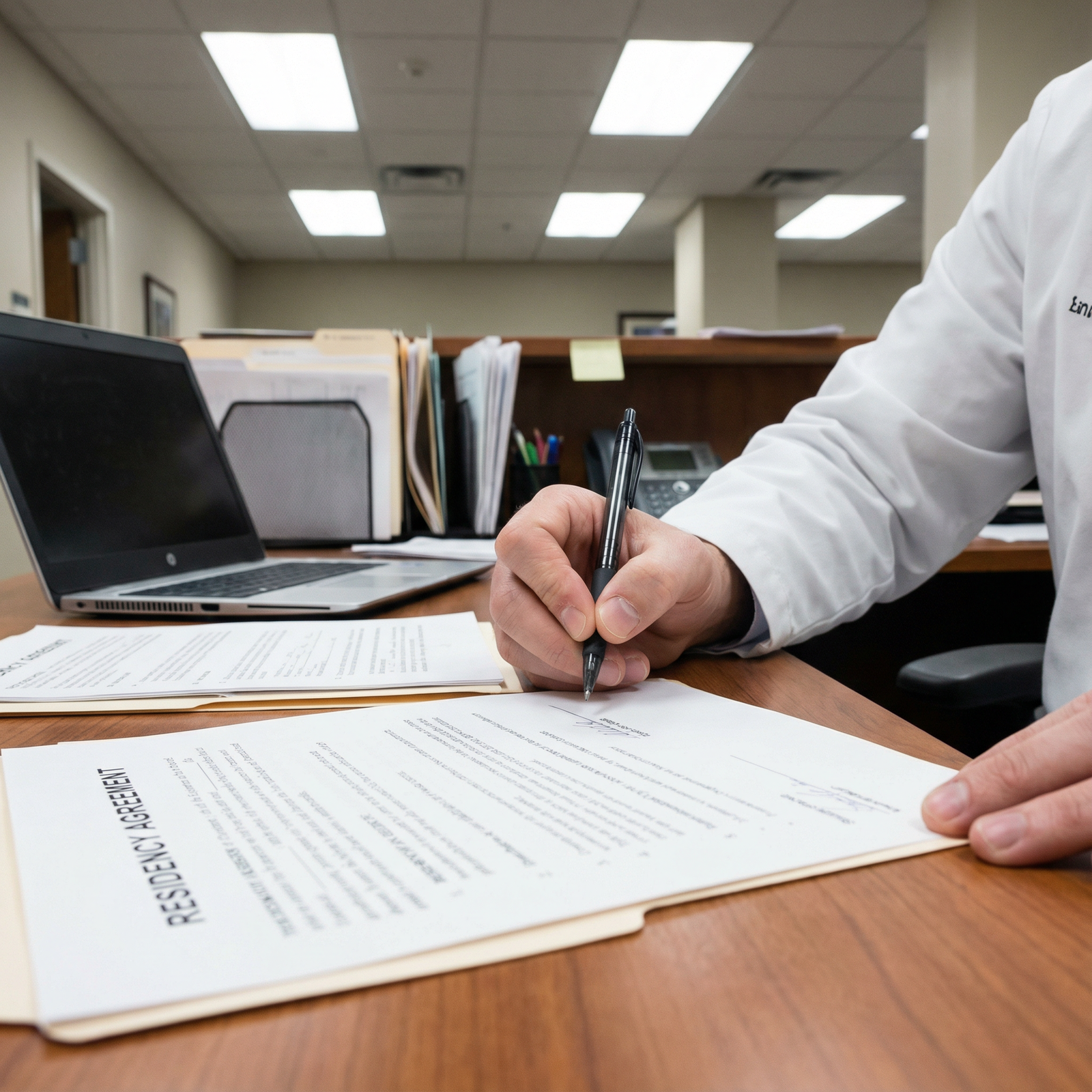
When it comes to residency applications, no moment looms larger for medical students than Match Day. Your NRMP Match result shapes where you will train, who will mentor you, and how your early career unfolds. Yet long before the envelope opens, your Match outcome—and even your eligibility to match—depends on how well you understand and follow NRMP rules.
Match Day is meant to be a fair, transparent, and structured process. The National Resident Matching Program (NRMP) protects this fairness through a set of binding policies. Violating these rules, even unintentionally, can jeopardize your residency position, your professional reputation, and your future in medicine.
This guide explains what the NRMP is, the most common types of NRMP Match violations, what happens if a violation occurs, and how to confidently avoid problems throughout your residency application journey.
What Is the NRMP and How Does It Shape Match Day?
The National Resident Matching Program (NRMP) is a private, non-profit organization that coordinates the annual residency and fellowship matching process in the United States. It uses a computerized algorithm to pair applicants’ rank order lists with program directors’ lists in a way that optimizes applicant preferences while maintaining fairness and equity.
The Role of the NRMP in Residency Applications
The NRMP is not a residency application service—that role belongs primarily to ERAS (Electronic Residency Application Service). Instead, the NRMP:
- Administers the Match (Main Residency Match and several specialty matches)
- Sets and enforces Match Participation Agreements and policies
- Runs the Matching Algorithm that pairs applicants and programs
- Investigates and adjudicates Match Violations
- Maintains a public Violation Report when applicants or programs breach the agreement
When you register for the Match, you sign a binding contract with the NRMP. This agreement governs your behavior—and the behavior of programs—throughout the Match cycle. Violating that agreement can carry serious, long-lasting consequences.
Why Understanding NRMP Match Violations Matters
Knowing the NRMP rules isn’t just about avoiding punishment; it’s about ensuring:
- A valid, secure Match result
- Protection of your rights as an applicant
- A fair playing field among all applicants and programs
- A smoother path to a successful residency start
Failing to comply with NRMP regulations can result in:
- Disqualification from the current or future Match cycles
- Loss or cancellation of a residency position, sometimes even after you’ve started training
- Public listing of the violation on the NRMP’s website (which program directors can see)
- Mandatory sanctions, such as being barred from entering certain fellowship Matches
- Institutional or professional consequences, depending on severity
For a residency applicant, one serious Match violation can have ripple effects across your entire early career, influencing how program directors, hospitals, and credentialing bodies perceive you.
Common Types of NRMP Match Violations Every Applicant Should Know
NRMP policies are detailed, but most applicant violations fall into a few predictable categories. Understanding these will help you recognize risky situations and make decisions that keep you compliant.
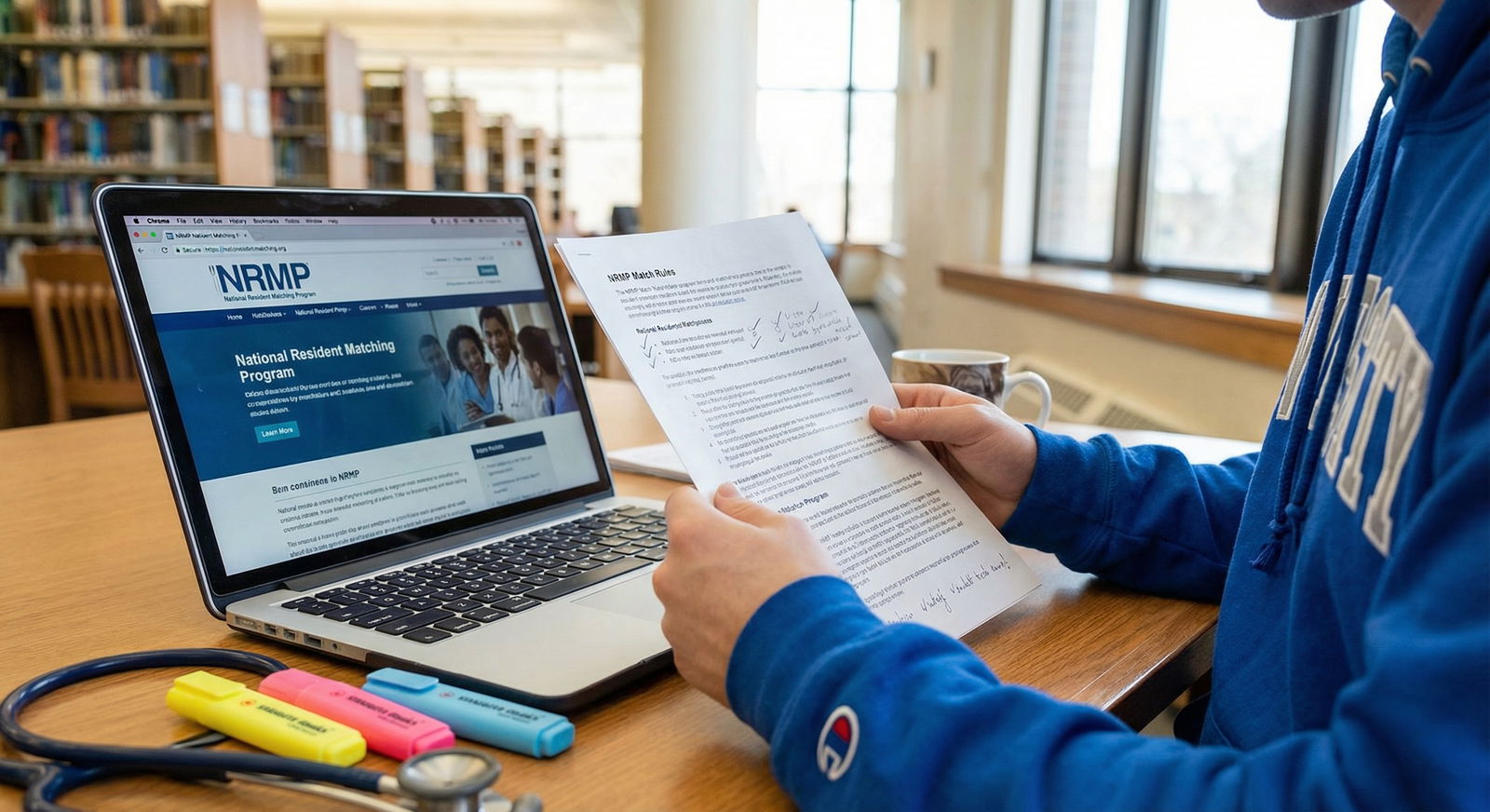
1. Providing False or Misleading Information
What it is:
Knowingly providing false or misleading information in any part of the Match process, including:
- ERAS application (education, USMLE/COMLEX scores, publications, degrees)
- Personal statements or CVs
- Interview communications with programs
- NRMP registration details
Examples:
- Inflating the number of procedures you observed or performed
- Listing publications “in press” that have not been accepted
- Incorrectly claiming to have graduated from a medical school
- Hiding a previous dismissal from a program or prior NRMP sanction
Why it matters:
Integrity is central to medical education and the NRMP. Dishonesty undermines trust and can result in:
- Automatic referral to the NRMP Violations Review Committee
- Match sanctions and reporting to your medical school or training program
- Potential consequences with state medical boards later
How to avoid it:
- Keep a detailed, updated activity log throughout medical school
- Verify all dates, titles, and roles before submitting
- When unsure, use conservative, accurate wording (e.g., “manuscript in preparation” rather than “submitted” if not yet submitted)
- Disclose significant issues (e.g., leaves of absence, professionalism concerns) honestly and consistently
2. Failure to Withdraw Properly From the Match
What it is:
Remaining registered for the NRMP Match when you know you will not be able or willing to start training in a residency program on July 1 (or your program’s start date), and failing to formally withdraw.
Common scenarios:
- You accept a definite position outside the Match (e.g., pre-match contract in a non-NRMP program or a guaranteed spot abroad)
- You decide to reapply next year instead of continuing in the current Match
- You become ineligible (e.g., failure to graduate, visa denial) and do not notify NRMP
Why it matters:
If you remain in the Match and are paired with a program, both you and the program are contractually bound. Failing to honor that Match commitment without appropriate NRMP processes can be deemed a violation.
How to avoid it:
- If your plans change, talk immediately with:
- Your Dean’s office or career advisor
- The NRMP (via MyNRMP or email) for guidance on formal withdrawal
- Do not assume that “doing nothing” will simply remove you from the process
- Keep track of all deadlines and policies regarding withdrawal and rank list certification
3. Rank Order List (ROL) Mismanagement and Misconduct
What it is:
Issues involving how you create, certify, or use your Rank Order List within the NRMP system.
Potential violations include:
- Attempting to rank programs you did not apply to or interview with at all
- Certifying your ROL while knowingly planning not to honor a potential match
- Colluding with another applicant to “trade” programs or influence each other’s ranks in violation of NRMP policies
Important distinction:
Making a strategic mistake (e.g., ranking based on “where I think I’ll get in” rather than true preference) is not a violation—just a poor strategy. Violations are about misrepresentation or bad-faith participation, not suboptimal choices.
How to avoid it:
- Rank programs in the true order of your preference, not based on speculation about program interest
- Do not let programs pressure you into ranking them first in exchange for promises or hints
- Double-check that:
- You only rank programs where you are eligible and have interviewed
- Your ROL is certified before the NRMP deadline
- Do not share your exact ROL or ask programs about their rank lists—this is discouraged and may trigger inappropriate conversations
4. Offering or Accepting Incentives, Promises, or Side Deals
What it is:
Any attempt to influence ranking decisions through incentives, guarantees, or pressure that violates the spirit of a fair Match.
Examples of problematic behaviors:
- A program offers you a financial incentive (stipend, bonus, or housing) specifically contingent on ranking them first
- A faculty member promises, “If you rank us first, we will rank you to match—guaranteed”
- An applicant offers to perform unpaid research or other work only if the program agrees to rank them highly
Clarifying nuance:
Programs can discuss the program’s strengths, express continued interest, and answer your questions. They cannot:
- Require you to disclose your ROL
- Promise you will match if you rank them a certain way
- Offer or request quid-pro-quo agreements related to ranking
How to avoid it:
- If language from a program feels coercive (“You should rank us first if you want to secure a spot”), document it and discuss with your Dean or advisor
- Never offer incentives or signal that you will rank a program in exchange for specific benefits
- If uncomfortable, you can politely end the conversation or reply with neutral language:
- “Thank you for your interest. I will be considering all of my options carefully before submitting my final rank list.”
5. Accepting or Negotiating Duplicate Positions
What it is:
Holding or agreeing to more than one binding residency position for the same training period.
This can occur if:
- You secure a contract outside the NRMP Match with a program that participates in the NRMP and simultaneously stay in the Match without an authorized exception
- You match into a position and later sign another contract for a different position starting at the same time
- You attempt to “switch” programs after the Match without going through approved NRMP or institutional processes
Why it matters:
NRMP rules help ensure that every position is filled fairly and that no applicant holds multiple positions while others go unmatched. Violations here can harm both programs and fellow applicants.
How to avoid it:
- Before signing any contract for a position, clarify:
- Is this position part of the NRMP Match?
- Does this affect my Match participation?
- If you’re offered an off-cycle or outside-Match position, discuss with:
- The NRMP (or review written policy)
- Your Dean’s office or GME advisor
- Never sign a second residency contract that overlaps with a position you’ve already matched to or committed to, without formal NRMP and institutional approval
How NRMP Enforces Match Rules and Handles Violations
The NRMP has a formal process to maintain fairness and address Match Violations.
Reporting and Investigation
NRMP can receive allegations of violations from:
- Applicants
- Program directors
- Medical schools
- Institutions or GME offices
When a complaint is filed, NRMP may:
- Open a case and notify the parties involved
- Request written statements and supporting documents
- Review communications (emails, messages) if provided
- Present findings to the Violations Review Committee (VRC)
Possible Sanctions
Depending on the severity and intent, sanctions can include:
- Warning or admonishment (for minor or first-time issues)
- Participation restrictions in future Matches (e.g., barred from matching for one or more cycles)
- Requirement to participate only in the Supplemental Offer and Acceptance Program (SOAP) for a period of time
- Public listing of the violation on the NRMP website for a specified duration
- Notification to:
- Your medical school
- Current or future training program directors
- Other relevant organizations, if applicable
How to Avoid NRMP Match Violations: Practical Strategies for Applicants
You do not need to memorize every line of the NRMP policy manual, but you should be familiar with core expectations and adopt habits that minimize risk.
1. Educate Yourself on NRMP Rules Early
- Read the Match Participation Agreement when you register for the Match—not just click “I agree”
- Review the NRMP’s Match Policies and Code of Conduct on their official site
- Attend any Match info sessions or workshops your medical school offers
- Ask specific questions if anything is unclear (Dean’s Office, NRMP support, or GME advisors)
This upfront effort is far easier than trying to untangle a potential violation months later.
2. Organize and Verify Your Application Materials
Accuracy reduces your risk of misrepresentation:
- Keep a running CV throughout medical school with dates, supervisors, locations, and responsibilities
- Maintain a folder (digital and/or physical) with:
- Score reports (USMLE/COMLEX)
- Transcripts
- Letters of recommendation
- Research proofs (e.g., publications, abstracts)
- Before submitting ERAS:
- Double-check all entries with documentation
- Ask a mentor or advisor to review for consistency and clarity
If you discover an error after submission, correct it promptly and transparently. Notify:
- The program(s) concerned
- Your Dean’s office
- The NRMP (if it directly affects Match eligibility or integrity)
3. Manage Your Rank Order List Thoughtfully and Honestly
The NRMP algorithm works in your favor when you rank programs in true order of preference.
Key tips:
- Make your list based on fit, training quality, and personal priorities, not where you “think” you’ll match
- Do not let post-interview communication from programs unduly sway you or pressure your ranking
- Verify that you:
- Have interviewed at every program you rank
- Are eligible and licensable in those states
- Are aware of any couples match or special track implications
- Log into MyNRMP early and often before the deadline; do not wait until the last minute to certify your ROL
4. Maintain Professional, Appropriate Communication With Programs
Programs and applicants must follow NRMP rules for communication:
- You are not required to tell any program how you will rank them
- Programs are not allowed to ask you to reveal your rank list or to make binding commitments about ranking
- You may send thank-you notes or update letters, but avoid:
- Explicit ranking promises ("I will rank you #1")
- Asking for specific ranking assurances ("Will you rank me highly?")
If a conversation feels uncomfortable or possibly non-compliant:
- Steer it back to neutral ground
- Document what was said (date, time, context)
- Seek advice from your advisor, Dean, or GME office
5. Seek Guidance Before Making Major Changes
Any time you are considering a significant change that affects your Match participation, get expert help:
- Withdrawing from the Match
- Accepting a job offer outside the Match
- Changing specialties mid-cycle
- Facing delayed graduation or exam failure
Involve:
- Your Dean or career advisor
- Your school’s NRMP liaison (if applicable)
- The NRMP help desk if you need clarification about policy
Asking early can prevent small issues from turning into reportable Match Violations.
Navigating Match Day and Beyond: Expectations and Best Practices
After months of applications and interviews, Match Week and Match Day are emotional and high-stakes. While the NRMP rules are most critical earlier in the process, there are still important expectations as you transition into residency.
1. Prepare Logistically and Emotionally
- Understand the timeline:
- Monday of Match Week: You learn if you matched
- Monday–Thursday: SOAP (if applicable)
- Friday: Match Day results released
- Plan ahead:
- Update contact information in MyERAS and MyNRMP
- Have a list of financial and housing considerations ready in case you need to move
- Emotionally:
- Anticipate a range of outcomes
- Lean on classmates, family, friends, and mentors
2. Verify Your Credentials and Readiness to Start
Once you match:
- Confirm you will meet all graduation requirements on time
- Keep your licensing exams, immunization records, and required clearances up to date
- Respond promptly and professionally to your new program’s emails and onboarding forms
Failing to complete necessary onboarding steps is not an NRMP violation per se, but it can result in losing your position or starting residency under stress.
3. Honor Your Match Commitment
The Match result is a binding commitment for both you and the program.
- You are expected to start residency at the program where you match
- Attempting to back out to pursue a different NRMP-participating position without formal NRMP involvement can be considered a violation
- If unavoidable circumstances arise (health issues, family emergencies, immigration barriers), immediately involve:
- Your matched program
- Your Dean’s office
- The NRMP
Approach these conversations honestly and with documentation, focusing on collaborative problem-solving.
4. Embrace the Outcome and Focus on Growth
Not everyone matches at their top choice, but any accredited residency program offers real opportunities for:
- Clinical growth
- Strong mentorship
- Career development and fellowship pathways
Your professionalism—including how you navigate NRMP rules and honor commitments—will matter far more in the long run than the rank number of your matched program.

FAQs: NRMP Match Violations and a Smooth Match Day
1. What are the key NRMP rules I need to know as an applicant?
At a minimum, you should understand that:
- Your participation in the Match is governed by a binding contract (the Match Participation Agreement)
- You must be honest and accurate in all application materials and communications
- You cannot:
- Accept multiple residency positions for the same time period
- Offer or accept incentives or guarantees in exchange for ranking decisions
- Misrepresent your intentions or eligibility to programs or the NRMP
- You must honor your Match commitment unless the NRMP and all involved parties formally release you
Reviewing the NRMP’s official Match Policies and Code of Conduct on their website is strongly recommended.
2. What should I do if I realize I made a mistake in my ERAS or NRMP information?
Act quickly and transparently:
- Correct the error in ERAS or other systems if possible.
- Notify any affected programs in writing, briefly explaining the correction.
- Inform your Dean’s office so they can advise and support you.
- If the error significantly affects your eligibility or Match participation (e.g., incorrect graduation date, misreported exam status), contact the NRMP for guidance.
Most honest mistakes, especially if corrected promptly, can be addressed without severe penalties.
3. Are there consequences for “minor” NRMP violations?
Yes, even minor violations can have formal consequences. The severity of sanctions depends on factors such as:
- Intent (was it deliberate or accidental?)
- Impact on other applicants or programs
- Whether this is a first-time or repeat offense
Potential outcomes include:
- Formal warning or admonishment
- Restrictions on participating in certain Matches or only via SOAP
- Public posting of the violation on the NRMP site for a defined period
Avoid assuming anything is “too small” to matter; when in doubt, seek advice and follow policy.
4. How can I learn more about my responsibilities in the NRMP Match?
Use these reliable resources:
- NRMP Official Website (nrmp.org):
- Match Participation Agreements (for applicants and programs)
- Detailed Match Policies and Violation Case Summaries
- FAQs and help center
- Your medical school’s Dean’s office or career counseling team
- Residency preparation workshops, webinars, and info sessions
- Specialty-specific organizations that often provide Match guidance
Reading materials from unofficial sources is helpful, but for rules and enforcement, always cross-check with NRMP’s own documentation.
5. What happens if I’m found guilty of an NRMP Match violation?
If the NRMP’s Violations Review Committee confirms a violation:
- You will receive a written decision detailing:
- The violation
- The rationale
- The sanctions imposed
- Possible sanctions may include:
- Temporary or long-term exclusion from the Match
- Restriction to participation via SOAP for a number of years
- Official public listing of the violation
- Notification to:
- Your medical school
- Current or prospective program directors
These consequences can affect fellowship applications, job prospects, and institutional trust. This is why proactive compliance, early communication, and professional conduct throughout the residency applications process are so important.
By understanding NRMP Match violations, respecting the Match Participation Agreement, and seeking guidance when in doubt, you protect not only your own Match Day but also the fairness of the entire residency application ecosystem. With informed preparation, clear communication, and ethical behavior, you can approach Match Day with confidence—knowing you have done everything within your control to ensure a smooth, successful transition into residency.