

What do you do when a program director leans in, lowers their voice, and says something like, “If you rank us first, I’ll take care of you”?
Let’s be blunt: this happens. More than it should. And if you are not prepared, you can get pressured into something that risks your Match, your integrity, or both.
This is about how to handle that exact moment. The half-smile, the “off the record” comment, the vague promise that sounds like security in a very insecure process.
You need three things:
- Clarity on what’s legal and illegal under NRMP rules.
- A script in your head for how to respond in real time.
- A plan for what to do afterward (document, report, ignore, adjust your rank list).
Let’s walk through it like you are actually in that chair.
1. What a “Handshake Deal” Really Is – And Why It’s a Problem
A “handshake deal” in residency is usually some version of:
- “If you rank us #1, we will rank you to match.”
- “You have a spot here if you want it.”
- “Don’t worry, we’ll take care of you as long as you rank us highly.”
- “You’re in as far as I’m concerned.”
Nobody uses the phrase “handshake deal” in an official email. They couch it in “informal,” “off the record,” “between us.” That’s deliberate.
Under NRMP rules, here’s the key point:
Programs and applicants cannot make or ask for a commitment about how the other will rank. Period.
That includes:
- Asking: “Will you rank us first?”
- Saying: “We will rank you first if you rank us first.”
- Implied quid pro quo: “I’m planning to rank you at the top; I hope you’ll do the same.”
This falls under “coercive communication” and “improper commitments.”
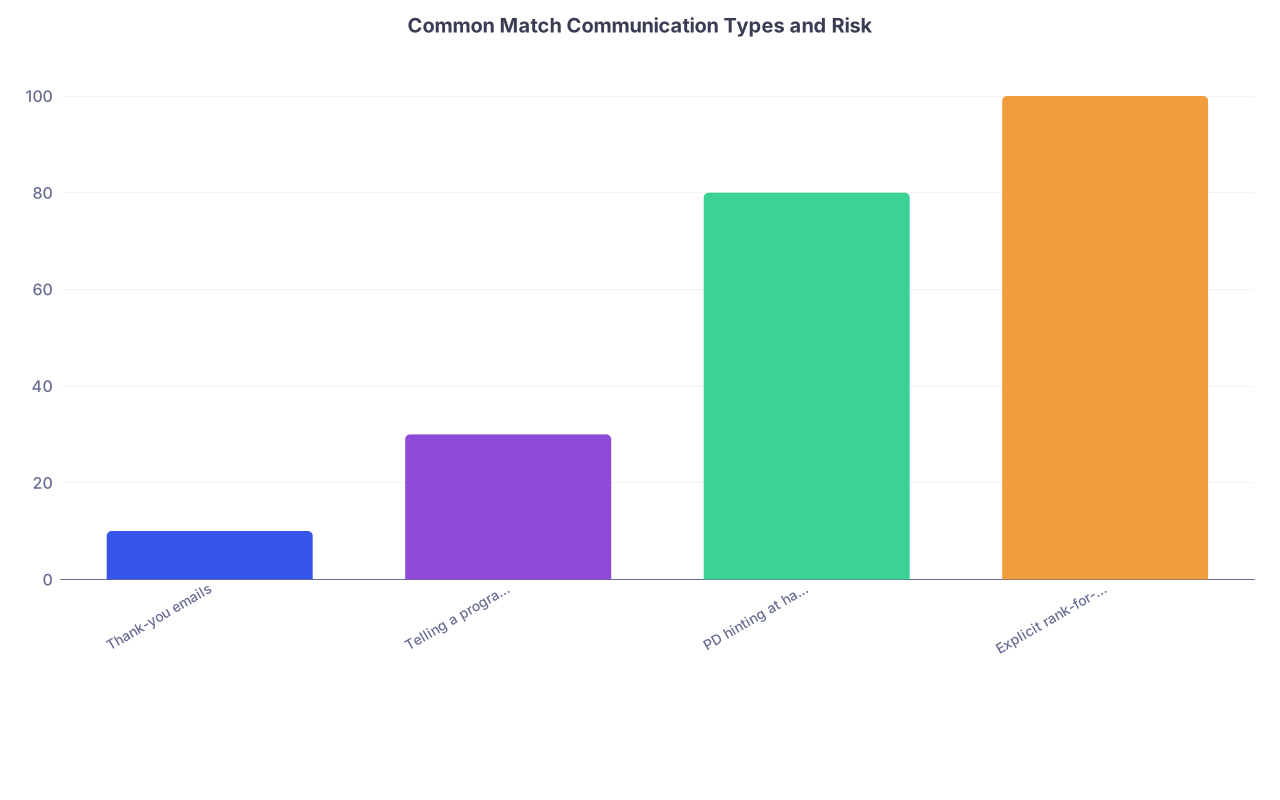
| Category | Value |
|---|---|
| Thank-you emails | 10 |
| Telling a program they are ranked highly | 30 |
| PD hinting at handshake deal | 80 |
| Explicit rank-for-rank agreement | 100 |
Interpretation:
- Thank-yous and “I’m very interested” are low-risk.
- “You’re ranked highly” is gray but common.
- “Handshake deals” and explicit rank-for-rank are high-risk and rule-breaking.
They may rationalize it with “We all do this,” or “NRMP doesn’t enforce much.” That’s not your problem. You are the one whose match could be questioned if things blow up. And you’re the one who has to live with getting played.
Here’s the ugly truth I’ve seen:
PDs sometimes overpromise. They tell 10 people, “You’re basically in,” then rank those 10 in some order and match only 4. The rest feel betrayed and have zero recourse.
So mentally translate “handshake deal” into what it actually means:
“I want you to rank us high, but I’m not putting anything in writing and I’m not giving you any enforceable guarantee.”
Once you see it that way, your posture changes.
2. When It Happens In Real Time: Exactly What to Say
Picture this:
You’re on your second-look day at a mid-tier IM program. You’re in the PD’s office. They say:
“You’ve made a really great impression. If you rank us first, I can basically guarantee you’ll be here in July.”
Your heart rate jumps. Part of you is relieved. Another part is thinking, “Wait… isn’t this… not allowed?”
You need a response that:
- Doesn’t antagonize them.
- Doesn’t trap you into an agreement.
- Keeps you clean under NRMP rules.
Here are ready-made scripts.
Script 1: The Polite Deflection
Use this if you want to avoid conflict and keep things smooth.
“I really appreciate how welcome everyone has made me feel here. I’m still going to follow NRMP rules and make my list based on my true preferences, but I’m very glad to know I’d be a good fit here.”
Key moves:
- You thank them.
- You invoke “NRMP rules” explicitly (signals you know what you’re doing).
- You commit to ranking based on preference, not a handshake.
Script 2: The Soft Boundary
Use this if the PD leans harder or keeps pushing.
PD: “So can you tell me you’ll rank us first?”
You:
“I actually can’t make any commitments about rank order; NRMP rules are pretty strict on that for both sides. I can say I’m very interested and that this program is seriously in the running.”
You’re reminding them they’re on thin ice without directly accusing them of misconduct.
Script 3: The Firm Line (When They’re Being Aggressive)
If the PD is really out of line:
PD: “If you can’t commit to ranking us first, I need to know that now.”
You:
“I’m not comfortable making a specific rank commitment. I’m going to submit a list that reflects my true preferences, as required. I hope that’s compatible with how you approach the Match.”
If they respond poorly to that, they’ve shown you something important: their culture and ethics. That should factor into your rank list.
3. What NRMP Rules Actually Say (In Plain English)
You don’t need to memorize the NRMP rulebook, but you should understand the backbone.
NRMP’s position boils down to:
- You can express interest (“I like your program,” “You’re one of my top choices”).
- You cannot demand or offer specific ranking commitments.
- You cannot require someone to state how they’ll rank you.
- You cannot make rank order contingent deals (“If you rank me first, I’ll rank you to match”).
| Action / Statement | Allowed? |
|---|---|
| “We enjoyed meeting you.” | Yes |
| “We will rank you highly.” | Technically discouraged, but common |
| “If you rank us first, we’ll rank you to match.” | No |
| “Will you rank us first?” | No |
| “We have 14 spots and you are in our top group.” | Risky; could be misleading |
Big misconception:
Many applicants think, “If a PD promised me, I’m safe.” You’re not. The algorithm doesn’t care about promises. It cares about the rank lists that actually get submitted. PDs change their mind. Faculty veto. Another applicant impresses them later. Sometimes they misremember what they said. You’re not part of that meeting.
You must rank on your own preferences and assume zero promise is binding unless it’s a legally binding employment contract after SOAP. And even then, residency is usually contingent on being matched correctly.
4. How To Decide Your Rank List After a “Handshake” Offer
Let’s say Program A gave you a clear handshake vibe. Program B did not, but you liked B more.
Here’s the decision rule that actually protects you:
Always rank programs in the exact order of where you most want to train, independent of what anyone said.
Not where:
- You think you’re “safer.”
- You think they “like you more.”
- The PD “promised” you.
The NRMP algorithm favors the applicant’s preferences. That’s literally built into the design. When people “game” it based on promises, they usually hurt themselves.
Let me give you a scenario:
- You prefer: B > A
- PD at A: “You’re in if you rank us first.”
- PD at B: “We liked you, no guarantees.”
Case 1 – You rank B higher (B > A)
- If B ranks you high enough, you match at your true top choice.
- If B does not rank you high enough, algorithm falls back to A. If A really liked you, you might still match there.
- You either get your favorite or your backup. Optimal.
Case 2 – You panic and rank A higher (A > B)
- If A ranks you just a bit lower than you expected, and fills before reaching you, your “handshake” evaporates.
- Algorithm then tries B next—but if B filled high, you’re out of both.
- You might slide further down your list or end up unmatched, all because you distorted your list for a promise.
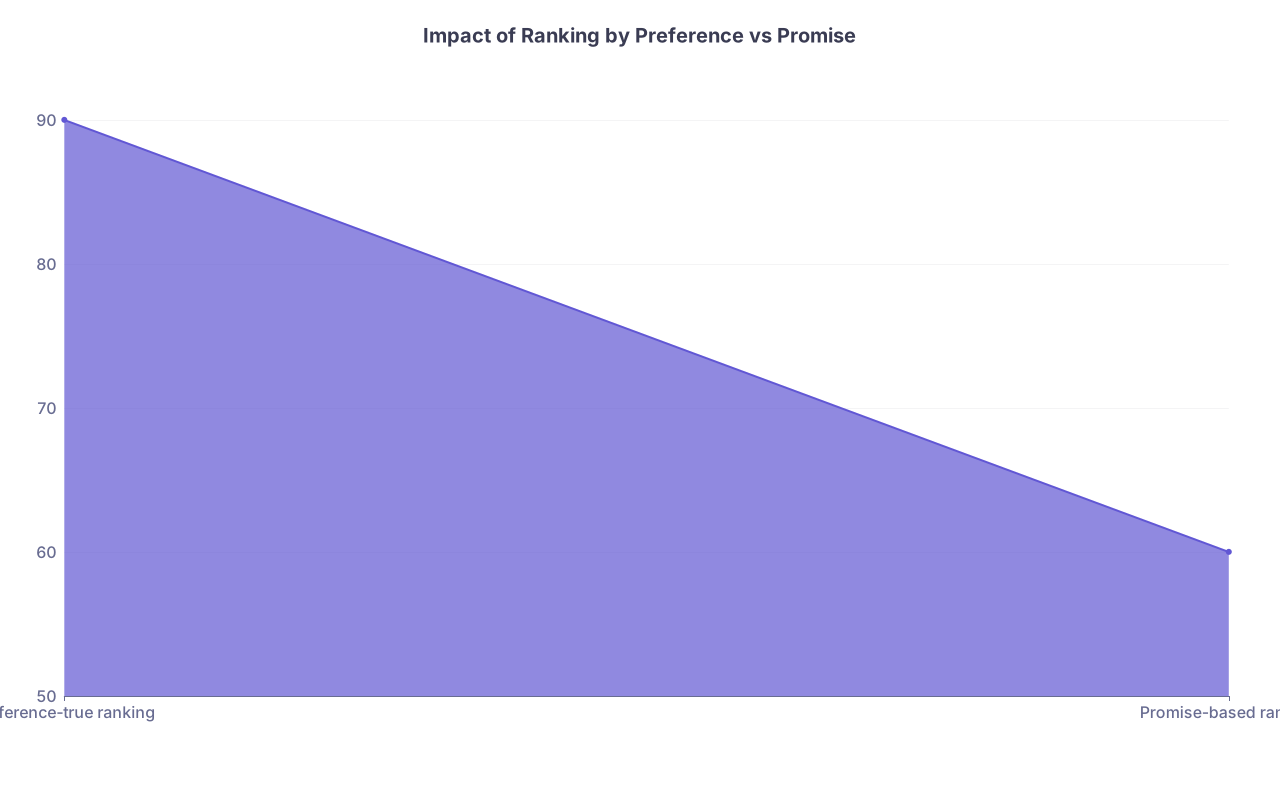
| Category | Value |
|---|---|
| Preference-true ranking | 90 |
| Promise-based ranking | 60 |
That “90 vs 60” is not literal data, but it reflects the reality: ranking by preference has a much higher chance of you landing where you’ll actually be happy. Promise-based ranking risks getting burned and resenting your decision.
So, how do you factor the handshake into ranking?
Use it as:
- A weak signal that the program likes you.
- One of many inputs among gut fit, geography, training quality, and lifestyle.
Never as:
- The main reason to move a program above another you truly prefer.
5. Documenting and, If Needed, Reporting the Interaction
Some PDs just make a dumb comment once and move on. Others turn it into a pattern of pressure.
If the interaction felt off, do this the same day:
Write down:
- Date and time.
- Where you were (PD office, Zoom call, post-interview social).
- Exact phrases they used, as best as you remember.
- Whether anyone else was present.
Save any emails or messages that sound like:
- “We will rank you to match if…”
- “You are guaranteed a spot if you rank us first.”
- “We are expecting you to rank us #1.”
Store this in a private document with your own timestamp (even a note emailed to yourself).
Now, what about reporting?
You have options:
- Do nothing: Totally valid. Many applicants don’t want drama.
- Ask your school’s dean or advisor: “This is what was said—does this cross a line?”
- Anonymous NRMP report: NRMP has a violation reporting mechanism.
- Post-Match reporting: Some people feel safer after they’re matched.
If the behavior was clearly coercive or repeated, I lean toward at least talking to your dean’s office. You’re not just protecting yourself; you’re also protecting future applicants who will sit in that same chair.
6. Red Flags About Program Culture Embedded in This Behavior
The best programs know the rules and respect them. They don’t need back-room deals because their training and reputation speak for themselves.
When a PD is fishing for handshake deals, they’re showing you:
- They’re comfortable breaking rules when convenient.
- They’re fine putting pressure on someone with very little power in the system.
- They might also be chaotic about their rank list and communication.
Is that the leadership style you want for 3–7 years?
A program that says:
“We’re not allowed to promise anything, but we really enjoyed meeting you and hope you’ll rank us highly.”
…is playing clean. That’s fine.
A program that says:
“If you rank us first, you’re basically guaranteed to match here.”
…has stepped out of bounds. You don’t need to punish them, but you should not ignore what that implies about how they operate.

7. Handling This in Different Common Scenarios
Let’s run a few specific setups you might face and what I’d actually do.
Scenario A: You love the program that made the handshake offer
PD: “If you rank us first, you’ll be here.”
Your internal truth: “Honestly, they are my top choice.”
What to do:
Use a polite deflection in the moment:
“This is absolutely one of my top choices, and I’m going to follow NRMP rules and rank by true preference. I really appreciate your enthusiasm.”
On your rank list:
- Rank them #1 if they really are your clear favorite.
- But know you didn’t do it because of the promise; you did it because you wanted to be there anyway.
Outcome: You’re still clean. Even if they go back on their “promise,” you’re not worse off—you already wanted them most.
Scenario B: You prefer another program but the handshake came from your “safety”
You like Program X more. Program Y offers the handshake.
What to do:
Respond with the soft boundary:
“I’m not able to commit to rank order, but I can say I’m very interested and your program is strongly on my list.”
Rank list:
- Put X above Y if you truly prefer X.
- Let the algorithm do its job.
Outcome: If X wants you enough, you land where you prefer. If not, there’s still a decent shot Y ranks you and you match there. No need to flip for a promise.
Scenario C: The PD is blatantly breaking rules, and you feel gross
PD on Zoom:
“Our policy is we only rank people who explicitly tell us we’re #1. If you won’t do that, we probably shouldn’t waste each other’s time.”
This is extreme, but I’ve seen versions of it.
What I’d do:
In the moment:
“I understand your position, but I’m not comfortable making a specific rank commitment. I’ll be ranking based on where I think I’ll be the best fit.”
After:
- Strongly consider removing them from your rank list entirely.
- Talk to your dean. Provide exact wording.
- Consider reporting to NRMP (even anonymously).
If they’re that comfortable coercing you during recruitment, imagine how they handle schedule requests, leave, pregnancy, or complaints.

| Step | Description |
|---|---|
| Step 1 | PD hints at handshake deal |
| Step 2 | Politely acknowledge interest |
| Step 3 | Rank them first based on true preference |
| Step 4 | Use soft boundary response |
| Step 5 | Rank list in true preference order |
| Step 6 | Document details |
| Step 7 | Discuss with dean or advisor |
| Step 8 | Consider NRMP report |
| Step 9 | Keep notes, move on |
| Step 10 | Do you truly want this program most? |
| Step 11 | Did PD use coercive or threatening language? |
8. Mental Framing So You Don’t Get Manipulated
The Match makes you feel powerless. Handshake deals prey on that.
You regain power by remembering:
- The algorithm is built to favor your rank list, not theirs.
- “Guarantees” without a contract are just air.
- Your future happiness isn’t just about matching—it’s about where you match and what kind of people run the place.
So before you submit your rank list, ask yourself two brutally honest questions:
- “If every program said nothing to me—no promises, no hints—how would I order this list?”
- “Would I still feel good about my reasoning a year from now if I reread it?”
If your order changes drastically because of one conversational promise, you’re letting someone else’s agenda drive your life.
You can acknowledge the flattery. You can even feel reassured they liked you. Just don’t let it override your actual priorities.

9. Quick Reference Scripts and Principles
If you remember nothing else, keep this small toolkit in your head.
Key phrases you can use:
- “I’m going to follow NRMP rules and rank based on my true preferences.”
- “I really appreciate your enthusiasm; I’m very interested in your program.”
- “I’m not able to make specific rank commitments, but I’m honored to be considered strongly.”
- “I’ll be submitting a rank list that reflects where I think I’ll thrive the most.”
Non-negotiable rules:
- Never promise how you’ll rank a program.
- Never let a promise change your genuine preference order.
- Document anything that feels off.
- Talk to your dean if something seems seriously out of bounds.

FAQ (Exactly 4 Questions)
1. If a PD tells me, “You’re ranked to match,” can I believe them?
You can believe they probably like you. You cannot treat it as a guarantee. Rank lists can change, other applicants can move ahead of you, or committee decisions can override individual intentions. Even if they’re being honest in that moment, it’s still not binding. Use it as one small confidence boost, not a factor that changes your own rank order.
2. Can I tell a program they’re my number one?
You can, but you should only do this if it’s absolutely true. And you should phrase it without making a quid pro quo. For example: “You are my top choice, and I will be ranking you first.” That’s allowed. What you cannot do is tie it to what they do (“If you rank me high, I’ll rank you first”). Also, do not tell multiple programs they’re your #1. That’s unethical and can burn bridges if people compare notes.
3. What if I already agreed verbally to rank a program first but want to change my mind?
You’re not locked in. NRMP rules protect your right to submit any rank list you want, regardless of what you said earlier. There is no mechanism for a program to “enforce” a verbal statement. You might feel awkward or guilty, but your rank list should still reflect your true current preferences. Your future is more important than saving a PD’s feelings about a casual conversation.
4. Could I get in trouble with NRMP if a PD pressured me and I didn’t report it?
No. You’re not obligated to report anything, and you won’t be punished for remaining silent. The responsibility to follow the rules is on the programs and applicants who initiate or participate in improper commitments. If you do choose to report, NRMP focuses on the violator, not on the applicant who was pressured. Your main job is to submit an honest, preference-based rank list.
Key points to walk away with:
- “Handshake deals” are not binding and often violate NRMP rules; treat them as noise, not truth.
- In the moment, politely assert that you’ll follow NRMP rules and rank based on true preferences.
- Always build your rank list in exact order of where you most want to train—no matter what anyone “promised” you.


