
The fantasy that “NRMP will swoop in and fix this” is exactly that—a fantasy. When a program is reported to the NRMP, what actually happens is slower, more bureaucratic, and far more strategic than most applicants ever realize.
Let me walk you through what really goes on behind those closed doors, because I’ve watched program directors scramble, GME offices go into crisis mode, and NRMP investigators quietly build cases that follow people for years.
First: What Triggers an NRMP Case (From Both Sides)
Most applicants think, “If I report this, the program is doomed.” That’s not how this works. Programs know the line. They dance right up to it. Sometimes over it.
The usual triggers that do end up in front of the NRMP:
- A program demands you reveal your rank list.
- A program explicitly tells you, “Rank us #1 and we’ll rank you highly.”
- A program pressures you to sign a “commitment” before Match.
- A program pulls an offer or refuses to rank you based on family status, pregnancy, visa, or other protected traits.
- A program or applicant engages in post‑Match scrambling games that break SOAP/Match rules.
The flip side NRMP almost never advertises to students: programs report you too.
If an applicant lies, games the system, or plays one program against another and gets caught, I’ve seen PDs quietly forward entire email chains to their NRMP institutional official the same afternoon.
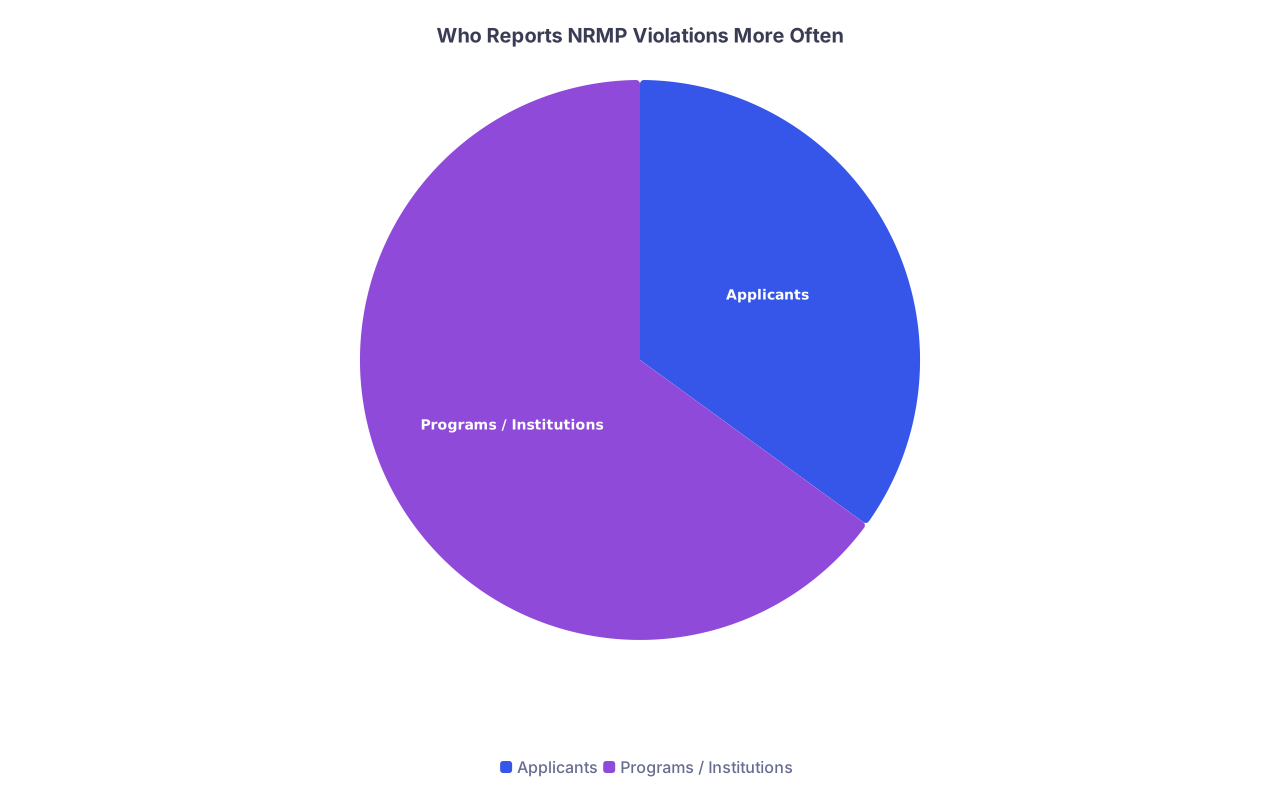
| Category | Value |
|---|---|
| Applicants | 35 |
| Programs / Institutions | 65 |
That chart lines up with what I’ve seen: institutions and PDs are more consistent about reporting than anxious applicants who just vent in GroupMe and move on.
Now let’s get into the machinery. What actually happens once someone files.
Step 1: The Report Is Filed – And It’s More Formal Than You Think
There’s this myth that you “email NRMP” and they’ll sort it out. No.
There is a formal Violation Investigation pathway. Here’s the part almost no one tells you: anything you submit is now potential evidence. Screenshots. Emails. Texts. Call summaries. If you report, you’re not just “complaining.” You’re triggering a legalistic process.
For an applicant report, it usually goes like this:
- You submit a violation report through NRMP’s system or via their official channel.
- You describe the incident, date, time, people involved, and attach any evidence.
- Your name is on it. Anonymous “I heard from someone” does not go far in formal proceedings.
For a program/institution report:
- The PD or faculty rarely reports directly.
They go through the Designated Institutional Official (DIO) or GME office. - The GME office and legal counsel skim the NRMP rules, decide if this is worth escalating.
- If yes, the institution feeds NRMP a very polished, coordinated narrative.
Here’s the first behind‑the‑scenes truth: by the time NRMP officially contacts anyone, your institution has probably already had internal meetings about it.
You won’t be invited to those.
Step 2: NRMP Opens an Investigation – The Quiet Phase
Once NRMP thinks the allegation is credible and within their jurisdiction, they open an investigation. This doesn’t mean anyone’s guilty. It means they’re going to dig.
This is usually what actually happens behind the curtain:
- NRMP notifies the program and/or applicant in writing that an investigation has been opened.
- They ask for written responses and supporting documents.
- They can request emails, letters, policies, and internal communications related to the alleged violation.
Programs take this extremely seriously. I’ve watched PDs cancel a half‑day of clinic to sit with the GME office and compose a response line by line.
Here’s how a program typically reacts once that letter hits:
Damage assessment.
PD, DIO, and often a hospital attorney sit together and say, “How bad is this? Are we exposed?”Internal evidence sweep.
They search email. They talk to the coordinator. They ask faculty, “What exactly did you say to this applicant on Zoom?”
People suddenly become very careful with wording.Narrative control.
If they know someone messed up, the internal conversation shifts to, “How do we frame this as misunderstanding, over‑eagerness, or miscommunication rather than intentional coercion?”
Meanwhile, for the applicant being investigated (if a program reported you):
- Your dean’s office or student affairs might get looped in.
- You may get asked for an official written response.
- If you’ve been sloppy with emails or tried to play programs off one another, they’ll see it.
Everyone is suddenly performing for an audience: the NRMP Review Panel.
Step 3: The Paper War – Written Statements and Evidence
This is the part where careers get protected or torched. Not during the initial report. During the exchange of written statements.
You’ll usually see:
- The complainant’s statement – the original allegation plus supporting documents.
- The respondent’s statement – point‑by‑point responses, extra emails, sometimes affidavits or memos.
- Any supplemental requests NRMP sends out when they see contradictions or missing pieces.
Behind the scenes, here’s what actually happens with those:
Programs comb through prior communications trying to find:
- Anything that shows they didn’t coerce you.
- Evidence that there were multiple candidates treated the same way.
- Wording that’s vague enough that they can reinterpret it.
I’ve heard PDs say almost verbatim:
“We never wrote ‘rank us #1.’ We just said ‘If you came here, we’d be very happy and you’d be a great fit.’ That’s allowable.”
They’re not wrong. NRMP rules forbid coercion and certain explicit language, but not all flattery or even “we’ll rank you to match” statements (though those are risky and frowned upon).
Applicants, on the other side, sometimes underestimate how specific they need to be. “I felt pressured” doesn’t carry the same weight as:
“On February 10 at 3:15 PM EST, during a Zoom call with Dr. Smith (PD) and Dr. Lee (APD), Dr. Smith said: ‘We will only rank applicants who indicate that this program is their first choice and agree to rank us #1. Can you commit to ranking us #1?’”
The NRMP panel isn’t judging vibes. They’re judging evidence.
Step 4: NRMP Review Panel – The Internal Courtroom
NRMP has its own quasi‑judicial process. They don’t call it a courtroom, but functionally, that’s what it is.
There’s a Review Panel (and, if appealed, an Appeal Board). These are not random people. They’re usually physicians, GME leaders, and others who know exactly how the Match game is played.
What you need to understand: they’re not naïve. They’ve seen every trick:
- PDs who try to blame rogue faculty: “Our interviewer went off script, we’ve since re‑educated them.”
- Applicants who suddenly “don’t remember” sending that email.
- Institutions that pretend a pattern of behavior was an isolated incident.
Here’s the rough sequence:

| Step | Description |
|---|---|
| Step 1 | Report Filed |
| Step 2 | NRMP Opens Investigation |
| Step 3 | Evidence Collected |
| Step 4 | Written Responses |
| Step 5 | Review Panel Meeting |
| Step 6 | Case Closed |
| Step 7 | Sanctions Decided |
| Step 8 | Sanctions Final |
| Step 9 | Appeal Board Review |
| Step 10 | Violation? |
| Step 11 | Appeal? |
The panel reviews all the paperwork first. Sometimes they’ll request more information. Only then do they deliberate and decide if a violation occurred.
You won’t be live‑cross‑examined like in court, but your written word will be dissected like it’s under oath. Because in this world, it basically is.
Step 5: Sanctions – What Actually Happens to Programs
Here’s where the myths really need to die.
No, NRMP does not usually “shut down” a program. They don’t have that power. They can’t close a residency. That’s ACGME territory.
What NRMP can do is punish participants in the Match ecosystem. And they do.
Common sanctions for programs/institutions include:
- Publicly posting the violation and sanction on the NRMP website.
- Being barred from participating in the Match for a set period (for a specific program or the entire institution).
- Being prohibited from accepting applicants who are currently under NRMP restrictions.
- Monetary penalties (less talked about in public, but very real).
- Monitoring or probation–NRMP tracking them more closely for future cycles.
Here’s what that looks like practically.
| Sanction Type | Real-World Effect |
|---|---|
| Public notice | Reputation hit, applicants avoid the program |
| Match participation bar | Program cannot use NRMP Match for X years |
| Institutional sanction | Multiple programs at that hospital are affected |
| Monitoring / probation | Program watched closely in subsequent cycles |
| Monetary penalty | Financial and administrative burden |
The reputational damage is often worse than the formal sanction. Applicants Google. Student Reddit threads light up. That program suddenly has to explain, for years, why they were on the violation list.
Internally, when a program is sanctioned:
- The PD is in hot water with the DIO and hospital leadership.
- Recruitment efforts become a nightmare.
- Faculty are “re‑educated” abruptly about NRMP rules.
- I’ve seen PDs quietly “step down” within a year or two after a high‑profile violation.
It’s not always immediate, but nobody forgets.
What Happens to Applicants When a Program Is Reported
Here’s the part you never get told in the info sessions: “Will this hurt me if I report?”
The unsanitized answer:
During the same Match cycle, NRMP will not “fix” your rank list.
They’re not going to go into the algorithm, rearrange ranks, or punish the program mid‑cycle in a way that benefits you personally. The Match still runs as designed.If you reported pre‑Match, and the program was clearly coercive, NRMP might advise but not micromanage.
Student affairs might tell you, “Rank however you want; the Match is designed to protect applicants.” That part’s true. But no one is guaranteeing you some protective bubble.Your name does get attached to the case.
The program will know who reported. They’ll see your file. That is the reality. NRMP due process cuts both ways.Retaliation is technically prohibited. Practically? Programs talk.
Would most PDs blatantly retaliate? No. But if they felt blindsided, don’t expect them to send glowing backchannel feedback about you to their friends at other institutions.
The good news: once you’re a resident, the NRMP case tends to fade from daily life unless you personally were sanctioned.
But you do need to understand: reporting is not the same as pressing a magic “justice” button. You’re choosing to become part of a legal‑administrative process. That has weight.
When the Applicant Is the One in Trouble
You also need to understand the mirror image scenario: when a program reports you.
What triggers that?
- You sign a pre‑Match contract with a program that participates in NRMP, then still enter the Match.
- You accept a position through SOAP, then ghost or refuse to start.
- You lie materially about your status, ranks, or commitments to multiple programs.
- You “double commit” – effectively agreeing to two positions in bad faith.
When that happens, the internal PD conversations are not gentle. I’ve heard lines like:
“If we let this slide, we’re telling every future resident they can ignore the Match contract.”
NRMP sanctions for applicants can include:
- Being barred from future NRMP Matches for 1–3 years or more.
- Being labeled as having committed a Match violation on your record.
- Restrictions on what positions you can accept for a period.
And yes, programs do check that list.
I’ve seen a PD pull a candidate’s name off a prelim offer because the GME office flagged a prior NRMP sanction. They won’t always tell you that’s why. They’ll just say, “We went in another direction.”
What Programs Actually Fear – And What They Don’t
Here’s the real psychology inside program leadership when NRMP gets involved.
They are genuinely afraid of:
- An institutional‑level sanction that hits multiple programs.
- Getting publicly posted and then butchered on Reddit/SDN for years.
- Future recruiting cycles becoming much harder.
- Legal liability if the violation overlaps with discrimination, harassment, or contract issues.
They are not particularly afraid of:
- A single applicant they can frame as “misunderstanding” verbal communication.
- Vague, undocumented complaints (“they made me feel uncomfortable” without specifics).
- A one‑off faculty slip they can blame, “We’ve re‑trained them; this won’t happen again.”
That’s why documentation matters. If you’re going to report, you need to be, frankly, more organized and precise than most stressed MS4s usually are.
How Long This All Takes (and What Happens During That Time)
You’re imagining some rapid adjudication. No.
NRMP violation investigations often stretch over months. Sometimes longer than a full Match cycle.
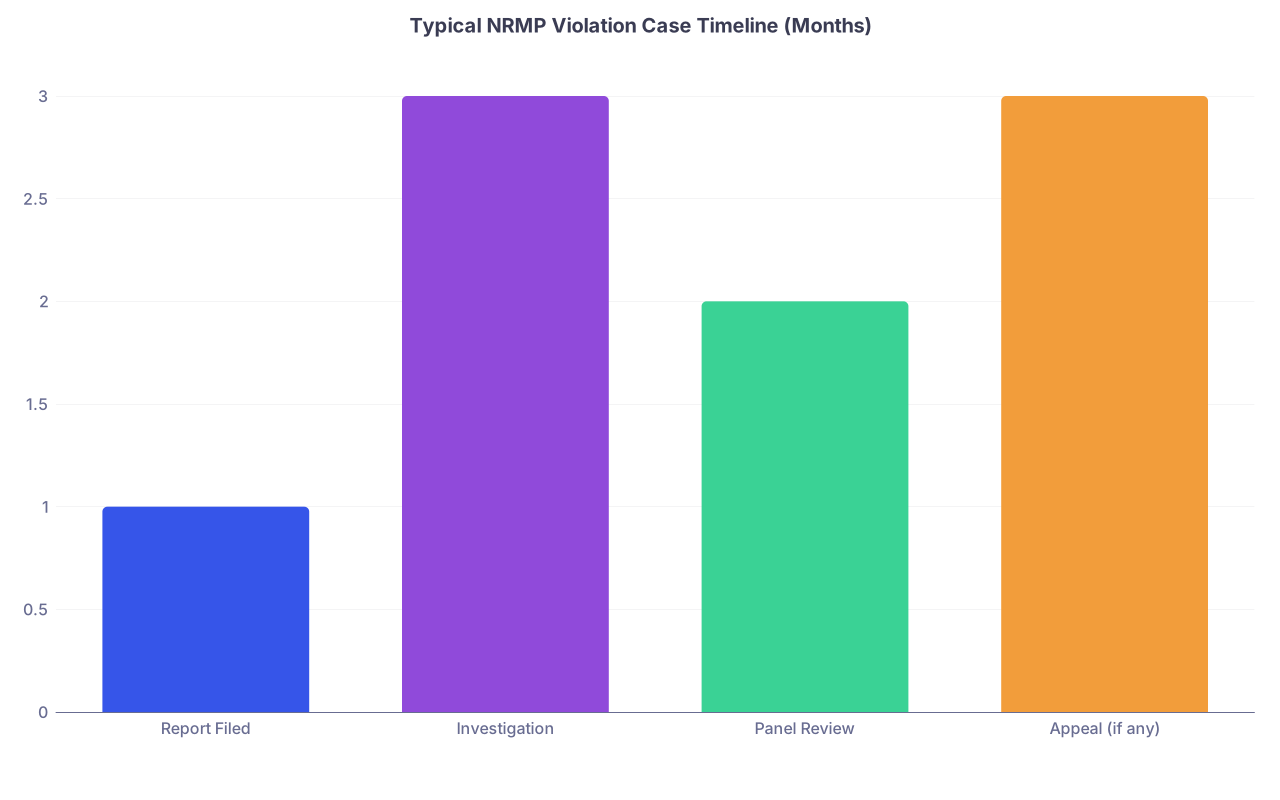
| Category | Value |
|---|---|
| Report Filed | 1 |
| Investigation | 3 |
| Panel Review | 2 |
| Appeal (if any) | 3 |
During that time:
- Programs keep running.
- Applicants go on with residency or move into fellowship.
- Most of the people involved hear nothing for long stretches.
Then, quietly, a decision letter arrives.
- If you’re an applicant: your school may be informed, you’ll get a formal decision, and any sanctions will be spelled out.
- If you’re a program: the PD, DIO, and legal all see it. There may be some fairly tense meetings after.
A few months later, the case may show up on the NRMP public violation list. That’s when the rest of the world finds out.

How This Actually Feels Inside a Program
Let me pull back the curtain even further.
When a program is under NRMP investigation, the tone internally changes.
Interview language gets absurdly sanitized overnight.
Suddenly faculty are saying stiff lines like, “We are not permitted to ask about your rank list or intentions,” in the middle of what used to be a normal conversation.GME sends out “reminder memos” about NRMP rules to all programs.
Everyone knows someone screwed up, even if they don’t know who.PDs start saying things in meetings like, “Do not put anything in email you wouldn’t want read aloud to an NRMP panel.”
The coordinator is usually the one quietly panicking. Because they’re the one who has to pull all the emails, schedule meetings, and keep residents from saying something stupid.
If the violation involved post‑Match behavior (like reneging on a SOAP agreement), it gets even messier. Residents and faculty will gossip; the official story will be more… curated.
How to Protect Yourself When You Suspect a Violation
I’m not going to sugarcoat it: you might encounter behavior that’s clearly out of bounds. Some programs still act like it’s 1995 and nobody ever gets held accountable.
Here’s what the seasoned insiders do when something smells off:
Write things down immediately.
Right after that sketchy phone call or Zoom, open a note and document:- Date, time, who was present
- Exact phrases you remember
- Any commitments or conditions they tried to tie to ranking
Save everything.
Emails. Screenshots of text messages. Voice mails.
Don’t delete in a moment of anxiety. Quietly archive.Run it by someone who actually knows NRMP rules.
Not your class GroupMe.
Your student affairs dean, NRMP’s own support line, or a trusted faculty advisor who’s been on the PD or GME side.Don’t threaten the program.
Don’t email back, “I’m going to report you to NRMP.”
That just triggers their defensive spin machinery earlier. If you plan to report, do it through channels.Decide strategically if you’re going to file.
This is where adults have to make hard choices.
If you have clear evidence of a serious violation, reporting may protect others and clean up a toxic pattern. But it will not be cost‑free emotionally.

And if you’re wondering: yes, NRMP does take well‑documented, serious violations seriously. They just won’t turn your personal grievance into an immediate rescue mission.
The Unspoken Reality: Most Cases Never Get Reported
Let me say the quiet part aloud: the majority of sketchy behavior never reaches NRMP.
- Students are afraid to jeopardize their chances.
- Programs count on that fear.
- Schools sometimes quietly discourage formal reports to “avoid complications.”
So the cases that do make it to NRMP usually either:
- Have unusually blatant evidence, or
- Involve multiple parties, patterns, or high‑stakes consequences.
That’s why, when sanctions finally land, they tend to be for egregious or repeated behavior. The subtle stuff gets addressed (if at all) at the institutional level, not by NRMP.
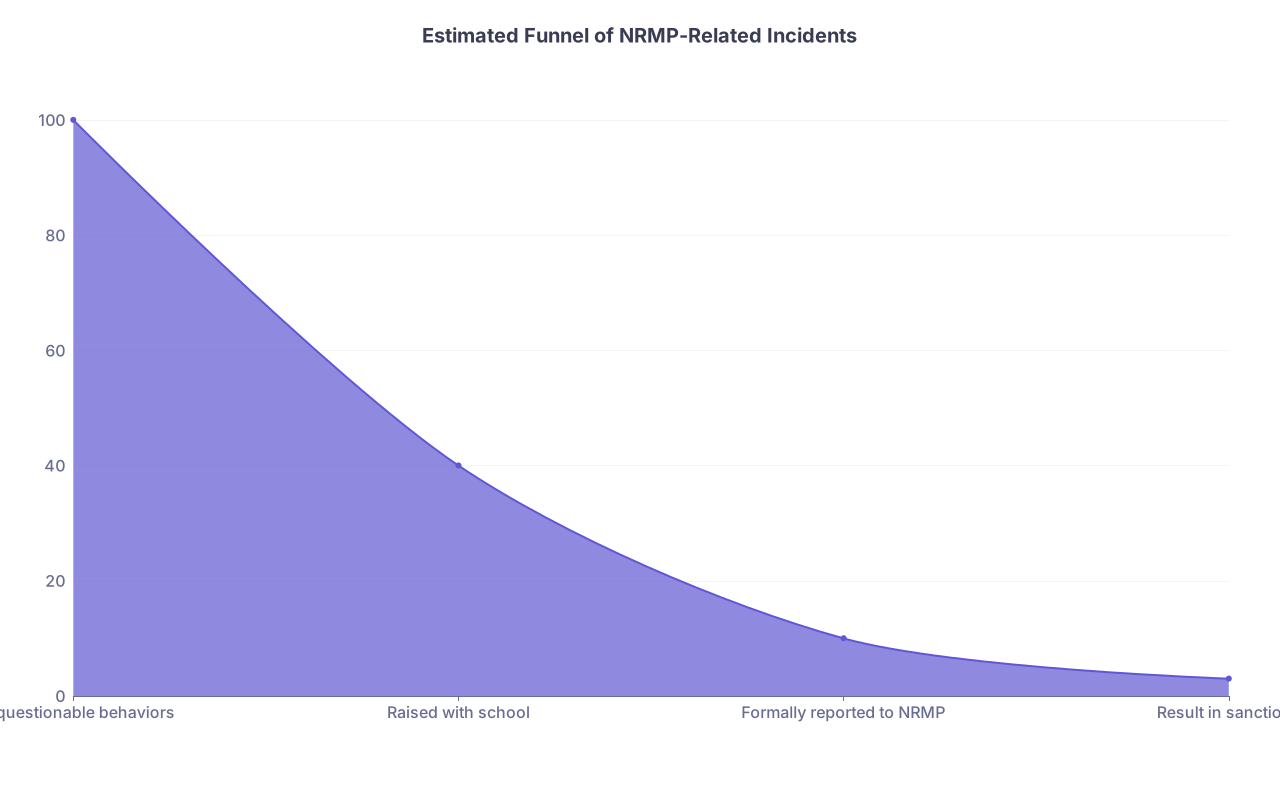
| Category | Value |
|---|---|
| All questionable behaviors | 100 |
| Raised with school | 40 |
| Formally reported to NRMP | 10 |
| Result in sanctions | 3 |
The gap between “questionable” and “sanctioned” is huge. That’s the real landscape you’re operating in.
Where This Leaves You
You now know more about what actually happens when a program is reported to the NRMP than most applicants – and frankly, more than some interns and junior faculty.
You know:
- Reports trigger a slow, formal, evidence‑heavy process.
- Programs mobilize GME and legal, not just hand‑wave it away.
- NRMP can’t close programs, but they can publicly stain them and block Match participation.
- Applicants aren’t invisible in this process; your name, statements, and documentation matter.
- Sanctions cut both ways. Programs and applicants can both end up on the wrong side of a violation ruling.
So what do you do with this?
You use it as context. To decide when something is just awkward recruitment and when it’s a real NRMP problem. To protect yourself with documentation instead of relying on memory. To recognize that the Match rules are more than fine print—they’re the contract everyone is pretending to follow until someone gets called on it.
The Match itself, the algorithm, is still surprisingly fair to applicants. The human behavior around it? Less so. That’s where you’ve got to keep your eyes open.
With this level of inside understanding, you’re better equipped to handle the politics and pressure of Match season. The next frontier is learning how to communicate with programs—before and after interviews—without stepping into the gray zones that create NRMP problems in the first place.
But that’s a conversation for another day.