

What exactly do you risk when you fire off that “You’re my number one!” email to a program two weeks before the rank list deadline?
Let me be blunt: you are not just being “enthusiastic.” You are flirting with NRMP violations, professionalism concerns, and potentially damaging your Match outcome. I have watched applicants get quietly blacklisted over emails they thought were harmless “updates.”
This is where a lot of smart, well-meaning people screw up. They confuse genuine interest with pressure. They confuse “showing love” with manipulating rank lists. And the NRMP has very specific opinions about that.
If you are in the residency Match and thinking about sending any post-interview update, read this before you hit send.
The Line You Cannot Cross: What NRMP Actually Cares About
Start with the core rule everyone pretends to understand but many violate in practice:
Programs and applicants cannot make or solicit commitments about how they will rank each other.
That is the heart of the NRMP Communication Code of Conduct. Overeager updates become dangerous when they drift from “Here is new information about me” to “Let us influence each other’s rank lists.”
Here is the bright red line you must not cross:
- You cannot ask a program:
- “Where am I on your rank list?”
- “Will you rank me to match?”
- “Can you tell me if I am in your top 5?”
- You cannot pressure or negotiate:
- “If you rank me high, I will rank you first.”
- “I will only rank you #1 if you can reassure me about X.”
- You cannot imply a mutual obligation:
- “I expect that our strong mutual interest will be reflected in our rank lists.”
On the flip side, programs are not allowed to:
- Ask where you will rank them.
- Ask if they are your #1 choice.
- Ask you to “promise” anything about your rank list.
- Condition their ranking on your response.
So where do overeager updates go wrong? They slide from:
“Just wanted to share an accepted manuscript that relates to your research focus.”
into:
“Because of how much I loved your program, I will rank you highly and hope you will do the same.”
That last part is the problem. Not the update itself, but the subtle (or not so subtle) attempt to influence ranking behavior.
Common “Nice” Emails That Actually Look Problematic
I have seen some version of each of these in real life. They seem harmless to the sender. They are not.
Example 1 – The Pressure Email
“Dear Dr. Smith,
Thank you again for the interview at X University. Your program remains my top choice, and I will be ranking you very highly. I hope this strong interest is mutual and reflected in how I am considered on your rank list.”
You just implied they should rank you differently because of your “strong interest.” That is nudging their rank list. That is exactly what NRMP rules are designed to stop.
Example 2 – The Fishing Expedition
“Dear Program Director,
I am very excited about your program and wanted to follow up. I was wondering if you could share how competitive my application is compared to others you interviewed, or where I might fall on your list.”
You are explicitly asking for rank information. That is a NO. Programs that answer this are putting themselves at risk. Programs that receive this may quietly mark you as “unprofessional.”
Example 3 – The Quid Pro Quo
“Dear Dr. Jones,
I am strongly considering ranking your program first and wanted to know if you believe I would have a good chance of matching there.”
Translation: “I will rank you high if you reassure me.” That is rank negotiation. The NRMP prohibits this kind of exchange.
NRMP does not need you to use the word “promise” for it to be a problem. Intent matters. Pressure matters. Fishing for rank list details matters.
Where “Love Letters” Go Off the Rails
Applicants are constantly told, “Send a letter of intent.” Or “Tell your top program they are #1.” The problem is that advice is usually given with zero mention of NRMP boundaries, professionalism, or realism.
You can get into trouble three ways:
- Content – Saying things you should not.
- Tone – Sounding manipulative, desperate, or transactional.
- Volume – Spamming programs with repeated contacts.
Let’s break these down.
1. Problematic Content
Mistakes I see over and over:
- Explicit rank talk:
- “I will rank you #1 if…”
- “I hope you rank me to match.”
- Implied ranking coordination:
- “I trust that my strong commitment will be acknowledged on your list.”
- Dishonesty:
- Telling multiple programs they are your “#1” or “top choice” in the same way.
- Hint: program leadership talk to each other. More than you think.
- Over-sharing fear or anxiety:
- “I am very worried about matching and hope you will strongly consider me high on your list.”
You are allowed to say:
- “I will be ranking your program very highly,”
or - “Your program is my first choice.”
You cross into NRMP gray or red zone when you start implying they must adjust their rank list to match your feelings, or when you try to extract their ranking decisions.
2. Bad Tone: Needy, Aggressive, or Transactional
Even if you technically obey NRMP rules, tone can still kill you.
Red flags from an applicant perspective:
- Repeated emails that sound like:
- “Just checking in again…”
- “I wanted to follow up again regarding my continued interest…”
- Aggressive urgency:
- “I need to know my chances before I submit my rank list.”
- Transactional language:
- “If I match at your program, I will bring X, Y, Z and hope that is recognized in your ranking.”
Programs read this as: high maintenance, boundary issues, anxiety poorly managed. Nobody wants that.
3. Too Many Messages
One update email for a legitimate reason? Fine.
Three emails, two phone calls, a LinkedIn message, and an attending “reaching out on your behalf”? Now you are not just overeager. You are a problem.
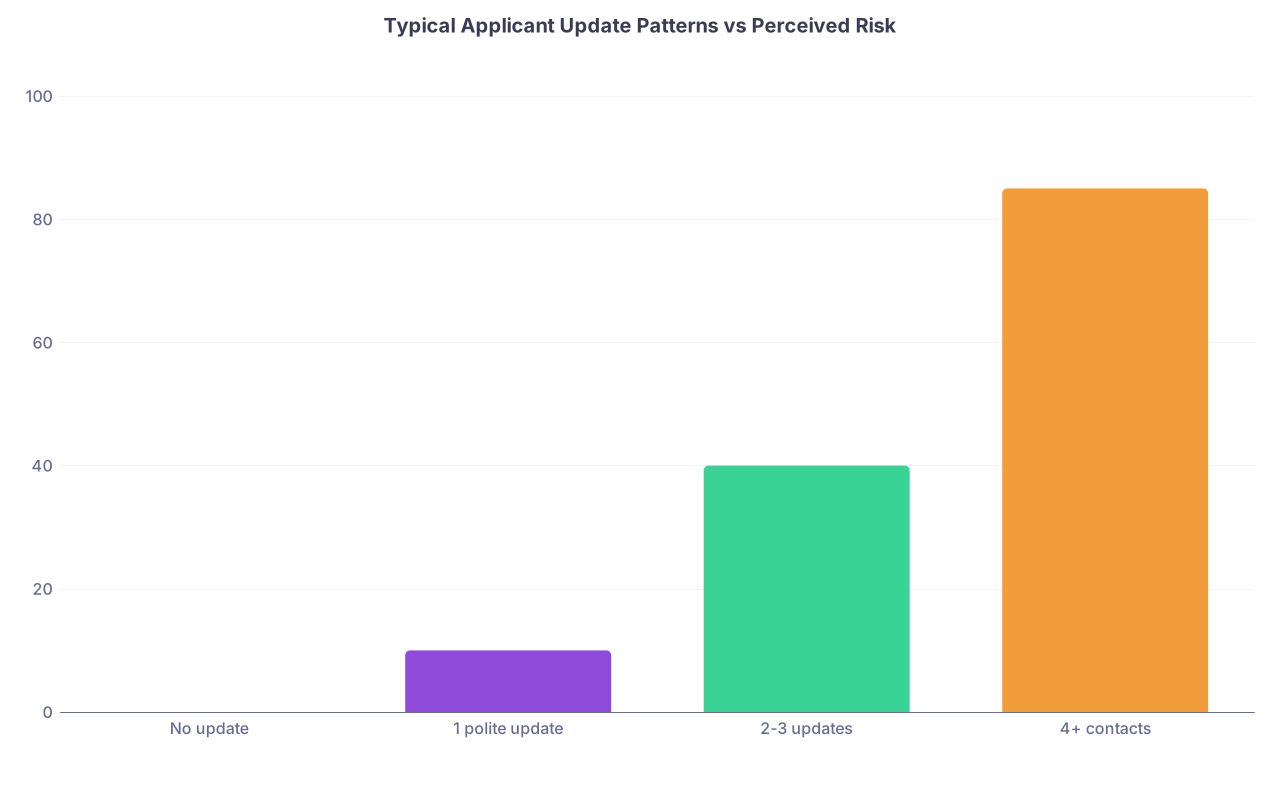
| Category | Value |
|---|---|
| No update | 0 |
| 1 polite update | 10 |
| 2-3 updates | 40 |
| 4+ contacts | 85 |
Those last two categories are where reputations start to suffer. Your name becomes “that applicant who keeps emailing.”
What You Can Safely Do (Without Crossing NRMP Lines)
You are not forbidden from contacting programs. The Match is not a gag order. But your communication must stay in the right lane.
Here is what is generally safe and appropriate post-interview:
A single thank-you email to:
- PD
- Coordinator
- Key faculty you interviewed with
Short, professional. Sent within a week of the interview.
A genuine letter of intent to ONE program (if you truly mean it), that:
- States they are your first choice.
- Does not ask how they will rank you.
- Does not imply quid pro quo.
For example:
“I am writing to express that [Program] is my first choice, and I intend to rank it first. My interests in [specific area] and the supportive culture I observed on interview day make me confident your program is the best fit for my training. Thank you again for the opportunity to interview.”
Notice what is missing:
- No “I hope you rank me to match.”
- No “Please tell me where I stand.”
- No “I will only rank you first if…”
You may also send a substantive update if something major occurs:
- New first-author publication accepted.
- Significant new award.
- Major leadership role or achievement.
But keep it lean and not emotional. You are giving information, not begging.
“Since my interview, I wanted to share a brief update. Our manuscript on [topic] was accepted in [journal]. I appreciated how our conversation on interview day aligned with this work, and remain very interested in your program.”
That is fine. It is factual, respectful, and non-coercive.

Situations Where Overeager Updates Backfire Hard
You are most at risk for crossing lines when you feel desperate. I see the same patterns every year.
Scenario 1: Few Interviews, High Panic
Applicant with 4 interviews in a competitive specialty starts blasting emails:
- “You are my top choice.”
- “I will rank you highly.”
- “Please let me know my chances.”
to every single program.
Programs pick up on this instantly. It feels generic, inauthentic, and anxious. Some programs document these communications in the file. Some simply roll their eyes and move on. Either way, you did not help yourself.
Scenario 2: Trying to “Move Up” on a Program’s List
Someone tells you, “Updates can move you up the list.” So you interpret that as license to negotiate. You send:
“I would be thrilled to train at [Program]. If I knew I would have a strong chance of matching there, I would be comfortable ranking you very highly.”
From the PD side, that reads like: “Change your list to give me reassurance.”
Again, that is NRMP territory. And it makes you look like a poor fit for a high-stakes, team-based environment.
Scenario 3: Attending or Chair “Reaches Out” for You
You ask a mentor: “Can you email the PD and tell them I am ranking them first?”
Now you have dragged someone else into risky territory.
If the attending says anything like, “This student will rank you first and hopes to be ranked to match,” that is an indirect attempt to coordinate ranks. NRMP does not care that you used a middleman.
Faculty who know what they are doing will keep it clean:
“I am writing in support of [Name], who interviewed at your program. They have expressed strong interest in your program, and I believe they would be an excellent fit based on [specific reasons].”
That is advocacy. Not rank negotiation.
What Programs Are Actually Allowed To Say Back
Another misconception: “If a program says they will rank me highly, that is an NRMP violation.”
Not exactly. Programs can express interest. What they cannot do is:
- Ask you how you will rank them.
- Require any commitment from you.
- Imply your rank should change based on what they say.
Here is the rough breakdown.
| Program Statement | NRMP Risk Level |
|---|---|
| "It was a pleasure meeting you. Best of luck in the Match." | None |
| "We were very impressed and think you would fit well here." | Low |
| "You will be ranked competitively on our list." | Moderate |
| "We will rank you to match." | High |
| "If you rank us first, we will rank you to match." | Severe |
If you receive something that sounds clearly like “We will rank you to match,” treat it cautiously. Do not respond with:
- “Then I will rank you first, I promise.”
- “Does this mean I am guaranteed to match if I rank you first?”
A simple, safe response:
“Thank you very much for your message and for the opportunity to interview. I remain very interested in your program and appreciate your consideration.”
No rank talk. No implied agreement.
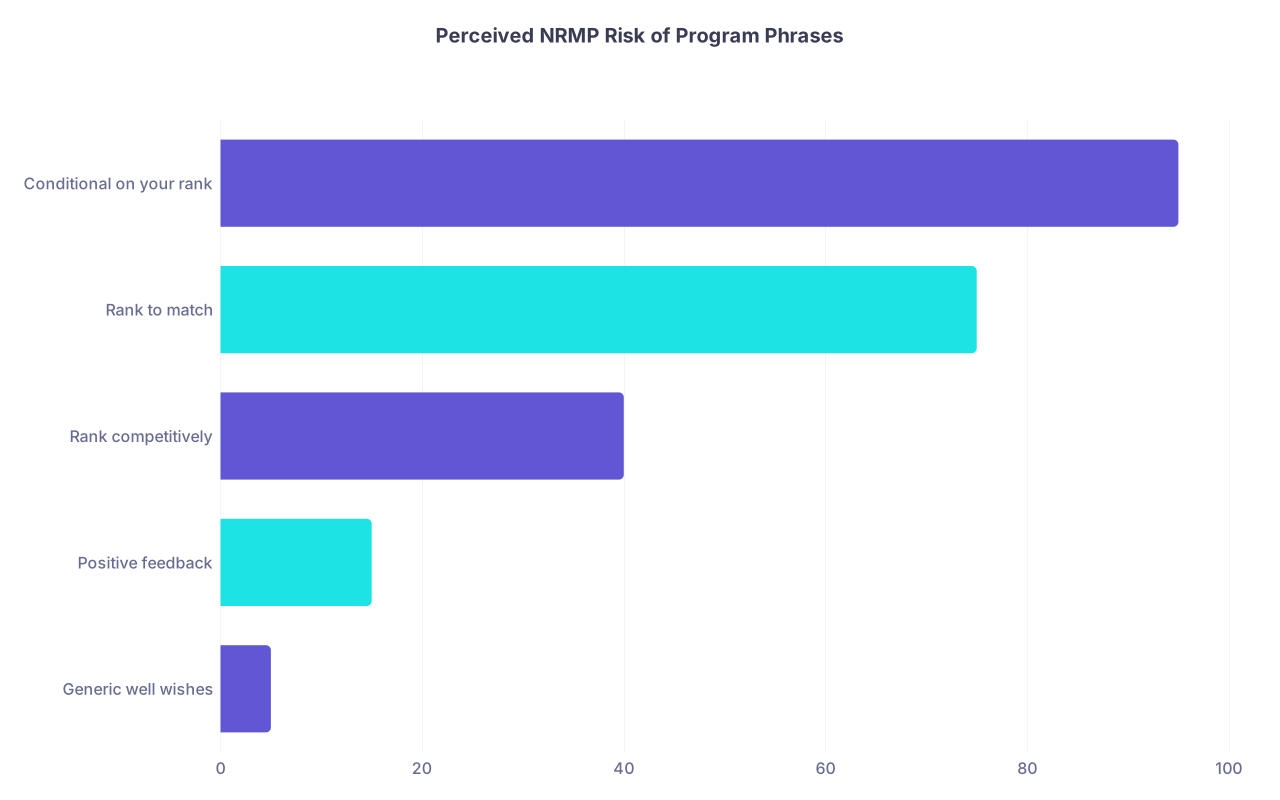
| Category | Value |
|---|---|
| Generic well wishes | 5 |
| Positive feedback | 15 |
| Rank competitively | 40 |
| Rank to match | 75 |
| Conditional on your rank | 95 |
How To Decide If Your Email Is Safe Or Stupid
Use a simple test I wish more applicants used before they send anything.
Ask yourself:
- Does this email:
- Ask where I will be ranked?
- Ask them to change their rank list?
- Suggest I will change my rank list based on their response?
- Use language like “promise,” “assure,” “guarantee,” or “chance of matching”?
If yes to any of those, delete it or re-write.
- If this email were shown:
- To the NRMP during an investigation,
- To a professionalism committee,
- Or read aloud at morning report,
Would I feel embarrassed or worried?
If yes, do not send it.
- Is there real content, or am I just soothing my own anxiety?
“I have a new publication” is content.
“I am just reminding you I exist” is anxiety. Programs do not reward anxiety.

| Step | Description |
|---|---|
| Step 1 | Draft email |
| Step 2 | Delete or rewrite |
| Step 3 | Likely unnecessary - do not send |
| Step 4 | Pause - consider not sending |
| Step 5 | Send brief, professional email |
| Step 6 | Includes rank talk? |
| Step 7 | New, substantive info? |
| Step 8 | More than 1 prior update? |
That flowchart is not theoretical. This is exactly how experienced advisors think when they read your draft.
Final Red Flags You Must Avoid
To make this concrete, here are phrases that should never appear in your messages:
- “Where will I be on your rank list?”
- “Will you rank me to match?”
- “Can you tell me my chances of matching at your program?”
- “If you rank me highly, I will rank you first.”
- “I need to know this before I submit my rank list.”
- “Please consider ranking me highly in light of my strong interest.”
- “I hope this strong commitment is reflected in how I am ranked.”
You also want to avoid turning every program interaction into therapy for your Match anxiety. Program directors have limited patience for applicants who constantly “check in” for reassurance.
The Bottom Line: How Not To Sabotage Yourself
You do not need to be silent. You do need to be disciplined.
Keep three rules in your head:
No rank talk.
Do not ask about their rank list. Do not try to influence it. Do not offer to change yours based on what they say.One or two focused communications, not a campaign.
Thank-you notes and a single, honest letter of intent or major update are reasonable. Repeated nudging is not.Information over emotion.
Share real updates. Express sincere interest. Leave out the pressure, bargaining, and desperation.
Follow those, and your post-interview communication will support your candidacy instead of quietly poisoning it.


