
The fastest way to get in trouble with the NRMP isn’t a bad interview. It’s a careless social media post.
You can sail through 15 interviews, rank your dream program first, and still end up under NRMP investigation because of one “harmless” tweet or Instagram story. I’ve seen it happen. And the worst part? Most of the time the applicant genuinely had no idea they were breaking the rules.
If you remember nothing else, remember this: the Match is a legally binding process, not a vibes-based social media experience. Treat it that way or risk your future.
Below are the specific types of social media posts that can breach NRMP Match rules, how programs and the NRMP actually see them, and what to do instead so you do not accidentally blow up your application cycle.
The Core Problem: Social Media + Match = Evidence
Before we get into the specific posts, you need to understand the trap.
The NRMP has two big principles you keep bumping into online:
- No soliciting or requiring ranking information
- No statements that imply a commitment or contract before Match Day
Everyone focuses on emails and phone calls. But social media is just as real to the NRMP as an email. Screenshots count. Time stamps count. DMs count.
Programs, other applicants, and bitter co-residents absolutely will:
- Screenshot your tweet or story
- Forward it to their PD or GME office
- File a report with NRMP if it looks like a Match violation
And yes, NRMP will investigate. They have. They do. Every year.
So let’s walk through the most common ways people accidentally cross the line.
1. “I Matched Here!” (Before Match Day)
This is the obvious one, yet every year someone does it.
Examples that will get you in trouble if posted before Match Day:
- “So excited to announce I’ll be training at [Program Name] this July!!!”
- “Dream program secured. See you soon [City]!!”
- “Officially joining the [Mascot] family next year” with tagged program account
- Posting a photo in the program’s swag with a caption clearly implying you matched there
Why this is dangerous:
- Before Match Day, no applicant knows where they matched (and if you do, that’s an even bigger problem).
- Publicly claiming you matched implies:
- You have unofficial knowledge of Match results
- Or you and the program have some pre-Match arrangement
- Both are giant red flags for NRMP because they undermine the integrity of the algorithm.
Allowed vs unsafe:
| Scenario | Risk Level |
|---|---|
| “Loved interviewing at [Program], thanks for a great day!” | Safe |
| “Hope to match at [Program]!” | Usually safe but still better to avoid naming rank intentions |
| “Can’t wait to join [Program] next year!” (before Match Day) | High risk |
| “Excited to start residency at [Program]!” (posted after Match Day) | Safe |
Do not:
- Announce any program as your future residency location before Match Day
- Use language like “joining,” “training at,” “future resident at” with a specific program pre-Match
Safer move:
Keep it neutral. Before Match:
- “Grateful for the chance to interview at so many great programs this season.”
- “Interview trail almost done. Fingers crossed for March!”
Wait until after official Match results to post where you’re going.
2. Publicly Sharing or Hinting at Your Rank List
You’re not supposed to disclose your rank order list to programs. Social media makes it way too easy to accidentally do this in public.
Risky posts:
- “Ranked [Program X] #1 — dream program!!”
- “Torn between [Program A] and [Program B] for #1 spot… help”
- “Top three are locked: [Program 1], [Program 2], [Program 3]”
- Polls like: “Who should I rank #1? [Program A] vs [Program B]”
Why this matters:
- If faculty, residents, or anyone affiliated with a program sees this and it influences their behavior, you’re edging into rule violation territory.
- Some programs are required by their GME offices to report this kind of thing.
- It creates documentation that could support a complaint if someone claims coercion, undue influence, or pre-arranged matches.
You might think, “Who cares, it’s my list.” The NRMP does. They explicitly want decisions to be independent and free from pressure. Blasting your list online invites pressure in both directions.
Do not:
- Post your rank list, even partially
- Publicly state “I ranked [Program] #1” at any point before Match results
- Let your friends tag you in posts like, “So glad you ranked us #1, see you in July!”
Safer move:
If you must vent about the rank list drama, do it in:
- Private, encrypted group chats
- In person with trusted friends
- Not anywhere that can be screenshotted and traced to you and specific programs
3. Implied or Explicit “I’m Coming to Your Program” Messages
Another Match rule: applicants and programs cannot make statements that imply a commitment or try to get the other party to make one.
Everyone understands “We’re ranking you to match” is forbidden in an email. But people say almost the same thing in DMs and public posts and think it’s fine.
Risky phrases in social media posts, comments, or DMs:
- “Can’t wait to join your program next year!”
- “See you in July!” to a resident or program account
- “I know I’ll fit right in at [Program], looking forward to working with you soon.”
- “We’ll be co-interns soon, calling it now” on another applicant’s post who also interviewed there
This stuff sounds friendly. NRMP hears: premature commitment language.
Programs are held to this too. If a program account or resident (acting as an agent of the program) posts:
- “We can’t wait to have you here next year!”
- “You’ll be an amazing addition to our team!” with clear future tense about residency
- “Looking forward to working with you as our intern!”
That can also be a violation. And yes, your name is still very much attached to that interaction.
Do not:
- Use any phrasing that suggests a decision has been made or a spot is secured
- Encourage or respond to program-side commitment language; do not “heart” or repost it either
Safer move:
Keep it vague and present-focused:
- “Thank you again for the interview day — really enjoyed meeting everyone.”
- “Appreciated learning more about your program.”
- If someone gets too forward in a DM, you can literally say:
“Per NRMP rules I can’t discuss commitments or ranking, but I really enjoyed meeting the team.”
4. Program Fishing: Publicly Asking Programs How They Ranked You
This one is almost always accidental but still very ugly from an NRMP perspective.
Examples:
- Tweeting: “If I interviewed at your program and you’re still ranking, let me know where I stand — happy to answer questions!”
- Instagram question sticker: “Program directors, are you still adjusting your rank lists? DM me if you interviewed me!”
- Posting in a public FB group: “Any PDs here willing to tell me if I’m in their top group? Trying to finalize my list.”
This crosses a hard line: you’re not allowed to solicit ranking information from programs. Full stop. Doesn’t matter if it’s DMs, anonymous apps, or public posts.
And by the way, PDs and residents lurk in those Reddit and FB spaces under pseudonyms. Do not assume anonymity protects you.
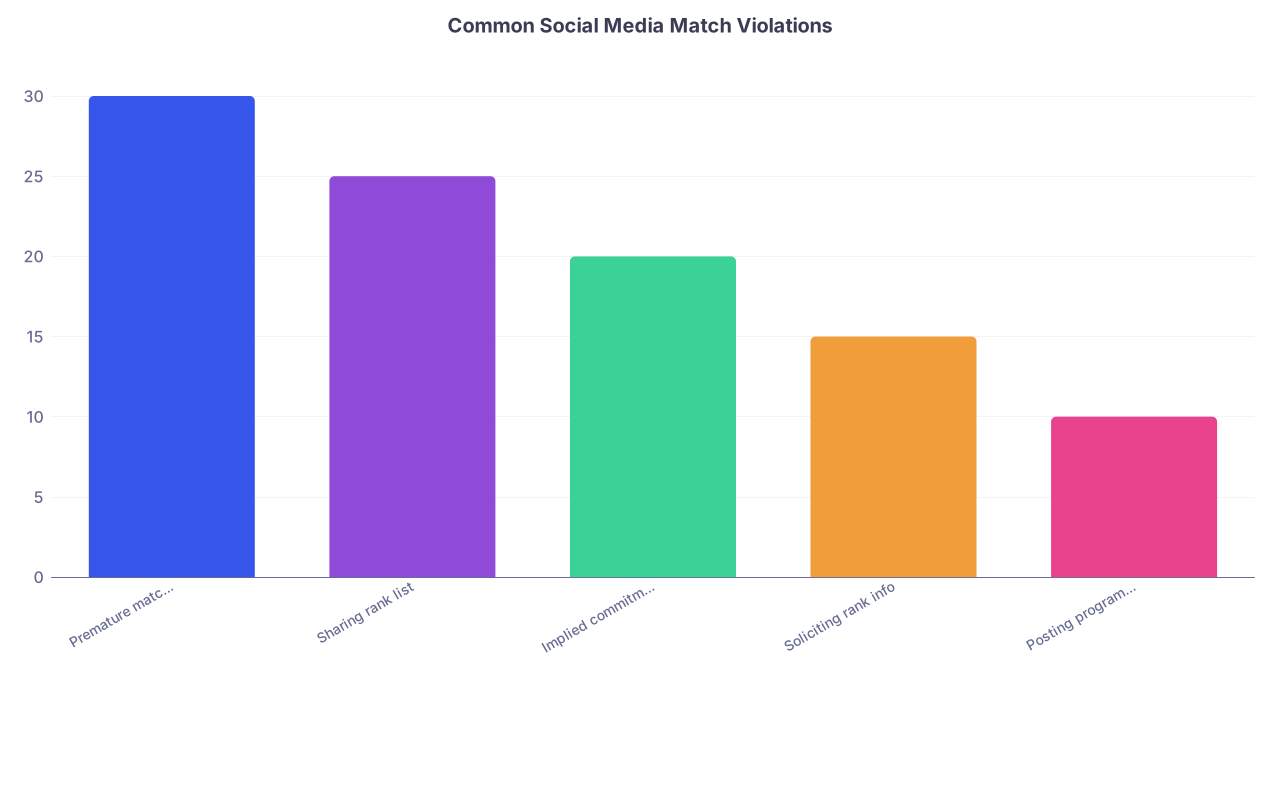
| Category | Value |
|---|---|
| Premature match announcements | 30 |
| Sharing rank list | 25 |
| Implied commitments | 20 |
| Soliciting rank info | 15 |
| Posting program violations | 10 |
Do not:
- Ask publicly or privately, in any format: “Where did you rank me?”
- Invite programs to contact you about their rank list
- Offer extra info in exchange for rank reassurance
Safer move:
If you genuinely have an update (new publication, major award, step score), you can email the program once with a neutral, professional update. Don’t ask about their list. Don’t hint you’ll rank them higher if they say nice things.
5. Broadcasting Program Misconduct… With Enough Detail to Trigger an Investigation
Let me be clear: programs that violate NRMP rules deserve to be reported. They’re the ones who should be nervous, not you.
The mistake is how you do it.
Risky pattern I’ve seen:
- A program blatantly violates rules (e.g., “We expect you to rank us #1 if you want a shot at matching here.”)
- Applicant is (rightfully) angry
- Applicant goes to Twitter/Reddit/IG and posts:
- “Program X just told me I need to rank them #1 if I want to match. Absolutely disgusting behavior from [exact name], [city], [specialty].”
- Post goes viral, program sees it, NRMP gets 10 third-hand reports with screenshots embedded
What happens next?
- NRMP investigates the program
- But they also look at you
- They pull every screenshot, message, context
- If you responded in a way that looks like you agreed to a commitment, or shared your rank list, or anything fuzzy — congratulations, now you’re part of the investigation too
The problem isn’t “calling out bad behavior.” It’s that once the process becomes public and messy, your own actions get audited.
Do not:
- Post detailed accusations about specific programs on public platforms while the Match cycle is ongoing
- Include screenshots with names, emails, or identifying details of conversations with programs in public spaces
- Turn your account into a running commentary of “PDs behaving badly” with names attached
Safer move (and actually effective):
Save everything privately:
- Screenshots
- Dates, times
- Exact wording
File a report directly with NRMP using their official violation reporting channels.
If you want to warn other applicants, do it:
- Anonymously and de-identified (e.g., “I experienced NRMP violations this cycle and reported them; keep your receipts”)
- Without naming the program or revealing unique details
6. Posting Program Communications That Contain Violations
Here’s the twist: sometimes you’re not the violator, but your post showcases a violation so clearly that NRMP has no choice but to get involved.
For example, you screenshot and publicly share:
- An email from a program saying: “If you rank us highly, we’ll rank you to match.”
- A DM from a chief resident: “We’re putting you in our top 3 if you promise we’re your number one.”
- A text from the PD: “You have a spot here if you want it, just confirm we’re first on your list.”
If you post those unretracted and unredacted in a public space with your name and their name visible, you just handed NRMP perfect evidence on a platter.
Again — the program is in the wrong. But NRMP investigations are messy, slow, and stressful. They may need to interview you. They may request your rank list history, communications, etc. All while you’re trying to finish M4 or intern year.
Do not:
- Blast clear NRMP-violating messages on social media with identifying info
- Tag NRMP, AAMC, or the program in these posts to stir drama in the middle of the cycle
Safer move:
- Redact identifying information if you absolutely must post educational content (e.g., “Here’s the kind of message that is an NRMP violation”)
- But for real cases, route the evidence to:
- NRMP
- Your dean’s office
- Your GME office (if you’re already a resident)
Use official channels first, vent online later.
7. Incriminating Yourself in Public Match Forums
Reddit, Student Doctor Network, specialty-specific FB groups, private Discord servers “open to all applicants” — these feel safe.
They’re not.
Common self-incriminating posts I’ve seen:
- “My PD told me they’ll rank me to match if I put them #1, so I did.”
- “I told [Program X] I’d rank them first if they kept me in their top 5. Hope that helps my chances.”
- “Anyone else getting texts from residents asking us to rank them higher? I replied that I will for sure if they bump me up.”
Even if you don’t name the program, context can give you away:
- Niche specialty + specific region + specific compliment = identifiable to anyone at that program
- Programs absolutely lurk in these spaces
- NRMP staff read these threads; sometimes they’re literally linked in formal complaints
Do not:
- Admit to agreeing to “rank us #1” deals in public postings
- Describe highly specific interactions that can only match one program
- Treat “anonymous” handles as real protection; screenshots outlive anonymity
Safer move:
- If you want to talk about experiences, strip them of:
- Dates
- Geography
- Exact phrases
- Distinguishing features
- Or better yet, discuss hypothetical or composite examples instead of your own real-time situation
8. Over-Aggressive Program Tagging and Love-Bombing
This one is less about explicit rule-breaking and more about painting a target on your back if things go sideways.
Aggressive patterns:
- Tagging programs in every post about your application
- Replying to all their tweets with enthusiastic comments about how much you want to be there
- DM-ing a program account repeatedly with “updates” and love notes
- Posting “Can’t wait to be a future [Program] resident!!” under their content
Even if none of this crosses a clear NRMP line, it creates a written trail of:
- Implied intent
- Possible pressure
- A weird, one-sided “relationship” viewable by anyone
If a dispute ever arises, this entire history can be screened and interpreted in ways that don’t favor you.
Do not:
- Treat program accounts like influencers you’re trying to impress
- Use public mentions as a way to “signal interest” during rank time
Safer move:
- Follow and like a few things if you genuinely enjoy their content
- Keep comments:
- Generic
- Professional
- Infrequent
Something like: “Great to see resident wellness highlighted!” is fine. “Manifesting myself as your intern!!” is not.
9. DMs You Think Are “Private”
Quick reality check: DMs are not private in any meaningful way.
Residents share screenshots with chiefs. Chiefs share them with PDs. PDs share them with GME. Anyone involved can forward them to NRMP during an investigation.
Risky DMs that can cause trouble:
- Asking a resident: “So where am I on your rank list?” (residents can be considered agents of the program)
- Sending: “If your PD ranks me to match, I promise I’ll rank you #1.”
- Venting: “I told [Program X] I’ll rank them first to secure a spot. I hate this system.”
Once any of those get shared or reported, your name is on them forever.
Do not:
- Say anything in a DM you wouldn’t be comfortable printing out and handing to NRMP directly
- Negotiate mutual ranking or commitments in writing. Or at all, honestly.
Safer move:
- Use DMs only for:
- Basic questions about living in the city
- Clarifying logistics
- Thank-you messages that avoid rank or commitment language
Quick Visual: Safe vs Risky Social Posts During Match
| Type | Safe Example | Risky Example |
|---|---|---|
| Post-interview | “Thank you [Program] for a great interview day!” | “Hope to call [Program] home next year!” pre-Match |
| Rank list talk | “Rank list certified. Grateful for options.” | “Ranked [Program] #1, manifesting!” |
| Program praise | “Impressed by the teaching culture at [Program].” | “I belong at [Program] and will be there next year.” |
| Match anticipation | “Excited and nervous for Match Day.” | “Pretty sure I locked in [Program], see you soon!” |
What You Should Do Today
Do not just absorb this and move on. Clean up.
Here’s your concrete action list for tonight:

| Step | Description |
|---|---|
| Step 1 | Open your social profiles |
| Step 2 | Check public posts |
| Step 3 | Delete or edit posts |
| Step 4 | Proceed |
| Step 5 | Review comments and replies |
| Step 6 | Remove or neutralize |
| Step 7 | Done |
| Step 8 | Any mention of rank list or commitments? |
| Step 9 | Any program tags or promises? |
Go through:
- Twitter/X, Instagram, TikTok, Facebook, LinkedIn
- Reddit posts under your username if it’s linked to your real identity
- Any screenshots you allowed friends to post that include you, tagged, talking about programs
If you find anything that:
- Names specific programs + future commitments
- Mentions your rank list
- Shows program communications with explicit ranking/commitment details
Delete it or make it non-identifiable. Screenshots may still exist, but stop adding fresh evidence.
FAQs
1. Can I post “I matched!” on social media before I know where I matched?
Yes. You can post generic “I matched!” messages as soon as Match Week emails confirm that you matched somewhere.
What you cannot safely do is suggest or announce the specific program before official results are released.
2. Can I say “X program is my top choice” publicly?
You can, but it’s unwise. Publicly declaring a program as your #1 can blur into the territory NRMP is trying to avoid — pressure and commitments. It also creates awkwardness if programs see it. Better to keep your rank intentions private and just express genuine interest during the season without specific ranking language.
3. Are group chats with classmates or friends risky for NRMP violations?
Private group chats among classmates (Signal, WhatsApp, etc.) are much lower risk because they’re not public and not directed at programs. The main danger is screenshots escaping that circle. NRMP is not policing your private venting unless it somehow becomes part of an investigation. Still — don’t put anything in writing you’d be horrified to see on a dean’s desk.
4. What should I do if a program sends me a clearly NRMP-violating message?
Do three things in this order:
- Document it — screenshots, dates, who sent it.
- Do not agree to any commitment in writing. A neutral response like, “Per NRMP rules I can’t discuss ranking commitments, but I appreciate the interview opportunity,” is safer.
- Report it through official channels — NRMP violation form and your school’s dean’s office (or GME if you’re a resident). Avoid blasting the program on social media until the process is complete.
Now, open your social media accounts and search your own name plus your specialty and favorite programs. If anything you find would look questionable in an NRMP PDF packet, fix it tonight.


