

It’s late January. You just finished your top-choice residency interview. The PD smiled, the residents were friendly, and you walked out thinking, “This is it. This is where I belong.”
Now you’re staring at your phone drafting an email:
“I will rank your program #1.”
If you hit send, you might have just broken NRMP rules.
And yes—people get reported for this. Programs. Applicants. Both.
Let me be blunt: loose, “friendly” language around the Match has ended careers before they even started. Most people don’t even realize which phrases are dangerous until someone forwards the email to GME or the NRMP gets involved.
You’re not going to be that person.
This is your guide to what not to say—on Zoom, on interview day, on the phone, or in writing—so you do not step on a landmine in the NRMP Match.
The One Rule Everyone Thinks They Understand (But Usually Don’t)
The NRMP’s entire Match system is built on one idea: no coercion and no commitments before Match Day.
The core problems the NRMP cares about:
- Anyone trying to influence rank lists with promises or threats
- Anyone implying a contract before Match results are released
- Anyone making verbal commitments that sound like binding agreements
This is where people slip: they think “verbal commitments” are harmless because “it’s not a contract.” The NRMP does not see it that way.
There are two main dangers:
- What programs say to you (and what they are not allowed to say)
- What you say to programs (and how you can still get in trouble, even if they started it)
Let’s separate the two.
Phrases Programs Must Never Say (And You Should Treat As Red Flags)
If you hear any of these, your radar should go up immediately. A lot of these are straight-up NRMP violations—or very close.
1. “If you rank us first, we’ll rank you to match.”
This is coercive. It’s a direct quid pro quo: conditional ranking based on your rank list.
That’s not just “unprofessional.” It’s against NRMP rules.
Watch for close variants:
- “We’ll match if you put us #1.”
- “If you commit to us, we’ll make sure you’re on our rank list high enough.”
- “We only rank applicants who tell us they will rank us first.”
That’s all garbage. And reportable.
Do not respond with your own commitment. Don’t say “Yes, I will rank you first.” Don’t say “You’re my #1.” Instead:
- Pivot: “I’m very interested in your program. I plan to finalize my list after all interviews.”
- If it feels bad enough, document it and talk to your dean’s office. They know what to do next.
2. “You have a spot here” or “You’re in if you want it”
This sounds flattering. It’s also dangerous.
Phrases that cross the line:
- “We’re saving a spot for you.”
- “As far as we’re concerned, you’re already here.”
- “We’ll definitely rank you to match.”
Programs cannot promise you a position before Match Day. If they say this, they’re either:
- Ignoring NRMP rules,
- Or overpromising to multiple applicants at once.
Either way, not a good look. Do not treat this as real. Do not alter your rank list on this basis. And don’t respond with a verbal commitment of your own.
3. “If we rank you highly, will you promise to rank us highly?”
Forbidden territory. Period.
This is coercive: “We’ll do X if you do Y with your rank list.” The NRMP cares less about whether it was “nice” or said with a smile, and more about whether it tries to influence your list.
Variants you need to recognize:
- “We just want to be sure you’ll rank us in your top 3.”
- “We don’t want to waste a high spot on you if you’re not serious.”
- “We’ll rank you high—do we have your commitment in return?”
Your safe response?
- “I’m very interested in your program, but as per NRMP rules, I can’t make any commitments about my rank order list.”
You do not need to play along to be polite. Trying to be “nice” here is how people get themselves in trouble.
4. “We need to know where we stand on your list”
This is a soft version of the same problem. Programs love to say:
- “Are we your top choice?”
- “Are we in your top three?”
- “We just want to know if you’d really come here.”
They’re fishing for informal commitments.
Technically, expressing interest is allowed; asking you to reveal rank order, or pushing, is not. When they push, they’re the ones breaking the rule. Don’t let them drag you with them by answering directly.
You can say:
- “I’m very interested and could see myself thriving here. I’ll be finalizing my rank list in line with NRMP policies.”
Short. Clear. Legal.
5. “We expect reciprocal communication”
You’ll see this mostly in emails:
“We really enjoyed meeting you and are ranking you highly. We appreciate reciprocal communication from applicants who are especially interested.”
Read that again. It’s subtle pressure: “Tell us if we’re your top choice.”
This is where people panic and reply: “You’re my #1, I’ll rank you first.”
Don’t.
You can respond with enthusiasm without crossing the line:
- “Thank you again for the interview. I remain very interested in your program and can see it as an excellent fit. I will let the Match process work as intended.”
Do not mirror their loaded language.
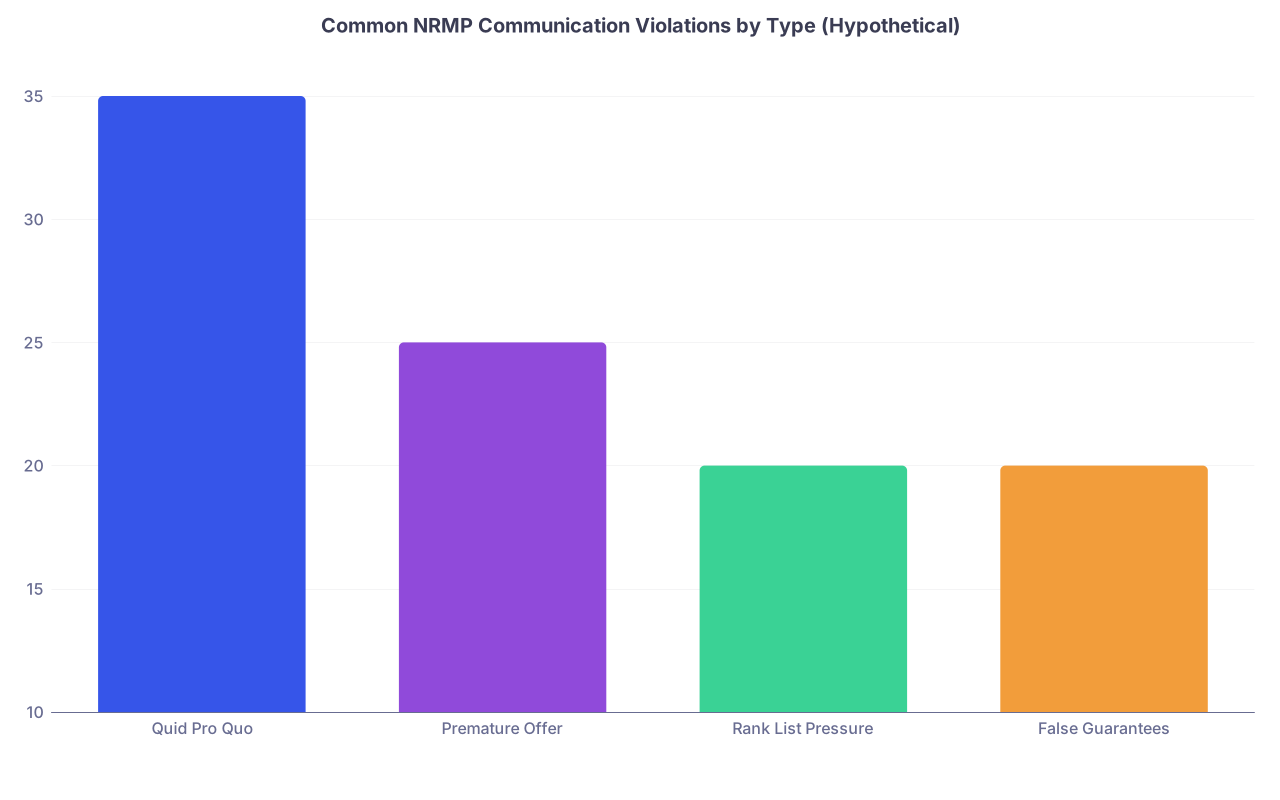
| Category | Value |
|---|---|
| Quid Pro Quo | 35 |
| Premature Offer | 25 |
| Rank List Pressure | 20 |
| False Guarantees | 20 |
Phrases You Must Never Say (Even If They Start It)
Now the part people hate to hear: applicants can get in trouble too.
The NRMP expects both sides to avoid statements that suggest a commitment. That means you can absolutely hurt yourself by “over-communicating enthusiasm.”
Here are the phrases that cause problems.
1. “I will rank your program #1.”
This is the classic mistake.
Most students think this is “just a courtesy” or “good manners.” They think everyone does it. They think programs need to know.
Reality:
- It creates the appearance of a verbal agreement.
- It can be used in disputes.
- It puts the program in a bad spot if they believe you and structure their list expecting you to match.
Also, you might change your mind a week later. Now you’ve either:
- Broken your word
- Or ranked a program higher than you truly want, warping your own Match outcome.
Both bad.
Say this instead if you really love them:
- “Your program is one of my very top choices.”
- “I left the interview even more excited about training here.”
- “I would be thrilled to match at your program.”
You can be honest about enthusiasm without promising a specific rank.
2. “If you rank me to match, I’ll come.”
This is the reverse quid pro quo. Also not allowed.
Whether you say it on a post-interview call or in an email:
- You’re offering a conditional promise based on their rank list.
- You’re participating in exactly the kind of deal-making the NRMP is trying to stop.
Even if the program started the conversation, you don’t have to finish it. Stop the chain right there.
3. “I accept your offer” (When there is no real offer)
I’ve seen this one in emails that became evidence later.
Example: program writes:
“We intend to rank you very highly.”
Student replies:
“Thank you so much— I accept and will rank you #1.”
Now someone has created the illusion of an agreement. If the student later ranks another place first and doesn’t match there, this email suddenly looks like they lied or broke a “commitment.”
Again: no offers exist before Match Day. So you cannot “accept.” There is nothing to accept.
Keep it safe:
- “Thank you for the update and for your consideration. I appreciate your support.”
- Full stop.
4. “You’re my top choice” (When that’s not 100% true)
This one is less about rules, more about reputation and ethics. But it still bites people.
Applicants send:
- “You are my #1 program.”
- “I will come here if I match.”
To multiple programs. Yes, multiple. They forget someone can forward or share that email. It happens.
You don’t want PDs comparing notes at a conference and discovering you told three places they were your “one and only.” It makes you look dishonest. And this field is small.
So:
- Either don’t make that kind of statement at all.
- Or only say it once—and only if it’s absolutely true—and still don’t phrase it as a binding commitment.
In my view, the safest move is: never give numerical rank promises to any program. Ever.
5. “I promise you I will… [anything rank-related]”
Any combination of “promise” + rank list content is a bad idea.
Examples:
- “I promise I will rank you ahead of all other programs.”
- “I promise I won’t apply to the Supplemental Offer and Acceptance Program if I don’t match here.”
- “I promise I’ll come if you rank me high enough.”
These are exactly the kinds of statements that turn “informal communication” into “possible NRMP issue.”
You’re still allowed to be human. You’re allowed to like places. Just don’t cross the line into policy-violating commitments.

| Step | Description |
|---|---|
| Step 1 | Finish Interview |
| Step 2 | Feel strongly about program |
| Step 3 | Do nothing |
| Step 4 | Send thank you |
| Step 5 | Use safe enthusiasm language |
| Step 6 | Stop - remove commitments |
| Step 7 | Send email safely |
| Step 8 | Want to reach out? |
| Step 9 | Mention interest? |
| Step 10 | Include rank promises? |
Safe vs Dangerous Phrases: Side-by-Side
Here’s what people usually say vs what they should say.
| Risky Phrase | Safer Alternative |
|---|---|
| "I will rank your program #1." | "Your program is one of my very top choices." |
| "If you rank me to match, I will definitely come." | "I would be thrilled to match at your program." |
| "I accept your offer and will come if I match." | "Thank you for your strong consideration and support." |
| "You have a spot saved for you here." (from PD) | "We were very impressed with your application and interview." |
| "Are we your #1? Please let us know." (from PD) | "We hope you will consider us strongly on your rank list." |
Memorize the pattern:
- Risky: Specific rank position, promises, “if you do X, I’ll do Y.”
- Safe: High interest, enthusiasm, “would be thrilled,” “strongly considering.”
The Psychological Trap: Why People Keep Making These Mistakes
You’ve been trained your whole life that:
- Jobs get negotiated.
- Offers get accepted.
- You “show commitment” to get picked.
The Match flips that. And everyone feels uncomfortable.
So what happens?
- Programs try to cling to control with soft offers and pressure.
- Applicants try to secure a sense of safety by promising things.
- Both sides pretend they’re not doing what they’re clearly doing.
You have to step out of that pattern. The algorithm already protects you if you rank programs honestly according to preference—not who flattered you the most.
Biggest psychological mistake: letting post-interview communication change your list more than your actual fit.
“Love letters” after interviews are mostly noise. Sometimes they’re manipulative. Sometimes they’re genuine. But they’re still noise.
Rank programs by:
- Where you’d be best trained
- Where you’d actually want to live
- Where residents seem happy and supported
- Where you’d wake up not hating your life at 3 a.m. on night float
Not by who wrote the nicest email.
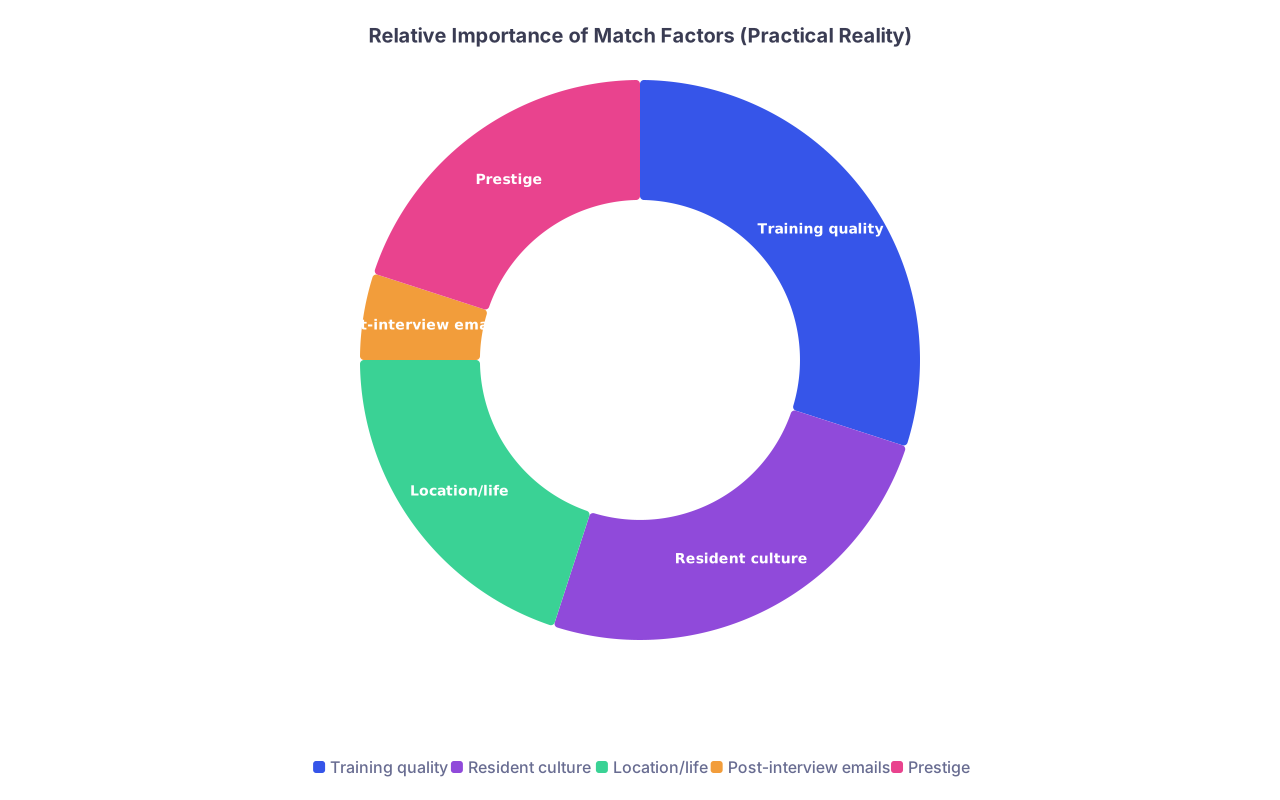
| Category | Value |
|---|---|
| Training quality | 30 |
| Resident culture | 25 |
| Location/life | 20 |
| Post-interview emails | 5 |
| Prestige | 20 |
Notice that tiny slice: “post-interview emails.” Treat it that way.
How to Communicate Strong Interest Without Crossing the Line
You don’t have to be robotic. You just have to be careful.
Here’s a simple framework that keeps you out of trouble:
1. Express gratitude
- “Thank you again for the opportunity to interview.”
- “I really appreciated the chance to learn more about your program.”
Harmless. Expected.
2. Highlight specifics you liked
Programs like hearing you paid attention:
- “The residents’ camaraderie during noon conference really stood out to me.”
- “The emphasis on mentorship and your physician-scientist track aligns with my career goals in cardiology.”
Specifics sound sincere without promising anything.
3. Show genuine enthusiasm
Safe enthusiasm examples:
- “I left the interview even more excited about the possibility of training at your program.”
- “I can clearly see myself thriving in your training environment.”
- “Your program remains one of the places I feel would be an excellent fit.”
Strong, honest, still within NRMP guidelines.
4. Don’t mention numbers. At all.
No:
- “#1”
- “Top 3”
- “Above any other program in your region”
You don’t need them. They only increase risk and corner you later.
When Programs Cross the Line: What You Should Actually Do
If a program clearly violates NRMP communication rules, you have three priorities:
- Protect yourself
- Don’t join the violation
- Decide whether to report
Here’s a reasonable sequence:
Do not commit back.
Don’t mirror their language. Don’t agree to rank them first. Don’t promise anything.Document it.
Save the email, write down the date/time of the conversation, who said what. Names and exact phrases matter.Talk to your dean’s office / student affairs.
They’ve seen this before. They can advise on whether this is something to quietly ignore, internally report, or formally bring to NRMP.Keep your rank list honest.
Do not “reward” bad behavior by artificially boosting them. If they were already your top choice purely on fit, fine. But don’t let manipulation shift your priorities.
You won’t be punished for what a program said to you. You might be punished for participating in it with your own promises. That’s the line.
FAQ (Exactly 4 Questions)
1. Can I ever tell a program they are my “top choice” or “#1”?
You can, but I strongly recommend you don’t use numerical language at all. The moment you say “#1,” you’ve created a pseudo-commitment. If you later change your mind, you’ve either lied or distorted your rank list. Instead, use non-numeric strong-interest language like: “I remain extremely interested in your program and would be thrilled to match there.”
2. What if a program directly asks, “Are we your first choice?”
Do not answer with rank details. You’re allowed to be vague and still be polite. Something like: “I’m very interested in your program and could absolutely see myself training here. I’ll be finalizing my rank list in accordance with NRMP guidelines.” If they push harder, that’s their violation, not yours—document it and discuss with your dean.
3. Could I get in trouble with NRMP for saying ‘I will rank you #1’ in an email?
Yes, you can be implicated if there’s evidence you entered into what looks like an agreement or tried to influence the Match outside the algorithm. Will they chase every single enthusiastic email? Probably not. But if there’s a dispute, your written “I will rank you #1” can show that you participated in disallowed commitments. There’s zero upside to phrasing it that way when you can say “very interested” instead.
4. Do post-interview “love letters” from programs actually mean anything for my rank list strategy?
They shouldn’t. Programs often send flattering, vague messages to many candidates. Some genuinely like you; some are just protecting their match rate. You have no way to know which is which. The safest approach is to treat all post-interview communication as background noise. Rank programs only by where you most want to train and live, not by who sent the nicest email or implied promise.
Key Takeaways
- Never make or accept verbal commitments about rank lists. No “I’ll rank you #1,” no “If you rank me, I’ll come,” no “I accept your offer.”
- Use strong but safe language. “Very interested,” “excellent fit,” “would be thrilled to match” are all fine. Numbers and promises are not.
- When in doubt, protect yourself. If a program crosses the line, don’t join them. Document, talk to your dean, and keep your rank list honest.


