

The fastest way to get in trouble with the NRMP is not cheating on test scores or forging letters. It is opening your mouth in the wrong ranking list conversation.
Most residents and students do not get hauled in front of the NRMP for dramatic fraud. They get reported because of an email they thought was “informal,” a phone call that “everyone does,” or a hallway comment that crossed the line from enthusiasm into coercion or collusion.
Let me be blunt: the NRMP takes communication around rank lists deadly seriously. Programs lose spots. Applicants get barred from future Matches. Careers get delayed for a year or more. And it often starts with someone who thought they were being friendly, helpful, or “transparent.”
You are not going to memorize the entire NRMP handbook. You do not need to. But you do need to recognize the conversations that put you at risk, whether you are the applicant or the resident/faculty on the other end.
This is the landmine field. Let me walk you through where people keep stepping.
1. The Most Dangerous Sentence: “How Are You Ranking Us?”
If you remember nothing else, remember this: any conversation that tries to get you to reveal your rank list is a red flag.
For applicants
The classic setup:
You had a great interview at Program X. A resident or faculty member emails you:
“We really enjoyed having you. We hope you will rank us highly. Out of curiosity, where are we on your list?”
That “out of curiosity” is exactly the problem.
Under NRMP rules, both sides may voluntarily share interest levels. But no one is allowed to request or require that you disclose your rank order list. Not programs. Not PDs. Not residents “just asking.” Not coordinators. No one.
You must not:
- Answer directly (“You are my number 1,” “I’m ranking you top 3,” etc.)
- Hint in a way that clearly signals your order (“You’re above all my other northeast programs,” when they know your list)
- Feel pressured to reciprocate their disclosure (even if they say “You’re in our top 5”)
The mistake many applicants make is thinking, “If I do not answer, I will hurt my chances.” In reality, the NRMP protects you. Programs cannot legally punish you for refusing to disclose your rank list. They can, however, get in serious trouble for asking.
So you need safe stock phrases ready. For example:
- “I am still finalizing my list but I really enjoyed your program.”
- “I am very interested, but I will submit my list independently.”
- “Per NRMP rules I am not able to share my rank order, but I appreciate your interest.”
If they keep pushing after that, you have learned something important about that program’s culture. And it is not a positive thing.
For residents and faculty
If you are on the program side and you ask an applicant how they will rank you, you are putting your program at NRMP risk. Full stop.
I have seen this happen most often with:
- Enthusiastic junior faculty who “did not know the rules”
- Chief residents trying to “help the program” with recruitment
- Informal phone calls to “touch base” with top applicants
Your intent does not matter. NRMP cares about the effect.
Never ask:
- “Are we your top choice?”
- “Where are we on your list?”
- “Are you ranking us above [state competitor]?”
- “If we rank you to match, will you rank us high enough to match?”
These are not “relationship building.” They are NRMP violations waiting to be reported.
2. Promises, Guarantees, and the “If You Rank Us High, We’ll Rank You High” Trap
The second big category of risk: conditional commitments.
This one destroys people.
What programs say that gets them in trouble
You will sometimes hear language like:
- “If you rank us highly, we will rank you highly.”
- “If you rank us #1, we can basically guarantee you will match here.”
- “We will rank you at the top of our list if you commit to ranking us first.”
- “Consider this a verbal contract that you will come here if we rank you to match.”
Every one of those is dangerous.
Program-side, you are not allowed to solicit a commitment in exchange for ranking behavior. You are not allowed to present any promise as binding. You are not allowed to imply that ranking them #1 is a condition for being ranked highly.
Applicant-side, do not participate in this game. If they propose a quid pro quo, that is a program showing you they are comfortable violating Match rules. Assume that culture will extend into how they treat residents.
The safe line if you are the applicant:
- “I am grateful for your enthusiasm. Per NRMP policy, I will submit my rank list based on my true preferences and cannot make binding commitments.”
Do not say:
- “Yes, I promise I will rank you #1.”
- “Yes, if you rank me to match, I will come.”
- “You have my word I will be here if I match.”
You might think you are just being polite. But those statements become evidence if a complaint is ever filed.
What applicants say that hurts them
There is another version of this: the applicant making threats or conditions.
Red-flag statements from applicants:
- “If you do not guarantee me a spot, I will rank you lower.”
- “I will only rank you first if you promise I will match.”
- “I have another offer; if you want to be my #1 I need to know your rank decision.”
You are not in a negotiation. You are in a regulated process. Trying to leverage your rank list like a bargaining chip is not only naive, it risks making you the problem in an NRMP investigation.
3. Post‑Interview Communication: Where Friendly Turns Into Reportable
Post‑interview communication is where most NRMP drama lives. Because it feels informal. And the NRMP does not care how casual you thought it was.
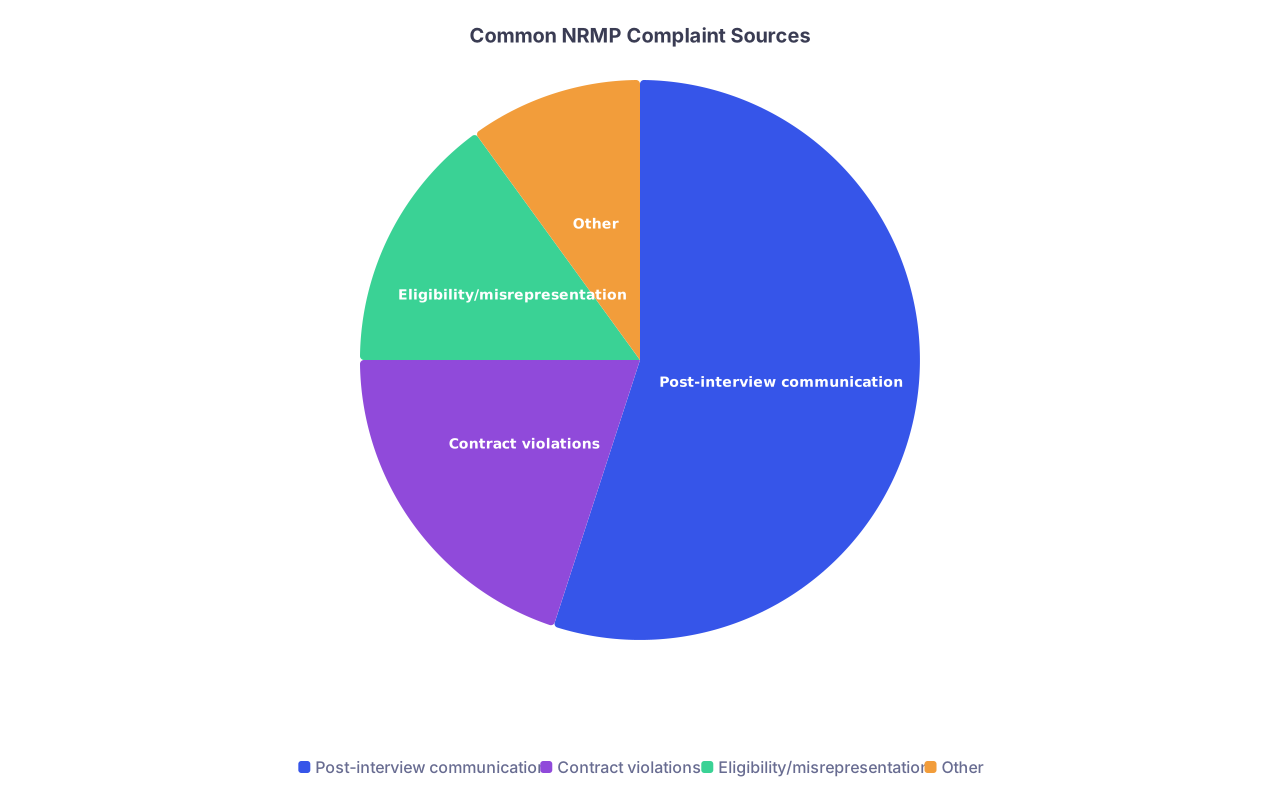
| Category | Value |
|---|---|
| Post-interview communication | 55 |
| Contract violations | 20 |
| Eligibility/misrepresentation | 15 |
| Other | 10 |
The dangerous belief: “Everyone sends these emails. It is just how the game works.”
No. Some programs push the line. Some blast past it. You do not have to join them.
What is allowed (on both sides)
- Expressing interest: “I really liked your program.”
- Expressing enthusiasm: “You remain one of my top choices.”
- Thank-you emails that are general and do not discuss rank positions.
- General recruiting messages from programs: “We enjoyed meeting you; feel free to reach out with questions.”
Where it turns into risk
Program-side high‑risk phrases:
- “We have ranked you to match.”
- “You are within our match range.”
- “You are in our top 5 and assured a spot if you rank us first.”
- “We depend on you ranking us highly to maintain our program quality.”
Applicant-side risky responses:
- “You are my number 1 and I am contractually committing to you.”
- “I promise I will be at your program in July.”
- “You have my word; if I do not match with you there was a mistake.”
You are free to say “I intend to rank you highly” if it is true. But “I will rank you number 1” and “I promise to match here” move into the zone where the NRMP has historically investigated.
And before someone objects: yes, many people still say these things. I am telling you how people get in trouble, not how to be “competitive.”
If a program tells you “we ranked you to match” and you do not match there, you are not protected by that statement. The NRMP does not use that to “fix” your Match. They use it as possible evidence of a policy violation.
4. Collusion Between Applicants: The Group Chat Problem
You probably think of NRMP rules as “program vs applicant.” The mistake is ignoring horizontal collusion: applicant‑to‑applicant agreements.
This comes up often with couples, friends applying to the same programs, or small specialties.

Conversations that move into risk:
- “Let us all agree to rank Program A first so our whole group can match together.”
- “If we as a class push Program B to the top, they will have to take more of us.”
- “We should coordinate so the department knows we will all come if they commit spots.”
- “You and I both tell them we will rank them first if they take us together.”
This is not just about “gaming the system.” The NRMP has rules against agreements among applicants to influence ranking certification in a way that undermines the algorithm’s fairness.
Now, there is a difference between:
- “I really liked Program X, I think it is my top choice,” and
- “Let us coordinate our lists and commit to them as a block.”
You can talk about programs with your friends. You can share impressions. You can even say, “I think I am ranking them #1.” What you must avoid is entering into explicit agreements or making your rank list contingent on other applicants’ rank lists in a coordinated way.
The particularly dangerous version: when a faculty member encourages this.
If someone at your home institution says:
- “If your whole group ranks our program first, we will rank all of you high so you come together.”
You now have a three‑way problem: program behavior, applicant collusion, and home institution pressure. This is exactly the sort of thing that blows up when one person feels burned and reports it.
5. Coercion and Pressure From Home Institutions
One of the ugliest categories: when your own school or current program leans on you to rank their affiliated residency in a certain way.
Common examples I have seen:
- A home department chair saying, “We expect our students to rank our program first.”
- An internal medicine PD telling prelims, “If you do not rank us highly, we will remember that.”
- A faculty advisor hinting that letters or mentorship depend on “loyalty” in ranking.
This is not just unprofessional. It edges into NRMP prohibition against coercion or undue influence over rank lists.
You are allowed to take advice. You are allowed to hear their pitch for why you should stay. What they are not allowed to do ethically is attach threats, retaliation, or implied penalties to how you rank.
The dangerous conversations:
- “If you choose not to rank us first, it will be hard to support your fellowship plans.”
- “We expect our students to prioritize us. That is how we decide who we invest in.”
- “I will remember how you rank us when it comes time for recommendation calls.”
If you hear this, document it. Save the email. Write down the exact words after the meeting. If something goes badly in the Match and you later need to file an NRMP complaint, contemporaneous notes matter.
For your own safety, keep your verbal responses bland:
- “I appreciate your perspective. I will think carefully about my options.”
Do not get into a fight, but also do not agree to anything that sounds like a loyalty oath.
6. Social Media, Texts, and “Informal” Messages That Are Anything But
People still act as if NRMP rules stop at the email client. They do not.
Instagram DMs, Twitter/X messages, WhatsApp groups, GroupMe, Signal, iMessage screenshots—NRMP investigators have seen it all. And programs have been burned by casual “we ranked you to match” DMs every year.
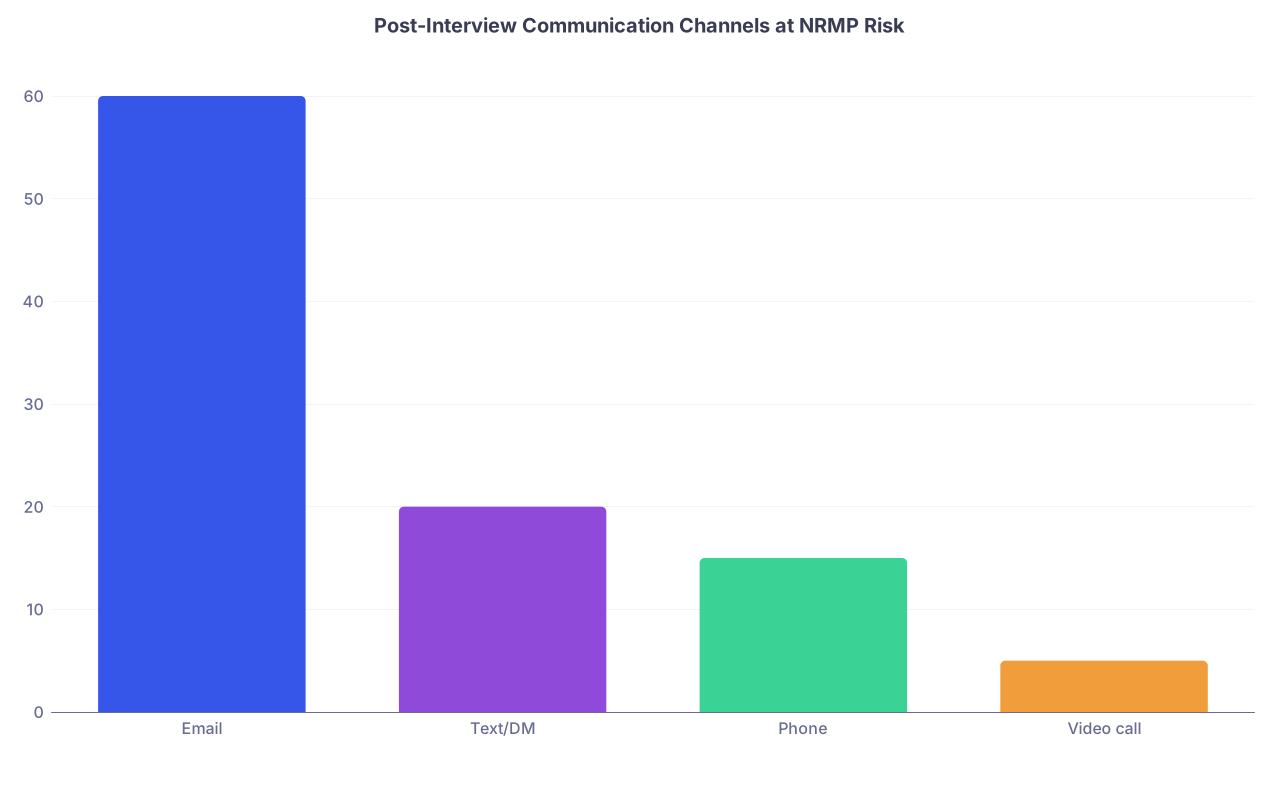
| Category | Value |
|---|---|
| 60 | |
| Text/DM | 20 |
| Phone | 15 |
| Video call | 5 |
High‑risk patterns:
- Residents messaging applicants on Instagram: “PD told us you are in our top few; rank us #1 and you are basically in.”
- Applicants texting PDs directly: “If you guarantee me a spot, I will cancel my other interviews.”
- Program coordinators in group texts: “Remember to tell the candidates we will rank them well if they commit.”
Do not assume that because it is “off the record” it is safe. There is no “off the record” when someone feels misled and screenshots everything to send to the NRMP.
If you are a resident: be very careful about sliding into applicant DMs to “recruit.” Stick to answering questions, describing the program culture, and sharing your experience. Avoid rank talk entirely.
If you are an applicant: you do not need to initiate or engage in rank‑discussion via text. If someone steers the conversation that way, either redirect or stop responding. You are not being rude. You are protecting yourself.
7. The “Second Look” and Informal Visit Minefield
Second looks and informal visits are not inherently problematic. The trouble is what gets said during them.
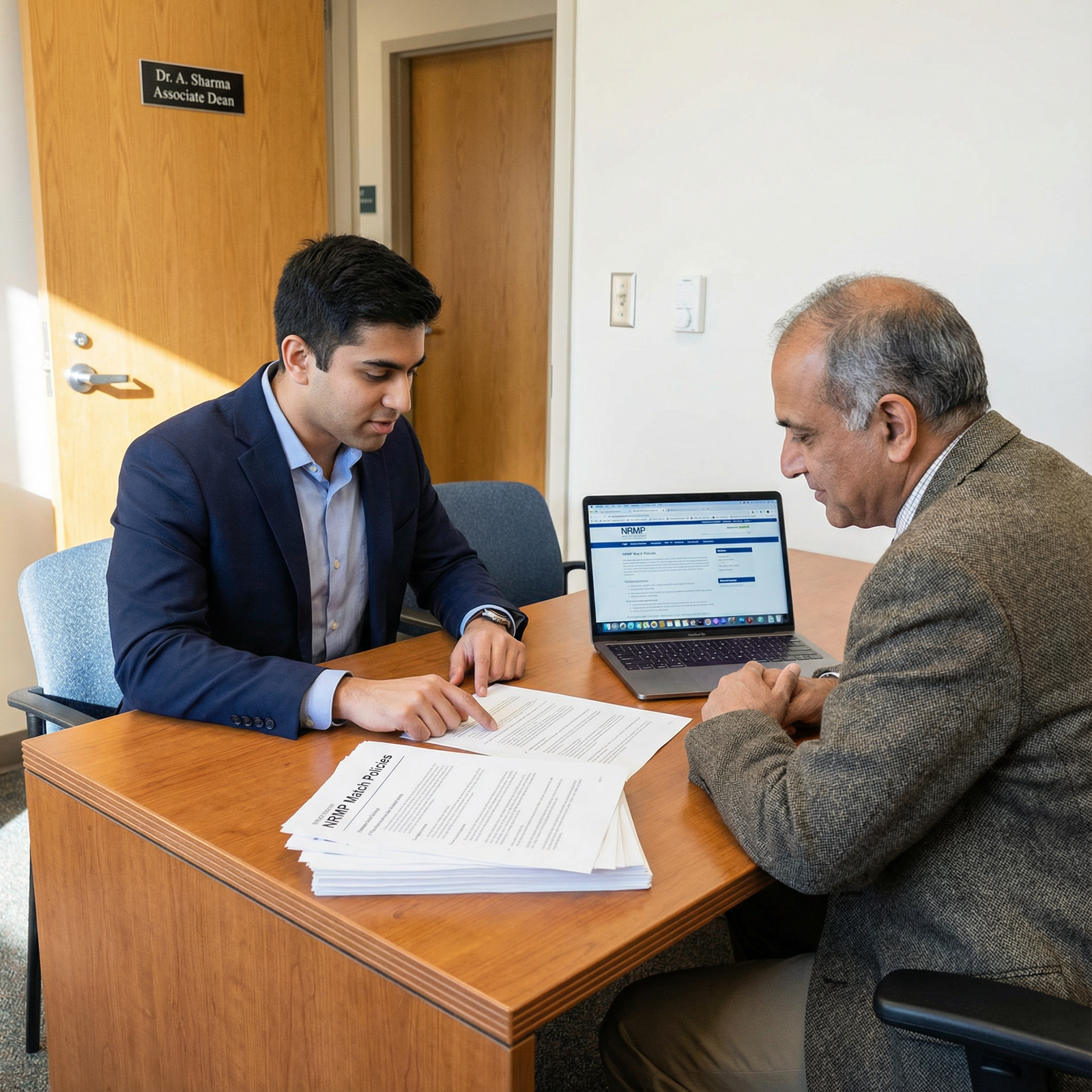
Common problem scenarios:
- During a second look, a PD says privately, “You are our top candidate, but only if you promise to come.”
- Residents tell applicants, “The PD told us you are in the top 3; just rank us first and it is a done deal.”
- Applicants tell PDs, “I am ready to sign something that I will come here if you take me.”
Again: visit all you like. Gather information. But when the conversation drifts to quasi‑contracts, guarantees, or conditional promises, you are in NRMP territory.
A safe rule: if a statement would sound like a promise, deal, or contract if written down, do not say it out loud either.
Programs: do not ask for “verbal commitments.” Applicants: do not offer them.
8. Confidentiality: Talking Too Much About Others’ Rank Lists
You are not only responsible for protecting your own rank list. You can get pulled into conflict by mishandling other people’s confidential information.
Situations that cause problems:
- You are on a resident selection committee and you share specific rank positions with an applicant friend.
- A PD tells you where someone else is on the list and you repeat that to them.
- You leak your program’s rank strategy to current residents or students in a way that influences their behavior or leads to perceived favoritism.
NRMP rules emphasize confidentiality of rank lists. Once you are involved on the program side, you have an extra duty here.
If you ever hear, “Do not tell anyone I said this but we ranked you #2,” that is a confidentiality failure already. Do not make it worse by repeating it.
9. What To Do When You Are On The Receiving End Of A Sketchy Conversation
You will likely encounter at least one NRMP‑gray conversation in your Match cycle. The question is how you respond without blowing up your relationships or your career.

| Step | Description |
|---|---|
| Step 1 | Hear questionable statement |
| Step 2 | Let it go |
| Step 3 | Use neutral response |
| Step 4 | Document details |
| Step 5 | Move on, rank true preferences |
| Step 6 | Seek advisor or NRMP guidance |
| Step 7 | Rank pressure or promise? |
| Step 8 | Pattern or serious threat? |
Practical steps:
Stay neutral in the moment.
You do not need to confront the PD or resident. Calm, non‑committal responses protect you:- “I appreciate the information.”
- “Thank you for sharing; I will consider everything when I make my list.”
Do not reciprocate the violation.
If they just did something questionable, your job is not to “match” it by disclosing your rank, giving a commitment, or making your own promise back.Write down exactly what was said.
Immediately after, jot down:- Who said it
- When
- Where (in person, email, DM, phone)
- Exact wording, as close as you remember
Save any written messages or screenshots. Future you will thank you.
Talk to a competent advisor.
Not every dean or faculty member actually understands NRMP rules. Ask someone who regularly advises on Match issues—student affairs dean, experienced PD from another specialty, or your advising office.If serious, consider NRMP assistance.
The NRMP has a Policy and Compliance Department. You can ask questions or eventually file a complaint. They are not perfect, but they take documented patterns seriously, especially if it involves coercion, retaliation, or systemic practices.
Remember: not every awkward phrase is a federal case. The line between clumsy enthusiasm and true coercion exists. But repeated pressure, explicit quid pro quo, or threats? That is where you stop “letting it go” and start protecting yourself.
10. The Only Safe Strategy: Rank How You Truly Prefer
The NRMP’s algorithm is designed to favor applicant preferences. That is not marketing fluff; it is baked into the math. The tragedy is how many students sabotage themselves by reacting to manipulative conversations.
You avoid most of the mess by following one core rule:
Never change your rank order list based on perceived promises or threats.
Rank solely on:
- Where you believe you will be happiest and best trained
- Where you think you can reasonably live for 3–7 years
- Where the environment felt safe, humane, and aligned with your goals
Do not rank:
- To “reward” a program that flattered you
- To “punish” a program that stayed professional and did not promise anything
- Based on who told you “we ranked you to match”
If a program plays weird NRMP games, that is a reason to move them down, not up.
| Situation | Safer Response | Risky Response |
|---|---|---|
| PD asks, "Will you rank us first?" | "I will submit my list based on my true preferences per NRMP rules." | "Yes, I promise you are my number 1." |
| Resident says, "We ranked you to match." | "Thank you, I appreciated my interview here." | "Great, then I will definitely rank you high enough to match." |
| Chair hints you should rank home program first | "Thank you for the guidance, I will consider my options carefully." | "I will do whatever you want if it helps my career." |
| Friend suggests group ranking strategy | "I am going to set my list independently." | "Let us all agree to rank Program X first together." |
The bottom line
Three key points you should not forget:
Any conversation asking you to reveal or change your rank list—especially with conditions or promises attached—is a warning sign. Do not participate, do not reciprocate, and do not let it alter your list.
“Informal” channels—texts, DMs, second looks, hallway chats—are exactly where NRMP violations get created and later exposed. Treat them with the same discipline you would a formal email.
Your safest and smartest move is boring but powerful: document questionable interactions, refuse to give binding‑sounding commitments, and rank programs in your true order of preference, ignoring the noise.
Protect your Match. The people trying to bend the rules will not be the ones living with the consequences. You will.


