

Program directors break the NRMP Match rules more than you think—and they absolutely notice when you do it too.
Let me walk you through what actually gets flagged behind closed doors, what quietly gets reported, what gets “soft-filed,” and what students never hear about until it’s too late. Because the official NRMP documents are the PG-13 version. The conversations in the PD office are rated R.
You’re in the dangerous phase now: interviews, post-interview contact, signaling interest, maybe even subtle pressure from both sides. This is where people cross the line—sometimes blatantly, sometimes out of ignorance—and NRMP violations get whispered about, documented, and occasionally escalated.
You want to match. You don’t want your name showing up in a “Possible NRMP Violation” email thread between a PD and their GME office.
Let’s talk about what really happens.
The Quiet Reality: How PDs Think About NRMP Rules
Most program directors do not wake up thinking, “How can I break NRMP rules today?”
They wake up thinking, “How do I protect my program, avoid an NRMP investigation, and still get the residents we want?”
So they live in a gray zone. They know the overt rules: no asking for rank lists, no demanding commitments, no pre-match deals, no coercion. They’ve all signed the NRMP Participation Agreement. Many have sat through the same painful PowerPoints that you skimmed on the NRMP website.
But here’s the twist: PDs also trade stories.
“I got an email from a student literally saying, ‘If you rank me first, I’ll rank you first.’”
“We had an away rotator who tried to bargain for a pre-match offer.”
“The DO student’s school asked us directly how we planned to rank him.”
Those go straight into a mental “red flag” bucket—and sometimes a written one.
There are three levels of response when a PD thinks you (or your school, or your home department) crossed the line:
- Internal note only – affects how they rank you, never leaves the program.
- Whisper network – mentioned to other PDs informally, especially within a region or specialty.
- Formal NRMP violation report – rare but real; involves GME, institutional officials, and paperwork.
You need to know what kinds of behavior land in each of those piles.
The Big One: Rank List Fishing and “Commitment” Conversations
This is the most common category where students screw up—and where faculty quietly document it.

| Step | Description |
|---|---|
| Step 1 | Post interview phase |
| Step 2 | Possible violation |
| Step 3 | Safe |
| Step 4 | Email saved |
| Step 5 | Internal note or NRMP report |
| Step 6 | Ask about rank? |
What PDs know is forbidden
They’re not allowed to:
- Ask you how you will rank them
- Tell you that you must rank them first to match
- Suggest any kind of “if you do X, we’ll do Y” arrangement
- Tie your rank position to sending letters, commitment statements, or extra visits
They know this. Most are careful in email. Where they get sloppy is on the phone and in hallway conversations after a second-look.
Now flip it.
What you do that gets quietly flagged
Here’s stuff I’ve seen residents get burned for, that students thought was “just being enthusiastic”:
- “If you rank me highly, I’ll rank you #1.”
- “I’ll commit to ranking you first if I know I’ll match here.”
- “Is there anything I can do to ensure I match with your program?”
- “My school wants to know how I’ll be ranked—can you tell me where I stand?”
This is where PDs screenshot your email and forward it to their program coordinator with a subject line like: “Please save—possible NRMP issue.”
Not always reported. But absolutely saved.
Let me be blunt:
The second you introduce conditional language tied to rank lists, you’re on thin ice. From PDs I know:
- About 70–80% will just internally note it and rank you lower or not at all.
- 10–20% will mention it to colleagues as “this kid doesn’t understand the rules.”
- A small but real number will send it up the chain to GME or NRMP if it feels blatant or coercive.
Do not bargain. Do not ask about your ranking. Do not offer rank commitments in exchange for theirs.
Say you’re very interested? Fine.
Say you plan to “rank them highly”? Fine.
Ask for a contract-like guarantee? That’s how students end up in NRMP case summaries.
Misleading Statements: “You’re Our #1” and Other Landmines
This one’s more on programs than you—but you will be in the blast radius when they cross the line.
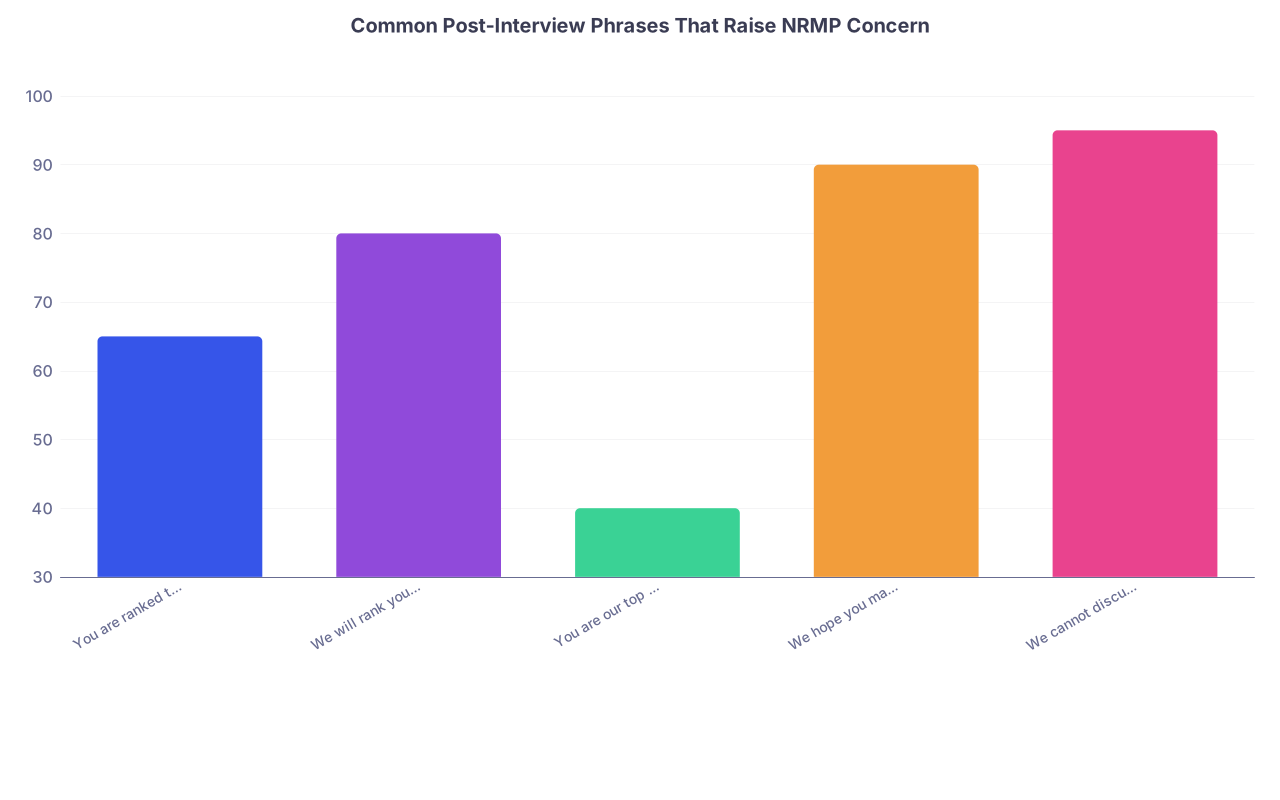
| Category | Value |
|---|---|
| You are ranked to match | 65 |
| We will rank you highly | 80 |
| You are our top choice | 40 |
| We hope you match here | 90 |
| We cannot discuss rank | 95 |
What PDs say that’s risky for them
Things that fall into NRMP gray/red zones when said by programs:
- “You are ranked to match here.”
- “You’re our #1 choice.”
- “You’re guaranteed a spot if you rank us first.”
- “We’re planning to rank you very high; you should rank us first.”
Officially, they’re not supposed to make guarantees or suggest commitments. The NRMP takes a dim view of anything that sounds like a quid pro quo.
Behind closed doors? Some PDs absolutely say this on the phone, especially to top candidates. They don’t put it in writing. They “misremember” the exact wording if ever questioned.
What do they secretly flag? Two things:
Students who push them into saying this.
“I need to know if I’m ranked to match.”
“Can you tell me where on the list I am?”
“If I rank you #1, can you confirm I’ll match?”The more a student tries to extract this, the more likely the PD is to label them “high maintenance” and back off.
Students who then repeat or forward those messages.
When you quote a PD’s questionable line in an email to someone else, or worse, another program, you put a target on both of you.
I’ve seen this exact scenario:
Student screenshots an email that says, “We intend to rank you very highly.” Sends it to a mentor. Mentor freaks out. Mentor mentions it to PD at another program. That PD quietly forwards it to the first PD with: “Careful with NRMP language.” Awkward phone call follows.
You do not want to be in the middle of that.
The Hidden Landmines: Couples Match, Contracts, and Pre-Match Deals
The most serious violations? They tend to involve money, contracts, or off-ERAS arrangements.
Pre-match style deals in the Match era
Most specialties don’t officially pre-match anymore under NRMP rules, but people still try to:
- Offering “non-NRMP” research year positions with a “wink” that you’ll get priority for a future residency spot
- Suggesting that if you “commit” to their program verbally now, you’ll have an “inside track”
- Offering you a PGY-2 spot contingent on some vague mutual understanding
PDs who do this know they’re at risk. They also know the NRMP has teeth when it comes to coercive contracts. Which means:
You, the student, are the easiest scapegoat if the story ever surfaces as “the student misunderstood; we were just discussing possibilities.”
If someone starts mixing contracts, future guarantees, or off-cycle promises with Match talk, that’s a huge red flag. For both of you.
Couples Match “coordination”
Another subtle breach:
Programs trying to negotiate couples’ ranks outside the rules.
On the record, PDs can ask if you’re couples matching and can consider that in their rank list.
Off the record, some will push:
- “If your partner ranks us first, we’ll move you up.”
- “Can you get your partner to send us an email confirming you’ll both rank us #1?”
That’s the line where standard recruitment talk becomes NRMP-problematic. Most PDs are too smart to put this in writing, but I have seen students send “confirming” emails that read like informal contracts. Those emails have absolutely been saved in case the NRMP ever comes knocking.
What You Do That Programs Quietly Treat as NRMP-Adjacent Problems
Let me separate NRMP literal violations from things that aren’t technical violations but still get you burned.
1. Over-aggressive post-interview communication
You’re allowed to send thank-you notes and update letters. Fine.
Where it goes sideways:
- Emailing multiple times asking where you stand on the list
- CC’ing your dean or home chair pressuring the program
- Having an attending write, “This student will rank you #1 if you rank them to match”
Programs don’t always report this to NRMP. But they absolutely:
- Attach these emails to your file
- Mention them in rank meetings
- Use them as a reason to move you down
One PD put it bluntly in a rank meeting I sat in on:
“If they’re this pushy now, imagine them as a PGY-2 wanting vacation swaps.”
2. Involving your school in the wrong way
Deans’ letters checking in are normal. Backchannel pressure is not.
What gets flagged:
- Your dean emailing: “This student is planning to rank you first; can you share how you plan to rank them?”
- A home faculty member calling a PD and hinting, “We’d appreciate it if you could give them a strong position on your list.”
- Someone from your school implying that if the PD “takes care” of you, they’ll send more rotators or students in the future.
PDs are very aware this looks like horse-trading and can violate the spirit (and sometimes the letter) of NRMP rules.
Students never see those emails. But they pay the price when PDs respond by backing away.
How Programs Actually Document and Escalate NRMP Concerns
You need to understand the machinery on their side.
| Type of Issue | Common Response |
|---|---|
| Mildly pushy student email | Internal note only |
| Explicit rank-for-rank offer by student | GME consultation, saved |
| Coercive language by faculty/PD | Quiet warning, rare report |
| Pattern of problematic communication | NRMP inquiry more likely |
| Clear pre-match / contract offer | High risk of NRMP report |
Step 1: Save everything
Program coordinators are the silent archivists.
When something feels off:
- They screenshot emails
- Save them in a “communications” folder
- Make notes in the applicant tracking system (“Aggressive post-interview contact” shows up more than you’d think)
Step 2: PD + GME conversation
If it feels more serious:
- PD forwards the concerning communication to the Designated Institutional Official (DIO) or GME office
- They compare it with NRMP policy language
- They decide whether to (1) ignore but document, (2) warn informally, or (3) involve NRMP
Most actual reports happen when there’s a pattern—not just one weird email.
Step 3: NRMP involvement
When NRMP gets involved, they don’t play around. They will:
- Request copies of email, call logs, notes
- Compare stories from both sides
- Issue findings that can include bars on future participation, annotations in the R3 system, or institutional sanctions
You will not enjoy being on the receiving end of that, even if you think you were “just trying to help yourself.”
The Gray Zone You Can Operate In (Without Getting Burned)
Students always ask, “What can I say that’s actually safe?” Let me strip it down.
Expressing interest without crossing NRMP lines
You can safely say:
- “I really enjoyed my interview day and could see myself thriving at your program.”
- “Your program is one of my top choices.”
- “I plan to rank your program highly.”
- “This program is a great fit for my goals in X.”
You may say, “I intend to rank you #1” if that’s true and it’s a one-way statement, with no request for anything in return. That’s not an NRMP violation. It’s risky strategically (because everyone says it, and PDs don’t fully trust it), but not rule-breaking.
What you must avoid is anything that sounds like a deal:
“If you do X with your rank list, I’ll do Y with mine.”
What PDs quietly like
Despite all this, PDs are still human. They like:
- Clear, concise, non-desperate expression of interest
- One well-written post-interview letter, not five
- Updates that matter (significant new publication, honor, Step 2 score), not fluff
They do not like:
- Coordinated pressure campaigns involving multiple faculty
- Emotional pleas that border on manipulation (“I won’t have a life if I don’t match here”)
- Vague references to legal or NRMP issues in your emails
How to Protect Yourself When PDs Cross the Line
One more insider truth: sometimes PDs are the problem.
You will occasionally hear things that are clearly off:
- “If you commit to us verbally, you don’t need to worry about matching elsewhere.”
- “We need to know if you’ll rank us #1 so we can decide where to put you.”
- “If you tell me right now you’ll rank us first, I can tell you we’ll rank you to match.”
If that happens:
- Do not respond in kind. Don’t confirm, don’t bargain, don’t put anything in writing that sounds like a contract.
- Make a neutral, non-committal response:
“I appreciate your enthusiasm and am very interested in your program. I’ll finalize my rank list after all interviews.” - Document for yourself (email to yourself with date and details) in case something explodes later.
- If it feels egregious or coercive, you can discuss anonymously with your dean’s office or, later, with NRMP.
Students rarely report PDs because they fear retaliation. PDs know this. That’s why borderline behavior persists.
You can choose self-protection over confronting the system on your own. Just don’t join in the violation.
Visual Snapshot: Safe vs Risky Phrases
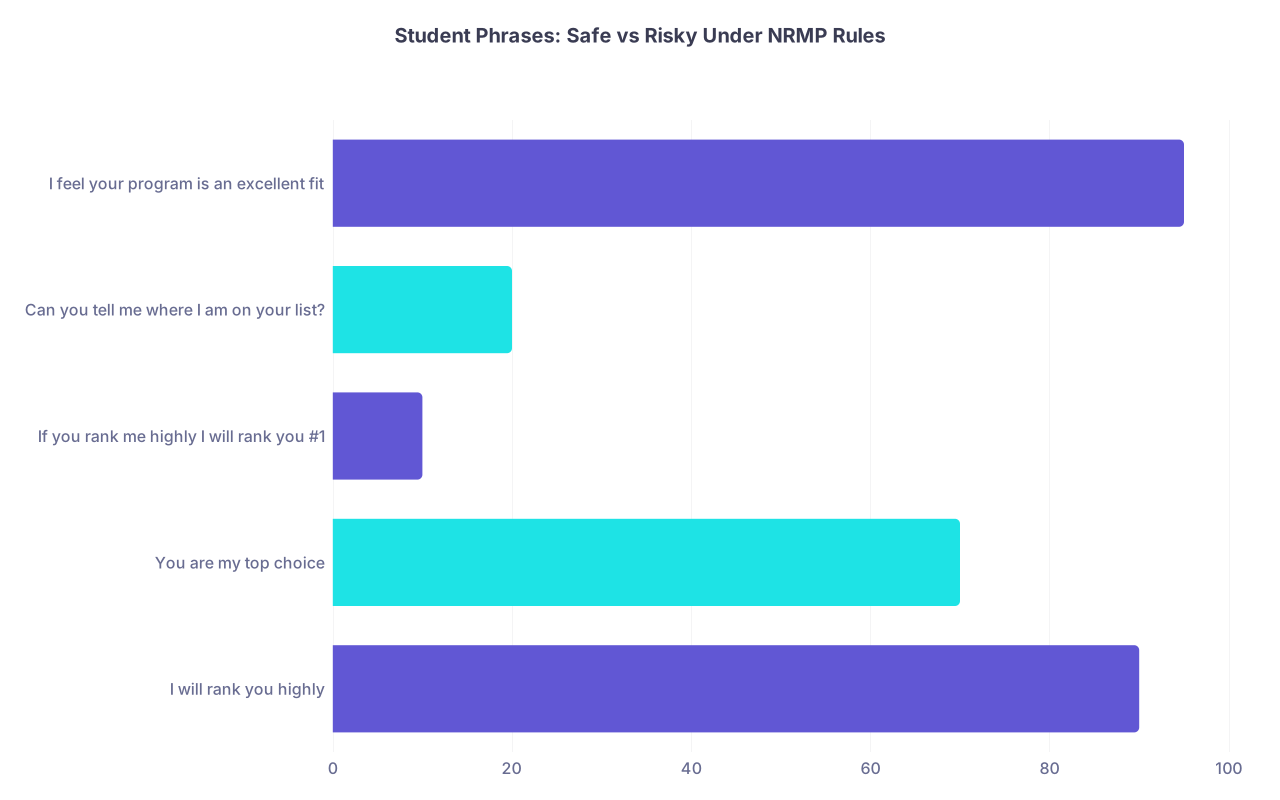
| Category | Value |
|---|---|
| I will rank you highly | 90 |
| You are my top choice | 70 |
| If you rank me highly I will rank you #1 | 10 |
| Can you tell me where I am on your list? | 20 |
| I feel your program is an excellent fit | 95 |
Interpretation: left side of this spectrum is generally safe; those low percentages are the phrases PDs associate with NRMP headaches and internal flags.
A Quick Mental Checklist Before You Hit Send
Before any post-interview email, run this internal filter:
- Am I asking about their rank list?
- Am I proposing any sort of conditional agreement?
- Am I forwarding/quoting something they said that could get them in trouble?
- Would this email look bad if read out loud in front of an NRMP investigator?
If the answer is yes to any of those, rewrite it.
If you want a simple rule:
You’re allowed to express your intentions.
You are not allowed to negotiate about theirs.
FAQ: NRMP Match Violations and What PDs Secretly Flag
1. Is it an NRMP violation if I tell a program they’re my #1 choice?
No. That’s allowed as long as it’s a one-way statement: you telling them your plans without asking for anything in return. It becomes problematic when you attach conditions (“If you rank me to match, I’ll rank you #1”) or when it starts sounding like a contract. Strategically, saying “You’re my #1” to multiple programs can hurt your credibility—but it’s not a technical NRMP violation.
2. Can I ask a program where I stand on their rank list?
You can, but you shouldn’t. Programs are not allowed to disclose their rank lists or use that information coercively. When students ask, it raises red flags. PDs often interpret it as lack of understanding of the rules or as high-maintenance behavior. They usually won’t report you, but they may move you down. Safe alternative: don’t ask. Focus on showing fit, not fishing for info.
3. What if a PD tells me I’m “ranked to match” or “guaranteed a spot”?
That’s their problem, not yours—but you still need to protect yourself. Don’t respond by making any promises or agreements. Don’t forward that email around. And don’t let it lull you into ranking them higher than you actually want. The algorithm protects you if you rank in your true order of preference. If the behavior feels coercive, you can speak confidentially with your dean or later with NRMP, but you’re not obligated to confront the PD.
4. Are thank-you emails or update letters ever NRMP violations?
Almost never, unless you start negotiating ranks or making conditional deals in them. A straightforward thank-you note or a one-time update is completely fine. Where students get into trouble is multiple messages that push for information about rank lists, propose informal agreements, or bring in third parties (like deans or chairs) to subtly pressure the program. Keep it simple, honest, and one-directional.
5. Can my school’s dean or my letter writers get me in trouble with NRMP?
Yes, indirectly. If your dean or a faculty member starts pressuring programs about how they should rank you, or references rank lists explicitly, PDs may flag that as inappropriate or potentially violating the spirit of NRMP rules. You won’t usually be reported over it, but you can absolutely be collateral damage—programs may quietly move away from you. The safest move is to coach your advocates: ask them to speak to your strengths, not to your rank positioning.
Key takeaways:
- Do not negotiate around rank lists. Express interest; never propose deals.
- PDs save and remember borderline communications even if they never file formal NRMP complaints.
- You’re safest when your communication is one-way, honest, and free of any conditions tied to how anyone will rank anyone else.


