

Informal pre‑Match offers are not “banned.” Lying, coercion, and anything that looks like a side deal is. That’s the line NRMP actually draws—and most people get it wrong.
You’ve probably heard some version of this on the trail:
“Programs aren’t allowed to tell you where you rank.”
“You can’t say you’ll rank them #1, that’s illegal.”
“Any pre‑Match offer is a violation.”
All three are wrong—or at least badly oversimplified.
Let me walk you through what the NRMP actually prohibits, what’s just “strongly discouraged,” and where you really can talk frankly with programs without blowing up your career.
What NRMP Really Cares About (Spoiler: Not Polite Flattery)
At its core, NRMP is not the conversation police. It’s the contract and fraud police.
What NRMP actually cares about falls into a few buckets:
- Coercion and pressure
- Contracts or commitments before the Match
- Dishonesty and misrepresentation
- Tampering with rank order lists or outcomes
Notice what’s not on that list: honest communication of interest.
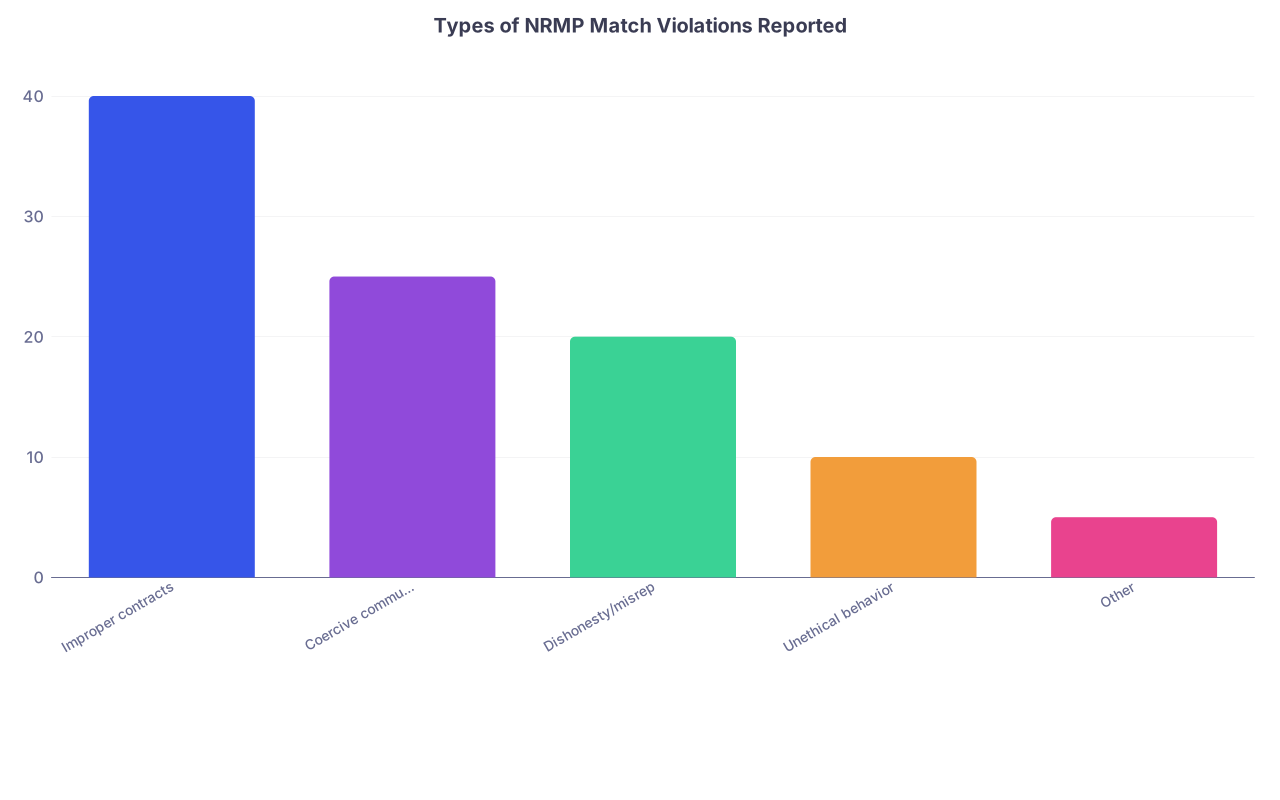
To ground this, here’s how enforcement actually looks year to year.
| Category | Value |
|---|---|
| Improper contracts | 40 |
| Coercive communication | 25 |
| Dishonesty/misrep | 20 |
| Unethical behavior | 10 |
| Other | 5 |
The biggest problem NRMP sees is programs and applicants making (or implying) binding deals outside the algorithm. The second is pressure—“If you don’t commit, we won’t rank you.” Everything else is noise.
So if you remember nothing else, remember this:
- You can say “I’m ranking you #1.”
- They can say “We plan to rank you highly.”
- Neither of you can say, “If you rank me X, I will rank you Y and we’re done,” as a condition of ranking.
That’s the line.
The Myths About “Pre-Match Offers”
Let’s take apart the phrase “informal pre‑Match offer,” because people use it to mean three totally different things—and only one is truly dangerous.
1. The “We Love You, Please Come Here” Email
You know this one. Usually arrives at 10:52 PM when you’re doom-scrolling your inbox.
“You interviewed very well. You are one of our top candidates. We hope to see you at our program next year.”
Is that a “pre‑Match offer”? No. It’s permitted, non‑binding communication of interest. NRMP has been crystal clear: programs are allowed to tell you they’re very interested, plan to rank you highly, even that you’re “in our top group.”
NRMP’s Match Communication Code of Conduct doesn’t forbid flattery. It forbids false guarantees and pressure.
You do not violate anything by receiving this. You don’t violate anything by sending something similar back like:
“Your program is my top choice and I intend to rank you #1.”
That’s allowed. Borderline cheesy, but allowed.
2. The “Soft Promise” That Pretends to Be Binding
This one drifts into gray territory:
PD: “If you tell me you’ll rank us #1, we’ll rank you to match.”
You: “If you rank me to match, I promise we’ll match here.”
Now you’re getting closer to what NRMP actually objects to: contingent behavior that attempts to pre‑arrange an outcome.
Is that going to get you dragged before the NRMP policy committee by itself? Probably not. But if there’s a complaint, this is the sort of conversation NRMP looks at and says: “Are you trying to circumvent the algorithm?”
They’re not reading your texts. But if things go sideways and someone reports a violation, “Let’s agree to match each other” is exactly what they don’t want to see.
3. The Actual Pre‑Match Contract (The Big No)
Then there’s the real landmine:
A written or clearly understood agreement—formal or informal—where you commit to work there and they commit to hire you outside the Match or regardless of the algorithm.
That’s what NRMP calls a “match commitment violation” or a “contract violation.” Example:
- You sign an employment contract or letter of intent with a Match‑participating program before Match Day that’s not clearly contingent on a Match outcome.
- A program says, “We don’t care what the algorithm says, we will take you” and you agree, then try to back out later.
This is the stuff that shows up in NRMP’s violation reports and actually leads to sanctions.
| Scenario | NRMP View |
|---|---|
| “We intend to rank you highly” | Allowed, non-binding |
| “You are our #1 choice” | Allowed, non-binding |
| “If you rank us #1, we will rank you to match” | Risky, coercive tone |
| Signing a pre-Match employment contract | Prohibited (unless contingent on Match) |
| Threatening not to rank without a commitment | Clear violation |
What the Rules Actually Say (In Plain English)
NRMP rules are written by lawyers, for lawyers. Let me translate the parts that matter to you.
1. No Contracts Outside the Match
If a program participates in the NRMP Match, they’re not supposed to make separate employment agreements with applicants that cover the same position during that Match year.
Exception: Sometimes they sign a contingent contract—something that explicitly says “effective only if you match here.” That’s generally OK, though it’s rare and usually mega‑bureaucratic.
If someone hands you a contract in January that doesn’t scream “contingent on successful Match,” that’s a screaming red flag. Back away.
2. No Pressure for Commitments
NRMP explicitly bans programs from:
- Asking you to state where you’ll rank them as a condition of being ranked.
- Saying or implying your ranking them highly is required to be ranked at all.
- Asking you to tell other programs you’re not interested.
The key is the conditional piece. A PD saying, “I hope you rank us highly; we think you’re a great fit” is fine. A PD saying, “If you don’t commit to rank us #1, we’re not ranking you” is a violation.

| Step | Description |
|---|---|
| Step 1 | Program expresses interest |
| Step 2 | Likely compliant |
| Step 3 | Potential violation |
| Step 4 | Coercion or implied deal |
| Step 5 | Any condition or pressure? |
3. No Lying or Misrepresentation
This one bites both sides.
- You can’t lie about having another offer, another ranking plan, or worse, falsify credentials.
- Programs can’t lie about their ranking intentions, number of spots, or accreditation status.
Does NRMP punish a PD for saying “You’re high on our list” when you end up unmatched? Not usually. They can’t see into people’s heads. But if someone documents a pattern of deceptive communication, NRMP can call that unethical behavior.
So… Are “Informal Pre-Match Offers” Allowed?
Let’s be precise with language, because that’s how you stay out of trouble.
Most of what med students call “pre‑Match offers” are actually just expressions of interest:
- “We will rank you to match.”
- “We will rank you very highly.”
- “You are one of our top candidates.”
These are allowed as long as they’re not tied to requiring action from you and not part of an actual side contract.
What’s NOT allowed is anything that functionally replaces the algorithm with a handshake deal:
- “We both agree now; the Match is just a formality.”
- “We’ll take you no matter what, just don’t rank other places above us.”
- “Sign this and you’re guaranteed a spot.”
If there’s a whiff of “we’re deciding this outside the algorithm,” that’s where you’re in violation territory.
| Category | Value |
|---|---|
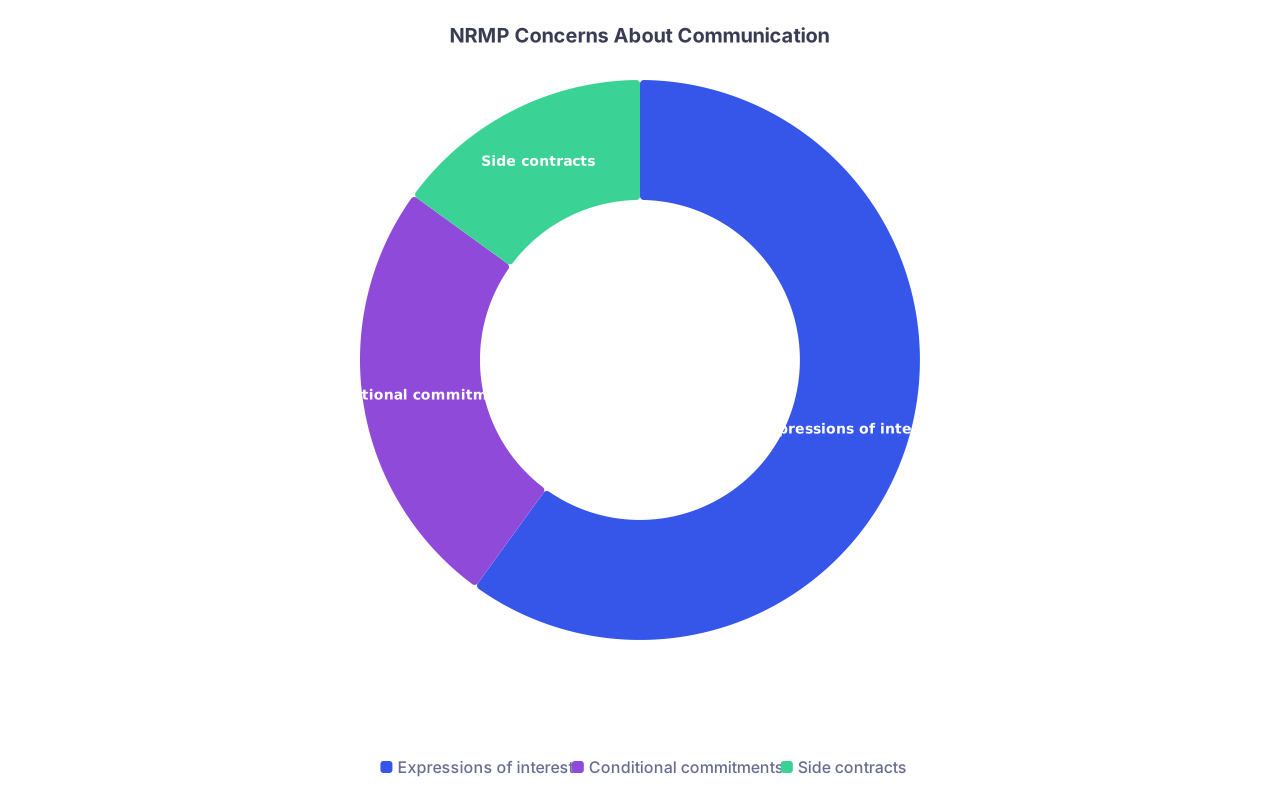
| Expressions of interest | 60 |
| Conditional commitments | 25 |
| Side contracts | 15 |
Most communication—about 60% if you talk to people who handle complaints—is just programs and applicants trying to show interest. NRMP barely blinks at that. The smaller slices—conditional commitments and actual contracts—are where the hammer falls.
How You Can Talk Honestly Without Crossing the Line
You don’t need to be a robot on the interview trail. You can be candid; you just need to avoid making promises that sound binding or conditional.
Here’s a simple rule set I’ve seen work very well.
What You Can Say Safely
To programs:
- “Your program is my top choice and I intend to rank you #1.”
- “I will be ranking your program highly.”
- “If I match here, I would be thrilled to train with you.”
None of these are contracts. None create a side deal. They are permitted and commonplace.
From programs to you (also allowed, on their side):
- “We will rank you to match.”
- “You are one of our top candidates.”
- “We expect to rank you highly.”
Again, none of these bind anyone. You shouldn’t rely on them like they’re guarantees, but they don’t violate NRMP on their own.

What You Should Avoid
Watch for language that moves from “interest” to “deal”:
- “If you rank me #1, I’ll rank you #1.”
- “We expect your commitment in return for ranking you highly.”
- “Please confirm in writing that you will rank us first.”
Now you’re implying a mutual obligation tied to ranking behavior. That’s exactly the kind of thing NRMP doesn’t want.
If a PD pushes you here, the safest response:
“I’m still finalizing my rank list, but I can tell you I’m very interested and your program is one of my top choices.”
That keeps you honest, non‑committal, and well within the rules.
What Happens If Someone Actually Violates the Rules?
Here’s the part people underestimate: NRMP is reactive, not omniscient. They don’t spy on your emails. They don’t record your Zoom calls. They act when someone files a complaint.
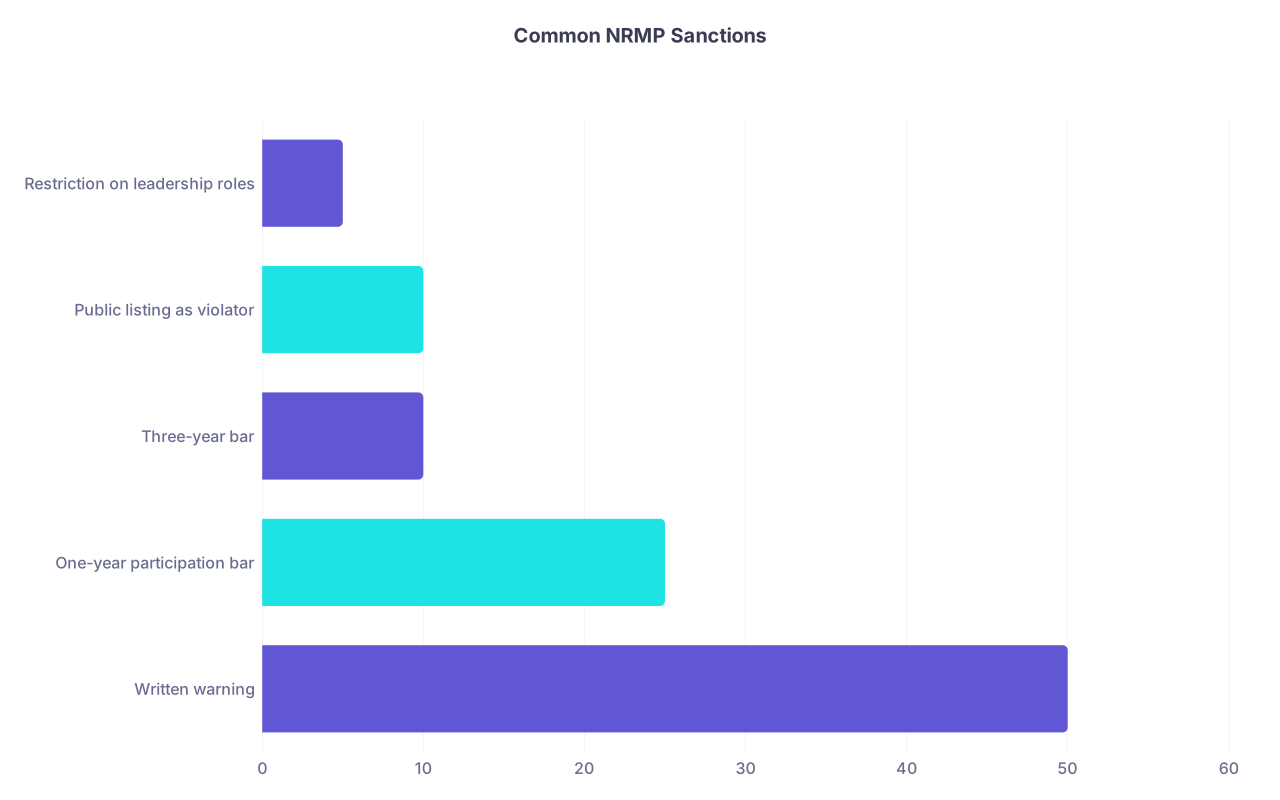
Yet when they do, they’re not shy about sanctions.
| Category | Value |
|---|---|
| Written warning | 50 |
| One-year participation bar | 25 |
| Three-year bar | 10 |
| Public listing as violator | 10 |
| Restriction on leadership roles | 5 |
The nightmare scenario:
- You and a program have a quasi‑deal.
- Something goes wrong—you don’t rank them high enough, they don’t rank you.
- One side feels betrayed and files a complaint with NRMP, with emails attached.
Now you’re explaining in writing why your “If you rank me to match, I promise I’ll rank you #1 and not consider other programs” was actually totally fine. Good luck with that.
Sanctions can include:
- Being barred from future NRMP Matches for 1–3 years.
- Being labeled a Match violator in a public NRMP report (yes, people see these).
- Programs losing spots or facing restrictions.
It’s not theoretical. I’ve seen residents forced into off‑cycle or non‑ACGME positions because they got tagged in a violation dispute. No one wins.

How to Handle a “Pre-Match Offer” in Real Life
Let’s make this concrete.
Scenario: PD Says “We’ll Rank You to Match”
You get the golden email:
“We were very impressed. We plan to rank you to match.”
Is that compliant? Yes, from their side.
What should you do?
- Don’t treat it as a guarantee. Rank list as if it doesn’t exist.
- If true, you can respond: “Thank you very much. Your program is my top choice and I plan to rank you #1.”
That’s still within the rules. You’re expressing intent, not signing a contract.
Scenario: PD Pushes for a Commitment
Phone call:
PD: “We want to rank you highly. But we need to know—will you rank us #1? We won’t rank you if you don’t commit.”
This crosses the line into coercion. NRMP specifically objects to conditioning ranking on your commitment.
You have three options:
- Give a generic, non‑committal answer.
- If uncomfortable, document the interaction for yourself.
- If things get really egregious, you can report it to NRMP later.
What you should not do is engage in a mutual “deal” that both of you know is essentially a side agreement.
Scenario: They Ask You to Sign Something
Program emails:
“We’d like to secure your spot early. Please sign this letter confirming that you’ll work here next year, independent of the Match outcome.”
Stop. This is almost certainly a violation for them and a disaster for you.
Your answer is simple:
“I appreciate your interest. Because this position is in the NRMP Match, I’m not able to enter any separate employment agreement prior to Match Day.”
End of story.

| Step | Description |
|---|---|
| Step 1 | Program sends contract |
| Step 2 | Ask for clarification, consider |
| Step 3 | Politely decline |
| Step 4 | Remain in Match only |
| Step 5 | Is it contingent on Match? |
The Underlying Truth Most People Miss
NRMP’s own algorithm works best when nobody cuts side deals.
The whole system assumes:
- You submit your true preferences.
- Programs submit their true preferences.
- No one is gaming the system with hidden contracts.
That’s not some moral stance. It’s just how the math works. Any time you start changing your ROL to honor a “deal,” you’re stepping away from the protection the algorithm gives you.
So the contrarian advice is actually the boring one:
- Ignore “pre‑Match promises” when you build your rank list.
- Rank programs in the order you actually want them.
- Don’t get cute with back‑room arrangements. They don’t help you, and they can hurt you.

FAQs
1. Can I tell a program they’re my #1 choice?
Yes. That’s explicitly allowed. Saying “I will rank you #1” or “You are my top choice” is permitted. It’s not a contract and NRMP doesn’t forbid it. Just don’t tell three programs the same thing; that’s not illegal, just unethical and stupid.
2. Is a program allowed to say I’m their #1 or that they’ll rank me to match?
Yes. Programs are allowed to express strong interest, including “We will rank you highly” or “We plan to rank you to match.” Those statements are non‑binding. They matter for vibes, not for legal guarantees.
3. What exactly is prohibited about pre‑Match offers?
What’s prohibited is making or accepting binding or quasi‑binding commitments outside the Match algorithm—especially written contracts or “we will match regardless of the algorithm” verbal deals. The problem isn’t the compliment; it’s the side deal.
4. Should I ever report a program for violating NRMP rules?
If a program asks you to sign a pre‑Match contract, pressures you to reveal or commit to your rank list as a condition of being ranked, or clearly tries to make a deal outside the Match, you can report them to NRMP. Document specifics—dates, names, emails. Use this sparingly, but don’t let blatant abuse slide.
5. Bottom line: How do I stay safe with all this?
Talk like a human. Express genuine interest. Avoid language that sounds like a deal or obligation. Never sign anything that’s not clearly contingent on the Match. And above all, build your rank list in the order you actually want programs—ignoring every “promise” you got along the way.
Key points:
Most “informal pre‑Match offers” are just interest, which NRMP allows; the real problem is side deals and coercion. You can say “you’re my #1,” they can say “we’ll rank you highly,” but neither side should treat that like a contract or condition rankings on commitments. Rank with your true preferences and let the algorithm do the job it was designed to do.


