

It’s late January. You’re on a Zoom “second look” or a casual meet-and-greet with a residency program. Things feel friendly, conversational. You’re starting to relax. And then someone drops the bomb:
“So… where are we on your rank list?”
or
“Can you tell us how highly you plan to rank us?”
or the sneaky one: “Are we in your top three?”
And your stomach just falls.
Because now you’re thinking:
If I answer honestly, could it hurt me?
If I lie, is that unethical?
If I refuse, will they hate me and drop me to the bottom?
Also — is this even allowed? Are they breaking NRMP rules?
And worst of all: Could this get me reported? Blacklisted? Unmatched?
Let’s untangle this. You’re not crazy for spiraling about this. Programs handle this badly all the time. I’ve seen smart, careful applicants panic on Zoom, blurt out something they regret, and then obsess about it for weeks.
You’re going to get a clear script, a few safe options, and a reality check on what actually matters here.
First: Are They Even Allowed to Ask About My Rank List?
Short version: No, they shouldn’t be asking. It’s not okay, and it’s against NRMP rules.
NRMP policy says programs cannot ask you how you plan to rank them or ask for any kind of commitment. They also aren’t supposed to pressure you into telling them they’re your top choice or “number one.”
Is this question common anyway?
Yes. More common than it should be. I’ve seen it:
- In “informal” Zoom socials where faculty forget there are rules.
- In 1:1 chats with PDs who phrase it as “just between us.”
- In group Q&As where everyone suddenly goes quiet because they know this feels wrong.
Here’s the annoying part: NRMP rules exist, but you are not the one who’s supposed to fix this in the moment. You don’t have to turn into the NRMP police while you’re trying to match.
You just need to:
- Not lock yourself into something that hurts you.
- Not say anything that forces you into lying later.
- Not trigger some retaliation from a petty PD.
So, yes, they’re out of line. No, you don’t have to take them on. Your job is to protect you.
The Safest General Strategy (Before We Get to Scripts)
If you remember nothing else, remember this:
You never have to give a specific rank position. Ever.
Not “you’re my #1,” not “top 3,” not “top 5.”
You can always stay vague and positive:
- Emphasize strong interest.
- Reaffirm that you could see yourself thriving there.
- Focus on fit and alignment, not rank number.
- Blame the algorithm and ongoing process.
You’re not being evasive. You’re staying within NRMP rules. And honestly, you’re also protecting yourself, because things change. You might love another program more next week. You don’t want old promises haunting you.
Exact Scripts: How to Respond Safely on Zoom
Let’s go through the actual nightmare scenarios one by one.
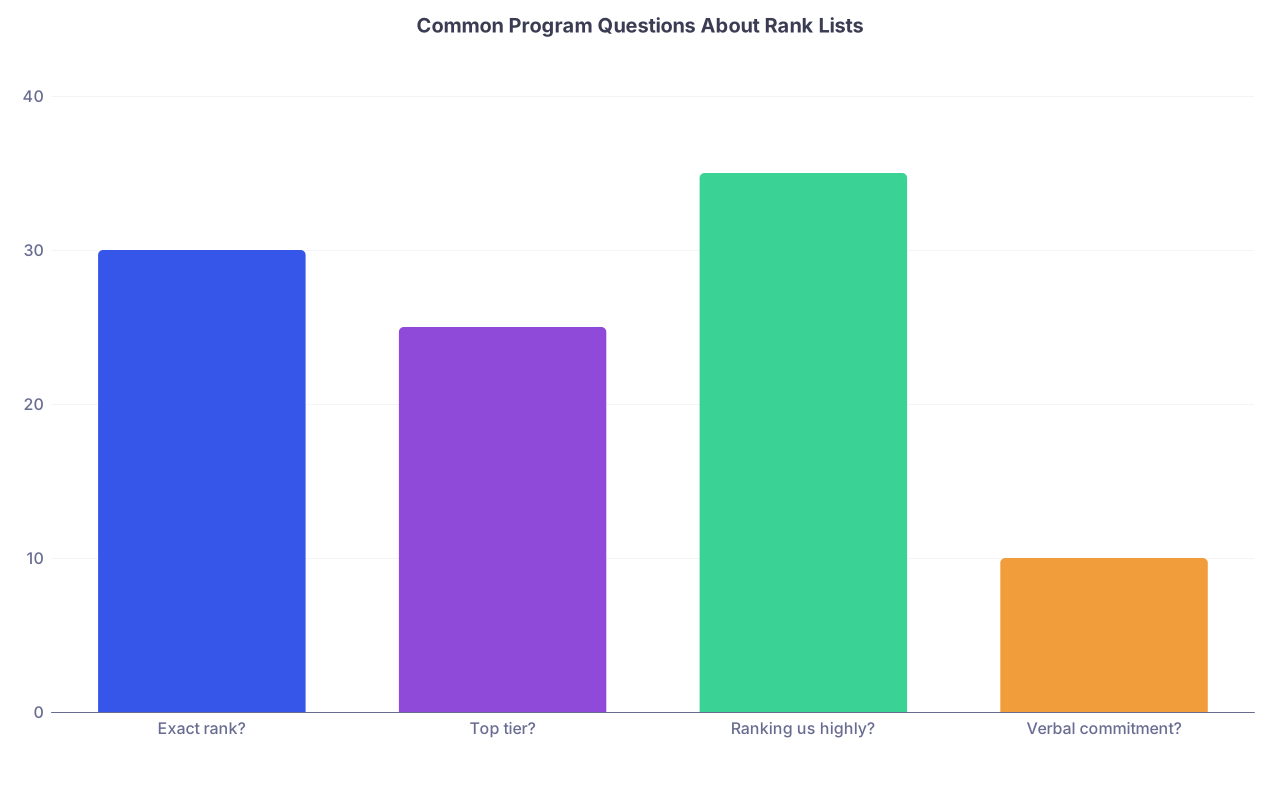
| Category | Value |
|---|---|
| Exact rank? | 30 |
| Top tier? | 25 |
| Ranking us highly? | 35 |
| Verbal commitment? | 10 |
1. “Where are we on your rank list?”
This is the blunt one. You feel cornered.
Safe answer:
“I’m still finalizing my rank list, but I can honestly say your program is one I’d be very excited to train at. I’d be very comfortable coming here for residency.”
What this does:
- You don’t commit to a number.
- You show enthusiasm.
- You don’t lie.
If they push (and sometimes they do):
“I really respect the match process and want to make sure I submit a list that reflects everything I’ve learned this season. But I can tell you that I’d be genuinely happy training here.”
You’re basically saying: I like you. I’m not breaking rules for you.
2. “Are we in your top three?” / “Top choice?”
This is more specific and more aggressive.
Option A (very safe, non-committal):
“I’m still sorting through my list, but I definitely consider your program one of the places where I can really see myself, both in terms of training and long-term fit.”
If they specifically say “top choice?”:
“I’m still in the process of finalizing, and I want to be fair to every program I interviewed at. I can tell you I’m very interested in your program and would be happy to match here.”
You’re allowed to be repetitive. You’re nervous, it’s Zoom, whatever. They’re the ones crossing the line.
3. “Will you rank us highly?”
This one is less explicit, but still about your list.
Safe answer:
“Yes, I’m planning to rank your program very competitively. I’ve really liked what I’ve seen here — the residents, the culture, and the clinical training all line up with what I’m looking for.”
“Rank very competitively” is vague on purpose. That can mean top 3, top 5, top 8 — whatever. You’re technically not lying as long as you’re not throwing them in the 20s.
4. “Are we your number one?” (The nuclear question)
This is the one that really spikes your heart rate.
You basically have three options:
Option 1: They are your #1 and you’re comfortable saying it
“I’ve really thought a lot about it, and yes — I’m planning to rank your program first.”
Know that this is a verbal signal, not a contract. You can change your mind before certification, but try not to toss around #1 casually.
Option 2: They are not your #1, and you don’t want to lie
“I’m still finalizing my list, but I can say I’m strongly considering your program near the top. I’d be very happy to match here.”
Or:
“I don’t feel comfortable giving an exact number, but your program is absolutely one of my top choices, and I’d be genuinely excited to train here.”
If they push harder, that’s actually more of a red flag about them than about you.
5. The Fake-Friendly Trap: “Off the record, where do we stand?”
Nothing on Zoom with a PD is “off the record.” Ever.
You can use the same line every time:
“To be honest, I’m still working through my list and really trying to be thoughtful about it. But I can say that this is a program I’d be very happy to match at.”
If they try to laugh it off and push more, you can gently throw NRMP process at them without using the word “rules”:
“I’m trying to be consistent in how I talk about my list with all programs, so I’m avoiding exact rankings, but my interest here is definitely sincere.”
That’s code for: I know the rules, and I’m not going to break them for you.
But Won’t They Punish Me If I Don’t Answer Directly?
This is the part that keeps people up at night. You imagine some PD thinking:
“They didn’t say we’re #1 — drop them to the bottom.”
Real talk: could some petty PD do that? Yes. There are always a few power-trippy people. But most programs are not nuking applicants who give respectful, enthusiastic, but non-committal answers.
And here’s the bigger point: you don’t want to train somewhere that needs you to break rules to feel loved. That insecure, boundary-pushing energy doesn’t magically disappear once you match. It just becomes your life.
Plus, the match algorithm favors your preferences when both sides like each other. You don’t get “extra credit” for saying “you’re #1” on Zoom. They rank you where they rank you.
Your safest move:
- Be warm.
- Be positive.
- Be consistent.
- Don’t give exact numbers unless you’re truly comfortable — and even then, you don’t have to.
Are You at Risk of Violating NRMP Rules by Answering?
This freaks a lot of people out: “If I tell a program they’re my #1, am I violating NRMP rules? Could I get reported?”
No. NRMP rules are mainly about program behavior and coercion. Applicants are allowed to:
- Tell a program they plan to rank them highly
- Say “you’re my first choice”
- Express preferences however they want
The key thing NRMP forbids is programs pressuring you or demanding commitments as a condition of ranking you a certain way.
So if you panic and say something like “Yes, you’re my top choice,” you haven’t broken the rules. You might have created an awkward situation if you change your mind later, but you haven’t committed some punishable offense.
That said: making promises you don’t intend to keep is messy and stressful. Future-you doesn’t need that.
What If I Already Said Something I Regret?
This is where the overthinking kicks into overdrive. You replay the Zoom in your head:
“I think I said they’re ‘definitely top 3’ but I’m not sure I meant it…”
“Now I love another program more — am I a liar?”
“Do I have to rank them higher because I said that?”
No, you don’t.
The NRMP match is based on the list you certify, not what you said on Zoom in a slightly sweaty panic.
Here’s the rule I’ve seen people stick to and stay sane:
- Your final rank list should reflect where you genuinely want to train. Period.
- Not who guilt-tripped you. Not who you feel you “owe” because you said nice words.
If you said something overly strong and changed your mind later, you can let it go. Or, if you’re really tortured about it, you can send a mild, non-dramatic follow-up that resets expectations without making it a big confession:
“Thank you again for the opportunity to interview. As I finalize my rank list, I continue to feel very positive about your program and know I’d be happy to train there.”
Notice what you don’t do:
You don’t mention, “I know I said top 3, but…”
You don’t write a guilt email.
You just state interest and move on.
Should I Report Them to NRMP?
You can report violations to NRMP. They do track patterns of behavior. But this is personal: you have to decide if the emotional cost is worth it.
Typical reasons people don’t report:
- Fear of retaliation (even though technically they’re not supposed to)
- Exhaustion — you’re barely holding your brain together as it is
- Worry that it won’t change anything
Reasons you might report:
- Repeated pressuring
- Explicit “if you don’t say X, we won’t rank you” type comments
- Patterns you hear about from multiple applicants
If you’re torn, write everything down for yourself: date, time, names, exact words as best as you can remember. You don’t have to act on it now. You can decide later, even after Match.
Quick Comparison: Safe vs Risky Responses
| Situation | Safer Response | Riskier Response |
|---|---|---|
| Asked exact rank position | “Still finalizing, but I’d be happy to match here.” | “You’re #1” when you’re not sure |
| Asked if top choice | “One of my top choices, very excited about it.” | “Yes, definitely my top choice” to many |
| Pressured for commitment | “I respect the match process, not giving exact ranks.” | “If you rank me high, I’ll rank you high” |
| Unsure where they stand for you | “I’d feel very comfortable training here.” | “Top 3 for sure” when it’s not true |
How to Practice So You Don’t Freeze on Zoom
Last thing you want is to hear the question, feel your brain go blank, and then word-vomit something chaotic.
Two steps that actually help:
Pick 1–2 go-to phrases now.
Something like:- “I’m still finalizing my list, but I’d be very happy to match here.”
- “Your program is definitely one of the places I can see myself thriving.”
Say them out loud. They’ll feel less clunky when you’re stressed.
Do a mock with a friend who will deliberately ask:
“So where are we on your rank list?”
Practice saying your line and not over-explaining after. Silence is okay.
You don’t need a 10-line speech. You just need 1–2 sentences you can fall back on when your anxiety spikes and your frontal lobe checks out.

| Step | Description |
|---|---|
| Step 1 | Program asks about rank list |
| Step 2 | Give vague positive answer |
| Step 3 | Reaffirm interest without numbers |
| Step 4 | Reference fairness and process |
| Step 5 | After Zoom - write down what happened |
| Step 6 | Exact rank requested |
| Step 7 | Pressure for commitment |

FAQ: 5 Very Specific Panic Questions
1. If I tell more than one program they’re “one of my top choices,” is that wrong?
No. That’s normal. “One of my top choices” is intentionally non-specific. It doesn’t mean “you are literally rank #1.” It means “you’re high on my list and I like you,” which can be true for multiple programs at once.
2. Do I have to rank a program higher because I told them they were “top 3” in a moment of panic?
No. Your rank list should reflect what you want now, not what you blurted out weeks ago. The algorithm doesn’t read your emails or your Zoom transcripts. It only reads your certified list.
3. Can NRMP punish me if I say “you’re my #1” and then don’t actually rank them first?
No. NRMP rules don’t prohibit applicants from expressing preferences. They focus on programs coercing or requiring commitments. Morally, you probably want to avoid making promises you know are false, but it’s not an NRMP enforcement issue.
4. What if I froze and actually told them my exact rank number — did I screw myself?
You didn’t screw yourself. You just overshared under pressure. You can still change your mind and change your list. The match is determined by your final list, not what you said. Next time, lean on the vague-but-true responses instead of numbers.
5. If I report a program for this, could it hurt my chances of matching there?
Technically, NRMP expects no retaliation. Reality: you’re not crazy for being worried. If you think you’d still want to match there, you might decide to wait and report later or not at all. That’s your call. Protecting your own match outcome is not selfish — it’s survival.

Key points to walk away with:
- You never have to give an exact rank position. Vague + positive is both safe and totally acceptable.
- Programs are the ones breaking NRMP rules when they push; your job is to protect yourself, not fix them.
- Your final certified rank list — not anything you said on Zoom — is what actually decides where you match.


