

It’s late. You’re staring at your sent mail folder, rereading that one email.
“Dear Dr. X, I just wanted to let you know that your program is my top choice…”
And now your brain is doing laps:
Did I just break NRMP rules?
Is this illegal?
Are they going to report me?
Can I get banned from the Match?
Is this going to show up on some permanent list that says “dishonest applicant, do not rank”?
Let’s walk through this like two people who are both a little too keyed up about the Match.
You told a program they’re your top choice. Maybe you even said “I will rank you #1.” Or “If offered a spot, I’d gladly accept.” Now you’re remembering that whole “don’t ask, don’t tell” vibe around the NRMP Code of Conduct and you’re spiraling.
Here’s the blunt version:
You almost certainly did not break NRMP rules. But there are lines here, and it helps to know exactly where they are so your brain can shut up and your future emails don’t cause more panic.
What the NRMP Actually Cares About (Not the Stories People Tell)
The NRMP is very clear about a few big things: coercion, contracts, and lying in ways that impact the Match.
They do not police every awkward “you’re my top choice” email.
What they care about most:
- Programs cannot require or pressure you to say how you’ll rank them
- You and programs cannot make side deals like “We’ll rank you #1 if you promise to rank us #1”
- Nobody can say “If you rank us #1, you’re guaranteed to match here” (that’s not how the algorithm works anyway)
- You cannot sign or imply a contract before Match Day
But expressing interest? Saying “you’re my top choice”? That alone is not a violation.
In fact, the NRMP literally says that post-interview communication is allowed, and programs and applicants can express interest. The uncomfortable, gray, anxiety-generating part is how far is too far.
So… Is “You’re My Top Choice” Allowed?
Let me answer the thing you’re scared to ask:
If you told one program they’re your top choice, or even “I will rank you #1,” you have not automatically triggered some NRMP punishment.
The NRMP is not reading your emails. Programs are not routinely reporting applicants for saying “you’re my first choice.” This is extremely common. People do it. Every. Single. Year.
Where it becomes a problem is if:
- You are clearly dishonest in a way that materially affects the Match
- You make conflicting promises to multiple programs that could burn you later if someone compares notes
- You imply some kind of binding agreement outside of the Match
Let me be more concrete.
Saying this:
“Your program is my top choice and I intend to rank you very highly.”
Totally fine. Everyone does some version of this.
Saying this:
“I will rank your program #1.”
Still not an explicit NRMP violation by itself. But now you’re shifting from “expression of interest” into “promise,” and that’s where the anxiety ramps up, especially if you change your mind later.
What would actually look bad:
“I promise to rank you #1 and not interview elsewhere if you rank me to match.”
That’s where NRMP would say: no, that’s not allowed, that’s a side deal.
Most applicants never get close to that kind of language. They just worry they did.
Did I Lie? And Does That Matter?
Here’s the uncomfortable part: sometimes you send that “you’re my top choice” email and then… you get an interview at a dream program two weeks later. Suddenly “top choice” doesn’t feel so true anymore.
Now you’re thinking:
Did I just lie? Is this an NRMP violation? Am I a dishonest applicant now?
Let’s separate ethics from NRMP rules.
From an NRMP rules perspective:
- You are allowed to change your mind about your rank list
- You are allowed to rank programs however you want, regardless of what you told anyone
- The only truly dangerous move is entering into some actual agreement to influence ranking outside the Match
From a professionalism perspective:
- Telling multiple programs “You are my #1” is… not great
- If that ever comes out, it looks bad, and people do remember
- But is the NRMP going to boot you from the Match because you told two programs they were your top choice? No. That’s not how this works.
I’ve seen applicants do this:
- October: Tells a solid mid-tier program, “You’re my #1.”
- November: Gets an unexpected interview at a big-name academic program.
- January: Realizes they’d actually rather go to the big-name place. Panics. Rereads emails 17 times.
What happens?
They rank however they want. Nothing happens with NRMP. They match somewhere. Life goes on.
The guilt sucks, but it’s not a disciplinary case.
What Actually Is an NRMP Violation Around This Stuff?
Here’s where lines get crossed.
Real problems:
- A program tells you: “You must tell us we’re your #1 or we can’t rank you.”
- Someone says: “If you rank us #1, we guarantee you’ll match here.”
- You and a program privately agree: “We’ll rank each other to match,” as a quid pro quo.
- A program pressures you repeatedly for your rank list, or hints you’ll be punished if you don’t show commitment.
On your side, an actual NRMP‑level problem would look like:
- Entering into a firm, private agreement to rank each other a certain way
- Encouraging a program to violate rules (“If you promise to rank me #1, I’ll rank you #1.”)
- Any kind of signed or implied contract about post-Match employment before Match Day
Sending a nervous “you’re my top choice, thank you for the interview” email is nowhere near that threshold.
“But What If They Report Me?”
Ok, let’s run the worst-case scenario that your 2 a.m. brain is whispering:
You told Program A: “I will rank you #1.”
Then later you match somewhere else.
Program A feels misled. They’re annoyed.
What do they actually do?
I’ve watched this play out from the program side. Here’s what typically happens:
- They roll their eyes.
- They say “Applicants always say that.”
- They maybe remember your name for 3 minutes.
- Then they move on with their lives because they matched someone else and they’re starting orientation.
Programs are jaded. A lot of them don’t trust any post-interview communication because they’ve heard every version of “you’re my top choice” under the sun.
Could a program file a violation report? Technically, yes, if they believed there was some actual Match rule broken.
Do they do this because an MS4 sent one overeager email? I haven’t seen that. It’s way more hassle than it’s worth, and they know the NRMP cares about serious behavior, not hurt feelings.
The NRMP is not in the business of chasing down every “you’re my #1” email and punishing people.
The Quiet Reality: Everyone Is Playing the “Interest Signal” Game
Here’s what’s really going on:
- Programs send vague “we’re very interested in you” emails that mean nothing concrete
- Applicants send “you’re my #1/very high on my list” emails that also may change
- Everyone knows there is some level of post-interview exaggeration
- The NRMP knows this culture exists and still focuses enforcement on actual coercion and side agreements
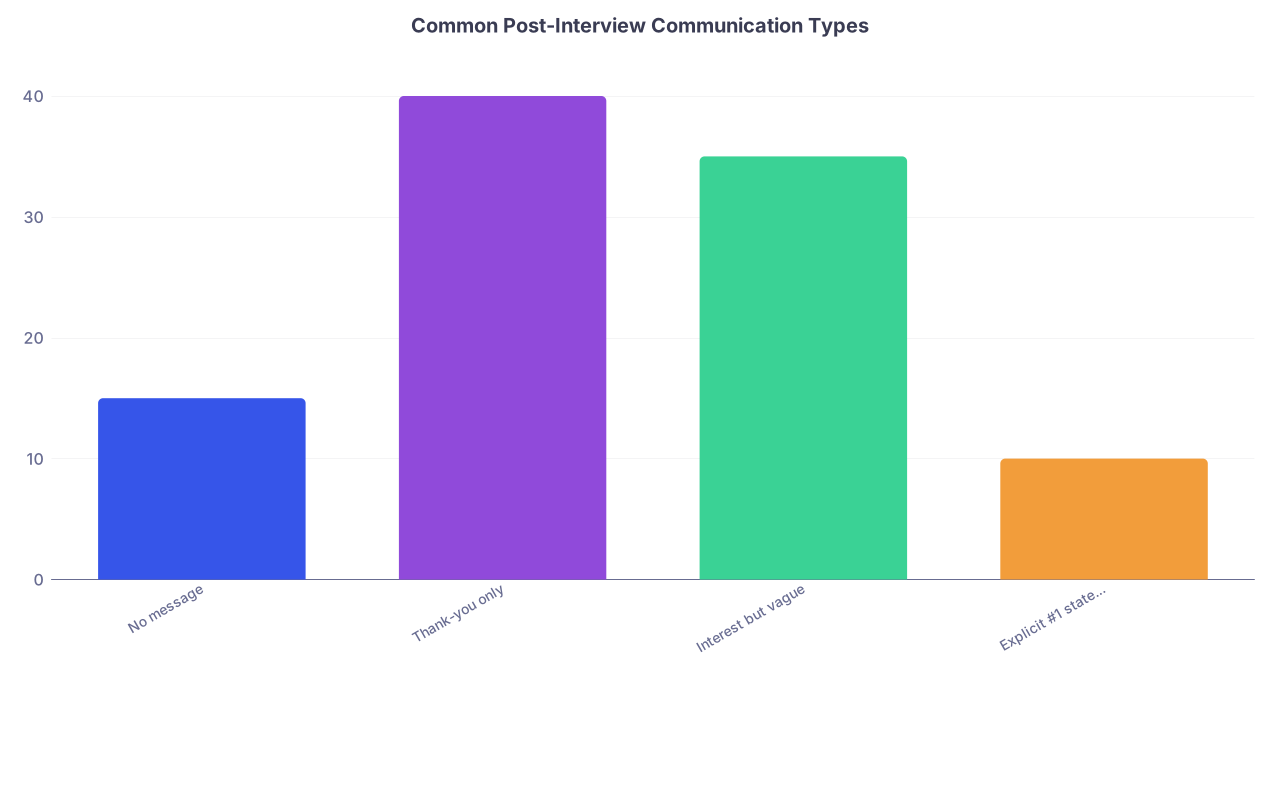
| Category | Value |
|---|---|
| No message | 15 |
| Thank-you only | 40 |
| Interest but vague | 35 |
| Explicit #1 statement | 10 |
So you telling one program they’re your top choice? You’re not some unusual outlier. You’re playing a game almost everyone is playing, you just feel guilty about it because you have a conscience.
If anything, your anxiety makes you less likely to do something reckless.
How To Phrase These Emails Without Losing Sleep
Since you’re probably still going to communicate with programs, let’s give your future self less to obsess over.
If you truly know a program is your clear #1 and that isn’t going to change, you can say something like:
“Your program is my first choice, and I plan to rank it #1.”
Is that allowed? Yes. NRMP has not banned that. It’s just a strong expression of preference.
If you want to avoid boxing yourself in:
“Your program is one of my top choices, and I’m very excited about the possibility of training there.”
or
“I intend to rank your program highly on my list.”
Those are honest, non-binding, and less likely to haunt you if life changes.
What I absolutely would not do:
- Telling more than one program explicitly: “You are my #1.”
- Writing anything that sounds like a deal (“If you rank me to match, I promise I’ll…”).
- Suggesting you’re making a legally binding commitment.
If you’ve already done one “you’re my #1” email and you now regret it, don’t send a second one. Just stop there. You don’t need to confess, you don’t need to retract. Let your rank list reflect your actual final choice.
Did I Need To Tell Them at All?
No. You never have to send this type of email.
The Match algorithm favors your preferences, not the program’s. Even if a program ranks you lower, if that’s where your preferences and their list line up, you’ll match.
A lot of people match at their #1 programs with zero post-interview communication beyond a simple thank-you. Others send love letters and don’t match there.
I’ve seen people torture themselves over whether their “commitment email” helped. Honestly? The signal probably matters at some programs, doesn’t matter at others, and is completely ignored by a lot.
But it almost never rises to the level of NRMP enforcement unless you cross into deal-making or coercion.
How This Affects Your Rank List (And What To Do Now)
Here’s the big question you’re probably not saying out loud:
“Since I told them they’re my top choice, do I have to rank them #1 now?”
No. You don’t.
The NRMP’s whole point is: you should rank programs in the order you want them, regardless of what you or they told each other.
You will not be punished for changing your mind. There is no honesty-check algorithm comparing your emails to your rank list. The NRMP is not doing forensic analysis of your “top choice” wording.
So if your feelings changed, your rank list is allowed to change with them.
| What You Told Program | Are You Allowed To Rank Them Lower Than #1? | NRMP Problem? |
|---|---|---|
| "You are my top choice" | Yes | No |
| "I will rank you #1" | Yes | No (but kind of unprofessional if repeated a lot) |
| "I promise to rank you #1 if you rank me to match" | Technically yes, but this is approaching violation territory | Potential |
| "If I match anywhere, it will be with you" (no deal language) | Yes | No |
So what should drive your rank list? Fit. Geography. Training. Your actual, current preferences. Not guilt from an email you sent two months ago when you didn’t have the full picture.
How To Calm Your Brain About This (Instead of Rereading the NRMP PDF Again)
You’re not crazy for worrying. The NRMP’s language, the weird rumors, the “this one person got in trouble ten years ago” stories—this all feeds anxiety.
Quick gut-checks you can use:
- Did I enter into a mutual agreement about rank order or a spot outside the Match? If no, you’re not in violation.
- Did anyone threaten me or say I had to reveal my rank list? If no, you’re not in the coercion territory.
- Did I make a normal-sounding expression of interest that lots of applicants do every cycle? If yes, you’re fine.
If you want to see this visually:

| Step | Description |
|---|---|
| Step 1 | Sent email to program |
| Step 2 | Potential violation zone |
| Step 3 | Normal and allowed |
| Step 4 | Probably no one cares |
| Step 5 | Do not repeat or escalate |
| Step 6 | Rank however you want |
| Step 7 | Did I promise a deal? |
| Step 8 | Did I just express interest? |
Most people are living in the “Normal and allowed” box.
What To Do Today So You Stop Obsessing About That Email
Here’s your move, right now:
Open the exact email you sent and read it once like a program director, not like a panicking applicant.
- Does it sound like: “I really like you, you’re my top choice”? That’s just an interest signal.
- Does it sound like: “If you do X, I guarantee Y”? That’s where it gets sketchier—but again, you already sent it, and almost certainly no one cares enough to make it a federal case.
Close the email. Seriously. Stop rereading it.
Open your rank list and, without thinking about guilt or promises, rewrite it in pure preference order. Where do you actually want to go?
That’s it. That’s the actionable step.
Do that right now: open your rank list draft and rearrange it based on how you feel today, not what your past self wrote in one anxious post-interview email.


