
What exactly are you allowed to say to a program director about your rank list without breaking NRMP rules—and why does it feel like they can say anything they want?
Let me ruin the cozy folklore right away: most of what you’ve heard about “NRMP violations” during interview season is either outdated, twisted, or flat‑out wrong. I’ve watched students sit in my office terrified because a faculty member said, “We’re ranking you to match,” and they thought the police version of the NRMP was about to kick in their door.
They are not.
But there are real rules. They just don’t look like the urban legends you’ve been fed.
This is the reality: there’s a power imbalance. Programs routinely push right up to the line. Applicants, scared of “being reported,” under‑exercise the freedoms they actually have. The result? You self‑censor while faculty and PDs run the table.
Let’s fix that.
What NRMP Rules Actually Cover (And What They Don’t)
The NRMP isn’t the etiquette police. It’s not there to protect your feelings from awkward emails or vaguely manipulative “we’re very interested in you” messages.
It mainly cares about three things:
- No coercion – nobody can pressure you to reveal your rank list or change it in exchange for a job.
- No lying about a binding commitment – no one can say “we will rank you to match” and then not rank you at all.
- The Match outcome is binding – once you match, you’re supposed to go there (barring serious, documented issues).
That’s the skeleton. Everything else is flesh people have added from rumor and fear.
| Topic | NRMP Reality |
|---|---|
| Asking your rank list | Explicitly prohibited |
| You stating interest | Fully allowed |
| Program stating interest | Allowed with some truthfulness constraints |
| Demanding post‑interview contact | Prohibited |
| Being nice / complimentary | Completely allowed |
Notice what’s missing: there is no rule that says “programs cannot tell you they like you” or “you cannot tell a program they’re your top choice.”
That’s lore. Not law.
Myth 1: “Faculty Can Say Anything, You Can’t Say Anything”
The myth goes like this: programs can say whatever they want because they’re powerful, but if you say the wrong sentence—“You’re my #1”—you’ve violated some sacred NRMP commandment.
Wrong.
Let’s separate what they can say and what you can say under the actual Match Participation Agreement.
What Programs Cannot Do
Programs and faculty cannot:
- Ask you to reveal how you intend to rank programs.
- Ask you to commit to ranking them first.
- Condition ranking you on any promise about your list.
- Tell you they are ranking you to match and then not rank you at all.
That last part matters. The NRMP has explicitly stated that if a program tells an applicant, “We will rank you to match,” that’s effectively a promise of a binding commitment. If they then decide not to rank you at all, that’s a match violation.
Do they still use the phrase? Yes. Especially older faculty who haven’t read the rules since the Bush administration. But if they do, the obligation is theirs, not yours.
What Programs Can Do (And Often Abuse)
Programs are allowed to:
- Say they “plan to rank you highly.”
- Say they are “very interested” or “hope you will be here in July.”
- Send you “love letters,” post‑interview, with vague praise.
- Say nothing at all after the interview.
Is that manipulative? Sometimes. Is it banned? No.
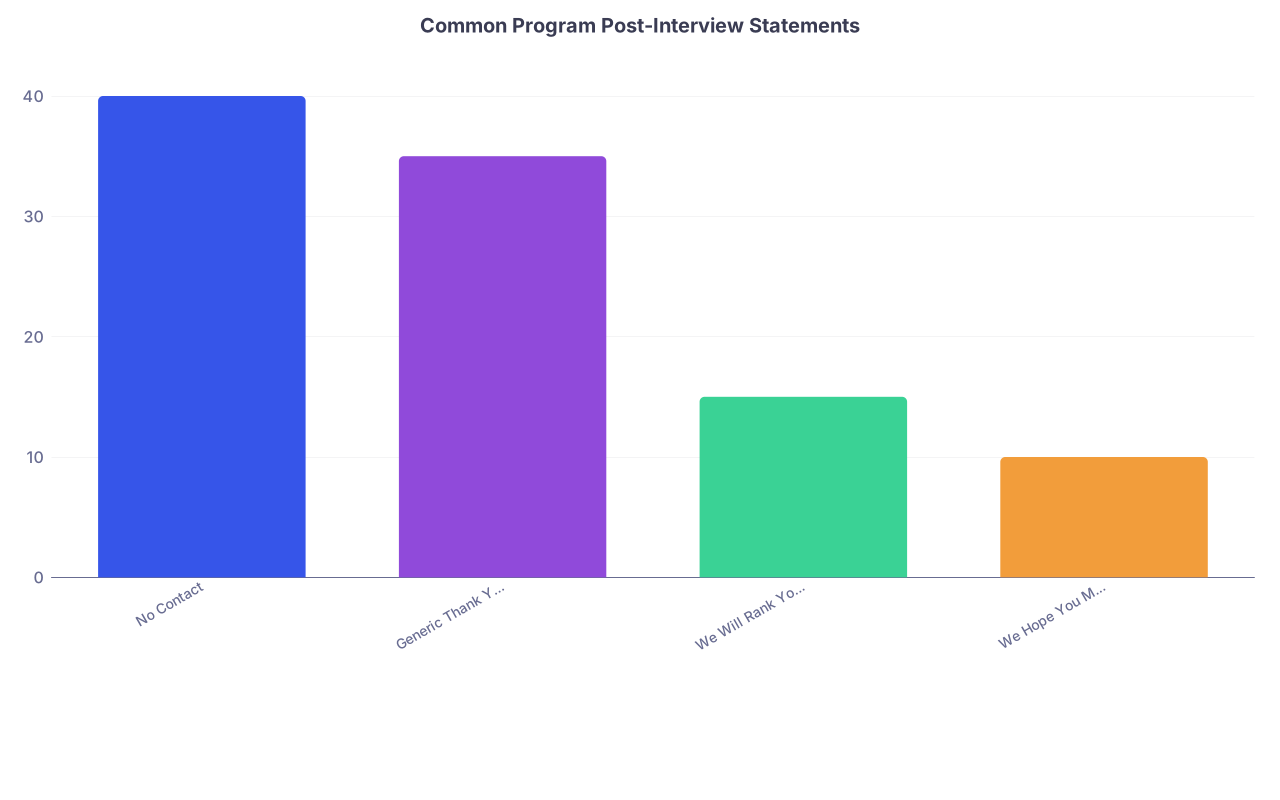
| Category | Value |
|---|---|
| No Contact | 40 |
| Generic Thank You | 35 |
| We Will Rank You Highly | 15 |
| We Hope You Match Here | 10 |
I’ve seen emails from big‑name institutions like “We intend to rank you very favorably,” copy‑pasted to dozens of applicants. It feels personal. It isn’t. It’s marketing.
What You Can Say Without Violating NRMP
You are allowed to:
- Tell a program they are your top choice.
- Tell multiple programs they are “among your top choices.”
- Send thank‑you notes.
- Clarify your interest level.
- Say, “If I match here, I’ll be thrilled.”
You are NOT allowed to:
- Enter quid pro quo agreements. For example: “If you rank me to match, I’ll rank you first.”
- Sign any “pre‑match commitment” for an NRMP specialty (this is different from SOAP or non‑NRMP matches like some fellowships).
But you can absolutely say, “You are my number one.” That’s not an NRMP violation. That’s just a strategic decision.
So the real asymmetry isn’t legal. It’s psychological. Programs bluff confidence. Applicants overestimate the rules and fold.
Myth 2: “Any Talk About Ranking Is Illegal”
You’ll hear this from anxious classmates: “We’re not allowed to talk about rank lists at all with programs.”
That’s not what the rules say.
Here’s the NRMP line (paraphrased): No one can ask you to disclose your rank list or influence how you certify it. That’s about coercion. Not casual conversation.
You can volunteer information. They just can’t solicit it as a condition of consideration.
Concrete Scenarios People Get Wrong
Let’s walk through what actually happens.
Scenario 1: You want to tell a program they’re your #1
(See also: Silent Blacklisting: How NRMP rule issues follow you across cycles for more details.)
You write: “I wanted to let you know that after completing my interviews, [Program X] is my first choice and I will be ranking you #1.”
Is this allowed? Yes.
Is it binding? Also yes—ethically. The NRMP isn’t your therapist, but if you tell a program “you are my #1,” you should not be telling that to anyone else. You don’t report this to NRMP—but you’re playing with professional trust if you lie casually.
I’ve seen PDs say in meetings, “We got a ‘you are my number one’ email from this applicant.” Some take that seriously for tie‑breaking. Some shrug and say, “Everyone says that.” You don’t control their reaction—but you’re not breaking rules by saying it.
Scenario 2: Program hints, “If you rank us highly, it will be looked upon favorably”
This drifts close to the line. They’re not explicitly asking to see your list, but they’re implying preference‑trading.
Is this clearly reportable? It’s gray. The NRMP would probably frown on it, but are you going to build a case and send documentation? Usually not. Practically, you just ignore the pressure and make your list how you want.
Scenario 3: Faculty asks, “So, where are we on your list?” in a winking tone
This is more obvious. Direct request for your rank intentions? Basically a textbook NRMP no‑no.
Your best move:
You: “I haven’t finalized my list yet, but I had a great experience here and you’ll definitely be on my list.”
You’ve answered without answering. They’ve crossed the line. You haven’t.
Myth 3: “Silence From Programs Means You’re Ranked Low”
This one isn’t about NRMP legality, but it completely distorts how people interpret the whole post‑interview period.
You see some classmates swimming in love letters. You get polite silence. You assume doom.
Data says otherwise.
Programs vary wildly in post‑interview behavior:
- Some send no post‑interview communication at all because their GME office or institutional counsel told them it’s safer.
- Some send mass‑generated “very interested” emails.
- A small minority still do old‑school personal calls or notes.
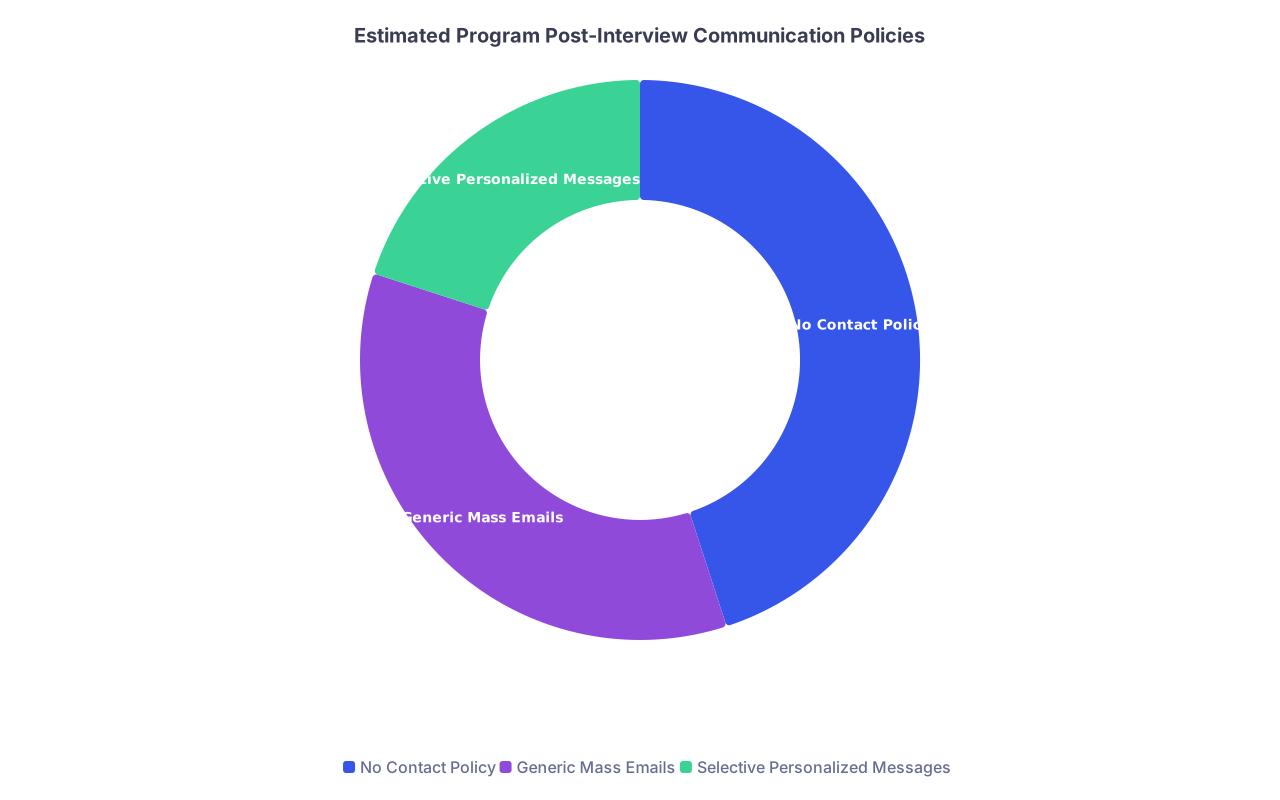
| Category | Value |
|---|---|
| No Contact Policy | 45 |
| Generic Mass Emails | 35 |
| Selective Personalized Messages | 20 |
When you look at NRMP data and post‑match surveys, you find that the predictors of matching at a program are what you’d expect: actual interview performance, file strength, Step scores, letters, fit with the program’s priorities. “Got a warm fuzzy email” isn’t on the list.
I’ve seen students match at their top choice after zero post‑interview contact. And I’ve seen people with glowing emails fall much lower on their lists. Why? Because those emails are rarely true hierarchy signals. They’re vibes.
So, no, NRMP doesn’t police who emails who. And that radio silence? Often a legal strategy from the program, not a verdict on you.
Myth 4: “If a Program Lies, NRMP Will Obviously Punish Them”
Here’s the ugly truth: enforcement is rare and usually toothless unless a program does something egregious and documented.
Yes, there have been programs sanctioned. Usually for blatant stuff—premature contracts, pressure to withdraw from the match, threatening applicants, or systematic games.
But the common everyday garbage—vague language, suggestive comments, “We like you a lot”—is almost never going to result in a formal penalty. Why?
Because you’d need:
- Written evidence.
- A clear connection to a specific NRMP rule.
- Willingness to file a complaint with your name attached.
Most students don’t want that smoke. Programs know it.
So you need a realistic mindset: NRMP rules protect the structure of the match, not you from every manipulative phrase. They keep the algorithm fair. They don’t sanitize human behavior.
You protect you.
How To Actually Navigate This Mess Without Losing Your Mind
So what do you do, practically, in a system where:
- Programs will sometimes push the line.
- Enforcement is minimal.
- Misinformation is everywhere.
You learn the real boundaries. Then you use every inch you’re allowed.
Your Safe Communication Zones
You can safely:
- Send post‑interview thank‑you emails.
- Clarify your genuine level of interest.
- Tell exactly one program they are your top choice, if that’s truly how you plan to rank.
- Update programs with substantive new information (new publication, major award, etc.).
You should avoid:
- Sending “You are my #1” to multiple programs (that’s not illegal, it’s just ethically gross and could come back to you).
- Any language that sounds like a contract or trade: “If you X, I will Y.”
- Pestering programs repeatedly for feedback or updates; that’s not illegal, it’s just a great way to annoy them.

When Faculty Say Stupid Things
You will encounter attendings who say things like:
- “You’re basically guaranteed to match here.”
- “We’re ranking you to match, don’t worry about it.”
- “Just tell them you’ll rank them #1, that’s how you play the game.”
Treat these as noise. Not gospel.
If they tell you “we’re ranking you to match,” you can quietly file that away. Does it obligate you? No. If they later don’t rank you at all, they might be on shaky NRMP ground, not you.
Your job is to remember the one rule that actually matters for you: make your rank list in the true order of your preference, independent of what you think programs are doing. The algorithm favors you when you do that. Every time you try to “game” it based on rumors and facial expressions, you hurt yourself.
The Real Power Play: Using the Algorithm, Not the Lore
Let’s talk strategy instead of superstition.
The match algorithm is applicant‑proposing. That means it tries to place you at your top choice first, then moves down only if that fails. It does not care about “being realistic” or “not overreaching.”
You know who benefits from the myth that you should be “realistic” with your rank list? Programs. Because you voluntarily give up shots at places you actually want.

| Step | Description |
|---|---|
| Step 1 | Your #1 Program |
| Step 2 | You match at #1 |
| Step 3 | Try #2 Program |
| Step 4 | You match at #2 |
| Step 5 | Try next program |
| Step 6 | Spot available and ranked by them? |
| Step 7 | Spot available and ranked by them? |
Programs often want you to believe their post‑interview signals are stronger than they are. So you’ll rank them higher. Your job is to ignore that emotional noise and answer a single question: Where do I actually want to work, if I had the choice?
That’s your rank order.
Everything else—emails, comments, side conversations—is static.
When To Actually Report Something
You’ll rarely need to. But there are cases where you should stop shrugging and start documenting.
Reportable territory includes:
- A program explicitly asking for your rank list.
- A program saying, “We will only rank you if you promise to rank us #1.”
- Being pressured to sign something that looks like a pre‑match contract in an NRMP specialty.
- Threats: “If you don’t do X, we’ll pull your rank.”
If that happens, you do three things:
- Save everything in writing.
- Talk to your dean’s office or student affairs. They’ve seen this before.
- Consider contacting NRMP directly. You’re not the first; you won’t be the last.
Will this blow up your career? Extremely unlikely. NRMP knows you’re vulnerable in this power dynamic. They’re not eager to shoot the messenger.
Stop Playing a Game You Don’t Understand
Here’s the uncomfortable conclusion.
Most of the fear you have around NRMP “rules” isn’t about the rules. It’s about power. You see faculty and PDs as people who can make or break your future. So you assume every interaction is legally loaded, and that you’re always one sentence away from disaster.
You’re not.
The NRMP is there to keep the match structurally fair, not emotionally fair. Programs will still send misleading “we like you” messages. Faculty will still say things that are technically improper. Enforcement will remain spotty.
Your best defense isn’t paranoia. It’s clarity.
Know exactly what’s banned. Use what’s allowed. Tell the truth about your preferences. Refuse to be bullied into sharing your rank list. And stop treating vague compliments as contract law.
Years from now, you will not remember the precise wording of the weird email that made you spiral at 1 a.m. You’ll remember whether you ranked programs in the order you actually wanted—and whether you trusted yourself more than the lore.


