Prestige is a drug, and premeds are hopelessly addicted to it.
Every application cycle, I see eager candidates with a 3.1 undergraduate GPA make the exact same blunder: enrolling in notoriously brutal, grade-deflating post-bacc programs at elite institutions because they believe medical schools will swoon over the brand name on their transcript.
They won't.
Admissions committees face stacks of over 10,000 applications every year. They aren't spending twenty minutes contemplating the heroic effort it took you to pull a 3.3 in Organic Chemistry II at Johns Hopkins. The AMCAS primary application flattens your hard work into a cold, unfeeling cumulative GPA and Science GPA (BCPM). An A at your local state university adds a 4.0 to your tally. A B- at an elite, curve-slashing research university adds a 2.7.
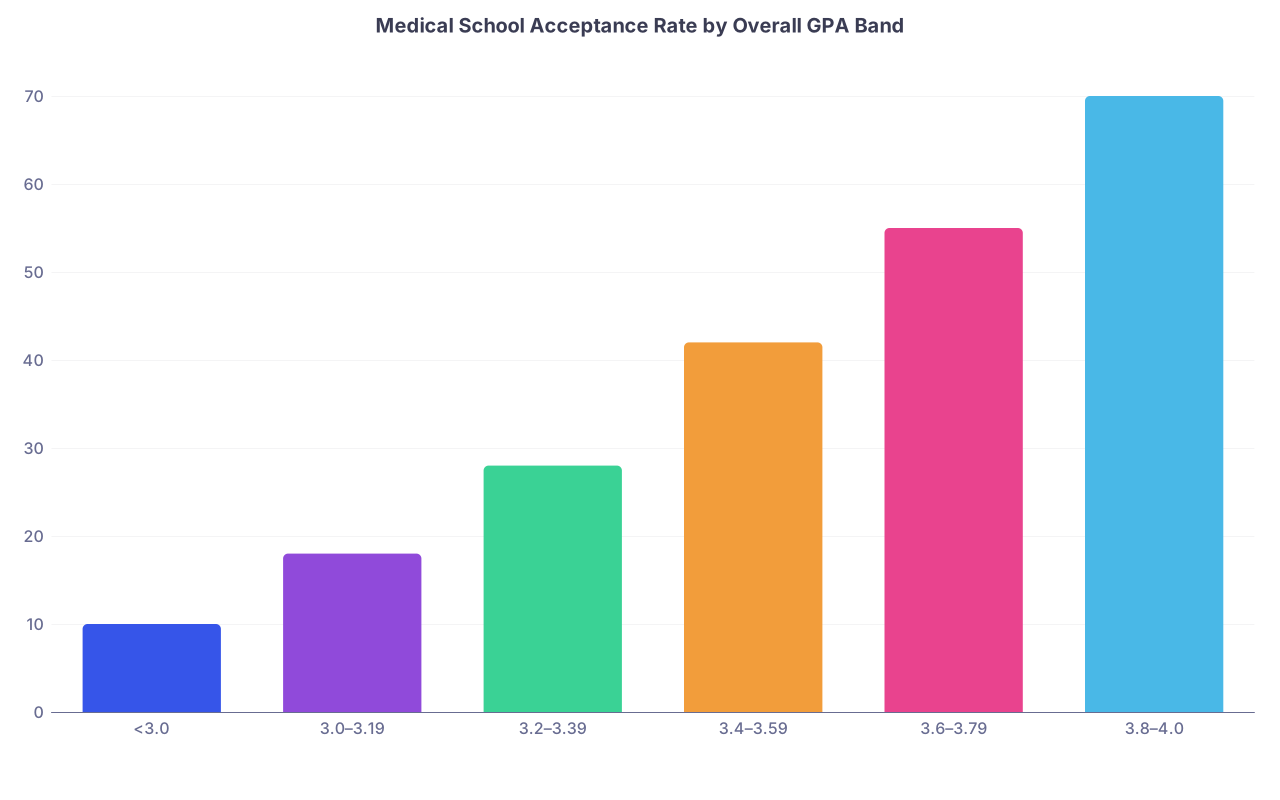
The "hard" post-bacc is a marketing masterclass designed to extract tuition dollars from anxious pre-meds. Admissions committees prioritize your GPA ceiling, the absolute highest numerical grade you can produce, over institutional brand names. A 3.8 from a grade-inflating state school or community college beats a 3.3 from a "prestigious" grade-deflating post-bacc every single time. Stop sacrificing your medical career on the altar of school pride.
Defining the Terms: Grade Deflation vs. Inflation
Let's drop the euphemisms and define what "hard" and "soft" actually mean in the post-bacc ecosystem.
When people brag about a "hard" post-bacc, they aren't describing a program that teaches superior biochemistry. They're describing institutional grade deflation. These are programs, frequently housed at top-tier research universities, where courses are curved to cap the total number of A grades at 15% or 20%. You aren't just trying to master the material. You're competing against cutthroat classmates in a zero-sum game designed to protect the university's artificial standards of "academic rigor."
Conversely, a "soft" post-bacc isn't "fake science." It refers to institutions characterized by grade inflation or straightforward criterion-referenced grading. If you learn the material and score 90% on the exams, you get an A. Period. No artificial caps. No curve designed to drop half the room into the C range to preserve institutional vanity.
The data on outcomes here is glaring. Students who enroll in grade-deflating post-bacc programs walk away with significantly lower GPAs than those who choose grade-inflating alternatives.
A 3.2 GPA in a grade-deflated program puts your application squarely in the "risky" pile for MD programs, regardless of where you took the classes. A 3.7 in a grade-inflated program clears the initial screening filters and gets your file read by an actual human being. It really is that simple.
The SMP Trap: Why 'Hard' Special Master's Programs Often Fail
If traditional grade-deflating post-baccs are dangerous, Special Master's Programs (SMPs) are nuclear reactors with failing cooling systems.
An SMP is a high-risk, high-cost gamble where you take actual first-year medical school courses alongside M1 students. The sales pitch for these programs sounds incredible: prove you can handle medical school coursework, and we'll hand you an interview. What they conveniently gloss over in the brochure is the flip side of that coin.
If you pull a 3.8 in an SMP, yes, you stand a great chance of getting accepted. But if you walk out with a 3.2, you haven't just failed to fix your low undergraduate GPA, you've actively proven to admissions committees that you struggle with medical school coursework. You just spent $50,000 to execute a headshot on your own admissions chances.
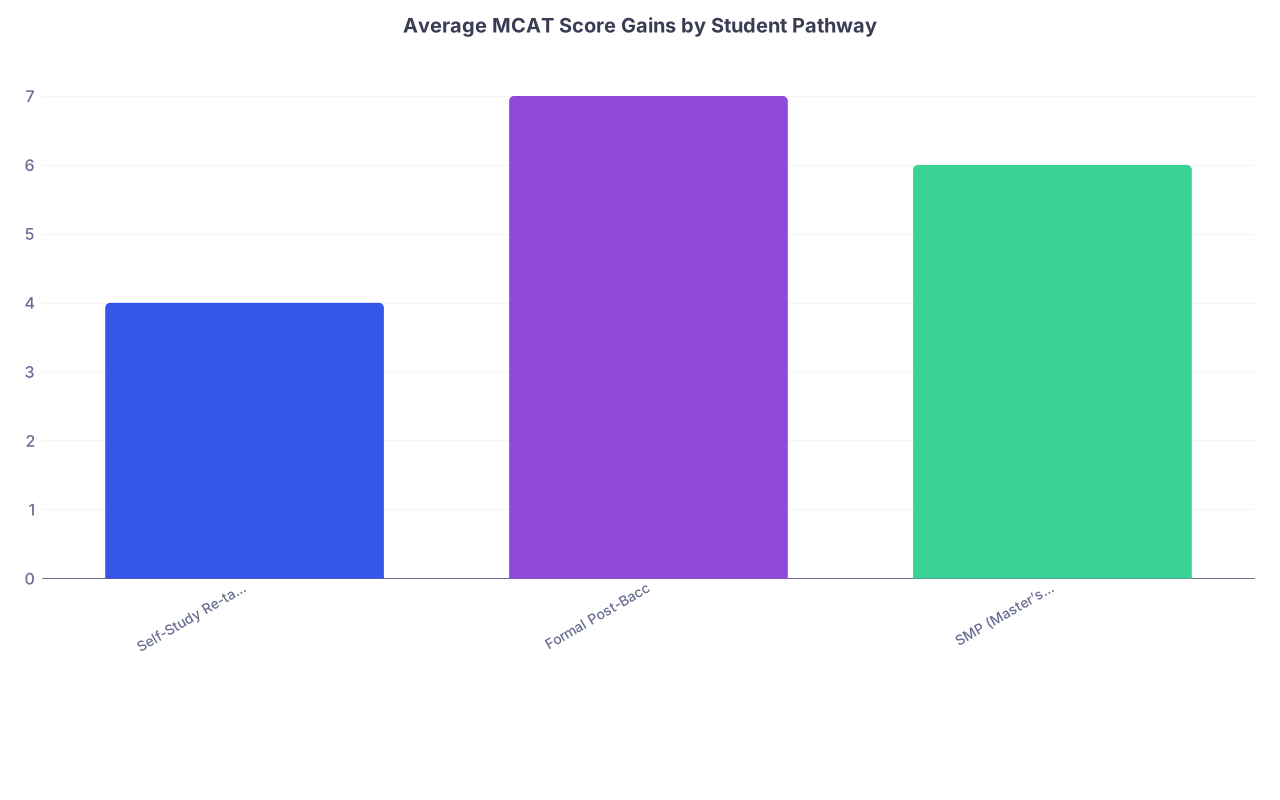
SMPs are built for a very specific applicant: someone with a solid MCAT score, a borderline GPA, and exceptional test-taking abilities who simply needs to demonstrate upper-level mastery under fire. If your baseline study skills are shaky, throwing yourself into an M1 curriculum at a high-deflation institution is academic suicide.
Unless your study habits are bulletproof and your testing ability is already proven, paying a premium for a high-stress SMP is an unnecessary threat to your medical career.
The 'Soft' Strategy: Maximizing Your GPA Ceiling
The primary goal of a post-bacc is not to prove how much pain you can endure. It's to raise your numerical GPA above automatic rejection filters.
Admissions screening software doesn't care about your suffering. It uses hard numbers. If a medical school sets an automated screen at a 3.5 science GPA, your 3.3 from an elite, ultra-hard post-bacc gets tossed into the discard pile before an admissions officer ever reads your personal statement.

The "soft" strategy isn't about taking fake classes; it's about optimizing your study environment. Taking upper-level biology, chemistry, and physics at an institution with standard grading or high grade-inflation gives you a realistic pathway to a 4.0 term GPA.
Medical schools want evidence of academic momentum. An unbroken string of 4.0 semesters demonstrates that you have figured out how to learn, retain, and perform under university-level expectations. Achieving that trend at a university that awards grades fairly is smart strategy. Choosing a path that guarantees a 3.3 out of misplaced pride is just bad risk management.
School-Specific Data: Stop Guessing, Start Researching
Before you register for a single class, stop relying on Reddit threads and forum gospel. Start looking at the actual numbers published by target medical schools.
Admissions policies on post-bacc coursework are not uniform across the country. Many state schools strictly prioritize raw numbers and care zero percent about where you completed your post-bacc coursework. Other private, elite institutions might give minor leniency for grade deflation, but even they rarely accept a mediocre GPA from a prestigious school over an outstanding GPA from a regional university.

Dig into the Medical School Admission Requirements (MSAR) database. Look at the 10th to 90th percentile GPA spreads for matriculants. If a school's 10th percentile BCPM GPA is 3.5, showing up with a 3.2 from a "hard" post-bacc means you're fighting an uphill battle you didn't need to fight.
Base your post-bacc selection on hard data: select the institution that gives you the highest mathematical probability of earning an A, tailored directly to the expectations of the medical schools you actually plan to target.
Key Takeaways
- The "hard" post-bacc prestige bump is a myth. Admissions committees prioritize your numerical GPA over the institution's brand name on your transcript.
- Grade deflation actively sabotages your application. Choose grade-inflating or standard criterion-graded programs to maximize your numerical GPA ceiling.
- SMPs are extreme-risk gambles. Unless your study habits and standardized testing abilities are already top-tier, avoid expensive master's programs that can permanently destroy your academic profile.
- Base your strategy on target school data. Use official class profiles and MSAR metrics rather than general pre-med speculation to make your post-bacc decisions.