Panic sets in when you realize you submitted an application with a typo in your ERAS contact information. You imagine program directors discarding your file because the email address listed for your Dean's office bounces. Let us clear the air immediately: a wrong contact is a clerical error, not a holistic application failure. Admissions committees evaluate your clinical grades, letters of recommendation, and personal statement. They do not rank you based on whether you accidentally typed ".org" instead of ".edu" in a secondary contact field.
The approach to fixing this is straightforward. Identify the error type, assess its impact, and correct it within hours, not days. You are dealing with an administrative bottleneck, not a career-ending catastrophe. Programs mainly evaluate your application content; contacts serve a purely operational function. Fixing them requires a protocol, not an apology tour.
What Counts as "Wrong" ERAS Contacts? Common Scenarios (and Which Ones Matter)

In ERAS, "contacts" refer to the individuals and institutions designated to receive verification requests, letters of recommendation prompts, and general communications regarding your file. It is not just your personal email. It includes your medical school registrar, dean's office, and the specific individuals tied to your letters of recommendation or clinical experiences.
The most common errors I see fall into a few distinct categories:
- The Typo: A transposed digit in a phone number or a missing letter in an email address.
- The Role Confusion: Listing a department's general front desk instead of the specific registrar or clerkship director.
- The Outdated Contact: Using an email or phone number for a supervisor who left the institution six months ago.
- The Institution Mix-Up: Sending a verification request to the hospital's HR department instead of the medical school's ERAS affairs office.
You must prioritize these by impact. A typo in a phone number is purely cosmetic; coordinators rarely call applicants during the initial screening phase. A typo in an email address tied to a Letter of Recommendation writer, however, can block document transmission entirely. If an ERAS verification email bounces, the system flags the document as unverified. That creates a silent delay that can push your application past program deadlines. Assess the error type. Is it cosmetic, or does it threaten document verification?
Reality Check: How Programs Actually Use ERAS Contacts
Program coordinators drive the ERAS workflow. They review your file, download your documents, and schedule your interviews. Contact fields exist to facilitate this logistics chain. They do not feed into the scoring rubric. A program coordinator will not reject a strong applicant because the Dean's office phone number has the wrong area code.
However, contacts do influence outcomes in three specific moments:
- Missing Document Alerts: If a program needs you to update a Medical Student Performance Evaluation (MSPE), they will email you. If that email bounces, you never receive the request, and your application remains incomplete.
- Interview Logistics: Coordinators use the provided phone numbers and emails to coordinate interview dates, send Zoom links, or offer waitlist slots. An undeliverable email here means a missed interview.
- Institution Verification Signals: If the contact information for your medical school is completely fabricated, it signals a lack of attention to detail, though programs rarely independently audit this before reaching out to you directly.
If a document request bounces or an email is undeliverable, it creates avoidable friction. The program moves on to the next applicant. You must ensure your inbox is clean and your institutional contacts are accurate to prevent these silent drops in communication.
Fix It Fast: A Step-by-Step Triage Protocol (First 30 Minutes, Then 24 Hours)
When you spot the error, do not freeze. Execute a rapid triage protocol.
Step 1 (0-10 minutes): Confirm the Error Log into ERAS. Screenshot the exact contact fields in question. Compare them against your submission preview. Do not rely on memory. Confirm exactly what is wrong. Is it the email domain? A misspelled name? Document the discrepancy.
Step 2 (10-20 minutes): Determine the Consequence Will this error block document verification, or is it merely a communication inconvenience? If you listed the wrong email for a Letter of Recommendation writer, check if the letter has already been uploaded. If the letter is already in the system, the wrong email no longer matters. If the letter is pending, you have a critical blockage. Look for any undeliverable email notifications in your own inbox.
Step 3 (20-30 minutes): Update the Fields Correct the contact fields in ERAS immediately. ERAS allows updates to certain contact information after submission. Keep a record of the timestamps and save the confirmation pages. You need proof that you initiated the correction at a specific time.
Step 4 (0-24 hours): Targeted Outreach If the error impacts document transmission or interview logistics, you must reach out. Contact your home institution's ERAS support staff first. They can manually verify documents or re-trigger automated requests. Next, email the program coordinator at the affected residency program. Do not email the program director. Coordinators manage the logistics.
Step 5 (within 24 hours): Verify and Stop Check your ERAS file status. Ensure the documents are uploading. Check your email for replies from coordinators. Follow up only once if you do not receive a response after 48 hours. Do not spam their inbox. Over-communicating makes you look anxious and high-maintenance.
What to Say: Copy-Paste Messages for Programs and Institution ERAS Support

Your communication must be professional, brief, and action-focused. Do not explain the emotional toll of the mistake. Do not accuse the system of being confusing. Provide the facts, state the correction, and ask for confirmation.
Message 1: For Program Coordinators
Subject: ERAS Contact Update, Correction Completed (AAMC ID: [Your ID])
Dear [Coordinator Name],
I am writing to notify you of a recent clerical correction in my ERAS application. I inadvertently listed an incorrect email address for [Contact Type/Name, e.g., Dr. Smith's LOR]. I updated this field on [Date/Time] to the correct address: [Correct Email].
My application ID is [Your AAMC ID]. Please let me know if you require any additional documentation or re-transmission of files on my end. Thank you for your time and assistance.
Sincerely, [Your Name] [Your Phone Number]
Message 2: For Institution/ERAS Support
Subject: Urgent: ERAS Contact Correction for [Your Name], AAMC ID [Your ID]
Dear [ERAS Support Contact],
I submitted my ERAS application on [Date] and realized I listed an outdated phone number and email for [Department/Contact Name]. I have updated the fields in the ERAS system as of [Date/Time].
Could you please confirm that this update will not affect the transmission of my MSPE or pending Letters of Recommendation? Please let me know if you need me to re-request any documents.
Thank you, [Your Name]
Common mistakes here include oversharing about why the error happened, apologizing profusely, or asking the coordinator to "expedite" your file. Do not do this. You want continuity and confirmation, not preferential treatment.
Prevention Strategy: Build a Contact-Quality Checklist So This Never Happens Again
The best fix is prevention. You need a contact audit routine before you submit your application. Do not treat contacts as an afterthought during the final hours before the ERAS opening.
Implement a validation checklist. Verify the spelling of all names. Ensure every email address is a working institutional address, not a personal Gmail. Confirm that professional voicemails are set up on all phone numbers you list. A phone that rings endlessly without a voicemail is a liability. Use consistent formatting across all fields.
Create a backup process. Maintain a private "ERAS contact source of truth" document outside of the ERAS portal. Update this document immediately after any life or institution change. If you start a new rotation, update the document. If your dean's office changes staff, update the document. When the submission window opens, you simply copy from your verified source document.
FAQ: "What if...?" Scenarios (and the Fastest Safe Actions)
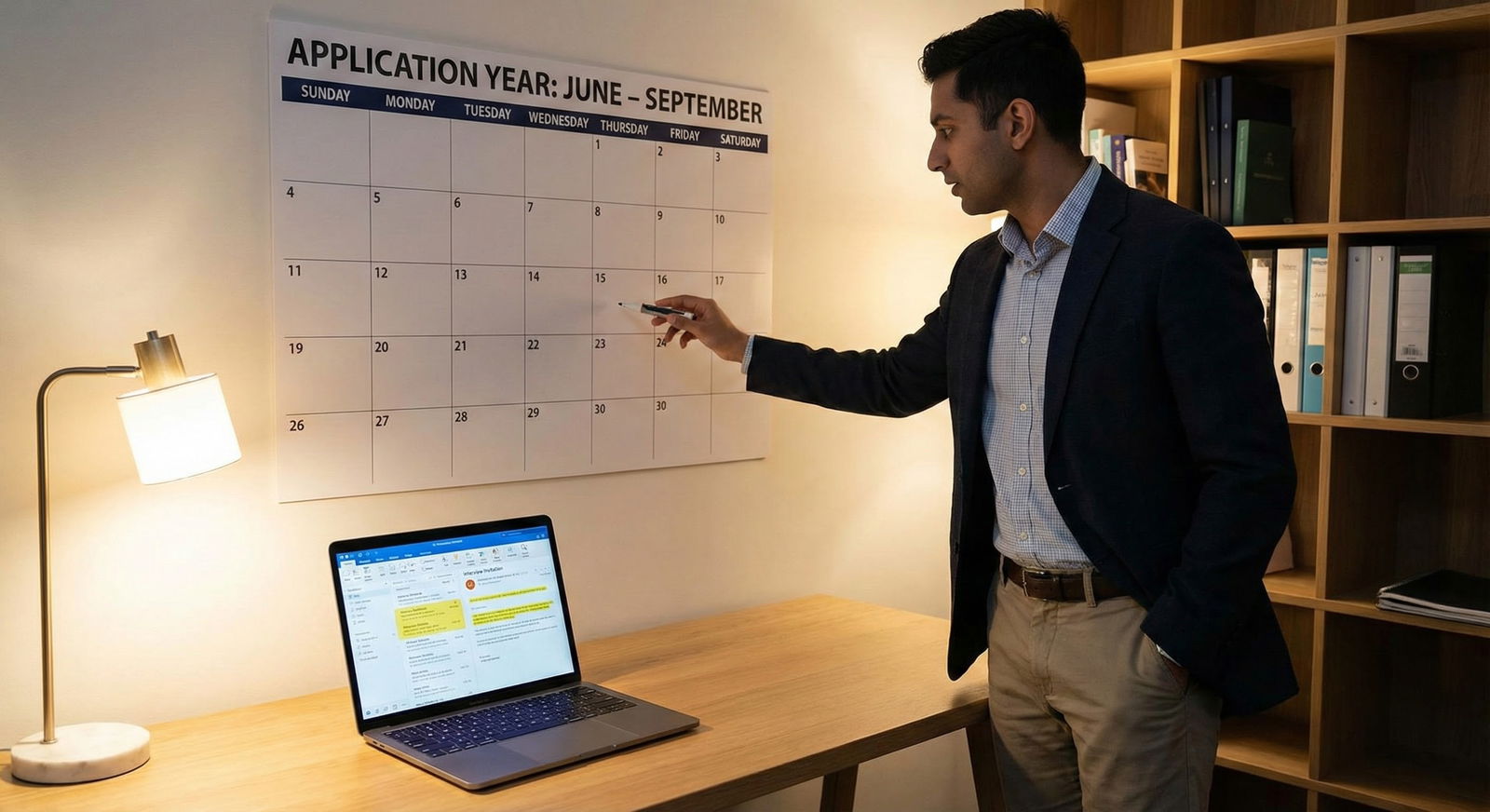
What if the wrong contact was submitted for weeks? Update it immediately. If a program already downloaded your file, they may have the wrong contact info. Send one brief email to the coordinator at programs where you are awaiting an interview, stating you have updated your contact information.
What if I correct the contact after a program already invited me? If you already received an interview, the coordinator is actively communicating with you via your primary email. The secondary contact error is irrelevant. Fix it for cleanliness, but do not panic.
What if my phone and email are inconsistent across different experiences? Standardize them. Use your primary, most-monitored email and phone number for every contact field that represents you. Only use specific institutional contacts for institutional verifications.
Treat wrong contacts as clerical fixes. Update, notify if necessary, and stop auditing compulsively.
Key Takeaways
- Treat wrong ERAS contacts like a clerical fix: confirm exactly what is wrong, correct it immediately, and verify your inbox/file status within 24 hours.
- Programs typically do not "rank" you based on contact fields. Your only real risk is missed communications, which you can prevent with targeted outreach if timing is critical.