
Educational disclaimer: This article is for general educational purposes only. It is not legal, financial, employment-contract, or professional advisory guidance. Residency scheduling, duty expectations, supervision, and employment terms vary by institution, so for situation-specific advice, consult your program leadership, GME office, union representative if applicable, or a qualified professional.
Can one weird clinic schedule change tell you a residency program is a mess? Usually, no. But if you're seeing abrupt changes over and over, with vague explanations and the same residents always absorbing the chaos, that’s not “flexibility.” That’s a warning.
I’ve seen applicants talk themselves out of their own instincts here. They’ll say, “Maybe it was just a busy week,” even after hearing that continuity clinic got moved three times in a month, attendings keep disappearing, and residents are covering holes like duct tape on a leaky pipe. One-off changes happen everywhere. Repeated disorganization is different.
So start with the actual change. Was this an isolated swap because somebody got sick? Fine. Was it a last-minute clinic cancellation, again, with residents told to “just be flexible”? Not fine. The issue isn’t inconvenience. The issue is whether the program can protect education, patient care, and your time when things get messy.
This article is for the moment when your gut says, “Something feels off,” but you’re not sure if you’re overreacting. You’re not here to panic. You’re here to read the pattern, ask better questions, and decide whether this should change your rank list, your level of concern, or your exit plan if you’re already inside the program.
Can a Sudden Schedule Change Be a Red Flag? Start With What Changed
A clinic schedule change by itself means almost nothing. Hospitals are living organisms. People get sick. Faculty go on leave. Clinics shift during holiday weeks. Someone has to cover admissions. That’s normal.
What matters is what kind of change happened.
Here’s the clean divide:
Usually normal
- A resident swaps call with notice
- Clinic hours change for a holiday week
- Seasonal patient volume changes clinic templates
- Coverage shifts during conferences or board review
- A faculty member goes on leave and the plan is explained
Potentially concerning
- Clinic gets canceled at the last minute, repeatedly
- Residents don’t know their clinic days until the week before
- The same residents keep getting pulled from educational time
- Attendings are absent and residents are expected to “figure it out”
- Nobody can give a straight answer for why this keeps happening
That last one matters more than people think. Bad programs love fuzzy language. “Dynamic environment.” “Need for flexibility.” “Things evolve.” Sure. And sometimes that’s just a polished way of saying leadership can’t plan, can’t staff, or won’t protect residents.
So if you’re an applicant or a current resident, don’t ask, “Did the schedule change?” Ask:
- How often?
- How late?
- Who gets affected?
- Was it explained?
- Did the burden fall fairly?
That’s how you separate ordinary operational noise from a real red flag.
When Schedule Changes Are Probably Operational, Not Alarming
Let’s be fair. Not every schedule disruption deserves a dramatic reading. Medicine is messy, and even strong programs have weeks where the schedule looks like it lost a fight.
Common non-red-flag reasons include:
- Faculty illness
- Maternity or paternity leave
- Seasonal census changes
- EMR transitions
- Accreditation site visits
- Resident retreat, didactics, or rotation coverage adjustments
- Temporary clinic construction or room shortages
I’ve seen excellent programs make annoying changes during an EMR conversion. Everybody was irritated. Nobody thought the program was toxic. Why? Because the leadership acted like adults. They explained the timeline, gave notice, redistributed work fairly, and made it obvious they were trying to shield residents from avoidable nonsense.
That’s what healthy flexibility looks like.
In a good program:
- changes are communicated early
- the reason is clear
- residents know who to contact
- the burden is spread fairly
- patient care is protected
- educational time isn’t casually sacrificed every week
A practical example: your continuity clinic gets moved from Thursday afternoon to Friday morning for two weeks because your attending is on leave and coverage was arranged. Annoying? Yes. Red flag? No.
Another example: during flu season, patient volume spikes, and clinic templates are adjusted for a month. But residents were told in advance, supervision remained intact, and nobody lost core learning time without a backup plan. Again, not a red flag.
The single biggest sign that a change is operational rather than alarming is transparent communication. Good programs don’t hide the ball.
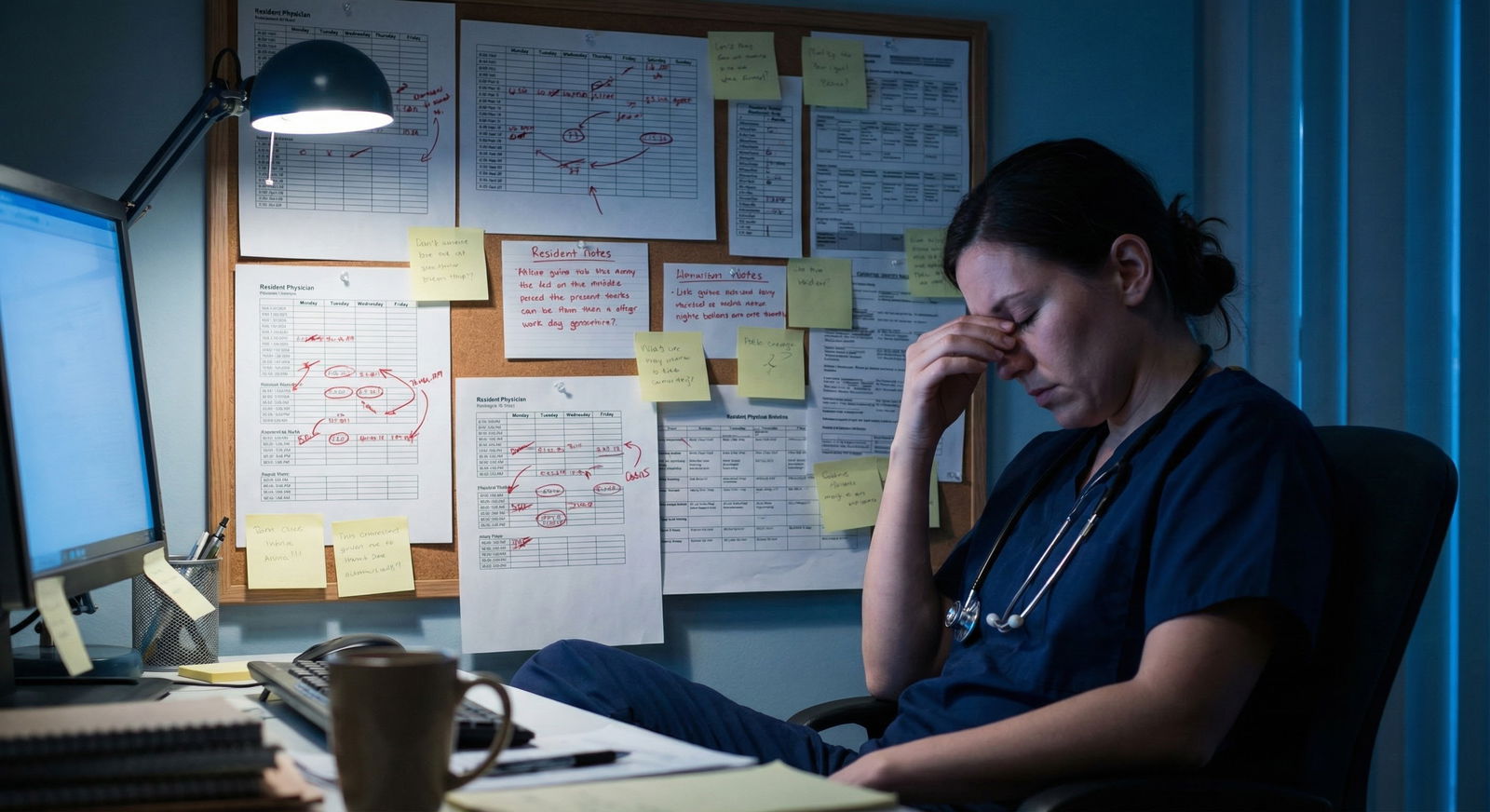
Patterns That Should Make You Pay Attention
Now the other side. The side applicants often underweight because they don’t want to seem picky.
If schedule instability is repeated, last-minute, unevenly distributed, and poorly explained, you should pay attention. That’s not random bad luck. That’s usually a systems problem.
Here are the warning signs that actually matter:
- Repeated last-minute changes
- Frequent clinic cancellations
- Residents covering for absent attendings
- Continuity clinic disrupted so often that actual continuity barely exists
- The same people always getting pulled in
- No clear explanation from leadership
- Patients getting shuffled with no stable plan
- Clinic time sacrificed for service needs again and again
That pattern can signal deeper problems:
- understaffing
- faculty turnover
- weak supervision
- poor leadership
- resident time treated as expendable
- burnout being normalized
- an education-versus-service imbalance that has already tipped the wrong way
And yes, these things travel together. A program that can’t maintain a stable clinic schedule often has other cracks: exhausted chiefs, faculty who look half-checked-out on interview day, residents who answer every quality-of-life question with a forced smile and the phrase “you get used to it.”
You don’t need perfection. No residency offers that. You do need evidence that the program can absorb disruption without dumping the cost onto trainees every single time.
Here’s the key point: the pattern matters more than the event.
One abrupt cancellation because an attending had a family emergency? Human.
Three unexplained clinic cancellations in six weeks, with residents reassigned at 6 a.m.? Bad sign.
Residents consistently losing ambulatory time to fill inpatient staffing gaps? Bigger bad sign.
This is where applicants get tripped up. They focus on whether any single explanation sounds plausible. Of course it does. Most bad systems can generate plausible excuses one event at a time. What they can’t hide is repetition.
If you’re already in the program, there’s another test I like: ask yourself whether residents seem resigned rather than surprised. When people say, “That’s just how it is here,” after another late clinic change, that’s culture. And not the good kind.
What to Ask Residents, Coordinators, and Faculty Before You Panic
If you’re interviewing or doing a second look, don’t come in swinging. You’re not cross-examining anyone. You’re trying to understand how the place functions under stress.
Ask direct, normal questions like:
For residents
- How often do clinic schedules change on short notice?
- When changes happen, how much notice do you usually get?
- Do residents ever get pulled from clinic to cover service needs?
- Is the burden spread fairly, or do certain people get hit more often?
- Has continuity clinic been stable this year?
For coordinators or chiefs
- Who communicates schedule changes, and how are residents notified?
- What’s the usual process when a faculty member is unexpectedly out?
- How does the program protect resident clinic time?
- Are cancellations mostly rare one-offs or part of a recurring staffing issue?
For faculty leadership
- How do you balance service coverage with continuity clinic?
- What systems are in place to avoid last-minute disruptions?
- Have there been staffing or clinic restructuring changes recently?
The tone matters. Don’t ask, “Why is your clinic schedule so disorganized?” That’s a great way to get a polished defensive answer and learn nothing.
Instead, try:
- “I’m trying to understand how the program handles unpredictability.”
- “How stable is clinic scheduling across the year?”
- “When there are unexpected changes, what support is built in for residents and patients?”
That framing works because it sounds like what it is: a thoughtful applicant trying to assess real workflow.
Also, don’t rely on one person. Ever. Ask multiple residents across different years if you can. Ask a coordinator. Ask faculty. Then compare the answers.
Here’s what you’re listening for:
- Do the stories match?
- Are people specific or weirdly vague?
- Does one resident say changes are rare while another says clinic gets blown up every other week?
- Does leadership describe a stable system while residents quietly hint that service always wins?
Inconsistency is information.
And pay attention to body language. I mean that seriously. I’ve watched residents answer “clinic is fine” while looking at each other like hostages reading from a script. That tells you plenty.

How to Decide What to Do If the Pattern Keeps Showing Up
Once you’ve noticed schedule instability, don’t isolate it from everything else. Put it next to the rest of the evidence.
Use this framework:
Low concern — probably move on
- one-off change
- clear explanation
- fair redistribution
- no impact on supervision or education
Moderate concern — investigate
- recurring short-notice changes
- mild inconsistency in how people describe the problem
- occasional clinic disruption tied to a real staffing transition
High concern — rank lower or rethink
- repeated unexplained cancellations
- residents regularly covering staffing holes
- clinic time constantly sacrificed
- faculty absence normalized
- resident frustration obvious
- leadership minimizing the issue
If you’re an applicant, write down what you heard right after the interview day. Not later. Later, everything blurs together and every program starts sounding “supportive” and “collegial.” Capture specifics:
- who said what
- whether explanations matched
- whether clinic instability connected to call burden
- whether there’s also faculty turnover
- whether residents seemed tired, evasive, or blunt
Then ask the bigger question: Can you tolerate this environment if it’s real?
Some applicants are fine with a scrappier program if the training is excellent and the culture is solid. Fair enough. Others want predictability, protected ambulatory time, and leadership that doesn’t improvise its way through every month. Also fair. Know yourself.
If you’re already in the program, repeated schedule chaos deserves documentation and escalation. Save emails. Track patterns. Bring concrete examples to chiefs or program leadership. Not vague frustration. Specific dates, specific effects, specific patient-care or educational consequences. If leadership responds with honesty and fixes, good. If they gaslight you, that tells you even more.
A sudden clinic schedule change alone does not prove a program is bad. But repeated, unexplained, resident-unfriendly changes absolutely deserve your attention. The real red flag isn’t the calendar move. It’s the system behind it. If the pattern says your time, your education, and your continuity clinic are always the first things sacrificed, believe the pattern before you commit.
Meta description: Can repeated clinic schedule changes signal a residency red flag? Learn which disruptions are normal, what patterns matter, and what questions to ask.