
A program can have glossy fellowship match lists, strong board pass rates, and a beautifully rehearsed interview day, yet still train residents in a supervision structure that is quietly bad. I have seen this more than once. The residents do not complain in big dramatic speeches. They just adapt. They wait longer for feedback. They ask seniors instead of attendings. They write notes for an ICU census that should have had tighter oversight. They normalize it.
That is why resident-to-faculty ratio is such a useful hidden signal. Not the brochure version. The real one.
In practical terms, resident-to-faculty ratio is how many trainees each attending is actually expected to supervise, teach, advise, evaluate, and rescue when things go sideways. That last part matters. A lot. On paper, a program may say it has 60 faculty for 36 residents. Fine. But if only 10 to 15 of those physicians are consistently present in the teaching environment, your lived ratio is completely different.
And that ratio reaches into everything applicants care about but rarely measure well before ranking: how good your feedback will be, how much true autonomy you will get versus unsafe abandonment, whether workload gets distributed rationally, and whether faculty are quietly burning out. Thin supervision changes the whole learning climate. It turns “independence” into guesswork. It weakens mentorship. It produces generic evaluations and uneven escalation culture. Bad programs hide this in plain sight.
Let me break down how to spot it before you submit your rank list.
1) Count the Faculty the Right Way, Not the Marketing Way
Programs love big numbers. “Forty-eight faculty.” “More than 70 affiliated specialists.” “Robust teaching network.” That language is usually doing public relations work, not educational work.
You need to separate four very different groups:
- Core full-time teaching faculty
- Part-time or adjunct faculty
- Moonlighters or occasional supervising physicians
- Affiliated attendings who are clinically attached to the institution but barely teach residents
These are not interchangeable. A cardiologist who appears on the department website but sees residents twice a month is not the same as a ward attending who staffs rounds, reviews plans, gives feedback, and writes meaningful evaluations. Yet programs routinely blend them together.
Here is the trick: ask yourself who residents actually see every week. Who is on rounds. Who staffs continuity clinic. Who takes overnight calls from residents. Who leads didactics without constantly canceling. That is your educational faculty pool.
Inflated ratios usually come from three moves:
- Listing every affiliated physician in a hospital system.
- Counting faculty from subspecialty silos who have little direct contact with residents.
- Including leadership heavily—the PD, APD, vice chair, director of this, associate director of that—while bedside supervision remains thin.
A program can absolutely have a smart, committed program director and still be poorly staffed where it counts. The PD cannot personally supervise every ward admission, clinic session, and ICU decompensation. Leadership headcount does not equal teaching capacity.
What I want you to do is embarrass the marketing math a little. Ask questions like:
- How many core faculty are assigned to resident education?
- On an average inpatient month, how many attendings do residents consistently work with?
- Which faculty have protected teaching time versus pure service roles?
- Are clinic preceptors the same people listed as academic faculty, or is there a gap?
If the answer sounds fuzzy, the ratio is probably worse than advertised.
2) Use the Rotation Schedule to Infer Supervision Reality
The rotation schedule tells the truth even when interview day does not.
If one faculty member is responsible for inpatient rounds, resident clinic staffing, and a consult service in the same block, that is not robust supervision. That is split attention dressed up as flexibility. And residents feel it immediately.
Start with the highest-risk rotations:
- ICU
- Night float
- Busy ward services
- ED-heavy admitting blocks
- Consult rotations with high volume
- Continuity clinic sessions packed into already overloaded weeks
Look for places where faculty presence is intermittent. Maybe the attending rounds in the morning and disappears into procedural time or administrative meetings. Maybe the overnight structure is “senior resident first, attending as needed,” which can be acceptable in some contexts but dangerous if the service is high acuity and the attending is hard to reach. Maybe teaching is compressed into a rushed sign-out because nobody has bandwidth for real case review.
That is how bad ratios hide. Not globally. Locally.
A program may have a reasonable overall number of faculty per resident for the academic year, yet still run several critical rotations with chronically thin supervision. That matters far more than the annual brochure ratio.
Specific patterns that should make you nervous:
- One attending supervising too many residents across multiple sites
- Large stretches of resident-driven care on unstable patients
- Overnight escalation routed through senior residents because attendings are inconsistently reachable
- Clinic precepting bottlenecks where residents wait excessively for sign-off
- Frequent phrases like “you learn to be very independent here”
That last one. I have heard it countless times. Sometimes it means strong graduated autonomy. Often it means the faculty are stretched thin and everyone has agreed not to say that out loud.
3) Compare the Ratio to Clinical Volume and Service Complexity
A low resident-to-faculty ratio is not automatically safe. That number means almost nothing if the service volume is crushing.
Let me be blunt: ratio without workload context is junk data.
You need to know how many residents each attending supervises per service and per shift, not just how many trainees and faculty exist in the department overall. One attending for three residents in a low-volume outpatient block may be perfectly fine. One attending for three residents managing a packed ICU, multiple rapid responses, and nonstop family meetings is an entirely different situation.
Ask about:
- Average patient census per team
- Admission volume per call day
- ICU bed count and typical resident load
- Consult volume per shift
- Number of sites covered simultaneously
- Whether attendings supervise more than one team at once
Mismatch patterns are predictable. I have seen them most often in:
- Safety-net hospitals with extraordinary throughput and social complexity
- Large ICUs where one attending oversees too many active learners and too many unstable patients
- Consult services where residents carry paging burden across multiple specialties with limited bedside attending presence
- Hybrid academic-community systems where service needs quietly outrun faculty teaching bandwidth
Notice the point in that comparison: the ICU may have a numerically “better” ratio than the ward, yet still impose far more supervision pressure because of acuity and volume. That is the trap.
A smart applicant asks, “On your busiest inpatient service, how many residents does one attending directly supervise at a time?” Then ask the same question for nights, ICU, and consults. If they can only quote annual faculty totals, they either do not understand the issue or do not want you to understand it. Neither is reassuring.
4) Look for the Feedback Clues That Reveal Faculty Bandwidth
Programs reveal faculty bandwidth through feedback. Always.
If residents consistently get timely, specific, behavior-based feedback, that usually means faculty have enough capacity to observe them, remember what happened, and care enough to write something useful. If evaluations arrive late, read like boilerplate, or say things like “pleasant resident, progressing appropriately,” faculty are overextended. That is not a culture quirk. That is a staffing signal.
Watch for these clues:
- Evaluations released weeks late
- End-of-rotation comments that could apply to literally anyone
- Milestone reviews that feel formulaic
- Residents unable to identify a faculty member who truly knows their work
- Difficulty securing strong letters because attendings rotate in and out too fast
I have reviewed resident files where the whole year of feedback could be summarized as “works hard.” That is not mentorship. That is administrative residue.
Thin faculty bandwidth also creates a specific kind of educational damage: residents can perform adequately on service while quietly falling behind in reflective growth. Nobody sits down to say, “Your presentations are efficient, but your assessment still lacks prioritization,” or “Your escalation threshold is too high in unstable patients.” That level of feedback requires repetition, observation, and time. Programs with unsafe supervision ratios usually cannot deliver it reliably.
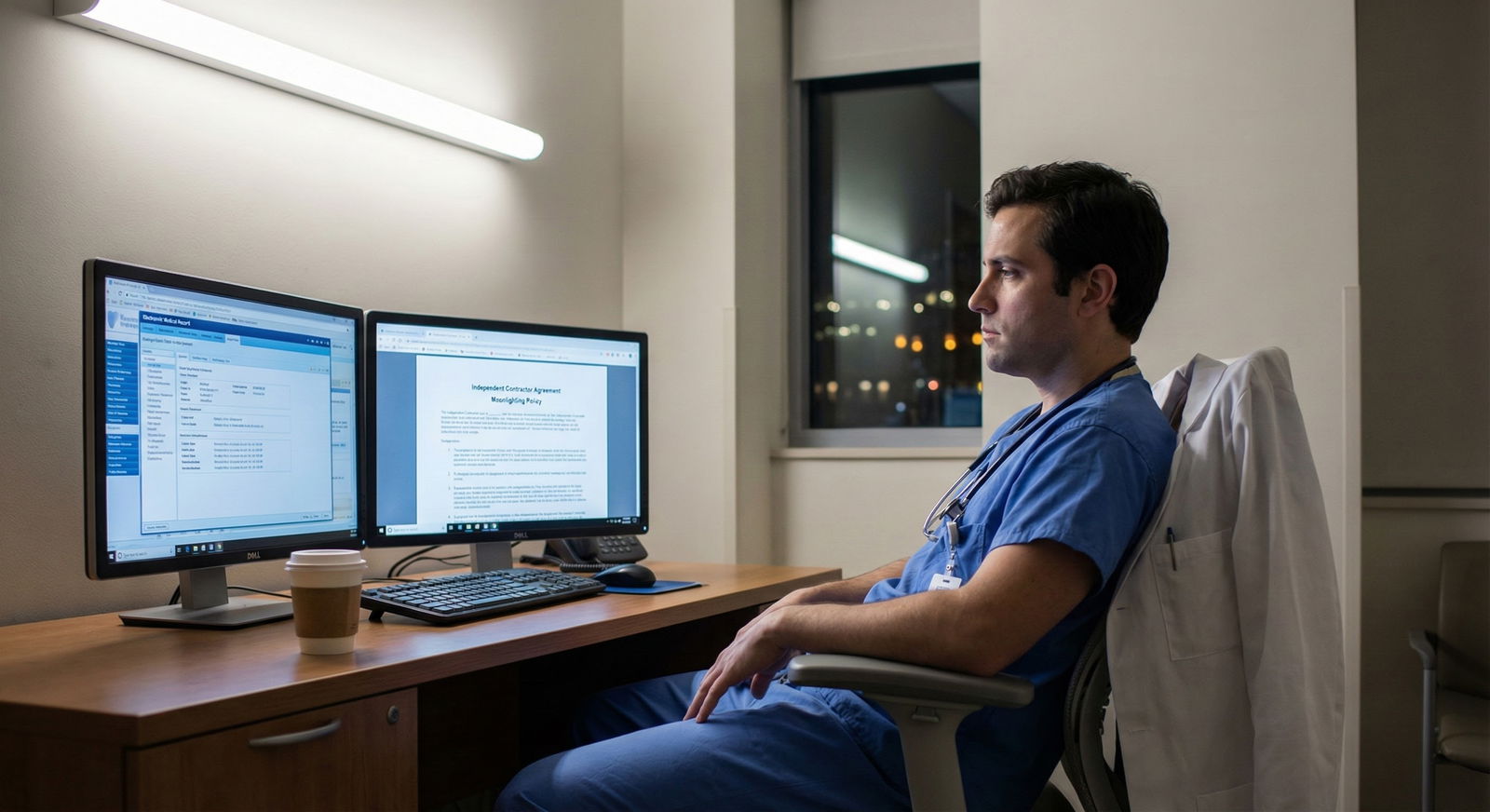
And yes, weak feedback eventually shows up downstream: thin letters of recommendation, vague mentorship, uneven fellowship advising, and residents who know they are undercoached but cannot prove it.
5) Investigate Whether Residents Are Filling the Faculty Gap
One of the most common bad-program adaptations is this: senior residents quietly function as substitute faculty.
That can sound flattering. It is not. At least not when it becomes structural.
Healthy graduated autonomy means seniors teach interns, triage routine questions, and develop leadership. Good. Necessary. Unsafe delegation is different. That is when seniors are effectively handling supervision, escalation, and sometimes de facto sign-off because attendings are too absent, too overloaded, or too difficult to contact.
The line becomes obvious if you ask the right questions.
Red flags include:
- Interns saying, “We usually ask the senior first and only call the attending if we really have to.”
- Seniors describing themselves as the main source of overnight clinical guidance
- Chiefs repeatedly patching operational holes that should be covered by faculty
- Residents speaking with pride about running the service “on our own” in settings where patient acuity makes that unacceptable
I have seen interns normalize bizarre things. Waiting too long to escalate respiratory decline because “that is just how nights work here.” Asking co-residents for management decisions that required attending input. Getting more teaching from a burned-out PGY-3 than from faculty all month.
That is not strong training. That is a supervision gap with a heroic resident culture layered on top of it. Heroic cultures burn people out.
6) Ask About Faculty Turnover, Vacancies, and Protected Time
A decent ratio today can become a bad ratio six months into intern year if the faculty roster is unstable.
Programs rarely volunteer this cleanly. They talk about “growth” or “transition” or “new recruitment efforts.” Translate that. Sometimes it means they lost key people and have been covering the holes ever since.
You should ask directly about:
- Recent faculty departures
- Unfilled teaching positions
- How long open roles typically stay vacant
- Whether faculty have protected time for teaching, mentorship, and evaluations
- How often attendings are pulled away by clinical overwork
Because headcount on a website means nothing if half the teaching faculty turned over in the last two years.
Protected time matters just as much as retention. A faculty member with zero real educational bandwidth is functionally unavailable, no matter how many committees they sit on. Programs that underinvest in protected teaching time often compensate by praising “resident ownership.” Again, same trick. Different packaging.
Stable faculty create continuity. They know the residents longitudinally. They notice patterns. They write credible evaluations. They can tell whether you are becoming a safe, thoughtful physician. If a program cannot keep those people, do not assume your experience will be fine because the institution has a prestigious name. Prestige does not round on patients at 2 a.m.
7) Use Interview Season Questions to Pressure-Test the Ratio
This is where applicants often get timid. Do not.
You are not being difficult by asking how supervision works. You are asking whether the program is safe, teachable, and worth several years of your life. That is the correct level of seriousness.
Here are the highest-yield questions:
- On wards, ICU, nights, and clinic, how many residents does one attending typically supervise at a time?
- Which rotations have in-person attending presence throughout the day versus intermittent staffing?
- How quickly are evaluations completed after a rotation?
- How are struggling residents identified if faculty contact is limited on some services?
- How easy is it to find a faculty mentor who knows your work longitudinally?
- In overnight or high-acuity situations, what is the actual escalation pathway?
Then cross-check the answers.
If faculty say supervision is excellent but residents say, “You mostly learn by figuring it out,” believe the residents. If leadership gives precise answers and residents independently confirm them, that is reassuring. If everyone gets vague or defensive—bad sign. If they answer with culture slogans instead of staffing specifics—worse sign.
The best off-schedule question is often the simplest: “Are there rotations where you feel faculty are stretched too thin?” Residents who trust you will answer that honestly, especially away from faculty.
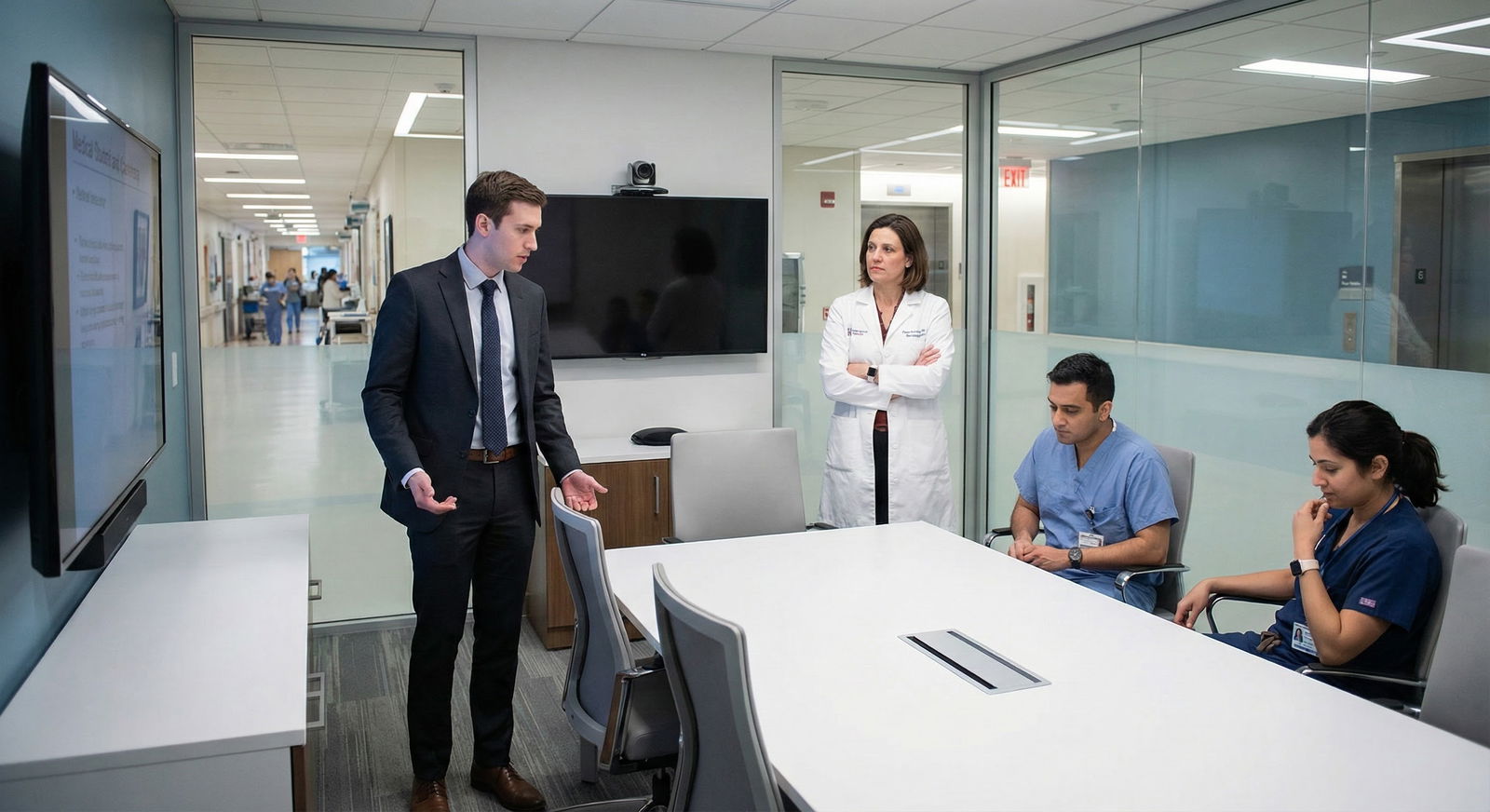
My ranking framework is blunt:
- If a program clearly explains who supervises whom, where, and when: good.
- If residents describe timely feedback and reachable attendings on high-risk rotations: better.
- If faculty are stable and teaching time is protected: strong signal.
- If the program cannot explain its supervision structure cleanly: red flag.
- If the explanation depends on resident heroics: rank it lower.
That is not nitpicking. That is pattern recognition.
Summary
Resident-to-faculty ratio is not just a number. It is a proxy for supervision quality, educational depth, feedback reliability, and whether the program is staffed safely enough to train physicians without quietly grinding them down.
The cleanest way to evaluate it before ranking is to stop accepting headline faculty counts at face value. Count the real teaching faculty. Audit the rotation schedule. Compare supervision to patient volume and service complexity. Look at the feedback culture. Figure out whether residents are compensating for absent attendings. Ask about turnover and protected time. Then pressure-test all of it during interviews.
Good programs can explain their supervision structure specifically. Bad ones hide behind prestige, volume, and slogans about independence.
Trust the structure. Not the brochure.