

If a residency’s rotation schedule looks “clean” and simple, that is often a bad sign.
Let me be blunt: hidden or missing rotations are one of the most reliable structural red flags in a residency program. They are not glamorous. They are not on the website splash page. But they will determine whether you graduate as a competent, independent physician or someone who has to quietly catch up during fellowship—or, worse, in practice.
I am going to walk through the specific curriculum gaps that should make you pause, ask pointed questions on interview day, and sometimes walk away from a program even if everyone you meet seems “nice.” Because nice does not fix structural under-training.
1. Why Missing Rotations Matter More Than “Vibes”
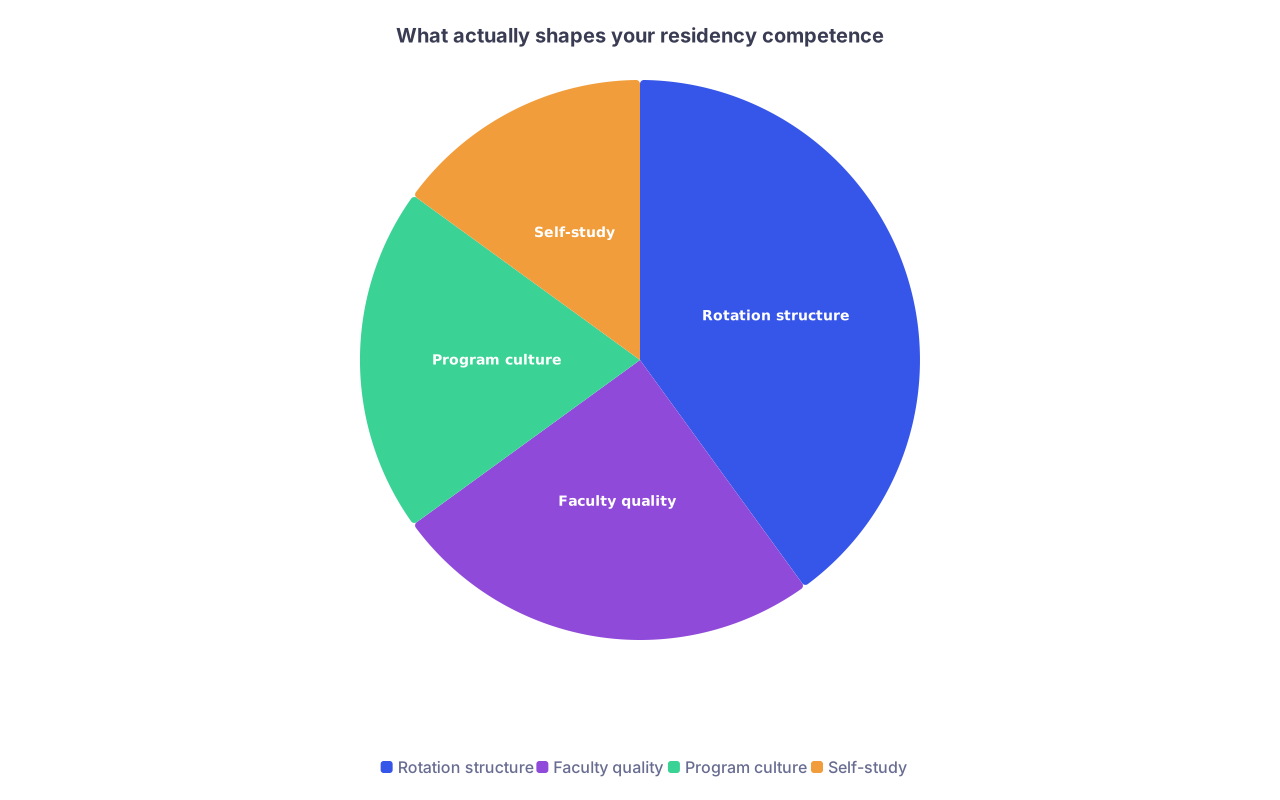
| Category | Value |
|---|---|
| Rotation structure | 40 |
| Faculty quality | 25 |
| Program culture | 20 |
| Self-study | 15 |
You can survive a mediocre didactic curriculum with good rotations. You cannot fix a fundamentally hollow rotation structure with good noon conferences and UpToDate.
Rotation gaps matter because they are:
- Systematic, not random
- Hard to “self-correct” as a resident
- Often signals of deeper problems: financial strain, poor leadership, or lack of institutional support
I have watched residents scramble to meet ACGME case minimums in the last six months of training because no one tracked their exposure until it was almost too late. Those residents were not lazy. Their curriculum was broken.
So when you look at a program, stop thinking only in terms of “prestige” and “brand” and start asking: What will I actually see and do, and what is missing that every modern physician should know?
2. Core Gaps That Should Raise Immediate Concern
These are not fringe “nice-to-have” rotations. These are core clinical experiences that, if missing or drastically under-represented, should set off alarms.
2.1. Missing Night Float or True Overnight Experience
I have heard this sales pitch too many times:
“We really value wellness, so we minimized nights.”
Translation in some places: “We do not have enough volume or faculty to run a safe, real 24/7 service.”
You should be worried if:
- There is no night float at all in a field that normally requires overnight in-house coverage (IM, EM, surgery, OB, anesthesia, peds).
- Nights are covered almost entirely by moonlighters or fellows, with residents rarely taking front-line responsibility.
- “Night rotation” is a token week or two per year.
Why this is bad:
- You do not learn how to manage sick, decompensating patients when staffing is thin and support is limited.
- You will be dangerous as an attending doing your first solo nights.
- It often reflects low-acuity, low-volume hospitals trying to pretend they are full training environments.
Ask explicitly:
“How many weeks of night float do residents do each year? Who is in-house at night (resident vs hospitalist vs moonlighter vs APP-only)?”
If they dodge or give vague answers, pay attention.
2.2. No Real ICU Exposure (Or Token ICU Rotations)
Critical care is not optional in modern medicine. Even if you never step foot in an ICU again after residency, you will stabilize ICU-level patients in the ED, on the floor, or in the OR.
Red flags:
- Less than 2–3 months of ICU over the entire residency in IM, EM, surgery, anesthesia, or peds.
- ICU staffed almost exclusively by non-intensivist hospitalists or APPs, with residents as note-writers.
- No dedicated MICU/SICU/NICU/PICU where relevant to your specialty.
- “ICU” is actually a step-down / high-acuity floor masquerading as an ICU.

Programs will say: “You still see really sick patients on the floor.” That is often code for, “We do not have enough ICU beds or intensivists to run a real unit.”
In internal medicine or surgery especially, a missing or anemic ICU experience is a deal-breaker if you want to practice independently in any hospital that is not a boutique clinic.
2.3. No Dedicated Emergency Department Time (When Your Specialty Needs It)
For some specialties, ED exposure is nice but not mandatory. For others, it is non-negotiable.
Be concerned if:
- Internal Medicine: no ED rotation at all, or a single scattered week disguised as “admissions” with no formal teaching. You should have at least 1–2 months total of ED exposure.
- Pediatrics: no pediatric ED rotation, especially if the hospital offloads most pediatric emergencies elsewhere.
- General Surgery: no trauma bay / ED consult experience, or it is entirely run by another service while you sit in the OR.
Why this matters:
You need to learn how patients enter the system, how to triage, and how to quickly decide admit vs discharge vs observation. If you only meet patients as neatly packaged admissions, you miss the most chaotic and educational part of medicine.
2.4. Weak or Missing Ultrasound Training (Across Several Specialties)
Point-of-care ultrasound (POCUS) is no longer a toy. It is core skill in EM, critical care, anesthesia, hospital medicine, and increasingly even outpatient specialties.
Red flags:
- No formal ultrasound rotation or curriculum in EM or critical care–heavy IM.
- No documented ultrasound scans logged or required (for EM, this is malpractice).
- Only “see one, do one” ad hoc teaching without structure or competency assessment.
Programs that are serious about POCUS will show you:
- Dedicated ultrasound faculty
- Scheduled scanning shifts
- Scan log requirements and QA sessions
If they shrug and say, “You can pick it up on shift,” that is lazy and outdated.
3. Specialty-Specific Curriculum Gaps That Predict Trouble
Now let me break it down by specialty. Because a “missing” rotation in dermatology means something very different than a missing rotation in surgery.
3.1. Internal Medicine: The Big Four Missing Pieces
For IM, there are four curriculum holes I see too often.
3.1.1. No Real Continuity Clinic (Just Random Outpatient Weeks)
If your “continuity clinic” is actually:
- Different clinic sites every block
- Preceptors changing constantly
- Panels that are never truly “yours”
…you are not learning outpatient medicine. You are doing serial shadowing.
You should have:
- A stable primary clinic site.
- A meaningful patient panel that you follow across years.
- Protected time that is not cannibalized by inpatient demand.
If a program seems proud that their residents “don’t have much clinic,” that might sound attractive when you are tired. It is a long-term disaster if you ever want to practice outpatient or hospitalist medicine competently.
3.1.2. Missing Key Subspecialty Rotations
Look for actual, discrete rotations (not just hallway consults) in:
- Cardiology (inpatient service, not just cath lab observer)
- Pulmonary / ICU
- Nephrology
- Infectious Disease
- Hematology/Oncology
- Endocrinology (yes, still relevant)
| Subspecialty | Reason if Missing | Concern Level |
|---|---|---|
| Cardiology | No acute coronary, HF exposure | High |
| Pulm/ICU | Poor vent and sepsis management | Very High |
| Nephrology | Weak dialysis and AKI skills | Moderate |
| ID | Poor antibiotic stewardship | High |
| Heme/Onc | Limited cancer, thrombosis care | Moderate |
Programs that truncate subspecialties into 2–3 day “experiences” are not serious about broad IM training.
3.1.3. Minimal Geriatrics (Or Completely Absent)
The population you will actually treat? Mostly older adults.
Yet many IM programs have:
- No dedicated geriatrics block.
- Tiny exposure through scattered SNF rounding.
- Little to no teaching on polypharmacy, functional assessments, or goals-of-care.
If geriatrics is “optional” or nonexistent, that program is training you for a fantasy patient population.
3.1.4. No Formal Palliative Care / End-of-Life Training
Watching attendings do bad goals-of-care conversations is not training. You need actual:
- Palliative care consult rotations
- Teaching on symptom management, opioid rotation, communication
If a program brags about aggressive care but never mentions palliative, they are behind the curve ethically and clinically.
3.2. General Surgery: Missing Cases, Missing Service Lines
For surgery, missing rotations translate directly into missing case logs. And missing case logs get noticed by boards and employers.
You should be very worried if a general surgery program lacks:
- A dedicated trauma service with you as primary surgeon-in-training
- A vascular rotation with real open and endovascular cases
- A minimally invasive / bariatric rotation with advanced laparoscopy
- Colorectal exposure beyond occasional elective hemorrhoids
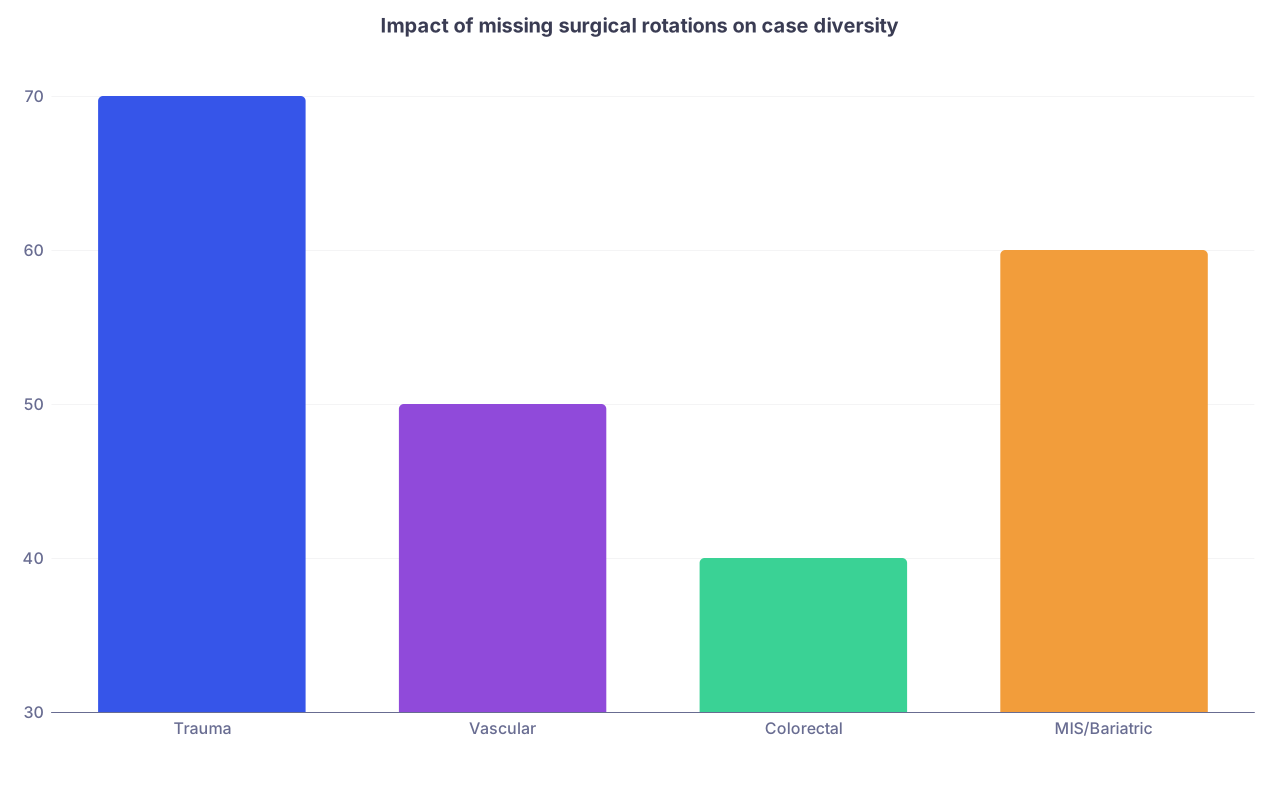
| Category | Value |
|---|---|
| Trauma | 70 |
| Vascular | 50 |
| Colorectal | 40 |
| MIS/Bariatric | 60 |
Those numbers are illustrative of how much your case diversity can drop if one of those services is weak or absent.
Other red flags:
- Heavy dependence on other nearby hospitals for “away” core exposure (e.g., you have to rotate across town just to get basic trauma or vascular). That often means the home institution cannot support comprehensive training.
- No transplant, no complex oncologic surgery, and ORs filled mostly with bread-and-butter hernias and cholecystectomies with attendings doing most of the critical steps.
Ask for anonymized case logs from recent graduates, not just the ACGME minimum compliance statement. Programs that barely scrape by the minimum in multiple categories are not strong, no matter what their website claims.
3.3. Emergency Medicine: The Classic Fake-Strong Program
Emergency Medicine has some very specific landmines.
Be suspicious of EM programs that lack:
- A dedicated pediatric ER rotation with substantial volume. If all peds cases are shipped to a children’s hospital where you barely rotate, your peds exposure will be thin.
- Trauma resuscitation leading roles. If trauma is owned entirely by surgery and EM just does triage, you will graduate weaker than you think.
- ICU months (MICU, SICU, or dedicated ED-based critical care), at least 4–6 months total over residency.
And the big one: ultrasound, which I mentioned earlier.
If an EM program:
- Does not require ultrasound competency
- Has no ultrasound director
- Has minimal QA and no log requirements
…that program is outdated. Full stop.
3.4. Pediatrics: Missing Real-World Bread and Butter
In pediatrics, gaps often hide in “we don’t see much of X here” comments.
Red flags include:
- No community outpatient pediatrics rotation (only tertiary care clinics with zebras). You will not learn routine well-child care there.
- Weak newborn nursery exposure because all deliveries are low volume or obstetrics is offsite.
- Minimal adolescent medicine exposure. Teenagers are not just “big kids”; they bring mental health, substance use, sexuality, and confidentiality issues that require practice.
- Tiny NICU/PICU exposure, especially if the program relies on transfers and you never actually manage ventilated kids long-term.
Ask how many deliveries occur per year at the main hospital. That number quietly predicts how meaningful your newborn and neonatal experience will be.
3.5. Psychiatry: The Silent Curriculum Holes
Psychiatry has its own blind spots that are easy to miss on a tour.
Look carefully for:
- Inpatient psych months: at least several over PGY-1 and PGY-2. If the hospital offloads most severe cases to state institutions where you barely rotate, you will miss real acute pathology.
- Emergency psychiatry / CPEP-style rotations. If your only ED psych exposure is brief consults, you will not learn to handle high-volume crisis work.
- Consultation-liaison (C-L) psychiatry integrated with medicine and surgery floors. Missing C-L means you miss the medical-psychiatric interface, which is where real-world complexity lives.
- Required addiction psychiatry exposure. If addiction is optional or minimal, the curriculum is not aligned with the actual epidemic you will face daily.
4. What Hidden Gaps Tell You About the Program Itself
Missing rotations are rarely random.
They often signal:
Under-resourced or financially strained institutions
- Closed service lines (vascular shut down, trauma downgraded, OB consolidated)
- Reliance on external sites where you are a visitor, not a core learner
Weak or disengaged leadership
- Curriculum not updated to modern practice (e.g., no POCUS, minimal palliative care)
- Poor advocacy for residents with hospital administration
Excessive reliance on non-physician clinicians
- APPs running critical services with residents sidelined
- Residents doing scut on low-yield rotations while key learning happens elsewhere
A culture of “checking boxes” instead of education
- Bare-minimum compliance with ACGME requirements
- No interest in whether graduates feel competent, just whether they graduated
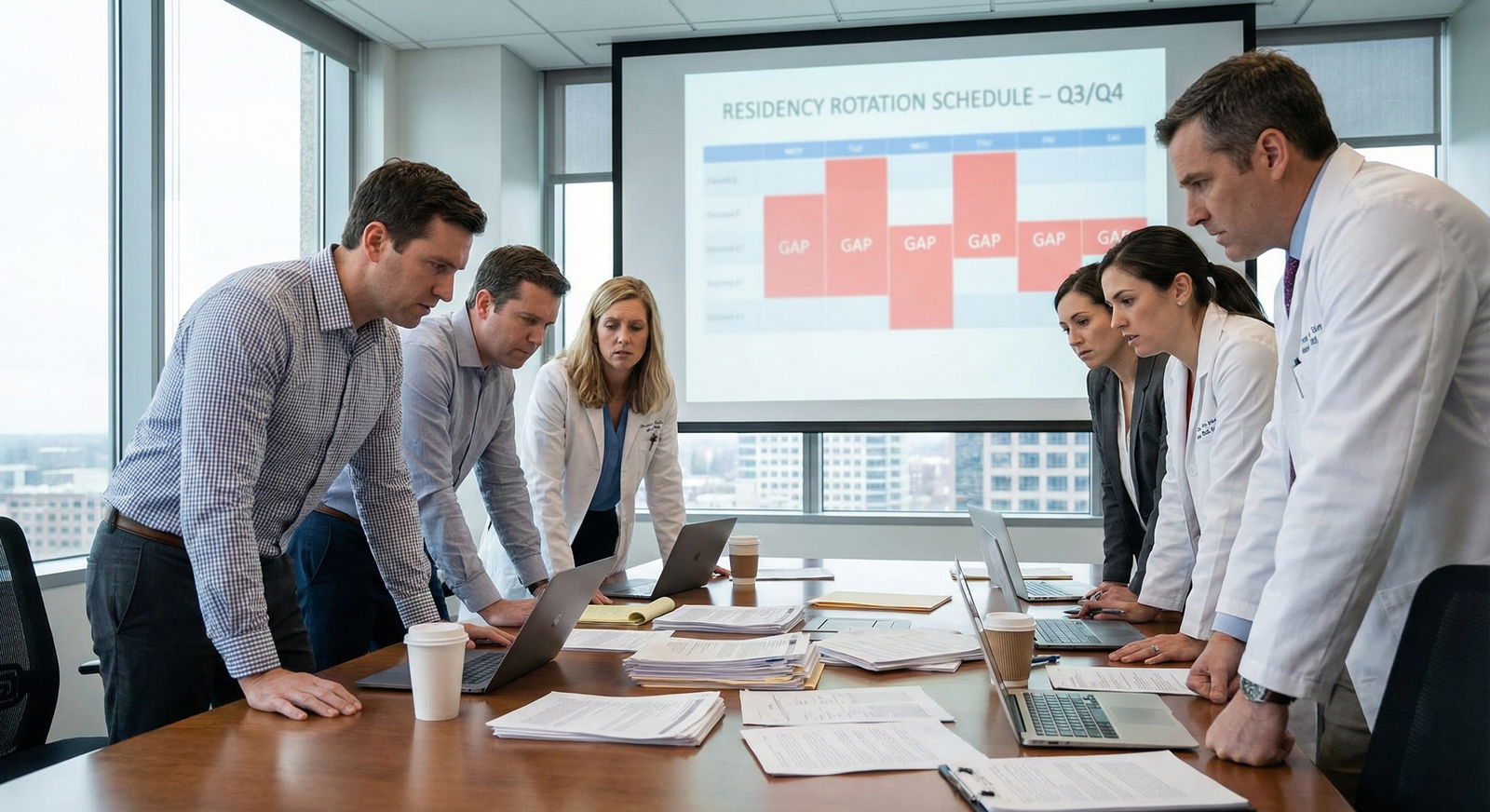
You are not just evaluating rotation titles. You are reading the institution’s priorities through what they choose not to offer.
5. How to Audit a Program’s Curriculum Like an Insider
You cannot rely on the official curriculum PDF alone. Every program can make a pretty grid.
Here is how you actually check.
5.1. Before the Interview: Do a Paper Reality Check
Look at:
- The posted block schedule: count ICU months, ED months, subspecialties.
- Affiliated hospitals: are core rotations offsite, far away, or clearly afterthoughts?
- Presence of key service lines: trauma center level, cath lab, transplant, NICU, etc.

| Step | Description |
|---|---|
| Step 1 | Download rotation schedule |
| Step 2 | Identify core services |
| Step 3 | Flag for questions |
| Step 4 | Check depth and volume |
| Step 5 | Ask residents for reality check |
| Step 6 | Adjust rank list |
| Step 7 | Any missing cores? |
5.2. On Interview Day: Ask Residents Very Specific Questions
Do not ask, “Do you feel prepared?” Everyone says yes.
Ask:
- “How many months of ICU did you personally do?”
- “Do you ever have to scramble to get certain procedures or cases?”
- “Are there any rotations everyone dreads because they are low-yield?”
- “What rotations were cut or changed in the last 3–5 years, and why?”
Listen for:
- “We used to have ___, but they shut that down.”
- “Some people have to go to another hospital for enough trauma / vascular / whatever.”
- “We do not really see much ___ here.”
Those offhand comments are gold.
5.3. After Interview Day: Compare Programs Side by Side
Make a simple table for yourself. Something like this:
| Program | ICU Months Total | Night Float Weeks/Year | Key Missing Rotation |
|---|---|---|---|
| A | 6 | 8 | None significant |
| B | 3 | 2 | No palliative care |
| C | 2 | 0 | No trauma ICU |
Patterns will emerge quickly. The “big-name” program with surprisingly thin ICU exposure and no palliative care starts to look less magical when you see it next to a smaller but structurally stronger program.

6. Future-Facing Rotations: The Missing Pieces You Will Regret
Some rotations are not yet universal, but they are clearly where medicine is heading. If a program offers none of these—or dismisses them outright—you are looking at a place that is already behind the future.
6.1. Clinical Informatics / Quality & Safety
Medicine is increasingly driven by:
- EHR optimization
- Data-driven quality metrics
- Systems-based care
A forward-thinking program will have at least:
- A QI rotation or dedicated QI projects with mentorship
- Exposure to clinical informatics, order set design, or dashboard use
- Opportunities to work with hospital quality or safety committees
If leadership waves their hand and says, “We have some required QI online modules,” that is checkbox-level, not real.
6.2. Telemedicine and Virtual Care
Whether you love or hate telemedicine, it is not going away.
Future-proof programs offer:
- Structured telehealth clinics or shifts
- Teaching on remote assessments, limitations, documentation, and liability
- Integration of remote monitoring tools when relevant
If the answer to “Do residents do any telehealth?” is “Not really, that is more for attendings,” they are training you for a model of care that is already fading.
6.3. Addiction Medicine and Integrated Behavioral Health
I mentioned addiction in psych, but this applies to IM, EM, and primary care–oriented fields too.
Ask:
- “Are there rotations or clinics specifically for addiction treatment (MAT, detox, etc.)?”
- “Do your clinics have integrated behavioral health or is everything referred out?”
If the program’s approach to substance use is simply “consult psych,” they are not aligning with current reality.
7. When a Missing Rotation Is Not a Deal-Breaker
Not every gap is fatal. You need to filter through your career goals.
You might reasonably tolerate:
- Less OB exposure in EM if you are certain you will work in a system where OB handles most deliveries and you have strong trauma and ICU instead.
- Limited transplant exposure in general surgery if vascular, colorectal, and MIS are robust and you are not aiming for transplant fellowship.
- Sparse oncology in IM if you are planning for cards or pulm/crit and the core inpatient medicine is excellent.
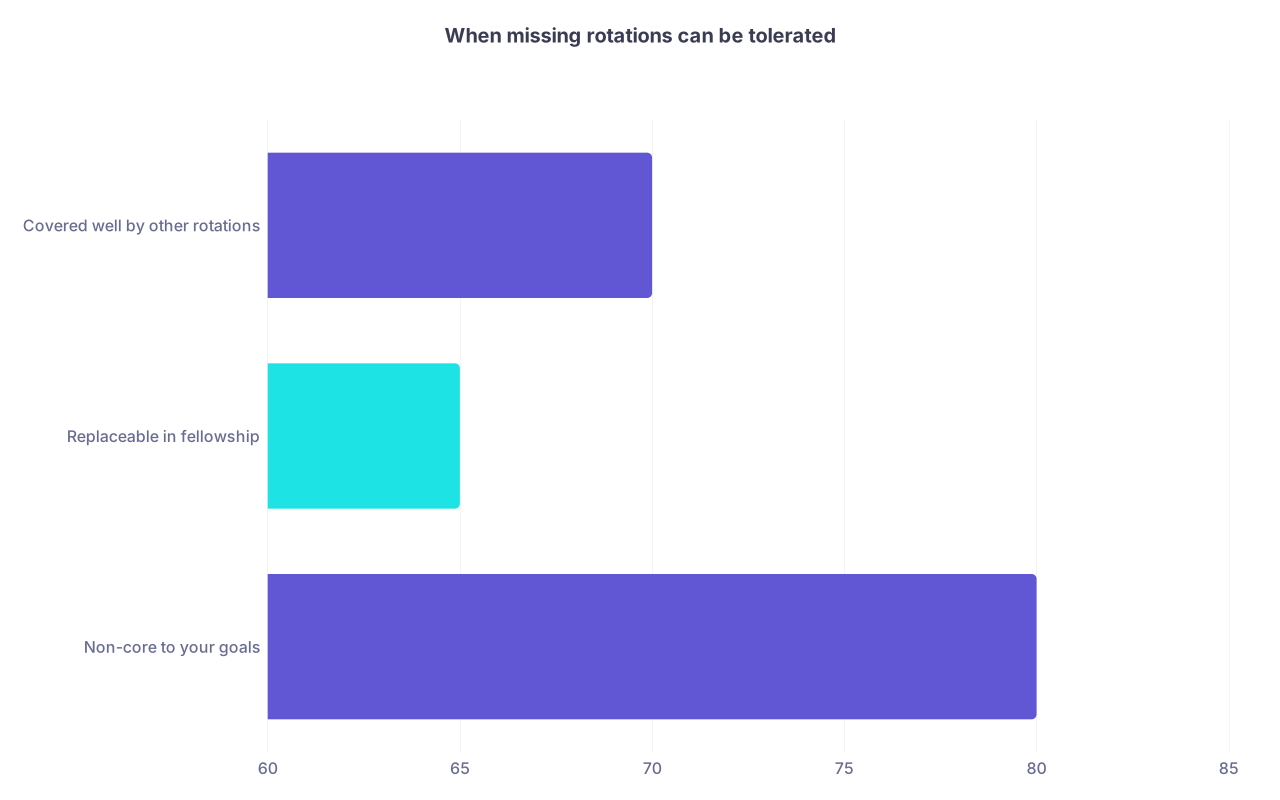
| Category | Value |
|---|---|
| Non-core to your goals | 80 |
| Replaceable in fellowship | 65 |
| Covered well by other rotations | 70 |
The real question is:
- Is the missing rotation core to safe, general practice in this specialty?
- Is the gap compensated by strong exposure elsewhere?
- Does the program acknowledge the gap and offer elective or outside options?
If leadership is transparent—“We do not have a trauma center, so we send residents to X Level 1 center for three months and track their cases carefully”—that is far less concerning than a place that simply pretends trauma does not matter.
8. Bottom Line: How To Use Curriculum Gaps In Your Rank List
Here is how I would translate all of this into decisions:
Automatic serious concern if:
- No or minimal ICU exposure
- No night experience in a field that requires nights
- Clearly inadequate trauma / resuscitation / critical care for EM, surgery, IM
Strong negative tiebreaker if:
- Weak continuity clinic
- No palliative or geriatrics in IM / family / peds
- No ultrasound in EM / crit care–heavy fields
- No addiction exposure in psych or primary care–oriented specialties
Yellow flag, but negotiable if:
- Missing niche rotations that do not fit your career goals and can be picked up in fellowship
- Gaps that are acknowledged and structurally compensated by away-rotations with good oversight
You are not just choosing where you will spend 3–7 years. You are choosing the holes you will graduate with. Some holes are manageable. Others will follow you for an entire career.
Choose programs that take their curriculum seriously enough to be a little messy and complex—because real medicine is messy and complex.
FAQ (Exactly 6 Questions)
1. If a program meets ACGME minimums, is that enough to ignore curriculum gaps?
No. ACGME minimums are floor-level, not quality. I have seen programs barely hit case minimums by front-loading residents with low-educational-value cases in their final year. Meeting the minimums tells you they are not in violation; it does not tell you that graduates feel competent or are competitive for good jobs and fellowships.
2. How many ICU months are “enough” for Internal Medicine or EM?
For Internal Medicine, I get uncomfortable with fewer than 4 total ICU months (MICU/SICU combined) across three years. Six is healthier. For EM, I want to see at least 4–6 months of ICU or dedicated critical care–style rotations, including ED-based critical care blocks if they are well run. Anything less usually results in weak vent management, sepsis care, and hemodynamic decision-making.
3. Can electives compensate for missing core rotations?
Sometimes, but with limits. Electives can deepen or slightly patch specific gaps if the structure is solid and attended by engaged faculty. They cannot replace an entire missing service line (e.g., no trauma center, no ICU) because you will not get enough volume or responsibility on a short, elective-style block. If a program’s answer to a core gap is, “You can just do an elective,” I am skeptical.
4. Are community programs more likely to have dangerous curriculum gaps than university programs?
Not automatically. Some community programs have outstanding, broad exposure and better hands-on autonomy than big-name academics. The risk is higher in small, low-volume hospitals that call themselves “academic” because they have a med school affiliation on paper but lack service lines like trauma, vascular, NICU, or advanced oncology. You have to look at the rotation list and hospital capabilities, not the label.
5. How much should I trust residents’ reassurance about curriculum strength?
Partially, but not blindly. Senior residents do not always know what they do not know until they leave and compare themselves to peers elsewhere. They may also normalize gaps because that is all they have seen. Use resident input to confirm or refute what you see in the block schedule and case logs, but still apply your own judgment about what looks missing or thin.
6. If I discover major curriculum gaps after I match, what can I realistically do?
You have a few levers: aggressively use electives and away-rotations to fill gaps, seek out procedures and critical cases proactively, get involved with program leadership and CCC to advocate for curriculum changes, and, in rare severe cases, explore transfer options early (PGY-1 or early PGY-2). None of these fully replace a well-designed program, which is why you must be ruthlessly honest with yourself before ranking places with obvious structural holes.
Key points: Missing or weak rotations are not an aesthetic issue; they are one of the clearest signals of a program’s actual educational value and institutional health. Learn to spot curriculum gaps—ICU, nights, trauma, palliative, geriatrics, POCUS, addiction—and use them as hard data when comparing programs that otherwise “feel” similar.


