
The horror stories about malignant residency programs are wildly overrepresented compared to how often they actually happen.
That’s the blunt truth no one says when you’re doom‑scrolling Reddit at 1 a.m., convincing yourself you’re going to match into the single worst program in the country and be trapped for three years with screaming attendings and 110‑hour weeks.
Let’s actually walk through this. Not in a fluffy “you’ll be fine” way. In a “what’s the real worst‑case scenario and how likely is it, mathematically and practically” way.
Because I’m just as anxious as you are. I also read those threads where someone says, “Run. This place will destroy your soul,” and then I start catastrophizing like it’s guaranteed.
It’s not. But you deserve more than vague reassurance.
First: What “Malignant” Actually Means (Not the Meme Version)
People throw “malignant” around like it means “I had a bad call night.”
It doesn’t. When residents and fellows use the word seriously, they usually mean some combo of:
- Chronic, systemic disrespect (yelling, shaming, humiliation as teaching)
- Unsafe hours / workload (ignoring duty hours, pressure to falsify logs)
- Retaliation culture (speak up → get punished in evals or schedule)
- No support when things go wrong (bad outcomes, mistakes, personal crises)
- Blame and fear over learning and feedback
- Gaslighting about wellness (“you’re just not resilient enough”)
Annoying? That’s common. Disorganized? Also common. Truly malignant? Much rarer.
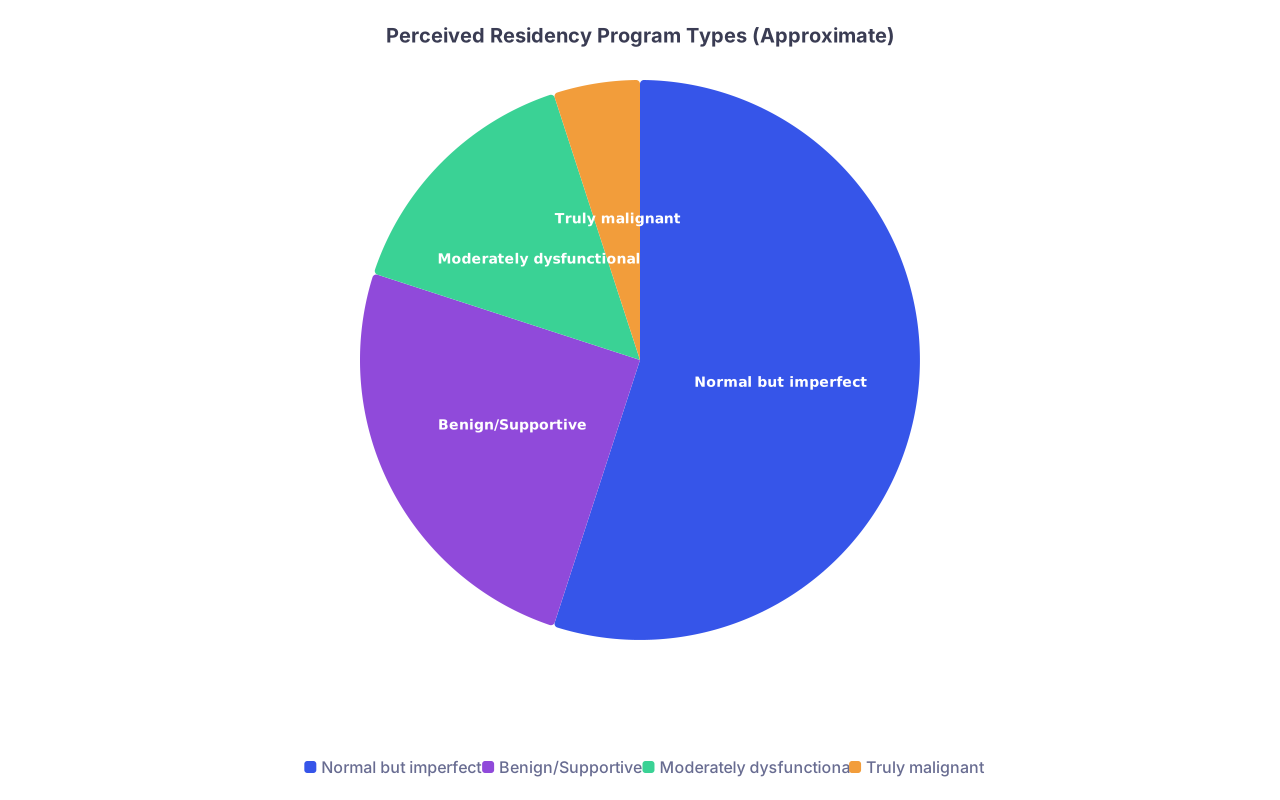
| Category | Value |
|---|---|
| Normal but imperfect | 55 |
| Benign/Supportive | 25 |
| Moderately dysfunctional | 15 |
| Truly malignant | 5 |
Are those hard numbers? No. But that 5% “truly malignant” slice is closer to reality than the 50% your anxious brain is telling you.
Still, even 5% feels huge when you’re thinking: “Yeah, but what if I’m the unlucky one who lands there?”
Let’s tackle that.
How Likely Is the Real Worst‑Case Scenario?
Let’s define what you’re probably afraid of when you say “worst‑case”:
- Matching at a malignant program
- Being trapped with no escape
- Being abused, burned out, and blackballed from your specialty
This is the nightmare loop. So I’ll walk through each piece.
1. Matching at a truly malignant program
First, remember this: malignant programs are bad at hiding forever.
Red flags leak. Residents talk. Students talk. Rotators talk. Things get around.
You’ve got several layers of protection even before Match:
- Word of mouth from students / residents
- Online reputations (not perfect, but patterns matter)
- Your gut on interview day
- Accreditation reviews (ACGME doesn’t always move fast, but it moves)
Does that mean no one ever slips through? No. Some places are very good at putting on a show. Some residents are too scared to speak honestly. It happens.
But you’re not going in blind unless you choose to.
If you:
- Ask residents direct questions
- Pay attention to subtle cues
- Watch for specific red flags
…the odds of accidentally ranking a truly toxic place high enough to match there drop dramatically.
And then there’s the numbers game. Rough example:
- Let’s say 5% of programs in your specialty are “truly malignant”
- You rank 12 programs
- You’ve already filtered out 2‑3 obvious red‑flag programs from your list
What’s left? Mostly “normal‑imperfect,” some very good, maybe one secretly bad one that hides it well.
Could you still land in that one? Theoretically yes. But the chance is nothing like 1 in 2. It’s way, way lower, especially if you’re intentional with your rank list.
2. Being “trapped” with no escape
This is the part that keeps people up at night: “If I match there, that’s it. My life is over.”
No. It’s not.
Residents:
- Transfer programs
- Change specialties
- Take research years
- Graduate and find happier jobs
I’ve literally seen people move from toxic IM programs to supportive community ones. From malignant surgery to anesthesia. From brutal OB to family med. Is it easy? Nope. Is it impossible? Also nope.
Programs know bad environments exist. PDs talk. People will quietly say, “Yeah, we’ve heard about that place,” and actually give you some grace.
The system is clunky and unfair sometimes, but it’s not a prison.
3. Being destroyed and blackballed
The darkest fear: “What if they crush me so hard I can’t function and I’m stuck with a ruined CV, bad letters, and no future?”
Very honest answer: there are people who come out of malignant programs deeply hurt. Burned out. Traumatized. Some leave medicine entirely.
That does happen. It’s not imaginary.
But it’s still the tail of the distribution, not the median. And it usually involves multiple compounding factors:
- Pre‑existing mental health strain
- Zero outside support system
- High personal shame / perfectionism
- Truly abusive culture with no way out and no mentor ally
If you:
- Keep friends/family close
- Stay connected with med school mentors
- Ask for help early
- Document things
…you massively shift the odds away from this worst‑case. You’re not powerless inside the machine, even if it feels that way.
Red Flags That Actually Matter (Not Just “They Asked About Step Scores”)
Your anxiety will try to flag everything as malignant:
- “The PD seemed rushed.”
- “One resident looked tired.”
- “They do a lot of scut.”
That’s not maligancy; that’s residency.
Let’s separate annoying from truly dangerous.
| Category | Normal Imperfection | Concerning / Malignant Red Flag |
|---|---|---|
| Hours | Occasional 80+ weeks, honestly reported | Systematically over 80, pressured to lie on logs |
| Culture | Some grumpy attendings | Routine shaming, yelling, public humiliation |
| Feedback | Mixed evals, some vague comments | Retaliation for speaking up, clear pattern of “troublemakers” |
| Wellness | Lip service wellness events | Punished for sick days, mocked for needing help |
| Safety | Busy but supported | No backup at night, unsafe patient loads |
Pay closest attention to:
- How residents talk when they think no one is listening
- Whether anyone admits weaknesses honestly (“we’re working on X…”)
- How they talk about people who left or struggled
If every story about someone who left is framed as “they just couldn’t hack it,” that’s a massive red flag. That’s how malignant programs talk.
What You Can Realistically Do to Lower Your Risk
You can’t eliminate all risk. But you can do a lot more than just cross your fingers.
Ask residents very direct, slightly uncomfortable questions
Not: “Do you like your program?” Everyone lies on that.
Try things like:
- “If your best friend were applying, would you be excited or hesitant for them to come here, and why?”
- “What’s something about this program that makes you think about leaving?”
- “If a resident here was really struggling, what actually happens?”
- “Has anyone ever pushed back on workload or culture? How did leadership respond?”
Watch the micro‑pauses. The exchanged glances. The “off the record…” comments.
Look for mismatch between what PDs say and what residents say
Classic malignant pattern: leadership says “We deeply value wellness” while residents:
- Laugh when you mention wellness
- Talk about being scared to call in sick
- Describe “vacations” where they were still charting
You’re not looking for perfection. You’re looking for honesty and alignment.
Use the quiet channels
Talk to:
- Recent grads from your school in that specialty
- Rotators who went there and then didn’t rank it
- That one upperclassman who’s chronically too honest
“How were the vibes?” is sometimes more useful than “How was the clinical experience?”
The Future: Are Malignant Programs Going Away or Just Getting Better at Hiding?
You’re not imagining it: people talk about this stuff more now. Program culture is under way more scrutiny than it was 10–15 years ago.
Some trends that work in your favor:
- ACGME is more aggressive with site visits and citations when residents complain
- Residents know they can go to the RRC, GME, hospital leadership, union (in some places)
- Social media and anonymous surveys make it harder for places to hide sustained abuse
- Applicant pools are shrinking in some fields → programs can’t treat residents like disposable labor forever
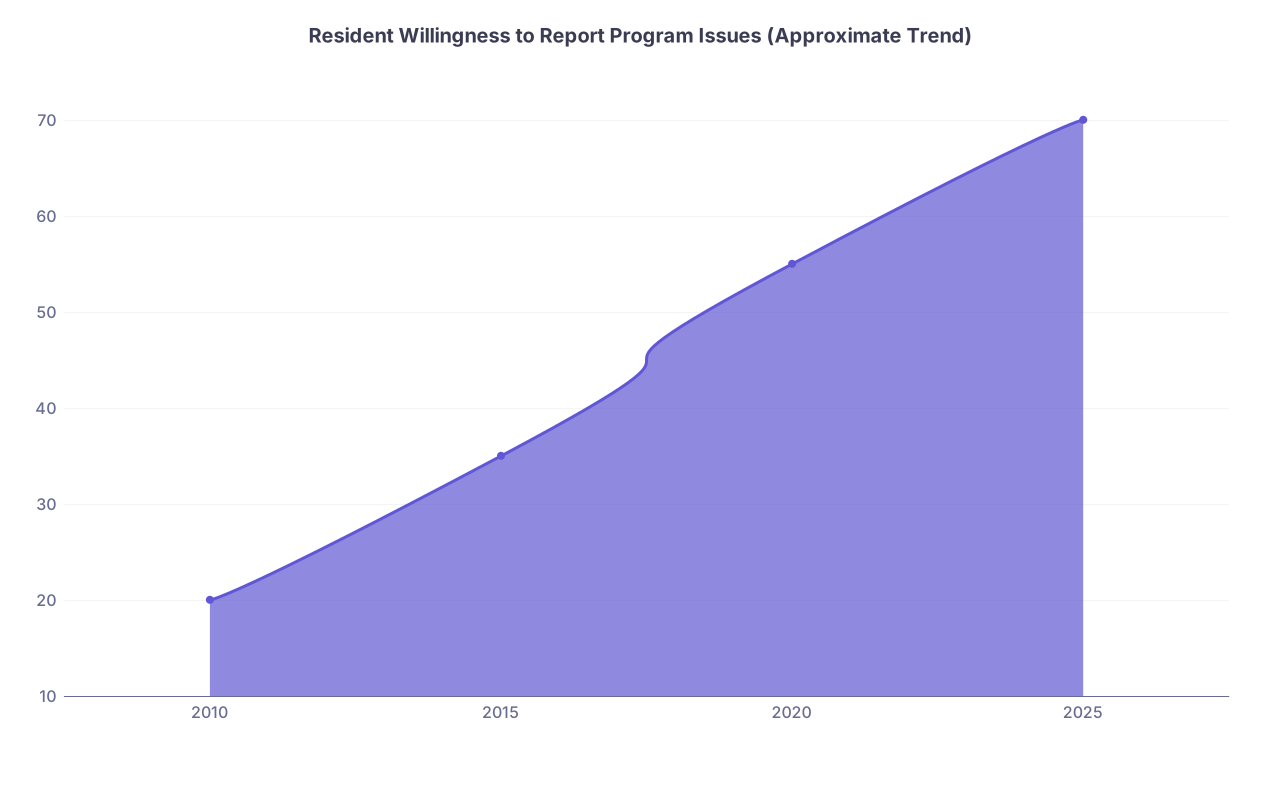
| Category | Value |
|---|---|
| 2010 | 20 |
| 2015 | 35 |
| 2020 | 55 |
| 2025 | 70 |
Is the system fixed? No. There are still programs where everyone knows it’s bad and nothing happens for years.
But the trajectory is moving your way. Slowly, annoyingly, but still.
The real risk long‑term might actually be more subtle: not cartoonishly malignant programs, but emotionally draining, under‑resourced, “meh” programs that never actively abuse you but also never really support you. Those can burn you out quietly.
And that’s why your goal isn’t “avoid the single worst program in the US.” Your goal is more realistic: “avoid places with multiple major red flags and aim for somewhere I can learn without being psychologically demolished.”
If You Do End Up Somewhere Bad: What Then?
This is the part your brain refuses to complete. It stops at “what if I match somewhere malignant?” and then just screams.
So force yourself to play it out:
You match at a program. First few months, the vibe is off. People get yelled at. Duty hours are a joke. PD thinks “weakness” is a moral failing. You’re miserable.
What can you actually do?
Gather data, not just feelings.
Keep a simple log: dates, events, who was present, how it affected patient care / safety / resident wellbeing.Find at least one mentor ally.
Maybe an APD, faculty member, chief, or even a psychologist in GME. Someone who’s not fully bought into the toxic culture.Use internal structures before external.
- Program leadership (if safe)
- GME office
- Ombudsperson
- Anonymous climate surveys
If it’s truly toxic, quietly explore transfer options.
Reach out to PDs at other programs you interviewed at or where grads from your school landed. Keep it discreet. You’re not the first person to do this.Take your own health seriously.
Therapy. PCP. Meds if needed. This is not weakness; this is strategy.
None of that is fun. None of it is easy. But it exists. The story is rarely: “I matched malignant and then my career just ended.”
You may lose a year. You may change paths. You may carry some scars. But you’re not doomed.
Calibrating Your Fear: Real Risk vs Brain‑Gremlin Risk
Your brain is wired to overestimate catastrophic, vivid, story‑based risks.
One Reddit post titled “THIS PROGRAM RUINED MY LIFE” hits harder than 200 quiet, boring residents who are… fine. Tired, sometimes annoyed, but fundamentally okay and progressing in their careers.
So here’s the uncomfortable but honest calibration:
- You might land somewhere that’s not your ideal fit.
- You might have a PD who’s mediocre, not inspiring.
- You might have rotations that feel exploitative and miserable.
But the true worst‑case—full‑blown malignant culture, no escape, career destroyed—is possible but rare, and even then, you still have partial control over what happens next.
Residency will be hard no matter where you go. That’s not maligancy; that’s training.
Your job is not to find the mythical program where no one is ever stressed. Your job is to avoid places where:
- Fear replaces learning
- Retaliation replaces feedback
- Image management replaces honest culture change
And you can do that with the tools you have.
FAQ (Exactly 5 Questions)
1. Can I really trust online reviews and Reddit when people call a program “malignant”?
You should treat any single post as a data point, not a verdict. One bitter graduate can torch a program’s reputation over a personal conflict. What matters is patterns: multiple independent comments over several years, consistent themes in what they criticize (abuse, retaliation, unsafe workload) versus “they made me work hard.” Use social media as a starting point, then cross‑check with residents you meet, your school’s graduates, and your gut feeling on interview day.
2. Are community programs or small programs more likely to be malignant?
Not automatically. Some of the most humane, supportive programs are small community hospitals where everyone knows each other and the PD actually knows your name. The risk is higher in any place where there’s less oversight, weaker GME structures, and no one pushing back. But I’ve seen malignant university programs too. Size and prestige aren’t the real predictors—culture, leadership, and how they respond to problems are.
3. If I think a program is malignant, should I leave it off my rank list entirely?
If you have strong, consistent evidence it’s truly malignant (not just “hard‑working,” but genuinely unsafe or abusive), I’d rather rank fewer programs than include it high. That said, if your list is very short and you’re at real risk of not matching at all, you might keep a borderline program at the bottom as an absolute last resort. But true, well‑documented malignant programs? I wouldn’t voluntarily enter those if I had any other path.
4. Do malignant programs actually get shut down or punished?
Sometimes yes, sometimes very slowly. ACGME can put programs on probation, limit positions, or pull accreditation, but it often takes years of complaints and documentation. What usually happens first is attrition: residents transfer, fewer people rank them, reputation spreads. That’s already happening more now than a decade ago. So while they don’t vanish overnight, they’re under more pressure than they used to be.
5. What’s one concrete thing I can do this week to lower my chance of ending up in a malignant program?
Pick 3 programs you’re most unsure about and send messages—today—to people with direct knowledge: a recent grad who rotated there, a resident from your school who matched near there, or even a chief resident on LinkedIn. Ask them very bluntly: “Would you choose this program again? Why or why not?” Their hesitation, specifics, and tone will tell you far more than anything on a glossy website.
Open your tentative rank list or list of target programs right now and mark each one with green (safe vibe), yellow (unsure, need more data), or red (clear concerns). Then pick ONE yellow program and email or message someone who’s been there. Don’t just sit with the anxiety—convert it into actual information.