
The fear of looking “high‑maintenance” is exactly how applicants end up in toxic programs.
You’re not paranoid. You’re not “too sensitive.” You’re reacting to a system that sometimes punishes people for asking completely reasonable questions about their own lives and sanity.
Let’s talk about how to ask about residency red flags without tanking yourself—or feeling like you are.
The Ugly Truth: Some Programs Count on You Being Afraid
There’s this unspoken rule: “Don’t rock the boat. Don’t ask too many questions. Just be grateful for interviews.”
And you can literally hear it in people’s voices on the trail:
- “Don’t ask about hours, you’ll look lazy.”
- “If you bring up wellness, they’ll think you can’t hack it.”
- “Never ask about call until after you match.”
I’ve watched applicants swallow really important questions because they were terrified of being labeled:
- The “problem” resident
- The “needy” one
- The one who “complains a lot”
Here’s the part no one wants to say out loud:
If a completely normal question about schedule, culture, mistreatment, or support makes a program think you’re “high‑maintenance,” that is the red flag.
Not you. Them.
You’re not asking, “Can I come in at 10 am and leave at 2 pm while getting paid 300k as a PGY‑1?”
You’re asking, “Will this place destroy my mental health and personal life?”
Totally different.
The Line Between Reasonable Questions and “High‑Maintenance”
Let me be blunt: there is a way to ask things that makes you sound like you’ll be a pain.
And there’s a way to ask the exact same thing that makes you look thoughtful and mature.
The content isn’t the problem.
The framing is.
The topics you’re afraid to ask about (that are absolutely fair):
- Work hours / call burden
- How the program handles struggling residents
- Harassment/discrimination and reporting systems
- How feedback is given
- Resident turnover / people who leave
- Moonlighting / fellowship matching / career support
- Changes after an ACGME citation or prior red flag
Those are all reasonable. You just can’t go in with:
“So… how bad is it really?”
“Is it true your residents are miserable?”
“I heard your program is malignant, is that right?”
That’s how you get yourself quietly labeled.
How to Ask “Red Flag” Questions Without Setting Off Alarms
Here’s the strategy I wish someone had handed me before interviews.
1. Use neutral, data‑seeking language
Programs freak out when your question sounds like an accusation. So you strip that out.
Instead of:
“Do residents get punished for calling in sick?”
Try:
“How does the program typically handle coverage when someone is out sick unexpectedly?”
Instead of:
“I heard interns work 80+ hours every week here.”
Try:
“How close do interns typically get to the 80‑hour limit on your busiest rotations, and how is that monitored?”
You’re asking the same thing. The second one just doesn’t sound like “I’m here to complain already.”
2. Ask about systems, not one‑off drama
“I heard about a resident who…” is catnip for drama and a fast way to look messy.
Ask about structures:
- “What does your system for anonymous feedback look like?”
- “How are resident concerns escalated and actually closed‑loop?”
You’re not sniffing for gossip; you’re evaluating infrastructure.
3. Aim “hard” questions at residents, not PDs (most of the time)
That’s not cowardice. That’s strategy. PDs are in PR mode. Residents are in “I still have to graduate but I will try to help you” mode.
During resident‑only time, you can push more:
- “Honestly, what’s the hardest part about being a resident here that I won’t see on a tour?”
- “If you had to pick one reason someone might be unhappy here, what would it be?”
- “Have any residents left the program in the last few years? What tended to be the reasons?”
You’d be shocked how often people answer those straight.
What You Think Makes You “High‑Maintenance” vs What Actually Does
Let’s separate your anxiety from reality.
| Situation | How Programs Usually See It |
|---|---|
| Asking about hours, call, wellness | Normal, expected |
| Asking about how they handle struggling residents | Mature, thoughtful |
| Asking about moonlighting and research support | Motivated, planning ahead |
| Arguing about schedule, benefits, or policies in the interview | High-maintenance |
| Repeatedly questioning required rotations or call | Potential problem resident |
The stuff you’re spiraling about?
- “If I ask about burnout, they’ll think I’m weak.”
- “If I ask about coverage, they’ll think I’m trying to get out of work.”
Most decent programs actually see this as:
“Oh good, they’re not naïve. They’re thinking about fit and sustainability.”
What actually screams “high‑maintenance”:
- Challenging the PD on their policies in a confrontational way
- Acting like the program should redesign itself around your preferences
- Turning Q&A into a therapy session (“At my last rotation they treated me so badly…”)
- Asking tons of tiny logistical what‑if questions (parking exceptions, can I leave early on Fridays, can I always switch calls for concerts, etc.)
You get one or maybe two specific personal‑life questions before people start mentally flagging you. Use those carefully, late in the process, not as your opener.
Using Indirect Questions When You’re Terrified to Be Direct
If your stomach drops at the thought of asking, “Any residents left your program?”, use “softer” entry points that still reveal a lot.
Here are some swap‑outs:
Direct: “Have there been any recent ACGME citations or serious complaints?”
Softer: “What kinds of things have you improved in the last few years based on ACGME or resident feedback?”Direct: “Is there bullying here?”
Softer: “How would you describe the culture when things get stressful—do people pull together or do tensions come out sideways?”Direct: “Do attendings yell at residents?”
Softer: “How does the program handle unprofessional behavior from faculty or staff toward residents?”Direct: “How many people quit?”
Softer: “What does resident retention look like? Have most of the recent classes finished the program?”
Same content. Lower threat vibe.
How to Read Between the Lines (When You’re Too Scared to Push)
Sometimes you ask a reasonable question and you get this weird, glossy non‑answer that makes you more anxious than before.
You’re not imagining that. That is data.
Watch for:
Overly vague answers
“Wellness is very important to us.” Okay… what do you do? If they can’t list actual initiatives or structures, that’s fluff.Defensive tone shift
You ask about feedback or grievances, and the PD suddenly sounds prickly or annoyed. That’s not a great sign.Residents glancing at each other before answering
Classic move. Or they give very short, tight answers that sound rehearsed.Weirdly strong emphasis on “resilience” and “thick skin”
Translation sometimes: “People yell and you’re supposed to tolerate it.”“We’re like a family” with no specifics
Could be lovely. Could also mean boundary issues, lack of professionalism, or “we handle everything internally so nothing gets reported.”
This is where your gut matters. If your anxiety spikes right after an answer and stays there, pay attention.
Use Charts, Not Just Vibes: What to Track About Programs
If you’re going to be afraid, at least collect some data with it.
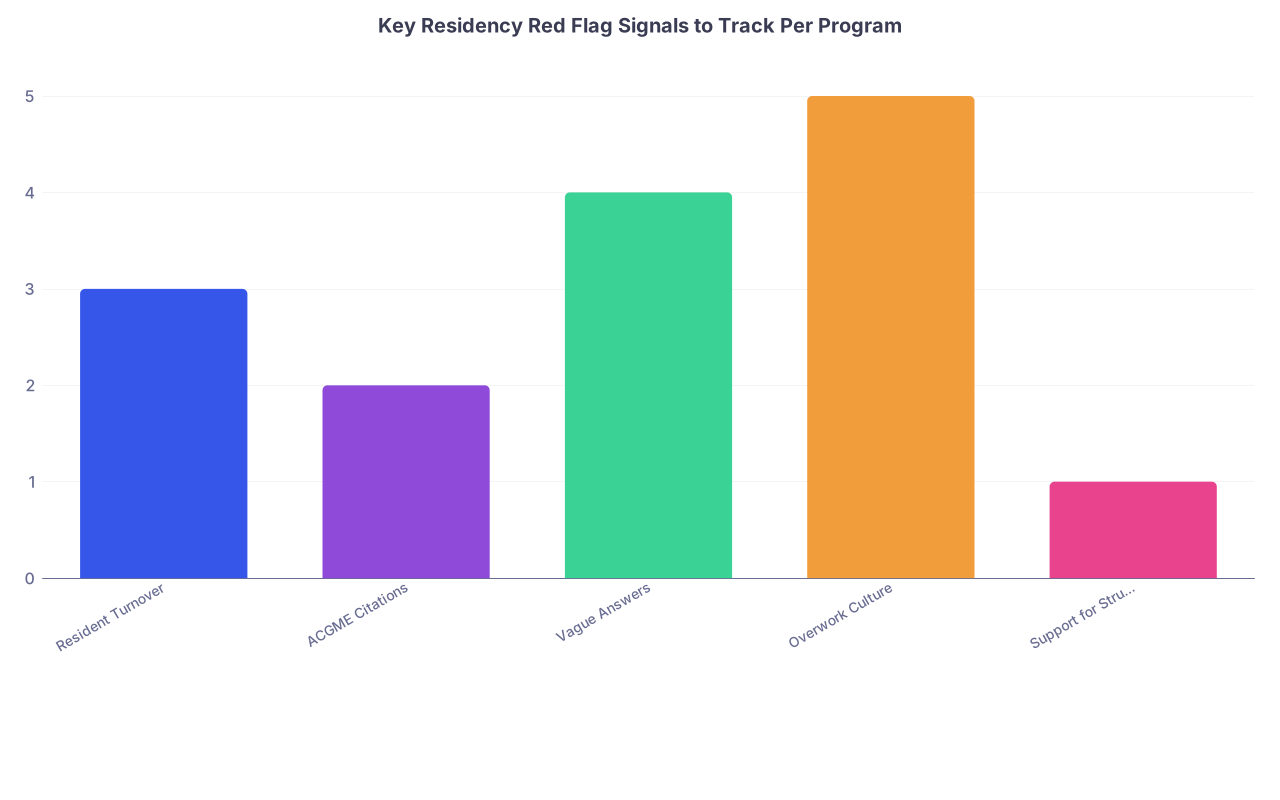
| Category | Value |
|---|---|
| Resident Turnover | 3 |
| ACGME Citations | 2 |
| Vague Answers | 4 |
| Overwork Culture | 5 |
| Support for Strugglers | 1 |
Example of what I literally tell people to jot down right after each interview day (rate 1–5):
- How honest did residents seem?
- Did anyone mention people leaving or switching programs?
- Did anyone clearly describe how the program supports residents in crisis?
- Did I get any “that was weird” feelings I’m now trying to rationalize away?
- Could I see myself asking for help here without being punished?
This protects you later when you’re staring at your rank list thinking, “Maybe I’m just overreacting, it wasn’t that bad.”
Your in‑the‑moment self is usually more accurate than your “I just want to match somewhere” self.
Scripts You Can Steal (So You Don’t Freeze)
Let me make this as plug‑and‑play as possible. Modify as needed.
On handling mistakes / struggling residents
- “How does the program typically support residents who are having a tough rotation or struggling clinically? Are there formal remediation or mentorship processes?”
On wellness that’s not just pizza
- “Beyond wellness days or social events, are there structural supports—like backup coverage, adjusted schedules after hard rotations, or built‑in mental health support?”
On faculty behavior
- “If a resident felt a faculty member was being disrespectful or creating a hostile learning environment, what options would they have, and how has that played out in practice?”
On schedule reality
- “On the most demanding rotations, what does a realistic week look like for an intern—from when you typically arrive to when you usually leave?”
On prior issues / reputation
- “Every program evolves over time. What are some areas you’ve actively worked to improve in the last few years based on resident feedback or past concerns?”
You can ask any of these without sounding like you’re about to file a lawsuit on Day 1.
The Irony: Asking Tough Questions Shows You’re Low‑Risk
Here’s the twist that might help your anxiety a bit:
The people who never ask about red flags? Who don’t care about culture, training quality, or support?
Those are the ones programs sometimes worry about. Because that can signal:
- Naivety
- Lack of insight into how hard residency is
- Potential for meltdown once reality hits
You, the person freaking out about “looking high‑maintenance” for asking whether there’s a system for grievances? You are not the problem.
You’re exactly the type of resident who:
- Sees issues early
- Uses appropriate channels
- Cares about sustainability and patient safety
- Doesn’t want to blindside anyone
That’s not high‑maintenance. That’s self‑aware. And smart PDs know that.
A Quick Framework for Your Next Interview Day
If you’re overwhelmed, use this simple rule set:
Aim for 2–4 substance questions per interview
One about education/teaching, one about culture/support, one about schedule/workload, one about what they’ve improved.Ask the “spicy” versions to residents, the polished versions to leadership
Residents: “What’s actually hard here?”
PD: “What are some challenges the program is currently working on?”Avoid framing that sounds like you’re trying to dodge work
Focus on safety, growth, and support—not “how can I minimize my effort.”Write down any half‑answers that made you uneasy
That’s often where the red flags are hiding.

| Step | Description |
|---|---|
| Step 1 | Identify Concern |
| Step 2 | Ask Residents |
| Step 3 | Ask PD or APD |
| Step 4 | Use Direct but Neutral Language |
| Step 5 | Use Softer, System Focused Language |
| Step 6 | Observe Verbal and Nonverbal Cues |
| Step 7 | Write Notes After Interview |
| Step 8 | Who to Ask |
FAQ (The Panic Edition)
1. Can a single “bad” question really get me ranked lower or not at all?
Yes, if it’s truly bad—hostile, entitled, or inappropriate. But truly reasonable questions about hours, support, or culture almost never kill an applicant. Programs expect people who are about to sign up for 3–7 years of their life to ask these things. What hurts you more is arguing, sounding like you hate hard work, or implying you’re shopping for “easy” programs.
2. What if I already went on interviews and didn’t ask anything about red flags?
You’re not doomed. Use second looks (if available), post‑interview emails sparingly, and especially resident contacts. It’s okay to email a resident and say: “Now that I’ve had some time to reflect, I realized I forgot to ask about X. Would you be open to sharing how the program handles Y?” Keep it short, respectful, and non‑accusatory. And lean extra hard on your gut impressions and any offhand comments you remember.
3. Is it safer to just not ask and avoid the risk?
Honestly? No. The “safest” move short‑term (don’t rock the boat) can be the most dangerous long‑term (getting stuck in a malignant program with no support). You’re not picking a restaurant; you’re choosing where you’re going to be exhausted, vulnerable, and responsible for human lives. Not asking is basically signing a contract blindfolded because you’re afraid the salesperson will think you’re rude for reading it.
4. How do I handle it if a PD seems annoyed by my question?
You stay calm, stay neutral, and don’t backpedal into panic rambling. Something like: “I appreciate you explaining. I’m asking because I want to make sure I’m in a place where I can grow and take great care of patients over the long term.” If their annoyance continues or they give a snarky answer? That’s not a cue to self‑flagellate. That’s your cue to quietly move them down your rank list.
Open your interview question document right now and add three red‑flag questions—one about support for struggling residents, one about culture under stress, and one about recent program changes—so you don’t talk yourself out of asking them later.