The biggest disaster in residency isn’t a bad shift, a harsh attending, or even a failed test. It’s a bad match you saw coming and talked yourself out of.
Let me be blunt: students don’t usually “miss” residency red flags. They rationalize them away. They explain them. They pretty them up with phrases like “it’ll be fine” and “every program has issues.” That’s how people end up stuck in toxic places for 3–7 years.
You’re not just ranking hospitals. You’re ranking who will control your time, your sleep, your mental health, and a decent chunk of your identity. If you screw this up because you ignored the signs, the system will not rescue you.
This is the stuff people cry about off-camera, not on the happy Match Day photos.
Let’s walk through the red flags students routinely excuse—and how not to be one of them.
The Core Mistake: Believing “I’ll Just Suck It Up”
The worst phrase I hear every year is: “Yeah, it sounded bad, but I can handle anything for a few years.”
No, you can’t. Not anything. Not indefinitely. Not with no control.
Here’s the mental trap:
- You’re tired and desperate by the time rank lists are due.
- You’ve invested in interview travel, time, and emotional energy.
- You want to believe every place that liked you is “good enough.”
- You’re scared of not matching, so you quietly lower your standards.
So you start rewriting reality:
- “They seem overworked, but that means I’ll learn a lot.”
- “Faculty seemed distant, but that’s just professionalism.”
- “The residents looked exhausted, but residency is supposed to be hard, right?”
Yes, residency is hard. That’s not the same thing as being unhealthy, unsupported, or unsafe.
Your job now: distinguish “brutal but healthy” from “slow-motion crash you call a career.”
Red Flag Cluster #1: How Residents Talk When Faculty Aren’t Watching
This is the most honest data you’ll ever get. And students blow it off constantly.
You don’t need a spreadsheet. You need to replay the tone and patterns of what residents said.
, Program Culture, Education, Support, Administration](https://cdn.residencyadvisor.com/images/articles_svg/chart-common-resident-comments-students-misinterpret-5209.svg "Common resident comments students misinterpret")
| Category | Value |
|---|---|
| [Call Schedule](https://residencyadvisor.com/resources/residency-program-red-flags/the-costly-error-of-overlooking-call-schedule-red-flags-in-contracts) | 85 |
| Program Culture | 70 |
| Education | 60 |
| Support | 55 |
| Administration | 50 |
Those percentages aren’t formal data, but they reflect how often I’ve heard these areas get downplayed by students later regretting their rank lists.
Watch for these phrases that are not “normal”
If you heard any of the following and shrugged, that’s a problem:
- “You just kind of survive intern year.”
- “Yeah, people cry, but we’re like a family.”
- “Honestly, we don’t really have time for didactics most days.”
- “You learn on your own—no one is holding your hand here.”
- “Vacation gets moved around depending on coverage. It usually works out.”
- “Administration doesn’t really listen, but we make it work.”
These are not quirky personality traits of a program. These are structural conditions. They do not magically improve because you’re “hard working” or “resilient.”
The mistake students make
They hear this, then say things like:
- “They’re just being honest. That’s good.”
- “I don’t need much support. I’m independent.”
- “I’m used to chaos. My med school was disorganized too.”
- “I’m tough. I’ll be fine.”
No. This is not about emotional toughness. It’s about chronic, systemic strain. You can’t out-grit a system that burns people as fuel.
Ask yourself: if a friend described their current job using those exact sentences, would you tell them to stay?
Red Flag Cluster #2: The Overused Badge of Honor – “We Work Hard Here”
You’re going into medicine. You already know you’ll work hard. That’s not a selling point. It’s the minimum.
The problem is programs using “we work hard” as a euphemism for:
- Chronic rule-breaking of duty hours
- Unsafe patient loads
- No time to read, think, or sleep
- Emotional trauma as “normal”
Here’s how it usually plays out on interview day:
- PD: “We’re very busy. You’ll see a lot of pathology.”
- Chief resident: “Our residents definitely work hard, but they come out strong.”
- Current resident (quietly, when no faculty around): “It’s rough, but whatever. It’s residency.”
The mistake? You translate that into:
- “Great training.”
- “Good preparation.”
- “High expectations mean I’ll be better than others.”
Sometimes, yes. Sometimes, it just means you’ll be wrecked.
Distinguish “busy” from “abusive”
Busy but healthy:
- Residents complain about being tired, but still laugh about cases.
- They talk about good teaching rounds despite the volume.
- They mention protections: “We actually log our hours and they care.”
- Senior residents seem functional, not hollowed-out.
Abusive or malignant:
- Residents make dark jokes about not seeing sunlight or their partners.
- No one can tell you their average patient cap confidently.
- They shrug off call frequency like it’s just inevitable misery.
- Seniors look like they’ve aged 10 years in three.
If “we work hard” is always paired with nervous laughter and changing the subject, that’s not a flex. That’s a warning.
Red Flag Cluster #3: “We’re Like a Family” – The Most Abused Phrase in Medicine
Sometimes “family” means genuine support. Often, in residency-speak, it means boundary-less expectations and guilt when you push back.
I’ve seen programs use “we’re a family” to justify:
- Covering each other’s shifts endlessly because staffing is awful.
- Zero tolerance for residents who say “no” or protect their time.
- Blurring professional and personal lines in creepy ways (e.g., your life = the program).
| Signal Type | Healthy Program | Toxic Program |
|---|---|---|
| Time off | Coverage is planned; days off respected | Days off frequently “volunteered away” |
| Boundaries | Saying no is accepted | Saying no is “not being a team player” |
| Socializing | Optional, low pressure | Social events feel mandatory |
The rationalization trap:
- “I want a close-knit program.”
- “Smaller programs feel like family, that’s good.”
- “They hang out a lot; that means they’re close.”
Be careful. Ask yourself:
- Do residents only have each other because no one else understands how bad it is?
- Is the “closeness” coming from genuine respect or shared trauma?
- Do people have lives outside the hospital—or is that subtly shamed?
If residents talk about divorced relationships, estranged friends, or “my entire life is this program” and it’s said like a joke—that’s not cozy. That’s a caution sign.
Red Flag Cluster #4: Education That’s “On Paper Only”
Programs love to list didactics, simulation, conferences, wellness days. The website always looks clean.
The question is: what actually happens?
Here’s what I’ve seen over and over:
- “We have weekly didactics” → regularly cancelled for “clinical demands.”
- “Protected time” → protected in the handbook, not in reality.
- “We do simulation” → once a year, badly, with no feedback.
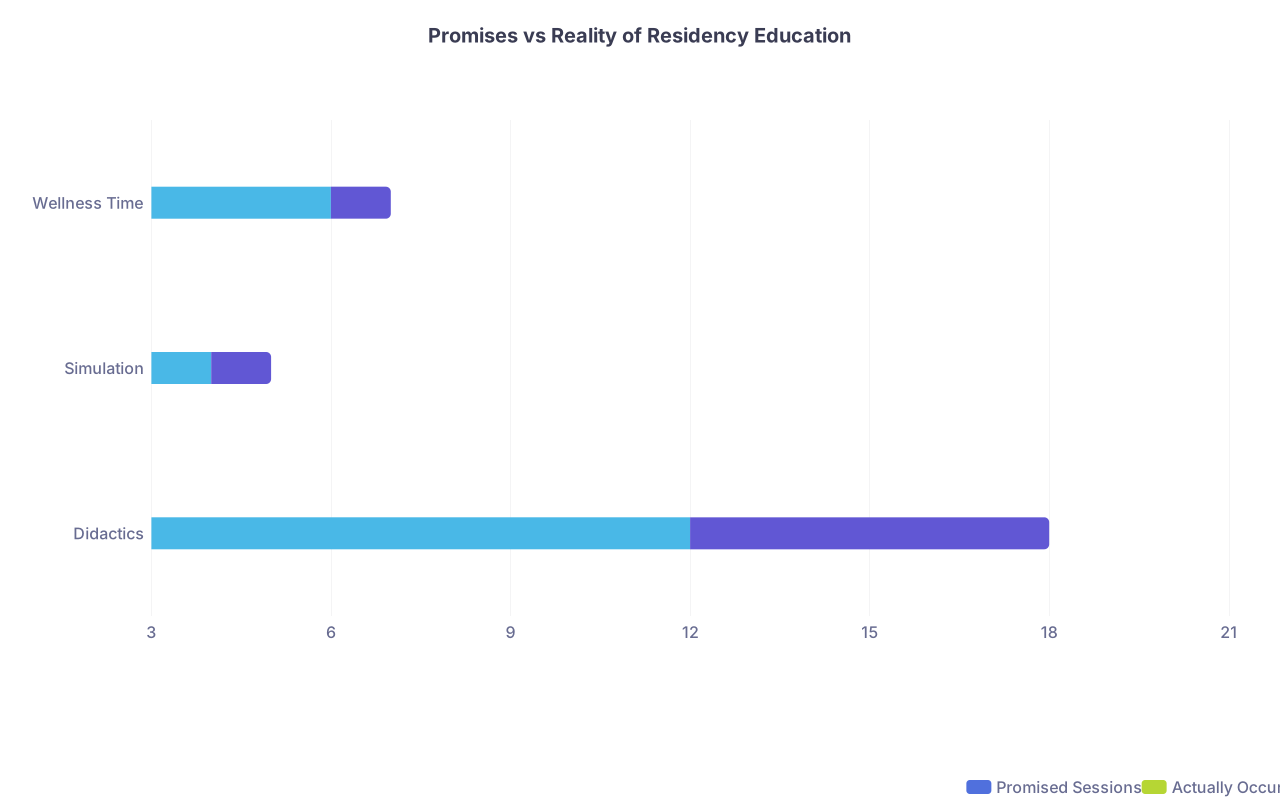
| Category | Promised Sessions | Actually Occur |
|---|---|---|
| Didactics | 12 | 6 |
| Simulation | 4 | 1 |
| Wellness Time | 6 | 1 |
How students rationalize this:
- “Honestly, I just want volume. I can study at home.”
- “Teaching isn’t everything. I learn better clinically.”
- “Every program cancels some didactics—it’s fine.”
Here’s the problem: when a program can’t protect any structured learning, it usually also can’t protect you.
Neglected education is usually a sign of:
- Overstretched faculty
- Administrative chaos
- Residents as workforce first, trainees second
You don’t need hand-holding. You do need a program that actually remembers it’s a training environment, not just a labor pool.
Ask residents directly:
- “How often are didactics cancelled?”
- “Do people get in trouble for skipping conferences?”
- “When was the last simulation session, honestly?”
If they pause, glance at each other, or give a “well, it depends” answer—believe that. Not the brochure.
Red Flag Cluster #5: PD and Leadership You Just Don’t Trust (But Pretend You Do)
Your Program Director can make your life much better—or much worse. This is not a detail.
Big mistake: students ignore their gut when something feels off.
Red flags you rationalize away:
- The PD dodges questions about resident attrition or leaves of absence.
- They blame “one bad resident” for any issues, never the system.
- They talk more about metrics, board pass rates, and “reputation” than humans.
- They subtly badmouth other programs, other specialties, or prior residents.
You tell yourself:
- “They’re just old-school.”
- “They seemed intense but fair.”
- “Maybe they were just having an off day.”
No. If they’re “off” on the day they’re trying to recruit you, imagine when they’re not performing.
You are not hiring a mentor. You are entering a power structure where this person can:
- Decide your schedule.
- Control your evaluations and letters.
- Gatekeep your fellowship opportunities.
- Influence whether you get time off for disasters in your personal life.
If you wouldn’t trust this person to handle your crisis, don’t rank them high because “the fellowship match is strong.”
Red Flag Cluster #6: “But the Name Is So Good…”
This one derails smart people every single year.
The prestige drug is strong:
- Big-name hospital
- Big-name city
- Big-name fellowship placements
You know what else is big?
- Burnout rates
- Resident resentment
- The gap between branding and reality
I’ve seen students choose a “top” program where:
- Residents openly warned them it was malignant.
- Wellness was a punchline.
- Leadership was hostile to feedback.
And the student still said, “But matching there will open doors for life.”
Sometimes true. Sometimes you just collect trauma with your brand name.
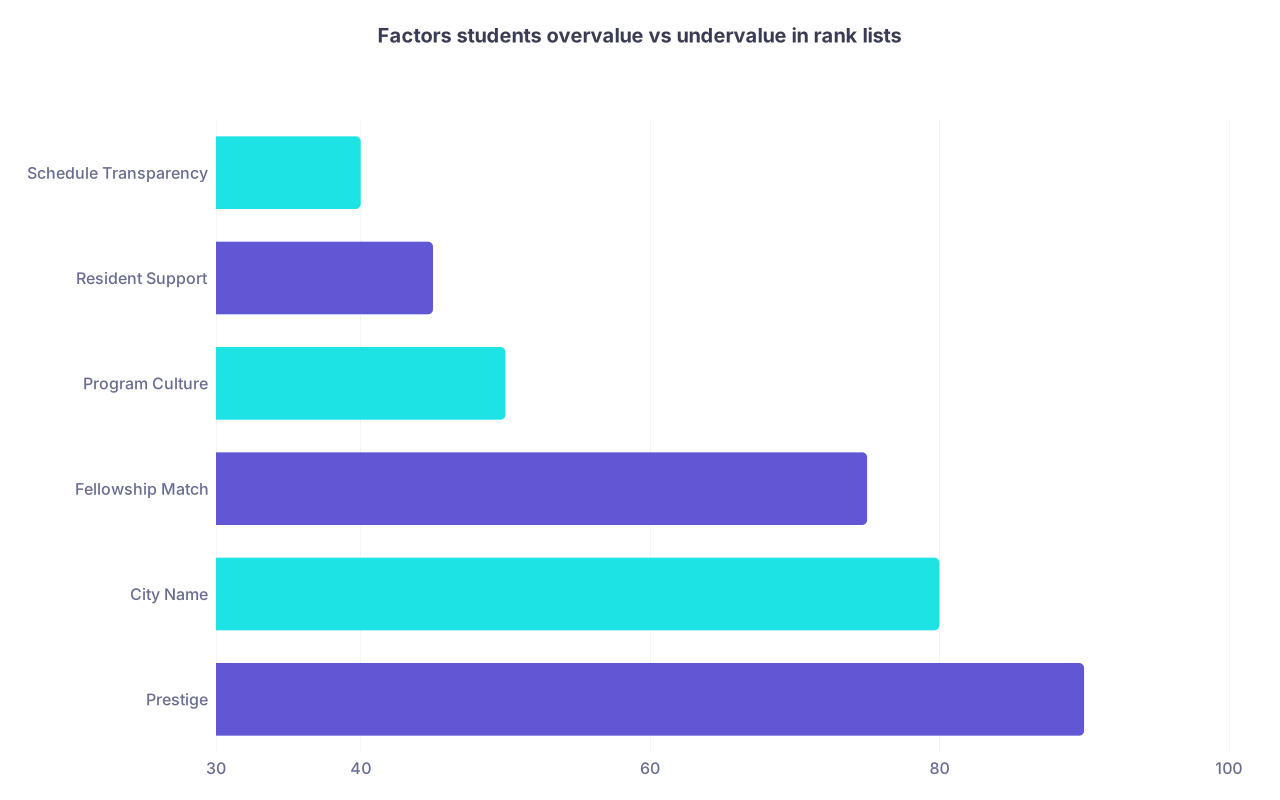
| Category | Value |
|---|---|
| Prestige | 90 |
| City Name | 80 |
| Fellowship Match | 75 |
| Program Culture | 50 |
| Resident Support | 45 |
| Schedule Transparency | 40 |
Here’s the pattern:
- Overvalued: prestige, location, research name, fancy facilities.
- Undervalued: leadership stability, schedule honesty, resident turnover, how people actually talk to each other.
Yes, reputation matters for some fellowships. But not at the cost of your mental stability and physical health. A mid-tier program where you thrive beats a top-tier place where you’re crushed.
Red Flag Cluster #7: The “Something Felt Off” You Keep Quiet About
This is the one students regret the most.
They say, months later:
- “I can’t explain it. The day just felt weird.”
- “The residents looked scared when faculty were around.”
- “People made jokes that didn’t feel like jokes.”
You know what your brain did? It flagged a mismatch between what you were told and what you saw. And then you muted that alarm because you didn’t want to deal with what it meant.

| Step | Description |
|---|---|
| Step 1 | Notice Red Flag |
| Step 2 | Rank Lower or Remove |
| Step 3 | Create Excuse |
| Step 4 | Tell Self Others Are Worse |
| Step 5 | Keep Program High On List |
| Step 6 | Admit Risk? |
Your intuition is not mystical. It’s pattern detection. Years of watching humans, hierarchies, and how people act when they’re afraid or unhappy.
If you left a program feeling drained, uneasy, or low-grade anxious—but the website looked impressive—you need to respect that dissonance, not bulldoze it.
Ask yourself:
- If there were no name, no city, no pressure—would I want to work there?
- If my best friend described that vibe to me, what would I tell them to do?
Then actually follow your own advice.
The Future-Focused Trap: “I’ll Use This as a Stepping Stone”
This is a subtle, dangerous rationalization in the “future of medicine” mindset.
You tell yourself:
- “I’ll just get through this residency, then I’ll do a cush fellowship.”
- “This program will look amazing when I apply for [competitive specialty/fellowship].”
- “I’m playing the long game. Sacrifice now, freedom later.”
Here’s what you’re ignoring:
- Burnout alters your ambitions. People who wanted competitive fellowships often just want out by PGY3.
- Toxic environments can wreck your confidence, making that “big future plan” much harder.
- Chronic stress changes your health. Anxiety, depression, physical illness—they’re not theoretical.

You cannot just “use” a malignant program as a stepping stone. They will use you harder. And they have more leverage.
Smart long-term thinking in medicine includes protecting the person who’s supposed to live in that future. That’s you.
Practical: How Not to Build a Disaster Rank List
Let’s be concrete. Here’s what people don’t do—and later wish they had.
Write down every red flag the same day as each interview.
Not the next week. The same day. Short, honest bullets:- “Residents look broken.”
- “PD felt defensive.”
- “No one could explain schedule clearly.” When you make your rank list, reread this before you look again at websites or name brands.
Give each program a “Trust Score.”
Not overall score. Just: how much do I trust these people to have my back when things go bad?
If the trust score is low, the rank should be low—no matter the name.Ask one brutally honest question: “If I burn out here, what happens?”
Watch their face. Listen to the answer. Programs that minimize or dodge this? Dangerous.Refuse to rank programs you know would be harmful.
Yes, even if it means ranking fewer places. A match in a place that breaks you is not a win.Talk to someone who’s not in love with prestige.
A primary care doc, a hospitalist, an older attending who’s seen what bad programs do to people. Ask what they would prioritize.
FAQ (Exactly 5 Questions)
1. Is it ever okay to rank a program I didn’t “click” with but that has great training?
Yes—with conditions. Not clicking socially is different from seeing true red flags. If residents seem tired but supported, leadership seems fair, schedules are transparent, and your discomfort is just “I didn’t find my people,” that’s acceptable. But if “great training” is code for constant misery and fear, you’re romanticizing suffering. Don’t do that.
2. Should I ever rank a program I actively disliked just to avoid not matching?
If you truly believe a program would be hazardous to your mental or physical health, do not rank it. An unmatched year is painful but temporary. A malignant residency can harm your health, your career, and your ability to practice long term. A low-ranked “safety” that’s actually unsafe is not safety.
3. Residents told me things seemed bad “a few years ago” but are improving. How much weight should I give that?
Look for proof, not promises. Evidence of real change: new PD with clear policies, documented schedule reform, multiple residents independently saying, “It used to be rough but here’s what’s changed.” If it’s all vague “we’re working on it” with no specifics, you’re volunteering as the experiment cohort. Be very cautious.
4. What if my dream fellowship mainly takes from one program that feels a bit toxic?
You’re trading one hypothetical future win for a very real present risk. Ask yourself if you’d still want that fellowship after 3–5 years of chronic stress. Often, a “slightly less famous” program with decent culture can still get you where you want to go—without breaking you on the way. Do not sacrifice your health on the altar of one pipeline.
5. Everyone says all residencies are hard. How do I know I’m not just being soft about normal hardship?
Normal: being tired, overwhelmed at times, stretched, pushed to grow, occasionally frustrated with schedules.
Not normal: constant fear of leadership, regular duty hour violations treated as normal, zero support when people struggle, high resident attrition, “we survive” as the dominant narrative. When multiple residents independently warn you or give dark, bitter commentary—that’s not you being soft. That’s you picking up on dysfunction.
If you remember nothing else:
- Do not let prestige, location, or fear of not matching drown out what you actually saw and heard.
- Any program that shrugs at your well-being will not magically treat you better once you’re trapped there.