
When ‘We’re Like a Family’ Is Actually a Residency Red Flag Phrase
What do you do when three different interviewers say “We’re like a family here,” but the residents all look exhausted and no one laughs?
If you do not learn to decode that sentence, you are exactly the kind of applicant programs take advantage of. That phrase is one of the most abused lines in residency recruitment. Sometimes it is genuine. Far too often it is a smokescreen.
Let me be direct: “We’re like a family” is not a data point. It is a script. Your job is to figure out which kind of script you are hearing—supportive community… or boundary‑less dysfunction.
You are about to commit years of your life, your sanity, and a big chunk of your early career to a single program. Treat this phrase like a biopsy result: you do not ignore it, and you certainly do not accept it without context.
Why Programs Love Saying “We’re Like a Family”
Programs use emotional language because it works. Applicants are anxious, lonely, and tired. “Family” sounds safe.
Here is the problem: the same words are used by:
- Truly supportive programs that have each other’s backs
- Toxic programs with no boundaries and chronic overwork
- Mediocre programs trying to distract you from deeper issues
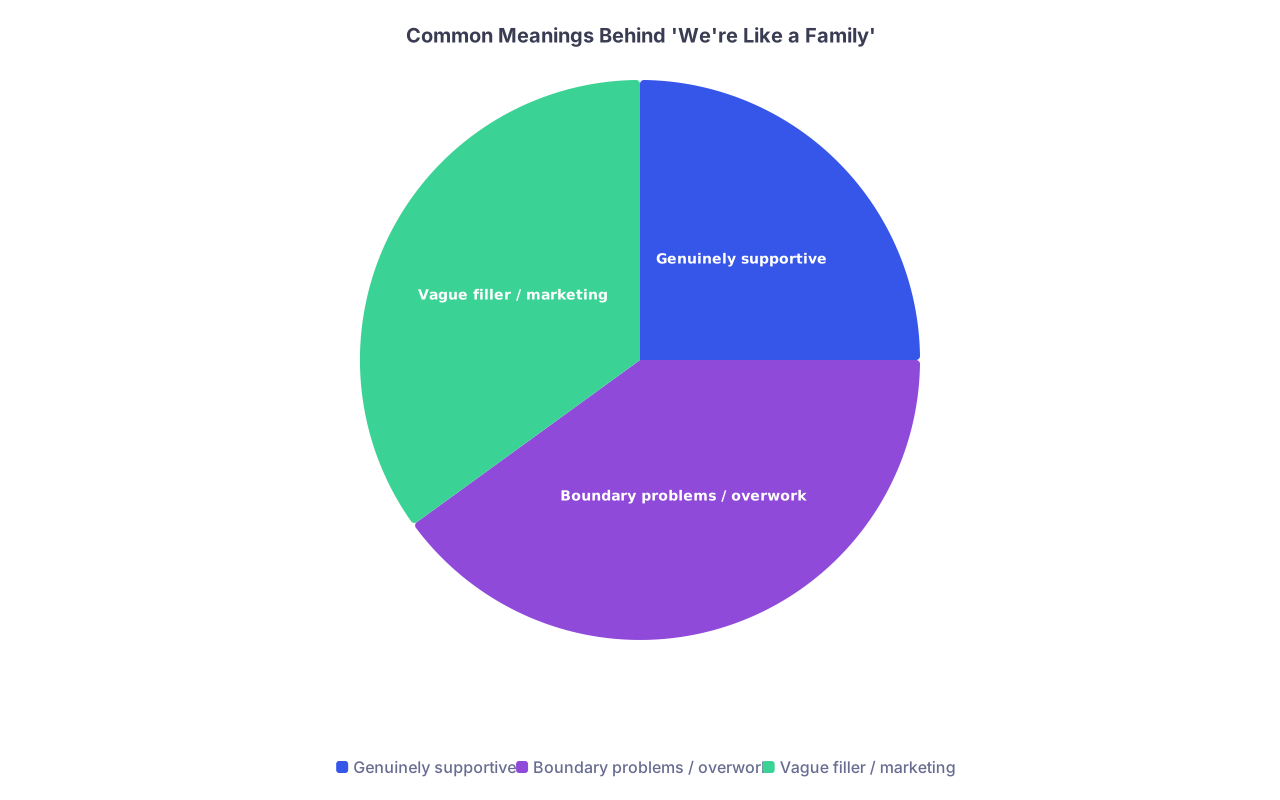
| Category | Value |
|---|---|
| Genuinely supportive | 25 |
| Boundary problems / overwork | 40 |
| Vague filler / marketing | 35 |
I have heard program directors throw out “We’re like a family” right after:
- Residents just told me they “never leave on time but we manage”
- A chief apologized for “some recent turnover” that was clearly a mass exodus
- A coordinator laughed off 80‑hour weeks as “part of the culture here”
That is not family. That is PR.
The mistake you must avoid: hearing “family” and assuming it means support, camaraderie, and empathy. In residency, it can also mean:
- You will cover everyone’s holes.
- Saying no will be treated as betrayal.
- Personal life will come second. Always.
You need to learn the difference.
The Healthy “Family” vs the Toxic “Family”
The phrase by itself is meaningless. The pattern around it is what matters.
| Aspect | Healthy 'Family' | Toxic 'Family' |
|---|---|---|
| Boundaries | Respected, personal life protected | Guilt for saying no, expected to be always on |
| Coverage | Shared fairly, formal systems | Informal pressure, chronic last‑minute asks |
| Feedback | Direct, safe to disagree | Dissent labeled as “not a team player” |
| Turnover | Low, residents stay connected | Frequent resignations, vague explanations |
| Wellness | Structured and enforced | Talked about, rarely honored |
If a program says “we’re like a family,” your internal translation should immediately be:
“Show me exactly what you mean by that.”
Here is how healthy versions sound when you press for specifics:
- “When intern X had a parent in the ICU, everyone shifted around call so they could be there. No one got punished for it.”
- “Night float texts the chiefs if they are drowning. Someone comes in. It is not martyr culture.”
- “We have a firm rule: if you work post‑call, you log it, and we fix it. No hero stories.”
Here is how unhealthy “family” shows up when you look closer:
- “We do what we have to do to get the job done.” (Translation: we violate duty hours routinely.)
- “We are very close, we hang out all the time after work—no matter how busy we are.” (Translation: you will have no life outside the program.)
- “People here do not really complain; we are all in it together.” (Translation: if you speak up, you are the problem.)
If no one can give you concrete, recent examples of support that cost someone else time or effort, but they keep saying “family,” treat that phrase as a red flag, not a comfort.
Red Flag Patterns Hiding Behind “We’re Like a Family”
The phrase becomes dangerous when it is used to paper over specific dysfunctions. Here are the big ones I see repeatedly.
1. Boundary‑less Culture Disguised as Commitment
Watch for any combination of these:
- Residents laugh off 80‑hour weeks like it is a badge of honor
- People brag about working while sick
- Saying “no” is framed as “not a team player”
- There is no clear structure for jeopardy, backup, or sick call, “we just figure it out”
That last line—“we just figure it out”—is a cousin of “we’re like a family.” It usually means “we rely on guilt and informal pressure instead of a real system.”
Programs like this will:
- Expect you to come in “for just a few hours” post‑call
- Text you on days off to “help out for a bit”
- Start sentences with “Can anyone be a team player and…” whenever there is a gap in coverage
You will get applauded for saying yes. You will get labeled if you say no. That is not family; that is codependency.
2. Guilt‑Based Coverage and “Helping Out”
“Family” is often code for “we expect you to sacrifice without complaining.”
Red flags:
- Coverage is “handled internally” but no one can explain the rules
- Chiefs or seniors talk about “stepping up” more than they talk about fair scheduling
- People dodge your questions about what happens when someone is out unexpectedly
If it is truly “family,” they should be able to describe:
- Who calls whom
- How often it happens
- How they prevent the same people from always paying the price
If the answer feels like vibes instead of policy, assume you will be the one pulled in on your only free Saturday because “we are a family and we help each other.”

| Step | Description |
|---|---|
| Step 1 | Hear We are like a family |
| Step 2 | Healthy culture likely |
| Step 3 | Dig deeper |
| Step 4 | High risk - avoid ranking highly |
| Step 5 | Neutral phrase - gather more data |
| Step 6 | Consider positively but verify |
| Step 7 | Protect your well being |
| Step 8 | Ask for specifics |
| Step 9 | Other red flags present |
3. Shielding Toxic Personalities
Sometimes “family” means “we are protecting someone you would never willingly work with.”
Listen carefully when someone says “we’re like a family” right after you ask about:
- Leadership responsiveness
- Problem attendings
- Conflict resolution
Common tells:
- “We are a small, tight‑knit group, so conflicts stay in‑house.”
- “We prefer to handle things internally.”
- “We are all very close, so occasionally emotions run high… but we work through it as a family.”
Translation: There is likely at least one attending or senior who is:
- A bully
- Chronically inappropriate
- Untouchable
And instead of formal reporting and consequences, they manage it with whisper networks and “just avoid rounds with Dr. X if you can” advice.
Programs with real psychological safety never need to hide behind “we handle it like a family.” They say things like:
- “We have removed people from roles when they crossed lines.”
- “Residents report anonymously through X system; we have acted on it.”
- “Here is a recent example of feedback we acted on at the program level.”
If you hear “family” in the exact moment you are trying to assess safety and accountability, that is not a warm fuzzy. It is a warning.
How to Test the “Family” Claim in Real Time
You do not have to accept or reject the phrase blindly. You can stress‑test it. Here is how without sounding confrontational.
1. Ask for a Time It Cost Someone Something
When someone says, “We’re like a family,” calmly follow with:
- “Can you tell me about a recent time that really showed that, especially when it was inconvenient for others?”
Good answers:
- “Last month an intern’s childcare collapsed, we reshuffled the schedule for two weeks so they could stay afloat.”
- “When a resident failed Step 3, the program protected their time for dedicated study and reduced elective demands.”
Bad answers:
- “We all hang out together…”
- “We are always joking around…”
- “We are like family because we see each other more than our real families.” (This one is almost always a red flag.)
If they cannot produce a single concrete example under pressure, the “family” talk is probably marketing, not reality.
2. Cross‑Check with Different Levels
Do not accept one person’s definition. Ask:
- The program director
- A chief resident
- A PGY‑1 and a PGY‑3/4
Ask each some version of:
- “People have described this program as ‘like a family.’ What does that look like in your day‑to‑day life?”
Then compare. If you get three wildly different answers, especially if residents sound cautious or rehearsed, something is off.
3. Watch Residents’ Faces When It Gets Said
I have seen this scene over and over:
- PD: “We are like one big family here.”
- Residents: small tight smiles, staring at the table, someone coughs
- One resident glances at another, then looks away
That micro‑body language tells you much more than any formal answer. Healthy programs? Residents nod, some smile genuinely, someone jumps in with a specific story.
If every time “family” is said, the room goes stiff, believe the body language, not the slogan.
Hidden Consequences If You Misread “Family”
Let me spell out what happens when you ignore this red flag and rank a bad “family” program highly.
1. Burnout Comes Faster and Hits Harder
In a boundary‑less “family,” you will:
- Pick up extra shifts “just this once” until it is routine
- Get texts on days off and feel pressure to say yes
- Feel guilty for using your own vacation time
Recovery time disappears. Sleep erodes. You stop doing anything outside of work. Then you begin to think the problem is you, not the culture.
By PGY‑2, you are staring at the wall in your call room at 2 AM wondering how you got here. I have watched strong interns crumble in these programs.
2. Saying “No” Becomes Dangerous
In unhealthy “family” programs, boundaries equal betrayal. You say:
- “I cannot come in, I have a medical appointment.”
- “I am post‑call; I need to go home.”
- “I am not comfortable doing that procedure without supervision.”
And you are labeled:
- “Difficult”
- “Not committed”
- “Not a team player”
Evaluations suffer. Letters get lukewarm. Your future fellowship or job options narrow—because you refused to be exploited.
3. Personal Life Gets Slowly Erased
Unhealthy “families” act confused or offended when you prioritize anything else:
- Partner, kids, or parents
- Health needs
- Religious commitments
- Therapy or mental health care
You will hear things like:
- “We are all sacrificing right now.”
- “Everyone is missing important stuff; that is residency.”
- “We are your family here.”
That last line is brutal. It is an attempt to replace your real support system with a workplace that burns you out.
Distinguishing “We’re a Family” from Other Phrases
Not every soft phrase is bad. Some are actually more useful than “family.” Pay attention to the exact wording programs use.
| Phrase | Often Indicates |
|---|---|
| "We are like a family" | Could be support or boundary issues |
| "We protect each other's time" | Focus on boundaries, usually a good sign |
| "We work hard and play hard" | High workload, party culture, watch closely |
| "We are very close knit" | Small program—can be great or suffocating |
| "We never say no" | Major red flag, no boundaries |
Out of all of these, the most dangerous in my experience:
- “We never say no.”
- “We do not really pay attention to duty hours; we just do what patients need.”
- “We are like a family, so people just step up when asked.”
When you hear those, do not romanticize them. See them as what they usually are: rationalizations for systemic overwork.
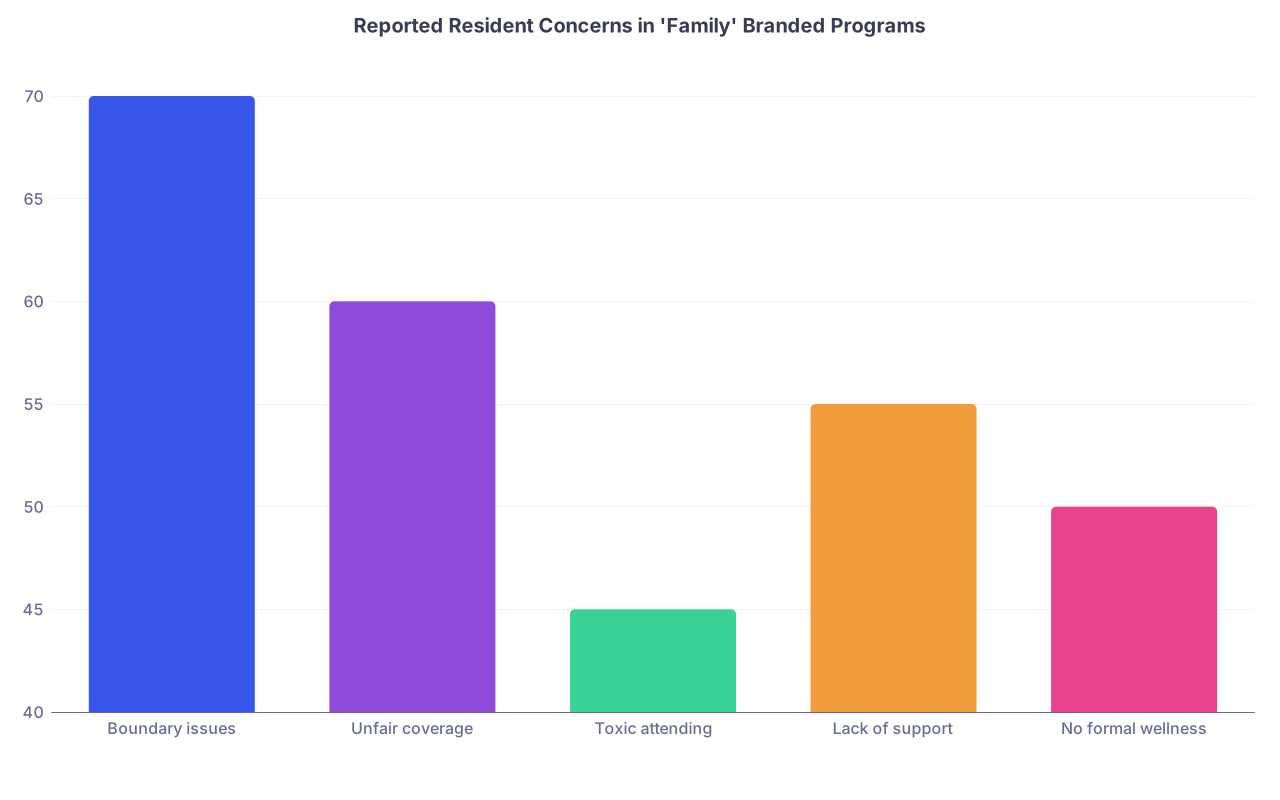
| Category | Value |
|---|---|
| Boundary issues | 70 |
| Unfair coverage | 60 |
| Toxic attending | 45 |
| Lack of support | 55 |
| No formal wellness | 50 |
Questions You Should Actually Ask (Instead of “Are You Like a Family?”)
If you want to protect yourself, stop asking, “Is the program supportive?” Everyone will say yes. Ask questions that produce measurable answers.
Here are better questions that cut through “family” fluff:
- “In the past year, how many times did someone get called in on a true day off to cover unexpectedly?”
- “What happens if an intern texts at 5 AM and says they have vomiting and cannot work?”
- “Can you tell me about a resident who was really struggling? What did the program concretely do to support them?”
- “What formal backup systems exist for:
- Sick call
- Parental leave
- Mental health crises”
- “How often do you actually leave on time on non‑call days?”
Pay attention to:
- The speed of their answers
- Whether different residents tell the same story
- Whether they look at each other before answering
If the only time you hear the word “family” is in prepared presentations, and never in honest side conversations with residents, you have your answer.
How to Use This Red Flag When You Rank
You do not need to automatically blacklist every program that says “We’re like a family.” You do need to combine it with the rest of your data.
Practical approach:
If you hear “family” + see clear, enforced boundaries
- Residents go home post‑call
- People use vacation without guilt
- Coverage is structured, not emotional
→ That phrase is probably harmless, maybe even accurate.
If you hear “family” + residents look fried + vague answers on support
→ Move that program down. Significantly.If you hear “family” used to dodge questions about:
- Problem faculty
- Duty hour violations
- Resident departures
→ Treat it as a big red flag. You are not “overly sensitive.” You are seeing what they are trying not to say.
If you walk away from interview day thinking, “They were so nice, it felt like family,” but…
- You have no concrete understanding of workload
- You never got straight answers about call
- Residents kept saying “it’s busy but manageable” with tired smiles
Go back through your notes. Apply the test again, with less emotion and more skepticism.
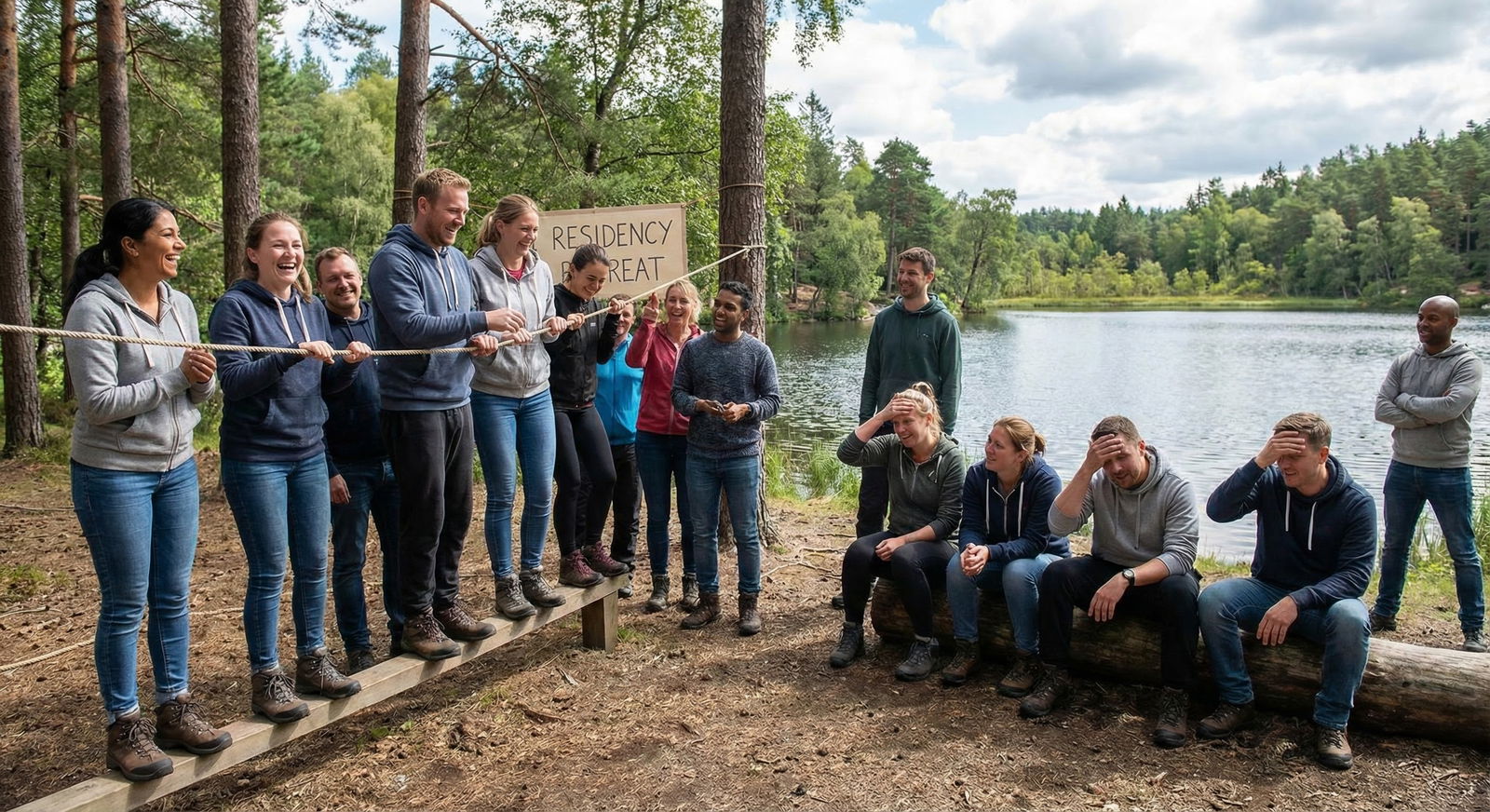
Bottom Line: Do Not Let “Family” Put You to Sleep
Keep these points in your head:
- “We’re like a family” is not a compliment by itself. It is a cue to dig deeper into boundaries, coverage, and accountability.
- The real test is behavior: how they handle sickness, failure, conflict, and time off—not how warmly they talk on interview day.
- When that phrase shows up alongside vague answers, overwork, or visible resident fatigue, treat it as a residency red flag and protect your rank list accordingly.