The resident who “jokes” about a toxic workload is not being funny. They are handing you a warning sign you would be foolish to ignore.
If you shrug off those comments as “just how residency is,” you are doing exactly what dangerous programs rely on: normalizing dysfunction. I have watched students match into burnout factories because they laughed along when they should have asked hard questions and walked away.
You are not just evaluating a residency’s prestige, case volume, or fellowship match. You are evaluating whether you can survive there with your health, ethics, and basic humanity intact.
This is where applicants make some of their worst mistakes.
The “Jokes” That Are Actually Alarms
You will hear these sooner than you think—on interview day, during resident dinners, on away rotations, even in DMs from “friendly” residents.
Common lines that are almost never harmless:
- “We basically live here. You will forget what sunlight looks like.”
- “You will have your first mental breakdown by November. We all did.”
- “Day off? What is that?”
- “We call it a golden weekend if we get to sleep one night.”
- “You will learn so much because you are drowning all the time.”
Those are not personality quirks. They are data.
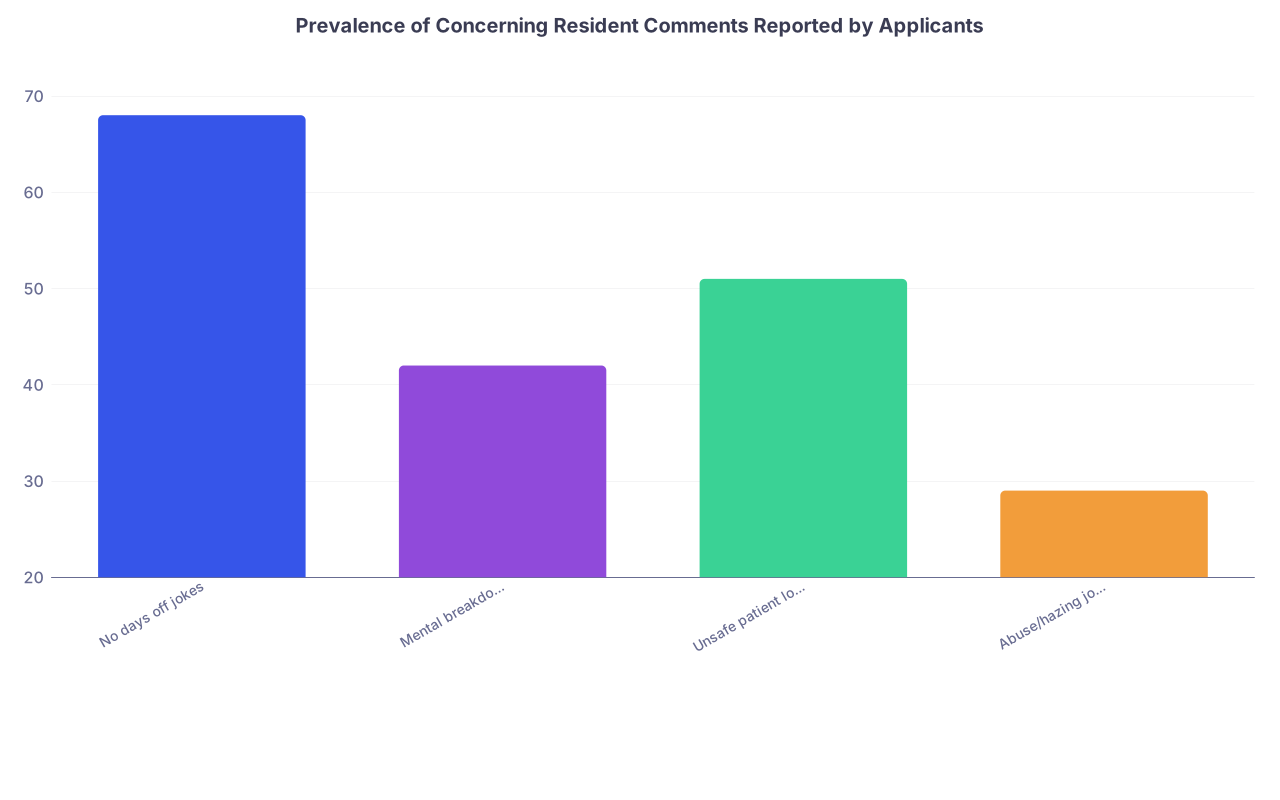
| Category | Value |
|---|---|
| No days off jokes | 68 |
| Mental breakdown jokes | 42 |
| Unsafe patient load jokes | 51 |
| Abuse/hazing jokes | 29 |
Applicants make two predictable mistakes here:
- They interpret these comments as bonding or dark humor instead of truth wrapped in sarcasm.
- They assume “It cannot be that bad” because the program is brand-name, or the residents look successful on paper.
You are hearing the most honest thing those residents will say all day. They know faculty and leadership are listening. So they code it as humor. But they are absolutely telling you what the culture tolerates.
A simple rule
If a resident has to turn their suffering into a joke to make it socially acceptable, the workload is probably worse than they are allowed to say openly.
Why You Laugh It Off (And Why That Will Hurt You)
Let me be blunt: the system is built so that you doubt yourself before you doubt the program.
You will rationalize red flags because:
- You fear being “soft” or “not resilient enough”
- You are terrified of not matching, so every program feels like a blessing
- You have already internalized the “medicine is suffering” narrative from med school
- You see impressive fellowship matches and convince yourself this is the price of success
I have watched applicants say things like:
“They said they work 90–100 hours some weeks, but everyone laughed, so I guess it is exaggerated.”
“They joked that someone passed out in the OR from exhaustion once. But they seemed proud of ‘pushing through’.”
That is cognitive dissonance. You are flattening your own alarm bells because facing them fully would mean rethinking your rank list, your specialty choice, and your narrative of what it means to be a “good” doctor.
Here is the mistake: assuming everyone is exaggerating.
Programs almost never exaggerate workload in front of applicants. They underplay it. If anything, those jokes are a watered‑down version of what actually happens when you stop interviewing and start signing orders at 3 a.m.
The Specific “Jokes” That Should Stop You Cold
Let us get concrete. There are patterns that correlate disturbingly well with toxic, unsafe programs.
1. “We log 80 hours… on the computer”
This one is classic.
Residents say, with a grin: “We always log 80 hours. No matter what. Funny how that works.”
Translation: Actual hours exceed ACGME limits. Residents are pressured to falsify hours to keep accreditation and leadership happy. You will have no institutional protection when you are dangerously exhausted.
Red flag escalates if you hear:
- “You will get a talk if you log over 80”
- “We were told to be ‘creative’ with our hours”
- “Do not be the one who gets us in trouble by over-logging”
That is not a misunderstanding. That is systemic dishonesty.

2. “You will carry 20–30 patients alone at night. You will be fine.”
The “you will learn so much” line is weaponized constantly.
Pay attention when residents describe night float or call:
- “Cross-covering 80 patients is normal”
- “Nights are wild—codes all the time and you are the only one”
- “Seniors are available… kind of… if you really beg”
Unsafe ratios are not a joke. They are exactly how mistakes happen, licenses get risked, and malpractice lawsuits appear with your name on them. You are still responsible for the orders, even if you were “just an intern” drowning at 3 a.m.
3. “We eat our young—haha, but we are like a family”
Whenever someone has to assure you they are “like a family,” ask yourself which family they mean. The loving kind. Or the dysfunctional one where everyone walks on eggshells.
Things I have heard residents say at dinners:
- “Interns do all the scut. That is what they are for.”
- “We like to toughen the interns up. You will cry; it is fine.”
- “We all got yelled at until we learned. It builds character.”
If hazing, shaming, or public humiliation are normalized as “education,” you are not walking into a teaching environment. You are walking into a power-abuse culture.
4. “Wellness? Our wellness is finishing notes before midnight”
Programs will check the “wellness” box on PowerPoint slides:
- “We have free pizza once a month!”
- “We have yoga… if you can get off the floor” (smirk)
Listen to what residents say afterwards, when faculty step away:
- “No one uses the counseling service—everyone is scared it gets back to leadership”
- “We had a wellness half-day once; we just used it to sleep”
- “If you call in sick you are basically dead to them”
A program that jokes about wellness while quietly punishing sick days and mental health care is dangerous. You cannot “out-resilience” a system that is built to grind you down.
How To Decode Resident Humor Without Getting Played
You are not a mind reader. You need a way to separate healthy dark humor (which most specialties have) from red-flag humor that signals structural toxicity.
Use a simple three-part filter:
| Filter Question | Healthy Answer | Red-Flag Answer |
|---|---|---|
| Is there backup? | Seniors/attendings reliably help | You are on your own |
| Is there choice? | People can say no sometimes | No one ever says no |
| Is there recovery? | True days off and coverage | “Golden weekends” are rare |
Then test the environment with specific follow-ups:
Instead of: “So you guys work hard, huh?”
Ask:
- “When you are overwhelmed on nights, what happens?”
- “How does the program respond if someone says they are burnt out?”
- “How often do people use their actual vacation days? Do they get covered fully?”
- “What happens if duty hour violations are reported?”
Watch for:
- Nervous laughter followed by “uh, we manage”
- Glances at each other before answering
- “Off the record…” followed by a different story
- “It is better now” with no concrete explanation of what changed

| Step | Description |
|---|---|
| Step 1 | Hear concerning joke |
| Step 2 | Likely dark humor |
| Step 3 | Ask specific follow up |
| Step 4 | Note but continue evaluating |
| Step 5 | Major red flag |
| Step 6 | Consider dropping program |
| Step 7 | About hours, safety or abuse |
| Step 8 | Response consistent and specific |
If the more you ask, the less straight the answers become, stop romanticizing the program. They are telling you who they are.
The Psychological Trap: “Everyone Suffers, So I Should Too”
This is the quiet engine behind so many bad rank lists.
You hear chiefs laughing about 28‑hour calls with no breaks and think: “I guess this is just what surgeons/internists/OBs do.” Residents half-joke that “If you are not suffering, you are not learning,” and you absorb that as a standard.
Here is the lie: that extreme, chronic overwork is a necessary price for competence.
Good programs produce strong clinicians without breaking them. They:
- Protect post‑call days and enforce them
- Respect duty hours instead of framing them as “suggestions”
- Distribute scut work more fairly (and sometimes hire more support staff instead of using residents as cheap labor)
- Treat sick days and mental health issues as legitimate, not moral failures
Toxic programs lean on tradition and machismo: “We did it this way, and we turned out fine.” (Newsflash: many of them did not “turn out fine.” They turned out divorced, bitter, or numb.)
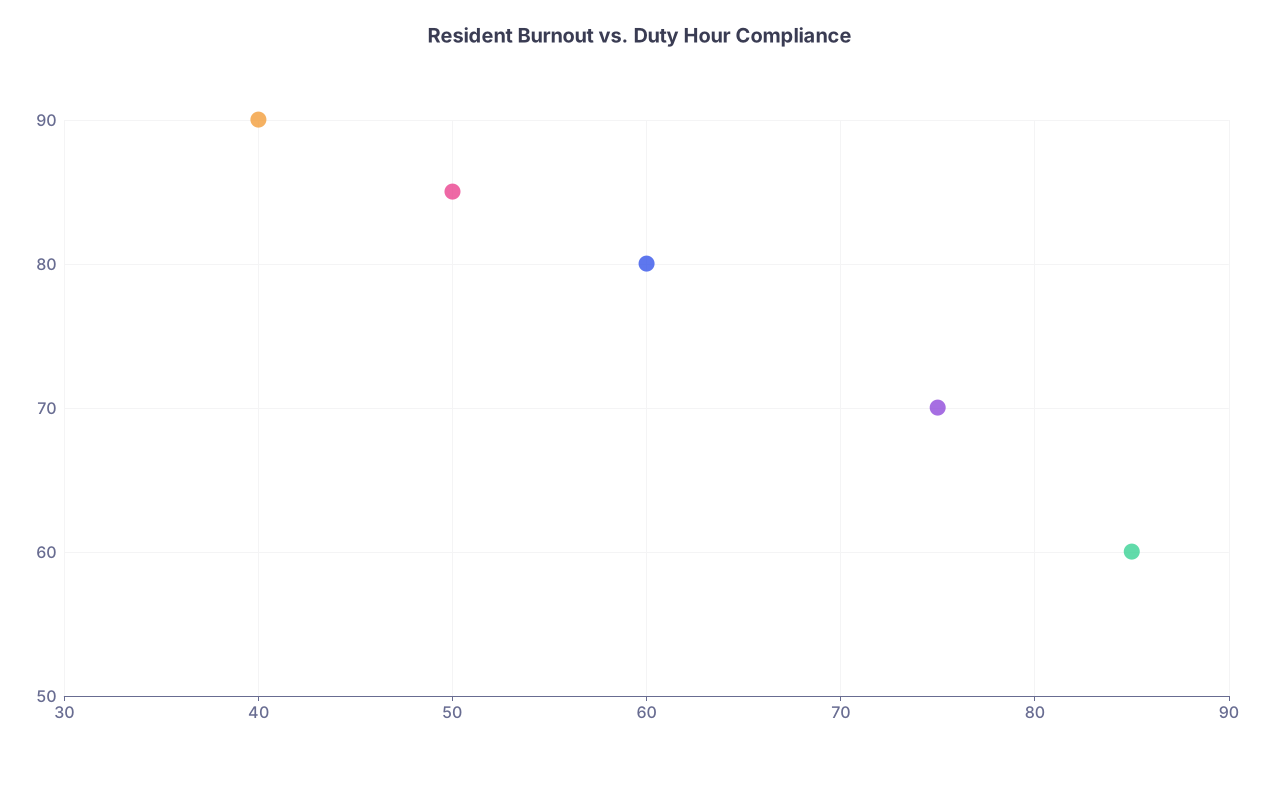
| Category | Value |
|---|---|
| Prog A | 60,80 |
| Prog B | 75,70 |
| Prog C | 85,60 |
| Prog D | 40,90 |
| Prog E | 50,85 |
Interpreting the above pattern: programs with lower duty hour compliance almost always report higher burnout. That is not theory; that is what surveys keep showing.
Do not make the mistake of assuming you will be the exception who thrives where others are drowning.
Future of Medicine: Why This Matters Beyond Your Own Survival
This is not just about protecting yourself (though that would be reason enough). Laughing off toxic workload “jokes” sustains a system that is already breaking.
Here is the uncomfortable truth: every time a cohort of residents accepts a program’s abusive culture as normal, that culture hardens.
That means:
- Patient safety erodes because exhausted residents miss things
- Teaching quality declines because burned‑out seniors cannot mentor
- The profession hemorrhages people early, feeding workforce shortages
- The next group of interns inherits an even more cynical, jaded environment
If you care about the “future of medicine” more than just in buzzwords, you need to stop rewarding programs that brag—through humor—about violating basic human limits.
The market signal is simple: Do not rank programs highly when residents consistently joke about:
- Working far beyond 80 hours
- Being unsafe on nights
- Being punished for being human (sick, pregnant, depressed, grieving)
- Leadership ignoring or mocking wellness
Programs respond to applicant behavior. If excellent candidates keep choosing programs that respect workload and call out toxicity, others eventually follow or lose competitiveness.
You are not powerless here. But you do have to be willing to say no.
How To Protect Yourself During Interviews and Rotations
Here is what applicants who avoid disaster do differently.
During pre‑interview socials
You are relaxed, food is out, some residents have a drink in hand. This is when the truth leaks out.
Ask:
- “What was your hardest month in the last year? What made it hard?”
- “How often do you get your full weekend off?”
- “What do people complain about most when they feel safe?”
Listen for:
- “Honestly, the work is heavy but we have backup. My seniors show up.”
- versus
- “The hardest part is that you are terrified to say you are overwhelmed.”
One should reassure you. The other should make you move that program down your list.
On away/audition rotations
You see the underbelly. Do not waste that access.
Watch for:
- Interns staying late consistently “to avoid bad evaluations”
- Residents charting from home after long shifts—regularly, not occasionally
- Seniors bragging about “not needing sleep” as a badge of honor
- Interns warning you: “Do not log your hours too honestly”
Those are not quirks. Those are institutionalized expectations.

Document what you see. After the rotation, write down specifics. You will forget details by the time rank lists are due, and your brain will conveniently soften the rough edges when you are desperate to match.
When A Program Is Great On Paper But Jokes Are Bad
This is where many smart applicants trip.
You see:
- Big-name institution
- Strong fellowship placements
- Huge case volume
- Fancy research
Residents “joke” about being miserable. You think: “Maybe it is worth it.”
Here is the harsh advice: if residents are consistently flagging toxic workload, prestige does not magically fix that. It amplifies it. Big-name programs know people will come anyway, so they feel even less pressure to fix cultural rot.
Ask yourself:
- Would I be okay being severely sleep-deprived for 3–5 years even if I match into a “top” fellowship afterwards?
- Would that fellowship still matter if my relationships, health, or empathy are wrecked by then?
Many of the “best” fellows I have met came from mid-tier programs that treated them as humans, gave them time to learn, and did not fry their nervous systems.
Do not make toxicity your price of admission to success. It is not required.
FAQ (Exactly 3 Questions)
1. How do I distinguish normal resident dark humor from true red flags?
Assume all “jokes” are partially true, then test them. Normal dark humor shows up alongside clear examples of support: residents say they are tired, but also talk about seniors who step in, leadership that listens, and protected time that is actually protected. Red-flag humor is consistently about being alone, unsafe, or punished for human needs, and when you ask follow-ups, the answers become vague, tense, or contradictory.
2. What if every program I visit has residents joking about being overworked?
First, do not normalize extremes. Every residency is tiring; not every residency is abusive. Focus on degree and response. Which programs have leadership that acknowledges workload strains and describes concrete changes they are making? Which programs act defensive or dismissive? If everyone seems slightly overworked but only some programs layer that with fear, dishonesty around hours, or glorified suffering, rank accordingly. Relative toxicity matters.
3. Can I safely ask about duty hour violations and burnout without hurting my chances?
Yes, if you ask intelligently. Do not accuse. Instead, ask open, specific questions: “How does the program handle it when duty hours are exceeded?” or “What changes have been made in the last few years to improve workload?” Good programs will answer directly and may even appreciate that you care about sustainability. Programs that penalize you for that question are showing you something invaluable: how they treat residents who raise concerns.
Open your interview notes and rotation memories right now. Highlight every “joke” residents made about workload, safety, or abuse. For each one, write what you actually think it meant—no sugarcoating. Then ask yourself: would you tell a close friend to rank that program highly if they heard the same thing? If the honest answer is no, stop pretending it is acceptable for you.