
The biggest residency regrets usually start on interview day—while people are too dazzled to see the red flags right in front of them.
I have watched too many strong applicants wave away warning signs because the program had a big name, a shiny new hospital, or a charismatic PD. Three months into intern year, they are emailing mentors: “I think I made a mistake.” You do not want to be that person.
This is where applicants get burned: you assume interview day is for impressing them. In reality, it is your single best chance to see how they treat people when they are on their absolute best behavior. If it looks bad that day, imagine what it looks like in February when no one cares about recruitment.
Let me walk you through the mistakes applicants make and the red flags they ignore.
1. Ignoring How Residents Actually Look And Talk
If you miss this one, the rest almost does not matter.
On interview day, residents are hand-picked, prepped, and told to smile. If they still look miserable, exhausted, or oddly flat, you should pay attention. Hard.
Visual and vibe red flags
You are not judging them for being tired. Everyone is tired. You are judging the pattern.
Watch for:
- Multiple residents with dark circles, flat affect, and that “checked-out” stare
- People joking too often about being “crushed,” “obliterated,” or “just trying to survive”
- Residents who look significantly more stressed than the level of acuity or program reputation would suggest
Listen to the throwaway comments. The nervous laughs.
“I have not had a day off in a while, but it is fine.”
“We live here, basically.”
“You just get used to not seeing your friends.”
Those are not cute bonding jokes. That is people normalizing an unhealthy baseline.
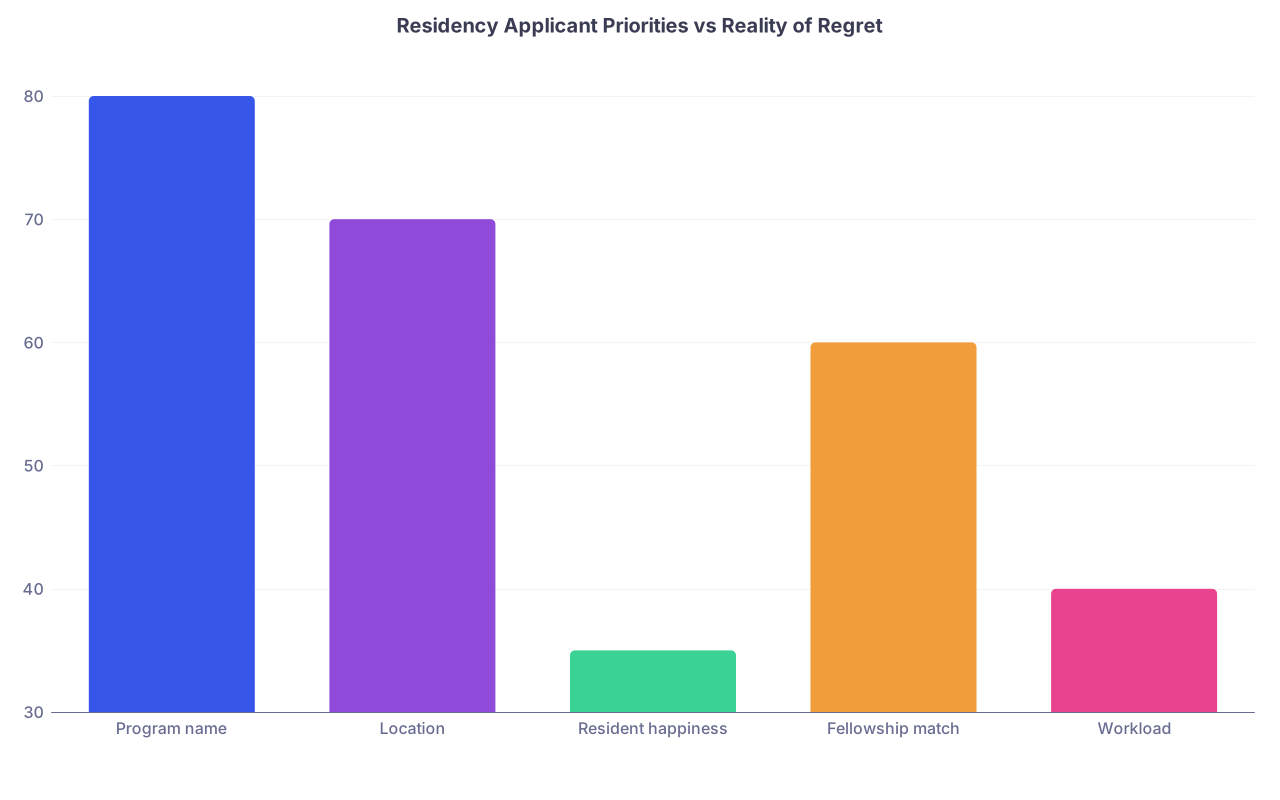
| Category | Value |
|---|---|
| Program name | 80 |
| Location | 70 |
| Resident happiness | 35 |
| Fellowship match | 60 |
| Workload | 40 |
The mistake: weighting name and prestige heavily on rank lists, then months later realizing you should have paid far more attention to evident resident misery.
The “overly rehearsed” problem
The opposite extreme can also be a red flag. When residents sound like they memorized the brochure, you are not getting truth.
Things like:
“We are like a family.” (Said by three different people in the exact same phrasing.)
“We really value wellness.” (But no one can give an example beyond “we have pizza nights.”)
If residents cannot or will not give a real, specific answer about their day-to-day life, it often means they are scared to say the quiet parts out loud.
Do not make the mistake of confusing polished with healthy.
2. Believing “We Care About Wellness” Without Proof
Programs have figured out that they have to say the word “wellness” out loud now. Many do the bare minimum: a wellness committee, a few yoga sessions, someone mentioning “protected time” that is not actually protected.
Your job is to separate marketing from reality.
Demand specifics, not buzzwords
When they say they prioritize wellness, ask:
- “What was the last meaningful wellness initiative you implemented that changed schedules or workload?”
- “Tell me about how you handle coverage when residents are sick or having a bad mental health day.”
- “How often do residents come to you about burnout, and what happens next for them?”
If the answers are vague or defensive, that is your red flag.

Common fluff answers you should not trust:
- “We have a wellness half-day once a year.”
- “We do resident retreats… when scheduling allows.”
- “We are like a family, so we look out for each other.”
Translation: “We have not changed structure, we just added decorations.”
Structural wellness vs cosmetic wellness
Real wellness shows up in structure:
- Reasonable caps and enforced admission limits
- Truly protected didactics (not constantly interrupted by pages)
- Coverage systems that do not punish residents who call out
- PD and chiefs who adjust rotations if a service is consistently unsafe
- Pizza, ice cream, yoga, resilience talks, “wellness champions”
- A meditation app code email sent at 1 a.m.
- A “wellness room” that no one has time to use
Do not confuse the second list for the first. Programs do this on purpose because applicants fall for it every year.
3. Overlooking How Faculty Talk About Residents
Faculty behavior on interview day is highly curated. Yet some still cannot help revealing how they really see trainees.
Red flags from attendings and leadership:
- Joking about residents being “workhorses”
- Boasting about how “our residents can handle anything we throw at them”
- Dismissing ACGME limits as “guidelines” that “our residents want to exceed”
- Bragging about Step scores and fellowship matches while never once mentioning resident satisfaction
When faculty tell you what they value, believe them. If no one mentions growth, support, or teaching philosophy, that is intentional.
| Indicator | Healthier Signal | Red Flag Signal |
|---|---|---|
| Talk about residents | Learners, colleagues, future partners | Workhorses, machines, “coverage” |
| Response to struggles | Coaching, schedule tweaks | “They need to toughen up” |
| Success stories | Growth and confidence | Only big-name fellowships and publications |
| ACGME rules | Baseline standards | “Suggestions we sometimes stretch” |
The big mistake: missing paternalistic or punitive undertones in how attendings talk. If they sound proud of how much they can “push” residents, expect to be pushed to the point of breaking.
4. Brushing Off Chaos And Poor Organization On Interview Day
Interview day is the best version of this program. Everyone is supposed to be on their best behavior, prepared, and presentable. If the day is disorganized, that is not a fluke. That is culture.
Red flags in logistics:
- You sit in a Zoom waiting room alone for 15–20 minutes with no explanation
- Interviewers join late, leave early, or seem surprised to see you
- The schedule changes multiple times with no clear communication
- No one is clearly responsible for fixing issues during the day
If they cannot run a virtual interview day, how well do you think they run cross-cover at 2 a.m. in July?

| Step | Description |
|---|---|
| Step 1 | Disorganized Interview Day |
| Step 2 | Poor Communication Culture |
| Step 3 | Unclear Expectations |
| Step 4 | Coverage Confusion |
| Step 5 | Resident Burnout |
Applicants often rationalize this away—“they are just busy,” “tech is hard,” “it is interview season for everyone.” Do not. Every other program is also busy. Some still manage basic professionalism.
I have never seen a place with consistently excellent resident support that ran a chronically sloppy interview day.
5. Ignoring How They Handle Tough Or Critical Questions
You learn more from how a program answers uncomfortable questions than from any glossy presentation.
Ask directly (you should not soft-pedal this):
- “Have you had residents leave the program or not finish in the last 5 years? Why?”
- “What are you working on improving right now that residents have complained about?”
- “How does the program respond when residents raise concerns about toxicity on a service?”
Red flag responses:
- “No one has ever left.” (For a large program over many years, that is almost never true.)
- “I cannot think of any major concerns right now.” (Means they are not listening or not honest.)
- “We have an open-door policy; residents can always come to us.” (Said with zero specific examples.)
- Immediately pivoting to bragging about board pass rates or match outcomes.
A mature, healthy program can admit, “Yes, we had a resident leave. Here is what we learned and what changed.” If they cannot tolerate even that level of transparency with a future trainee, they are unlikely to tolerate criticism once you are inside.
6. Falling For Brand Name Over Fit And Safety
This one ruins people’s lives.
Big-name academic centers and famous programs are seductive. Applicants routinely push obvious red flags down the list because the logo looks good on a white coat.
Common self-sabotaging thoughts:
- “It is only three years; I can survive anything.”
- “This will open doors; it is worth the pain.”
- “Everyone says intern year is horrible; maybe this is just normal.”
That “just survive” approach works until it does not. Until you are the one crying in your car post-call. Or thinking about leaving medicine entirely.
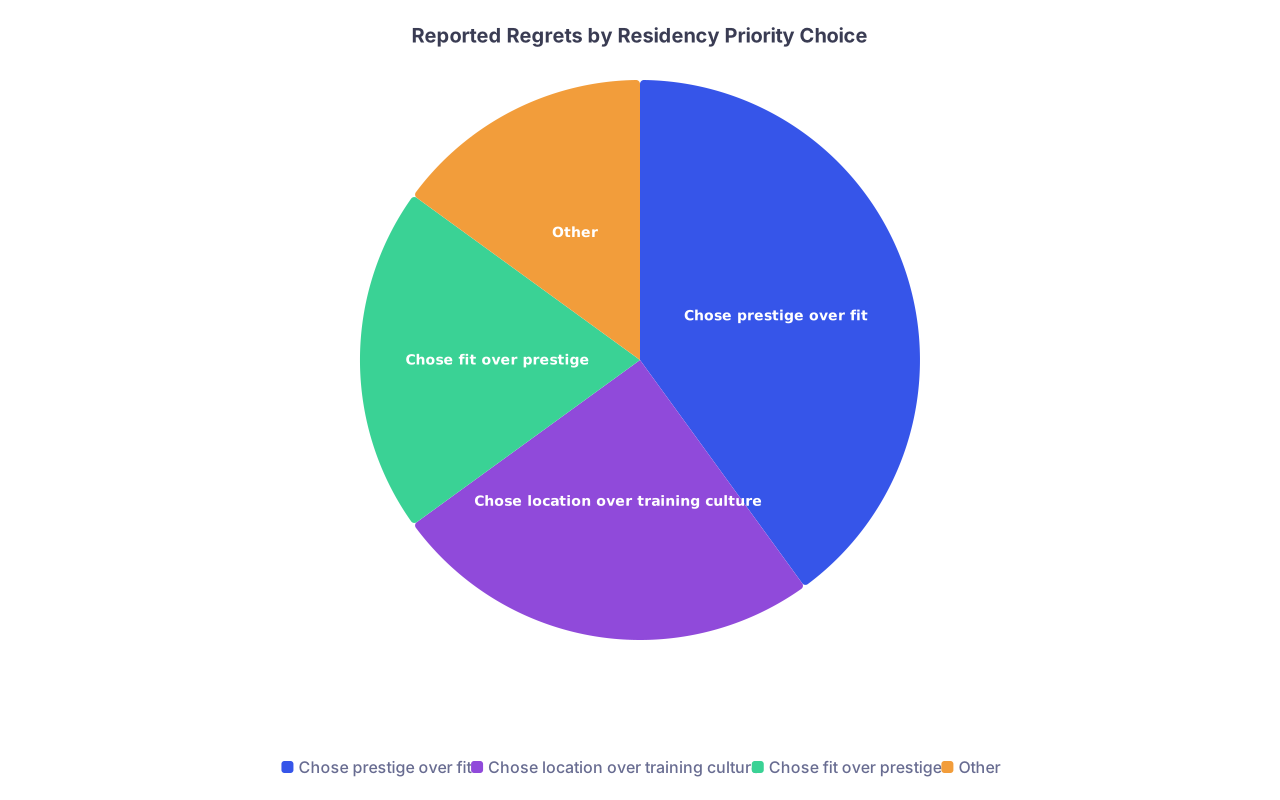
| Category | Value |
|---|---|
| Chose prestige over fit | 40 |
| Chose location over training culture | 25 |
| Chose fit over prestige | 20 |
| Other | 15 |
Prestige is not useless. It matters for some subspecialties and some academic careers. But it never compensates for:
- Unsafe staffing and workloads
- Chronic disrespect and humiliation
- No backup when things go wrong
- A culture that sees residents as disposable
If you catch yourself saying, “I know there were some red flags, but the fellowship match is incredible,” slow down. That sentence has been the opening line of a lot of later regret.
7. Missing Structural Overwork And “Hero Culture”
You can usually detect overwork on interview day if you are paying attention.
Specific red flags:
- Residents casually mention pre-rounding on 18–22 patients alone
- “We try to keep you under 80 hours, but sometimes it goes a little over, and people want to stay to help.”
- “You will get out on time… depending on the attending.” (Spoken with a look that says “almost never.”)
- Being proud that “we never call the night float to help—we just push through”
That last one is hero culture: glorifying self-sacrifice and suffering, punishing people who set normal human limits.
You might be tempted to admire this. “They are so dedicated.” Stop. That is the exact thinking that keeps toxic systems alive.
Ask:
- “How often do residents actually log over 80 hours?”
- “What happens if someone consistently logs high hours?”
If the answer sounds like, “We talk to them about being more efficient,” that is code for “we pressure them to under-report.”
8. Dismissing “Small” Behavioral Red Flags From Leadership
The best PDs and chairs radiate something very simple: they care about residents as humans and do not need to prove how powerful they are.
Worry about programs where:
- The PD shows up clearly unprepared, has not read your file, and looks bored
- They talk more about how hard it was “in my day” than about supporting current trainees
- They interrupt residents in front of you or dismiss their comments
- They make jokes that are sexist, racist, or condescending and then brush it off
I still remember one PD who, during a group Q&A, responded to a resident’s question about childcare with, “Well, you chose this life.” Applicants laughed nervously. Some still ranked that program highly because it had name recognition.
Later, two residents from that same place told me they wish they had believed that moment for what it was: genuine contempt.
If someone shows you even a small flash of disdain for trainees on interview day, multiply it by ten for what it will look like under pressure.
9. Ignoring Residents Who Try To Quietly Warn You
Sometimes the truth leaks out in tiny, almost imperceptible ways. An eye roll when an attending leaves the room. A pause before answering. A “there is so much I could say” followed by silence.
Pay attention to:
- Residents who say, “I am happy here,” but cannot give a concrete reason beyond “good training”
- Strongly guarded answers like, “Every place has its issues,” said a little too quickly
- Senior residents who seem a lot more cynical than interns
If you get a one-on-one moment with a resident and they say anything like, “Off the record…” or “Just think carefully about what you want,” do not brush it off because you want to hear something more comforting.
I have seen residents try to thread the needle—signal enough to thoughtful applicants without getting themselves in trouble. You are supposed to catch it.
10. Forgetting To Notice Who Is Missing
Silence can be a red flag too.
Things to look for:
- No recent graduates present or available to talk about their experience
- No one from your demographic group, yet they talk about “diversity” constantly
- No current residents at all in certain tracks or sites you are expected to work at
- Only chief residents present, no juniors
Ask yourself: who is not in the room, and why?
If graduates are proud and happy, they usually love coming back for interview days. If groups are consistently underrepresented and there is no clear pipeline, something is off. If juniors are mysteriously unavailable, consider whether they are being shielded—intentionally or not.

11. Misreading The “Future of Medicine” Talk As A Positive By Default
You mentioned this is under “Miscellaneous and Future of Medicine.” Here is the trap: a lot of programs lean hard into buzz about innovation, AI, big data, and cutting-edge medicine. That can be good. It can also be cover.
Red flags in the “future” pitch:
- Endless talk of research output and technology, zero talk of how they protect trainees from being buried under low-value tasks
- Proud of “being early adopters” but vague about training residents adequately on new tools
- A heavy emphasis on productivity metrics—RVUs, throughput, documentation speed—without balancing discussion of learning and safety
The future of medicine is not just tech. It is also burnout, corporatization, and exploitation if you are not careful. A program that chases “innovation” while neglecting resident well-being is not forward-thinking. It is reckless.
Ask:
- “How has the push toward more technology and metrics affected residents’ day-to-day work?”
- “What have you done to prevent residents from becoming just data-entry labor for new systems?”
If the answer basically amounts to “we work harder,” that is your sign.
FAQ (Exactly 3 Questions)
1. How many red flags does it take for me to drop a program down my rank list?
You do not need a magic number. One major red flag (like clear resident misery or blatant dishonesty) is enough to move a program significantly down—or off—your list. Several smaller, consistent issues that all point in the same direction (overwork, poor communication, dismissive leadership) should carry as much weight as one obvious problem. Trust patterns, not isolated comments.
2. What if I loved the residents but saw some issues with leadership or structure?
Residents you like cannot compensate for unsafe or unsupportive leadership. People graduate; culture stays. If the residents seem genuinely happy and empowered to shape the program, that is promising. If they seem happy despite leadership, be careful. You can rank those programs, but do not ignore the risk that things change quickly when leadership is weak or indifferent.
3. Should I tell my mentors about the red flags I saw, or will they think I am being too picky?
Tell them. You are not being picky; you are trying to avoid preventable misery. Good mentors will take your concerns seriously and help you interpret what you saw. If someone dismisses repeated, concrete red flags as you being “soft,” that is more about their training trauma than your judgment. You are allowed to value safety, respect, and sustainable training. You should.
Key points, stripped down: Believe what you see on interview day, not what you hope is true. Resident demeanor, leadership honesty, and structural reality matter more than branding and buzzwords. Ignore those red flags, and you will regret it from the inside when it is much harder to walk away.