
Residency will break you faster than any exam if you get the culture wrong.
People obsess over reputation, case volume, and fellowship matches, then blow past the one thing that will determine whether you wake up dreading every shift: how the place feels. Your gut reaction. The vibe. The way people talk to each other when they forget you are there.
And too many smart applicants override that gut feeling because the name is shiny, the board scores are high, or they are scared they will not match “as well” somewhere else.
That is the mistake I want you to avoid.
The Lie You’re Being Sold About “Fit”
You are told to be “open-minded.” To “look past first impressions.” To “focus on training quality.” Reasonable advice on the surface. Weaponized stupidity when it makes you ignore what your brain and body are screaming at you.
Here is the quiet reality no one wants to say out loud:
- A prestigious program with a toxic culture will harm you more than a mid-tier, healthy program ever could.
- “But everyone here works hard” is often code for “we normalize abuse and burnout.”
- When multiple residents independently warn you off a place in carefully chosen phrases, they are not being dramatic. They are protecting themselves and trying, carefully, to protect you.
Your gut is not magic. It is fast pattern recognition based on thousands of little cues:
- Who holds doors and who lets them slam
- Who says “we” and who says “you people”
- Who gets blamed when things go wrong
- Who looks dead behind the eyes at noon conference
Ignore that at your own risk.
How Your Gut Actually Works (And Why It’s Usually Right)
Your “gut feeling” isn’t mystical. It is your nervous system integrating data you are not consciously tracking.
On an interview day or away rotation, you are picking up on:
- Tone of voice when attendings talk to residents
- Micro-expressions when you ask about wellness or mentorship
- Whether residents joke with each other or about each other
- Who eats alone
- How often “malignant” gets brushed off with a laugh
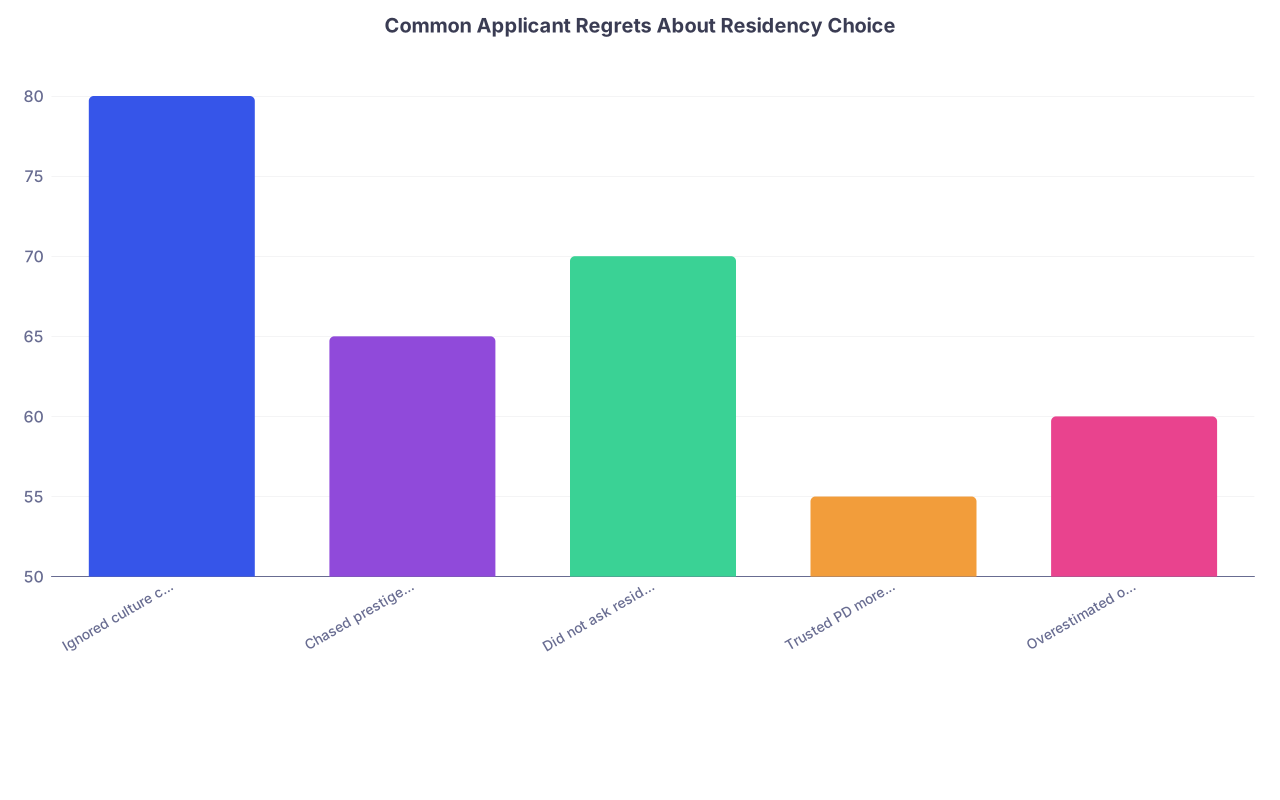
| Category | Value |
|---|---|
| Ignored culture concerns | 80 |
| Chased prestige over fit | 65 |
| Did not ask residents privately | 70 |
| Trusted PD more than residents | 55 |
| Overestimated own resilience | 60 |
These are not trivial details. They are your early-warning system.
When your body tightens in a pre-interview dinner because:
- People keep making “jokes” at one intern’s expense
- Someone says, “Well, it was worse before duty hour reforms” and laughs a little too hard
- Residents talk more about “just getting through it” than about learning
That tension is information.
The biggest mistake? Telling yourself:
- “Maybe I am overreacting.”
- “Maybe they just had a bad day.”
- “Every program has issues.”
Yes, every program has issues. But not every program makes your stomach drop when you walk through the door.
Red Flags You’ll Feel Before You Can Name
Let me walk through the stuff applicants sense but talk themselves out of believing.
1. The “Something Is Off” Pre-Interview Dinner
You sit down at a restaurant. Within 10 minutes, you know.
- One resident does all the talking. Everyone else stares at their plates.
- Someone makes a snide comment about “the IMG crowd” or “less competitive applicants.”
- When you ask about support, they say, “We are a tough group. You figure it out.”
If you walk out of that dinner more anxious than you went in, do not chalk that up to social awkwardness. Your gut is flagging:
- Power dynamics
- Psychological safety
- How hierarchy actually works
2. The Silent Hallway Test
You will not see this on a brochure.
Watch the hallways:
- Are residents greeting each other?
- Does anyone say thank you to nurses, housekeeping, techs?
- Do people look each other in the eyes?
If you see:
- Heads down, no one talking
- Snapped orders, no “please” or “thanks”
- Eye rolls when you ask basic questions
Your gut is right to whisper, “This place is not safe.”
Not physically unsafe (though sometimes that too). Emotionally unsafe. Intellectually unsafe. That matters just as much.
3. The “Tight Smile” Resident
You ask, “How is the program really?” and a senior resident gives you that tight smile.
You know the one.
They say:
- “You get great training here.”
- “You work hard. But you come out strong.”
- “It’s not for everyone.”
The words are fine. The eyes are not.
Your gut isn’t fooled. You sense:
- Fear of retaliation
- Normalized suffering
- A culture where speaking honestly is risky
If a resident drops their voice, checks who is around, and then chooses their words like a landmine field? Believe what your body is telling you, even if their actual sentences are sanitized.
How People Talk Themselves Into Ignoring Their Gut
This is where the real damage happens.
You feel something is off. Then your brain starts doing damage control so you can still rank the program high because it is “smart” to do so.
Common rationalizations I have heard (and watched people regret):
- “The residents complained a lot, but honestly, that shows they are close and open with each other.”
- “The PD interrupted everyone, but maybe they are just efficient.”
- “The interns looked exhausted, but that means they see a lot and learn a ton.”
- “Everyone emphasized ‘resilience,’ but I am tough. I can handle it.”
- “The name will open doors. It will be worth it.”
No, it usually will not.
A prestigious program does not feel like:
- Constant tension
- People afraid to speak honestly
- Residents quietly warning you without using explicit words
Objective vs. Subjective: The Trap of Over-Correcting
Med students live in the world of numbers:
- Step scores
- Class ranks
- Research output
So when it comes to ranking programs, they over-correct. They decide “objective” metrics matter more than “subjective” feelings.
Here is the problem: culture is not actually subjective once you know what you are seeing. It is just harder to put into a spreadsheet.
| Factor | What MS4s Overrate | What PGY-2s Say Matters |
|---|---|---|
| Program prestige | Very high | Medium |
| City desirability | High | Medium |
| Fellowship match list | Very high | Medium |
| Call schedule structure | Medium | High |
| Resident–attending relationships | Low | Very high |
| Psychological safety | Low | Extremely high |
Two years into residency, ask people what they wish they had prioritized:
- “I wish I had listened to the bad feeling I had at the pre-interview dinner.”
- “I knew in my gut this place was cold, but I wanted the name.”
- “I assumed every residency was miserable and ignored my own reaction.”
You do not need to choose feelings instead of data.
You need to treat your gut as data.
“Maybe I’m Just Anxious” — Separating Anxiety from Insight
You are stressed. You are interviewing. You are tired. So you start doubting yourself:
- “I feel off everywhere. Is this just me?”
- “I am introverted. Maybe that is why I did not click socially.”
- “First days always feel weird.”
Fair. Anxiety is real. But do not gaslight yourself.
Here is a simple way to differentiate:
Write your reactions the same day you visit
Later you will rewrite history to match where you matched or what your mentors like. Do not give your brain that chance.
Right after the interview, jot down:
- 3 things that felt good
- 3 things that felt off
- A number from 1–10 for: “Would I want to walk back into this building tomorrow?”
You are not writing prose. Just raw reactions. Your gut, before your ego edits it.
Look for patterns across multiple interviews
If you feel “off” everywhere:
- That is more likely your anxiety.
- Then look for where you felt “least off” and where people felt safest to you.
If only a few places make your skin crawl? Believe that difference.
Subtle Culture Red Flags Your Gut Notices First
Let’s get brutally specific. These are the things that will not show up on the website but your body will notice in 30 seconds.
Red flag: Residents do not eat
You go to noon conference. Food is there. No one eats. Or they grab and run back to the floors.
Your gut reads:
- They cannot safely step away
- They are punished socially or practically for taking breaks
- “Wellness” is performative
You are not overreacting if this feels bad. You will be that resident soon.
Red flag: Every story is a war story
You ask, “What do you like about the program?” and get:
- “You will never be scared of any patient after this.”
- “You will learn to handle anything alone at 2 a.m.”
- “You will be the workhorse and that’s why our graduates are so strong.”
Notice what you are not hearing:
- “I feel supported.”
- “I feel safe asking questions.”
- “I feel like a human being here.”
Your gut hears the silence.
Red flag: Jokes that punch down
Pay attention to humor. It is diagnostic.
- Jokes about “weak” residents
- Jokes about nurses
- Jokes about certain med schools, DOs, IMGs, nontraditional students
If the room laughs and you feel a little sick? That is your value system saying, “I do not belong here.”
Listen to that. You will not “toughen up” into enjoying cruelty.
The Future of Medicine: Culture Is Not Optional Anymore
This is not just about your comfort. It is about where healthcare is going.
Residency programs that ignore culture are already behind:
- Burnout is collapsing entire services.
- Residents are unionizing.
- Patients are more complex, systems more chaotic, stakes higher.
Programs that treat residents like disposable labor will:
- Struggle with staffing
- Lose good faculty
- Burn out their best people
Your gut is often picking up on whether a program is preparing for the future or clinging to “that’s how I trained” nonsense.
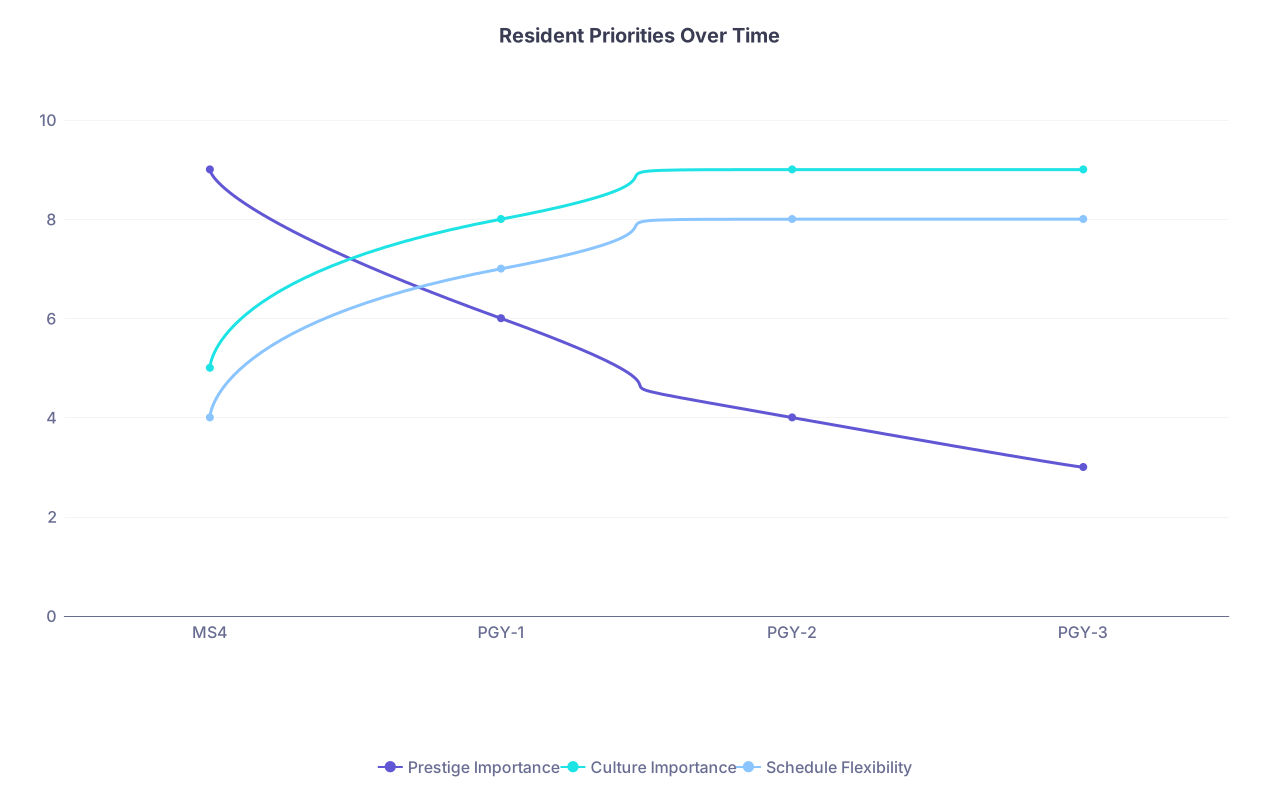
| Category | Prestige Importance | Culture Importance | Schedule Flexibility |
|---|---|---|---|
| MS4 | 9 | 5 | 4 |
| PGY-1 | 6 | 8 | 7 |
| PGY-2 | 4 | 9 | 8 |
| PGY-3 | 3 | 9 | 8 |
You are not being “soft” by putting culture high on your list. You are being realistic.
The physicians who will survive in this system are those who train where they can:
- Ask for help without fear
- Admit limits
- Learn instead of just endure
That starts with choosing programs where your gut says, “I can breathe here.”
Protecting Yourself: How To Use Your Gut Without Being Naive
You should not base your entire rank list on one awkward interaction. But you also should not bury that interaction under a pile of match statistics.
Here is how to treat your gut like serious data.
1. Name what you felt
After each interview, write something like:
- “Felt tense all day, like people were on edge.”
- “Residents were kind but seemed scared to talk honestly.”
- “Felt energized and safe. Could see myself here.”
Do not polish it. Get the raw tone down.
2. Cross-check with specific questions
If your gut is uneasy, follow up (email residents, ask friends who rotated there, talk to alumni) with pointed questions like:
- “When residents are struggling, what actually happens?”
- “Can a resident safely say ‘I don’t know’ on rounds?”
- “Have there been any recent major resident departures?”
- “Would you choose this program again?”
Watch not just the answers, but how long they pause before answering.
3. Trust convergence, not one-off blips
If:
- Your gut felt bad
- Multiple residents gave weird, filtered answers
- You heard rumors from students at other schools
That is not noise. That is a pattern.
If your gut felt off but everyone else you trust says, “Actually, we had a great experience,” then yes, hold it more loosely. But do not erase it entirely.
The Cost of Ignoring Your Gut vs. The Cost of Listening
Let’s be blunt.
Cost of ignoring your gut
- Years of dreading work
- Sleep that never truly feels restful
- Increased risk of depression, anxiety, or worse
- Erosion of your confidence and compassion
- Potential need to transfer programs (which is painful and not guaranteed)
Cost of listening to your gut
- Maybe you rank a “less prestigious” program higher
- Maybe certain attendings or peers quietly judge your choice
- Maybe you wonder, briefly, “Could I have matched at that big-name place?”
One of these costs is reversible. The other is not.
I have never heard a content PGY-3 say, “I regret choosing the place where I felt safe and supported.”
I have heard countless burned-out residents say, “I knew on interview day this place was wrong for me. I just did not listen.”
Your Next Step (Do This Today)
Do not wait until rank list panic sets in.
Today, right now, do this:
Open a blank document and create a “Gut Reactions” list for each program you have seen or are scheduled to see.
For each one, leave space under these questions:
When I picture walking into that hospital tomorrow, do I feel:
- Calm
- Neutral
- Tight / uneasy
Did I feel like I could ask “dumb” questions there?
Did the residents seem like people I could call at 2 a.m. when I am drowning?
Did I see anyone treated in a way that made my stomach twist, even a little?
Then, after every interview, fill it out the same day. No editing. No justifying.
When it is time to rank, do not make the classic mistake of treating that document as an afterthought. Put it next to your spreadsheet of board pass rates and fellowship matches.
If your gut and your spreadsheet disagree, do not automatically trust the numbers.
Trust the data coming from the one place that will live this choice every day: you.