The way a residency program communicates before interview day is not “just admin stuff.” It’s a preview of your life there. Ignore those warning signs, and you’re volunteering for years of preventable stress.
Most applicants obsess over name prestige and Step scores while overlooking the one thing that predicts daily misery better than anything else: how a program treats you when they don’t technically “owe” you anything yet.
Let me say it bluntly:
If they cannot manage basic respect and organization with you as an applicant, they’re not magically turning into a functional, supportive program after you match.
You’re in the danger zone if you keep telling yourself: “It’s probably just a busy time.” “Maybe I’m overthinking.” “They’re a big-name program; this is normal.” That’s exactly how people walk knowingly into toxic environments.
Let’s walk through the pre‑interview communication red flags that scream: future headache, guaranteed.
1. Chaotic, Disorganized Scheduling – A Direct Window Into Their Culture
If the interview scheduling process feels like you’re trying to book a flight through a broken website, do not brush that off.
Common mistakes applicants make:
- Assuming all programs are this sloppy
- Blaming themselves for “missing something”
- Interpreting bad logistics as a sign of “high demand” instead of poor systems
Here are the red flags:
Last‑Minute, Repeated Schedule Changes
I’m not talking about one unexpected change due to weather or illness. I’m talking about:
- Getting an invite on Monday for a Wednesday interview
- Then a frantic email the night before changing the time
- Then a follow‑up saying “Actually, can we move you next week?”
That’s not “busy.” That’s disorganized.
This behavior usually correlates with:
- Poor clinic and OR scheduling
- Rotations that change at the last second
- Call schedules posted late (or changed after posting)
- Grand rounds or didactics moved or canceled with no notice
Residents in these places live in constant reactive mode. That’s how burnout accelerates.
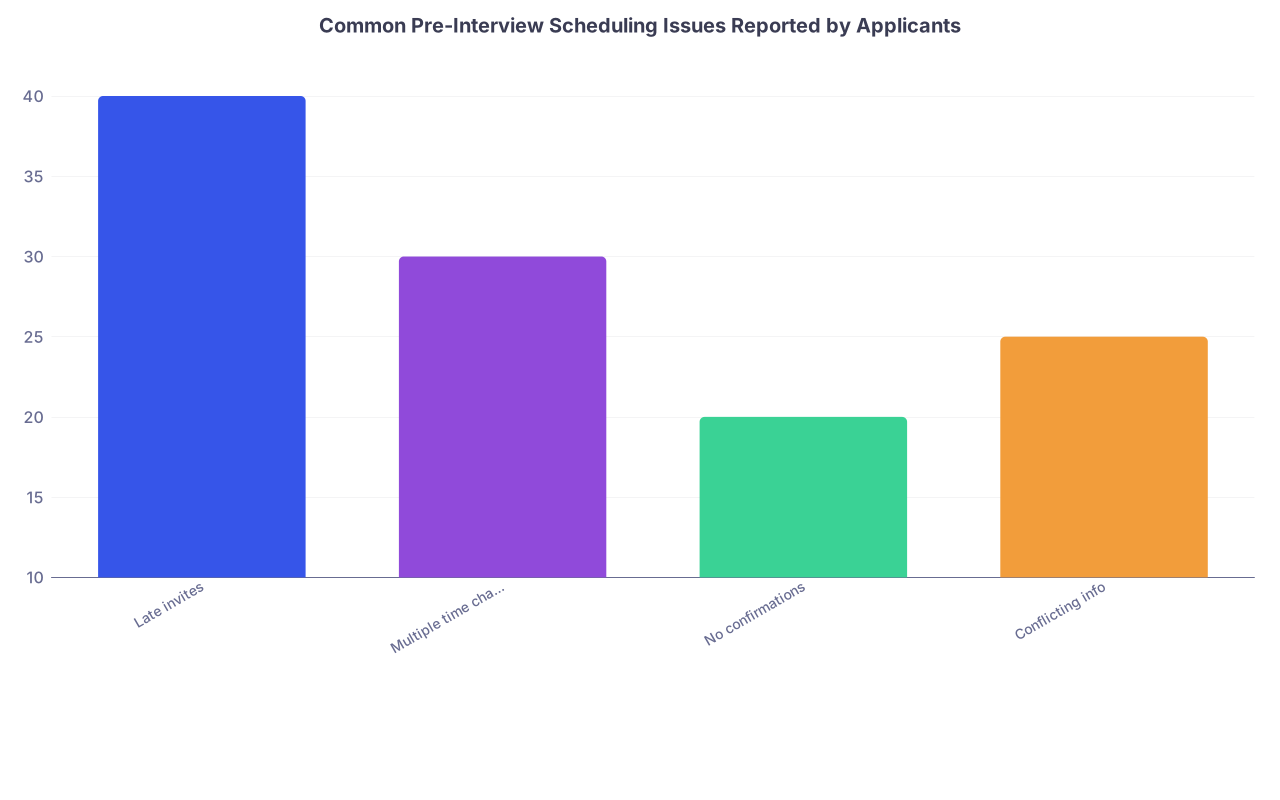
| Category | Value |
|---|---|
| Late invites | 40 |
| Multiple time changes | 30 |
| No confirmations | 20 |
| Conflicting info | 25 |
Conflicting Information From Different People
You get:
- One email from the coordinator: “Your interview starts at 8:00 AM.”
- Another from a chief resident: “Plan to log in at 7:30 for orientation.”
- The website says: “Interviews start at 9:00.”
If you’re sending follow‑up emails just to figure out when to show up, that’s not a minor issue. It’s reflective of:
- Poor internal communication
- No one truly owning the process
- A culture where “someone else will handle it” is standard
This is exactly how orders get missed, consults get dropped, and residents end up blamed for system failures.
Radio Silence After You Confirm
You click the Thalamus/ERAS link, pick a date, and…nothing. No confirmation. No agenda. No Zoom link. No plan.
If you:
- Have to chase them for basic details
- Get a “we’ll send details later” email 48 hours before the interview
- Receive your schedule the night before
…that’s your sign. These are people who normalize leaving others in the dark.
2. Slow, Dismissive, or Inconsistent Email Responses
How they respond to your emails now predicts how they’ll respond when you’re a resident asking for something that actually matters.
The Non‑Response Black Hole
You send a clear, specific question:
- Clarification on interview date
- Policy on away rotations
- Instructions for technical setup
…and nobody replies. For days. Maybe weeks. Or ever.
Don’t kid yourself that this is harmless. In residency, this translates to:
- PD not responding to duty-hour concerns
- Coordinator ignoring questions about licensing or visa issues
- GME dragging their feet when you report harassment or unsafe conditions
Programs that care about people reply. Maybe not instantly, but consistently.
The “Half‑Answer” Reply
You write three questions in a single email. The reply answers one…barely.
You ask:
- “Is the interview virtual or in person?”
- “What time zone are times listed in?”
- “Will there be a resident social?”
The coordinator writes back:
- “Interviews will be via Zoom.”
That’s it. That’s the whole response.
This is not just poor service. It’s a sign of:
- Rushed, task-only thinking
- No habit of reading carefully
- Minimal concern for whether you actually have what you need
When you’re a resident, this mentality shows up as:
- “We sent an email” being used as cover when things go wrong
- A complete lack of follow‑through on resident feedback
- Constant minor frustrations that add up to real burnout
Defensive or Blaming Tone
Pay attention to how they handle their own mistakes.
You ask politely about a conflicting schedule, and the reply is:
- “As stated in our previous email…”
- “This information is all on our website.”
- “You must check your ERAS portal for updates.”
Translation: We will blame you when our process fails.
This defensive posture doesn’t disappear after Match Day. It becomes:
- “Residents were instructed on this during orientation.”
- “You should have known that.”
- “Other residents aren’t having this problem.”
You do not want to spend three to seven years in a system that reflexively blames instead of fixing.
3. Vague or Misleading Information About the Interview Day
If they can’t give you a straightforward picture of one morning on Zoom, what do you think they’re doing with your education?
No Clear Agenda Until the Last Minute
You should have, at minimum, several days before:
- Start and end times
- Time zone clearly stated
- Rough outline of interviews vs breaks vs presentations
If you’re getting:
- “We’ll send details the day before”
- Or a schedule that arrives at 10 PM for an 8 AM interview
…you’re looking at chronic disorganization.
Mismatched Expectations
They say:
- “You’ll meet many of our residents” → you get a 15‑minute group Q&A with two PGY‑1s
- “We emphasize research” → no research faculty appear anywhere in your schedule
- “We’re very supportive of wellness” → zero mention of specific policies or resources
You’re not nitpicking. You’re catching small lies. Small lies scale.
Today it’s “meet our residents.”
Tomorrow it’s “protected didactics” that aren’t protected.
Next year it’s “we support time for Step 3” while you’re on q4 call.
4. Unprofessional or Boundary‑Crossing Communication
Anything that feels off probably is. Do not rationalize it.
Overly Casual or Disrespectful Tone
Examples I’ve actually seen or heard about:
- Emails starting with “Hey guys” to applicants
- Messages implying you should be grateful to even be considered
- Coordinators sending snarky responses to simple questions
This is a culture signal. It often sits side by side with:
- Attendings talking down to residents
- Chiefs dismissing concerns
- A general hierarchy where respect only flows upward
Inappropriate Personal Questions Pre‑Interview
Before you’ve even met them, someone asks by email:
- “Do you have any children?”
- “Are you planning to stay in the area long term?”
- “What does your partner do?”
- “Are you planning any time off next year?”
Yes, some of these are technically illegal or at least deeply inappropriate. If they’re this casual by email, what do you think the vibe is behind closed doors?
Programs that blur boundaries with applicants will absolutely blur them with residents.
Pressure or Guilt‑Tripping Around Scheduling
Watch for manipulative language:
- “We expect serious applicants to accept the first available date.”
- “Slots are limited; delaying may affect our view of your interest.”
- “If you cancel, we cannot guarantee future consideration.”
Competitive does not mean coercive. Healthy programs:
- Are clear about deadlines but not threatening
- Respect that you’re juggling many interviews
- Do not guilt you for rescheduling once with adequate notice
When you see pressure tactics now, imagine what they’ll do about:
- Vacation approvals
- Maternity/paternity leave
- Elective choices
- Moonlighting requests
You’re not just choosing a program. You’re choosing who will control your schedule and your life for years.
5. Red Flags Hidden in How They Talk About Residents
Pre‑interview emails and info packets tell you a lot if you actually read them critically instead of skimming.
Residents Talked About, Not Talked To
If all pre‑interview communication:
- Mentions residents constantly
- Uses them as selling points (“Our residents love X”)
- But gives you no systematic way to talk to them…
That’s intentional.
Programs proud of their culture:
- Put resident socials front and center
- Encourage you to ask hard questions
- Don’t over‑script resident access
Programs that are nervous about what residents might say? They:
- Limit access
- Pack socials with faculty presence
- Keep everything tightly controlled
Language That Signals Overwork and Under‑Support
Look for the subtle phrases:
- “Very busy clinical program” with no mention of support or backup
- “Our residents are extremely resilient” (translation: they endure a lot)
- “You’ll see everything here” (often code for: we dump everything on you)
Alone, any one phrase isn’t damning. In combination with sloppy or dismissive communication? That’s your pattern.
| Phrase Used | Likely Hidden Meaning |
|---|---|
| "Very resilient residents" | High stress, little support |
| "You will be practice ready" | Service over education |
| "Extremely busy program" | Poor workload control |
| "Tight-knit, small community" | Possible insularity, little backup |
| "High expectations, high reward" | Culture of overwork normalized |
6. Technical Sloppiness with Virtual Interviews
Yes, everyone had growing pains during early COVID virtual cycles. We’re past that excuse now. Tech chaos in 2026 is not “oops, learning curve.” It’s negligence.
Broken Links, Wrong Platforms, Last‑Second Fixes
Red flags include:
- Zoom link sent with the wrong date or time
- Multiple links sent with no clarity on which to use
- Changing from Teams to Zoom to Webex in a single week
If you’re testing links the night before because you don’t trust their info, that’s not paranoia. That’s survival.
This technical sloppiness is usually mirrored by:
- Bad EMR workflows
- Poor onboarding for new systems
- Minimal IT support when residents have problems
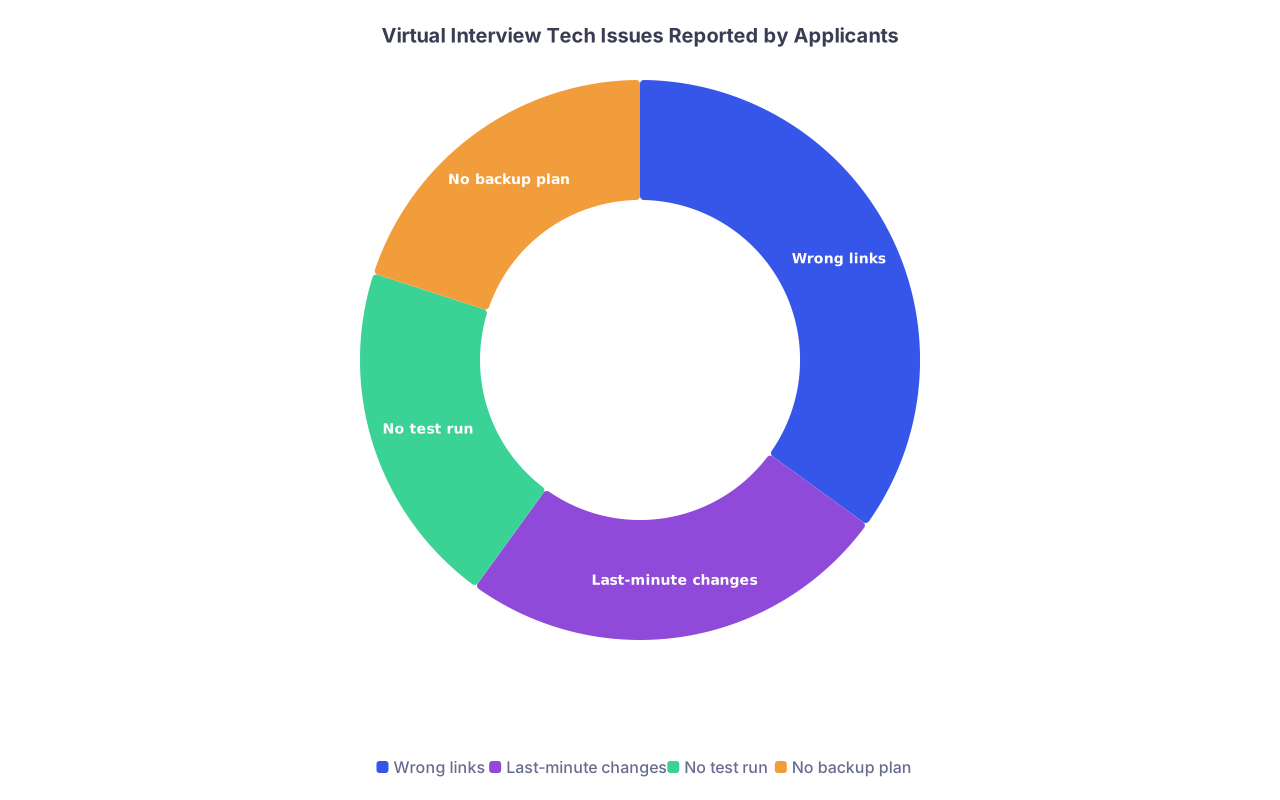
| Category | Value |
|---|---|
| Wrong links | 35 |
| Last-minute changes | 25 |
| No test run | 20 |
| No backup plan | 20 |
No Clear Backup Plan
Better programs explicitly tell you:
- What to do if you disconnect
- Who to call or email if links fail
- How they’ll handle technical problems fairly
Weak programs:
- Say nothing
- Leave you panicking mid‑interview
- Put all responsibility on you for their broken setup
If they’re not thinking ahead now, they’re not thinking ahead when you’re cross-covering 40 patients with a crashing EMR.
7. Dishonesty, Spin, and Over‑Selling
Some of the worst programs I’ve seen weren’t outwardly chaotic. They were polished. Slick emails. Fancy PDFs. Beautiful websites. All covering quiet dishonesty.
Over‑Curated Communication
Warning signs:
- Every resident photo looks staged at golden hour with coordinated outfits
- Every line reads like marketing copy
- Zero mention of any challenge or growth area
If you ask a reasonable question by email:
- “How has the program changed in response to resident feedback?”
And you get: - “Our residents are uniformly satisfied with their training.”
That’s propaganda, not transparency.
Inconsistencies Between What Different People Say
You notice:
- Website: “Four weeks of vacation guaranteed.”
- Email from chief: “Most people can take around three weeks, depending on needs.”
- PD’s message: Changes subject when you ask about time off.
Or:
- Coordinator says call is q4
- Resident at social says “it’s more like q3.5 if we’re honest”
Single data points can be mistakes. Multiple misalignments are lies, just spread thinly.

| Step | Description |
|---|---|
| Step 1 | Pre interview chaos |
| Step 2 | Scheduling problems as resident |
| Step 3 | Poor duty hour enforcement |
| Step 4 | Slow defensive emails |
| Step 5 | Lack of support for concerns |
| Step 6 | Blame culture |
| Step 7 | Over selling and spin |
| Step 8 | Broken promises |
| Step 9 | No real wellness or support |
8. The Meta‑Mistake: Gaslighting Yourself
The biggest error applicants make isn’t missing red flags. It’s explaining them away.
I’ve heard all of these rationalizations:
- “It’s a top‑10 program, they can’t be that bad.”
- “Every program is chaotic during interview season.”
- “Maybe I’m being too sensitive; they’re just busy.”
- “I don’t want to lose my chance over something small.”
You’re not “too sensitive” for wanting:
- Clear schedules
- Respectful communication
- Honest information
- Reasonably timely replies
You’re setting a baseline for how you’ll be treated for the next several years.

If a program shows multiple of these red flags before they’ve even met you, understand what that means: this is them at their best behavior.
They’re courting you now.
If this is what courting looks like, imagine marriage.
9. How to Actually Use These Red Flags Instead of Just Noticing Them
Seeing a red flag isn’t enough. You have to act on it.
Do not:
- Pretend you didn’t see it
- Rank them highly because of prestige anyway
- Assume “I can handle it” as your excuse
Do:
- Keep a written log of weird or problematic interactions
- Compare how different programs treat you (the contrast will be obvious)
- Discuss patterns with mentors who are willing to be blunt
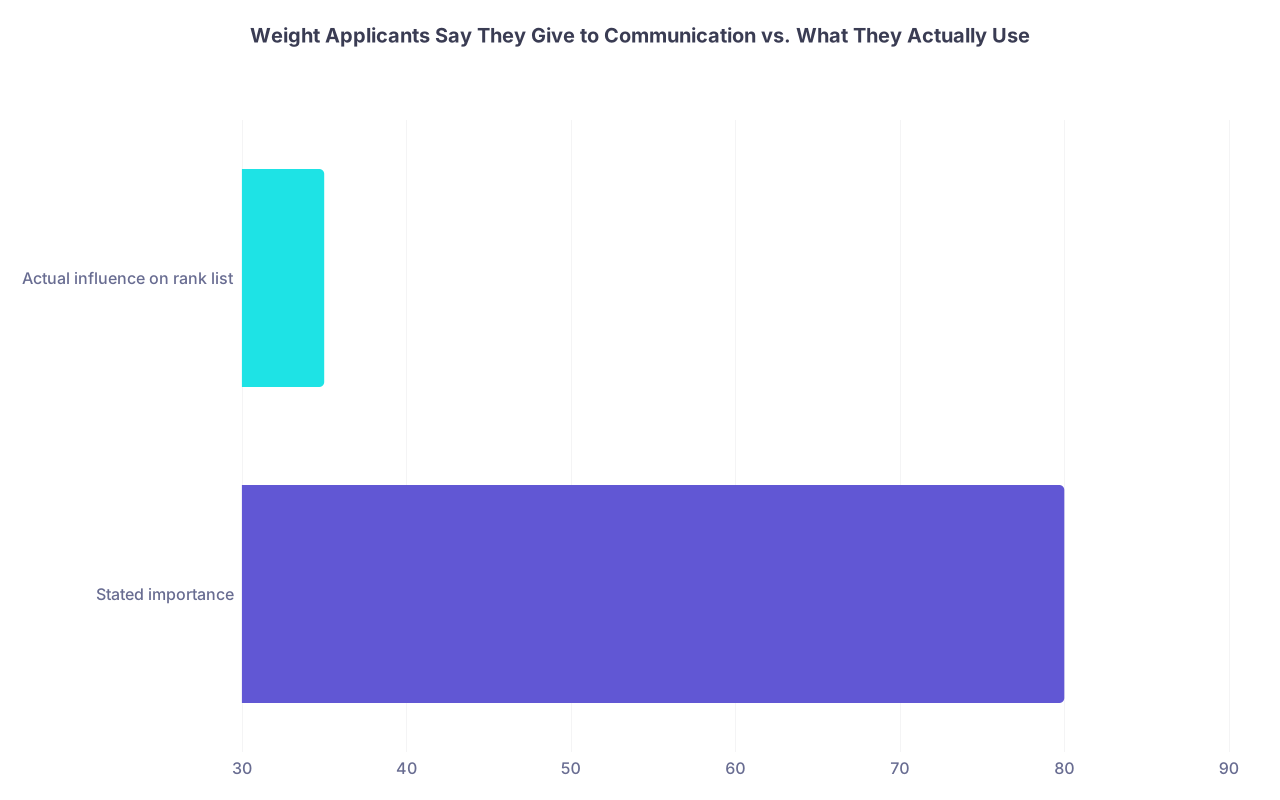
| Category | Value |
|---|---|
| Stated importance | 80 |
| Actual influence on rank list | 35 |
Most applicants say they care about how programs treat them. Then they rank based on name, location, and Step cutoffs, minimizing the gut feeling that something is off.
Do not make that mistake.
10. When One Red Flag Is Enough to Walk Away
You don’t need ten data points to protect yourself. Sometimes one is enough.
For example, strongly consider dropping a program down (or off) your list if you experience:
- Directly disrespectful communication
- Pressure or threat regarding interview scheduling
- Inappropriate personal questions
- Clear, provable dishonesty between written materials and email answers
You’re not being dramatic. You’re enforcing basic standards.
Boiling It Down
Keep three things burned into your brain:
Pre‑interview communication is data, not noise. Chaotic, dismissive, or dishonest contact now predicts day‑to‑day misery later. Believe the pattern.
You’re not overreacting to basic disrespect. Late schedules, non‑responses, blame‑shifting, and pressure tactics are not “just how it is.” They’re culture on display.
Prestige will not protect you from a toxic environment. A shiny name on your badge won’t make your call schedule humane or your leadership responsive.
Protect yourself early. The headaches you prevent now will be the burnout you never have to recover from later.