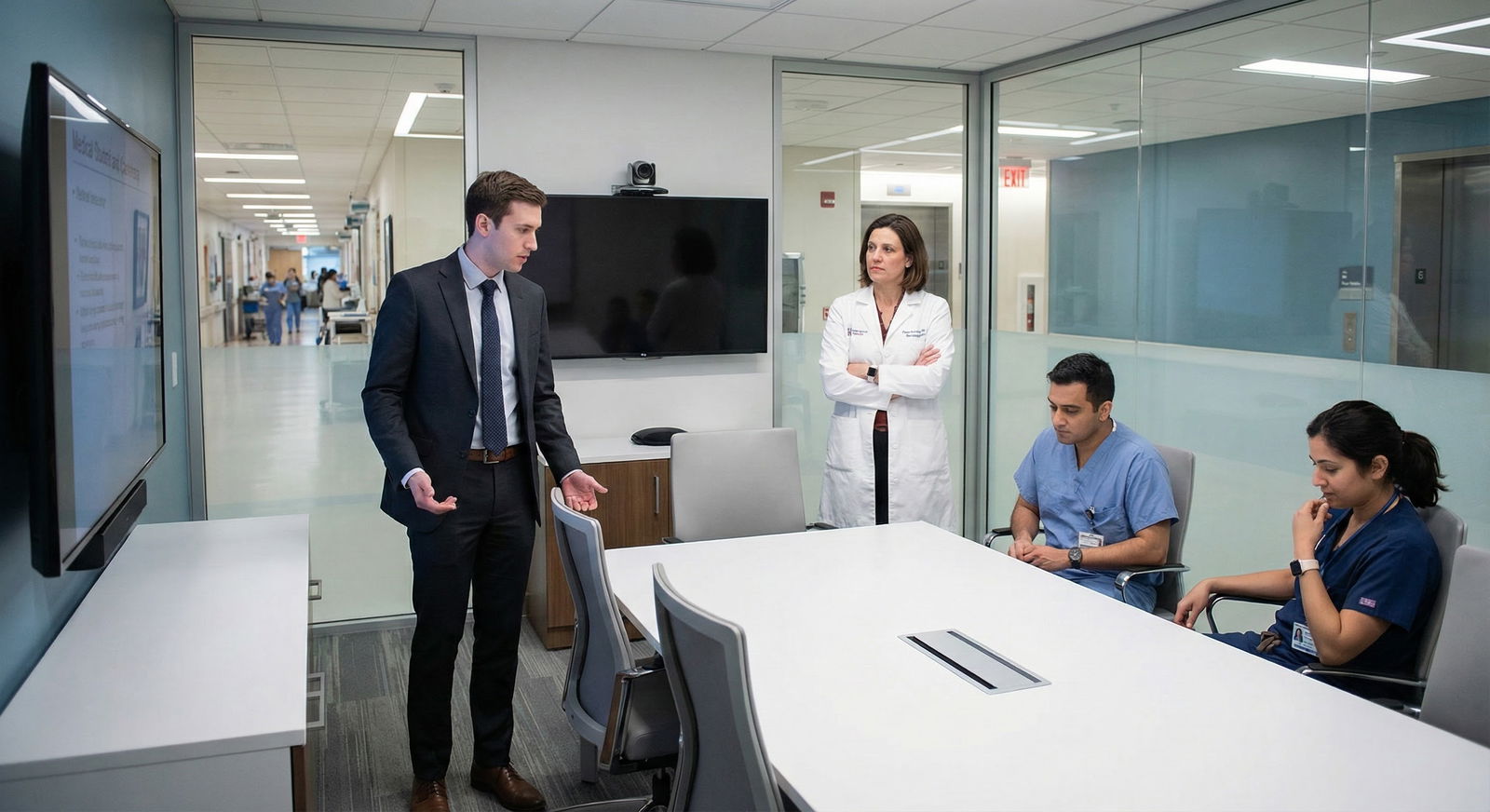
Two weeks before rank lists were due, a chief resident pulled me aside after a long interview day and said quietly, “If any of them ask you what the culture is like here, just tell them we ‘work hard and support each other.’ Don’t say more.” The faculty were still in the conference room, laughing loudly, selling the program like it was a luxury hotel. The residents’ faces told a different story.
You will not see the truth about a residency program in the brochure, the slide deck, or the PD’s carefully rehearsed speech. You see it in micro-behaviors from faculty when they think you are not paying attention—or when they believe you are too junior to decode what you’re seeing.
Let me walk you through what faculty behaviors actually mean, from the vantage point of someone who’s sat on the other side of the table, watched rank meetings, and heard the “off-record” comments once applicants left the building.
The Faculty Room Before You Walk In
Spend one minute listening through the door of a pre-interview faculty meeting and you’ll know more about a program than from any glossy PDF.
I’ve watched this play out over and over:
In strong, healthy programs, the conversation before applicants walk in is organized, respectful, and—frankly—boring. “You’ve got Chang at 9:10, Patel at 9:30.” “Let’s remember to highlight the ICU curriculum updates.” There’s some light joking, but the tone is collegial.
In problematic programs, the tone is completely different. Faculty roll in late, flip through CVs for the first time, make snide comments about candidates, or about their own residents.
Here are the behaviors you’ll see fragments of during the day.
Red flag #1: Faculty openly trash residents when you’re nearby
If during interview day or a rotation you hear:
- “Our residents just don’t want to work anymore.”
- “The new class is weak; we’re trying to fix that this year.”
- “He’s on a remediation plan… again.”
…that is not just a personality quirk. That is culture.
When faculty are willing to bad-mouth residents in front of students, that is exactly how they talk in faculty-only spaces—worse, actually. It means residents are not protected, not viewed as junior colleagues, and any support you receive will be conditional and fragile.
Healthy programs handle concerns about residents privately, specifically, and with language like “We have high expectations and we’re helping them meet those.”
Red flag #2: The “they work so hard” humble-brag
Watch for the attending who smiles and says, “Our residents are the hardest working in the region; they carry the hospital on their backs.” Said with pride. No mention of guardrails, no mention of wellness, no hint of guilt.
That line shows up a lot at community programs trying to prove they’re “gritty,” and at some academic places that still think 1990s-style abuse is a badge of honor.
If you hear “they work hard” with no follow-up about how the program protects residents, you should assume work-hour violations are normalized and unreported. The safest programs feel almost guilty about the workload and over-justify their safeguards.
How Faculty Talk About the Schedule and Service
Most programs show you some version of a rotation grid. The slide is usually rushed. That’s deliberate. The more time you spend looking at that grid, the more questions you’ll have.
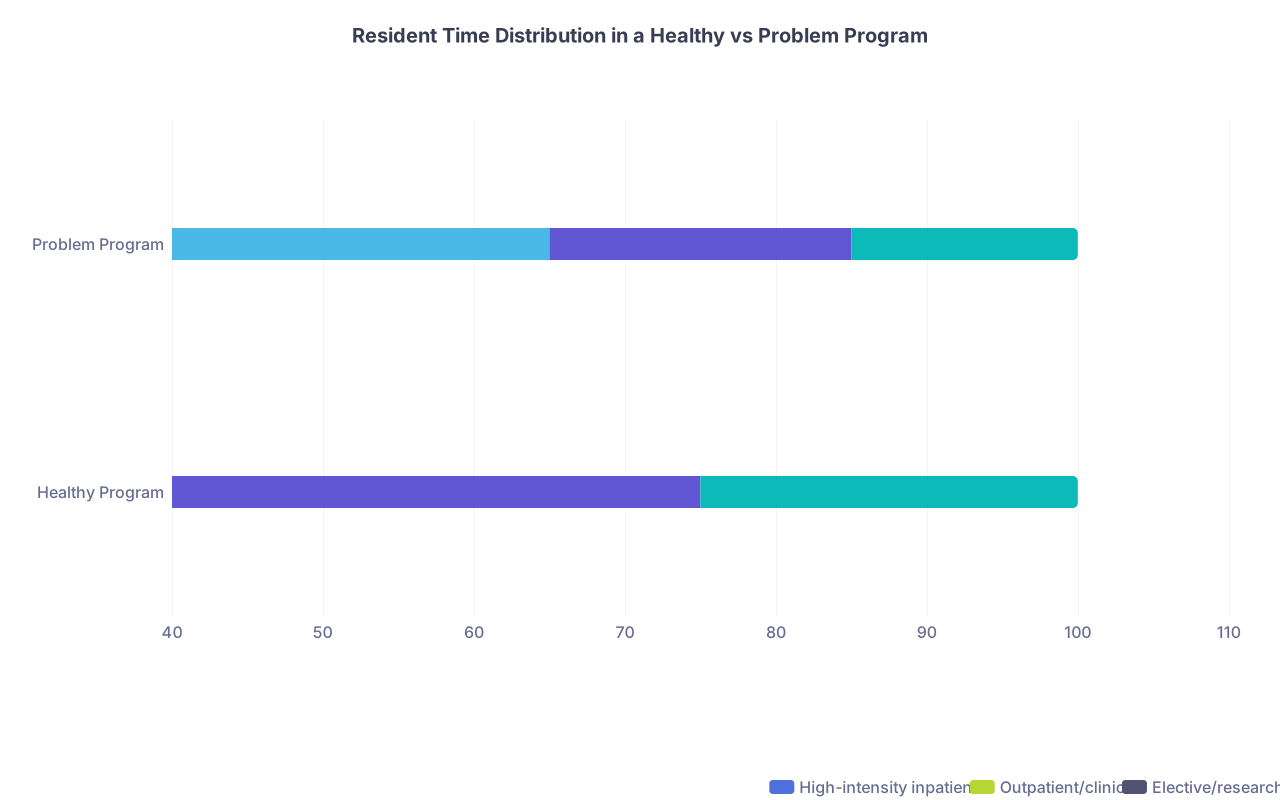
| Category | High-intensity inpatient | Outpatient/clinic | Elective/research |
|---|---|---|---|
| Healthy Program | 40 | 35 | 25 |
| Problem Program | 65 | 20 | 15 |
Red flag #3: Faculty minimize or joke about brutal services
Listen closely when they describe tough rotations:
- “MICU month is survival mode.”
- “You’ll be eating breakfast, lunch, and dinner in the work room.”
- “It’s a rite of passage; we all went through it.”
The language matters. Do they talk about hard months with empathy and specifics about support (“We cap at X; night float takes Y; we proactively watch for burnout”), or with nostalgia and machismo?
Programs that hide behind “rite of passage” are telling you directly: we accept suffering as normal. Nothing in ACGME says that has to be true.
Red flag #4: Vague answers about caps, cross-cover, and nights
On interview day, when someone asks, “What’s the cap on the inpatient service?” a strong faculty member answers with numbers and context. “Our interns cap at 8, seniors at 16, and admissions stop at 7 p.m. unless there’s an emergency. Nights are a true night float system.”
A problematic program’s faculty member says something like:
- “It depends.”
- “We follow ACGME rules.”
- “You’ll be busy, but it’s manageable.”
Translation: the caps look fine on paper and can be blown past “in exceptional circumstances,” which mysteriously happen 3–4 nights a week. If even the APD is fuzzy on details in front of you, the real-world practice is worse.
Faculty Body Language When Residents Speak
Here’s where most applicants miss the biggest clues: watch the faculty when residents are talking.
During lunch. During the resident panel. During your pre-interview chit-chat. Don’t just listen to the words; watch the reactions.
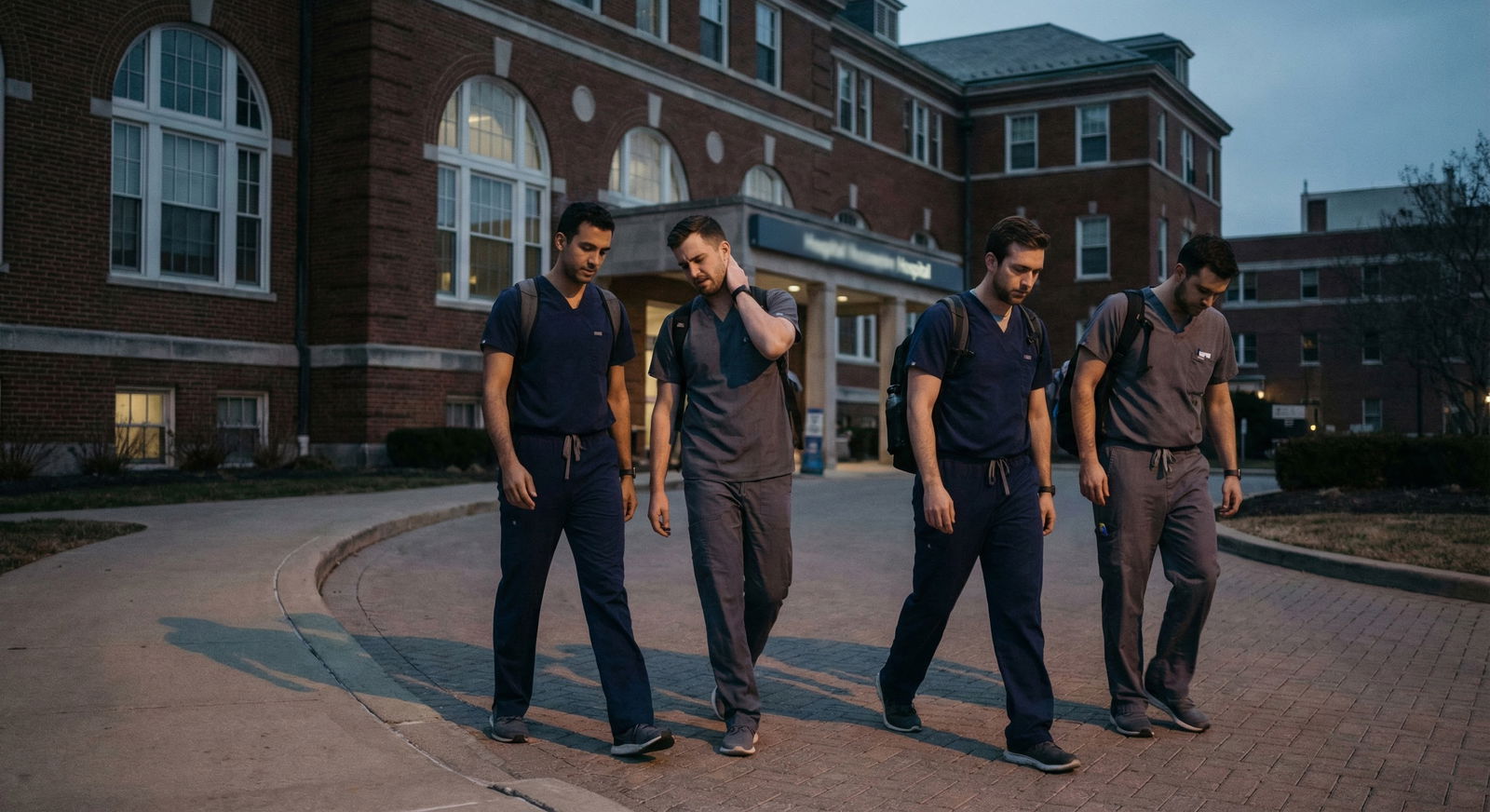
Red flag #5: Residents look at faculty before answering hard questions
Someone asks the classic: “How responsive is the program leadership to resident feedback?”
A healthy program: a senior resident immediately answers, maybe even laughs, and gives concrete examples. The PD smiles, might add a detail, but does not control the response.
A problem program: there’s a pause. One resident glances at the PD or chief before speaking. The answer is strangely generic: “We have an open-door policy,” or “We’re always trying to improve.” No specifics. You see tightening jaws on the quieter residents.
That glance toward faculty leadership is not subtle. They’ve been burned before for saying too much.
Red flag #6: Faculty dominate the “resident Q&A”
Some programs invite faculty to sit in the back of the room “in case there are curriculum questions.” Watch what happens next.
If residents get a question about duty hour enforcement, pregnancy, parental leave, or mental health resources, do faculty jump in and answer for them? Does the PD “clarify” when a resident starts to say something even mildly critical?
I’ve literally seen PDs interrupt: “Well, to add to what she’s saying…” and then completely overwrite the resident’s point. That tells you exactly what the communication dynamic is like when the doors are closed.
In a safe program, faculty physically leave the room or stay quiet and trust their residents to speak freely—even if something unflattering comes up.
How Faculty Treat Each Other: Internal Culture on Display
Applicants obsess about how attendings will treat them. They forget that attendings who treat each other poorly will treat residents worse.
Red flag #7: Sniping and undermining between faculty
During your half-day, notice how often you hear one faculty member undermining another:
- “The ICU team does things their own way; we fix it on the floor.”
- “Surgery is always dumping on us.”
- “You don’t want to end up on Dr. X’s team… the residents hate it.”
This is not harmless gossip. This is the tip of a dysfunctional iceberg. You will be triangulated into these turf wars, blamed for miscommunications, and caught in the middle when services fight.
Strong programs present a united front even when they disagree internally. They protect residents from interdepartmental nonsense.
Red flag #8: Silence or eye-rolling when leadership speaks
Watch the faculty—not just the residents—when the PD or chair is talking in a group setting.
If the chair gives a little “we value wellness” speech and you catch subtle eye-rolls between attendings, or the room goes dead in that specific “we’ve heard this, it isn’t true” way, believe them, not the speech.
In rank meetings, the same attendings rolling their eyes will be the ones saying, “Our residents are too soft now” while arguing against schedule changes. They’re signaling to you, accidentally, that the leadership message is performative.
The Favorite Move: Overcompensating With Forced Enthusiasm
One of the clearest red flags is actually too much smiling. Too polished. Too rehearsed.
Every attending on the zoom screen or in person seems a little… hyper. Every comment about the program is uncritically glowing. Every answer lands like a PR statement.
That’s not an amazing culture. That’s damage control.
Red flag #9: Everyone suddenly “loves” something that was just changed
The PD proudly says, “We completely revamped our night system this year,” and then each faculty interview you have includes some variation of, “Our new nights system is fantastic. Residents love it. It’s a huge strength.”
When faculty talk like a coordinated marketing campaign, that tells you:
- There was a serious problem bad enough to force change.
- They’re worried about reputation and recruitment.
- The new thing may not actually be working yet.
In a transparent program, you’ll hear something more nuanced: “We changed nights. Honestly, it’s still a work in progress. Here’s what’s better, here’s what we’re still fixing.” That’s how real systems change sounds.
Red flag #10: Weird over-focus on “family” language
Plenty of good programs use the word “family.” But when every other sentence from faculty is “We’re a family,” “We’re like a family here,” “Join our family,” and they seem oddly insistent about it, watch your step.
Unhealthy “family” culture usually means:
- Boundaries are poor
- Saying no is culturally punished
- Loyalty is prized more than fairness
- Criticism is reframed as betrayal
Listen for how they handle conflict and feedback. A healthy “family” story: “Residents pushed back hard on X; here’s what we changed.” A toxic one: “We’re really close knit; when someone isn’t a good fit, they usually leave.”
Subtle But Deadly: What They Do NOT Say
Some of the most damning faculty behaviors are silences and omissions.
| Topic | Strong Program Faculty | Problem Program Faculty |
|---|---|---|
| Duty hour violations | Specific & candid | Vague or deflecting |
| Grievance process | Described clearly | Barely mentioned |
| Mistreatment reporting | Concrete examples | “We take it seriously” |
| Remediation/failing board | Structured support | Blame resident |
| Fellowship match misses | Honest & analytical | Shrug or blame market |
Red flag #11: No one can describe how complaints are actually handled
If you ask, “How are concerns about faculty or the program addressed?” and faculty answer with, “Oh, we have an ombudsperson,” or “You can always come to me,” but cannot walk you through a real example, that means either:
- Residents don’t bring issues forward because they’re scared, or
- Issues go into a black hole.
You want to hear something like: “We had a problem with X, residents brought it up at the program evaluation committee, we met, and changed Y. Here’s the timeline.” If they can’t produce a single concrete example, that’s not because everything is perfect.
Red flag #12: Evasive when asked, “What needs improvement?”
This question terrifies weak programs. Faculty have three standard dodges:
- “Great question!” (long pause) “We’re always trying to evolve.”
- “We’re working on wellness.” (No specifics.)
- “Parking.” (If a program’s biggest issue is parking, they will tell you 12 other real things before they get to parking.)
Good programs have a script that actually includes vulnerability. “We’re still light on certain subspecialty exposures—we’re adding a rotation.” Or, “Our research infrastructure was weak; here’s how we’re building it out.” Anything with specifics and a timeline beats vague reassurances.
When every faculty member acts like there are no meaningful weaknesses, that’s not pride. That’s denial.
The Interview Room: Micro-Behaviors You Should Not Ignore
You’ll spend 10–20 minutes one-on-one with several faculty. Most applicants are too anxious selling themselves to notice what those interviews reveal about the program.
Red flag #13: They’re clearly seeing your file for the first time
This seems minor, but it isn’t.
If an interviewer opens with, “So… where are you from again?” while flipping through your ERAS printout, they’re not just disorganized. They’re telling you what the program’s approach to residents will be: reactive, last-minute, not particularly invested in individuals.
Strong programs brief faculty. Weak ones hand them a stack of names the morning of and hope for the best. That same chaos shows up in scheduling, evaluations, feedback, and remediation.
Red flag #14: Inappropriate, invasive, or discriminatory questions… that no one corrects
Most applicants know blatantly illegal questions are a bad sign. But the bigger signal isn’t the one clueless attending; it’s what everyone else does about it.
If someone asks about your family plans, your ethnicity, your mental health, or anything else off-limits, here’s the test:
In a healthy program, that faculty member gets quietly corrected by leadership later, and often you’ll see PDs pre-emptively say, “If anyone asks something inappropriate, please let us know. We take that seriously.”
In a problem program, you’re expected to laugh it off. Sometimes the PD themselves ask the question.
Faculty behavior in those moments reveals what the program actually thinks about professionalism and bias, no matter how many “DEI” slides they show.
On Wards and Rotations: When the Mask Drops
If you rotate as a sub-I or visiting student, you’ll see the unvarnished faculty behavior the marketing can’t hide. Pay attention. Your future self will thank you.

| Step | Description |
|---|---|
| Step 1 | Start Rotation |
| Step 2 | Observe Rounds |
| Step 3 | Ask seniors for honest views |
| Step 4 | Note public criticism or shaming |
| Step 5 | Assess fit with your values |
| Step 6 | Faculty respectful to team |
Red flag #15: Public shaming as a teaching method
Everyone has seen the attending who “pimps” too aggressively. What matters is how normalized that is.
If an attending routinely:
- Dresses down a resident in front of the whole team
- Uses sarcasm as feedback
- Says things like, “Did you even go to med school?” or “This is intern-level thinking”
…and no one pushes back, that’s the culture. Chiefs don’t intervene. PDs know and have chosen not to act. You will not be the exception who “handles it fine.”
In good programs, that behavior is rare, and when it happens, residents talk about it and you’ll hear, “Yeah, Dr. X used to be like that, but leadership shut it down.”
Red flag #16: Faculty are always “too busy” for teaching
Everyone is busy. But how faculty treat teaching when no one is watching is revealing.
On elective or ward rotations, do attendings routinely blow off scheduled teaching? Do they leave early, hand off decisions to fellows, and treat residents as documentation machines?
If the default attending behavior is “I’ll sign your notes, just don’t bother me,” you’re looking at a service-driven, not education-driven, program. That’s not inherently evil, but it’s a problem if you actually want to grow clinically and have support.
Strong programs have at least a critical mass of faculty who carve out time to teach even on bad days. Problem programs let the service model completely dictate culture.
Quick Comparison: Faculty Signals in Healthy vs Problem Programs
| Signal | Healthy Program Version | Problem Program Version |
|---|---|---|
| Talking about residents | Respectful, specific praise and critique | Mocking, global labels, blame |
| Describing workload | Concrete, honest, with protections explained | Vague, macho, “rite of passage” |
| Resident Q&A | Residents speak freely, faculty mostly silent | Faculty interrupt, correct, or dominate |
| Handling weaknesses | Admit real flaws with plans to fix | Hand-wave, joke, or deny any issues |
| On-rotation teaching style | Direct but respectful, feedback in private | Public shaming, sarcasm, or indifference |
How To Actually Use This on Interview Day
I’ll be blunt: you will not get a perfect program. But you can avoid the truly toxic ones if you stop getting hypnotized by the shiny parts and start reading the faculty.
Here’s what to do in real time:
- When a faculty member speaks, split your attention: 50% on content, 50% on what their behavior says about how they see residents.
- During resident panels, watch the faculty in the room more than the residents. Reactions > rehearsed lines.
- Ask at least one question about a past problem and what changed. Weak programs cannot answer this convincingly.
- Debrief immediately after the day and write down verbatim phrases you heard from faculty that felt off. They’ll sound worse when you read them later. Trust that reaction.
You’re not just choosing a curriculum. You’re choosing which attendings have the power to shape your identity as a physician at 2 a.m. when things go wrong. The smiles are cheap. The behaviors are not.